Well, it may be a little late (okay, more than a little), but the War for the Crown Player’s Guide has finally been released by Paizo. Meant to go with their War for the Crown Adventure Path, which takes place in the nation of Taldor, this player’s guide is a free download on their website. The War for the Crown Adventure Path is already underway, with volume one, Crownfall, released in February, and volume two, Songbird, Scion, Saboteur, released this month. The other four volumes have yet to be released.
Now, I’m not sure about all of you, but I’ve been supremely excited for the War for the Crown Adventure Path. However, purchasing that lovely little book isn’t in the cards right now, so I was ready to pounce on the Player’s Guide the moment it launched. And I waited…. And waited…. And waited….
Like the Adventure Path Player’s Guides before it, this one is filled with all the information you need to create a character well-suited to the (War for the Crown) Adventure Path, and invested in its major plots and purpose. It contains advice and compiled lists of which classes and archetypes are best suited to the campaign. It briefly describes the region that the Adventure Path will be taking place in (Taldor, in this instance), as well as the culture or cultures found there. It describes each races place in the region, and gives advice on which obscure races are more common there (I was pleasantly surprised to find Taldor contains a LOT!). It also releases a series of traits specific to the Adventure Path (called Campaign Traits), of which each character is expected to have one.
There was plenty of wonderfully, interesting information in this little guide, and I actually got a really great feel for Taldor from it. Not a clichéd stereotype of the nation, either. An actual feel for the place. It left me happily inspired. Although there’s lots of neat tidbits we could discuss here, I’m not going to go into details. It’s free! You might as well download it yourselves.
My favourite parts of the Player’s Guide were quite unexpected. The first was a wonderfully illustrated map of Taldor. It’s just… beautiful. I love it!
And the second? We finally got a good, clear view of Princess Eutropia Stavian, eldest daughter and only living child of Grand Prince Stavian III, ruler of Taldor. Who? The War for the Crown Adventure Path was not given its name without cause! The players are going to be acting as spies/diplomats/agents of Princess Eutropia herself as she maneuvers through a budding civil war in order to claim Taldor’s throne for herself. And her opponents? Not nearly as awesome as she is! Holy smokes! I knew a bit about her from campaign spoilers, namely that she wanted to change Taldor for the better, she supports reform, she wants to ensure that women could inherit (as currently in Taldor only men can), and wants to claim the throne for herself. I’m not sure what I expected, but the Princess Eutropia we got was not it! In a good way! She’s AMAZING. From her stats to her backstory, from her public attitude to her inner turmoil, and especially THAT ART, she literally blew me away. Never mind who her opponents are, I’m in, hands down. Call it! I support the Princess!
Seriously! Look her up.
But, it’s a Player’s Guide! It’s not about our patrons, or our country. Not at its core. At its beating heart the Player’s Guide is a free tool to help players like us make characters who will work well within the Adventure Path they’re going to commit to. It should inspire us to make characters, entice us with ideas, provide us with some cool traits, and let us go crazy. And this one did.
There’s plenty of character concepts you could run with for this campaign, and a ton of classes that would work. Rogues and bards (from the Core Rulebook or the Core Rulebook (Pocket Edition)) as well as investigators (from the Advanced Class Guide or the Advanced Class Guide (Pocket Edition)) are the most obvious options, and probably the best suited to the campaign. But, I’m not one for optimization. I won’t play something just because it’s going to be the best or the most useful. It’s characters and quirkiness that I tend to enjoy most. So, I gave all the classes a lot of thought. I quickly narrowed it down to four classes that I was inspired to make. Yes, bard was one of them. I LOVE bards. Absolutely, positively, my favourite class. And although I’ve made plenty of bards, they all seem doomed to have their campaigns crash and burn and die. So sad. Which means that bard is once again a strong contender for class choice. I also adore occultists, and making one who utilizes ancient relics of Taldor sounds like a ton of fun. The third option I’m contemplating is the mesmerist. I recently had a chance to test one (finally) as a player for a Pathfinder Society Scenario and I just had a ball. I think mesmerist’s would be a great choice for this campaign. Both the occultist and mesmerist are from Pathfinder Roleplaying Game: Occult Adventures.
And lastly? The vigilante, of course! I feel that vigilante’s are a hard class to play. Not mechanically, but to actually use. At their heart they’re linked to one area or region (which not a ton of campaigns are) and they rely on keeping your two identities secret (which could be a challenge among certain parties, and even among players). Although I’ve been interested in them since their release in Pathfinder Roleplaying Game: Ultimate Intrigue, I haven’t had opportunity to play one before. And War for the Crown seems like the PERFECT time. Honestly! Is there ever going to be a better chance than this campaign? I highly doubt it. How can I resist?
So, although mesmerist is a close runner-up, I’d play a vigilante for War for the Crown. But what kind? One that I’ve desperately wanted to play since it’s publication is the magical child. Yeah, yeah. It’s cheesy, I know. But my favourite show growing up was Sailor Moon. This archetype is literally my childhood dreams all rolled up into a spectacular little package! So, obviously I want to make one. But, it’s not the only vigilante archetype I’m interested in. The warlock is also cool. With the ability to hurl magical bolts or wield them in melee combat and up to sixth level spells at your disposal, I think this archetype would be a ton of fun. And finally, the psychometrist! This class gains the ability to use the focus powers of the occultist class, with implements you designed yourself. You get to be an master inventor, who utilizes awesome gadgets. How cool is that? All three archetypes are from Pathfinder Roleplaying Game: Ultimate Intrigue.
In the end, it was the psychometrist that won me over. I’d probably play a clever woman… The daughter of an inventor or craftsman. She was married to a ‘like-minded’ man before her father’s death so that she could inherit her father’s business and home (through her husband). Unfortunately, her husband wasn’t as ‘like-minded’ as they thought. He sold the business, took over the house, and was generally a big jerk. Infuriated, she lobbied for change and reformation, making a public spectacle of herself, and gaining the support of many of the lower classes (or at least causing them to talk). In order to shut her up, she was given a government job tending to the plights of the commoners. It was office work, reading official requests for assistance and sorting them by priority and importance. Unfortunately, the department she was supposed to pass on her recommendations to, turned out to be completely un-staffed. It existed only on paper. Her job was useless! A sham! And her reputation? Ruined! Or was it? Using the complaints as a guide, and her father’s inventions (with a few modifications of her own), she took to the streets to help those in need. She would save Taldor one person at a time!
How about you? What character concepts and builds would YOU like to play for War for the Crown? I’d love to hear them!
There’s been exciting changes to the Pathfinder Society Organized Play this past week. On Wednesday, Pathfinder Roleplaying Game: Ultimate Wilderness became legal for play. So crack out your books, and calculating statistics, it’s time to make some Shifters! In addition to the Shifter class, there’s a ton of wilderness themed archetypes that became usable. Around 80 archetypes from the book are now considered legal, and nine of them are not (blighted defiler, blighted myrmidon, fiendflesh shifter, flood walker, rageshaper, raging cannibal, verdant grappler, wildborn and wild soul). Happily, all three of my favourites, the oozemorph, the season sage and the viking, made it into PFS. Nearly all of the familiar and animal companion options were made legal, as were all of the animal tricks (excluding mark territory). All but three of the spells were added to the additional resources document (with forest’s sense, grasping vine, and vine strike being the spells left out of play), making around fifty new spells up for grabs. Feats had nearly as good luck, with around a hundred feats sanctioned for play and only ten being left out (Cultivate Magic Plants, Expert Cartographer, Expert Explorer, Expert Salvager, Hide Worker, Mutated Shape, Natural Poison Antitoxin, Sproutling, Wild Growth Hex, and Wood Crafter are still not allowed). Nearly all of the miscellaneous character rules like discoveries and rage powers were made legal. All in all it’s an exciting, vast collection of new player options for us to tinker with. For full details on what’s become legal from Ultimate Wilderness for PFS Organized Play, check out the Additional Resources document on Paizo’s website and scroll down to the bottom.
The sigil of the Scarab Sages, a faction of the Pathfinder Society whose relevance is coming to an end.
On a related note, another major announcement was made last week. The storyline of the Scarab Sages Faction has officially come to an end, although characters are still allowed to keep their Pathfinder Society Characters in the faction and continue earning their season goals. In it’s place we get a new faction, Concordance. As the only ‘nature’ or ‘wilderness’ themed faction, this group was a long time coming. The two main members of the group we’ve been introduced to so far were met quite a long time ago, with the janni Jamila being introduced back in the third PFS scenario ever published, #03: Murder on the Silken Caravan, and the gnome Falbis being introduced in scenario #3-05: Tide of Twilight. The actual leader of the group, Ashasar, was introduced in scenarios #8-12: Caught in the Eclipse, and #8-24: Raid on the Cloudborne Keep. The Concordance was first utilized in the Tyranny of Winds Trilogy, which includes scenarios #8-08: The Sandstorm Prophecy, #8-10: Secrets of the Endless Sky, and #8-12: Caught in the Eclipse.
Now, I mentioned that The Concordance is a ‘nature’ themed Faction, but this isn’t strictly true. They’re not some ring of tree-hugging druids, or animal-loving rangers. They’re concerned with keeping the elements, and the elemental planes, in balance. Although they’re typically involved in affairs on the elemental planes themselves, a group of the Concordance has recently established itself on the material plane, upon realizing that its home to many extra-planar rifts, wild magic, elemental surges and the like. More properly known as the Concordance of Elements, this group is ancient and diverse. Honestly, I think they sound awesome.
The sigil of The Concordance of Elements, a new Faction joining the Pathfinder Society.
The Concordance wasn’t released on it’s own. It was also released with a society scenario which features the organization, and offers Pathfinders who play in it the chance to join the faction after playing it through to its completion (without cost or penalty). That’s pretty neat! Very rarely do you get the chance to test out a faction in this way, without committing.
The scenario itself, #9-14: Down the Verdant Path, was a lot of fun. I won’t get into the plot line too much, but know that it involves a bleached gnome, the First World of the Fey, and unnatural weather. Down the Verdant Path makes spectacular use of NPCs, both allies and enemies, and in addition to starring new characters it also features all three of the above-mentioned members of the Concordance Faction (Jamila, Falbis and Ashashar). They did a splendid job of bringing these characters to life in an engaging, fun way. Down the Verdant Path is a splendid tier 1-5 scenario, which I can’t wait to play in.
With who?
A member of the Concordance, of course! As to WHAT I’ll make her, I’m not quite sure. I’m contemplating an elf druid of some kind. I never make elves. Haha.
Things are pretty crazy around my house right now. My son’s sick (again), and both of my children had their birthdays this past week. But, as things begin to settle, we’re ready to get right back into the swing of things here on d20 Diaries. So today, we’re taking a look at another book I recently got my hands on: Pathfinder Player Companion: Adventurer’s Armory 2!
The Adventurer’s Armoury 2 is a sequel to the ever-popular Adventurer’s Armory, which was also released as a Player Companion back in April 2010. As a product from the Player Companion line, it’s a thin, soft-cover book intended for use by players, which clocks in at 32 pages in length. In my opinion, the Adventurer’s Armory was among the most universally useful books in the Player Companion line, so I was thrilled to pick up the sequel.
Without further ado, let’s take a look at what’s inside…
The inside covers both feature purchasing charts showcasing the new equipment in this book. The front inside cover’s home to weapon and armour charts, while the back inside cover’s where you’ll find everything else. This includes adventuring gear, alchemical remedies, alchemical tools, alchemical weapons, poisons, clothing, magical items, and mundane tools. Looking past the covers we find the table of contents and then the introduction.
Although it doesn’t sound very exciting, the introduction’s home to one feat, Equipment Trick, which is an old, quirky feat originally printed in Adventurer’s Armory which allows your characters to make interesting uses out of a specific type of equipment chosen at the time of taking the feat. Only certain items have equipment tricks written for them, and in order to use each trick you must meet its specific requirements. Sound confusing? No worries. You take the feat and select which kind of item you’re going to learn tricks with, then read the list of tricks. If you meet the requirements for any of those tricks, you can use them. If not, keep an eye on them. You can use the trick as soon as you do meet the requirements, even if its many levels down the road. Curious what kind of equipment you can utilize? We’ll touch on that again later. For now, just know there’s plenty.
After the feat, you’ll find a collection of five traits which are all themed around where you buy your goods and feature some of the most infamous marketplaces in the Inner Sea. Including Absalom’s Coin District, Cassomir, Katapesh, Ostenso, and Riddleport, each of these traits are flavourful and fun. That being said, they’re not staples. You won’t read them and decide every one of your characters has to have it. My personal favourite? Absalom’s Amiable Briber, which is a social trait allows you to offer bribes without fear. The first time someone refuses a bribe you offer, that person’s attitude towards you doesn’t worsen, even if the offer normally would offend the person. Cool! Cassomir’s Bountiful Herb-Lore and Riddleport’s Master Messenger are also pretty cool, so be sure to check them out.
Lastly, the introduction features a handy rules index that lists the page numbers of each feat, trait and other rules option presented in this book. By now, one thing’s already clear: not everything in Adventurer’s Armory 2 is new. Some of the equipment and player options in this book are reprints from other out-of-print books. An understandable move, and helpful for those of you who might not own the original sourcebooks.
Moving on from the introduction we come to one of my favourite sections of the book: Equipment Packages! What, you may ask, is an equipment package? Simple! It’s a big collection of gear that your characters can choose to start with. What does it cost you? Two things! First, it costs a trait: Well-provisioned Adventurer. Second, it costs your starting gold. That’s right! If you take this trait you don’t staring gold at all. So, are these equipment packages worth it? That depends. In terms of value, each of these packages is worth about a thousand gold pieces. That’s a lot! In addition, the gear is well-chosen, and varied. Each allows for a minor amount of tweaking with GM approval, which should make them even more accessible. Having that much extra wealth can mean the difference between life and death at level one. However, whether or not you personally feel the gear is better than a +1 to a saving throw, a bonus to a few skills, turning a skill into a class skill, or picking up a quirky minor ability, is entirely a personal preference. My husband wasn’t wowed by it, but I certainly was, and my kids also loved it. I wouldn’t use it for all of my characters, of course, but for plenty these equipment packages are an option I’d consider. In addition to a well-chosen set of equipment geared at many different class types, these packages also include the weight for both medium and small characters already calculated. A wonderful thing if you don’t really like number crunching weights and carrying capacities, determining the adjusted weights for small sized characters, or coin counting to the copper piece. These equipment packages can also be purchased for 1,000 gp, for those of you who don’t want to use a trait to get one. As an aside, GMs can also use these equipment packages as rewards, care packages and gifts to be handed out to your players by grateful NPCs. The only obvious downside? They’re heavy. With the lightest weighing in at 44 pounds (28 3/4 for small characters) your low-strength characters are bound to be overburdened by them. I’d love to see some more light-weight options appear in the future. My favourite equipment packages turned out to be the Arcane Adept (intended for arcane spellcasters) and the Daring Bravo (intended for any lightly armoured combatant). My young son loved the Wilderness Warrior, while my daughter loved the Mystic Guide (which she’d like to use on her next druid). After you’ve given the equipment packages a read, leave us a comment and let us know if you intend to use any. I’d love to hear your thoughts.
Next up we come to what most people will purchase this book for: armour and weapons. First up’s the armour. With eight new choices varying in price from 1 gp to 2,100 gp, there’s a wide variety of new armour, even if there aren’t many. My personal favourites are the Erutaki coat, the Varisian dancing scarves, and the reinforced tunic. In addition to armour, this book introduces a new type of item called a modification. Modifications can be applied to armour by a skilled smith, and offer both a benefit and a drawback. You’ll also find a feat later in the book that allows players to better utilize armour modifications. Although cool, none of these modifications are cheap, so invest with care. I’d recommend the nimble modification, which increases an armour’s Max Dex by two, reduces its check penalty by one, but costs 1,000 gp, and adds five pounds to its weight. Burnished also sounds like lots of fun at lower levels. For a cost of 500 gp, five pounds of added weight, and a -10 penalty to stealth in areas of bright light, you can dazzle your enemies with your brilliantly shining armour! Capable of targeting everyone who can see you within 30 feet, this ability has the potential to be really effective. However, each target can only be affected once per day. Other armour modifications include deflecting, double-plated (which I expect will see a lot of use), jarring, nimble, razored, slumbering (which is SUPER handy) and vitalguard.
With that we come to the Weapons. There’s a whopping twenty-five new weapons in this book, most of which are exotic, and only one of which is simple. I’m pretty partial to the cutlass, the lantern staff, and the spiral rapier. That being said, the flask thrower’s going to be incredibly handy for some characters. Past the new weapon options you’ll find a handy list showing what weapon group each belongs to, followed by seven weapon modifications. Weapon modifications work in the same way as armour modifications do, and also feature some feats which can improve their efficiency and capabilities. In addition, modified weapons have their weapon type increase by one step (from simple to martial, and martial to exotic). The weapon modifications included in this book are brutally weighted, dual-balanced, jagged hooks, razor-sharp, serrated edge, tactically adapted, and versatile design. Personally, I think that dual-balanced (which reduces the penalties for two-weapon fighting by -1) and tactical adapted (which allows you to add weapon qualities like blocking, disarm, and nonlethal to a weapon) are bound to see the most use in play.
All in all, I like the idea of modifications more than I like them mechanically. I’m unlikely to invest in them due to their hefty price tag, and the extra weight. Of course, if I’m playing a character who has extra cash to spend, a wide array of proficiencies and carrying capacity to spare, I’d give definitely them a try. I’m very curious to see them in action.
Next up we have a single page of feats. There’s nine of them total, and all of them are combat feats. Seven have to do with armour and weapon modifications, while the last two involve utilization of the dwarven dorn-derger, an exotic weapon that appears in this book. Although I’m sure some people are bound to try out the modification feats, especially Creative Armorsmith and Creative Weaponsmith, I found the feats on offer so specialized that I’m highly unlikely to use them. It’s a shame, but luckily these aren’t the only feats up for offer in Adventurer’s Armory 2.
Leaving the weapons and armour behind we come to the next section of the book, which showcases eighteen new pieces of mundane gear. Of them, I’d guess that only five or six will see play with any kind of frequency. The most useless item on the list would definitely be the false teeth, while the most universally used would probably be the charcoal. It’s so much better than buying ink and an inkpen! But, my favourite? The spring-loaded scroll case. This snazzy little case is five gold, and can be hung from a belt or backpack. It holds a single scroll which can be retrieved as a swift action. Shiny!
After the adventuring gear is a new type of equipment known as preparatory gear. These are items that you practise with for an hour everyday, then make a specific skill or ability check. If you pass, you gain a benefit that lasts for 24 hours. For example, the drowner’s helmet can help train you to hold your breath longer and the practise straitjacket can help train you to escape from bindings. There’s only two other preparatory gear in this book: the hanging board and a thief trainer. Each option’s a bit pricey–between 35 and 200 gp–but is certainly useful. The one hour daily training requirement might be a turn-off for some players, but I don’t mind at all. It’s particularly useful for non-spellcasters who travel with spellcasters and can give them something to do while your casters prepare their spells or pray to their deities. Since the benefits of each last 24 hours, training can also be done at night before heading to bed. All in all I think it’s an intriguing concept, and I’m excited to see them put to use.
Up next is some equipment tricks for use with a few fun bits of mundane gear: ladders, lanterns, mirrors and poles. Each type of gear has between three to five tricks associated with it (poles have three, ladders have four, while lanterns and mirrors have five each). Some of these tricks require a number of ranks in an associated skill to utilize, while others require specific feats as the prerequisites. The lantern tricks are the most utilitarian, and allow users to make their lanterns burn brighter or dimmer and explode like alchemist’s fire when thrown. When being held in the same hand as a shield, your lantern can deal some fire damage with each shield bash. Finally, you can toss lantern oil in an opponent’s eyes with the dirty trick maneuver (your lantern or theirs) which can both blind and burn them. The mirror tricks also sound like lots of fun. My personal favourites let you shine light into your opponents eyes, reflect gaze attacks, and even penetrate illusions! No longer is your mirror just for looking around corners!
Leaving behind the mundane adventuring gear we head into the exciting world of more mundane gear! This time it’s tools and tool kits we’re taking a gander at. Both of these sections are small, with only six items in each. As far as tools go, I was excited for a duo of new bear traps, while my daughter insisted that the portable terrarium was the greatest item in the entire book. (Warning: She may have been biased by the adorable picture of the terrarium, which features a cute little frog in a glass globe…). As for tool kits, I’m partial to the elemental explorer’s kit, and the underground survival kit, although I’m more than ready to admit that the fiendslayer’s kit and the undead survivor’s kit will see more use in play. And what other kits are up for offer, you ask? The emergency interrogation kit, and the invisible enemies kit.
The next section is a single page that features seven new poisons. The cheapest poison up for offer is the delightfully named rainbow scarab shell. At a price of only 150 gp per dose, this iridescent toxin deals strength damage upon injury once per round for four rounds. Although it’s not particularly difficult to resist or overcome, victims who reach 0 strength also begin to suffocate. The priciest poison also happens to be my favourite. Grinding joint paste is an ingested poison with a ten minute onset which costs a whopping 2,100 gold per dose. Made from dried and ground up cockatrice organs it causes a decent amount of Dexterity damage for six minutes. In addition, movement becomes so painful that the victims take damage whenever they swing a two-handed weapon or move more than ten feet in a round. Ouch! I’m also pretty partial to the Leng’s tears, which is a fast acting contact poison which causes vivid hallucinations and paralysis. Failing just once causes a full ten minutes of paralysis, with unlucky victims being unable to move for an entire hour. Nasty!
Following these nasty poisons is another set of equipment tricks, this one for instruments. Of all the equipment tricks offered in this book, this set are by far my favourite. In fact, they might be my favourite equipment tricks ever. I love them! Attention grabber lets your character draw attention to themselves in order to cover their allies movements. Goad animal lets you command friendly animals to perform tricks they know as a free action or push them to perform tricks they don’t know as a standard action. Jaw-dropping distraction lets you feint with a perform check instead of a bluff check. Play to the crowd let’s you use a perform check in place of an initial diplomacy check to influence an NPC, and finally, ruffian’s riff lets you treat an instrument as an improvised weapon with the performance special feature. Got a masterwork instrument? Then it counts as a masterwork weapon. Got a magical one? It’s treated as magic for the purpose of overcoming damage reduction. Awesome. I’m definitely going to be giving these tricks a try.
Side by side on the same page with the instrument equipment tricks is a column that I actually loved a lot. Examples of masterwork tools. I know, it doesn’t sound very exciting. But, think of it. How often do you purchase the generic ‘masterwork tools’ from the Core Rulebook. On occasion, right? Maybe if you’ve got a character who has a craft or profession. But this list reminds us that these tools are far more useful than the average player has been giving them credit for. This lists a large number of skills (which don’t already have a designated tool or tool kit), and provides example tools that you could purchase to improve those skills. Want to improve your acrobatics check? Pick up a balancing pole, gymnast’s slippers or a vaulting pole. Feel like being menacing? You could invest in frightening tattoos, an executioner’s hood, or a set of torturer’s tools. How about a reference book to help with a knowledge check, or lubricating oils to help escape bonds. This list really got me thinking about the term ‘tool’ and how they can be applied to a wide variety of characters and skills. I was honestly surprised how useful I found this little column, and I’m sure plenty of other players will get good use out of it, as well.
The next two pages revolve around clothing, with the first page being ten new articles of clothing, and the second being six new spells that need to be cast upon specific articles of clothing. The burglar’s outfit, courtesan’s outfit and squire’s outfit all provide great new options for starting outfits, while the spells allied cloak, grappling scarf, and surefoot boots were all great fun.
Past clothes we get to one of my favourite sections in the book: impromptu equipment. That’s right! Want a list of example objects and their damage for reference? It’s here! Want some magical items that help improvised weapons? Also here! There’s also a few neat feats and, my personal favourite: special qualities that some improvised weapons can possess. So whether you’re wielding a pronged taxidermic moose head, a gross hunk of rotting meat, a heavy anvil, or a burning log, these improvised weapons qualities are a lot of fun that can really get your player’s creativity flowing. It’s going to be a blast! As for feats, check out hook fighter, which lets you turn a grappling hook into a deadly weapon. For magical gear be sure to pick up gloves of improvised might and quick metal bracers, both of which are awesome options for characters interested in focusing on improvised weapons.
As we near the end of the book we find ourselves among a pile of products that can be created with arguably the most popular type of crafting in Pathfinder: alchemy. This section features two new alchemical remedies, three new alchemical tools, and seven new alchemical weapons (four of which are forms of alchemical bolts). My personal favourites were troll stypic (a painful paste which can grant users fast healing for up to 8 rounds) and the tress tincture (an alchemical weapon that causes raid hair growth, which can be terribly irritating, as your opponents hair constantly gets in their eyes and obscures vision. Yes, you read that correctly!). In addition to new alchemical substances we also get three new sets of equipment tricks which showcase the classics of alchemy: smokesticks, tanglefoot bags, and thunderstones. Exciting! Although all three are awesome, the tanglefoot bag tricks are my favourite. If you’ve got a sneaky or stealthy character, definitely give the smokestick tricks a read. The final part of the alchemy section is a new kind of brew called concoctions. These creations are less stable than your typical alchemical creations and are known for having bad side effects. In addition, players who consume more than one concoction at a time roll on a table of random effects. Half of these effects are good, and half are bad. Of those, they vary from alright and not too bad, all the way up to amazing and horrible. If you’re a gambler this can be great fun to fiddle with, but with the options ranging from ‘unleash the full potential of my body and mind’ which allows you to gain a +4 bonus on two ability score for 24 hours, all the way to the concoction explodes within your stomach, or is highly toxic, I’m not really into to testing my luck. The concoctions themselves are typically 50 gold each with the priciest being 100 gp. Each offers a benefit and a drawback. The crystal-sweet concoction gives you +2 on diplomacy and -4 on sense motive, while the sphere-song concoction gives you +1 on Will saving throws and a -2 on initiative. Although interesting, I think these items have great potential for GM
use. These can easily be added into drug dens, dangerous bars and high-end noble parties. They can also be focal points for social encounters, or used as a ‘test of faith’ or as ‘dares’ by gangs, religious organizations and the nobility. Whatever use your group happens to find for them, they’re certainly a colourful (and potentially dangerous) experience.
The next two pages of Adventurer’s Armory 2 feature a variety of equipment from two distinct regions: the Dragon Empires and the Padishah Empire. Each region has an entire page to itself, and contains a few articles of clothing, alchemical remedies or tools, and a special material. Spirit-vision ink turned out to be my favourite piece of equipment from Tian Xia, while the special material, sunsilver, was my favourite object to come from the Keleshite culture.
The final section of this book turned out to be among my favourites. It releases rules for a brand new type of construct you can make right from level one: poppets. If crafting’s not your cup of tea, you can also purchase these little fellows. Although too costly to purchase as a brand new level one character, they’re certainly affordable by the time level two rolls around. These tiny or small creations can be upgraded and modified with a host of abilities, and can even be taken as familiars with a special feat. If you’ve been reading my blog for a while now, you may have already heard me speak about poppets. My seven-year-old son made a mad scientist who is obsessed with creating new life, and currently has two poppets he’s hand-crafted with care. To read more about poppets and our experiences using them in games, read my blog post Character Focus: Professor McMaan, and Crown of the Kobold King: Part One. Short summary: we love them.
And that’s it. We’ve reached the end.
So when it comes down to it, what do I think of Adventurer’s Armory 2? Was it worth the money?
I think so. This books features a lot of new equipment and gear, as well as some cool new rules to go with them. Although most of the rules are quite specialized and exclusive to certain character builds, the items in the book are much more varied and useful. It’s one of those books that you’ll pull out every time you’re making a new character, and pull out again for your first few level ups. Certainly, it’s not as useful as Ultimate Equipment. And with the upcoming change to Pathfinder Playtest this next August, it’s unlikely to be as popular as its predecessor, Adventurer’s Armory, was. But as far as Player Companions go, it’s definitely one of the most universally useful ones they’ve printed. In my opinion, it’s worth it.
Have a copy of Adventurer’s Armory 2 at home? Let us know what you think in the comments! Do you have a favourite item featured in its pages? Let us know that, too!
I love the Starfinder Roleplaying Game (Starfinder Core Rulebook). But, I also didn’t want to leap right into Starfinder with my own custom adventures. I wanted to try it out as a player first. Obviously, there’s not many options right now. There’s the Starfinder Adventure Path: Dead Suns (Part One: Incident at Absalom Station), which looks great, but I didn’t want to lock my family into a long campaign with their first characters. I wanted to do something short. Something that got started right away. That hopped right into the action!
So I turned to the Starfinder Society.
The Starfinder Society is a lot like the Pathfinder Society, but in space. It’s a world-wide organized play campaign where anyone can make a character and play a single short adventure (usually four hours in length). The adventures are called scenarios and available as PDF downloads on Paizo’s website for only a few dollars each (usually $4.99 American). These scenarios are short, action packed, and fun. There’s other rules you’ll need to know for playing in the Starfinder Society, all of which are available as a free download on their website, here. In addition to special rules, you should also know a bit about the setting, and the recent achievements of the Starfinder Society. Paizo’s website says it better than I ever could:
“The gods have mysteriously spirited Golarion away to an unknown location and refuse to answer questions about it. In its place, the cultures of that world have evolved and spread throughout the solar system, especially to a vast space platform called Absalom Station. Gifted access to a hyperspace dimension by an ascended AI deity, the residents of the system suddenly find themselves with the ability to travel faster than light, and the race is on to explore and colonize potentially millions of worlds. But there are horrors out there in the darkness…”
“The Starfinder Society is on the brink of ruin, having had to resort of mercenaries to maintain their hold on claimed planetoids, stellar regions, and archeological sites. After training to join a new cadre of Starfinders, it is up to you as a member of the Starfinder Society to help restore the organization. The Starfinder Society, with memories of the Scoured Stars incident still fresh, embarks on the quest to rebuild and discover the truth of what happened in the inaugural season: Year of Scoured Stars!”
Playing in the Starfinder Society is a blast, and I highly recommend it either in person, or online via play-by-post (which is my preferred method), but you don’t have to use these Starfinder Society Scenarios for organized play alone. These scenarios also make great mini-adventures for playing at home in a more casual setting. I’ve continually been impressed with their quality, and the continuity of the scenarios. When used together they’re already beginning to tell a longer, more important story than they do on their own.
Today we’re going to take a look at the Starfinder Society Scenarios that are currently available for purchase, and let you know our favourites. Although you’ll find references to events in each that I liked or disliked, and comments about specific characters, these scenarios are not explored in detail. It’s not my intention to spoil the events in these scenarios, or give summaries and full reviews, but to share my opinions and provide recommendations. That said, if you want to avoid even minor spoilers I recommend you check out a different article. So sit back, and get ready to enter the Drift!
Scenario #1-00: Claim to Salvation is a Tier 3-4 adventure which is unlike any of the other scenarios. In this special scenario you don’t play your own Starfinder Society character. Instead, you play one of the level four pre-generated iconic characters. These characters are mercenaries hired by the Starfinder Society only a few months after the Scoured Stars incident decimated their ranks. These mercenaries are tasked with exploring the surface of a ‘fake-moon’ known as Salvation, for the purpose of determining if the site is worth further exploration, or is a dud that needs shelving. As one of the very first scenarios released, this adventure has some great supplementary rules notes and cheat sheets included within it for ease of play, which is a really awesome addition. This adventure is really fun, and has a cast of colourful characters, both allies and enemies, which are a blast to interact with. The starship battle in this adventure is really unique and kooky. Plus, it’s got goblins in it! Who doesn’t want to see goblins in space?!? Despite that this was a really fun adventure, there are two major downsides for me. The first, is that you need to use pre-generated characters if you’re playing it in the Starfiner Society, as mentioned above. And the second? You’re only exploring the surface of Salvation and determining if the site is worth further exploration. Exploration of the interior continues in another adventure, #1-09: Live Exploration Extreme!, and I strongly believe it will continue on in at least another scenario or two further down the line. That means that when you reach the end of this scenario you’re likely to feel as a player like its unfinished. Although I’m definitely going to use this scenario with my family as part of an ongoing campaign, I’m unlikely to play it in the Starfinder Society. Pre-generated characters aren’t really my thing. Overall, I give this scenario three out of five stars. However, if you enjoy using pre-generated characters, or, if you’re going to use it in a home campaign, I’d increase it to four out of five stars.
Starfinder Society Quests: Into the Unknown is the next adventure we’re going to take a peek at. This tier 1 scenario is awesome! For starters, Into the Unknown is a free download. So click the link and get downloading. Its a repeatable adventure, which means that if you’re playing it in the Starfinder Society you can play it once for each character (as opposed to only once as a player). That’s a very important thing when there’s so few scenarios to choose from. Like Claim to Salvation, Into the Unknown has some wonderful cheat sheets and extra rules listed, which makes it awesome for beginner players and GMs. As a quest, it’s formatted a bit different than the other scenarios. Instead of being one four hour long adventure, its a connected series of five short one-hour long adventures. Each of these short quests forms one cohesive, wonderful adventure that feels much grander in scope than your typical scenario. These quests are meant to be played in order, and intelligence gathered in the first four quests can provide you with an advantage in the final quest. The adventure itself has got a bit of everything in it: fun social interactions, local combat, and starship battles. My kids loved roleplaying with Julzakama and the ysoki family who own the Vat Garden in the first quest, ‘Salvation.’ The Vat Garden encounter also had some tricky environmental effects that made it unique. I loved the ‘Boarding’ quest, but did have a few qualms with it. There’s no mention of any bodies, which is unfortunate. Also, this scene could really benefit from an ominous, atmospheric opening description. I loved the battle in ‘Salvage,’ although this scene also could have benefitted from a scripted description of the wreck. There’s a total of two different starship battles in these quests, both of which are very different. I would have loved to learn more about the crew of the Lawblight, though. For such a cool ship with a lot of build-up, we don’t even learn the name of the captain! Events in this scenario tie into later adventures, including #1-02: Yesteryear’s Truth. In addition, there’s further hints that this scenario will tie into other unwritten scenarios in the future. All in all, Into the Unknown is one of my very favourite scenarios, and I give it five out of five stars. I highly recommend it as the first scenario for new players to try.
Up next is scenario #1-01: The Commencement. This is a repeatable scenario that does not feature any starship battles. This scenario is intended as an introduction to the Starfinder Society and its major factions. As brand new Starfinders, you’ll need to complete a task for each of the faction leaders. These tasks are fun, but quite minor. Some of them are… silly. That being said I enjoyed the silliest one a lot. (Star Sugar Heartlove!!!, here’s looking at you!). I found there was a bit too much rolling and math during the Acquisitives mission, which bogged down gameplay quite a bit. The Wayfinder and Exo-Guardian missions were great fun, while the Dataphiles task allowed characters with a lot of skills to shine. One of the best parts of this scenario is its adaptability. Multiple parts of this scenario are chosen randomly each time you play, which is just awesome in a repeatable scenario. From vehicle statistics, to enemy abilities, and even alien appearances and motives, although the tasks don’t change, the details do, which will make for a fresh experience every time. Conceptually, I like that they give fresh agents minor tasks, but in practise it feels… underwhelming. Not very exciting. For that reason, although this is a great first adventure for Starfinder Society characters, and a wonderful introduction to the factions, I don’t recommend it be your first Starfinder experience. If you’re new to Starfinder, play Into the Unknown instead. This adventure features events that tie into other adventures, as well as characters that continue to play a role in the Year of Scoured Stars. I give it three out of five stars.
Scenario #1-02: Fugitive on the Red Planet is a tier 1-4 adventure that doesn’t feature any starship battles. This scenario sends you to the Mars-like planet of Akiton on the trail of an ex-Starfinder who stole an artifact from the Society. This is a another fun adventure. I like the encounters, both social and combat, but the scenario itself was very ‘on the rails.’ Now, this isn’t surprising for SFS or PFS scenarios, and it doesn’t feel like it’s constraining, but it is worth noting. I was impressed that the investigation in Maro has an effect later in the scenario. I really enjoyed the inclusion of AbadarCorp in this scenario, and that there were repercussions or benefits based on your interactions with them. I also liked that infamy repercussions were built right into the module, which is a nice early example that evil actions don’t work out for your characters in the long run. The final battle’s location was wonderfully varied, and the inclusion of the mine carts made it very dynamic. Overall, I really enjoyed this scenario and give it four out of five stars.
Scenario #1-03: Yesteryear’s Truth is a tier 1-4 adventure that contains one starship battle. This mission is of particular importance to the Wayfinders faction and sends you to explore a newly discovered planet. I found that the starship battle was too long, but a slower launch rate of the combat drones, or less hp for each drone would fix that easily. I really loved the premise of this adventure. It’s very much a ‘first contact’ situation, and I thought it followed through on this wonderfully. As expected for a scenario of this kind, social skills are very important to the mission, which could be hard for some groups. That being said, they have plenty of chances to make friends with both types of locals, and the module can progress as scheduled even if they fail to do so. Finally, I loved the history this scenario lets you uncover, and that your actions can affect the planet’s future. This scenario features a planet that was first mentioned in Into the Unknown, and introduces Winks, a character who will later be met again in Scenario #1-04: Cries from the Drift. I give it five out of five stars.
Scenario #1-04: Cries from the Drift is a tier 1-4 adventure that sends the players to investigate a missing Starfinder ship. It contains one starship battle. This mission is of particular importance to the Exo-Guardians faction and is highly likely to link to further missions regarding Sangoro’s Bulwark. I thoroughly loved this scenario, but be warned, this one is NOT for the squeamish. It features body horror, gore and suspense. Because this scenario really benefits from all players being surprised, I won’t be saying anything else about the events contained within. What I will say is that it connects to lots of other adventures. It name-drops Winks, from scenario #1-03: Yesteryear’s Truth. It also introduces a starfinder team known as the Manta Corps, who will make a further appearance in scenario #1-08: Sanctuary of Drowned Delight. This social encounter is a fun way to let players brag about their accomplishments. There’s some fun goodies hidden in this scenario for players who’ve already experienced scenario #1-01: The Commencement, including the return of Zigvigix and his warehouse. It also features tie-ins to a not-yet-released scenario that involves a Strawberry Machine Cake concert. I give this scenario five out of five stars, but remember: it’s not for everyone!
Scenario #1-05: The First Mandate is a tier 1-4 adventure that tasks your players with impressing dignitaries and contacts who are important to the Starfinder Society. It is of particular importance to members of the Acquisitives faction, and the Second Seekers faction. There are no starship battles in this scenario. This scenario introduces six really important NPCs, including Luwazi Elsebo, leader of the Starfinder Society. It also introduces Royo, a ysoki Forum member, and Naiaj, a gnome bleachling Venture-Captain. All three of these characters were fun to interact with, detailed, and are certain to make plenty more appearances as the Starfinder Society continues. There’s also two other important NPCs of note, Iteration-177, an android Aspis Consortium member, and Zo!, an Eoxian media mogul. Despite the premise of this adventure, it doesn’t all come down to social skills. There’s plenty of combat to go around and the NPCs varied interests mean that even the most awkward characters have a chance of impressing someone. The NPCs represent a wide variety of races, which was really refreshing. The social encounters themselves are a lot of fun, and the rules introduced to measure the players success aren’t overly complicated. In addition to the intangible benefits of impressing the dignitaries, there’s also visible, mechanical benefits that occur in the scenario, which are sure to make players pleased. I felt that the investigation part of this scenario was really well done. The clues were subtle, and it didn’t beat you over the head with details, which was really refreshing. The final battle allowed for multiple different approaches, methods and tactics, all of which look to be a lot of fun. So far two other scenarios are connected to this one, including #1-06: Night in Nightarch, and #1-09: Live Exploration Extreme! Although I wasn’t sure I’d like this scenario from it’s premise, I ended up really loving it. I give it five out of five stars.
Scenario #1-06: Night in Nightarch is a tier 3-6 scenario that grants your players leave to track down a missing weapons shipment from a drow thief. The best part? She’s on a planet of drow. Yeah. Take a second and imagine that. Yikes! This scenario doesn’t feature any starship battles. I absolutely love the premise of this scenario. It’s got some fun NPCs to interact with, awesome drow artwork, and does a great job of setting an atmospheric tone with only a few short sentences. I really enjoyed that the mission was on a timeframe, and the quick mechanics that were used to speed up/determine time. The office levels were well-detailed and organic. It had character, which was really nice. There were multiple ways to go about one of the encounters, which is nice. The outcome of the battle doesn’t change too much from one to the other, but its nice to have the option. I even loved the little details hidden here and there, like the advertisements–particularly the one featuring Zo!’s reality tv show. I give this scenario four out of five stars.
Scenario #1-07: The Solar Sortie is a tier 1-4 adventure that sends the players undercover on Brilliance, a solar satellite owned by the Arch Energy Consortium, for the purpose of recovering classified information. To this end, the players must earn the friendship of Envar Tamm, the ‘boss’s’ hard-partying son. This scenario could contain one starship battle. This scenario is fun and quirky. It requires subterfuge, social skills and computer skills to succeed, but is not without combat. Because of the skills required, its not a scenario for everyone, but it did a great job of making all kinds of characters useful. Envar himself is a great NPC who’s going to be a blast to play at the table. This scenario features a character introduced in #1-01: The Commencement, and can be affected by your players experiences in #1-02: Fugitive on the Red Planet. I give this adventure four out of five stars.
Scenario #1-08: Sanctuary of Drowned Delight is a tier 3-6 adventure that has your players investigate an old Starfinder Lodge on an aquatic planet. In addition to determining if the Lodge is salvageable, they also need to make contact with the first group who was sent on this mission, the Manta Corps, who were introduced in #1-04: Cries from the Drift. This mission is of particular importance to the Wayfinders faction. It does not contain any starship battles. This scenario is location based, which is to say that they are given a single location to explore, and can do so in any fashion and order they desire. In addition to room-based encounters and there are also event-based encounters, which are a lot of fun. In addition to getting to explore a great location on a new planet, players will get to meet and interact with a new alien race. This is a great adventure for players who love to role-play social encounters. It also features investigation elements which are wonderfully subtle. This scenario reintroduced us to Fitch and the Master of Stars, which is the same ship visited in #1-01: The Commencement. This scenario is just… AWESOME! I give this scenario five out of five stars.
The last adventure we’re going to take a look at today is Scenario #1-09: Live Exploration Extreme! This is a tier 1-4 adventure which is a direct sequel to #1-00: Salvation’s End. It also has ties to #1-05: The First Mandate, and features Zo!, who was met in that scenario. It is the first (likely of multiple) scenarios that will delve into the fake-moon, Salvation. The catch? In the aftermath of the Scoured Stars incident, The Starfinders had to rely on mercenaries, investors and powerful organizations in order to keep operational. One such investor was Zo!, a undead Eoxian media mogul. He provided the Starfinders with a vast amount of funding, on the condition that if any important discoveries were made on those sites the Starfinders would cease investigation immediately, until Zo! and his camera crew were ready to document the findings and turn it into a new reality television special. That’s right! You don’t just get to explore an awesome ruin and make amazing discoveries, you have to do it alongside a film crew while impressing a live studio audience! It does an awesome job of playing up this quirky experience, including pulling characters aside to ask prying questions, and having the studio audience vote on how some situations should play out. This adventure is populated with a ton of entertaining characters. From the crew, to Zo!, and the people met while exploring Salvation, this is a scenario that’s overflowing with fun, engaging, social encounters. It’s full of personality, and I guarantee you’ve never played anything like it before. Aside from the wonderful ‘reality t.v.’ schtick it’s got going for it, the adventure itself–the things you find in Salvation–are really, really surprising. Honestly. Wow! I cannot wait for the investigation into Salvation to continue in another scenario, and I strongly hope that Zo! and his camera crew will be along with us for the ride. This scenario is one of my very favourites. I give it five out of five stars.
And that’s it! The first eleven Starfinder Society scenarios, specials and quests for your perusal. I don’t know about you, but I can’t wait to play through them all. But when it comes down to it, which ones were my very, very, favourites? Which ones blew my mind?
Into the Unknown, Sanctuary of Drowned Delights, and Live Exploration Extreme!
What about you? If you’ve got a favourite Starfinder scenario let us know in the comments below! Have experiences playing or GMing these adventures that you want to share? Do so! We’d love to hear from you!
Big changes were just announced for Pathfinder today. The release of Pathfinder’s Second Edition.
That’s right.
Whether that causes you to jump for joy or cringe in terror, it’s big news! What does it give me? Fear.
Now, thankfully, things won’t be happening right away, or all at once. On August 2nd Pathfinder’s launching their rules as a playtest. Called, Pathfinder Playtest, there’ll be a free copy of the new rulebook available as a download on their website, as well as a new deluxe adventure module, and a flip mat. All of these downloads can also be purchased in hard cover on their website. During the first few months after the release of Pathfinder Playtest you’re encouraged to try out the new ruleset and leave your feedback on their messageboards. Upon completion of the playtest they’ll launch Pathfinder Second Edition.
I rather like the playtest phase, and I am excited that there’s a free download of the rules that’s going to be available. So, thanks for that Paizo. But, honestly, I don’t want new rules. New rules means replacing rulebooks. It means a phasing out of the content I have at home. It means trying to get a handle on a new game. And mostly, it means more money. Money I don’t have to reinvest.
Now, let’s be clear. Pathfinder’s not perfect. Are there things that could be fixed? Yes. Streamlined? Yes. Does that mean I want it changed and altered? No. I stopped playing Dungeons and Dragons the moment they switched to 4th edition and took up Pathfinder instead. Why? Is it cause I hated 4th? No. I never even gave it a try. I stopped because I didn’t want to learn new rules, or buy another new Core Rulebook. I switched to Pathfinder, because I wouldn’t have to learn anything new. And I loved it. I worry that this switch will leave me behind.
I understand where they’re coming from. I understand that lots of players will be thrilled. Games and rules for d20 games are always evolving. Always getting better. I understand wanting to make Pathfinder the best it can be. I understand making it easier and more user-friendly for new gamers. And I certainly understand that after creating Starfinder, why wouldn’t they want to do the same to Pathfinder? I mean, at its core, Starfinder ‘fixed’ and ‘improved’ a lot of the basic rules from the Pathfinder game into a ‘better’ version. After having done that, successfully, why wouldn’t they want to do the same for Pathfinder? I definitely get that.
And, I suppose, underneath my apprehension and fear, I am excited.
But what about the new rulebooks? They won’t be compatible with the old ones. What about all the wonderful books I own? I won’t forget about them. I won’t stop using them. It’s much more likely I stop buying new product. What about the Pathfinder Society? The classes? How compatible will Pathfinder Second Edition be with Pathfinder?
From a thorough reading of the information on Paizo’s website, I get the feeling that although adventures and monsters will be relatively easy to switch over to the new rules, it’s the character rules, and the basic rules themselves that will take more work. This won’t be something you just switch over. You’ll need the new rules for that.
As of August 2018 there will no longer be content published for Pathfinder (First Edition). Everything will be published for their new ruleset. However, that doesn’t mean you won’t be able to get the old books. The Pathfinder Pocket Editions will be kept in stock as long as people continue to purchase them, while PDF versions of their extensive Pathfinder collection will be available for the foreseeable future on their website.
As for Pathfinder Society? It sounds like the Pathfinder Society will continue on in two forms. Like the rulebooks, as of August all new scenarios will be to the Playtest/Second Edition ruleset. You’ll need new characters to play by the new rules. However, all of the ‘old’ scenarios will still be available for purchase, and can be run for credit with ‘old’ characters using the original ruleset. This is likely going to continue at conventions and via online play-by-post for a long time to come. Kind of like choosing between Core and Standard, now you’ll also have the addition of ‘Second’ (or whatever it’s going to be called…)
Pathfinder knows what they’re doing. And I love Pathfinder.
But when it comes down to it, what do I really think of the upcoming changes? What am I going to do?
I’m going to take a deep breath, and give it a try.
When Pathfinder Playtest comes out on August 2nd, I guarantee you I will download the rules. I will read the rules. And I will test out the rules.
In fact, I bet I’ll enjoy them.
But when Second launches will I buy the books again? Will I keep up with it?
In time? For sure. But right away?
I honestly can’t say.
What I can say, is that I think they’re going about it the right way. This playtest will be invaluable for them, both for gaining valuable feedback, and for providing nervous gamers like me the chance to try out the rules for free, before we make up our minds. We get to give it a try before investing. And most importantly? Allowing and facilitating use of the old ruleset, for those of us who decide we don’t want to move on to a ‘bigger’ and ‘better’ Pathfinder.
Want to learn more about Pathfinder Playtest? Follow the link to Paizo’s website and give the FAQs a read for yourself.
Have an opinion? Want to let me know your thoughts on Pathfinder Playtest?
Let me know in the comments. I’d love to hear your thoughts.
Today we’re going to be taking a look at one of the wonderful new Pathfinder books I purchased: Blood of the Beast!
Blood of the Beast is a Pathfinder Player Companion compatible with the Pathfinder Roleplaying Game. This means it’s a thin, soft-cover book with plenty of new options intended for players creating characters. More specifically, this volume focuses on some of the anthropomorphic (‘animal-people’) races of Golarion.
The races detailed in Blood of the Beast include catfolk, grippli, kitsune, nagaji, ratfolk, tengu and vanara. Although each of these races was originally introduced in Pathfinder’s Advanced Race Guide, Blood of the Beast introduces further information about each race, as well as new favoured class options, archetypes, feats and spells. Most of these options are compatible with other races, which means this book will give you a lot more bang for your buck than expected. Each race contains four pages worth of information, making the entire book 32 pages long.
Blood of the Beast opens with a map of the Inner Sea showcasing the areas that each of the featured races are most commonly found. This was surprisingly enlightening. Although I expected grippli to be found in the Mwangi Expanse, tengu to be found in the Shackles, and Nagaji to be found in Jalmeray, many of the other race’s territories were unexpected. Especially when it came to ratfolk!
Following this is the Introduction, which gives us a new trait for each of the races, as well as a reference list for easily finding the options in this book by type (archetypes, feats, and other options). I liked most of the traits, although some are considerably less useful than others. Although the catfolk trait, Adherent of Ancient Osirion, is really cool, my favourite turned out to be the grippli trait, Jungle Native, turned out to be my favourite. In addition to making survival a class skill, this trait also grants you a +1 trait bonus on saving throws against disease and poison, and a +1 trait bonus on initiative checks made in jungle terrain! This is one solid Region trait!
After the Introduction we dive right into the races! Up first was the Catfolk! Although I know plenty of people who love catfolk, they’ve never been my cup of tea. Probably because my sister-in-law plays only catfolk, so they’re a pretty common sight around my game table. That being said, catfolk are cool, so I was excited to see what this chapter had to offer! Catfolk options in this book include nine favoured class options, three archetypes, three feats, a vigilante course (for use with the wildsoul vigilante archetype from Ultimate Intrigue), and three spells. Although I expected the Senedipity Shaman archetype to be my favourite catfolk option, it turns out I was most impressed with the Prowler At World’s End, an archetype for bloodrager. Based on the premise that “ancient catfolk legends claim their kind was created to protect the world from the sinister forces that exist at the world’s fringes,” these bloodragers commune with powerful predatory nature spirits who take on the forms of lions, cheetahs, and leopards. This allows the bloodrager to use the medium’s spirit and spirit surge abilities. At later levels these bloodragers can also assume the forms of these great cats while bloodraging, and can cast spells while transformed this way. Honestly, I’ve never been particularly interested in being a medium, since it’s the most complicated class I’ve ever read, but this archetype really makes me want to give this medium-inspired Prowler At World’s End a try! Other highlights of the catfolk chapter are the Graceful Athlete feat, and the Curse of Befouled Fortune spell.
The second featured race in this book are Gripplis. Grippli are small frog people who live in jungles. These colourful little fellows are a quirky race, but I’ve never personally played one. My son does, and he loves it, but frogs aren’t really my thing. That being said, the options presented for grippli are my favourite in the entire book! Next time I have a chance, I’m definitely making a grippli. There’s nine favoured class options in this chapter, three archetypes, two feats and three spells. All three of these archetypes are awesome! Fiend Keeper is a medium archetype that allows you to contain evil spirits within yourself and, through your good deeds, cleanse the spirit until it is no longer evil. Done through the generations, it is an honour to be a fiend keeper among grippli tribes. Warpainter is a skald archetype which allows you to ceremonially paint your allies faces in order to imbue them with your magical songs. Later, spells and rage powers can also be imbued into your allies with this ability. However, my favourite grippli archetype is the Poison Darter! This ranger archetype allows you to concoct debilitating poisons which get better over time, grants you poison use, and allows you to take some rogue talents or alchemist discoveries in place of a combat style. It also grants you sneak attack–when attacking with a blowgun! Cool! As for other options, I really enjoyed the Cunning Killer feat, and the Batrachian Surge spell.
Up next is Kitsune. For the record, kitsune are my favourite non-core race in Pathfinder, so I expected to be irrationally in love with this chapter. Which is why I was so surprised that the previous chapter on grippli turned out to be my favourite! That being said, kitsune didn’t disappoint. This chapter contains four alternate race traits, nine favoured class options, three advanced versatile performances, one archetype, three feats, two spells, three vigilante social talents and three vigilante talents. To start with, each of the four alernate race traits are very cool. Keen Kitsune lets you shift around the kitsune bonus ability score from Charisma to Intelligence. Multilingual shakes up the kitsune starting languages and allows you to choose any languages you want with a high intelligence score. Skilled gives kitsune an extra skill point every level. My favourite, Superior Shapeshifter, gives you the feat fox shape which allows you to take on the form of a normal fox, in addition to the form of a specific humanoid via change shape. Among their favoured class options is another neat option which can be taken by kitsune of any class, that allows them to gain the Magical Tail feat every six times it’s taken. I’m a big fan of that feat, so I’m thrilled to see this option surface! In a similar vein, the sorcerer archetype Nine-Tailed Heir lets the kitsune gain the Magical Tail feat four times through the course of its 20 levels, in exchange for the bloodline spells known. If you’re a fan of that feat, like me, you might finally get to be a kitsune with the whole nine tails! Though not overpowered, it’s more than a fair trade. Martial Performance turned out to be my favourite Advanced Versatile Performance option available, while the feats Shapechanging Savage and Startling Shapechange really tickled my fancy. Coupled with the shape changing themed feats found in the Pathfinder Player Companion: Dragon Empires Primer, they get even better! If you’re into the Vigilante class, be sure to check out the Obscurity, Brutal Maneuver and Deceitful Trick talents.
Nagaji are up next in Blood of the Beasts, which is very exciting. For some reason I’ve been hooked on these guys since their brief introduction in the Advanced Race Guide, and their links to the Naga’s of Kaer Maga, which (thanks to Pathfinder Chronicles: City of Strangers), is my favourite city in all of Golarion. The nagaji article featured eight favoured class options, two naga bloodlines (one for bloodrager and one for sorcerer), two feats, one archetype, three mesmerist tricks and a whopping five spells. Both of the Naga bloodlines turned out to be interesting, although I liked the sorcerer one slightly more. With the ability to turn invisible, increased effectiveness with charm abilities, and the ability to cast spells with somatic components even when your hands are full by gyrating your body like a snake, this bloodline sounds like a blast! The First Mother’s Fang cavalier archetype allows you to ride a large constrictor snake and allows you to become a master of martial and politic pursuits. Personally, I think it’s the mesmerist abilities that are the coolest part of the nagaji entry. Be sure to check out the feat Venemous Stare, and the trick Break Stupor. For spells, be sure to check out Greater Hypnotism, and all of the Naga Shape spells!
If you’ve read the article on my blog ‘Vermin, vermin, everywhere…‘ you’ll know that vermin are not my favourite thing. So, it should come as no surprise to you that ratfolk are not at the top of my list for races I was excited for in this book. Still, with an open mind I delved into the ratfolk chapter. And was more than pleasantly surprised! This chapter contains ten favoured class options, three archetypes, five feats, and a psychic discipline. Like the much beloved grippli chapter, I thoroughly enjoyed every one of the ratfolk archetypes. Opportunist is an awesome fighter archetype that makes you a master at using bombs, alchemical weapons and dirty tricks. Swarm Monger is a druid archetype that lets you influence vermin, turn your companion and eventually yourself into a swarm. Finally, my personal favourite, the Scavenger archetype for investigators lets you make clockwork gadgets instead of extracts, allows you to enhance, hinder or repair mechanical devices, and even craft constructs. To read about a Scavenger in action, check out my character Nix in my blog post ‘Iron Gods: Character Focus: Haji and Nix,’ or read about her continuing adventures in the Iron Gods Adventure Path starting with ‘Iron Gods: Part One: Into the Weeping Pond.’ For feats, be sure to check out Cooperative Swarmer and Underfoot. Lastly, be sure to check out the Warp psychic discipline which allows your ratfolk to sense the weak points in reality, and open portals through which they can manipulate objects, teleport, and turn aside blows. For a bit of awesome flavour, listen to the last line of text describing the warp discipline: “Ancient practitioners […] even claimed that the art once allowed ratfolk to guide great caravans to the stars.” That’s right. Now you know why the ysoki are found on nearly every planet in the Starfinder’s Pact Worlds. Awesome!
With only two races left to explore, we’ve come to the chapter on tengu. Much like ratfolk, although a lot of people love tengu, I’ve never really been one of them. Despite this, I was excited for reading about tengu and hoped that I’d find something I’d love. This chapter has ten favoured class options, three archetypes, two feats and three spells. Although I was most excited to read about the Jinx Witch archetype for witches, it’s the Courser swashbuckler archetype that really excited me. This archetype takes the already nimble swashbuckler and ramps it up a notch, focusing on speed, agile maneuvers, spring attacks, and some cool deeds including the ability to run along walls, and leap incredible distances. Got a character who’s a big old liar? Be sure to check out the feats Empty Threats and Lovable Scoundrel. As for spells, check out fumblestep.
Last up? Vanara! These wonderfully fun monkey-people come with two alternate racial traits, twelve favoured class options, five feats, one archetype, some fighter advanced weapon training options, one unchained summoner eidolon subtype, and a bevy of unchained monk options. Now, I love Vanara, but I have to say this chapter was less useful than the others for one reason: nearly all of the options in this chapter requires you to own other supplementary books that many of us don’t own. While this is expected with Pathfinder’s many, many books in print, to have three quarters of the chapter require these books is unfortunate. All five of the feats offered for vanara are meditation feats, rules for which you’ll need to check out Pathfinder Player Companion: Faiths & Philosophies. Fighter Advanced Weapon Training options are found in Pathfinder Player Companion: Weapon Master’s Handbook (but it looks like enough details are presented in this volume for you to get by without it),. Lastly, all of the monk and summoner options require you to make unchained characters with the rules found within Pathfinder Roleplaying Game: Pathfinder Unchained. To those of us who don’t own these supplementary books, that leaves only the alternate racial traits, favoured class options, and the archetype usable. On the plus side, the Fortune-Finder archetype for rangers is pretty cool. These expert explorers adapt themselves to fight against any enemy in any terrain, and can traverse any terrain, even magically impeding ones, without difficulty.
And that’s it! We’re at the end of Blood of the Beast! Overall, I really liked this little supplement book. If you’re a player with interest in any of the more bestial races of Golarion, I highly suggest you pick it up!
The Starfinder Roleplaying Game launched a while ago, and unsurprisingly there’s a LOT of supplementary products already out on the market. Today, we’re going to take a look at these awesome (and not so awesome) products!
To start off with, The Starfinder Core Rulebook (for more details on the Starfinder Core Rulebook, check out my blog post about it here). You want it. You need it. This book is NOT optional. It’s got everything you need to play! Or does it? The only thing it’s missing?
Monsters! Which brings us to our second necessary product, the Starfinder: Alien Archive. This is the book where you’ll find a ton of monsters, new player races and, most importantly, simple rules for making MORE monsters and races. If you’re going to run a game of Starfinder, you NEED the Alien Archive.
But there’s another product you can already pick up about monsters in Starfinder. And this one’s FREE. Starfinder: First Contact is a short PDF of some Starfinder monsters, available as a free download on Paizo’s website. You can also purchase it in print for five dollars on their website, but I’m pretty partial to free, myself.
So you’ve got your game, and you’ve got you’re monsters. For books, this is all that’s necessary. However, Paizo just announced a third hardcover book in their line-up which is available for pre-order (and is expected out next month): The Pact Worlds! If you enjoyed the campaign setting chapter in the Starfinder Core Rulebook, then Starfinder: Pact Worlds is for you! This book contains details on all of the major planets of the Pact Worlds, new playable races, new themes, new ships, new archetypes, and new gear, spells and feats! In short, despite being a book about the setting of Starfinder, it’s got a ton of new class options for everyone. This book isn’t necessary, but I know I’m DEFINITELY adding it to my collection.
Once you’ve got your books, you need something to actually play on. Starfinder uses two grid types, one for player battles, exploration and so forth, and one for starship battles. For starship battles, they have only one flip-mat for sale, but it’s awesome. It’s big, it’s beautiful, it’s good with dry and wet erase markers, as well as permanent markers, and it’s double sided. Starfinder Flip-Mat: Basic Starfield is a must-have play mat for the Starfinder game.
For standard play, though, there are a ton of options. Now, chances are, if you’ve played Pathfinder, Dungeons and Dragons or any other d20 games you have a play mat already. My personal favourite, Pathfinder Flip Mat: Basic Terrain Multi-Pack, is a great choice for a wide variety of terrain types. Starfinder has launched another new basic flip-mat, which is a great addition to your game (and my favourite of the new Starfinder mats), Starfinder Flip-Mat: Basic Terrain. One side is a windswept desert or badlands style terrain, while the other is a metallic, grey terrain type. In addition to basic mats, Starfinder has launched a couple REALLY beautiful flip-mats. In general, although they’re lovely, and easy to use, I tend to stick with the basic mats for budgeting purposes. But if you’re interested, there’s the Starfinder Flip-Mat: Cantina, which features a high-end dance-club scene on one side, and a grungy, dive-bar on the other. The Starfinder Flip-Mat: Starship features a sleek exploratory starship on one side, and a more utilitarian ship on the other side which would work great as a military ship, a freighter, or a derelict ship. The last map I haven’t been able to find on amazon, which means you’ll have to order direct from Paizo’s website (which if you’re Canadian, like, means the shipping fees are a nightmare). That being said, the Starfinder Flip-mat: Urban Sprawl is gorgeous. One side is a sleek, futuristic city or parkscape, while the other side is a grungy, dystopian slum. There are plenty of other maps on the horizon, which we’ll be sure to keep our eyes out for.
You’ve got your books, and you’ve got your play-mat, but what the heck are you going to put on it? Paizo has a few paintable resin miniatures available on their website, Navasi the human envoy, Iseph the android operative, and Keskodai the shirren mystic. They’re nice figures, and I’d expect the other iconics to be released in the future. But, for the cost and time investment, paintable minis aren’t for me. What I’d suggest instead is the Starfinder Core Rulebook Pawn Collection which comes with a hundred awesome minis perfect for player characters and humanoid enemies, as well as a large assortment of ship pawns. You are going to get a TON of use out of this collection! In addition, I highly recommend the Starfinder Pawns: Alien Archive which has 300 pawns inside, in a collection of monsters, humanoids and even a few ships. These two pawn collections will give you a ton of minis to work with, and should be al you need for a long time to come. The only other thing you’ll need to go with them is a set of bases. They’re compatible with the Pathfinder Pawn bases, so if you have some at home already, you won’t need to buy more, but if you don’t you can pick Starfinder Pawns: Base Assortment from amazon or from Paizo’s website here.
In addition to the necessities, which we’ve gone over, there’s a collection of other, less useful, supplementary products available. There’s a helpful Starfinder GM Screen (which has gorgeous artwork on one side and a collection of very important information for the GM on the other), Starfinder Player Character Folio (which is a very detailed character sheet), and Starfinder Combat Pad (to help make combat organization quicker and easier). But what I’d recommend is the Starfinder: Condition Cards, which put all of the conditions in Starfinder on handy cards which can be given out to players, or used by the GM for easy reference. They also feature some snazzy artwork of space goblins on each condition to make them more interesting.
But, if long adventure paths aren’t your thing, you can also check out the Starfinder Society. Much like the Pathfinder Society, this is a world-wide gaming community where you make a character, bring them to your local game store, convention, or take them online on Paizo’s message boards, and play a short 4 hour scenario together. If you’re not interested in actually joining these games, you can always purchase the PDFs for a few dollars each and run them at home with your regular Starfinder rules. I’m a big fan of these short scenarios, and for my family, this was how we decided to test out the Starfinder Roleplaying Game.
Currently there are eight scenarios available for purchase, with new ones coming out regularly. I highly recommend picking up Into the Unknown, which is a series of short 1 hour mini-quests that form a continuing story-line and is available as a free PDF download on Paizo’s website. It’s great fun, and has a great introduction to starship combat rules, which makes it a spectacular first-time adventure for everyone. In addition, the plot-line’s great. I also highly recommend Scenario #1-03: Yesteryear’s Truth, which can be used as a sequel to Into the Unknown, as well as Scenario #1-04: Cries from the Drift, and Scenario #1-08: Sanctuary of Drowned Delight. All three have a great balance of social encounters, combat encounters, and starship encounters. They’re AWESOME.
Scenario #1-01: The Commencement provides a great introduction to all the factions of the Starfinder Society, but has your players performing minor tasks that aren’t very glamourous. If you’re planning on playing in the Starfinder Society I’d pick this one up, but otherwise I recommend passing on it. If you’re a fan of social encounters or mysteries I’d give Scenario #1-02: Fugitive on the Red Planet, Scenario #1-05: The First Mandate, or Scenario #1-07: The Solar Sortie a try, but keep in mind that none of them feature starship battles. Lastly, Scenario #1-06: A Night in Nightarch is a fun romp which sees the players attempt to reclaim a stolen weapons shipment from a drow thief, though this is a slightly higher level adventure and is intended for levels 3-6.
Thanks for joining me for a look at the many Starfinder Products available! Be sure to check back in at d20 Diaries to read about new releases, and reviews on further products.
Today we’re taking a look at the Starfinder Core Rulebook! So fuel up your starships, set your phasers to stun and double-check you’re not wearing a red shirt! We’re launching into space!
Starfinder is a new d20 game from Paizo Publishing which is heavily based on Pathfinder. With a streamlined set of rules, a bunch of new races, and a whole galaxy to explore, Starfinder certainly brought with it a lot of excitement! The Starfinder Core Rulebook is massive. It weighs in at a whopping 527 pages, and has an American cover price of $59.99. That means if you’re Canadian, like myself, you’re looking at paying around 75-80 dollars. If you’re lucky, you can find some decent sales on this hefty tome. At the time of posting this the Starfinder Core Rulebook is on sale on amazon for only $56 Canadian, which is an awesome deal! I highly suggest picking it up before it goes back up to full price. The book itself is split into thirteen chapters, plus the reference sections at the back.
Before we take a look at the contents of the book itself, I’d like to make a few general points about the book. First off, the entire book is user friendly and well-written. It does a wonderful job of making the game accessible and easy to understand. This is a definite improvement over the Pathfinder Core Rulebook, which can be complicated, to say the least! Second, although a lot of Starfinder’s rules are familiar, and a player of Pathfinder could technically pick up a character sheet and hop right into the game, there are a lot of minor changes to the rules and character creation process. This means that there are differences which you should read. Owning and reading the Starfinder Core Rulebookisn’t optional. You need to read this bad-boy! And finally, The Starfinder Core Rulebook isn’t just a rulebook. Like the Pathfinder Core Rulebook, it also has everything you need to GM a game. In addition, unlike the Pathfinder Core Rulebook, this book also has a large portion dedicated to the campaign setting, including various planets, religions and organizations. This is an AWESOME addition.
The first chapter is an overview. Now, that may not sound very exciting, but let me tell you, this chapter is invaluable for new players. It tells you, right up front, what the heck Starfinder is, what you need to play, how the game works, and gives you definitions for a bunch of common terms. In addition, it has an enjoyable example of play. If you’re familiar with d20 games, and Pathfinder specifically, you won’t need to read this chapter more than once, but if you’re not? It’s amazing. More importantly, it gives someone browsing at a bookstore or a game shop an actual idea of what Starfinder is. I can’t tell you how many times when I was a pre-teen I picked up the old Dungeons & Dragons 3.5 Player’s Handbook, browsed it, desperately wanted to buy it, but put it back because I had NO IDEA what it was. Haha. So, from me to you, Starfinder, THANKS. Countless curious readers will appreciate the overview. I promise.
Chapter Two
A human envoy, from the Starfinder Core Rulebook.
The second chapter is INVALUABLE. It’s all about Character Creation. To start with, it gives an AWESOME step-by-step guide to making your character. It’s simple, easy to understand, and super user-friendly. Also in the chapters is a short, one sentence description of each of the core races, themes, and classes in Starfinder, as well as chart showing which ability scores they modify for ease of reference.
Right from the beginning of this chapter you’ll find some differences between Starfinder and Pathfinder. There’s the addition of a few vital statistics, including Stamina Points, which act like a buffer for your Hit Points, and Resolve Points, which allow your character to perform amazing feats, stabilize themselves, and even regain consciousness. All ability scores are chosen by point buy, but on a one-for-one basis with ten points to spend. This is going to give you stronger characters with better stats than you would get with Pathfinder, while the addition of SP and RP will make characters sturdier, and hardier. In short, even if you think you know what you’re doing, you need to give this chapter a read. Although the character creation process is familiar to players of Pathfinder, Dungeons and Dragons and other d20 games, there are differences you need to be aware of.
Later in the same chapter is another very important section: Themes.
What is a theme?
A theme represent a focus for your character, which may represent your background, training, or natural gifts. These themes are quite broad, and every character gets one in addition to their class. It makes characters seem more varied, and allows two different characters of the same class to feel different, even if they chose similar builds and tactical options. An ace pilot mercenary might be a hot-shot space pilot who’s a master of starship battles and races, while an icon mercenary might be a galaxy-famous gladiator, and a priest mercenary might be a mystical holy warrior. A theme is like adding flavour and personality onto your character based on their interests.
Mechanically, each theme adds a +1 bonus to a single ability score and grants four special abilities. The first ability is universal across all classes, and is called Theme Knowledge. This ability gives each theme an important skill as a class skill, or grants them a +1 bonus in that skill if it is already a class skill. In addition, it reduces the DC for those characters to learn information related to their chosen theme. For example, an Ace Pilot finds it easy to learn about starships, vehicles and famous pilots, while a Priest finds it easier to recall information about religions, their symbolism and their leaders. The other three abilities that each theme grants are different for each theme, but are gained at levels 6, 12 and 18. For those of you who don’t want to choose a theme, you can make a character themeless, which gives you a few generic benefits, but isn’t as powerful as the other themes.
There’s a total of ten themes in Starfinder. They are: Ace Pilot, Bounty Hunter, Icon, Mercenary, Outlaw, Priest, Scholar, Spacefarer, Xenoseeker and Themeless. They’re all quite solid choices, but my personal favourites are the Ace Pilot–who doesn’t want to be an awesome starship pilot?!–the Spacefarer and the Xenoseeker. The Spacefarer is an explorer who is a master at discovering and surviving new worlds. They get a bonus on Constitution, and are naturally skilled at the Physical Sciences. At later levels they gain the ability to better utilize skills they’re not trained in, and can regain Resolve Points by exploring new worlds and locations. The Xenoseeker is similar to the Spacefarer, in that they love exploring new worlds, but where the Spacefarer loves the worlds themselves, the Xenoseeker is interested in the life found upon them. Xenoseeker’s get a bonus to Charisma and are naturally skilled at the Life Sciences, including learning about living creatures and their culture. At later levels they gain the ability to quickly create a pidgin tongue in order communicate with alien beings, and can easily make a good impression upon them. They can regain their Resolve Points by discovering or documenting a new species of flora or fauna.
Whichever theme you’re drawn to, I think they’re a great addition to the game, and are a lot of fun.
Chapter Three
An android operative, from the Starfinder Core Rulebook.
Chapter Three brings us to the Races of Starfinder. One of these, the human, is a staple of all d20 games, but the others are more obscure. The core races in Starfinder also include androids, kasathas, lashuntas, shirrens, vesk and ysoki. Some of these, namely androids, kasathas, lashuntas, and ysoki, might be familiar to players of Pathfinder, while the shirren and vesk are entirely new.
Curious what happened to the old favourites, like dwarves and elves? They’re still a part of Starfinder, but are much more rare than the core races. These races can be found in a different chapter of the book, which we’ll get to later.
In addition to altering ability scores and giving special abilities, races also have an HP value. This HP is added to the HP granted by your class to make your starting HP. After the technical aspects of the class, each race entry has a few notes about playing that race, as well as descriptions about the race’s physical description, home world, society, alignments, relationships, and naming conventions. Each race has a full two-page spread dedicated to it, with some awesome artwork.
There are seven core races in Starfinder. Humans are as adaptable as ever, but we won’t delve into them any more than that. You are one, so I think you can handle it. Haha. Androids are artificial creatures with both biological and mechanical components that are smart, but poor at interacting with others. Kasathas are four-armed, hairless humanoids, with elongated craniums that come from a desert planet. They’re strong and wise, and have great reverence for their past and history, which causes them to live by a lot of odd taboos and traditions. Lashuntas are dimorphic, and have two different types of statistics. All lashunta are good at interacting with others, but the muscular Korasha’s can be brash and unobservant, while the tall and slender Damaya’s are clever, but delicate. Both types of lashunta have telepathic powers, and are capable of a few minor magical spells. They have antennae on they foreheads, but otherwise look relatively human. Shirrens are an insectile species of humanoid with a delightful disposition. Shirrens were once part of a hive-mind, and have broken free from it. Now they take great delight in free-will and making choices. These quirky bug-people are hardy and clever, but not very good at interacting with others. They also give out some of the highest HP of the core races. Shirren have blind sense, and some telepathic powers. They’re fascinated with learning about other cultures and societies, and are good at working with others. Vesk are strong, hardy lizard-like humanoids who come from a battle-focused society. Not long ago, the Vesk (who have an entire galaxy under their control) were at war with the Pact Worlds, but in order to conquer a greater threat, the Vesk made peace with their one-time enemies. Vesk are bold, fearless, and capable of combat even when unarmed. Like the Shirren, they give out some of the highest starting HP of the core races. Finally, there’s the Ysoki, or ratfolk. Ysoki are nimble, smart little fellows that are good at building and creating things. They’re found on nearly every world, and are known to be resilient. They’re small though, and slight, making them weaker than the other core races, and they do not give out much HP. They have cheek pouches which they can store goods in, can see in the dark, and are scrappy even when the odds are against them.
So what are my favourites? Honestly, I like them all, but my VERY favourites, would be the tough but stupid vesk, and the enthusiastic, scrappy little ysoki! It should be noted that the quirky shirren came in a close third for me, and considering how much I hate bugs, that’s quite an accomplishment!
Chapter Four
A kasatha solarian, from the Starfinder Core Rulebook.
Chapter four is all about classes! That’s right! For many player’s this is the best, and most used chapter of any rulebook. The classes in Starfinder will likely feel familiar, but are not quite what you’d expect. You won’t find a bard, or a rogue or a sorcerer here. Instead there’s the Envoy, the Mechanic, Mystic, Operative, Solarion, Soldier and Technomancer. Each of these classes have a set HP they give out, as well as a certain number of Stamina Points, which is modified by your Constitution. They each have a key ability score which is what your Resolve Points run off of. Like most d20 games, they each have a list of class skills, give out a certain number of skill points, grant certain armour and weapon proficiencies, and have a ton of cool abilities. One thing I’d like to point out is that each of these classes is very adaptable and varied. That is, each gives the player different options or specialties, which will make two characters of the same class seem different right from the get-go. Combine this with different themes, and the combinations of characters you can create are vast. Each class entry varies between seven to ten pages long, and ends with an example of four quick character examples made by combining themes with classes.
The first class, the Envoy, is kind of like a mix between a bard and a diplomat. The envoy uses their charm, skills and wits to get by. Their expertise ability lets them add an extra 1d6 to Sense Motive checks, as well to any skills they have skill focus in. They can also select other skills to become an expert at as they gain levels. Later they can unlock other ways to use their skills, with expertise talents. Their other major ability is envoy improvisation, which lets them learn abilities which can bolster their allies, confound their enemies or change the ebb and flow of battle. My favourite low level envoy improvisation is ‘Inspiring Boost’ which lets you inspire an ally that was wounded last turn to regain stamina equal to your level plus your Charisma modifier. There’s also ‘Go Get ‘Em!’ which lets you choose an enemy as a move action, and grants a bonus on attack rolls against that enemy. Both are awesome staples, and good examples of some of the tricks your envoy can utilize right from level one.
The second class, the Mechanic, is a favourite in my house, with both myself and my children desperately loving it. The mechanic is a master of machines an computers, who makes an artificial intelligence and can implant it into either a drone, or their own brain (which is called an exocortex). Drones come in three basic types (combat, hover and stealth) but can be modified as you gain levels, while installing the AI inside yourself allows the mechanic to gain proficiency with extra weapons, and increases your battle prowess. Along the way mechanics can become experts at hacking and overriding machines, repairing mechanical devices and starships, and can gain some snazzy tricks. My favourite low level trick for those with a drone is ‘Repair Drone,’ which is pretty self explanatory, haha, and energy shield, which grants you a force field for a minute (functions as temporary hp).
A shirren mystic, from the Starfinder Core Rulebook.
The third class is the Mystic, which is Starfinder’s divine caster and healer. They give out a decent amount of HP, SP, and run off wisdom. In addition to being able to cast spells, every mystic chooses a force which is connected to their powers. This force, or connection, will determine the extra abilities the mystic receives. Connections that are available include Akashic, Empath, Healer, Mindbreaker, Overlord, Star Shaman, and Xenodruid. Each are very cool, and each can be associated with different religions, if you like, but doesn’t have to be. My favourite connections are the Healer, which gain the ability to channel at level one, and later can steal health from enemies in order to heal themselves, and can resurrect the dead; and the Star Shaman, who can survive perfectly fine unprotected in the vacuum of space, and can later transform themselves into flying bursts of starlight, call down meteor showers, and teleport between planets.
The fourth class is the Operative, which is kind of like a rogue. They give out a decent amount of HP and SP, and run off of Dexterity. Every operative has a specialization which grants them skill focus with a few key skills and gives them some special abilities. These specializations include Daredevil, Detective, Explorer, Ghost, Hacker, Spy and Thief, each of which is very cool and really helps make each operative feel unique. They also gain the trick attack ability, which allows them to fake out their opponents in order to deal more damage. To trick your opponent you can use bluff, intimidate or stealth, as well as any special skills tied to your specialization. As operatives progress, they also gain exploits, which are special abilities that grant you bonuses on skill checks, or new offensive or defensive options. Operative’s have trained hard to get where they are and get a bonus on all initiative and skill checks. They also gain the evasion ability and increased move speed. At high levels they have can make extra attacks when taking a full attack action. Operatives are a really solid class, and I like a lot of their options, but my favourite specialization has got to be the daredevil. I’m a fan of flashy combatants. Haha.
The fifth class is another favourite of mine, the Solarian, a warrior attuned to the powers of the universe. Solarian’s get among the highest HP and SP of all the classes, and a decent array of skills. They run off of charisma, which they use to channel their stellar powers, which are generally themed around gravity and the stars. Every solarian gets either a melee weapon or armour made from their stellar powers, the cosmetic description of which can be highly variable. Whatever they choose, the manifestation gets better over time. At the start of every battle, solarians attune themselves to the powers of the universe (photons or gravitons), which allows them to use special powers (revelations) associated with those themes. The most powerful of these abilities (called zenith revelations) use up this attunement, while the rest can be used as long as you are attuned. At first level each solarian gets the same two zenith powers: supernova, which lets out a burst of fire to harm your enemies, and black hole, which drags your enemies closer to you. At later levels the revelations are your choice, but must be taken in equilibrium. This means that you cannot make a creature with only gravity or only solar powers. Solarians tend to be melee focused, so they benefit greatly from high strength and constitution. Although a lot of fun, solarian’s feel the least varied to me in terms of character options.
A vesk soldier, from the Starfinder Core Rulebook.
The sixth class is the Soldier, which is kind of like a fighter. They get the highest HP and SP of all the classes (tied with the solarian), and a wide range of weapon and armour proficiencies. They get a ton of bonus feats, and some abilities which let them get better use out of their gear. Like the operative, soldiers get the ability to make extra attacks at higher levels, and must choose a fighting style to specialize in. At higher levels they’ll also gain a secondary fighting style. The fighting styles are extremely varied, and include Arcane Assailant, Armour Storm, Blitz, Guard, Hit-and-Run, and Sharpshoot. I was really impressed with the wide range of combat styles, but my favourites turned out to be the Arcane Assailant, which lets you magically enchant your weapons and shake off harmful conditions; and Bombard, which make you an expert with grenades.
The seventh and final class is the Technomancer, which is Starfinder’s arcane caster. Technomancer’s use technology to empower, harness and manipulate magic, and they use magic to augment, control and modify technology. In addition to casting spells, and gaining some some basic abilities and bonuses, they get a collection of spell hacks–special abilities that modify or augment their spells. There are plenty of cool spell hacks, but my favourite low-level ones include Fabricate Tech, which lets you use up a spell slot to create technological items as a full action, and Selective Targeting, which lets you shape your area of effect spells so that they ignore one five foot square.
The last part of the Classes chapter features two archetypes. Each archetype replaces a specific number of class abilities with new ones. These archetypes are the Phrenic Adept, which gain powerful psychic abilities, and the Starfinder Forerunner. I like the archetypes, but mostly I like the way they’re done. Starfinder archetypes always grant abilities at either 2nd, 4th, 6th, 9th, 12th and 18th levels, and for each of these levels, each class gives up certain class abilities. This means that each archetype can be used with any class, and doesn’t need to specify what abilities are lost, only what level the new abilities are gained. I think this is an interesting way to use archetypes, and so far, I quite like it.
Chapter Five
A lushunta technomancer, from the Starfinder Core Rulebook.
Chapter five is about skills. There are less skills than there are in Pathfinder, and most of the skills do a lot more than I expected. In addition to familiar skills–like Acrobatics, Athletics, Bluff, Diplomacy, Disguise, Intimidate, Perception, Profession, Sense Motive, Sleight of Hand, Stealth and Survival–there’s quite a few new ones. Some of these are self-explanatory: Computers, Engineering, Medicine, and Piloting, come to mind. But others take a bit more to explain.
Culture lets you learn about other cultures, including their laws, customs, government, religion, history and related topics, but also lets you decipher texts and learn languages. Life Sciences lets you craft food, poisons, drugs and medicines, identify creatures and plants, and recall knowledge about bioengineering, biology, botany, ecology, genetics, zoology and other forms of biological sciences. Mysticism lets you identify, craft, disable and utilize magical devices, and recall knowledge about alchemy, magic, the planes, and deities and their traditions. Physical Sciences lets you create drugs, poisons and medicines, and recall knowledge about astronomy, chemistry, climatology, geography, geology, hyperspace, meteorology, oceanography, physics and other fields of natural science.
See what I mean? Each skill does SO MUCH. They’re super-charged! Even familiar skills, like Survival, do more than I expected. In addition to allowing you to track, navigate, predict the weather and live off the land, Survival also allows you to rear wild animals, and ride creatures. Cool!
Chapter Six
Up next is feats! Who doesn’t love a good feat, right? And what was the first thing I noticed about the feats chapter? It’s not very long. I mean, there’s a good deal of feats, but not a ton. I was expecting more.
The second thing I noticed? Many of the feats are highly adaptable, or do more. For example, Skill Focus! It’s the same as in Pathfinder. But Skill Synergy? This feat allows you to choose two skills and either make them class skills, or get +2 in both of them. Cool! That’s multiple Pathfinder feats all rolled into one feat, AND made more useful. This is a theme with Starfinder’s feats. There’s less, but they do more and are often adaptable.
Another common theme among these feats is that a lot of things you would have needed a feat for in Pathfinder, no longer needs a feat. Take Improved Unarmed Strike. This is still a feat, but it’s not needed to throw a punch. Instead, it allows you to do progressively more damage with your unarmed strikes, count as armed when unarmed, and allow you to attack with more than just your fists. Or take a look at Weapon Focus. Familiar? Yes. The same? No! Its better. In Starfinder, Weapon Focus allows you to choose a weapon type (NOT a specific weapon) and gain +1 attack with that weapon. If your BAB sucks? It grants a +2 instead. See? Better.
Lastly, feat trees are shorter and many feats that would require other feats as prerequisites in Pathfinder, no longer do in Starfinder. Cleave, Body-Guard, Mobility, and so on. All feats which no longer have other feats as prerequisites. This is just… awesome.
All in all, I really like what they’ve done with the feats in Starfinder. Some are familiar, some are new, but all of them deserve a read! You can’t just assume you know what they do!
Chapter Seven
A ysoki mechanic, from the Starfinder Core Rulebook.
The seventh chapter is one you’re going to use constantly. Also? It’s huge. At nearly 70 pages long, chapter seven is all about equipment. Weapons, armour, mundane gear, technological wonders, magical equipment, hybrids, cybernetics, augmentations, vehicles and even AIs. It’s all here!
In Starfinder you don’t use gold, or coins. That’s a thing of the past. Instead you use credits, which are kept on cred-sticks and can be set up like bank accounts or like gift cards. Some can even store access to a credit line. Each character starts with a whopping 1,000 credits upon character creation, which is less than it seems when you account for the cost of weapons and armour. I’ve found this is a good, generous number. You’re not rich, and you can’t just spend willy-nilly, but it’s certainly more than you need. And with every character getting the same amount, you no longer need to fret that your character will get less stuff based on their class. It’s a change I like.
Now, even if you strike it rich, that doesn’t mean you can just buy anything. Every item has a level, and you can only purchase items up to one level higher than your own. This means that even though there’s a level 10 laser pistol you really want, no shopkeep will show it to you until you’re level 9. This might seem weird, at first, but it’s a super streamlined way to let a player know what they can purchase in a city, without a lot of calculations, rolling of percentile dice, or bookkeeping. I highly approve.
Next thing you’ll learn about in this chapter is carrying capacity. Don’t groan! I know that no one likes number crunching pounds and recalculating for being small, but you know what? Starfinder knows that, too! Starfinder uses Bulk. This is an abstract measurement, not an actual weight, and is super easy to use. Each character can comfortably carry up to half of their strength score in bulk. If they carry more than that, they’re encumbered, which affects their movement speeds, max-dex and makes it hard for them to use physical and dextrous skills. No one can carry more than their strength score in bulk, and if they’re forced to they are overburdened. Which sucks, so don’t do it! Haha.
This system makes it easy to calculate you carrying capacity. You’ve got 8 strength? You can carry 4 bulk without being hindered, and if you carry five or more, you’re encumbered. You can’t carry more than eight. Easy! Items will say beside their names either a whole number (1 Bulk, 2 Bulk), nothing, or L. What is L? L means something is light and weighs less than one bulk. 10 L makes 1 Bulk. And if you have less than 10? It doesn’t count toward your bulk at all! That’s right! You could carry 1 Bulk and 9 L, and still only count as 1 Bulk. Awesome. Now, I know this might make it feel like you can’t carry much. You’ll look at that 5 or 6 bulk and worry that you’ll go over the weight and get yourself encumbered, but you know what? I can honestly say that it hasn’t been a problem for me. I’ve made a ton of characters with these rules already, and haven’t once had an issue with carrying too much stuff. Not once.
For the most part, the weapon and armour charts will look like they do in most d20 games. They’re sorted by type, they’ve got a price and damage, and such, but there’s a lot more information hiding in these charts than you’re used to. In addition to items having levels, they also state what kind of damage they do right in their damage entry. P denotes piercing, S is slashing, B is bludgeoning, F is fire, E is electricity and so on. Physical attacks (which typically do B, P, or S damage) target Kinetic AC or KAC for short, while energy attacks (which typically do A, C, E, F, or So damage) target Energy AC or EAC for short. This means that all armour now have two AC bonuses they grant, an EAC and a KAC bonus. Guns and powered armours all have a capacity column now, which shows how many bullets or charges an item can hold, and a usage column, which shows how many bullets or charges are utilized each time the object is used. The column for critical has changed. All weapons do double damage on a critical hit, but many also have special abilities that function when a critical is scored. Some might knockdown the opponent, others might light them on fire, and others might cause bleeding wounds. Whatever the case, you’ll grow to love these extra critical abilities. There’s also another column, which is also pretty exciting: Special. Nearly all weapons and armour have special properties, and instead of describing them in every weapon or armour entry these abilities have all been given key words, which are written under special. From analog weapons, which don’t require technological or electronic parts to function, to automatic, operative, stun and penetrating, these abilities are going to come in handy–or be a hinderance, depending on the ability. The last addition you’ll find on these equipment charts? Upgrade slots. Some armour has a number of open spaces within which you can install upgrades. These can range from granting you inferred sensors and force fields, to jet packs and spell reflectors. Upgrades are COOL.
A space goblin, from the Starfinder Core Rulebook. What? You thought you’d get away from these little pests in space? Not a chance!
Now, we’re not going to go into the actual items found in the book in depth, but what I will say is that there’s a lot of weapons and armour, which is great, and a lot less magical objects than I expected, which is not so great, but not horrible. Many of the things once done by magic has become technological or hybrid items, which means you don’t need as much space for magical objects as most d20 games do. Of particular note, is that there is a lot of information in this chapter on computers. On the one hand, that’s good, cause they’re clearly going to play a large role in the game, and you’ll get a lot of use out of your computers skill, but is bad because honestly, most of that information flew right over my head. Haha. The computers section can be overwhelming on a first read, but after a second (or third), I think I’ve got the hang of it. Still, it was more complicated than I expected and was the first, and only, part of the book that confused the heck out of me.
Overall, I really like the equipment, currency and carrying capacity systems that Starfinder utilizes.
Chapter Eight
The next chapter is where we finally start to get into the game itself: Tactical Rules. This chapter takes up about fifty pages and is quite clear and well-written. It makes sense, and all of the changes from Pathfinder really serve to streamline combat and make it more enjoyable. Only three things provoke attacks of opportunity now (moving away from melee, making a ranged attack in melee, and spell-casting in melee). You’ll also want to brush up on the rules about charging, full attacks, damage and dying, all of which operate differently than they do in Pathfinder. This is also where you’ll find details on conditions, vehicles, and chases.
Chapter Nine
The Pegasus, an exploratory ship used by the Starfinder Society, and one of the many kinds of Starcraft you can create in Starfinder.
The next chapter is around forty pages long and is all about starships and space travel! This is one of the more exciting chapters, which allows you to make, modify and create your own ships easily. It’s also got all the rules you’ll need to fly, battle and repair your ships, as well as details on types of space flight. There’s a collection of beautiful artwork showing the different cultural style of ships, which are just gorgeous!
The ship creation system is simple, but allows for a wide range of custom vessels, and I think it works wonderfully. Same goes for the starship combat rules. In addition to flying and shooting any guns your ship might have, there’s duties and jobs for all members of the crew to do during a starship battle, all of which can turn the tide in your crew’s favour. This means that not just the pilot, and the gunners get to participate, the engineers are invaluable, and the science officers and captains can dramatically alter the battle’s outcome. Movement during these battles is tactical, as the way your ship is facing can change which weapons it can target the enemy with, and which shields your enemy can strike of yours.
I haven’t had a chance to play out a starship battle yet, but this chapter got me VERY excited to do so.
Chapter Ten
Chapter ten has all the rules you need to know for spellcasting, as well as all the spells currently available in Starfinder. There’s only two spell lists: mystic spells and technomancer spells, and both of these are spontaneous casters (which means all magic in Starfinder is spontaneous!). Spells in Starfinder only go up to level six, and there’s not a lot of them (the entire chapter only takes up forty five pages). That being said, some of the spells do a lot more than I expected, while others can be cast at varying levels, which changes their effects. Flight is a good example of a spell with a variable level, as is mystic cure and mind thrust. Magic missile is a good example of a spell that does more than it’s Pathfinder equivalent (at low level).
There’s plenty of familiar spells within this chapter. Spells you’ll recognize from Pathfinder, Dungeons and Dragons and other d20 games. But, there’s also a lot of new ones, some of which are VERY cool. Give it a read and let me know what you think! You won’t be disappointed.
Chapter Eleven
Up next is a chapter you’ll either get a lot of use out of, or none at all…
It’s all about Game Mastering. This is where you’ll find information on creating encounters, experience and wealth, how to run a game, environments and their hazards, settlements, traps, afflictions, and–very importantly–how to read a stat block! Every section of this chapter is explained concisely, and is easy to understand. I’m a big fan, actually, and I’m going to be reading it (and using it) a LOT.
Chapter Twelve
As we near the end of the book, we come to one of the most exciting, flavourful chapters: the world universe of Starfinder! The setting.
Now, obviously, with a universe at your fingertips, the number of worlds and species you can encounter is limitless, but this chapter, all sixty glorious pages of it, breathes life into Starfinder’s presumed setting: The Pact Worlds. This chapter starts off with a short history of the Pact Worlds, and a few notes on what happened to Golarion, the world of Pathfinder.
Wait!
What happened to it?
What do I mean?
It’s simple. Golarion has completely vanished. How? Why? Oh, you’ll have to read to find out, but I will say that in it’s place is Absalom Station, a massive space station and home to the Starfinder Society (a group that is inspired by the Pathfinders). In addition to learning about the planets, cultures, religions and major organizations that are going to be the homes, travel destinations, and enemies of your players, this chapter also introduces a few very important concepts that are integral to the campaign setting. These include the Drift, the Gap, and the formation of the Pact Worlds.
I am a HUGE fan of this chapter and its inclusion in the Core Rulebook. The setting is wonderful and vibrant, and within this chapter is a ton of inspiration for your players and your adventures.
The Pact Worlds System, from the Starfinder Core Rulebook.
Chapter Thirteen
A dwarf soldier from the Starfinder Core Rulebook.
And here we are! The final chapter in the Starfinder Core Rulebook! But what’s left?
Pathfinder Legacy.
This is a short, ten page chapter that provides statistics for all of Pathfinder’s core races, allowing your players to be classics like elves, half-orcs and gnomes. And even more exciting? This chapter has all the rules necessary to convert any monster or class over from Pathfinder, to Starfinder. Likewise, it’s a simple process to convert other races over to the Starfinder rules.
This information appears at the end because it is supplemental, and has the potential to unbalance a game. Conversions must be done with care, and only by the GM. However, despite these limitations, the core races are available to all players, so get ready to bring your dwarf into space. He’s more than welcome.
I love the Starfinder rules, and the game. And I LOVE that the campaign setting is included right inside the Core Rulebook. Before I even finished reading this big, beautiful, tome, I was testing out the character creation rules, and reading up on religions, curious as to what might be familiar and what would be new. I was pleasantly surprised with the game at every turn, and can’t wait to bring the joy of Starfinder to my family.
I hope you enjoyed taking a look at Starfinder with me today.
This just in! Old Spice–makers of hilarious commercials and a ton of men’s grooming products that probably make a bunch of people in your life smell good–have sent their creative energy out into the gaming sphere…. and created a Pathfinder Class!
Now, obviously this class is a joke, but in my opinion? It’s a good one!
The gentleman is goofy, and while some abilities are overpowered, others are underpowered and some are completely useless. It’s a fun, flavourful, silly class that reminds us Old Spice has a sense of humour. I laughed out loud multiple times while reading it through, and frankly? I’d love to play test this at mid-to-low levels. For obvious reasons, play-testing this at high levels would be impossible, since the ‘Being of Pure Energy’ ability breaks the game completely. Haha.
My favourite abilities are ‘Catchphrase,’ which allows the Gentleman to utter his or her catchphrase in order to inspire an ally to greater heights; ‘Punchline,’ which lets the gentleman utter a hilarious insult that might harm the enemy if they can’t take a joke; and ‘I’m on a Horse’, which makes a horse miraculously appear beneath the gentleman and prance away before disappearing. Even better, if your character is married and your significant other is sitting beside you, they can join you on the horse. Why? Cause it’s romantic, obviously!
Considering the intended audience of Old Spice products, I expected the Gentleman class to be a ‘man’s’ class, and was pleasantly surprised to find that the Gentleman can also be a ‘Gentle-lady.’ The only problem? The class specifically points out that some abilities work on members of the ‘opposite sex,’ instead of ‘someone who could be sexually attracted to you.’ Obviously, this makes the class hetero-normative and ignores the possibility of same-sex and non-binary relationships.
When all is said and done, I really enjoyed giving the Gentleman a read. It made me smile, and it made me laugh. Not much else you can ask for in a joke. Haha. The best part? It shines a spotlight on d20 games!
Give it a read, and let me know what YOU think in the comments below.
For more information of Old Spice, or to watch some of their hilarious videos and articles, check out their website! To pick up some of their products, click on the links below.
Old Spice has had plenty of catchy slogans in the past decade, but I’ll leave you with my favourite: “The Original. If your grandfather hadn’t worn it, you wouldn’t exist.”
Now, if you’ll excuse me, I have to think of my own catchphrase…
Have any of you seen the film Kubo and the Two Strings? I watched it with my children and husband recently, and was literally amazed by it.
Kubo is wonderful stop-motion movie that follows a boy named Kubo on a journey to protect himself from the dreaded Moon King. But Kubo is no ordinary boy. Kubo can make magic happen by playing his samisen. On his journey he’s accompanied by an origami samurai, a talking monkey, and a samurai beetle who has amnesia.
It’s a samurai film and a fantasy film, lovingly made with puppets and gorgeous scenery. Not only was it a joy to look at, the story was well-developed, the characters were lovable (or terrifying) and everyone was… well-rounded. Whole, believable people. No one thought they were the villain, not everyone got along, and not everything came down to killing things. It was a touching tale, and admittedly I was sobbing my face off near the end, but at the same time, it was heartwarming and hopeful.
Although an American movie, Kubo is clearly a Japanese story, and a ton of research went into making it as historically accurate as possible–considering the story, haha. For those of you who haven’t given this movie a chance, I STRONGLY recommend you do.
Watching Kubo made me want to play some of the awesome adventures I have kicking around my house that have an Eastern feel to them, but since I have way too many campaigns on the go as it is, today we’re going to celebrate them on d20 Diaries! Presenting my five favourite d20 adventures that are inspired by Eastern cultures. Whether they’ve got samurai, ninja, monasteries of contemplative warrior monks seeking enlightenment, or a fusion of many places and cultures, these adventures celebrate, embrace, emulate or are inspired by the Far East!
So sit back, and enjoy!
The Winding Way
The first adventure we’re taking a look at is The Winding Way. Written by Nicholas Logue, and Published by Paizo in Dungeon Magazine Volume 117, The Winding Way is a 3.5 Dungeons and Dragons adventure intended for 14th level characters. Although it was written for a ‘neutral’ campaign setting and is meant to be dropped into any fantasy world, The Winding Way is clearly inspired by contemplative warrior monks like the Shaolin of China. That being said, it’s a horror adventure first and foremost, so don’t expect to be achieving enlightenment, or making friends with this one.
The Winding Way takes place at a secluded temple monastery which was built on the slopes of Darkmoon Mountain. During construction the Master, Marik Draven, discovered an ancient stone door, sealed for untold generations. Marik and his students were unable to decipher much of the text, but what they did translate was ominous: words like death, darkness and plague. Marik halted construction of his temple and meditated in contemplation. Eventually he decided that the door should be left untouched, and that his temple would be built around and above it. In addition to being a school for martial arts and enlightenment, the Temple of the Winding Way would become a guardian of this unholy doorway, ensuring it remained sealed for all time.
But it was not to last. Out of jealousy and greed, a rebuffed student sought to steal the riches of the temple for himself, and discovered the graven door. He picked the locks, disabled the door’s defences, and opened it, sealing the fate of those within the temple. For death was behind the door, and its spread is unstoppable!
This adventure has the PCs explore the Temple of the Winding Way for a variety of reasons, only to find that everyone inside has been turned into undead monstrosities. In order to put an end to this evil, they’ll have to defeat a wide variety of undead including bhuts, dread wraiths, forsaken shells, vampires and–my personal favourite–a pennaggolan monk! That’s right, an undead monk that’s going to use unarmed strike to fight with his own lungs and entrails. It’s going to be AWESOME! In addition, they’ll have to pass through the trials of the Winding Way itself, not all of which can be accomplished with brute strength or agility, and discover the source of the undead plague.
The Quest for Perfection
The second adventure we’re taking a look at today is actually a three-part trilogy of Pathfinder Society Scenarios entitled the Quest for Perfection. All three scenarios are Tiers 1-5. Scenario #3-09: The Quest for Perfection Part 1: The Edge of Heaven is written by Jerall Toi, and takes place in Tian Xia, a continent on Golarion strongly inspired by Chinese cultures. This adventure tasks the Pathfinders with travelling through the Wall of Heaven, the tallest mountain range on Golarion, on a journey to reach the Clouded Path Monastery and obtain an ancient relic, the Braid of a Hundred Masters, from the monastery. The trip is dangerous, and has a lot of wonderfully designed encounters where terrain plays a huge part. In addition to the perils of the mountain itself, the players are clearly on a pilgrimage trail, and there’s a lot of neat shrines, and other monuments along their journey. Upon reaching the monastery itself, they find it the lair of violent yetis who make excellent use of their surroundings. Their leader throws relics and nearby objects at the group including foo lion statues (of which there’s a picture)! In addition to enemies, the group can also meet a former monk of the monastery, currently a statue capable of tactile telepathy, who can share much of the history of the monastery with the group. After obtaining the Braid of a Hundred Masters, the Pathfinders discover it’s powers have gone dormant, which leads us into part two.
Scenario #3-11: The Quest for Perfection Part 2: On Hostile Waters is written by Benjamin Bruck, and sets the Pathfinders on a quest to reactivate the Braid of a Hundred Masters by bringing to the last remaining descendant of its rightful owner, a woman from the town of Nesting Swallow by the name of Je Tsun. The journey is a long one, down the Tuunma River and into the Sea of Eels. The river is surrounded on all sides by political turmoil, as it passes through the warring successor states of Lingshen, Po Li and Quain. In addition to the dangers of the river, and banditry, the players have to defend the Braid from soldiers and naval ships from Lingshen who desire to claim its power for themselves.
Scenario #3-13: The Quest for Perfection Part 3: Defenders of Nesting Swallow is written by Sean McGowan, and finally sees the Pathfinders arrive in the small town of Nesting Swallow, only to discover it has been under attack from tengu bandits. Je Tsun agrees to aid them in reactivating the Braid of a Hundred Masters–and will even let them keep it–if they can defend Nesting Swallow from the villains who prey upon them. The rest of the adventure allows the players to organize the defence of the town, train the villagers, and set up barricades or whatever else the group might think of. When the bandits finally come, they get to see how their work has paid off (or not!) as the villagers and the Pathfinders fight alongside one another to drive off the bandits. Wave after wave attacks the town, and whether anyone survives is up to your players. In the end, the bandit leader himself joins the battle, the tengu samurai mounted atop his axe beak mount: Khwankonu! This is the adventure’s finale, and is a ton of fun! If Je Tsun lives she makes good on her word and reignites the magic of the Braid, bestowing it upon the Pathfinders for saving her village.
The Palace of Plenty
The third adventure we’re taking a look at is the Palace of Plenty, a 3.5 Dungeons and Dragons adventure written to complement the Oriental Adventures: Dungeons & Dragons Supplement book. This adventure was written by Tito Leati, and was published in Volume 130 of Dungeon Magazine. It is intended for 10th level characters.
This is a wonderful, atmospheric adventure that has the players explore the frozen wastes of Kisarimuke, with the purpose of finding the Amata Goten–the legendary Palace of Plenty–which was said to be a magical palace that once was connected to the city of Okabaimura. After making the journey through Kisarimuke, the group can explore the ruins of Okabaimura, a sombre, mysterious experience. Events in the ruins can give the group clues as to the nature of the Palace of Plenty, and how to get there, but it does so in a very subtle, wonderful way. After eventually finding the way to Amata Goten, the players find a beautiful palace, lush with greenery, that is frozen in time. Within are spirits and ghosts, and many more mysteries. I’ll refrain from giving anything else away about this adventure. But, I will say that I cannot emphasize enough how wonderful this adventure hints at the backstory, and the stories and lives of the ghosts and spirits within it, without just giving away information. It’s subtlety is spectacular.
The Ruby Pheonix Tournament
The fourth adventure we’re looking at is The Ruby Phoenix Tournament, a Pathfinder adventure written by Tim Hitchcock and intended for 11th level characters. This adventure brings us back to the Wall of Heaven on the continent of Tian Xia. Here, on the island of Xielan, a prestigious fighting tournament takes place, which allows the winners to claim any one object from the treasury of Hao Jin, the Ruby Pheonix. This tournament attracts combatants from all over the world, including from nations inspired by real-world Japan, China, India and many more. The matches the players are going to engage in are varied, with the terrain often playing an important part in the battles. Some places the players might find themselves fighting in are: flooded mud pools, hot coals, atop multiple towers and rope bridges, and even fighting horizontally on the side of a cliff (literally standing on the cliff face with slippers of spider-climb)! Your players are bound to be continually surprised. In addition to the tournament battles, the players can join in extra matches and challenges. But as the tournament proceeds it becomes clear that something is wrong. From entrants being poisoned and assassins attacking, the players will have to work fast to figure out who’s trying to put an end to the Ruby Pheonix Tournament and stop them, before it’s too late!
Although this adventure has a simple premise, I HIGHLY recommend it. It’s a great, exciting adventure that can be a ton of fun!
Tide of Honor
The final adventure we’re talking about today is my very, very favourite. Jade Regent Part 5 – Tide of Honor by Tito Leati. Now, the Jade Regent is a Pathfinder campaign where the last three books take place in Minkai, Paizo’s Japanese inspired nation in Tian Xia, but volume five of the series is my all time favourite. This adventure was clearly written with such LOVE and RESPECT. It’s honestly astounding how clearly that shows in the final product. But enough about the writing, what about the adventure?!
Tide of Honor has the PCs arrive in Minkai with their friend Ameiko Kaijitsu, true heir to the Imperial Throne of Minkai. …But they have no army! Minkai is currently ruled by the Jade Regent, a vicious tyrant who claimed the throne by murdering the emperor. In order to overthrow the Jade Regent the players are going to need allies. A LOT of them. The players single out an honourable Ronin and his small band of masterless samurai as a likely ally, knowing that they were expelled from the capital and are opposed to the Jade Regent. If the players can make contact with the ronin and ally with them, they will gain not only a number of trained warriors, but also allies who know the country, and may be able to help the group get other allies–or at least in contact with them. The leader of the ronin, Hirabashi Jiro attempts to test the PCs character and, if he finds them trustworthy, gives them a task. There is a group of bandits terrorizing the villagers and farmers of the region, but as they operate in two units, the ronin do not have enough warriors to defeat both groups at once. If the players can attack and conquer the bandit fortress, then Jiro and his men can take out the raiders before they harm any innocents. This opening battle is very adaptable and mobile, featuring a lot of ways the players can go about attacking, and organic ways in which the inhabitants respond to attacks. This encounter can benefit a LOT from good planning and scouting, and it’s a great location. To make it better? If the players can defeat the bandits, not only does Jiro agree to join your cause, but he also sets up the fortress as a base of operations for your group and your allies. This fortress is YOURS.
After some deliberation and discussion, Jiro can give the group a list of important political players and potential allies throughout the nation: the ninja clans of Enganoka, the merchants of Minkai who can be contacted by the geisha of Sakakabe, and the samurai of a cruel daimyo! But success isn’t as easy as simply meeting these groups, the players will have to earn their trust, and prove themselves worthy. But, if they can? The players will have an army at their disposal, one which will help them take on the Jade Regent himself and restore the throne to its rightful heir!
But the Jade Regent has many spies, and will not let the players operate without opposition! I hope you’re ready for some fearsome Oni!
And that’s all for us today! I hope you enjoyed taking a look at some of my favourite Eastern styled adventures! What are yours? Did I miss any you think deserve to be on my list?
At the very least, I hope you have a chance to watch Kubo and the Two Strings. You won’t regret it!


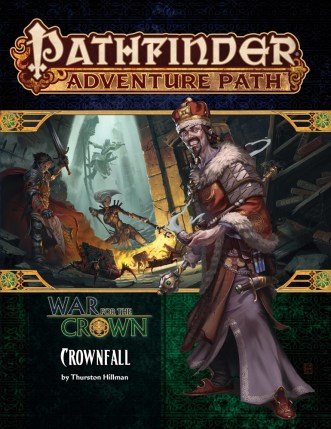
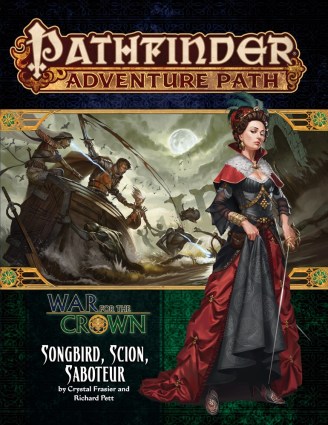



 !
!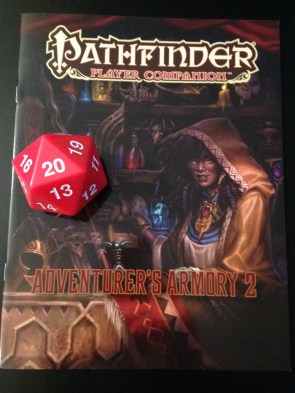
 , which was also released as a Player Companion back in April 2010. As a product from the Player Companion line, it’s a thin, soft-cover book intended for use by players, which clocks in at 32 pages in length. In my opinion, the Adventurer’s Armory was among the most universally useful books in the Player Companion line, so I was thrilled to pick up the sequel.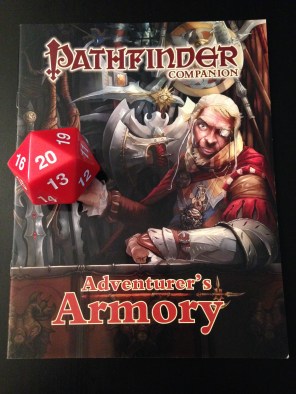
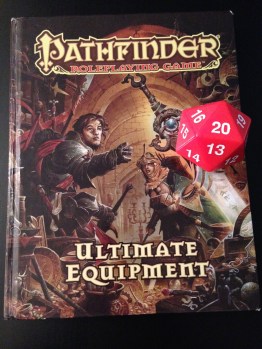

 . But, I also didn’t want to leap right into Starfinder with my own custom adventures. I wanted to try it out as a player first. Obviously, there’s not many options right now. There’s the
  , which looks great, but I didn’t want to lock my family into a long campaign with their first characters. I wanted to do something short. Something that got started right away. That hopped right into the action!
 !
! , Blood of the Beast introduces further information about each race, as well as new favoured class options, archetypes, feats and spells. Most of these options are compatible with other races, which means this book will give you a lot more bang for your buck than expected. Each race contains four pages worth of information, making the entire book 32 pages long.
 , they get even better! If you’re into the Vigilante class, be sure to check out the Obscurity, Brutal Maneuver and Deceitful Trick talents.
 ), is my favourite city in all of Golarion. The nagaji article featured eight favoured class options, two naga bloodlines (one for bloodrager and one for sorcerer), two feats, one archetype, three mesmerist tricks and a whopping five spells. Both of the Naga bloodlines turned out to be interesting, although I liked the sorcerer one slightly more. With the ability to turn invisible, increased effectiveness with charm abilities, and the ability to cast spells with somatic components even when your hands are full by gyrating your body like a snake, this bloodline sounds like a blast! The First Mother’s Fang cavalier archetype allows you to ride a large constrictor snake and allows you to become a master of martial and politic pursuits. Personally, I think it’s the mesmerist abilities that are the coolest part of the nagaji entry. Be sure to check out the feat Venemous Stare, and the trick Break Stupor. For spells, be sure to check out Greater Hypnotism, and all of the Naga Shape spells!
 . Fighter Advanced Weapon Training options are found in
  (but it looks like enough details are presented in this volume for you to get by without it),. Lastly, all of the monk and summoner options require you to make unchained characters with the rules found within
  . To those of us who don’t own these supplementary books, that leaves only the alternate racial traits, favoured class options, and the archetype usable. On the plus side, the Fortune-Finder archetype for rangers is pretty cool. These expert explorers adapt themselves to fight against any enemy in any terrain, and can traverse any terrain, even magically impeding ones, without difficulty.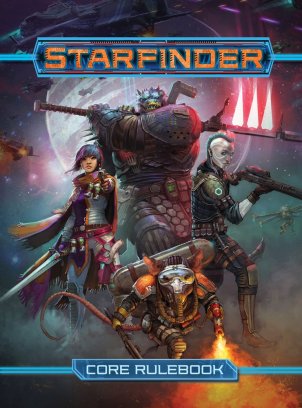
 . This is the book where you’ll find a ton of monsters, new player races and, most importantly, simple rules for making MORE monsters and races. If you’re going to run a game of Starfinder, you NEED the Alien Archive.
 is for you! This book contains details on all of the major planets of the Pact Worlds, new playable races, new themes, new ships, new archetypes, and new gear, spells and feats! In short, despite being a book about the setting of Starfinder, it’s got a ton of new class options for everyone. This book isn’t necessary, but I know I’m DEFINITELY adding it to my collection.
 is a must-have play mat for the Starfinder game.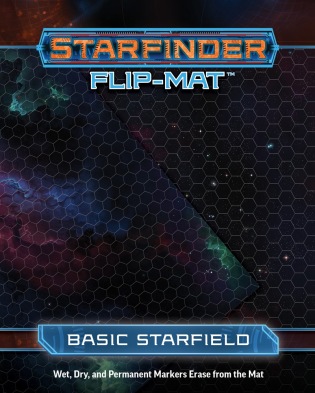
 , is a great choice for a wide variety of terrain types. Starfinder has launched another new basic flip-mat, which is a great addition to your game (and my favourite of the new Starfinder mats),
  . One side is a windswept desert or badlands style terrain, while the other is a metallic, grey terrain type. In addition to basic mats, Starfinder has launched a couple REALLY beautiful flip-mats. In general, although they’re lovely, and easy to use, I tend to stick with the basic mats for budgeting purposes. But if you’re interested, there’s the
  , which features a high-end dance-club scene on one side, and a grungy, dive-bar on the other. The
  features a sleek exploratory starship on one side, and a more utilitarian ship on the other side which would work great as a military ship, a freighter, or a derelict ship. The last map I haven’t been able to find on amazon, which means you’ll have to order direct from Paizo’s website (which if you’re Canadian, like, means the shipping fees are a nightmare). That being said, the

 which comes with a hundred awesome minis perfect for player characters and humanoid enemies, as well as a large assortment of ship pawns. You are going to get a TON of use out of this collection! In addition, I highly recommend the
  from amazon or from Paizo’s website
  (which has gorgeous artwork on one side and a collection of very important information for the GM on the other),
  (which is a very detailed character sheet), and
  (to help make combat organization quicker and easier). But what I’d recommend is the
  , which put all of the conditions in Starfinder on handy cards which can be given out to players, or used by the GM for easy reference. They also feature some snazzy artwork of space goblins on each condition to make them more interesting.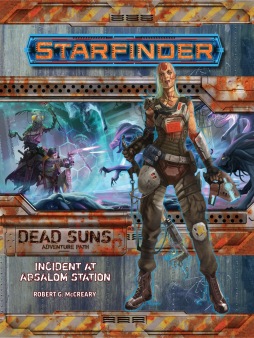
 ,
,  ,
,  ,
,  , and
, and  . From what I’ve read so far of the Adventure Path, it’s great fun.
 , browsed it, desperately wanted to buy it, but put it back because I had NO IDEA what it was. Haha. So, from me to you, Starfinder, THANKS. Countless curious readers will appreciate the overview. I promise.


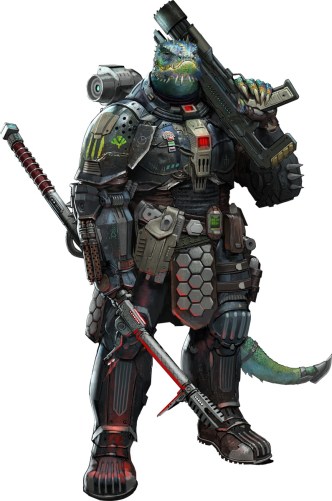


 Presenting, the
 ,
,  and the classic
  .
.

 The Quest for Perfection
 Scenario
 The third adventure we’re taking a look at is the Palace of Plenty, a 3.5 Dungeons and Dragons adventure written to complement the
  book. This adventure was written by Tito Leati, and was published in
  The fourth adventure we’re looking at is
  , a Pathfinder adventure written by Tim Hitchcock and intended for 11th level characters. This adventure brings us back to the Wall of Heaven on the continent of Tian Xia. Here, on the island of Xielan, a prestigious fighting tournament takes place, which allows the winners to claim any one object from the treasury of Hao Jin, the Ruby Pheonix. This tournament attracts combatants from all over the world, including from nations inspired by real-world Japan, China, India and many more. The matches the players are going to engage in are varied, with the terrain often playing an important part in the battles. Some places the players might find themselves fighting in are: flooded mud pools, hot coals, atop multiple towers and rope bridges, and even fighting horizontally on the side of a cliff (literally standing on the cliff face with slippers of spider-climb)! Your players are bound to be continually surprised. In addition to the tournament battles, the players can join in extra matches and challenges. But as the tournament proceeds it becomes clear that something is wrong. From entrants being poisoned and assassins attacking, the players will have to work fast to figure out who’s trying to put an end to the Ruby Pheonix Tournament and stop them, before it’s too late!
 The final adventure we’re talking about today is my very, very favourite.
  by Tito Leati. Now, the Jade Regent is a Pathfinder campaign where the last three books take place in Minkai, Paizo’s Japanese inspired nation in Tian Xia, but volume five of the series is my all time favourite. This adventure was clearly written with such LOVE and RESPECT. It’s honestly astounding how clearly that shows in the final product. But enough about the writing, what about the adventure?!
 d20 Diaries