Today we’re going to take a look at two of the most recent Pathfinder Society Scenarios that are currently available for purchase, and let you know we thought. Although you’ll find references to events in each that I liked or disliked, and comments about specific characters, these scenarios are not explored in detail. It’s not my intention to spoil the events in these scenarios, or give summaries and full reviews, but to share my opinions and provide recommendations. That said, if you want to avoid even minor spoilers then I recommend clicking on a different article. Whether you intend to use them in home games of the Pathfinder Roleplaying Game, sanctioned scenarios for use with the Pathfinder Society Organized Play, or just want to read a nifty new adventure, we’ve got you covered! So let’s get cracking!
Scenario #9-18: Scourge of the Farheavens is a Tier 1-5 adventure written by Jason Owen Black which takes place in Iobaria. For those of you who don’t know, Iobaria is located northeast of Brevoy, just off the map of the Inner Sea. It’s a place they’ve rarely focused on for Pathfinder products. As far as I know the only other adventure that takes place there is Pathfinder Adventure Path 69: Maiden, Mother, Crone (Reign of Winter Part 3 of 6), while Pathfinder Adventure Path 33: The Varnhold Vanishing (Kingmaker Part 3 of 6) features a gazetteer on the region. If you’re curious, check out this nifty map of Iobaria! But, if you want the short, short summary: Iobaria’s cold, sparsely populated, generally ‘uncivilized,’ and prone to devastating plagues. It was once home to a Cyclopian nation, as well as an Ulfen one, and some of its people have ties to old Sarkoris. Sounds fun, right? Right! More specifically, this scenario takes places in an independent city-state called Mishkar, as well as a ruined village in the Norinor Forest. It features creatures from Bestiary 3 and Bestiary 4 (although all of the necessary stat blocks are included within the scenario) and utilizes the Pathfinder Flip-Mat: Bigger Forest, and Pathfinder Map Pack: Ruined Village.
The Pathfinder Society has recently gained access to some old Sarkorian ruins, and wants to get the assistance of Sarkorians (or their descendants) to help them interpret the ruins and culture, before it is lost forever. To that end, the PCs are sent to Mishkar to meet with a refugee by the name of Nelket, whom the Society hopes to ally with. It’s a delightfully fun romp, that has a wide variety of social encounters (some of which could be quite challenging). It gives you a bit of a glimpse into Iobarian culture, but Mishkar didn’t feel very different to me, which is a shame. That minor nitpick aside, I thought it was a great scenario. Now, I ADORE adventures where you get to explore exotic locales, ruins and cultures. So, it should come as no surprise that I loved this scenario. Admittedly, I might be biased. Haha. I give this scenario five out of five stars.
Dolok Darkfur from Pathfinder Society Scenario #9-18: Scourge of the Farheavens. Illustration by Sebastian Rodriguez.Scenario #9-21: In the Grandmaster’s Name, by Jenny Jarzabski
Scenario #9-21: In the Grandmaster’s Name is a Tier 3-7 scenario written by Jenny Jarzabski. It takes place in Druma, and is of particular importance to members of the Grand Lodge Faction. It features enemies from Bestiary 2, Bestiary 4, and the NPC Codex, and uses a single custom map. It features subterfuge, reconnaissance, infiltration, and trickery, so be sure to choose your PC wisely!
Now, it should be noted, that Grandmaster Torch does not appear in this scenario. (I found this very disappointing! Haha.) Instead, the PCs are tasked with impersonating some of his couriers. They must deliver a message to another courier, this one serving two one-time allies turned enemies: Ex-Venture-Captain Thurl, and Pasha Muhlia al-Jakri. If the PCs are successful, the message will (hopefully) cause Thurl and Muhlia to leave their defensible hide-out and move on to a new location, giving the Pathfinder Society the perfect opportunity to strike against them! If you’ve got characters kicking around who have met these characters before, now is definitely the time to bring them out to play! No idea who those two are? Thurl can be found in Scenarios: #2-08: Sarkorian Prophesy, #5-09: The Traitor’s Lodge, #5-24: Assault on the Wound, #5-25: Vengeance at the Sundered Crag, #7-17: Thralls of the Shattered God, #9-06: Shores of Heaven, and the Special: Siege of the Diamond City. As for Muhlia? As the old leader of the Qadiran Faction, she’s been mentioned and featured in a ton of early scenarios, but most notably #2-21: The Dalsine Affair, #6-05: Slave Ships of Absalom, and #6-11: Slave Master’s Mirror. But enough about the past! What’s up with this scenario? In an effort to prevent too many spoilers, I won’t go into detail, but I will mention that it involves Kalistocrats and Blackjackets! Exciting! Finally, the events in this scenario directly lead to another upcoming scenario, #9-25: Betrayal in the Bones, which is a Seeker level mission. All that excitement aside, I found that this scenario fell short of what I expected. In the end, I’m only giving it three out of five stars.
Thanks for joining us today! We’ll see you again soon, when we take a look at the two newest Starfinder Society Scenarios!
Jessica
Kristoff Valicho from #9-21: In the Grandmasters Name. Illustrated by Sebastian Gomez.
Nayeli Rullus from #9-21: In the Grandmasters Name. Illustrated by Sebastian Gomez.
Today we’re going to take a look at one of the most recent Pathfinder Society Scenarios that are currently available for purchase, as well as it’s prequel, and let you know what we thought. Although you’ll find references to events in each that I liked or disliked, and comments about specific characters, these scenarios are not explored in detail. It’s not my intention to spoil the events in these scenarios, or give summaries and full reviews, but to share my opinions and provide recommendations. That said, if you want to avoid even minor spoilers then I recommend clicking on a different article. Whether you intend to use them in home games of the Pathfinder Roleplaying Game, sanctioned scenarios for use with the Pathfinder Society Organized Play, or just want to read a nifty new adventure, we’ve got you covered! So without further ado, let’s get started!
The sigil of the Liberty’s Edge Faction.
Today, both of our scenarios focus on the Liberty’s Edge faction of the Pathfinder Society. This group is run by Major Colson Maldris, and many members are willing to bend and break laws in order to promote freedom throughout Golarion. They tend to utilize diplomacy, sabotage, proselytizing, and trickery to their advantage, and in addition to battling slavers and fighting oppression, they seek to spread hope among the downtrodden, and to inspire others to fight. There’s plenty of Liberty’s Edge related missions out there, but today we’re going to take a look at the brand new Scenario #9-20: Fury of the Final Blade, as well as it’s prequel, Scenario #9-02: A Case of Missing Persons.
As the title so clearly points out, A Case of Missing Persons tasks the PCs with investigating the abduction of a group of missing people. I won’t give away much more about the investigation, as following the clues yourself is one of the best parts of a good mystery, but what I will say is that it involves members of Andoran’s Free People’s Council, and the Grey Gardeners of Galt! This missions requires discretion, intelligence, cunning and inventiveness, so choose your PCs carefully! In addition, the amount of time that passes matters, which always ups the ante a bit. Occasionally this can be a source of distraction, but I found it both well handled and integral to the plot line, so I enjoyed it. The investigation itself was enjoyable. It has plenty of threads to pull at and clues to tie together. I was certainly surprised at certain points, which was fun to see! But, my favourite part of the scenario? The DELIGHTFUL fey encounters. SO GOOD! Overall, I give this scenario four out of five stars.
Scenario #9-20: Fury of the Final Blade is a Tier 7-11 adventure which picks up a few weeks after the end of #9-02: A Case of Missing Persons. The difference in tier means that if you want to play them in close succession you’ll want to start as a level six or seven character. This scenario takes place in Rosehaven and Isarn, both of which are located in the nation of Galt, and tasks the PCs with recusing the missing persons from the previous scenario, as well as the leader of the Liberty’s Edge Faction, Major Colson Maldris himself! This means you’ll have to track down the locations of the prisoners, face of against the Grey Gardeners and enact a daring prison break, all before the prisoners lose their heads to the notorious, soul-stealing guillotines: the Final Blades. Once again, time is of the essence, as the PCs must race against the clock if they’re to have any chance of saving the prisoners. The stakes are very high in this adventure, and failure could mean the beginning of an international incident, and war. In addition, the life of Major Colson Maldris is literally in your hands! Whether he lives or dies is entirely up to your players.
Colson Maldris from #9-20: Fury of the Final Blade. Illustrated by Marko Horvatin.
This scenario features some fun investigation elements, which are adaptable enough to allow all of the different members of the party a chance to shine. The infiltration segment is well created, allowing different groups to use different methods for accessing, and progressing through the location. It also has some very unexpected enemies. But, in my opinion, this scenario’s greatest strength is in it’s dynamic battles. Overall, I really enjoyed this scenario, and give it four out of five stars.
Thanks for joining us today on our foray into the recent events of the Liberty’s Edge Faction! I hope you’ve enjoyed reading about them as much as I have! Tune in later this week for our sneak peek of the other most recent Pathfinder Society Scenario, and both of the brand new Starfinder Society Scenarios!
OutPost marked my first PFS convention. It was also my husband and children’s first foray into play-by-post gaming, and their second adventure in the Pathfinder Society, so it was pretty exciting for us! My husband signed up for one game, while my children each signed up for two. And me? Well, I signed up for a lot. Three for Starfinder and three for Pathfinder. Plus the Solstice Scar Special.
All of the scenarios were a blast, and we had the wonderful luck to play alongside some awesome GMs and players. All told, not counting specials, OutPost hosted fourteen games of Core Pathfinder Society Scenarios, fifty-seven games of Classic/Standard Pathfinder Society scenarios, eleven games of the Pathfinder Adventure Card Game, and twenty-four games of Starfinder. That makes for nearly a hundred games!
So, what did we play?
I’ll tell you!
Black Waters
Glyph of the Open Road, symbol of the Pathfinder Society and the Grand Lodge faction.
My husband, children and I all signed up for an old classic: Scenario #06: Black Waters. From season zero, this adventure is intended for tier 1-2 and 4-5, and was written by Tim and Eileen Connors back before Pathfinder had it’s own rules set. It was being run by one of my favourite GMs I’ve had the pleasure of playing alongside on Paizo’s Messageboards, GM Shieldbug, who gave us a great game. Seriously. It was such a wonderful experience, my kids and husband are now thoroughly spoiled. I warned them after we finished this scenario to lower their expectations for whatever scenario they signed up to next, because not all GMs are as awesome as Shieldbug. They didn’t believe me at the time, but for the record, they do now. If you happen to be lucky enough to join a game he’s running, I highly recommend leaping at the opportunity. You won’t regret it.
Black Waters takes place in the Beldrin’s Bluff district of Absalom. Once a neighbourhood full of the wealthy elite, this area was devastated by an earthquake a decade or so ago, which killed many, and sent an entire chunk of the cliffs the neighbourhood was built upon, tumbling into the sea. Included in this devastation was a school for the city’s elite called the Tri-Towers Yard, which collapsed into an ancient underground necropolis. As the buildings are destroyed, black foul water rose up from below, drowning all those who weren’t crushed. The Tri-Towers yard was sealed up, and no one has been allowed inside–or into the necropolis–since. Lucky for us, the Pathfinders have finally been granted clearance, presuming they treat the site with respect.
My husband played Enzo Jeggare, a well-groomed, Chelaxian nobleman with pale skin, black hair, grey eyes, and a fabulous moustache. He’s a handsome, if lanky, gentleman with a reputation as a philanthropist and a conjurer. He enjoys fine wine, fine company, and ancient magical objects. Enzo is a secretive man, which gives him an air of mystery. Though well-practised in the art of evasion, he’s an awkward liar. He is never without his Devil Deck—a beautifully illustrated harrow deck adorned with images of devils and infernal symbolism—and a worn-out dog figurine that he can occasionally be seen speaking to. Enzo’s an occultist who specializes in conjuring creatures. He used his esteemed family’s political connections to gain membership into the Dark Archive’s faction of the Pathfinders, and is hopeful that handling other objects of power will allow him to access other magical abilities.
My daughter played a two-tailed kitsune druid (saurian shaman) with pink fur and eyes by the name of Bunny Paras. She is always accompanied by her pink and yellow pet parasaurolophus, called Paras, and adores rabbits. She and Paras run a rabbit farm–although they are sold only as pets, and are not for eating! Bunny Paras is a vegetarian, and a good healer. Paras loves to sing and dance, and is very, very loud.
My son is playing Senton, a pale Ulfen ranger better known as Mr. Ice. He is always shivering with cold, and has constantly chattering teeth. He wears warm winter clothes in every weather, including a big furry hat on his head, and a fur cloak and boots. He has a black patch on his cheek from some old frost bite, a big bushy beard, and a full moustache. Under his hat his hair is grey and his eyes are blue. He likes to fight with his short swords and his fine longbow. Senton works on Bunny Paras’ rabbit farm as a guard. He often lays traps to protect the farm.
But, this kooky trio wasn’t the only Pathfinders on the case. I played my wood kineticist, Everbloom, a wild and curious kitsune who grew up alone in the wilds and views life and death as just another fascinating part of existence. Her fur is an orangy-brown, with bits of leaves and flower petals constantly tangled in its length. Everbloom’s easily fascinated by people and places, and just as easily bores of them. More than a little aloof and uncaring, Everbloom comes off as way nicer than she actually is.
The final character was Tera Fosham, a veiled ifrit oracle with clouded vision whose healing touch and blessings were invaluable on this adventure.
Together, these five Pathfinders enjoyed some awesome roleplaying with their venture captain (Drandle Dreng), at a fancy dinner party held alongside Absalom’s nobility, and with the caretaker of the Tri-Towers Yard, who is equal parts sad, deluded, and gifted. Possibly insane. I’ll leave that up for debate! From there they investigated the haunted classrooms, and foul black waters of the estate. Battling off monstrous bugs and undead, they descended into the ancient necropolis to discover its secrets. Along the way, they made some amazing discoveries, and even saved a little girl. The frail–but still alive–Junia Dacilane. Junia reappears a decade down the road in the Pathfinder Society Scenario #7-05: School of Spirits (which is a delight), and can even be found in the Pathfinder Society Pawn Collection, which I only recently discovered and am itching to get my hands on!
Want to follow along with their adventures? Check out the complete gameplay for our group here.
My children were so excited to play in OutPost that they created a second character each for the occasion, a pair of twenty-five year olds who couldn’t be more different. Lady Naysha is an oracle of whimsy who stumbled in the First World through a fairy ring, and came back over a decade later looking like not a day had passed. A few years have passed since then, but she still doesn’t look a day over twelve. Lady Naysha has a child-like enthusiasm and innocence about her. She believes her stuffed rabbit, Miss Whiskers, is the source of her powers (which is entirely false, by the way), and can all upon her fairy friend to play tricks on her enemies. Contrariwise, my son made a paladin of Iomedae who is brave, bold and true! Unfortunately, he died fighting in the Worldwound. Iomedae took pity on him and granted him a second life, but he was reincarnated as an old man, with horrible memory problems. Unable to even remember his name, he calls himself Fuzzzy, and he relies on his pet owl, Bobby, to keep him on track. For full details on my Lady Naysha and Fuzzzy, check out my blog post OutPost Commences.
I joined them, with my dwarven fighter, Juno Berik, a self-centred woman who believes she’s far more important than she’s given credit for. Together with some other quirky characters, they entered a complicated maze underneath Absalom City to search for a lost minotaur prince, Nuar Spiritskin, in another classic PFS Scenario, #45: Delirium’s Tangle. This is a tier 1-5 scenario written by Crystal Frasier. Personally, I find this is a difficult scenario to run by play-by-post, as navigating a maze is always tricky in person, never mind over message boards. When it could take an entire day for a team to roll a single perception or survival check–which could be done in seconds in person–there’s a high probability the game will get bogged down. Fortunately, our GM was wonderful at streamlining the navigation process. In fact, this scenario finished first out of all the games I played! As poor navigators, the sheer number of pit traps we endured (and by endured I mean fell into over and over again) was painful (literally), and has left permanent mental scarring on Juno. Fuzzzy was also traumatized by the event–for about a minute before he promptly forgot about it. The fights and secret chambers were interesting, and left my kids hungry for more information on the maze and its connecting chambers. The final battle was interesting, as was the wrap-up roleplaying. All in all, we had a lot of fun, although this one certainly left a lot of unanswered questions.
You can read our complete gameplay experience here, if you’re interested.
In the time since, Lady Naysha’s begun Scenario #5-08: The Confirmation, alongside my husband’s character, Toban Tangletop (check out the ongoing gameplay here). Fuzzzy’s moved on to combat the Master of the Fallen Fortress (a free download on Paizo’s website, by the way) and rescue a lost Pathfinder (check out the ongoing gameplay here). And, Juno’s decided to tell the Aspis Consortium where to shove it, in Scenario #4-07: Severing Ties. Currently being as boorish and mean as she can be, she’s in Riddleport, happily dragging the Aspis Consortium’s name through the mud. This scenario’s about to begin a two-week break while some of the participants go on vacation, but you can check out it’s progress so far, here.
The Unseen Inclusion
Symbol of the Scarab Sages, a faction of the Pathfinder Society.
I was positively thrilled to bring my beloved half-orc monk, Kenza Bloodborn, through Scenario #9-04: The Unseen Inclusion. Why? Well, as a member of the Scarab Sages, whose faction stories have come to an end, I wanted to see my stoic warrior tackle a Scarab Sage-centric mission. Taking place in the Thuvian city of Merab, Kenza delved into haunted ruins on the hunt for a mysterious spirit that even now seeks her master’s jewels… Part dungeon delve and part investigation, I had no idea what to expect with this scenario when I signed up for it, but I ended up having a blast. She had plenty of opportunities to hurl herself into danger to protect her allies, and nearly died on more than one occasion. You can check out the complete gamplay here.
In the time since, Kenza’s journeyed to Absalom for the first time, in order to pay her respect to the centre of her order. There, she’s been called on by Venture Captain Drandle Dreng, on a mission of great importance… Fetching him a bottle of wine. Fortunately, this mission is a lot more than it seems at first, leading the group through hidden chambers, abandoned homes, conspiracies and secrets, and even into Absalom’s Temple of the Fallen. That’s right, she’s playing through a super quick run of Scenario #6-10: The Wounded Wisp. Check out her adventure so far, here.
Yesteryear’s Truth
But not everything’s about Pathfinder! I’m also involved in three wonderful Starfinder Society Scenarios. My primary SFS character, a bold, boastful vesk solarion with far more brawn than brains by the name of Julakesh Starfist participated in Scenario #1-03: Yesteryear’s Truth. We’ve already spoken about Julakesh earlier this week, but if you’ve missed it, check out my blog post Competitions and Compliments. If you’re interested in reading Julakesh’s experiences in Yesteryear’s Truth, the complete gameplay if found here. Want a summary? She discovered a new planet, engaged in amazing battles, attempted to befriend the planet’s natives, and made a lot of people laugh! Seriously, a ton of fun. Speaking of fun, Julakesh recently began a new adventure that’s tailor made for her: Scenario #1-07: The Solar Sortie. Or, it’s half made for her, anyway… Sent to retrieve information from a corporation that orbits the Sun, Julakesh gets to begin this infiltration by impersonating a gladiator! This pretty much consists of her being herself, in front of a large adoring crowd. Awesome! And all that other subtle espionage stuff? Well…. we’ll cross that bridge up (and mess it up horribly) when we get to it! Check out the start of out adventures, here! It’s been a ton of fun so far (and it’s only just begun).
Fugitive on the Red Planet
I also used OutPost as an opportunity to try out two Starfinder classes I had yet to have a chance to test. Firstly, I created a proud, smooth-talking ysoki xenoseeker envoy by the name of Aurora Vim (Rora, for short) who was tasked with finding a rogue Starfinder and retrieving an powerful object he stole from the Society in Scenario #1-02: Fugitive on the Red Planet. Her adventures took her to the grungy planet of Akiton alongside a haan, a human, and a whopping three other ysoki! Apparently those furry little fellows are popular! All in all this scenario was a lot of fun, and Rora really had a chance to shine throughout its length. It was completed quite quickly, and was hosted by a wonderfully humorous GM. You can check out the complete gameplay here.
Following her adventures on Akiton, Rora hopped a shuttle back to Absalom Station, where she’s been invited to attend a gala in honour of the First Seeker, Luwazi Elsebo. Scenario #1-05: First Mandate is right up her alley, and has seen her wheeling and dealing with a bunch of movers and shakers–including Zo!, who I’ve been dying for her to meet! This scenario is reaching its climax, but you can check out its progress so far, here.
Cries from the Drift
I also made a curious but awkward shirrin spacefarer operative, Zez’ka, who is prone to announcing her emotions to the world. She’s friendly, but super awkward, and honestly a blast to play. Unfortunately, Scenario #1-04: Cries from the Drift, is a horror scenario, which tossed my chipper shirren into the most traumatizing, suspenseful, and gory Starfinder Scenario to date. This adventure particularly benefits from having the element of surprise, so I won’t mention much more in the way of spoilers. What I will say is that if you’re uncomfortable with body horror, don’t play it. That being said, when played by play-by-post the suspense is lost, so it turned out to be a fun, romp despite the tone. For those of you who aren’t afraid of spoilers, our complete gameplay can be read here. In the time since, Zez’ka has joined a delightfully fun and carefree mission, which won’t possibly be as traumatizing for her as her previous one was! Right? Right…? Wrong. She’s currently engaged in Starfinder’s second horror scenario, Scenario #1-10: The Half-Alive Streets, which amuses me to no end. She’s currently oblivious to the dark turn this scenario’s going to take, and is currently having great fun making friends and shopping. You can check it out here.
The end to these Starfinder scenarios will mark the sixth games I’ve played in the SFS, which means I’ve reach a milestone on my Alien Archive Boon. No idea what that means?
For every Starfinder Society game you participate in as a player (not a GM) you can get your GM to sign your boon sheet, which is available here. When you have six games played you can apply this sheet to a new character to make them either a wrikreechee, or a ryphorian. Or, you can wait until you have twelve games played, and then apply it to a new character to make them a barathu. After applying it you can start a new boon, and begin earning new plays. Note, that there is a time limit on earning credit for this boon. After June 14th of this year they’ll be releasing a new boon in its place, which will let you unlock other races for play.
Now, of the current options, I think I’d get a kick out of a Barathu, but I won’t have a chance to earn that bad boy. I’ll be hitting six, which leaves the wrikreechee and ryphorians. And for me, the choice is clear! Ryphorians! I have honestly no idea what I’m going to make for her class, but its definitely going to be different than the others I’ve got! Soldier, perhaps? That’s a question for another day!
And that’s it!
OutPost and its associated adventures have come to an end–for this year. But, there’s plenty more adventures out there waiting to be played!
We’ve been looking at a lot of Starfinder products lately, but today we’re changing gears. I recently got my hands on Pathfinder Player Companion: Disciple’s Doctrine, so today, we’re going to take a look at what’s inside.
Disciple’s Doctrine is a soft cover book that is 32 pages in length. Like the other ‘Faith’ books before it (Faiths of Balance, Faiths of Purity, Faiths of Corruption, Faiths & Philosophies, etc.), this book takes a look at a dozen complex philosophies that are found throughout Golarion. As a book in the Player Companion line, it’s aimed at players, which means that you won’t find any great secrets of the order explained in this book. What you will get is spoiler-free information about each of the disciplines inside, including what the discipline’s about, how its organized, and what’s expected of its members. In addition, you’ll find some new player options related to each discipline, typically spells and character archetypes.
Disciple’s Doctrine features awesome cover art by Setiawan Fajareka, and features the Iconic Psychic Rivani, and the Iconic Slayer Zadim, facing off against a devourer. The inside front cover compiles information on each of the disciplines inside the book. Each has some iconography to represent it, and a few sentences describing it in an abbreviated fashion. So what’s in the book, exactly? The Concordance of Elements, Cults of the Failed, Esoteric Order of the Palatine Eye, Harbringers of Fate, Hellknights of the Godclaw, Magnimarian Mystery Cults, Oracular Council of Po Li, Prophecies of Kalistrade, Razmir the Living God, Sangpotshi, Shoanti Shamanic Traditions and Tamashigo. It’s quite an array! Some of them are expected–for example, I was well aware that the Oracular Council and the Prophesies of Kalistrade would get some attention in this book, but others are a surprise. I had honestly no idea that the Concordance of Elements would be featured in this book! I’m a huge fan of them in the Pathfinder Society Organized Play, so I’m thrilled to get a bit more background for this group. I was also super excited about getting to learn about the Hellknights of the Godclaw and the Cults of the Failed. A few of the other disciplines I’ve read about before, so I wasn’t entirely sure how much new information would be presented here on them. The Esoteric Order of the Palatine Eye, for example, although mysterious to most is featured in the Carrion Crown Adventure Path–which I’m currently running for my children. (Yes, that’s a horror campaign, and yes, my children are very young. They love it, I swear! Haha! More details on that in the future!). The Shoanti Shamanic Traditions are another example of this. I LOVE them, I cannot emphasize that enough, but they were already covered in depth during the Curse of the Crimson Throne Adventure Path (which I played through with a wonderful group of players back when it was new). Still, I was hopeful that the player focus of this book would bring something new to the table.
Up next is the table of contents, followed by the introduction. Here you’ll find some flavourful information about what’s inside the book–and what the difference is between a religion and a discipline or a philosophy. Of more interest to most players is the Rules Index, which is a handy list of all of the archetypes, traits and other rules option found in this book, with page numbers for reference. There’s also a series of six new traits focused on some of the traditions found in this book. Five are faith traits, with one a social trait. Of those, one is very focused on a specific tradition (Dogged, which is for members of the Cult of the Failed), while the others are more broad. They’re not amazing traits, and you’re certainly not going to wish you could take them with every character, but they’re thematic, and I really like them. I think that Heretic’s Caution, which gives you a bonus on bluff checks that gets better against religious figures, is going to see the most use, followed by Self-Sustaining, which grants you a 0-level spell once per day as a spell-like ability (from a small selection).
Past the introduction we enter the bulk of the book: the disciplines. Each one has two facing pages devoted to it, with approximately one page being information about the group, and one page being player options (although there is variance in these lengths).
The Concordance of Elements
Concordance of Elements is up first and, as previously mentioned, I was super excited for it! The Concordance of Elements is a planes-spanning organization whose goal is to preserve balance between the elemental forces of the world (air, earth, fire and water). They can act as diplomats and impartial investigators amongst the elemental planes, and also work to stop planar disturbances, planar portals and powerful magic from messing the world up. The information presented on the Concordance is all quite useful and interesting, and contained different information than that which can be found in the Pathfinder Society Roleplaying Guild Guide. In addition to general organizational information, we get to learn about the role that Concordance Agents play within the group, and how the group as a whole interacts with other organizations and religions.
As for character options, we’re treated to two archetypes and a combat style. The first is the Elemental Monk, which is a monk archetype I can’t wait to try. It’s definitely one of my favourite archetypes in the entire book! For starters, they must be true neutral, and instead of gaining stunning fist and bonus feats they gain the feat elemental fist with one special alteration: they don’t select one element for use with this feat. Instead, they select what element they want whenever they use the feat, which makes them super adaptable. At second level they gain the ability to enter any of the five genie fighting styles as a swift action, chosen each time they activate the ability. At low levels this grants them the basic fighting style feat, but as they increase in level they gain access to the more advanced fighting style options automatically. This is super cool! I’ve been a fan of style feats for a while, but they’re such a big feat investment for very specific circumstances that I’ve never really had the opportunity to make good use of them. I’m thrilled that this archetype give us a chance! There’s other abilities the elemental monk gets, but I won’t go into any more depth on it than I already have. Just know: I love this one. I want to make one. Heck, I might go make one right now. The second archetype is the Elemental Envoy for rangers, which is quite thematic and cool, but very focused. Lastly, we’re treated to the elemental combat style for rangers, which offers some quirky feat choices for a combat style. Overall, I really enjoyed getting to take a look at the Concordance of Elements. It’s one of my favourite entries in the book.
Up next is the Cults of the Failed, a group of people who pay homage to those brave souls who have attempted to achieve godhood through the Test of the Starstone and failed. They venerate, honour, and learn from these deceased mortal heroes lives, and trials. They maintain a spartan temple in Absalom which is more of a solemn memorial than anything, and have no holy texts, or official clergy. Now, having played through Pathfinder Society Scenario #6-10: The Wounded Wisp, I know a tiny bit about the Cults of the Failed, which made me very curious to hear more. The information was definitely intriguing, and I was pleasantly surprised. For character options, we get a single medium archetype: Vessel of the Failed. Now, although I love the flavour of this archetype, it’s not really my cup of tea. As previously mentioned in other blog posts, the medium is my least liked class, so it takes a lot to get me interested in a medium archetype enough to make me want to actually make one. It’s not impossible, as I learned when we took a look atBlood of the Beast, but it is hard, and this one didn’t really do it for me. Still, I was intrigued enough with the group to start thinking of other things I wanted to do with the them, which is a win in my book!
Next we come to the Esoteric Order of the Palatine Eye. This elite secret society is heavily influenced by Osirion mysticism, Varisian occult traditions, and Pharasmin beliefs, which they have fused into a strange amalgam in order to achieve wisdom, enlightenment and an understanding of the occult. Based in Ustalav, this group has far reaching influence, and hidden agents throughout the world. As previously mentioned, this group is featured in the Carrion Crown Adventure Path, and an in-depth article aimed at GMs can found in Carrion Crown: Part 2: Trial of the Beast. That means that I was coming to the table with a lot of information in hand. I found that although the information on the Order inside this book didn’t offer me anything new, it was interesting, well-written and (very importantly) geared towards players, meaning the group is now accessible to a much wider audience without giving away the group’s secrets and too much history. I really enjoyed it. As for player options, there’s one archetype offered for my favourite class, the occultist, which I loved. The Esoteric Initiate focuses his studies on objects of antiquity related specifically to his Order’s teachings. Their symbolism ability is particularly interesting. There’s also a few new magus arcana which are super useful, my favourite of which is Book-Bound.
The Harbringers of Fate are up next, and I can honestly say I had no idea what these guys were about when I opened this book. And now? It think they’re cool! In short, they believe that Aroden can be ushered back into the world if the prophecies in his holy text are be made real. They gather information and attempt to manipulate events in order to bring about such prophecies. Apparently the group was recently splintered into three differing opinions, all of which are pretty interesting. Now, there’s not too much information on the Harbingers themselves, with one half of a single page devoted to information about their order, while the rest of the two pages consists of player options. We get a new Prophesy School (a focused arcane school for wizards) which I really enjoyed, and three new thematic spells, including one enchantment (debilitating speech), and two divinations (fortune’s path and prophetic lore). Although nice options, I wish there was a big more useful information on the group itself.
The five faiths of the Godclaw
Then we come to The Hellknights of the Godclaw! Now, I was intrigued with these guys from the moment I first read about them on the front inside cover. They’re Hellknights, obviously, but they don’t exclusively worship Asmodeus or Hell. Instead, they worship a collection of five lawful deities–Abadar, Asmodeus, Iomedae, Irori, and Torag–believing that all five work together to put an end to chaos. Abadar is the keeper of laws, Asmodeus is the strategist, Iomedae is the perfect offensive combatant, Irori is disciplined, and Torag is the perfect defensive combatant. Together, they are the Godclaw. Now, obviously, this is super heretical to all five of those faiths, but these guys? They don’t care! Their quirky, super oppressive dogma collects the lawful aspects of those deities, and smushes them together into one religion, playing it off like these five are good pals who happen to work together to obliterate disorder in their off-time. Like some weird, super, adventuring party. I cannot express how much I love it! Haha. Suffice to say as far as information goes, I’m sold! But what about character options? I loved that too! In fact, this whole section is right up in there among my favourite parts of the book. First, we’ve got the Fist of the Godclaw, which is an archetype for war priests that sounds like a ton of fun. Because it’s so focused on defeating chaos, it’s quite specific in terms of usage. It’s not one of those universally awesome archetypes you’ll always want to add to your character, but it’s cool and I love it. Also? It’d be particularly useful in the Wrath of the Righteous Adventure Path, as well as the Second Darkness Adventure Path (to a lesser extent). After this we’ve got a new war priest blessing: Godclaw, which is useful and quirky. And lastly we’ve got four new spells called litanies, which are each activated as either an immediate or a swift action, and are for inquisitors, paladins and on occasion even antipaladins. You should really check these awesome spells out! All in all, I highly recommend you give this part of the book a read!
Up next is the Magnimarian Mystery Cults. Now, this entry isn’t really a unified group or religion. It’s a lot of religions, all focused on the worship of little known empyreal lords. These demigods are worshipped in private or in small groups, at personal shrines or sacred monuments. Typically, these beliefs are passed down through the generations. They are particularly prominent in and around the Varisian city of Magnimar, where they have been worshipped since before the city was founded. The most commonly worshipped empyreal lords in Magnimar are Arshea (the Spirit of Abandon), Ashava (The True Spark), Ragathiel (General of Vengeance), Sinashakti (The Immaculate Joy), Soralyon (The Mystic Angel) and Ylimancha (Harborwing). There’s a ton of information on these Empyreal Lords (and a lot more!), mystery cults, and the Mystery Cultist prestige class in Pathfinder Campaign Setting: Chronicle of the Righteous, but this entry contains just enough information to whet your appetite for more, and to briefly describe (just a few sentences) each of the most common empyreal lords in Magnimar. After this it moves right onto a new cavalier order, Order of the Monument. I think this Order is very cool and useful, but not suitable for all campaigns. This order requires that you select a single city or settlement to protect. You don’t need to stay in that city all the time, but it’s pretty hard to justify somehow protecting your city when you haven’t been there in a long time. So, although this would be an awesome Order to play in plenty of Adventure Paths and modules (including Curse of the Crimson Throne, Kingmaker, Hell’s Vengeance, Ironfang Invasion, Ruins of Azlant, The Dragon’s Demand and even the Crown of the Kobold King series of adventures), there’s a lot of other Adventure Paths and Modules where it wouldn’t be thematically appropriate. After this nifty new Order we get a Variant Channeling ability for each of the mentioned empyreal lords, which can also be chosen by clerics who worship deities with the same portfolios. These variant channeling abilities include Duty, Flying, Journeys, Moonlight, Monuments and Sexuality. Personally, I like the moonlight and monuments abilities best, but I’d be curious to see what everyone else thinks.
And that brings us to the Oracular Council. Located in the nation of Po Li where divine magic is revered, but worshipping the gods is forbidden, the Oracular Council uses advanced mathematics and a wide variety of divinations to foretell the future and govern their nation. In addition to information about the group itself, there’s also details on initiation and membership with the Oracular Council, as well as details on what it’s like working for the Council. Although this entry wasn’t my favourite, they did a great job of presenting thorough, but not overwhelming, details on this group. I really liked it. After this is the Divine Numerologist, which is an oracle archetype that’s pretty neat. This archetype is compatible with any mystery, and replaces the 10th, 12th, 14th, 16th, and 18th level bonus spells with divination themed ones. But, it’s the two unique revelations that really make this archetype shine. The first is Calculate the Odds, which must be taken at 1st level, and allows your character to quickly use numerology to grant herself a bonus on her next d20 roll equal to her Charisma bonus. Very cool, but I wish you could use it more often (it’s usable once per day at 1st level, twice at 7th, and three times at 15th). The second unique revelation is Program the Divine Algorithm, which you must take at 7th level, and lets you choose to take the average of a single or set of die rolls instead of rolling (so a 10 on a d20 or three 3s if rolling 3d6). All of your regular modifiers are then added as normal. The final revelation makes your character immune to aging, and allows a critical threat rolled within 30 feet of you by an ally to automatically confirm once a day. Neat. But, that’s not all this entry has to offer. There’s also five new numerology themed investigator talents, the coolest of which is Greater Numerical Alchemy. Definitely check it out!
Iconography of the Prophecies of Kalistrade
Up next is the article I was the most excited to read about when I learned about this book: The Prophecies of Kalistrade. Now, I knew of the prophecies, and I knew that Prophets of Kalistrade were full of themselves and interested in amassing wealth. I also know that they wore long white gloves so they’d never have to come sully themselves via contact with someone not of their faith. But, I didn’t know much more than that. They have weird taboos, but I didn’t know what they were, and they wear a lot of white and gold. Voila! I know, Ygritte, I know nothing. Which is why I was hoping I would learn something more concrete about their group in this book. There was plenty of information in here, but at the end of it, I still don’t fell like I’ve got a handle on them. Maybe it’s me. I have a feeling I might ‘get’ them more if I just made a Kalistocrat and played them. Still, info aside, these guys have some awesome player options. First up is a new psychic discipline: Superiority, which focuses on the Kalistocrats absolute confidence in themselves, disdain for touching the unworthy, and their greed. The Magical Hoarder ability is particularly cool! I definitely recommend checking this one out if you’re going to make anyone who’s particularly proud or self-centred. It’s pretty awesome! There’s also three new spells, fastidiousness (which keeps you perpetually clean), hallucinatory decor (which lets you change the way things appear so they meet your high standards), and unflappable mein (which tries to stop others from touching you, and can harm them if they try). I’m not going to lie, my next bard is definitely taking fastidiousness! Haha.
A mask worn by followers of Razmir, the Living God.
Following the self-centred Kalistocrats is a guy who takes ‘self-centred’ to a whole new level: Razmir, the Living God. Now, I love to hate these guys. In everything I’ve seen Razmirans used, they’re the villain. The wonderful modules Masks of the Living God and City of Golden Death are particularly good examples of this. But, that doesn’t mean that’s all these cultists are. An entire nation worships Razmir, and most of those people are just trying to get by. They’re normal. So, I love that this is an article that aimed at them. We get some information about Razmir himself, reasons that outsiders might say he’s not a ‘real’ god but a charlatan, reasons that believers refute those claims, and reasonings behind Razmir’s teachings. There’s information on a priest’s role, and Razmir’s interactions with other religions. All of this was really helpful, and I feel like it gave me a much better understanding for them as a group. I definitely want to make a worshipper of Razmir now, which isn’t something I’ve never wanted to do before. After all this information we get to an archetype for the ninja. Yeah, when does that ever happen, right? Well, wait no longer! This ninja archetype is called Mask of the Living God, and it’s pretty awesome. Of course, it’s also intrinsically tied to the Razmiran faith, so it’s not very adaptable. After this there’s four new arcanist exploits, my favourite of which is Mending Flesh, and a single greater exploit which is pretty nifty, Convert Wand. All of the arcanist options are worth a read.
Next we have the philosophy of Sangpotshi, which is the concept that our souls are reincarnated after death into a form based upon our deeds and worthiness from our previous lives, until we eventually achieve the honour of breaking the cycle and resting in Pharasama’s Boneyard. It’s a mix of the concepts of reincarnation, karma and fate, all rolled into one. This philosophy is incredibly prevalent in Tian Xia, and is compatible with many different religions. Most of the information presented on it involves the role of a believer to the, and their relationships with other religions. There’s a spiritualist archetype up for offer, called the Seeker of Enlightenment, which I thought I would like more than I did. I think my favourite ability it offered was Words of the Past, which lets you cast comprehend languages at will as a spell-like ability. There’s also some options for vigilantes, including two social talents and three vigilante talents. My favourites were Ancestral Enlightenment, Magical Familiarity and Weapon Familiarity.
Which brings us to the Shoanti Shamanic Traditions. Now, as mentioned, I LOVE, LOVE, LOVE the Shoanti peoples and their culture. But, I’ve also read a lot about them already. So, as much as I was hoping there’d be new information on them for me to drool over, I wasn’t sure what I’d be getting. Unfortunately, I didn’t find any new information about their traditions in this volume. However, for those of use who don’t own the original Curse of the Crimson Throne Adventure Path, The Inner Sea World Guide, or Varisia, Birthplace of Legends, this is a great way to explore the awesomeness that is the Shoanti. The character options were quite exciting, though. The Totem Channeler is a fun looking skald archetype, while the faith trait Aspect of the Quah, allows hunters to replace one of their animal aspects with a new aspect related to a Shoanti’s quah (tribe). Shiny!
The last discipline we’re looking at in this book is Tamashigo, which is a philosophy that teaches that every part of nature has a soul and a spirit, and that these spirits must be treated with honour and respect, for their whims shape the world. This is most common in Tian Xia (which is where it is known as Tamashigo), but this philosophy can also be found in many other cultures of the Inner Sea, from Kellid tribes, to the Shoanti Quahs, and beyond. Much like Sangpotshi, this philosophy is compatible with nearly any religion, and can be used for characters of a variety of faiths. After this there’s a cool Samurai archetype, called the Ward Speaker, which honours the kami (more information on Kami can be found in Bestiary 3 or the Jade Regent Adventure Path). There are also two new bardic masterpieces, which are neat. I especially like Kaminari Drums, which allows percussionists to call lightning down from the sky.
Although that brings us to the last of the disciplines explored in Disciple’s Doctrine, this isn’t the end of the book. There’s a little bit left: a chapter called Tools of the Faith, which features three pages of mundane and magical equipment for characters to purchase, followed by two occult rituals. I particularly enjoyed the Godstar, and the Lantern of the Four Elements. The Echo of Divinity’s Promise was also cool, but too expensive. As for the occult rituals, check out the Song of the Kami’s Gift!
And that brings us to the end of Disciple’s Doctrine. This was a really good book, and I rather enjoyed it. My favourite entries were on the Concordance of Elements, The Cults of the Failed, the Hellknights of the Godclaw, and Razmir the Living God. As for character options, it’s the elemental monk archetype, the superiority psychic discipline, the arcanist exploits, and the hellknight litanies that I’m going to make the most use of.
Have your own copy of Disciple’s Doctrine? Let us know your favourite parts in the comments!
Today we’re going to take a look at the two most recent Starfinder Society Scenarios that are currently available for purchase, and let you know we thought. Although you’ll find references to events in each that I liked or disliked, and comments about specific characters, these scenarios are not explored in detail. It’s not my intention to spoil the events in these scenarios, or give summaries and full reviews, but to share my opinions and provide recommendations. That said, if you want to avoid even minor spoilers I recommend you check out a different article. Whether you intend to use them in home games of the Starfinder Roleplaying Game, sanctioned scenarios for use with the Starfinder Society Organized Play, or just want to read a nifty new adventure, we’ve got you covered! So sit back, and get ready to explore the Pact Worlds!
Scenario # 1-12: Ashes of Discovery is a Tier 1-4 adventure which takes place on an abandoned outpost in Near Space. It has the repeatable tag and features starship combat. As a repeatable scenario, this adventure can be played once with every character (as opposed to once per player), which is AWESOME and makes it easier to get some much needed experience for low level characters. In addition, it features randomized mechanical and story elements, which means that each time you play it will be slightly (or very) different. These randomized elements include what special abilities the enemies have, the atmosphere of the planet, attitudes and cultural quirks of the locals, what corporation the colony once belonged to, and much, much more. I was super impressed with how completely these randomized elements could change the scenario. I fully intend to play this one through with every character I ever make for SFS play. The only difficulty? With a scenario this randomized it’s really up to the GM to sell the environments, characters, and atmosphere. With a GM not willing to put their all into running this delightful scenario, it could fall flat.
So what’s this scenario about? Recently a corporation discovered records of a long abandoned outpost they haven’t had contact with in centuries. They’ve hired to Starfinders to head on down to the planet–cleverly named Colony-753–and have a look see. Your Starfinder will get to explore an unknown planet, deal with hazards and wildlife, befriend the locals and survive a bit of wild weather. Basically, this scenario is a wonderful example of what being a Starfinder is all about! It features Guidance, an AI created from the memories and knowledge of previous Starfinders. Unlike the other repeatable scenario (#1-01: The Commencement, which also happens to be Guidance’s first appearance), this one really lived up to my expectations. It was wonderful. Overall, I highly recommend Ashes of Discovery. I give it five out of five stars.
Besmaran whelp from SFS #1-12: Ashes of Discovery. Art courtesy of Paizo Inc.
Scenario #1-13: On the Trail of History is a Tier 3-6 adventure which takes place on an unchartered planet in the Vast known as Icefront, or Izalraan to the natives. It has the Faction (Second Seekers [Luwazi Elsebo] scenario tag and features starship combat. In addition to being of great importance to the Second Seekers (Luwazi Elsebo) faction, this scenario also contributes to the ongoing year of the Scoured Stars storyline. Following a lead discovered in Scenario #1-11: In Pursuit of the Scoured Past, First Seeker Elsebo sends the Starfinders on an expedition to a planet that could have a connection to the Scoured Stars incident. Tasked with finding out whatever they can about the planet, and a relic believed to have landed there, the group must deal with a strange environment, and dangerous locals. Unlike similar scenarios, this adventure features a whole lot more than you’d expect, the mysterious introduction of what’s sure to be an important part of the Scoured Stars plot line, and some delightful moral dilemmas. Those of you who have played through #1-05: The First Mandate, will find that one of your boons might earn you an extra hint or two. Overall, this was an awesome scenario, that was very different from those that have come before. I give it five out of five stars.
A mysterious ship… Art courtesy of Paizo Inc.A Starfinder Society Agent from the Starfinder Society Guild Guide. Art Courtesy of Paizo Inc.
And that’s all for today! Thanks for joining us on our exploration of the wonderful new scenario’s available this month. I hope you’ve enjoyed reading about them as much as I have. Both scenarios look like a ton of fun, and I can’t wait until I have a chance to run them for my family, or play them myself. My son’s been super curious about the mystery of the Scoured Stars incident, so I can’t wait to tell him about what’s waiting for him down the line.
Today on d20diaries we’re going to take a look at an awesome supplement book for the Starfinder Roleplaying Game, the Alien Archive! This book has a hardcover, and clocks in at 159 pages. It’s got an American cover price of $39.99, which means that if you’re Canadian (like myself), you’re looking at a cost of around forty-five to fifty dollars for the book online, or up to sixty in your local game store. There’s a sequel in the works, Starfinder Roleplaying Game: Alien Archive 2, which is due out in October, though I’ve heard little more than that about it.
At it’s core, Starfinder Roleplaying Game: Alien Archive is a book of monsters. Like Pathfinder Roleplaying Game: Bestiary, you’ll find a ton of monsters to fight and ally with inside this book, as well as some new player races. With that being said, there are a lot of differences between the Alien Archive and the many Bestiaries available for the Pathfinder Roleplaying Game. For starters, it’s shorter, with a typical Bestiary being around 325 pages in length, compared to the Alien Archive’s 159 pages. But, that’s only scratching the surface. The Alien Archive is also easier to use, and much more adaptable, than any Bestiary I’ve ever read. So, without further ado, let’s get started!
The Alien Archive features lovely cover art by Remko Troost, which shows off some of my favourite creatures inside the book–the dragonkin and the skittermander–as well as a robot. The inside front and back covers feature an image of the Pact Worlds, although it’s faded looking, instead of shiny and bright. After that we come to the table of contents.
The Alien Archive has sixty distinct monster entries inside it, many of which have more than one stat block or variation of that creature, making the actual number of foes inside larger than it seems (around ninety four). Of these, twenty-two are playable as character races. Each of these player races is differentiated from the other entries by a star beside their name, which is really useful for quickly referencing player options.
Combatant icon, which denotes creatures that excel in physical combat.
After the table of contents we reach the introduction. This is where we learn how the races are oriented, and how to read a stat block. While most of this is basic information that only a player new to d20 games with need to read, some of the information is quite important.
For starters, each of the stat blocks inside the Alien Archive is sorted into one of three categories: combatants (which excels in physical combat), experts (who are most effective with skills), and spellcasters (who rely on spells or spell-like abilities). These categories are represented by an icon in the left margin. These images are easy to distinguish and provide a quick and easy way for GMs to realize the role each monster plays in combat, which makes it super easy to find the type of creatures your looking for, or to quickly discern a creature’s tactics.
Expert icon, which denotes creatures that rely upon their skills in combat.
There’s also a few interesting things to note about the stat blocks themselves. Very few of the creatures inside have Resolve Points and none have Stamina Points. A creatures ability scores aren’t listed, instead, their stats show their ability modifiers. This is a simple change that will make it easier for GMs–especially new GMs–to handle unexpected situations (like unlisted skill checks) in combat. Not all of a creatures feats are listed in their entry. Instead, only feats that grant new combat options will be shown. Feats that grant static bonuses (like improved initiative, or skill focus) are already factored into the stat block and will not be listed anywhere at all. This really streamlines the stat blocks, and makes it easier to find important information fast. Similarly, not all of a creature or NPCs spells will be listed in a stat block. Instead, it only features their most powerful spellcasting options.
Spellcaster icon, which denotes creatures who utilize spells and spell-like abilities during combat.
In addition to information provided in this chapter, I’d like to point out a few other things of note. Every one of the bestiary entries in this book is two side-by-side pages long. These entries include information on the creature, where they’re found, their use throughout the Pact Worlds, and their society–if they have one. Many of the entries include more than one stat block on a theme. For example, the Aeon Guard entry gives us stats for a CR 3 rank and file soldier, along with a CR 7 specialist, capable of working without support for weeks and months at a time. Similarly, the apari entry features the both the hive-like apari, and it’s tiny, bug-like constituents. Some entries include many stat-blocks, or simple grafts that can be added to a featured creature to make it into other versions. Examples of this include elementals, which are statted out by size and have grafts which apply the elemental abilities themselves (including air, earth, fire and water), and dragons, which have one age category statted out, rules for making other age categories, and grafts which can be applied to determine the dragon’s colour (including black, blue, green, red and white). In fact, as you’ll soon discover, grafts and templates are a common sight in the Alien Archive, and are used to great effect. Many of the archive entries introduce new gear or consumables. My personal favourites include the shadowstaff found on the draelik’s entry, and the bone cestus of the crest eater.
After this we come to the meat of the book: the Alien Archive itself. There are a ton of cool creatures in this book, and even some that I wasn’t sure I’d like on first perusal, I ended up really enjoying. Some of my favourites you should check out include the asteray, a CR 12 fey which is to space what mysterious water creatures like mermaids and nixies were to the oceans and waterways of golarion. I also adored the caypin, a CR 6 aquatic tentacle beast with eyeball mouth worms which can detach and explore their surroundings, before returning to the caypin’s face. Seriously cool! Electrovores were a fun, low level challenge I also really enjoyed, as were the radioactive fey, hesper.
Mixed amongst the monster entries are twenty-two playable races. Each entry features two different CR stat blocks representative of their race, a bunch of interesting information on their societies and home worlds, and a side bar which include the rules for playing them as a race. Although many of these were ‘humanoid shaped’, with arms and hands or some sort, there were some which were not, most notably the jellyfish-like barathu. This was just awesome to see, and I really enjoyed it! Some of the races and monsters from old Golarion were up for selection, including contemplatives, drow, and space goblins but many were brand new. I honestly loved a TON of these races, but my favourite new additions are dragonkin, ikeshti, sarcesians, and the cheerful skittermanders.
Curious about the playable races available in this book? Well, look no further! The Alien Archive includes:
Barathu: highly adaptable jellyfish-like race who float like blimps through the sky
Contemplative: telepathic creatures with massive brains and atrophied little bodies
Draelik: green, nihilistic, gaunt humanoids with ties to the negative energy plane
Dragonkin: large bipedal dragons who form a close bond with their soul-mate
Drow: dark-skinned, demon-worshipping, evil elves–a fantasy classic!
Formian: ant-like humanoids who live in hives and are resistant to sonic effects
Space Goblin: comical little runts with big heads, and bad attitudes. You know you love them!
Gray: small, hairless humanoids with bulbous heads and telepathic powers who abduct and experiment on other beings for unknown reasons
Haan: large insectile humanoids who can spew fire and create buoyant balloons of webbing
Ikeshti: small lizardfolk who live in desert wastes and can squirt blood from their eyes
Kalo: aquatic humanoids with wing-like fins who live in freezing cold waters
Maraquoi: primitive simians with prehensile tails who have exceptional hearing
Nuar: strong minotaurs with pale skin, a great sense of direction and an affinity for complex patterns
Reptoid: cold-blooded reptilians who can assume the appearance of specific individuals
Ryphorian: trimorphic elves who have adapted to the generations-long seasons of Triaxus
Sarcesian: large humanoids who can survive in a vacuum for a time, and grow glowing wings of energy in the void of space
Shobhad: large, four-armed, nomadic giants who are ferocious and quick
Skittermander: small, furry, six-armed humanoids with a cheerful disposition who love to lend a helping hand
Urog: large, crystalline magical beasts with meticulous minds, a lack of tact, and a resistance to electricity
Verthani: tall, long-limbed humanoids with black, orb-like eyes and skin capable of camouflage
Witchwyrd: terribly mysterious interstellar merchants with four-arms who are capable of absorbing force from magic missiles and launching them back at their enemies
Wrikreechee: amphibious, humanoid, filter-feeders who look like a mix between bugs and mollusks
Past the statistics for all those snazzy new aliens we come to arguably the most important part of the book: Appendix 1: Creating Races and NPCs. In Starfinder, monsters and NPCs–even those with class levels–are created differently than PCs. Within these fifteen pages you’ll find simple, easy to use instructions on how to make any kind of creature you can imagine. To use some options you’ll also need access to the Starfinder Core Rulebook, which shouldn’t be an issue, as if you’ve purchased the Alien Archive you probably own the Core Rulebook it already. And if you haven’t? Well, you really should! Haha.
My kids and I gave making monsters a try and found it very simple and easy to use. It makes use of a few handy charts, some simple templates and your creativity. That’s it, that’s all. For those of you more interested in the nitty gritty, I’ll give you a quick rundown. First: a concept. Figure out what you want to make and what CR. Next? Pick an array. That means deciding if it’s a combatant, expert or spellcaster. Then you look at the chart for that category. Each category has two charts for it, which give you the all the stats you need to make the monster. These numbers are the actual values you’ll be using, so you won’t need to do any calculations. These values include everything from ACs, and hp, to the amount of damage they’ll do with ranged and melee attacks. In addition, it lists how many extra special abilities they’ll be able to select later on.
Once you’ve got your stats you need to select your monster’s creature type from a list. Each of these will grant your monster a slight variation to its statistics, as well as a few other static abilities (typically related to its vision types, and innate immunities). For example, aberrations gain darkvision 60 feet, and a +2 to all Will saves, while fey gain low-light vision, +2 on Fortitude and Reflex saves, and a -1 to all attack rolls. Simple and easy. Once you’ve got your creature’s type applied, you pick out it’s subtype. Not all creatures will have one, but if they do, it will grant them some extra traits. Give your monster the cold subtype and they gain immunity to cold and vulnerability to fire. Give them the demon subtype and they gain immunity to electricity and poison, resistance 10 to acid, cold and fire, the ability to summon allies, and telepathy. Slightly more complicated than applying a creature type, but still easy.
What’s next? A class graft. Now, not all monsters will have a class graft, but many intelligent NPCs you make will. This is essentially a quick and easy way to give your creations access to class abilities. So, how does it work? First, you choose the class you want them to have, then you check out the class graft. This will have a requirement (for example, envoys need to use the expert array), a few adjustments (like which saving throws they get an extra bonus to, and which skills they’re best at), a quick formula for giving them equipment, and a helpful chart. On this chart you look up the CR you’re aiming for and check out which abilities you’ll be applying. Now, this isn’t the full class abilities, but rather a few of the best abilities, which the creature will be able to use. You’re not literally applying a whole class here, but just the selected items on this list. For example, if you’re making a CR 1 mystic, the chart tells you to select one first level connection power and one special ability. Pick those out and you’re done. If he’s instead CR 11, the chart tells you to select the first, third, sixth and ninth connection powers, mind link and telepathic bond. Done and done. Although not overly complicated, this is the most difficult step involved in monster creation.
Once you’re done with your class graft (if you’re adding one) you can choose to add a simple template. These are available later in the Alien Archive (in Appendix Three) and include choices like fiendish, giant and two-headed. These grafts are as easy to use as the creature type ones are, and take barely any time at all to add. There’s also some other templates found in the Alien Archive which can be chosen.
The next step is to select your monster’s special abilities. Depending on their array and CR they’ll have a number between one and four that they can choose from. In addition, some abilities are free. These abilities include things like feats, universal monster abilities, and statistic increases. You can also select abilities that show up in other stat blocks. If you’re like my son, you’ll want to make radioactive broken robots, so you could select an aura of radiation as one ability, the ability to shoot blasts of electricity as a second, construct immunities as a third, a vulnerability to critical hits (to represent their broken chassis), and have them self-destruct upon their destruction. If you’re like my daughter, you’ll want to make colossal sized flying space rabbits who shoot laser beams from their eyes, breathe fire from their noses and can survive in a vacuum. Yes, that’s seriously what she made. So pick up a breath weapon as your first ability, a ranged natural attack as your second, as well as immunity to cold, vacuums, and the no breath universal monster ability. This is also where you’ll decide what kind of attacks your monsters will use. Maybe the aforementioned radioactive robots have a slam attack with the stun critical ability, or perhaps their slams do bludgeoning and electricity damage. (My son’s pretty fond of both at once). And the flying space rabbits? Their bite attacks do piercing damage, and perhaps they can swallow you whole. But their laser beam eyes? Definitely fire damage.
Once you’re done with the special abilities, you can select your monster’s skills. Your array chart already gave you the skill points you’ll have, and how many you’ll be good at, but now’s the time you choose which skills those will be. This is a simple step, and will be done in a flash. Then you’re onto selecting spells and spell-like abilities (if your creature happens to have them from a class graft or a special ability you’ve chosen). If it does you check out a simple chart to see what you’ll be adding by CR, make your spell selections and away you go. If you happen to be making a CR 2 creature with Spell-like abilities, they’ll have two 0 level spells usable at will, and two first level spells each usable once per day. If they instead are CR 16, they’ll have two third level spells usable at will, four fourth level spells usable three time a day each, and two fifth level spells usable once a day each. The chart works the same for spellcasting, but with different numbers. Again, only the most powerful spells will be added into your stat block. Your CR 15 creatures won’t have level one spells available, since they’ll be much more likely to use their third fourth and fifth level spells during battle.
And now it’s time for the last step: checking it over. Take a gander at your creation and make sure it lives up to your concept.
And you’re done! It may sound complicated, but it’s actually very easy to use in practise. Even my kids, who are only six and seven, managed to make something fun, balanced, and unique in a short amount of time.
Once you’re done with the first appendix you move on to the second, which focuses on summoning creatures. Much like the monster creation process, this six page section makes use of charts and grafts, although this is infinitely simpler and easier. Each time you gain access to a summon creature spell you select four specific creatures that you can summon. But what are the options? They’re awesome is what they are! Balanced, thematic and adaptable all at the same time. So what do you do?
First, head on over to the elemental statistics. These will be the base stats for all summoned creatures. The level of summoning spell you’re using determines which size stat block you’ll be using. Then, check out the charts and select what you’re summoning. Is it an aeon, agathion, angel or archon? An elemental? what about a protean, robot or shadow creature? Depending on what you choose it will allow you to select either an elemental or summoning graft which you can then apply to the creature. These grafts are simple and easy to use. And that’s it! You’re done. Get summoning. I, for one, can’t wait.
Which brings us on to our third appendix: simple template grafts. This is two pages of simples grafts, which I already mentioned when I spoke about creating monsters. In addition to their use for monster creation, NPC creation and summoned creature statistics, you can also use these templates to quickly alter existing creatures into new creations.
Past this is our fourth and final appendix, which focuses on universal creature rules. Here you’ll find a listing of the common abilities that the different monsters in the Alien Archive have, which also happen to be abilities you can choose to give your monstrous creations.
So what’s left? An index which sorts the creatures by CR for ease of reference, and an advertisement at the back of the book.
That’s it. We’ve come to the end of the Alien Archive.
And what did I think?
I highly recommend this book for players, even if just to have access to the plethora of fun races, but for GMs? This book isn’t recommended, it’s necessity. You need it for the monsters inside, and you need it for the monster creation rules. Lucky for us, this book is just awesome! I’m supremely happy to own it.
And now it’s time to say goodbye!
But before I go, I want to hear from you! What’s your favourite creatures and races from the Alien Archive? What have you made with it? Let me know in the comments!
Today we’re going to take a look at the two most recent Starfinder Society Scenarios that are currently available for purchase, and let you know we thought. Although you’ll find references to events in each that I liked or disliked, and comments about specific characters, these scenarios are not explored in detail. It’s not my intention to spoil the events in these scenarios, or give summaries and full reviews, but to share my opinions and provide recommendations. That said, if you want to avoid even minor spoilers I recommend you check out a different article. Whether you intend to use them in home games of the Starfinder Roleplaying Game, sanctioned scenarios for use with the Starfinder Society Organized Play, or just want to read a nifty new adventure, we’ve got you covered! So sit back, and get ready to enter the Drift!
Scenario #1-10: The Half-Alive Streets, a Tier 1-4 scenario for the Starfinder Society.
Scenario #1-10: The Half-Alive Streets is a Tier 1-4 adventure which takes place in Absalom Station. It has no scenario tags and does not feature starship combat. This lovely little scenario sends the PCs on a hunt throughout Absalom’s Freemarkets to track down the creator of a new series of biotech augmentations which the Pathfinder Society would like to make accessible to its agents. Unfortunately, the creator is unknown, and the only lead comes from a shady contact of the Society’s, Julzakama, a vesk pawnbroker first introduced in Quests: Into the Unknown. In addition to the wonderful recurrence of Julzakama, this scenario also involves AbadarCorp, and the shirrin Philt, so anyone who has played through Scenario #1-02: Fugitive on the Red Planet and earned the AbadarCorp Respect boon, will want to slot it for this scenario. There’s plenty of wonderful new faces in this scenario as well, including a ysoki pawnbroker named Dot, a vesk ‘barber’ who specializes in scale and horn detailing named Katazoa, a burly medicinals saleswoman named Isidre, a verthani technomancer named Chryson, and a halfling family in need of your player’s help. This tidy little mystery is great fun, and a has a bit of a horror vibe to it. However, its got a bit of a horror vibe to it. It would definitely freak my kids out. Overall, I give this scenario four out of five stars.
Scenario #1-11: In Pursuit of the Scoured Past, a Tier 3-6 scenario for the Starfinder Society.
Scenario #1-11: In Pursuit of the Scoured Past is a Tier 3-6 adventure which takes place on the library planet of Athaeum which constantly teleports throughout the galaxy. It is of utmost importance to the Second Seeker’s Faction (Luwazi Elsebo), and is strongly tied to the Year of Scoured Stars metaplot. In addition to Luwazi herself, this scenario also includes Royo (a ysoki who dislikes digital records) and Iteration-177 (and android member of the Apis Consortium), both of which are characters introduced in Scenario #1-05: The First Mandate. Anyone who’s earned the boon High Society Influence (Royo) should definitely slot it. New characters and organizations introduced include the axiomite Curators of Athaeum, and the Hellknight Order of the Pyre! Rife with wonderful roleplaying opportunities and a delightful cast of characters, this scenario is a blast! How can it go wrong? Right?! All in all it was a fun scenario, and certainly unique. The major downside is that it’s a relatively high-minded plot in this one, so if you’re just after a fun romp, or you’re playing alongside children, I would recommend a different scenario. Overall, I give this scenario three out of five stars. If you’re particularly interested in the Scoured Stars Incident, or a big fan of roleplaying (like I am) I’d increase the rating to four out of five stars. It should also be noted that there is a Mission Faction Note missing at the end of this scenario. This line has been copied from the Paizo website and is shared below:
“If the PCs succeeded at their primary mission, they further goals of Luwazi Elsebo in uncovering the truth behind the Scoured Stars incident. Each PC earns 1 additional Reputation with the Second Seekers (Luwazi Elsebo) faction, in addition to any other Reputation earned as a result of completing this scenario.”
Thanks for joining us today on our exploration of the new scenario’s available this month. I hope you’ve enjoyed reading about them as much as I have. Now it’s time to go out, join a game, and get playing!
Jessica
Maija from SFS #1-10 The Half-Alive Streets. Illustrated by Priscilla Kim. Art courtesy of Paizo Inc.
Loomarch from SFS #1-11 In Pursuit of the Scoured Past. Illustrated by Priscilla Kim. Art courtesy of Paizo Inc.
The Glyph of the Open Road, Sigil of the Pathfinder Society.
Another week has passed, and another of our OutPost games has come to an end. It was an oldie, but a goodie, from way back in Season 0. Scenario #06: Black Waters was an absolute delight. Put on by GM Shieldbug, the best GM I’ve ever had the opportunity to play alongside, my kids, my husband and I all had a ton of fun! Black Waters is designed for 1st to 5th level characters, and was written by Tim and Eileen Connors. In it, the Pathfinder Society sends its agents to the Tri-Towers Yard, an elite academy for the children of Absalom which was destroyed and flooded by an earth quake a decade ago. During the quake the school collapsed into an undiscovered necropolis, and the Pathfinders have been itching to get at the ruins ever since. Kept out of the mass graves by the (understandable) sentimentality of the influential parents whose children died in the tragedy, the Pathfinders have bided their time. Now known as the Drownyard, the Pathfinders are finally granted a chance! Sent to retrieve a magical ring, this scenario is more than just a dungeon delve. It’s got a surprisingly wide cast of entertaining characters to interact with, from influential noblewoman Lady Dacilane, to a gardener who is more than he appears, and the spirits of the dead themselves. I highly recommend this one!
Five lucky Pathfinders were chosen for the job, including my husband’s character: Enzo Jeggare, a Chelaxian occultist with a splendid moustache and a habit of summoning a dog to battle on his behalf. My daughter played Bunny Paras, a two-tailed kitsune druid with a fondness for dinosaurs and rabbits. Bunny Paras owns a rabbit breeding farm and is a vegetarian. In addition to her many pet rabbits, she has a pet parasaurolophus named Paras, who loves to dance and toot out rocking tunes. My son was paying Senton, an Ulfen ranger better known as Mr. Ice who fled south to escape the continual cold of his homeland: unfortunately, he’s still freezing anyway. I played my wood kineticist, Everbloom, a kitsune who grew up alone in the wilds and views life and death as just another fascinating part of existence. More than a little aloof and uncaring, Everbloom comes off as way nicer than she actually is. The final character was Tera Fosham, a veiled ifrit oracle with clouded vision whose healing touch and blessings were invaluable on this adventure. For more information on Enzo Jeggare, Bunny Paras, Paras and Mr. Ice, check out the following blog posts (Joining the Pathfinder Society and Signs in Senghor: Part One and Part Two) where I talked about their backgrounds, creation, and their first adventure playing Scenario #9-10: Signs in Senghor. To read about our adventures playing Black Waters, check out the gameplay thread, here.
Sigil of the Scarab Sages, a faction of the Pathfinder Society.
After wrapping up that wonderful game, my kids wanted to immediately begin another one, but my husband had other plans. Knowing he was only one adventure shy of a reaching level two, my husband suggested I GM them through another scenario this weekend, and my kids agreed. I spent some time thinking about what my kids love best about playing Pathfinder. Fulfilling faction goals, of course, which means missions that have importance to the Scarab Sages and the Dark Archives. My daughter loves adventures that contain animals and cute things. Definitely nothing with lycanthropes. My son loves missions where he gets to interact with colourful characters, and make friends. Also? Turns out he loved messing with the Aspis Consortium, which he saved his good pal Gideon Wren from. And my husband? Something he’s never done before. And surprisingly, he showed interest in missions regarding the Shadow Lodge. Awesome! So after a ton of sifting, reading and sorting through the scenarios I own, I made an absurdly long list of potential scenarios we could play, and set to work reading. In the end, I decided to run us through an old scenario from Season 0 intended for Tiers 1-7: Scenario #14: The Many Fortunes of Grandmaster Torch. Why, you might ask, did you choose to run that old thing? Well, for starters, Grandmaster Torch is an important character to both the Shadow Lodge and the Scarab Sages, so I definitely wanted to ensure my family got to meet him before we played later scenarios which might involve or mention him. Second, this scenario takes place in Qadira and involves the illegal smuggling of Osirian artifacts, a topic which would interest both my son and daughter’s characters, as they are members of the Scarab Sages. Third, it involves retrieving the stolen relics, all of which have magical properties, and turn out to be more dangerous than originally thought–aspects which could interest my husband’s character, who is a member of the Dark Archives faction. Fourth? This scenario has a lot of roleplaying opportunities, not just with your venture captains and Grandmaster Torch, but also with the people around each of the relics, and the people who possess them. And lastly, although this scenario might seem to be pretty straightforward, there’s actually a lot of ways that players who think outside the box could shake up or alter how the encounters are supposed to take place. And if there’s one thing my family’s good at, its coming up with crazy plans and ideas that no one’s accounted for. In short, I thought they’d have a blast.
And I was right!
The sigil of the Dark Archives, a faction of the Pathfinder Society.
We began our adventure with a short introduction to it’s setting: Qadira and the city of Sedeq, followed by our mission briefing with Venture-Captain Yasmin Kal’al (complete with pictures, of course!). From there we set out into the city, to track down the smuggler Matzal Chaim and determine who he sold the relics to. Bunny Paras and Mr. Ice were also interested in who his inside contact was within the Osirian Cultural Ministry, without whom the relics would have remained out of his hands. They found Chaim, and came up with a good plan to corner him, but he noticed them and fled into a bathhouse. While our Iconic filler character and Mr. Ice watched the outside entrances an exits, Enzo and Bunny Paras chased him into the bathhouse, and cracked out a bunch of wonderful skill checks to avoid slipping on wet tiles, pushing past crowds of bathers, jumping over baths, and seeing through stream. Enzo nearly slipped and fell on the tiles, while Bunny Paras was thrown off guard when she had to slip past a group of naked bathers who fled from Paras in a panic. In the end they caught up to their target, but they were too late. He had run into a private bath and was cut down by the guards–guards working for the notorious information broker, Grandmaster Torch. Lucky for them, Torch had the information they were looking for and was willing to part with it–for a price.
My kids had a blast interacting with the ever-creepy Grandmaster. My daughter immediately began trying to purchase other, non-related, frivolous objects from his associates for her rabbit farm (a giant rabbit statue and planter, anyone?), while my son offered Torch a whopping two dollars for the information. Hearing the price was 3,000 gold pieces, Mr. Ice sure was surprised! He bargained for the information by offering favours and was rewarded with four names–one for each person who had purchased one of the stolen statuettes. Mr. Ice promptly asked for more information on them, in exchange for another favour each. Grandmaster Torch was more than happy to oblige. With that information, my son set out to learn more by offering MORE favours, but was interrupted by Enzo Jeggare, who had to drag his companions out of the bathhouse before they agreed to any more favours and absurdities. Clearly, his companions had never dealt with anyone unscrupulous before! Not trusting the Grandmaster, Enzo himself led the group through the streets of Sedeq to find each of their targets.
Although it’s expected that the PCs will have to engage in four or five combat encounters during this scenario–some groups might manage three or four–my family managed to use quick thinking, cunning plans, distractions, summoned creatures and childish optimism to complete three of those encounters non-violently. That left only two battle encounters for the entire scenario. A real feat! The battles all went well, but weren’t particularly difficult for them. But in this scenario it was the interactions and roleplaying that really shined. Everyone had a BLAST.
After completing their mission and some minor interactions with their venture captain, the group was given an invitation to have dinner with Grandmaster Torch–an event which Enzo accepted with some trepidation, Bunny Paras was happy for, and Mr. Ice was over the moon. Seriously. He was SUPREMELY excited. In the end he decided that Grandmaster Torch was his second favourite NPC, and he wanted to make him his best friend–alongside Gideon Wren, of course! Mr. Ice invited Grandmaster Torch to his upcoming birthday party, and the group bid him farewell.
And so our scenario came to an end. As their third scenario, they got to spend some time levelling up their characters to level two, and purchasing gear. And which adventure will they go on next time?
I’m thinking… Scenario #7-10: The Consortium Compact! It’s a low level, repeatable scenario involving the Aspis Consortium that I think my kids will rally have a ball with!
It’s been a while, but I finally got my hands on a Starfinder flip-mat! Which one, you might be wondering? The most important one, of course! We’ve been using a hex grid at my house for starship combat while playing Starfinder, but it’s terrain from another game. Admittedly, brightly coloured grass, hills and some trees is not exactly an atmospheric location to be making fancy piloting maneuvers and firing our laser turrets. But, Starfinder Flip-Mat: Basic Starfield has come to the rescue! This mat is gorgeous, folds well, can handle markers, and has two different sides: one is black with white stars, while the other is more colourful. We’ve tested it out a few times and honestly, couldn’t me more thrilled.
Which brings me to the next wonderful product I finally got my hands on: Starfinder Pawns: Starfinder Core Pawn Collection. Now, there’s other pawn collections out there for Starfinder: Starfinder Pawns: Alien Archive is another beauty, but I knew that if I only invested in one pawn collection, Starfinder Pawns: Starfinder Core Pawn Collection would be it. Why? For starters, it has ships. SHIPS. No longer will we fly around a random leucrotta or demon mini while travelling the stars! Oh, no! We’re upgrading to a gorgeous Idaran spaceship! Second? The races. With over ten different minis for each of the core Starfinder races, many of which contain multiples, this Pawn Collection has you set for player characters, NPCs and enemies of all kinds.
My son’s favourite pawn from the set: The Thaumtech Omenbringer!
In addition to the core races represented, there’s also a mini or two for each of the legacy races, as well as a few select Starfinder races from other sources, including the haan, elebrian, grey, and contemplative. The icing on the amazing star-cake? A few drone minis for all those mechanics out there! My son adores all the ships inside, but his favourite turned out to be the Thaumtech Omenbringer, an ominous looking Eoxian ship made of bone and magically enforced steel.
My daughter’s favourite was certainly more expected: the cutest and cleanest looking ysoki in the set: The ysoki Star Shaman. And myself? I’m actually a big fan of the stealth drone, which turned out to be a cute little dog-bot!
Come on! You know you want it! Haha.
After sifting through the pawns with my kids and finding them a new home in a shoe box, we had a ton of fun picking out which minis would be our Starfinder characters. No longer will Hoponisa be using a kobold mini, nor will Vishkesh and his drone be represented by a kuo-toa and a stirge! We couldn’t be happier.
Do any of you own the Starfinder Core Rulebook: Pawn Collection? Got a favourite mini you want to share? Let us know!
I love the Starfinder Roleplaying Game: Starfinder Core Rulebook. But, I also didn’t want to leap right into Starfinder with my own custom adventures. I wanted to try out some published adventures first. Obviously, there’s not many options right now. There’s the Starfinder Adventure Path: Dead Suns (Part One: Incident at Absalom Station), which looks great, but I didn’t want to lock my family into a long campaign with their first characters. I wanted to do something short. Something that got started right away. That hopped right into the action!
So I turned to the Starfinder Society Scenarios–more specifically, Into the Unknown! Into the Unknown is the first of the Starfinder Society Quests. It’s a tier 1 scenario and is a free download on Paizo’s website. As a quest, it’s formatted a bit different than the other scenarios. Instead of being one four hour long adventure, its a connected series of five short one-hour long adventures. Each of these short quests forms one cohesive, wonderful adventure that feels much grander in scope than your typical scenario. These quests are meant to be played in order, and intelligence gathered in the first four quests can provide you with an advantage in the final quest. The adventure itself has got a bit of everything in it: fun social interactions, local combat, and starship battles. If you’ve read my reviews on the current Starfinder Scenarios which are available, you’ll know that Into the Unknown is one of my very favourites. So, it should come as no surprise that for my family’s first experience playing Starfinder, I picked up Into the Unknown.
But, first, we had a decision to make. We had made our characters for play in Starfinder, not specifically for the Starfinder Society. The rules for character creation are slightly different. Most noticeably for us, halflings are not legal for SFS play as of yet, and my daughter’s robot rabbit may not be strictly legal. After talking it out together, we decided to make our characters legal for SFS play, which required minor changes, and then play Into the Unknown for SFS credit. Afterwards, we’d reevaluate, and decide if we wanted our home campaign to continue as SFS legal, or we would retire from the Starfinder Society and continue on as a regular Starfinder campaign. So, after some fiddling, we set out Into the Unknown. For full details on our characters, check out my previous blog post, Starfinder: Character Focus.
My family spent some time deciding how well they knew each other. In the end, we decided that only one of them–my daughter’s ysoki, Hoponisa–was a Starfinder Agent. A member of the Wayfinders, Hops acts as a contact with a specific group of mercenaries–our other PCs: Tucker Aetherfoot (an operative played by my husband), Vishkesh (a shirrin mechanic with an engineering drone named Rijin, played by my son), and Aya (a kasatha mystic who believes each life if precious and worth saving). Together, Hops and her hired help travel the Vast, deploying drift beacons for credits at the behest of the Wayfinders Faction. After discovering new planets, collecting data on their environments, and deploying drift beacons, the group prepares a report on the planet for the Wayfinders, which allows them to better prepare proper Starfinder teams for further investigation. The mercenaries make some decent credits, and the Wayfinders get to expand their influence without using up valuable Starfinder resources and personnel. This allowed their characters to be allies–friends even–and ‘Starfinders’ without committing their characters to a lifetime of SFS. Thus prepared, we gathered our equipment and got ready to set out Into the Unknown!
Due to their backstory, our session began with a bit of preamble. The group arrived back in Absalom Station and turned their intel over to the Starfinders for some hard-earned credits. Their’s is not the only ship to go on such missions, there’s a few and they’ve formed something of a fraternity. They socialized for a few days in between missions with the other ships and crews, only to realize that one of their fellow Vast explorers, a fully sanctioned Starfinder vessel called the Unbounded Wayfarer, never showed up. This was odd, but not unheard of. Missions involving the discovery of unknown planets was always dangerous, and unforeseen circumstances often popped up which could delay ships by a few weeks. Surely they would run into them next time!
Unfortunately, Hoponisa has some bad news for them. After reporting her information on their last mission to her superior, Venture Captain Arvin, she was told to fetch her mercenary friends for a special mission involving the crew of the Unbounded Wayfarer! Oh, no!
This brought us to the proper start of Into the Unknown‘s first quest, Station, which begins with a briefing hosted by Venture Captain Arvin, of the Starfinders. Arvin’s a friendly lashunta, with brown skin and green hair. He was endearing, and the group seemed to like him quite a bit. However, this mission is urgent, and they have little time to spend interacting with Arvin at the beginning of this quest. Thankfully, Arvin makes many appearances in the current Starfinder Society Scenarios available, so I fully expect them to grow to love the guy as they interact with him time and time again.
More pressing for my players, was the purpose of the briefing. Arvin had just received word that a pawnbroker from the Downlow neighbourhood of Absalom Station had come into possession of some Starfinder Insignias. Insignias belonging to the crew of the Unbounded Wayfarer, who were quite late in reporting back to the Station! Worried, Arvin is dispatching the group to meet with the pawnbroker, a vesk named Julzakama, in order to purchase the Starfinder Insignias back and determine how he got ahold of them. The price had already been negotiated, and the credits transferred. All that remained was to complete the deal. With hope, this intel could allow them to discover what happened to the Unbounded Wayfarer.
My players were so worried for their friends that they set to work nearly immediately, asking few questions of Arvin. They ascertained where Julzakama could be found and the name of his pawnshop (Julzakama’s Loans). They also discovered that some Starfinder Insignia are more than just badges and pins. Many hide secret information and can encrypt or decrypt information the the Starfinders would prefer to keep hidden.
Thus prepared, the group hurried off through the poor, densely-populated, Downlow neighbourhood in order to get to Julakama’s Loans. They found the place without difficulty, and entered the crowded little shop to look around. They found it stinky and crowded, and filled with relatively useless bits of junk, so they approached Julzakama right away.
Julzakama turned out be a lot of fun. My whole family–especially my kids–loved roleplaying with the swaggering, aggressive vesk. They saw through his attempts to con them out of some extra credits, and bargained for information on the seller of the insignias with aplomb. Soon, they discovered that the seller was a female named Exegara. She wore a flight suit, and had clearly come off of a long trip. Once she had her money she asked about purchasing clean skeletons and he directed her to the Vat Garden.
Vishkesh made a purchase from the store in thanks, before the group hurried out into the ‘streets’ of Downlow and made their way to the Vat Garden. Hoponisa let the others know that the Vat Garden was a flooded garden run by a family of ysoki. In addition to selling the plants they grow throughout Absalom Station, the ysoki also act as a mortuary for the poor, and accept corpses for fertilizer. My son, being a young environmentalist, decided that this was perfectly acceptable, and couldn’t wait for his character to meet the ysoki!
Once again, they found the Vat Garden without trouble. A multi-level, dynamic environment, packed full of dense plant-life and surrounded by catwalks, this location turned out to be a lot of fun. Upon arriving they heard people sifting through the garden and saw no signs of the ysoki family who owned the gardens. Worried, they spread out to cover the various ladders and stairs that led down from the catwalks into the garden, and snuck up on the occupants. Vishkesh sent his drone flying above the Garden, before Vishkesh himself called out to greet the people hidden in the garden. His reply was a shot from a laser pistol! Deciding that this was unacceptable, Tucker hopped out of hiding to get the jump on the shooter, while Hops and Aya descended into the garden from the other exits.
The battle in the Vat Garden turned out to be a lot of fun, but quite a challenge! My kids worried over the fate of the ysoki family the entire time. Aya took one heck of a beating, while Hops stayed out of the way and fired her laser pistol at the enemies. Tucker proved an invaluable asset, dashing around and making great use of his trick attack ability. Vishkesh’s drone fired his flare gun at the enemy from above, which helped draw attention to their locations. Vishkesh realized after his first shot with his flame thrower, that he probably should have invested in a different gun. Although it was wonderful shooting a line of fire through the plants at his well-hidden enemies, my son was very sad about the damage it caused to the plants! In the end they subdued a female ghoul–Exegara–and her hired mercenaries just as they were digging skulls and bones out of the wet, deep mud at the bottom of the Vat Gardens. Our Starfinder heroes had knocked everyone unconscious, including Exegara. Fortunately, they discovered a data pad upon her and managed to learn a great deal of information. Even if it was weird using a data pad made of bone, metal and necromantic magic! They decided that Eoxian technology was very disconcerting!
Turns out Exegara had recently joined the Corpse Fleet, a unit of violent renegades from the Undead planet of Eox that believe living beings are nothing but chattel and prey. She sailed on a vessel known as the Endless Threnody. While travelling through the Vast they picked up a distress signal from the Starfinder ship, Unbounded Wayfarer. Following the distress signal to a desert planet surrounded by asteroids, the Endless Threnody found that the Unbounded Wayfarer had crashed. Although the data-pad made no mention on if any of the crew had survived, it did mention that they thoroughly looted the Starfinder vessel and acquired several treasures, including the Starfinder Insignias. From there, the Endless Threnody left the planet. But, before they could enter the Drift they were attacked by a ship called the Lawblight. Surprised and crippled, the Endless Threnody managed to escape into the Drift, but was promptly stranded within. Exegara took a smaller craft and was dispatched to Absalom Station for the purpose of acquiring the parts needed to repair the Endless Threnody. Unfortunately, she had to sell much of their treasure in order to cover the costs–the Starfinder Insignias included. Although the data pad did not include information on the location of the Unbounded Wayfarer, it did include the coordinates of the Endless Threnody within the Drift. If they could access the databanks of the Eoxian ship, they could discover the coordinates of their friends ship.
Hops, Tucker, Vishkesh and Aya were all upset by this news, and decided that they had to report to Venture Captain Arvin immediately. But first…
The station authorities arrived on the scene, led by four interesting ysoki. As the ‘cops’ took the mercenaries and Exegara into custody, the ysoki family approached the PCs to ask who they heck they were and what they were doing here.
My family had a blast roleplaying with these four quirky characters. Admittedly, it helped that I had images prepared for each of them, which is not contained within the module. So, they happily spent some time roleplaying with Grandma Gold, her sons Scum and Mix, and her grandson Spike. Eventually, they remembered the urgency of their mission, and bid the ysoki goodbye before hurrying off to the Lorespire Complex to report to Venture Captain Arvin.
With that, we immediately segued into the second quest of Into the Unknown, Adrift. This quest begins with another mission briefing, which was streamlined considerably for us, since we were moving right along with the action. Arvin thanked their characters for their hard work, lent them a Pegasus Model ship called the Loreseeker, and sent them off into the Drift to corner the Endless Threnody.
Here we took a break to talk about the rules and roles for spaceship combat, which promptly led to a large argument. Neither of my children, who were made to be awesome ship mechanics, wanted to fill the mechanic’s role. Both fought over being pilot for a while, with Vishkesh winning based on the fact that he took the Ace Pilot theme and was a better pilot. My daughter begrudgingly took over the role of mechanic, being the only person left who was any good with it. Tucker took a spot as a gunner, and Aya took over as captain, being incompetent with all forms of technology and the only party member with any sort of social skills. Unfortunately, at the word ‘captain’ both of my kids got right back into arguing, this time over who got to be the captain, despite that they would both be horrible at it. In the end, we decided everyone had to assume the role they were best at and, for our next adventure, if they wanted to switch around their skills to fill other roles, they could do so. But for now, it was time to get going again. By then we were out of time for the day, so we took up playing Adrift the next day.
As our second session began, there was more arguing from my kids over their roles onboard the starship, but we got past it pretty quickly and the Loreseeker finally left Absalom Station. Travelling through the Drift, the trip took two weeks. My family had great fun describing their interactions during the trip and learning about the Drift. Soon, we moved along, though, and the Endless Threnody came within range of their sensors.
As an Eoxian made ship, the Endless Threnody proved quite an ominous sight. Made of bone, steel, and powered by necromantic engines, the ship featured a blood-red lens that looked a lot like an eye, staring out at them. The ship was open to the depths of space, making it impossible for anything living to survive unprotected. In a flash, the ships detected each other, and both fired up their defences. Our first starship battle was underway!
As our first starship battle experience, this fight was a little rough. Everyone was new to their roles and two of our players were under seven. The cheat-sheets that Into the Unknown provided were very helpful, but there was still a lot of referencing our Starfinder Roleplaying Game: Starfinder Core Rulebook, which slowed down the battle considerably. All in all, the experience was complex, but fun. Both of my kids decided they enjoyed starship battles, even if they didn’t enjoy their roles as much as they hoped. In the end the Loreseeker took down the Endless Threnody, and we launched into the third quest from Into the Unknown, Boarding.
Slowly, our players piloted their ship up alongside the Endless Threnody. They would need to board the creepy bone-ship and make their way to the bridge, where they could access the ship’s databanks and discover the location of their friend’s crashed ship. For obvious reasons, they approached with caution. Hops shifted roles from mechanic to science officer so she could scan the ship. They detected a harmful necromantic energy signature on board, and decided to dock at the rear cargo bay, in order to avoid the surges damaging their own ship. They ensured their armour was fully protecting them from the dangers of outer space–which is was–and then Hops cast life bubble on everyone–just in case! Finally, they approached, and Vishkesh deftly piloted the Loreseeker into position without damaging it.
After boarding, they found the Endless Threnody had artificial gravity, but was lightless, and was indeed open to space. In fact, if they were brave enough, they could actually reach their fist out through the gaps in the bone wall right out into the Drift. DISCONCERTING!
The PCs readied themselves for battle and began to explore the cargo hold. There they found a magical computer terminal which allowed them to learn a bit about the Endless Threnody, how it functioned, and mitigate the deadly necromantic surges by deactivating a few of the ship’s necromantic engines. The rest could not be accessed from this terminal, so they group left the cargo hold and set off down the bone and steel hallways to find the bridge. Unfortunately, the ship was not undefended. Although most of the undead aboard were destroyed by the ship battle, a few still roamed the halls! As the group spread out to find their way through a series of branching hallways which were within reach of the harmful necromantic power surges, the skeletons surged out at them.
This battle was tricky! The skeletons, coupled with the necromantic generator made for some tough mechanics. In addition, our party was split up. While Hop worked on shutting down the generators from inside the area of the surges, Tucker protected her. Meanwhile Vishkesh and his drone Rijin were left with the job of fighting the rest off! Vishkesh suffered heavy damage, and his drone was nearly destroyed! Luckily, Hops had good luck with the computer terminal, and managed to shut off the nearby necromantic engines, which put an end to the harmful surges (in this area, at least). This gave the group the edge they needed to regroup and turn the battle around. In the end, everyone survived the encounter against the skeletons and they PCs continued on to the Bridge where they hacked into the computer and transferred all the data they could to Hop’s computer. Armed with information on the Unbounded Wayfarer–their friend’s crashed ship–and on the Lawblight–the space pirate ship that disabled the Eoxian ship in the first place, the group quickly left the Endless Threnody.
Back aboard the Loreseeker, my family debated for a short time over the fate of the Endless Threnody. In the end they decided to destroy the ship, by turning their weapons onto it and blowing it up once and for all. As Vishkesh piloted the Loreseeker off through the Drift, Hop and Tucker got to work deciphering the data they had uncovered.
This brings us to the fourth quest of Into the Unknown: Salvage. Their recently recovered intelligence has revealed that the Unbounded Wayfarer crashed on a planet called Ulmarid in the Vast. Quickly, they reported to Arvin, and he responded by holographic message, urging them to continue on to the unexplored planet and discover what happened to the Unbounded Wayfarer. There they must rescue any survivors, and slot the Starfinder Insignias into the bridge’s computer console, decrypt the information stored inside, and bring all of the information back home to the Starfinders.
The group happily accepted their new mission goals and flew off through the Drift to Ulmarid. Sounds simple, but this wasn’t going to be a walk in the park. Although Ulmarid was unexplored, that didn’t mean it was undiscovered. Previous landing groups had managed to discover some basic information on the planet. It was a desert planet wracked with fierce storms. In addition to weather, visitors would need to contend with the large number of dangerous, violent beasts who make the planet home. Beneath the surface are a network of artificial square tunnels with no discernible purpose. Finally, the approach was dangerous, as Ulmarid’s two moons collided ages ago, shattering into pieces that now orbit the planet in its upper atmosphere.
Despite the risk, my family was itching to finally get the chance to examine the Unbounded Wayfarer. And after a quick trip through the Drift they had reached Ulmarid. After scanning the planet for extra dangers, which turned up nothing, the group decided to fulfill some character goals by deploying a series of Drift Beacons on Ulmarid. They chose three optimal deployment locations, with a location near the Unbounded Wayfarer as their fourth spot, and flew down to the surface. Vishkesh proved a capable pilot and they managed to deploy the beacons and get them online without trouble.
Finally, they landed on the surface, near the location of the Unbounded Wayfarer. The nearest safe landing zone was only a short distance away, but travelling between the two location proved harder than expected. A sudden storm overtook the group, raining down toxic crystals that could tear right through your flesh. Luckily, the group noticed before being pincushioned, and managed to take some precautions, preventing the toxins from affecting them too much with some special plant bulbs they were gifted by the ysoki from the Vat Garden back in quest one. Wounded, but not too worse for wear, they finally came within sight of the Unbounded Wayfarer. Unfortunately, intel from the Endless Threnody was spot on. The ship had crashed, and the Unfounded Wayfarer was a wreck.
Suddenly there was a rumbling, and the ground shook. A massive monster leapt from the sands and attacked. Known as a skreebara, this large burrowing beast had six legs, and a carapace of reflective crystals. Of all the battle featured in Into the Unknown, this one was the one I was most worried for. As a CR 3 challenge against only four level one characters, it would be tricky. Fortunately, Hoponisa noticed a massive starship gun still mounted on the back of the Unbounded Wayfarer, and hurried over to it, unleashing massive damage on the beast. Coupled with some good luck, the group came out just fine. And with that, they approached the wreck of their friend’s ship.
They were very saddened–my kids especially–to find that none of their friends had survived the crash. However, this wasn’t unexpected. They had already been picked over by an undead crew of people-eaters. So, with some tears (in character) they set about retrieving the classified data from the ship’s computers. Meanwhile, Tucker salvaged a bunch of valuable crystals from the dead skreebara’s corpse, and Vishkesh examined the ship itself, discovering that the Unbounded Wayfarer was in a fierce space battle before crashing, against a ship with weapons eerily similar to those that took down the Endless Threnody. Had the same space pirates that attacked the Corpse Fleet been the true cause of their friends deaths?
When there was nothing else they could do, they deployed their final drift beacon and headed back to their ship. All that was left was to pilot their ship back through the asteroids, reenter the Drift, and head home to Absalom Station.
Or was it?
On the way out of the asteroids, just as they were almost free of Ulmarid, a ship came into view. The Lawblight! The space pirates who had taken down not only a battle ship of the Corpse Fleet, but also been their death of their fellow Starfinders!
As the law blight flew out to ambush them, it’s captain hailed them, taunting them with their impending death in overly theatrical fashion.
“Yar! Beg for your lives before Captain Rook and the Lawblight blow you to bits!”
My kids responded by throwing up their shields and preparing for battle. The final quest, Lawblight, had begun!
With Vishkesh at the helm, dodging asteroids was easy, but the many guns of the Lawblight would be another matter entirely. Luckily for them, the vast amount of intel they had retrieved and discerned about this ship gave them an advantage.
This starship battle ran a lot smoother than the first. Not only had we already gotten the hang of starship combat from the previous battle, we’d all grown accustomed to our roles a bit. In addition, my children’s anger at these space pirates made them completely forget to argue over their roles on the ship. They were ready for vengeance!
The battle went easier than expected, and in short order the Lawblight was defeated. The Loreseeker had triumphed! With their mission finally complete, the PCs activated their Drift Engines and left Ulmarid behind, for Absalom Station.
As our first Starfinder adventure came to an end, they got a chance to see Absalom Station from afar. Venture Captain Arvin was waiting for them as they disembarked, with congratulations on a job well done. He offered them a reward, above and beyond their typical credits owed, and accepted a full report of their mission. Those PCs who weren’t official Starfinders were offered membership, and the previous Starfinder, Hoponisa, was gifted her own Starfinder Insignia as a reward.
We had reached the end of Into the Unknown and we had all had a blast. My daughter, especially, loved the entire experience. There were changes they wanted to make to their characters. And different roles on the starship they wanted to try out. But, they had had fun. Everyone decided they wanted to join the Starfinders–most specifically, the Wayfinders Faction–so they could continue their work deploying drift beacons as members of the organization.
But would we continue as actual Starfinder Society characters? Well, that was still up for debate! Although tempting, my daughter was keen to try making her own Starship instead of using the Pegasus or Drake model ships the Starfinders utilize.
What was certain? Our characters would all be back for more!
And next time? They would explore one of the newly discovered planets found in the Unbounded Wayfarer‘s databanks. That’s right! We’re going to tackle Scenario #1-03: Yesteryear’s Truth!


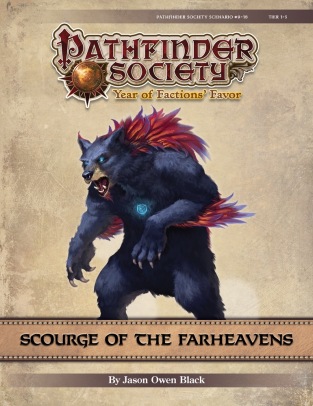


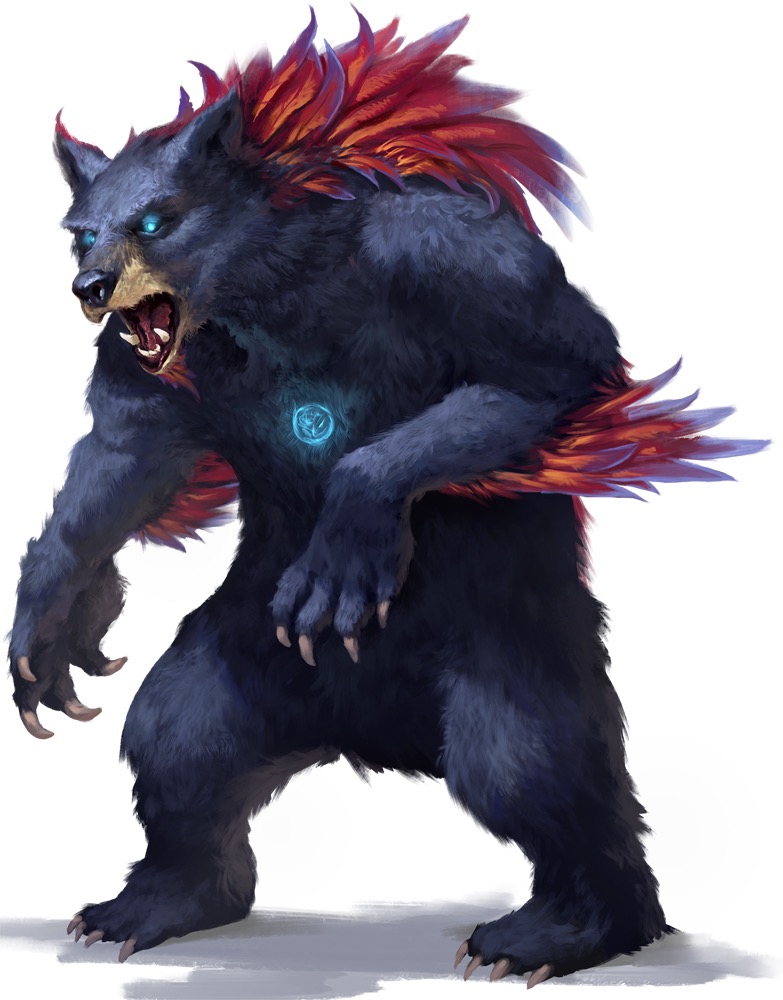
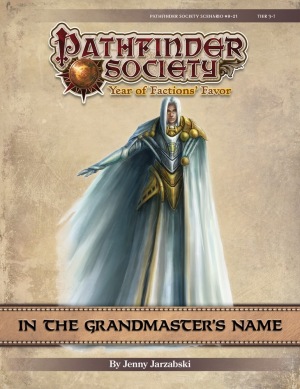


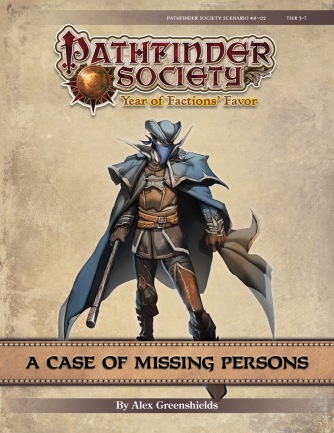
 , and is featured in the Eyes of the Ten Pathfinder Scenarios (Scenarios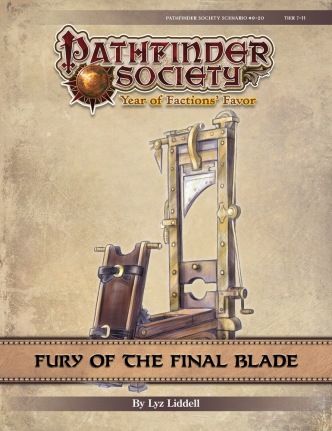
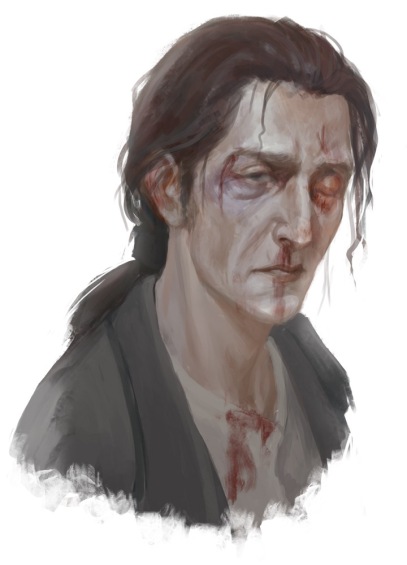
 : OutPost!
 , which I only recently discovered and am itching to get my hands on!

 which you will need to make full use of the boon.
 , so today, we’re going to take a look at what’s inside.
 ,
, 
 ,
, 
 ,
, 
 , etc.), this book takes a look at a dozen complex philosophies that are found throughout Golarion. As a book in the Player Companion line, it’s aimed at players, which means that you won’t find any great secrets of the order explained in this book. What you will get is spoiler-free information about each of the disciplines inside, including what the discipline’s about, how its organized, and what’s expected of its members. In addition, you’ll find some new player options related to each discipline, typically spells and character archetypes.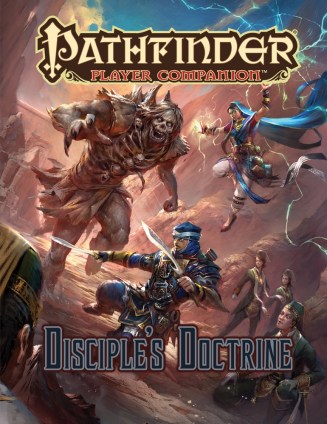
 Adventure Path–which I’m currently running for my children. (Yes, that’s a horror campaign, and yes, my children are very young. They love it, I swear! Haha! More details on that in the future!). The Shoanti Shamanic Traditions are another example of this. I LOVE them, I cannot emphasize that enough, but they were already covered in depth during the
  Adventure Path (which I played through with a wonderful group of players back when it was new). Still, I was hopeful that the player focus of this book would bring something new to the table.
 , but it is hard, and this one didn’t really do it for me. Still, I was intrigued enough with the group to start thinking of other things I wanted to do with the them, which is a win in my book!
 . That means that I was coming to the table with a lot of information in hand. I found that although the information on the Order inside this book didn’t offer me anything new, it was interesting, well-written and (very importantly) geared towards players, meaning the group is now accessible to a much wider audience without giving away the group’s secrets and too much history. I really enjoyed it. As for player options, there’s one archetype offered for my favourite class, the occultist, which I loved. The Esoteric Initiate focuses his studies on objects of antiquity related specifically to his Order’s teachings. Their symbolism ability is particularly interesting. There’s also a few new magus arcana which are super useful, my favourite of which is Book-Bound.
 Adventure Path, as well as the
  Adventure Path (to a lesser extent). After this we’ve got a new war priest blessing: Godclaw, which is useful and quirky. And lastly we’ve got four new spells called litanies, which are each activated as either an immediate or a swift action, and are for inquisitors, paladins and on occasion even antipaladins. You should really check these awesome spells out! All in all, I highly recommend you give this part of the book a read!
 , but this entry contains just enough information to whet your appetite for more, and to briefly describe (just a few sentences) each of the most common empyreal lords in Magnimar. After this it moves right onto a new cavalier order, Order of the Monument. I think this Order is very cool and useful, but not suitable for all campaigns. This order requires that you select a single city or settlement to protect. You don’t need to stay in that city all the time, but it’s pretty hard to justify somehow protecting your city when you haven’t been there in a long time. So, although this would be an awesome Order to play in plenty of Adventure Paths and modules (including
  ,
,  ,
,  ,
,  ,
,  and even the
  series of adventures), there’s a lot of other Adventure Paths and Modules where it wouldn’t be thematically appropriate. After this nifty new Order we get a Variant Channeling ability for each of the mentioned empyreal lords, which can also be chosen by clerics who worship deities with the same portfolios. These variant channeling abilities include Duty, Flying, Journeys, Moonlight, Monuments and Sexuality. Personally, I like the moonlight and monuments abilities best, but I’d be curious to see what everyone else thinks.

 and
and  are particularly good examples of this. But, that doesn’t mean that’s all these cultists are. An entire nation worships Razmir, and most of those people are just trying to get by. They’re normal. So, I love that this is an article that aimed at them. We get some information about Razmir himself, reasons that outsiders might say he’s not a ‘real’ god but a charlatan, reasons that believers refute those claims, and reasonings behind Razmir’s teachings. There’s information on a priest’s role, and Razmir’s interactions with other religions. All of this was really helpful, and I feel like it gave me a much better understanding for them as a group. I definitely want to make a worshipper of Razmir now, which isn’t something I’ve never wanted to do before. After all this information we get to an archetype for the ninja. Yeah, when does that ever happen, right? Well, wait no longer! This ninja archetype is called Mask of the Living God, and it’s pretty awesome. Of course, it’s also intrinsically tied to the Razmiran faith, so it’s not very adaptable. After this there’s four new arcanist exploits, my favourite of which is Mending Flesh, and a single greater exploit which is pretty nifty, Convert Wand. All of the arcanist options are worth a read.
 , or
, or  , this is a great way to explore the awesomeness that is the Shoanti. The character options were quite exciting, though. The Totem Channeler is a fun looking skald archetype, while the faith trait Aspect of the Quah, allows hunters to replace one of their animal aspects with a new aspect related to a Shoanti’s quah (tribe). Shiny!
 Adventure Path). There are also two new bardic masterpieces, which are neat. I especially like Kaminari Drums, which allows percussionists to call lightning down from the sky.
 !
!

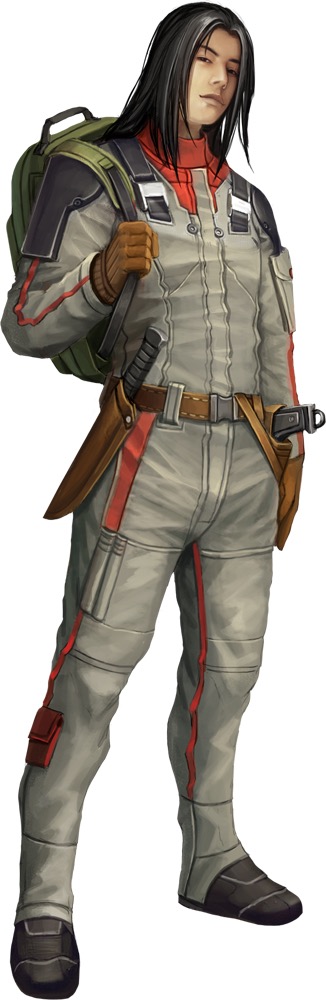
 , which is due out in October, though I’ve heard little more than that about it.
 , you’ll find a ton of monsters to fight and ally with inside this book, as well as some new player races. With that being said, there are a lot of differences between the Alien Archive and the many Bestiaries available for the Pathfinder Roleplaying Game. For starters, it’s shorter, with a typical Bestiary being around 325 pages in length, compared to the Alien Archive’s 159 pages. But, that’s only scratching the surface. The Alien Archive is also easier to use, and much more adaptable, than any Bestiary I’ve ever read. So, without further ado, let’s get started!


 which contains over three hundred pawns.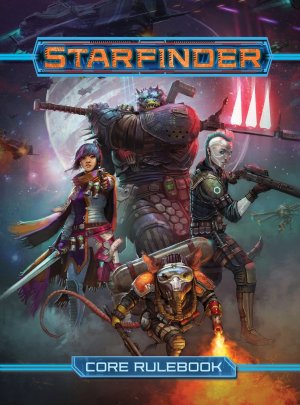
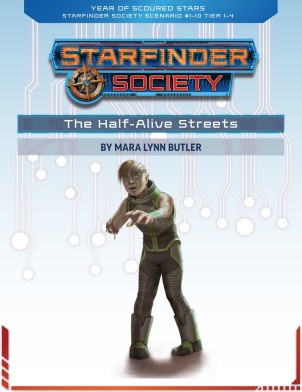
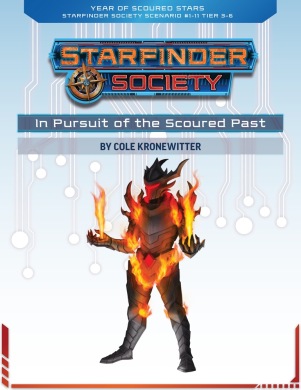




 My daughter’s favourite was certainly more expected: the cutest and cleanest looking ysoki in the set: The ysoki Star Shaman. And myself? I’m actually a big fan of the stealth drone, which turned out to be a cute little dog-bot!
 , which looks great, but I didn’t want to lock my family into a long campaign with their first characters. I wanted to do something short. Something that got started right away. That hopped right into the action!
 d20 Diaries