Space Rabbits and Radioactive Robots

Just the other day we took a look inside the covers of the Starfinder Roleplaying Game: Alien Archive. I shared some of my favourite creatures, spoke about what the book contains, and touched on the easy and adaptable monster and NPC creation process. My children and I tested out the creation system, and today, we’re going to share what they made in order to emphasize just how fun and easy it is.

StarfinderCover
The creatures featured today are for use with the Starfinder Roleplaying Game: Core Rulebook.

Now, it should be noted, that my children are young. My daughter turned six last month, while my son turned seven last month. This means that if they can do it, you can do it.

Now, where to start?

The first step is the concept and CR. My daughter immediately decided to make a colossal rabbit which flies through space, firing laser beams from her eyes, breathing fire from her nose, and feeding off the electrical energy of space storms, starships, asteroids, and even other living beings. It’s quite big and strong, so she’s hoping to make it a CR 10 or so. And my son? He made radioactive robots! As their creators and their societies were destroyed by nuclear war, some of the robots survived the devastation. Damaged from the blast and the centuries that have passed since, these robots have broken chassis, exposed wiring, and scratched and dented frames. Their solar panels no longer work, but they absorbed a huge amount of radiation, and function on nuclear power, instead. He’s aiming for a lower powered monster, making it CR 3.

The next step is to choose the creature’s array, which is its role in combat. Although my daughter strongly debated changing around her concept to make her space rabbits spellcasters, in the end she stuck to her original concept, and made her space rabbits a combatant. My son chose the same. Once you know your array you check out the associated charts and get all of your statistics for the creature. We wrote these down, and got ready for the next step: selecting a creature type. My daughter’s space rabbits were going to be magical beasts, and didn’t need a subtype. This means they’ll be getting dark vision, low-light vision, +2 to Fortitude and Reflex saving throws, and +1 on attack rolls. Meanwhile, my son’s radioactive robots were going to be constructs, which grants his monster a -2 to all its saving throws, a +1 to its attack rolls, and some snazzy traits including darkvision and construct traits. They would also have the technological subtype, which didn’t add any new abilities.

The next step is adding a class graft, which neither of my children’s creations needed. Skipping this step meant we would next be adding any any other templates they desired, which they also both decided against.

PZO7105
Creatures featured today were created with the rules found inside the Starfinder Roleplaying Game: Alien Archive.

The next step they found the most fun: selecting special abilities and your creature’s attack forms. Their array and CR will determine how many abilities they can choose. In addition, some abilities are free. It should also be noted that this number is a guideline, and can be altered as necessary to make your monster concept come to life. The special abilities you can select include things like feats, universal monster abilities, and statistic increases. You can also select abilities that show up in other stat blocks.

So what did they choose? Well, our space rabbits already have darkvision and low-light vision from being a magical beast, but my daughter was very intrigued with the idea of giving them blindsight (voltage), which would allow them to detect and see electrical fields to a range of 60 feet. If she did choose to add this, it would count as one special ability. Attacks are necessary to the creature, so the natural attacks it would receive (a piercing bite and laser beam eyes) would be free of charge. Other free abilities creatures receive is anything that they require to survive in their environments. For our space rabbits this means they need immunity to cold and a vacuum, as well as the no breath ability. Because of her CR she’d get a third immunity, so my daughter chose electricity.

Which brings us to our second special ability! Space rabbits would get a breath weapon which shoots out a super heated blast of energy–fired from their nose, of course! She also contemplated taking the swallow whole ability, but was undecided. This would be their third ability, if she chose to select it. And lastly, they’d need a supernatural fly speed so that they can move around in space. Luckily, movement speeds (within reason) are also free. That left her with three abilities. Her chart suggested having two, but, as mentioned, you can go over within reason (or under, for that matter). There was one other ability my daughter thought they needed: the ability to land upon and leave planets safely. After all, how could they escape a planet’s gravity with only a 60 ft. move speed…? We left my daughter to mull this over, and moved on to help my son.

PZO7109
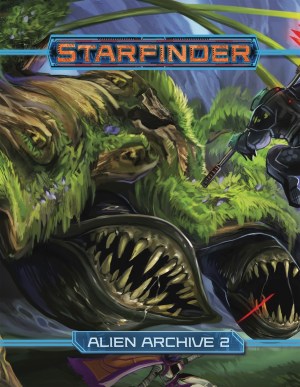
Starfinder Roleplaying Game: Alien Archive 2, due out in October,is currently available for preorder!
So what did our radioactive robots need? Well, unlike the rabbits, they didn’t need any special abilities to survive in their environment, nor did they need a fancy move speed. Just walking was fine. As a construct, they would already have plenty of immunities and snazzy traits, so he didn’t want to add to that. The robot’s natural attacks would be a slam attack. Originally this would have done bludgeoning damage, but my son adores the idea of them broken and crackling with electricity, so he decided it does bludgeoning and electricity damage. He also gave it the arc critical ability. To represent that the robots are already broken open and damaged, he gave them a weakness: vulnerable to critical hits. The first special ability he knew he wanted to give them was an aura of radiation. Due to their minor CR, it would only be low level radiation, which he thought was a little disappointing–especially since they would be found on a radiated planet and the PCs would likely already have their armour’s environmental protections up (which would make them immune to low levels of radiation). We decided to revisit the radiation levels later, and continue on with planning. For their ranged attack, he decided that they would shoot out a beam of their internal nuclear energy–an attack against EAC which would deal fire damage. He wants them to explode upon destruction, so we gave them the self-destruct special ability, but we were torn on whether to make it deal fire or electricity damage–fire to represent their minor nuclear explosion, and electricity to represent their sparking, glitching exposed wiring. In the end we decided to make it deal fire. There was one other thing he wanted to make his robots do: spark with electricity when touched in melee combat. We decided that this would do only minor damage, just a single zap of damage to anyone touching them with a manufactured or natural melee attack. And that was it! He was happy.

From there we chose which skills each creature would be best with, a simple step which was over in a flash. Then you select spells and spell-like ability–if your monster has a spell casting class graft or a special ability which grants them casting. Neither of our creatures did, so all that was left was to put it together and check it over.

So how did it turn out? Take a peek for yourself.


GALACTIC RABBIT

CR 10                  XP 9,600
N Colossal magical beast
Init +5; Senses blindsense (electicity) 60 ft., darkvision 60 ft., low-light vision; Perception +24

DEFENSE           HP 165
EAC 23; KAC 25
Fort +14; Ref +14; Will +9
Immune cold, electricity, vacuum

OFFENSE
Speed 30 ft., fly 60 ft. (Su, good); thermal flight (speed 6; maneuverability good (turn 1))
Melee bite +21 (2d8+18 P plus swallow whole)
Ranged eye lasers +19 (3d4+10 F)
Offensive Abilities breath weapon (70 ft. cone, 11d6 F, DC 17, usable every 1d4 rounds), swallow whole (1d6+15 F, EAC 23, KAC 21, 41 HP)
Space 30 ft.; Reach 20 ft.

STATISTICS
Str +8; Dex +5; Con +3; Int –2; Wis +2; Cha +0
Skills Acrobatics +24, Intimidate +19, Survival +19
Languages Sylvan (can’t speak any language)
Other Abilities no breath, thermal flight

SPECIAL ABILITIES
Eye Lasers (Ex): Galactic rabbits can fire laser beams from their eyes at a range of 120 feet. Despite having two eyes, both laser beams must be directed at the same target, and function as a single attack.

Thermal Flight (Su): Galactic rabbits can use the thermal energy stored in their stomachs to achieve incredible bursts of speed for a short time. This enables them to land upon and take off from planets without difficulty, and reach speeds equivalent to that of a spaceship. A galactic rabbit cannot activate thermal flight if they have used their breath weapon within four rounds. Once activated, the galactic rabbit gains shields as if it were a starship (20 shields, split evenly between its four quadrants), and a fly speed of 6 hexes (good maneuverability). This flight speed lasts for a number of minutes equal to the galactic rabbits CR (10 minutes for adult galactic rabbits). After activating thermal flight, galactic rabbits no longer have enough thermal energy to utilize their breath weapon, or thermal flight for 24 hours.

ECOLOGY
Environment space
Organization solitary, pair, or herd (2 galactic rabbits with 2–6 galactic bunnies)

GALACTIC BUNNY
CR 4                    XP 1,200
N Large magical beast
Init +5; Senses blindsense (electicity) 60 ft., darkvision 60 ft., low-light vision; Perception +15

DEFENSE           HP 50
EAC 16; KAC 18
Fort +8; Ref +8; Will +3
Immune cold, electricity, vacuum

OFFENSE
Speed 30 ft., fly 40 ft. (Su, average); thermal flight (speed 4; maneuverability average (turn 2))
Melee bite +12 (1d6+9 P plus swallow whole)
Ranged eye lasers +9 (1d4+4 F)
Offensive Abilities breath weapon (40 ft. cone, 5d6 F, DC 13, usable every 1d4 rounds), swallow whole (1d4 F, EAC 16, KAC 14, 12 HP)
Space 10 ft.; Reach 5 ft.

STATISTICS
Str +5; Dex +3; Con +1; Int –2; Wis +0; Cha +0
Skills Acrobatics +15, Intimidate +10, Survival +10
Languages Sylvan (can’t speak any language)
Other Abilities no breath, thermal flight

SPECIAL ABILITIES
Eye Lasers (Ex): Galactic bunnies can fire laser beams from their eyes at a range of 90 feet. Despite having two eyes, both laser beams must be directed at the same target, and function as a single attack.

Thermal Flight (Su): Galactic bunnies can use the thermal energy stored in their stomachs to achieve incredible bursts of speed for a short time. This enables them to land upon and take off from planets without difficulty, and reach speeds equivalent to that of a spaceship. A galactic bunny cannot activate thermal flight if they have used their breath weapon within four rounds. Once activated, the galactic bunny gains shields as if it were a starship (4 shields, split evenly between its four quadrants), and a fly speed of 4 hexes (average maneuverability). This flight speed lasts for a number of minutes equal to the galactic bunnies CR (4 minutes for galactic bunnies). After activating thermal flight, galactic bunnies no longer have enough thermal energy to utilize their breath weapon, or thermal flight for 24 hours.

ECOLOGY
Environment space
Organization solitary, litter (2-6), or herd (2 galactic rabbits with 2–6 galactic bunnies)

Galactic rabbits look surprisingly like their mundane counterparts—on a much large scale. Although capable of flying through any environment, galactic rabbits prefer to live in the void of space. They survive on electrical energy, and are capable of seeing it from great distances. They can devour any sources with electrical fields, including electrical devices, starships, satellites, asteroids, and even other lifeforms. They can also absorb it directly from space storms. Electricity is digested and stored as thermal energy in their stomachs. This thermal energy can be released in a superheated exhalation shot from their constantly twitching nose, or used to power extreme bursts of speed.

Although quite rare, galactic rabbits can wreak havoc on technologically advanced planets and starships and are often attacked with extreme prejudice when spotted. Because of their modest intelligence, Xenowardens often befriend galactic rabbits. In most cases, this is to protect them, or raise them as companions, while more violent xenowardens use them as a weapon against their enemies, releasing them upon corporate satellites, and exploitive colonies.

It is unknown how galactic rabbits came into being, although their ability to understand the language of the fey makes most scholars suggest that they are a beings of the fabled First World, or perhaps the result of fey experimentation upon the galactic rabbit’s mundane cousins. Whatever the case, galactic rabbits are here to stay, and are capable of procreating incredibly rapidly. Their offspring, galactic bunnies, are capable of living alone after only two months, and are full grown within a year. Galactic rabbits live for centuries, and can go for extended periods of time without feeding. They are capable of birthing two litters of young a year, if given even electrical currents to feed off of.  Although this can easily overrun a planet, the galactic rabbit’s fondness for space means that this is rarely a problem. Even a horde of well-fed galactic rabbits cannot overpopulate the infinite solar systems.

There are rumours that a galactic rabbit exists deep in the Vast, so large it can devour an entire planet, and swallow the largest of starships whole. These rumours are unsubstantiated, and no reliable source has ever reported or proven such claims.


Radioactive Robot (Patrol Class)
CR 3                    XP 800
N Medium construct (technological)
Init +2; Senses darkvision 60 ft., low-light vision; Perception +8
Aura radiation (15 ft., DC 13)

DEFENSE           HP 40
EAC 14; KAC 16
Fort +3; Ref +3; Will +1
Immunities construct immunities, electrified exterior
Weaknesses vulnerable to critical hits

OFFENSE
Speed 20 ft.
Melee slam +12 (1d6+7 B & E; critical arc 1d4)
Ranged nuclear beam +9 (1d4+3 F; critical burn 1d4)
Offensive Abilities self-destruct (1d6+3 F, DC 12)

STATISTICS
Str +4; Dex +2; Con —; Int —; Wis +1; Cha +0
Skills Athletics +8
Languages One local language (can’t speak any language)
Other Abilities mindless, unliving

SPECIAL ABILITIES
Aura of Radiation (Ex)
Due to the devastation of nuclear war or extremely radioactive environments, radioactive robots have absorbed extreme levels of radiation, and have evolved the ability to produce, store and redirect this energy without being harmed by it. A radioactive robot emanates low radiation out to 15 feet.

Electrified Exterior (Ex)
Radioactive robots are broken and damaged, and spark with electricity. Making physical contact with a radioactive robot can cause electrocution. Any creature that succeeds on a melee attack against a radioactive robot with a manufactured or natural weapon—even if this attack does not harm the radioactive robot—takes 1 electricity damage.

Self-destruct (Ex)
A radioactive robot is highly unstable and self-destructs when it is reduced to 0 HP, dealing an amount of fire damage equal to 1d6 + the robot’s CR to all creatures in a 10-foot-radius burst. A creature can attempt a Reflex saving throw to reduce this damage by half. This ability destroys any technological components that could have been salvaged from the radioactive robot.

Radioactive Robot (Enforcer Class)
CR 7                    XP 3,200
N Large construct (technological)
Init +2; Senses darkvision 60 ft., low-light vision; Perception +14
Aura radiation (30 ft., DC 17)

DEFENSE            HP 105
EAC 19; KAC 21
Fort +7; Ref +7; Will +4
Immunities construct immunities, electrified exterior
Weaknesses vulnerable to critical hits

OFFENSE
Speed 30 ft.
Melee slam +18 (2d6+12 B & E; critical arc 1d6)
Ranged nuclear beam +15 (2d6+7 F; critical burn 1d6)
Offensive Abilities self-destruct (1d6+7 F, DC 15)

STATISTICS
Str +5; Dex +4; Con —; Int —; Wis +2; Cha +0
Skills Athletics +14
Languages One local language (can’t speak any language)
Other Abilities mindless, unliving

SPECIAL ABILITIES
Aura of Radiation (Ex)
Due to the devastation of nuclear war or extremely radioactive environments, radioactive robots have absorbed extreme levels of radiation, and have evolved the ability to produce, store and redirect this energy without being harmed by it. A radioactive robot emanates medium radiation out to 15 feet and low radiation for an additional 15 feet.

Electrified Exterior (Ex)
Radioactive robots are broken and damaged, and spark with electricity. Making physical contact with a radioactive robot can cause electrocution. Any creature that succeeds on a melee attack against a radioactive robot with a manufactured or natural weapon—even if this attack does not harm the radioactive robot—takes 1d4 electricity damage.

Self-destruct (Ex)
A radioactive robot is highly unstable and self-destructs when it is reduced to 0 HP, dealing an amount of fire damage equal to 1d6 + the robot’s CR to all creatures in a 10-foot-radius burst. A creature can attempt a Reflex saving throw to reduce this damage by half. This ability destroys any technological components that could have been salvaged from the radioactive robot.

ECOLOGY
Environment any environment with high levels of radiation
Organization solitary, pair, unit (3-4 radioactive robots attempting to complete a similar objective)

Radioactive robots are found in places where nuclear war or high levels of radiation have destroyed technologically advanced societies. The few robots who survive such destruction are battered and broken—sparking with electricity form their exposed, tattered wiring and circuitry. These robots have absorbed the radiation around them, and use it to power themselves. Mindless and glitching they wander aimlessly, sometimes attempting to continue their original purposes, and other times corrupted to the point of senseless violence. They never wander far from their radioactive environments.

Radioactive robots can be found in localized areas of devastation, like the ruins of exploded nuclear reactors, or the wreckage of crashed starships that were once powered by nuclear engines. They can also be found in large swaths of territories that have high radiation levels, like the desert wastes of a planet destroyed by nuclear war, or natural phenomenon. They are a common sight on the ghibrani homeworld of Elytrio, which was devastated by thermonuclear war, and Jasterax, a planet in the Vast wracked with fierce storms of radioactive rain.


I hope you enjoyed reading about our creations as much as we enjoyed making them. My kids and I had a blast, and they couldn’t be more proud with what they’ve developed.

Have any creations you’d like to share with us? Let us know in the comments!

See you soon,

Jessica (and kids)


Starfinder: Alien Archive

Today on d20diaries we’re going to take a look at an awesome supplement book for the Starfinder Roleplaying Game, the Alien Archive! This book has a hardcover, and clocks in at 159 pages. It’s got an American cover price of $39.99, which means that if you’re Canadian (like myself), you’re looking at a cost of around forty-five to fifty dollars for the book online, or up to sixty in your local game store. There’s a sequel in the works, Starfinder Roleplaying Game: Alien Archive 2, which is due out in October, though I’ve heard little more than that about it.

At it’s core, Starfinder Roleplaying Game: Alien Archive is a book of monsters. Like Pathfinder Roleplaying Game: Bestiary, you’ll find a ton of monsters to fight and ally with inside this book, as well as some new player races. With that being said, there are a lot of differences between the Alien Archive and the many Bestiaries available for the Pathfinder Roleplaying Game. For starters, it’s shorter, with a typical Bestiary being around 325 pages in length, compared to the Alien Archive’s 159 pages. But, that’s only scratching the surface. The Alien Archive is also easier to use, and much more adaptable, than any Bestiary I’ve ever read. So, without further ado, let’s get started!

The Alien Archive features lovely cover art by Remko Troost, which shows off some of my favourite creatures inside the book–the dragonkin and the skittermander–as well as a robot. The inside front and back covers feature an image of the Pact Worlds, although it’s faded looking, instead of shiny and bright. After that we come to the table of contents.

The Alien Archive has sixty distinct monster entries inside it, many of which have more than one stat block or variation of that creature, making the actual number of foes inside larger than it seems (around ninety four). Of these, twenty-two are playable as character races. Each of these player races is differentiated from the other entries by a star beside their name, which is really useful for quickly referencing player options.

Combatant
Combatant icon, which denotes creatures that excel in physical combat.

After the table of contents we reach the introduction. This is where we learn how the races are oriented, and how to read a stat block. While most of this is basic information that only a player new to d20 games with need to read, some of the information is quite important.

For starters, each of the stat blocks inside the Alien Archive is sorted into one of  three categories: combatants (which excels in physical combat), experts (who are most effective with skills), and spellcasters (who rely on spells or spell-like abilities). These categories are represented by an icon in the left margin. These images are easy to distinguish and provide a quick and easy way for GMs to realize the role each monster plays in combat, which makes it super easy to find the type of creatures your looking for, or to quickly discern a creature’s tactics.

Expert
Expert icon, which denotes creatures that rely upon their skills in combat.

There’s also a few interesting things to note about the stat blocks themselves. Very few of the creatures inside have Resolve Points and none have Stamina Points. A creatures ability scores aren’t listed, instead, their stats show their ability modifiers. This is a simple change that will make it easier for GMs–especially new GMs–to handle unexpected situations (like unlisted skill checks) in combat. Not all of a creatures feats are listed in their entry. Instead, only feats that grant new combat options will be shown. Feats that grant static bonuses (like improved initiative, or skill focus) are already factored into the stat block and will not be listed anywhere at all. This really streamlines the stat blocks, and makes it easier to find important information fast. Similarly, not all of a creature or NPCs spells will be listed in a stat block. Instead, it only features their most powerful spellcasting options.

Spellcaster
Spellcaster icon, which denotes creatures who utilize spells and spell-like abilities during combat.

In addition to information provided in this chapter, I’d like to point out a few other things of note. Every one of the bestiary entries in this book is two side-by-side pages long. These entries include information on the creature, where they’re found, their use throughout the Pact Worlds, and their society–if they have one. Many of the entries include more than one stat block on a theme. For example, the Aeon Guard entry gives us stats for a CR 3 rank and file soldier, along with a CR 7 specialist, capable of working without support for weeks and months at a time. Similarly, the apari entry features the both the hive-like apari, and it’s tiny, bug-like constituents. Some entries include many stat-blocks, or simple grafts that can be added to a featured creature to make it into other versions. Examples of this include elementals, which are statted out by size and have grafts which apply the elemental abilities themselves (including air, earth, fire and water), and dragons, which have one age category statted out, rules for making other age categories, and grafts which can be applied to determine the dragon’s colour (including black, blue, green, red and white). In fact, as you’ll soon discover, grafts and templates are a common sight in the Alien Archive, and are used to great effect. Many of the archive entries introduce new gear or consumables. My personal favourites include the shadowstaff found on the draelik’s entry, and the bone cestus of the crest eater.

After this we come to the meat of the book: the Alien Archive itself. There are a ton of cool creatures in this book, and even some that I wasn’t sure I’d like on first perusal, I ended up really enjoying. Some of my favourites you should check out include the asteray, a CR 12 fey which is to space what mysterious water creatures like mermaids and nixies were to the oceans and waterways of golarion. I also adored the caypin, a CR 6 aquatic tentacle beast with eyeball mouth worms which can detach and explore their surroundings, before returning to the caypin’s face. Seriously cool! Electrovores were a fun, low level challenge I also really enjoyed, as were the radioactive fey, hesper.

PZO7105.jpg
Starfinder Roleplaying Game: Alien Archive

Mixed amongst the monster entries are twenty-two playable races. Each entry features two different CR stat blocks representative of their race, a bunch of interesting information on their societies and home worlds, and a side bar which include the rules for playing them as a race. Although many of these were ‘humanoid shaped’, with arms and hands or some sort, there were some which were not, most notably the jellyfish-like barathu. This was just awesome to see, and I really enjoyed it! Some of the races and monsters from old Golarion were up for selection, including contemplatives, drow, and space goblins but many were brand new. I honestly loved a TON of these races, but my favourite new additions are dragonkin, ikeshti, sarcesians, and the cheerful skittermanders.

Curious about the playable races available in this book? Well, look no further! The Alien Archive includes:

  • Barathu: highly adaptable jellyfish-like race who float like blimps through the sky
  • Contemplative: telepathic creatures with massive brains and atrophied little bodies
  • Draelik: green, nihilistic, gaunt humanoids with ties to the negative energy plane
  • Dragonkin: large bipedal dragons who form a close bond with their soul-mate
  • Drow: dark-skinned, demon-worshipping, evil elves–a fantasy classic!
  • Formian: ant-like humanoids who live in hives and are resistant to sonic effects
  • Space Goblin: comical little runts with big heads, and bad attitudes. You know you love them!
  • Gray: small, hairless humanoids with bulbous heads and telepathic powers who abduct and experiment on other beings for unknown reasons
  • Haan: large insectile humanoids who can spew fire and create buoyant balloons of webbing
  • Ikeshti: small lizardfolk who live in desert wastes and can squirt blood from their eyes
  • Kalo: aquatic humanoids with wing-like fins who live in freezing cold waters
  • Maraquoi: primitive simians with prehensile tails who have exceptional hearing
  • Nuar: strong minotaurs with pale skin, a great sense of direction and an affinity for complex patterns
  • Reptoid: cold-blooded reptilians who can assume the appearance of specific individuals
  • Ryphorian: trimorphic elves who have adapted to the generations-long seasons of Triaxus
  • Sarcesian: large humanoids who can survive in a vacuum for a time, and grow glowing wings of energy in the void of space
  • Shobhad: large, four-armed, nomadic giants who are ferocious and quick
  • Skittermander: small, furry, six-armed humanoids with a cheerful disposition who love to lend a helping hand
  • Urog: large, crystalline magical beasts with meticulous minds, a lack of tact, and a resistance to electricity
  • Verthani: tall, long-limbed humanoids with black, orb-like eyes and skin capable of camouflage
  • Witchwyrd: terribly mysterious interstellar merchants with four-arms who are capable of absorbing force from magic missiles and launching them back at their enemies
  • Wrikreechee: amphibious, humanoid, filter-feeders who look like a mix between bugs and mollusks

Past the statistics for all those snazzy new aliens we come to arguably the most important part of the book: Appendix 1: Creating Races and NPCs. In Starfinder, monsters and NPCs–even those with class levels–are created differently than PCs. Within these fifteen pages you’ll find simple, easy to use instructions on how to make any kind of creature you can imagine. To use some options you’ll also need access to the Starfinder Core Rulebook, which shouldn’t be an issue, as if you’ve purchased the Alien Archive you probably own the Core Rulebook it already. And if you haven’t? Well, you really should! Haha.

PZO7109.jpg
Starfinder Roleplaying Game: Alien Archive 2, due out in October.

My kids and I gave making monsters a try and found it very simple and easy to use. It makes use of a few handy charts, some simple templates and your creativity. That’s it, that’s all. For those of you more interested in the nitty gritty, I’ll give you a quick rundown. First: a concept. Figure out what you want to make and what CR. Next? Pick an array. That means deciding if it’s a combatant, expert or spellcaster. Then you look at the chart for that category. Each category has two charts for it, which give you the all the stats you need to make the monster. These numbers are the actual values you’ll be using, so you won’t need to do any calculations. These values include everything from ACs, and hp, to the amount of damage they’ll do with ranged and melee attacks. In addition, it lists how many extra special abilities they’ll be able to select later on.

Once you’ve got your stats you need to select your monster’s creature type from a list. Each of these will grant your monster a slight variation to its statistics, as well as a few other static abilities (typically related to its vision types, and innate immunities). For example, aberrations gain darkvision 60 feet, and a +2 to all Will saves, while fey gain low-light vision, +2 on Fortitude and Reflex saves, and a -1 to all attack rolls. Simple and easy. Once you’ve got your creature’s type applied, you pick out it’s subtype. Not all creatures will have one, but if they do, it will grant them some extra traits. Give your monster the cold subtype and they gain immunity to cold and vulnerability to fire. Give them the demon subtype and they gain immunity to electricity and poison, resistance 10 to acid, cold and fire, the ability to summon allies, and telepathy. Slightly more complicated than applying a creature type, but still easy.

What’s next? A class graft. Now, not all monsters will have a class graft, but many intelligent NPCs you make will. This is essentially a quick and easy way to give your creations access to class abilities. So, how does it work? First, you choose the class you want them to have, then you check out the class graft. This will have a requirement (for example, envoys need to use the expert array), a few adjustments (like which saving throws they get an extra bonus to, and which skills they’re best at), a quick formula for giving them equipment, and a helpful chart. On this chart you look up the CR you’re aiming for and check out which abilities you’ll be applying. Now, this isn’t the full class abilities, but rather a few of the best abilities, which the creature will be able to use. You’re not literally applying a whole class here, but just the selected items on this list. For example, if you’re making a CR 1 mystic, the chart tells you to select one first level connection power and one special ability. Pick those out and you’re done. If he’s instead CR 11, the chart tells you to select the first, third, sixth and ninth connection powers, mind link and telepathic bond. Done and done. Although not overly complicated, this is the most difficult step involved in monster creation.

Once you’re done with your class graft (if you’re adding one) you can choose to add a simple template. These are available later in the Alien Archive (in Appendix Three) and include choices like fiendish, giant and two-headed. These grafts are as easy to use as the creature type ones are, and take barely any time at all to add. There’s also some other templates found in the Alien Archive which can be chosen.

The next step is to select your monster’s special abilities. Depending on their array and CR they’ll have a number between one and four that they can choose from. In addition, some abilities are free. These abilities include things like feats, universal monster abilities, and statistic increases. You can also select abilities that show up in other stat blocks. If you’re like my son, you’ll want to make radioactive broken robots, so you could select an aura of radiation as one ability, the ability to shoot blasts of electricity as a second, construct immunities as a third, a vulnerability to critical hits (to represent their broken chassis), and have them self-destruct upon their destruction. If you’re like my daughter, you’ll want to make colossal sized flying space rabbits who shoot laser beams from their eyes, breathe fire from their noses and can survive in a vacuum. Yes, that’s seriously what she made. So pick up a breath weapon as your first ability, a ranged natural attack as your second, as well as immunity to cold, vacuums, and the no breath universal monster ability. This is also where you’ll decide what kind of attacks your monsters will use. Maybe the aforementioned radioactive robots have a slam attack with the stun critical ability, or perhaps their slams do bludgeoning and electricity damage. (My son’s pretty fond of both at once). And the flying space rabbits? Their bite attacks do piercing damage, and perhaps they can swallow you whole. But their laser beam eyes? Definitely fire damage.

PZO7403
Starfinder Roleplaying Game: Alien Archive Pawn Box, which contains over three hundred pawns.
Once you’re done with the special abilities, you can select your monster’s skills. Your array chart already gave you the skill points you’ll have, and how many you’ll be good at, but now’s the time you choose which skills those will be. This is a simple step, and will be done in a flash. Then you’re onto selecting spells and spell-like abilities (if your creature happens to have them from a class graft or a special ability you’ve chosen). If it does you check out a simple chart to see what you’ll be adding by CR, make your spell selections and away you go. If you happen to be making a CR 2 creature with Spell-like abilities, they’ll have two 0 level spells usable at will, and two first level spells each usable once per day. If they instead are CR 16, they’ll have two third level spells usable at will, four fourth level spells usable three time a day each, and two fifth level spells usable once a day each. The chart works the same for spellcasting, but with different numbers. Again, only the most powerful spells will be added into your stat block. Your CR 15 creatures won’t have level one spells available, since they’ll be much more likely to use their third fourth and fifth level spells during battle.

And now it’s time for the last step: checking it over. Take a gander at your creation and make sure it lives up to your concept.

And you’re done! It may sound complicated, but it’s actually very easy to use in practise. Even my kids, who are only six and seven, managed to make something fun, balanced, and unique in a short amount of time.

Once you’re done with the first appendix you move on to the second, which focuses on summoning creatures. Much like the monster creation process, this six page section makes use of charts and grafts, although this is infinitely simpler and easier. Each time you gain access to a summon creature spell you select four specific creatures that you can summon. But what are the options? They’re awesome is what they are! Balanced, thematic and adaptable all at the same time. So what do you do?

First, head on over to the elemental statistics. These will be the base stats for all summoned creatures. The level of summoning spell you’re using determines which size stat block you’ll be using. Then, check out the charts and select what you’re summoning. Is it an aeon, agathion, angel or archon? An elemental? what about a protean, robot or shadow creature? Depending on what you choose it will allow you to select either an elemental or summoning graft which you can then apply to the creature. These grafts are simple and easy to use. And that’s it! You’re done. Get summoning. I, for one, can’t wait.

Which brings us on to our third appendix: simple template grafts. This is two pages of simples grafts, which I already mentioned when I spoke about creating monsters. In addition to their use for monster creation, NPC creation and summoned creature statistics, you can also use these templates to quickly alter existing creatures into new creations.

StarfinderCover
Starfinder Roleplaying Game: Starfinder Core Rulebook

Past this is our fourth and final appendix, which focuses on universal creature rules. Here you’ll find a listing of the common abilities that the different monsters in the Alien Archive have, which also happen to be abilities you can choose to give your monstrous creations.

So what’s left? An index which sorts the creatures by CR for ease of reference, and an advertisement at the back of the book.

That’s it. We’ve come to the end of the Alien Archive.

And what did I think?

I highly recommend this book for players, even if just to have access to the plethora of fun races, but for GMs? This book isn’t recommended, it’s necessity. You need it for the monsters inside, and you need it for the monster creation rules. Lucky for us, this book is just awesome! I’m supremely happy to own it.

And now it’s time to say goodbye!

But before I go, I want to hear from you! What’s your favourite creatures and races from the Alien Archive? What have you made with it? Let me know in the comments!

Until next time,

Jessica


Starfinder Society Scenario Reviews: Half-Alive Streets and the Scoured Past

Today we’re going to take a look at the two most recent Starfinder Society Scenarios that are currently available for purchase, and let you know we thought. Although you’ll find references to events in each that I liked or disliked, and comments about specific characters, these scenarios are not explored in detail. It’s not my intention to spoil the events in these scenarios, or give summaries and full reviews, but to share my opinions and provide recommendations. That said, if you want to avoid even minor spoilers I recommend you check out a different article. Whether you intend to use them in home games of the Starfinder Roleplaying Game, sanctioned scenarios for use with the Starfinder Society Organized Play, or just want to read a nifty new adventure, we’ve got you covered! So sit back, and get ready to enter the Drift!

PZOSFS0110E
Scenario #1-10: The Half-Alive Streets, a Tier 1-4 scenario for the Starfinder Society.

Scenario #1-10: The Half-Alive Streets is a Tier 1-4 adventure which takes place in Absalom Station. It has no scenario tags and does not feature starship combat. This lovely little scenario sends the PCs on a hunt throughout Absalom’s Freemarkets to track down the creator of a new series of biotech augmentations which the Pathfinder Society would like to make accessible to its agents. Unfortunately, the creator is unknown, and the only lead comes from a shady contact of the Society’s, Julzakama, a vesk pawnbroker first introduced in Quests: Into the Unknown. In addition to the wonderful recurrence of Julzakama, this scenario also involves AbadarCorp, and the shirrin Philt, so anyone who has played through Scenario #1-02: Fugitive on the Red Planet and earned the AbadarCorp Respect boon, will want to slot it for this scenario. There’s plenty of wonderful new faces in this scenario as well, including a ysoki pawnbroker named Dot, a vesk ‘barber’ who specializes in scale and horn detailing named Katazoa, a burly medicinals saleswoman named Isidre, a verthani technomancer named Chryson, and a halfling family in need of your player’s help. This tidy little mystery is great fun, and a has a bit of a horror vibe to it. However, its got a  bit of a horror vibe to it. It would definitely freak my kids out. Overall, I give this scenario four out of five stars.

PZOSFS0111E.jpg
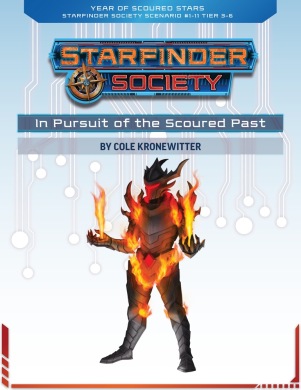
Scenario #1-11: In Pursuit of the Scoured Past, a Tier 3-6 scenario for the Starfinder Society.

Scenario #1-11: In Pursuit of the Scoured Past is a Tier 3-6 adventure which takes place on the library planet of Athaeum which constantly teleports throughout the galaxy. It is of utmost importance to the Second Seeker’s Faction (Luwazi Elsebo), and is strongly tied to the Year of Scoured Stars metaplot. In addition to Luwazi herself, this scenario also includes Royo (a ysoki who dislikes digital records) and Iteration-177 (and android member of the Apis Consortium), both of which are characters introduced in Scenario #1-05: The First Mandate. Anyone who’s earned the boon High Society Influence (Royo) should definitely slot it. New characters and organizations introduced include the axiomite Curators of Athaeum, and the Hellknight Order of the Pyre! Rife with wonderful roleplaying opportunities and a delightful cast of characters, this scenario is a blast! How can it go wrong? Right?! All in all it was a fun scenario, and certainly unique. The major downside is that it’s a relatively high-minded plot in this one, so if you’re just after a fun romp, or you’re playing alongside children, I would recommend a different scenario. Overall, I give this scenario three out of five stars. If you’re particularly interested in the Scoured Stars Incident, or a big fan of roleplaying (like I am) I’d increase the rating to four out of five stars. It should also be noted that there is a Mission Faction Note missing at the end of this scenario. This line has been copied from the Paizo website and is shared below:

“If the PCs succeeded at their primary mission, they further goals of Luwazi Elsebo in uncovering the truth behind the Scoured Stars incident. Each PC earns 1 additional Reputation with the Second Seekers (Luwazi Elsebo) faction, in addition to any other Reputation earned as a result of completing this scenario.”

 Thanks for joining us today on our exploration of the new scenario’s available this month. I hope you’ve enjoyed reading about them as much as I have. Now it’s time to go out, join a game, and get playing!

Jessica

Gifts from the Stars!

PZO7302
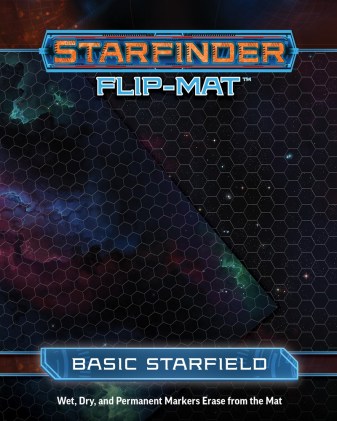
Starfinder Flip-Mat: Basic Starfield

It’s been a while, but I finally got my hands on a Starfinder flip-mat! Which one, you might be wondering? The most important one, of course! We’ve been using a hex grid at my house for starship combat while playing Starfinder, but it’s terrain from another game. Admittedly, brightly coloured grass, hills and some trees is not exactly an atmospheric location to be making fancy piloting maneuvers and firing our laser turrets. But, Starfinder Flip-Mat: Basic Starfield has come to the rescue! This mat is gorgeous, folds well, can handle markers, and has two different sides: one is black with white stars, while the other is more colourful. We’ve tested it out a few times and honestly, couldn’t me more thrilled.

2018-04-05 18.27.44
Contents from the Starfinder Pawns: Starfinder Core Pawn Collection. My kids and I had a blast unboxing it!

Which brings me to the next wonderful product I finally got my hands on: Starfinder Pawns: Starfinder Core Pawn Collection. Now, there’s other pawn collections out there for Starfinder: Starfinder Pawns: Alien Archive is another beauty, but I knew that if I only invested in one pawn collection, Starfinder Pawns: Starfinder Core Pawn Collection would be it. Why? For starters, it has ships. SHIPS. No longer will we fly around a random leucrotta or demon mini while travelling the stars! Oh, no! We’re upgrading to a gorgeous Idaran spaceship! Second? The races. With over ten different minis for each of the core Starfinder races, many of which contain multiples, this Pawn Collection has you set for player characters, NPCs and enemies of all kinds.

2018-04-05 18.59.19.jpg
My son’s favourite pawn from the set: The Thaumtech Omenbringer!

In addition to the core races represented, there’s also a mini or two for each of the legacy races, as well as a few select Starfinder races from other sources, including the haan, elebrian, grey, and contemplative. The icing on the amazing star-cake? A few drone minis for all those mechanics out there! My son adores all the ships inside, but his favourite turned out to be the Thaumtech Omenbringer, an ominous looking Eoxian ship made of bone and magically enforced steel.

2018-04-05 18.59.592018-04-05 18.59.38My daughter’s favourite was certainly more expected: the cutest and cleanest looking ysoki in the set: The ysoki Star Shaman. And myself? I’m actually a big fan of the stealth drone, which turned out to be a cute little dog-bot!
Come on! You know you want it! Haha.

 After sifting through the pawns with my kids and finding them a new home in a shoe box, we had a ton of fun picking out which minis would be our Starfinder characters. No longer will Hoponisa be using a kobold mini, nor will Vishkesh and his drone be represented by a kuo-toa and a stirge! We couldn’t be happier.

Do any of you own the Starfinder Core Rulebook: Pawn Collection? Got a favourite mini you want to share? Let us know!

We’ll see you in the Vast!

Jessica

April Blooms and d20 News

Well, April’s here and that means rain and puddles and flowers all around. Or it should, anyway. Instead, we’ve got another cold snap and some snow where I live. But soon! Oh, SOON it will feel spring-like outside! Eventually…

Whatever the weather, Spring Break and Easter have just come to an end for us, and my kids are back in school. My son’s more than a little put-out with this situation, but my daughter’s thrilled to get back to Kindergarten and have some fun. Plenty has happened for us this past week, and it’s been more than a little busy. My daughter obsessively loves rabbits, so Easter is her favourite holiday. In fact, the only thing she likes better than Easter is her birthday, which also passed last month, so this time of year’s always a little bonkers. Aside from Easter events, egg hunts and dinners, we also took my kids to get their picture taken with the Easter Bunny at the mall, and tried to squash in enough time to pick up a gift for my kids. My daughter ended up picking out her own Easter gift when she discovered a children’s stuffed chair–that was a pink rabbit. She’s quite pleased with the gift, and sits in her rabbit chair constantly.

We had two opportunities to get some d20 gaming in this week, although we had hoped to get three in. This past Tuesday my kids sifted through their many, many, MANY characters and took a look at the adventures that each adventuring party was in the middle of or about to embark on. They decided to each pick a group and we’d play one on Tuesday, and the other on Friday. My son chose our aptly named ‘Jungle Characters’ while my daughter chose our much beloved ‘Goblin Characters’ who are about to finish up We B4 Goblins! (which is a FREE download and great fun, so you should definitely click that link! Haha). Deciding we’d start with the Jungle crew, I cracked out my old Dungeon Magazine, Volume #136, and we got right down to playing a modified Tensions Rising. Unfortunately, we ended up busy on Friday and didn’t have time to play our trouble-making goblins, but we did find time on Saturday to begin our second adventure with our Starfinder characters! We embarked on an important Wayfinders mission to Elytrio with Yesteryear’s Truth. Full details on our play sessions this week will appear in an upcoming post, but for now, just know that we had a ton of fun!

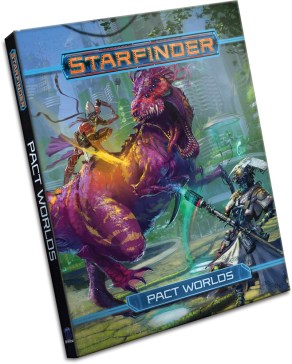
PZO7107.jpg
Starfinder Roleplaying Game: Pact Worlds

In Starfinder news, Pact Worlds was released last week, which we’re itching to get our hands on in my house. Seriously. Even my husband wants that one! And today it just became sanctioned for Starfinder Society Play. Nearly everything in the entire book is an option. Now, if only I owned it… There were also two new Starfinder Society Scenarios released, which I did splurge on. Scenario #1-10: The Half-Alive Streets is a tier 1-4 mystery involving a lethal bio-tech augmentation that sets the PCs loose on Absalom Station. While Scenario #1-11: In Pursuit of the Scoured Past is a tier 3-6 that sends the PCs to the library world of Athaeum, where they’re on the hunt for information about the Scoured Stars Incident. Also joining you? Some Hellknights from the Order of the Pyre! How could it go wrong? Neither of these scenarios involve starship battles.

Later this month the volume five in the Dead Suns adventure path will be released: The Thirteenth Gate. Dead Suns begins with Volume One: Incident at Absalom Station, which I’ve found great fun. They’ve also announced the next Starfinder Adventure Path. For those of you who don’t know, Starfinder Adventure Paths are going to be of varying lengths. One six-part series, followed by two three-part series’. This means that once Dead Suns wraps up we’ll be treated to Against the Aeon Throne, which is a three volume series that begins at level one with The Reach of the Empire. This Adventure Path pits the PCs against the Azlanti Star Empire which I’m absurdly excited for! Afterwards we’ll get to play Signal of Screams, which begins at level 7 with The Diaspora Strain. I’m particularly interested in this one as it strikes me as a horror themed space adventure which is just AWESOME. I can’t wait to see how it unfolds.

PZO90128
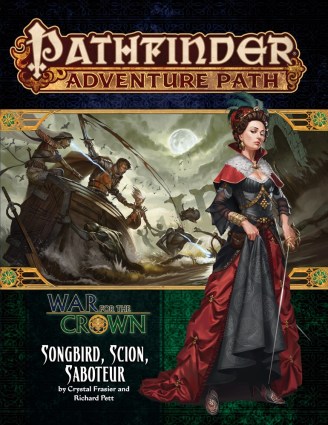
Pathfinder Adventure Path: Volume Two: Songbird, Scion, Saboteur

As for Pathfinder, the second volume of War for the Crown, Songbird, Scion, Saboteur has been on game shelves for a while, but volume three, Twilight Child, is due out later this month. If you’ve been reading my blog lately you’ll know that I’m super excited for this campaign, although I’m not yet lucky enough to own it. Last month Merchant’s Manifest came out, which admittedly, I’m not very excited for. But, later this month a sourcebook on the creepy nation of Nidal is released. Called Nidal, Land of Shadows, this IS a book I’m thrilled for. I’ve always been drawn to this ominous place and I can’t wait to see what they do with it. The Pathfinder Society has two neat scenario’s out this month. The first is Scenario #9-16: Fallen Family, Broken Name, which is a series of five one-hour quests that take place in Isger and revolves around the now deceased Irrica family who were said to command some kind of supernatural forces. Sent to discover this weapon and the family’s secrets, this scenario sounds like a lot of fun. Plus, if I’m being totally honest, I’ve never had the chance to play in Isger before. This scenario is intended for tiers 1-5. The second scenario recently released is Scenario #9-17: Oath of the Overwatched, which returns to the constantly cursed Blakros Museum and directly involves the Dark Archives faction. I’ve been a big fan of this series of scenarios from way back during Season 0, so I’m desperate to play this one! Intended for tier 5-9, this one’s going to be tricky!

In other news, my whole family’s been loving their play-by-post campaigns they joined for OutPost. My children and I finished one of the scenarios, Scenario #45: Delirium’s Tangle, over a week ago, and my daughter immediately set out to bring her beloved oracle, Lady Naysha into another adventure. She has since joined up in a game of Scenario #5-08: The Confirmation, alongside one of my husband’s new characters. Meanwhile, my son’s forgetful wizard, Fuzzzy, alongside his pet owl, Bobby, joined up to play Master of the Fallen Fortress, a free Pathfinder Module which is sanctioned for Pathfinder Society play. Lady Naysha and Fuzzzy were both previously introduced in this blog post. My character, Juno Berik, has yet to join another game. For those of you curious, our escapades in Delirium’s Tangle can be found here. My husband has had such fun playing his occultist Enzo in our still ongoing Black Waters adventure, that he made three new Pathfinder Society Characters. Toban Tangletop, an eccentric gnomish chef and inquisitor of Shelyn is joining Lady Naysha on her Confirmation; Ruslo, a roguish Varisian slayer who fights with a grappling hook and has a bone to pick with the Aspis Consortium is playing alongside Fuzzzy and Bobby in Master of the Fallen Fortress. And finally, Jeb Barlo, a water kineticist swamper from Wartle, has just begun to tackle Scenario #0-23: Tide of Morning. One of my Starfinder characters has also completed one of her OutPost games: Aurora Vim, a stylish and vain ysoki envoy with a chipper attitude and an ego bigger than a starship. Better known as Rora, this quirky little ball of fun just made a name for herself by tracking down a fugitive on Akiton and saving an entire town in Scenario #1-02: Fugitive on the Red Planet. To read about her adventures on Akiton, check out the completed gameplay thread, here.

And, in anticipation of Pathfinder Playtest, we’ve been reading Paizo’s previews of the new ruleset on their blog. Recent articles include information on critical hits, critical failures and a system that they’re calling the four degrees of success, and a rogue class preview. But, my personal favourite? The details they shared about those beloved pyros: goblins! Colour me intrigued, Paizo!

I hope, like us, your last week has been full of fun, and the glorious sound of rolling dice.

Until next time,

Jessica

War for the Crown: Player’s Guide

Well, it may be a little late (okay, more than a little), but the War for the Crown Player’s Guide has finally been released by Paizo. Meant to go with their War for the Crown Adventure Path, which takes place in the nation of Taldor, this player’s guide is a free download on their website. The War for the Crown Adventure Path is already underway, with volume one, Crownfall, released in February, and volume two, Songbird, Scion, Saboteur, released this month. The other four volumes have yet to be released.
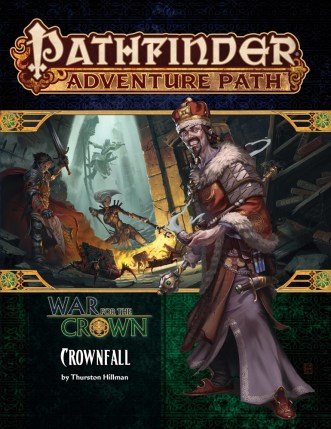
Now, I’m not sure about all of you, but I’ve been supremely excited for the War for the Crown Adventure Path. However, purchasing that lovely little book isn’t in the cards right now, so I was ready to pounce on the Player’s Guide the moment it launched. And I waited…. And waited…. And waited….

But, now that it’s here! Was it worth the wait?

Uh, yeah, obviously. It’s awesome and it’s free.

Want more details? On it!

PZO90127
War for the Crown Adventure Path, Volume One of Six, Crownfall

Like the Adventure Path Player’s Guides before it, this one is filled with all the information you need to create a character well-suited to the (War for the Crown) Adventure Path, and invested in its major plots and purpose. It contains advice and compiled lists of which classes and archetypes are best suited to the campaign.  It briefly describes the region that the Adventure Path will be taking place in (Taldor, in this instance), as well as the culture or cultures found there. It describes each races place in the region, and gives advice on which obscure races are more common there (I was pleasantly surprised to find Taldor contains a LOT!). It also releases a series of traits specific to the Adventure Path (called Campaign Traits), of which each character is expected to have one.

There was plenty of wonderfully, interesting information in this little guide, and I actually got a really great feel for Taldor from it. Not a clichéd stereotype of the nation, either. An actual feel for the place. It left me happily inspired. Although there’s lots of neat tidbits we could discuss here, I’m not going to go into details. It’s free! You might as well download it yourselves.

My favourite parts of the Player’s Guide were quite unexpected. The first was a wonderfully illustrated map of Taldor. It’s just… beautiful. I love it!

And the second? We finally got a good, clear view of Princess Eutropia Stavian, eldest daughter and only living child of Grand Prince Stavian III, ruler of Taldor. Who? The War for the Crown Adventure Path was not given its name without cause! The players are going to be acting as spies/diplomats/agents of Princess Eutropia herself as she maneuvers through a budding civil war in order to claim Taldor’s throne for herself. And her opponents? Not nearly as awesome as she is! Holy smokes! I knew a bit about her from campaign spoilers, namely that she wanted to change Taldor for the better, she supports reform, she wants to ensure that women could inherit (as currently in Taldor only men can), and wants to claim the throne for herself. I’m not sure what I expected, but the Princess Eutropia we got was not it! In a good way! She’s AMAZING. From her stats to her backstory, from her public attitude to her inner turmoil, and especially THAT ART, she literally blew me away. Never mind who her opponents are, I’m in, hands down. Call it! I support the Princess!

Seriously! Look her up.

But, it’s a Player’s Guide! It’s not about our patrons, or our country. Not at its core. At its beating heart the Player’s Guide is a free tool to help players like us make characters who will work well within the Adventure Path they’re going to commit to. It should inspire us to make characters, entice us with ideas, provide us with some cool traits, and let us go crazy. And this one did.

So after reading the guide, what would I make?

A good question!

PZO90128.jpg
War for the Crown Adventure Path, Volume Two of Six, Songbird, Scion, Saboteur

There’s plenty of character concepts you could run with for this campaign, and a ton of classes that would work. Rogues and bards (from the Core Rulebook or the Core Rulebook (Pocket Edition)) as well as investigators (from the Advanced Class Guide or the Advanced Class Guide (Pocket Edition)) are the most obvious options, and probably the best suited to the campaign. But, I’m not one for optimization. I won’t play something just because it’s going to be the best or the most useful. It’s characters and quirkiness that I tend to enjoy most. So, I gave all the classes a lot of thought. I quickly narrowed it down to four classes that I was inspired to make. Yes, bard was one of them. I LOVE bards. Absolutely, positively, my favourite class. And although I’ve made plenty of bards, they all seem doomed to have their campaigns crash and burn and die. So sad. Which means that bard is once again a strong contender for class choice. I also adore occultists, and making one who utilizes ancient relics of Taldor sounds like a ton of fun. The third option I’m contemplating is the mesmerist. I recently had a chance to test one (finally) as a player for a Pathfinder Society Scenario and I just had a ball. I think mesmerist’s would be a great choice for this campaign. Both the occultist and mesmerist are from Pathfinder Roleplaying Game: Occult Adventures.

And lastly? The vigilante, of course! I feel that vigilante’s are a hard class to play. Not mechanically, but to actually use. At their heart they’re linked to one area or region (which not a ton of campaigns are) and they rely on keeping your two identities secret (which could be a challenge among certain parties, and even among players). Although I’ve been interested in them since their release in Pathfinder Roleplaying Game: Ultimate Intrigue, I haven’t had opportunity to play one before. And War for the Crown seems like the PERFECT time. Honestly! Is there ever going to be a better chance than this campaign? I highly doubt it. How can I resist?

So, although mesmerist is a close runner-up, I’d play a vigilante for War for the Crown. But what kind? One that I’ve desperately wanted to play since it’s publication is the magical child. Yeah, yeah. It’s cheesy, I know. But my favourite show growing up was Sailor Moon. This archetype is literally my childhood dreams all rolled up into a spectacular little package! So, obviously I want to make one. But, it’s not the only vigilante archetype I’m interested in. The warlock is also cool. With the ability to hurl magical bolts or wield them in melee combat and up to sixth level spells at your disposal, I think this archetype would be a ton of fun. And finally, the psychometrist! This class gains the ability to use the focus powers of the occultist class, with implements you designed yourself. You get to be an master inventor, who utilizes awesome gadgets. How cool is that? All three archetypes are from Pathfinder Roleplaying Game: Ultimate Intrigue.

In the end, it was the psychometrist that won me over. I’d probably play a clever woman… The daughter of an inventor or craftsman. She was married to a ‘like-minded’ man before her father’s death so that she could inherit her father’s business and home (through her husband). Unfortunately, her husband wasn’t as ‘like-minded’ as they thought. He sold the business, took over the house, and was generally a big jerk. Infuriated, she lobbied for change and reformation, making a public spectacle of herself, and gaining the support of many of the lower classes (or at least causing them to talk). In order to shut her up, she was given a government job tending to the plights of the commoners. It was office work, reading official requests for assistance and sorting them by priority and importance. Unfortunately, the department she was supposed to pass on her recommendations to, turned out to be completely un-staffed. It existed only on paper. Her job was useless! A sham! And her reputation? Ruined! Or was it? Using the complaints as a guide, and her father’s inventions (with a few modifications of her own), she took to the streets to help those in need. She would save Taldor one person at a time!

How about you? What character concepts and builds would YOU like to play for War for the Crown? I’d love to hear them!

Until then,

Get reading! You’ve got a free Player’s Guide to download!

Jessica


Update: All of the issues of War for the Crown are now available!

War for the Crown: Book One: Crownfall

War for the Crown: Book 2: Songbird, Scion, Saboteur

War for the Crown: Book Three: Twilight Child

War for the Crown: Book Four: City in the Lion’s Eye

War for the Crown: Book Five: The Reaper’s Right Hand

War for the Crown: Book Six: The Six-Legend Soul

Unleash the Wilds!

s-l300
Pathfinder Roleplaying Game: Ultimate Wilderness

There’s been exciting changes to the Pathfinder Society Organized Play this past week. On Wednesday, Pathfinder Roleplaying Game: Ultimate Wilderness became legal for play. So crack out your books, and calculating statistics, it’s time to make some Shifters! In addition to the Shifter class, there’s a ton of wilderness themed archetypes that became usable. Around 80 archetypes from the book are now considered legal, and nine of them are not (blighted defiler, blighted myrmidon, fiendflesh shifter, flood walker, rageshaper, raging cannibal, verdant grappler, wildborn and wild soul). Happily, all three of my favourites, the oozemorph, the season sage and the viking, made it into PFS. Nearly all of the familiar and animal companion options were made legal, as were all of the animal tricks (excluding mark territory). All but three of the spells were added to the additional resources document (with forest’s sense, grasping vine, and vine strike being the spells left out of play), making around fifty new spells up for grabs. Feats had nearly as good luck, with around a hundred feats sanctioned for play and only ten being left out (Cultivate Magic Plants, Expert Cartographer, Expert Explorer, Expert Salvager, Hide Worker, Mutated Shape, Natural Poison Antitoxin, Sproutling, Wild Growth Hex, and Wood Crafter are still not allowed). Nearly all of the miscellaneous character rules like discoveries and rage powers were made legal. All in all it’s an exciting, vast collection of new player options for us to tinker with. For full details on what’s become legal from Ultimate Wilderness for PFS Organized Play, check out the Additional Resources document on Paizo’s website and scroll down to the bottom.

250px-Scarab_Sages_faction_symbol.jpg
The sigil of the Scarab Sages, a faction of the Pathfinder Society whose relevance is coming to an end.

On a related note, another major announcement was made last week. The storyline of the Scarab Sages Faction has officially come to an end, although characters are still allowed to keep their Pathfinder Society Characters in the faction and continue earning their season goals. In it’s place we get a new faction, Concordance. As the only ‘nature’ or ‘wilderness’ themed faction, this group was a long time coming. The two main members of the group we’ve been introduced to so far were met quite a long time ago, with the janni Jamila being introduced back in the third PFS scenario ever published, #03: Murder on the Silken Caravan, and the gnome Falbis being introduced in scenario #3-05: Tide of Twilight. The actual leader of the group, Ashasar, was introduced in scenarios #8-12: Caught in the Eclipse, and #8-24: Raid on the Cloudborne Keep. The Concordance was first utilized in the Tyranny of Winds Trilogy, which includes scenarios #8-08: The Sandstorm Prophecy, #8-10: Secrets of the Endless Sky, and #8-12: Caught in the Eclipse.


Now, I mentioned that The Concordance is a ‘nature’ themed Faction, but this isn’t strictly true. They’re not some ring of tree-hugging druids, or animal-loving rangers. They’re concerned with keeping the elements, and the elemental planes, in balance. Although they’re typically involved in affairs on the elemental planes themselves, a group of the Concordance has recently established itself on the material plane, upon realizing that its home to many extra-planar rifts, wild magic, elemental surges and the like. More properly known as the Concordance of Elements, this group is ancient and diverse. Honestly, I think they sound awesome.

Concordance.png
The sigil of The Concordance of Elements, a new Faction joining the Pathfinder Society.

The Concordance wasn’t released on it’s own. It was also released with a society scenario which features the organization, and offers Pathfinders who play in it the chance to join the faction after playing it through to its completion (without cost or penalty). That’s pretty neat! Very rarely do you get the chance to test out a faction in this way, without committing.


The scenario itself, #9-14: Down the Verdant Path, was a lot of fun. I won’t get into the plot line too much, but know that it involves a bleached gnome, the First World of the Fey, and unnatural weather. Down the Verdant Path makes spectacular use of NPCs, both allies and enemies, and in addition to starring new characters it also features all three of the above-mentioned members of the Concordance Faction (Jamila, Falbis and Ashashar). They did a splendid job of bringing these characters to life in an engaging, fun way. Down the Verdant Path is a splendid tier 1-5 scenario, which I can’t wait to play in.

With who?

A member of the Concordance, of course! As to WHAT I’ll make her, I’m not quite sure. I’m contemplating an elf druid of some kind. I never make elves. Haha.

What are you waiting for? Unleash the WILD!

Thanks for joining us on d20 Diaries.

Jessica


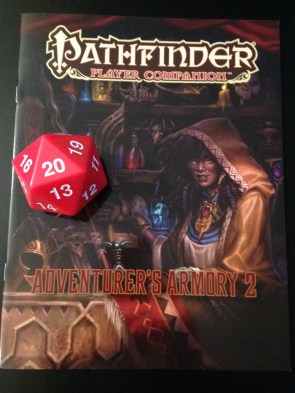
Adventurer’s Armory 2

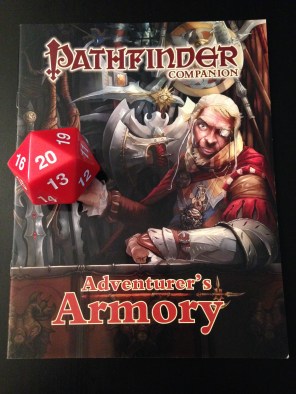
Things are pretty crazy around my house right now. My son’s sick (again), and both of my children had their birthdays this past week. But, as things begin to settle, we’re ready to get right back into the swing of things here on d20 Diaries. So today, we’re taking a look at another book I recently got my hands on: Pathfinder Player Companion: Adventurer’s Armory 2!

d20diaries Adventurers Armory 2.jpg
Pathfinder Player Companion: Adventurer’s Armory 2

The Adventurer’s Armoury 2 is a sequel to the ever-popular Adventurer’s Armory, which was also released as a Player Companion back in April 2010. As a product from the Player Companion line, it’s a thin, soft-cover book intended for use by players, which clocks in at 32 pages in length. In my opinion, the Adventurer’s Armory was among the most universally useful books in the Player Companion line, so I was thrilled to pick up the sequel.
Without further ado, let’s take a look at what’s inside…

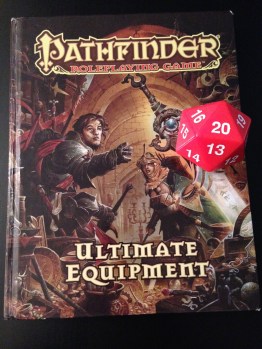
The inside covers both feature purchasing charts showcasing the new equipment in this book. The front inside cover’s home to weapon and armour charts, while the back inside cover’s where you’ll find everything else. This includes adventuring gear, alchemical remedies, alchemical tools, alchemical weapons, poisons, clothing, magical items, and mundane tools. Looking past the covers we find the table of contents and then the introduction.

d20diaries Adventurers Armory.jpg
Pathfinder Companion: Adventurer’s Armory

Although it doesn’t sound very exciting, the introduction’s home to one feat, Equipment Trick, which is an old, quirky feat originally printed in Adventurer’s Armory which allows your characters to make interesting uses out of a specific type of equipment chosen at the time of taking the feat. Only certain items have equipment tricks written for them, and in order to use each trick you must meet its specific requirements. Sound confusing? No worries. You take the feat and select which kind of item you’re going to learn tricks with, then read the list of tricks. If you meet the requirements for any of those tricks, you can use them. If not, keep an eye on them. You can use the trick as soon as you do meet the requirements, even if its many levels down the road. Curious what kind of equipment you can utilize? We’ll touch on that again later. For now, just know there’s plenty.

After the feat, you’ll find a collection of five traits which are all themed around where you buy your goods and feature some of the most infamous marketplaces in the Inner Sea. Including Absalom’s Coin District, Cassomir, Katapesh, Ostenso, and Riddleport, each of these traits are flavourful and fun. That being said, they’re not staples. You won’t read them and decide every one of your characters has to have it. My personal favourite? Absalom’s Amiable Briber, which is a social trait allows you to offer bribes without fear. The first time someone refuses a bribe you offer, that person’s attitude towards you doesn’t worsen, even if the offer normally would offend the person. Cool! Cassomir’s Bountiful Herb-Lore and Riddleport’s Master Messenger are also pretty cool, so be sure to check them out.

Lastly, the introduction features a handy rules index that lists the page numbers of each feat, trait and other rules option presented in this book. By now, one thing’s already clear: not everything in Adventurer’s Armory 2 is new. Some of the equipment and player options in this book are reprints from other out-of-print books. An understandable move, and helpful for those of you who might not own the original sourcebooks.

Moving on from the introduction we come to one of my favourite sections of the book: Equipment Packages! What, you may ask, is an equipment package? Simple! It’s a big collection of gear that your characters can choose to start with. What does it cost you? Two things! First, it costs a trait: Well-provisioned Adventurer. Second, it costs your starting gold. That’s right! If you take this trait you don’t staring gold at all. So, are these equipment packages worth it? That depends. In terms of value, each of these packages is worth about a thousand gold pieces. That’s a lot! In addition, the gear is well-chosen, and varied. Each allows for a minor amount of tweaking with GM approval, which should make them even more accessible. Having that much extra wealth can mean the difference between life and death at level one. However, whether or not you personally feel the gear is better than a +1 to a saving throw, a bonus to a few skills, turning a skill into a class skill, or picking up a quirky minor ability, is entirely a personal preference. My husband wasn’t wowed by it, but I certainly was, and my kids also loved it. I wouldn’t use it for all of my characters, of course, but for plenty these equipment packages are an option I’d consider. In addition to a well-chosen set of equipment geared at many different class types, these packages also include the weight for both medium and small characters already calculated. A wonderful thing if you don’t really like number crunching weights and carrying capacities, determining the adjusted weights for small sized characters, or coin counting to the copper piece. These equipment packages can also be purchased for 1,000 gp, for those of you who don’t want to use a trait to get one. As an aside, GMs can also use these equipment packages as rewards, care packages and gifts to be handed out to your players by grateful NPCs.  The only obvious downside? They’re heavy. With the lightest weighing in at 44 pounds (28 3/4 for small characters) your low-strength characters are bound to be overburdened by them. I’d love to see some more light-weight options appear in the future. My favourite equipment packages turned out to be the Arcane Adept (intended for arcane spellcasters) and the Daring Bravo (intended for any lightly armoured combatant). My young son loved the Wilderness Warrior, while my daughter loved the Mystic Guide (which she’d like to use on her next druid). After you’ve given the equipment packages a read, leave us a comment and let us know if you intend to use any. I’d love to hear your thoughts.

Next up we come to what most people will purchase this book for: armour and weapons. First up’s the armour. With eight new choices varying in price from 1 gp to 2,100 gp, there’s a wide variety of new armour, even if there aren’t many. My personal favourites are the Erutaki coat, the Varisian dancing scarves, and the reinforced tunic. In addition to armour, this book introduces a new type of item called a modification. Modifications can be applied to armour by a skilled smith, and offer both a benefit and a drawback. You’ll also find a feat later in the book that allows players to better utilize armour modifications. Although cool, none of these modifications are cheap, so invest with care. I’d recommend the nimble modification, which increases an armour’s Max Dex by two, reduces its check penalty by one, but costs 1,000 gp, and adds five pounds to its weight. Burnished also sounds like lots of fun at lower levels. For a cost of 500 gp, five pounds of added weight, and a -10 penalty to stealth in areas of bright light, you can dazzle your enemies with your brilliantly shining armour! Capable of targeting everyone who can see you within 30 feet, this ability has the potential to be really effective. However, each target can only be affected once per day. Other armour modifications include deflecting, double-plated (which I expect will see a lot of use), jarring, nimble, razored, slumbering (which is SUPER handy) and vitalguard.

With that we come to the Weapons. There’s a whopping twenty-five new weapons in this book, most of which are exotic, and only one of which is simple. I’m pretty partial to the cutlass, the lantern staff, and the spiral rapier. That being said, the flask thrower’s going to be incredibly handy for some characters. Past the new weapon options you’ll find a handy list showing what weapon group each belongs to, followed by seven weapon modifications. Weapon modifications work in the same way as armour modifications do, and also feature some feats which can improve their efficiency and capabilities. In addition, modified weapons have their weapon type increase by one step (from simple to martial, and martial to exotic). The weapon modifications included in this book are brutally weighted, dual-balanced, jagged hooks, razor-sharp, serrated edge, tactically adapted, and versatile design. Personally, I think that dual-balanced (which reduces the penalties for two-weapon fighting by -1) and tactical adapted (which allows you to add weapon qualities like blocking, disarm, and nonlethal to a weapon) are bound to see the most use in play.

All in all, I like the idea of modifications more than I like them mechanically. I’m unlikely to invest in them due to their hefty price tag, and the extra weight. Of course, if I’m playing a character who has extra cash to spend, a wide array of proficiencies and carrying capacity to spare, I’d give definitely them a try. I’m very curious to see them in action.

Next up we have a single page of feats. There’s nine of them total, and all of them are combat feats. Seven have to do with armour and weapon modifications, while the last two involve utilization of the dwarven dorn-derger, an exotic weapon that appears in this book. Although I’m sure some people are bound to try out the modification feats, especially Creative Armorsmith and Creative Weaponsmith, I found the feats on offer so specialized that I’m highly unlikely to use them. It’s a shame, but luckily these aren’t the only feats up for offer in Adventurer’s Armory 2.

Leaving the weapons and armour behind we come to the next section of the book, which showcases eighteen new pieces of mundane gear. Of them, I’d guess that only five or six will see play with any kind of frequency. The most useless item on the list would definitely be the false teeth, while the most universally used would probably be the charcoal. It’s so much better than buying ink and an inkpen! But, my favourite? The spring-loaded scroll case. This snazzy little case is five gold, and can be hung from a belt or backpack. It holds a single scroll which can be retrieved as a swift action. Shiny!

After the adventuring gear is a new type of equipment known as preparatory gear. These are items that you practise with for an hour everyday, then make a specific skill or ability check. If you pass, you gain a benefit that lasts for 24 hours. For example, the drowner’s helmet can help train you to hold your breath longer and the practise straitjacket can help train you to escape from bindings. There’s only two other preparatory gear in this book: the hanging board and a thief trainer. Each option’s a bit pricey–between 35 and 200 gp–but is certainly useful. The one hour daily training requirement might be a turn-off for some players, but I don’t mind at all. It’s particularly useful for non-spellcasters who travel with spellcasters and can give them something to do while your casters  prepare their spells or pray to their deities. Since the benefits of each last 24 hours, training can also be done at night before heading to bed. All in all I think it’s an intriguing concept, and I’m excited to see them put to use.

Up next is some equipment tricks for use with a few fun bits of mundane gear: ladders, lanterns, mirrors and poles. Each type of gear has between three to five tricks associated with it (poles have three, ladders have four, while lanterns and mirrors have five each).  Some of these tricks require a number of ranks in an associated skill to utilize, while others require specific feats as the prerequisites. The lantern tricks are the most utilitarian, and allow users to make their lanterns burn brighter or dimmer and explode like alchemist’s fire when thrown. When being held in the same hand as a shield, your lantern can deal some fire damage with each shield bash. Finally, you can toss lantern oil in an opponent’s eyes with the dirty trick maneuver (your lantern or theirs) which can both blind and burn them. The mirror tricks also sound like lots of fun. My personal favourites let you shine light into your opponents eyes, reflect gaze attacks, and even penetrate illusions! No longer is your mirror just for looking around corners!

Leaving behind the mundane adventuring gear we head into the exciting world of more mundane gear! This time it’s tools and tool kits we’re taking a gander at. Both of these sections are small, with only six items in each. As far as tools go, I was excited for a duo of new bear traps, while my daughter insisted that the portable terrarium was the greatest item in the entire book. (Warning: She may have been biased by the adorable picture of the terrarium, which features a cute little frog in a glass globe…). As for tool kits, I’m partial to the elemental explorer’s kit, and the underground survival kit, although I’m more than ready to admit that the fiendslayer’s kit and the undead survivor’s kit will see more use in play. And what other kits are up for offer, you ask? The emergency interrogation kit, and the invisible enemies kit.

The next section is a single page that features seven new poisons. The cheapest poison up for offer is the delightfully named rainbow scarab shell. At a price of only 150 gp per dose, this iridescent toxin deals strength damage upon injury once per round for four rounds. Although it’s not particularly difficult to resist or overcome, victims who reach 0 strength also begin to suffocate. The priciest poison also happens to be my favourite.  Grinding joint paste is an ingested poison with a ten minute onset which costs a whopping 2,100 gold per dose. Made from dried and ground up cockatrice organs it causes a decent amount of Dexterity damage for six minutes. In addition, movement becomes so painful that the victims take damage whenever they swing a two-handed weapon or move more than ten feet in a round. Ouch! I’m also pretty partial to the Leng’s tears, which is a fast acting contact poison which causes vivid hallucinations and paralysis. Failing just once causes a full ten minutes of paralysis, with unlucky victims being unable to move for an entire hour. Nasty!

Following these nasty poisons is another set of equipment tricks, this one for instruments. Of all the equipment tricks offered in this book, this set are by far my favourite. In fact, they might be my favourite equipment tricks ever. I love them! Attention grabber lets your character draw attention to themselves in order to cover their allies movements. Goad animal lets you command friendly animals to perform tricks they know as a free action or push them to perform tricks they don’t know as a standard action. Jaw-dropping distraction lets you feint with a perform check instead of a bluff check. Play to the crowd let’s you use a perform check in place of an initial diplomacy check to influence an NPC, and finally, ruffian’s riff lets you treat an instrument as an improvised weapon with the performance special feature. Got a masterwork instrument? Then it counts as a masterwork weapon. Got a magical one? It’s treated as magic for the purpose of overcoming damage reduction. Awesome. I’m definitely going to be giving these tricks a try.

Side by side on the same page with the instrument equipment tricks is a column that I actually loved a lot. Examples of masterwork tools. I know, it doesn’t sound very exciting. But, think of it. How often do you purchase the generic ‘masterwork tools’ from the Core Rulebook. On occasion, right? Maybe if you’ve got a character who has a craft or profession. But this list reminds us that these tools are far more useful than the average player has been giving them credit for. This lists a large number of skills (which don’t already have a designated tool or tool kit), and provides example tools that you could purchase to improve those skills. Want to improve your acrobatics check? Pick up a balancing pole, gymnast’s slippers or a vaulting pole. Feel like being menacing? You could invest in frightening tattoos, an executioner’s hood, or a set of torturer’s tools. How about a reference book to help with a knowledge check, or lubricating oils to help escape bonds. This list really got me thinking about the term ‘tool’ and how they can be applied to a wide variety of characters and skills. I was honestly surprised how useful I found this little column, and I’m sure plenty of other players will get good use out of it, as well.

The next two pages revolve around clothing, with the first page being ten new articles of clothing, and the second being six new spells that need to be cast upon specific articles of clothing. The burglar’s outfit, courtesan’s outfit and squire’s outfit all provide great new options for starting outfits, while the spells allied cloak, grappling scarf, and surefoot boots were all great fun.

Past clothes we get to one of my favourite sections in the book: impromptu equipment. That’s right! Want a list of example objects and their damage for reference? It’s here! Want some magical items that help improvised weapons? Also here! There’s also a few neat feats and, my personal favourite: special qualities that some improvised weapons can possess. So whether you’re wielding a pronged taxidermic moose head, a gross hunk of rotting meat, a heavy anvil, or a burning log, these improvised weapons qualities are a lot of fun that can really get your player’s creativity flowing. It’s going to be a blast! As for feats, check out hook fighter, which lets you turn a grappling hook into a deadly weapon. For magical gear be sure to pick up gloves of improvised might and quick metal bracers, both of which are awesome options for characters interested in focusing on improvised weapons.

As we near the end of the book we find ourselves among a pile of products that can be created with arguably the most popular type of crafting in Pathfinder: alchemy. This section features two new alchemical remedies, three new alchemical tools, and seven new alchemical weapons (four of which are forms of alchemical bolts). My personal favourites were troll stypic (a painful paste which can grant users fast healing for up to 8 rounds) and the tress tincture (an alchemical weapon that causes raid hair growth, which can be terribly irritating, as your opponents hair constantly gets in their eyes and obscures vision. Yes, you read that correctly!). In addition to new alchemical substances we also get three new sets of equipment tricks which showcase the classics of alchemy: smokesticks, tanglefoot bags, and thunderstones. Exciting! Although all three are awesome, the tanglefoot bag tricks are my favourite. If you’ve got a sneaky or stealthy character, definitely give the smokestick tricks a read. The final part of the alchemy section is a new kind of brew called concoctions. These creations are less stable than your typical alchemical creations and are known for having bad side effects. In addition, players who consume more than one concoction at a time roll on a table of random effects. Half of these effects are good, and half are bad. Of those, they vary from alright and not too bad, all the way up to amazing and horrible. If you’re a gambler this can be great fun to fiddle with, but with the options ranging from ‘unleash the full potential of my body and mind’ which allows you to gain a +4 bonus on two ability score for 24 hours, all the way to the concoction explodes within your stomach, or is highly toxic, I’m not really into to testing my luck. The concoctions themselves are typically 50 gold each with the priciest being 100 gp. Each offers a benefit and a drawback. The crystal-sweet concoction gives you +2 on diplomacy and -4 on sense motive, while the sphere-song concoction gives you +1 on Will saving throws and a -2 on initiative. Although interesting, I think these items have great potential for GM

use. These can easily be added into drug dens, dangerous bars and high-end noble parties. They can also be focal points for social encounters, or used as a ‘test of faith’ or as ‘dares’ by gangs, religious organizations and the nobility. Whatever use your group happens to find for them, they’re certainly a colourful (and potentially dangerous) experience.

The next two pages of Adventurer’s Armory 2 feature a variety of equipment from two distinct regions: the Dragon Empires and the Padishah Empire. Each region has an entire page to itself, and contains a few articles of clothing, alchemical remedies or tools, and a special material. Spirit-vision ink turned out to be my favourite piece of equipment from Tian Xia, while the special material, sunsilver, was my favourite object to come from the Keleshite culture.

The final section of this book turned out to be among my favourites. It releases rules for a brand new type of construct you can make right from level one: poppets. If crafting’s not your cup of tea, you can also purchase these little fellows. Although too costly to purchase as a brand new level one character, they’re certainly affordable by the time level two rolls around. These tiny or small creations can be upgraded and modified with a host of abilities, and can even be taken as familiars with a special feat. If you’ve been reading my blog for a while now, you may have already heard me speak about poppets. My seven-year-old son made a mad scientist who is obsessed with creating new life, and currently has two poppets he’s hand-crafted with care. To read more about poppets and our experiences using them in games, read my blog post Character Focus: Professor McMaan, and Crown of the Kobold King: Part One. Short summary: we love them.

And that’s it. We’ve reached the end.

So when it comes down to it, what do I think of Adventurer’s Armory 2? Was it worth the money?

d20diaries Ultimate Equipment
Pathfinder Roleplaying Game: Ultimate Equipment

I think so. This books features a lot of new equipment and gear, as well as some cool new rules to go with them. Although most of the rules are quite specialized and exclusive to certain character builds, the items in the book are much more varied and useful. It’s one of those books that you’ll pull out every time you’re making a new character, and pull out again for your first few level ups. Certainly, it’s not as useful as Ultimate Equipment. And with the upcoming change to Pathfinder Playtest this next August, it’s unlikely to be as popular as its predecessor, Adventurer’s Armory, was. But as far as Player Companions go, it’s definitely one of the most universally useful ones they’ve printed. In my opinion, it’s worth it.

Have a copy of Adventurer’s Armory 2 at home? Let us know what you think in the comments! Do you have a favourite item featured in its pages? Let us know that, too!

I hoped you’ve enjoyed this look at Adventurer’s Armory 2.

Until next time,

Jessica


Pathfinder Playtest: Actions! Reactions! And a Glass Cannon!

As you may have heard, Pathfinder recently announced that in August they’ll be releasing the beta version of Pathfinder’s Second Edition ruleset. For the first few months these rules will be available for a free download on Paizo’s website, and feedback will be collected from us, the players. Known as Pathfinder Playtest, this news has stirred up a lot of excitement. As mentioned in my previous post on the matter, I’m excited for the new edition, but also afraid. It’s not that I worry about the rules–I know I’ll like them–but I worry about the investment. I have no intention of leaving behind 1e, especially in regards to the Pathfinder Society. Although I know I’ll switch over to 2e eventually, the cost that’s going to be involved when 2e officially launches is going to prevent me from making the transition immediately.

Pathfinder is slowly releasing some spoilers and details on their blog of the new Playtest rules, and has an extensive FAQ section dedicated to the game already. So what do we know? For starters, alchemist will be one of the classes released with the original core classes in the first book. Also, goblins will be among the core ancestries up for offer, which is exciting! Who doesn’t love goblins? Wait! Ancestries? What’s that? It’s a new name for races, which will influence your character as it always has. In addition to ancestry and class, your character will also be influenced by a third category called your Background. I’m not sure what this is exactly, as details haven’t launched yet, but it sounds like having a theme from Starfinder. There’s also plenty of other little things that have been hinted at, but the only things that have been spoilered in any kind of detail is the action system.

You know all that work you put into learning which actions are standard, move, swift and free actions? Ignore that! Instead, everything costs one Action. During each round, every player gets three actions. Want to attack three times? Go for it! Draw a potion, move and administer it to someone else? Sure! Move and attack twice? Yup! Open a door, move through, shut a door? Yup! Three actions. Do what you will. Those of you choosing to attack multiple times take a cumulative -5 penalty on those additional attacks (so the second attack is at a -5 penalty and the third is at a -10). The only exception mentioned so far in regards to the ‘one Action’ rule is spells. Most spells will cost 2 Actions, some can be cast as 1 Action, and some will be cast at variable Action costs, which will increase the spell’s effectiveness. Every character also gets a single Reaction that they can take between the start of their turn and the start of their next turn. In addition to attacks of opportunity, each class has special Reactions they can take, like a fighter readying a shield against an attack in order to reduce its damage. So far I like this concept. It’s effective and uncomplicated. But will it work? After hearing it in action on the Glass Cannon Podcast special where they tried out Pathfinder Playtest alongside Jason Bulmahn and Erik Mona, I think it’s going to be great. This podcast was a lot of fun to listen to, and featured a lot of cool glimpses at the new rules.

My favourite thing I learned from the podcast? Initiative is no longer a single score. Instead, what you roll for initiative is determined by what you’re doing. For example, if you’re looking around and keeping alert it will run off of your Perception. If you’re slinking around and hiding at the time, Stealth will be what you’re rolling. And if you’re checking out the terrain and looking for tracks, you’ll roll Survival for your initiative. It’s a neat way to run initiative that sounds like a lot of fun.

For further details on Pathfinder Playtest check out Paizo’s website, blog post, or the podcast mentioned above.

What’s surprised me more than the new rules we’ve heard about is the variety of attitudes I’ve seen on the Paizo Messageboards about it. Some people are thrilled, which is what I expected, and some people are worried–also expected. Some are upset. One GM was so angry he immediately dropped every game he was GMing, leaving dozens of players in the lurch! Seriously!? How unprofessional can you be? Luckily, the wonderful community of players on the Paizo Messageboards leapt to the rescue and are managing replacement GMs as we speak. My character leaps for joy and thanks her lucky stars.

Since the announcement of Pathfinder Playtest, the news has settled. The shock has faded. And we’ve received a glimpse at the new rules and how play works.  So how do I feel now? Excited. I can’t wait until we get to learn more about the new system.

And you? How are you feeling about Pathfinder Playtest and the upcoming Pathfinder 2e?

I’d love to hear your opinions!

Jessica

Starfinder Society Scenarios

I love the Starfinder Roleplaying Game (Starfinder Core Rulebook). But, I also didn’t want to leap right into Starfinder with my own custom adventures. I wanted to try it out as a player first. Obviously, there’s not many options right now. There’s the Starfinder Adventure Path: Dead Suns (Part One: Incident at Absalom Station), which looks great, but I didn’t want to lock my family into a long campaign with their first characters. I wanted to do something short. Something that got started right away. That hopped right into the action!

So I turned to the Starfinder Society.

The Starfinder Society is a lot like the Pathfinder Society, but in space. It’s a world-wide organized play campaign where anyone can make a character and play a single short adventure (usually four hours in length). The adventures are called scenarios and available as PDF downloads on Paizo’s website for only a few dollars each (usually $4.99 American). These scenarios are short, action packed, and fun. There’s other rules you’ll need to know for playing in the Starfinder Society, all of which are available as a free download on their website, here. In addition to special rules, you should also know a bit about the setting, and the recent achievements of the Starfinder Society. Paizo’s website says it better than I ever could:

“The gods have mysteriously spirited Golarion away to an unknown location and refuse to answer questions about it. In its place, the cultures of that world have evolved and spread throughout the solar system, especially to a vast space platform called Absalom Station. Gifted access to a hyperspace dimension by an ascended AI deity, the residents of the system suddenly find themselves with the ability to travel faster than light, and the race is on to explore and colonize potentially millions of worlds. But there are horrors out there in the darkness…”

“The Starfinder Society is on the brink of ruin, having had to resort of mercenaries to maintain their hold on claimed planetoids, stellar regions, and archeological sites. After training to join a new cadre of Starfinders, it is up to you as a member of the Starfinder Society to help restore the organization. The Starfinder Society, with memories of the Scoured Stars incident still fresh, embarks on the quest to rebuild and discover the truth of what happened in the inaugural season: Year of Scoured Stars!”

Playing in the Starfinder Society is a blast, and I highly recommend it either in person, or online via play-by-post (which is my preferred method), but you don’t have to use these Starfinder Society Scenarios for organized play alone. These scenarios also make great mini-adventures for playing at home in a more casual setting. I’ve continually been impressed with their quality, and the continuity of the scenarios. When used together they’re already beginning to tell a longer, more important story than they do on their own.

Today we’re going to take a look at the Starfinder Society Scenarios that are currently available for purchase, and let you know our favourites. Although you’ll find references to events in each that I liked or disliked, and comments about specific characters, these scenarios are not explored in detail. It’s not my intention to spoil the events in these scenarios, or give summaries and full reviews, but to share my opinions and provide recommendations. That said, if you want to avoid even minor spoilers I recommend you check out a different article. So sit back, and get ready to enter the Drift!

Scenario #1-00: Claim to Salvation is a Tier 3-4 adventure which is unlike any of the other scenarios. In this special scenario you don’t play your own Starfinder Society character. Instead, you play one of the level four pre-generated iconic characters. These characters are mercenaries hired by the Starfinder Society only a few months after the Scoured Stars incident decimated their ranks. These mercenaries are tasked with exploring the surface of a ‘fake-moon’ known as Salvation, for the purpose of determining if the site is worth further exploration, or is a dud that needs shelving. As one of the very first scenarios released, this adventure has some great supplementary rules notes and cheat sheets included within it for ease of play, which is a really awesome addition. This adventure is really fun, and has a cast of colourful characters, both allies and enemies, which are a blast to interact with. The starship battle in this adventure is really unique and kooky. Plus, it’s got goblins in it! Who doesn’t want to see goblins in space?!? Despite that this was a really fun adventure, there are two major downsides for me. The first, is that you need to use pre-generated characters if you’re playing it in the Starfiner Society, as mentioned above. And the second? You’re only exploring the surface of Salvation and determining if the site is worth further exploration. Exploration of the interior continues in another adventure, #1-09: Live Exploration Extreme!, and I strongly believe it will continue on in at least another scenario or two further down the line. That means that when you reach the end of this scenario you’re likely to feel as a player like its unfinished. Although I’m definitely going to use this scenario with my family as part of an ongoing campaign, I’m unlikely to play it in the Starfinder Society. Pre-generated characters aren’t really my thing. Overall, I give this scenario three out of five stars. However, if you enjoy using pre-generated characters, or, if you’re going to use it in a home campaign, I’d increase it to four out of five stars.

Starfinder Society Quests: Into the Unknown is the next adventure we’re going to take a peek at. This tier 1 scenario is awesome! For starters, Into the Unknown is a free download. So click the link and get downloading. Its a repeatable adventure, which means that if you’re playing it in the Starfinder Society you can play it once for each character (as opposed to only once as a player). That’s a very  important thing when there’s so few scenarios to choose from. Like Claim to Salvation, Into the Unknown has some wonderful cheat sheets and extra rules listed, which makes it awesome for beginner players and GMs. As a quest, it’s formatted a bit different than the other scenarios. Instead of being one four hour long adventure, its a connected series of five short one-hour long adventures. Each of these short quests forms one cohesive, wonderful adventure that feels much grander in scope than your typical scenario. These quests are meant to be played in order, and intelligence gathered in the first four quests can provide you with an advantage in the final quest. The adventure itself has got a bit of everything in it: fun social interactions, local combat, and starship battles. My kids loved roleplaying with Julzakama and the ysoki family who own the Vat Garden in the first quest, ‘Salvation.’ The Vat Garden encounter also had some tricky environmental effects that made it unique. I loved the ‘Boarding’ quest, but did have a few qualms with it. There’s no mention of any bodies, which is unfortunate. Also, this scene could really benefit from an ominous, atmospheric opening description. I loved the battle in ‘Salvage,’ although this scene also could have benefitted from a scripted description of the wreck. There’s a total of two different starship battles in these quests, both of which are very different. I would have loved to learn more about the crew of the Lawblight, though. For such a cool ship with a lot of build-up, we don’t even learn the name of the captain! Events in this scenario tie into later adventures, including #1-02: Yesteryear’s Truth. In addition, there’s further hints that this scenario will tie into other unwritten scenarios in the future. All in all, Into the Unknown is one of my very favourite scenarios, and I give it five out of five stars. I highly recommend it as the first scenario for new players to try.

Up next is scenario #1-01: The Commencement. This is a repeatable scenario that does not feature any starship battles. This scenario is intended as an introduction to the Starfinder Society and its major factions. As brand new Starfinders, you’ll need to complete a task for each of the faction leaders. These tasks are fun, but quite minor. Some of them are… silly. That being said I enjoyed the silliest one a lot. (Star Sugar Heartlove!!!, here’s looking at you!). I found there was a bit too much rolling and math during the Acquisitives mission, which bogged down gameplay quite a bit. The Wayfinder and Exo-Guardian missions were great fun, while the Dataphiles task allowed characters with a lot of skills to shine. One of the best parts of this scenario is its adaptability. Multiple parts of this scenario are chosen randomly each time you play, which is just awesome in a repeatable scenario. From vehicle statistics, to enemy abilities, and even alien appearances and motives, although the tasks don’t change, the details do, which will make for a fresh experience every time. Conceptually, I like that they give fresh agents minor tasks, but in practise it feels… underwhelming. Not very exciting. For that reason, although this is a great first adventure for Starfinder Society characters, and a wonderful introduction to the factions, I don’t recommend it be your first Starfinder experience. If you’re new to Starfinder, play Into the Unknown instead. This adventure features events that tie into other adventures, as well as characters that continue to play a role in the Year of Scoured Stars. I give it three out of five stars.

Scenario #1-02: Fugitive on the Red Planet is a tier 1-4 adventure that doesn’t feature any starship battles. This scenario sends you to the Mars-like planet of Akiton on the trail of an ex-Starfinder who stole an artifact from the Society. This is a another fun adventure. I like the encounters, both social and combat, but the scenario itself was very ‘on the rails.’ Now, this isn’t surprising for SFS or PFS scenarios, and it doesn’t feel like it’s constraining, but it is worth noting. I was impressed that the investigation in Maro has an effect later in the scenario. I really enjoyed the inclusion of AbadarCorp in this scenario, and that there were repercussions or benefits based on your interactions with them. I also liked that infamy repercussions were built right into the module, which is a nice early example that evil actions don’t work out for your characters in the long run. The final battle’s location was wonderfully varied, and the inclusion of the mine carts made it very dynamic. Overall, I really enjoyed this scenario and give it four out of five stars.

Scenario #1-03: Yesteryear’s Truth is a tier 1-4 adventure that contains one starship battle. This mission is of particular importance to the Wayfinders faction and sends you to explore a newly discovered planet. I found that the starship battle was too long, but a slower launch rate of the combat drones, or less hp for each drone would fix that easily. I really loved the premise of this adventure. It’s very much a ‘first contact’ situation, and I thought it followed through on this wonderfully. As expected for a scenario of this kind, social skills are very important to the mission, which could be hard for some groups. That being said, they have plenty of chances to make friends with both types of locals, and the module can progress as scheduled even if they fail to do so. Finally, I loved the history this scenario lets you uncover, and that your actions can affect the planet’s future. This scenario features a planet that was first mentioned in Into the Unknown, and introduces Winks, a character who will later be met again in Scenario #1-04: Cries from the Drift. I give it five out of five stars.

Scenario #1-04: Cries from the Drift is a tier 1-4 adventure that sends the players to investigate a missing Starfinder ship. It contains one starship battle. This mission is of particular importance to the Exo-Guardians faction and is highly likely to link to further missions regarding Sangoro’s Bulwark. I thoroughly loved this scenario, but be warned, this one is NOT for the squeamish. It features body horror, gore and suspense. Because this scenario really benefits from all players being surprised, I won’t be saying anything else about the events contained within. What I will say is that it connects to lots of other adventures. It name-drops Winks, from scenario #1-03: Yesteryear’s Truth. It also introduces a starfinder team known as the Manta Corps, who will make a further appearance in scenario #1-08: Sanctuary of Drowned Delight. This social encounter is a fun way to let players brag about their accomplishments. There’s some fun goodies hidden in this scenario for players who’ve already experienced scenario #1-01: The Commencement, including the return of Zigvigix and his warehouse. It also features tie-ins to a not-yet-released scenario that involves a Strawberry Machine Cake concert. I give this scenario five out of five stars, but remember: it’s not for everyone!

Scenario #1-05: The First Mandate is a tier 1-4 adventure that tasks your players with impressing dignitaries and contacts who are important to the Starfinder Society. It is of particular importance to members of the Acquisitives faction, and the Second Seekers faction. There are no starship battles in this scenario. This scenario introduces six really important NPCs, including Luwazi Elsebo, leader of the Starfinder Society. It also introduces Royo, a ysoki Forum member, and Naiaj, a gnome bleachling Venture-Captain. All three of these characters were fun to interact with, detailed, and are certain to make plenty more appearances as the Starfinder Society continues. There’s also two other important NPCs of note, Iteration-177, an android Aspis Consortium member, and Zo!, an Eoxian media mogul. Despite the premise of this adventure, it doesn’t all come down to social skills. There’s plenty of combat to go around and the NPCs varied interests mean that even the most awkward characters have a chance of impressing someone. The NPCs represent a wide variety of races, which was really refreshing. The social encounters themselves are a lot of fun, and the rules introduced to measure the players success aren’t overly complicated. In addition to the intangible benefits of impressing the dignitaries, there’s also visible, mechanical benefits that occur in the scenario, which are sure to make players pleased. I felt that the investigation part of this scenario was really well done. The clues were subtle, and it didn’t beat you over the head with details, which was really refreshing. The final battle allowed for multiple different approaches, methods and tactics, all of which look to be a lot of fun. So far two other scenarios are connected to this one, including #1-06: Night in Nightarch, and #1-09: Live Exploration Extreme! Although I wasn’t sure I’d like this scenario from it’s premise, I ended up really loving it. I give it five out of five stars.

Scenario #1-06: Night in Nightarch is a tier 3-6 scenario that grants your players leave to track down a missing weapons shipment from a drow thief. The best part? She’s on a planet of drow. Yeah. Take a second and imagine that. Yikes! This scenario doesn’t feature any starship battles. I absolutely love the premise of this scenario. It’s got some fun NPCs to interact with, awesome drow artwork, and does a great job of setting an atmospheric tone with only a few short sentences. I really enjoyed that the mission was on a timeframe, and the quick mechanics that were used to speed up/determine time. The office levels were well-detailed and organic. It had character, which was really nice. There were multiple ways to go about one of the encounters, which is nice. The outcome of the battle doesn’t change too much from one to the other, but its nice to have the option. I even loved the little details hidden here and there, like the advertisements–particularly the one featuring Zo!’s reality tv show. I give this scenario four out of five stars.

Scenario #1-07: The Solar Sortie is a tier 1-4 adventure that sends the players undercover on Brilliance, a solar satellite owned by the Arch Energy Consortium, for the purpose of recovering classified information. To this end, the players must earn the friendship of Envar Tamm, the ‘boss’s’ hard-partying son. This scenario could contain one starship battle. This scenario is fun and quirky. It requires subterfuge, social skills and computer skills to succeed, but is not without combat. Because of the skills required, its not a scenario for everyone, but it did a great job of making all kinds of characters useful. Envar himself is a great NPC who’s going to be a blast to play at the table. This scenario features a character introduced in #1-01: The Commencement, and can be affected by your players experiences in #1-02: Fugitive on the Red Planet. I give this adventure four out of five stars.

Scenario #1-08: Sanctuary of Drowned Delight is a tier 3-6 adventure that has your players investigate an old Starfinder Lodge on an aquatic planet. In addition to determining if the Lodge is salvageable, they also need to make contact with the first group who was sent on this mission, the Manta Corps, who were introduced in #1-04: Cries from the Drift. This mission is of particular importance to the Wayfinders faction. It does not contain any starship battles. This scenario is location based, which is to say that they are given a single location to explore, and can do so in any fashion and order they desire. In addition to room-based encounters and there are also event-based encounters, which are a lot of fun. In addition to getting to explore a great location on a new planet, players will get to meet and interact with a new alien race. This is a great adventure for players who love to role-play social encounters. It also features investigation elements which are wonderfully subtle. This scenario reintroduced us to Fitch and the Master of Stars, which is the same ship visited in #1-01: The Commencement. This scenario is just… AWESOME! I give this scenario five out of five stars.

The last adventure we’re going to take a look at today is Scenario #1-09: Live Exploration Extreme! This is a tier 1-4 adventure which is a direct sequel to #1-00: Salvation’s End. It also has ties to #1-05: The First Mandate, and features Zo!, who was met in that scenario. It is the first (likely of multiple) scenarios that will delve into the fake-moon, Salvation. The catch? In the aftermath of the Scoured Stars incident, The Starfinders had to rely on mercenaries, investors and powerful organizations in order to keep operational. One such investor was Zo!, a undead Eoxian media mogul. He provided the Starfinders with a vast amount of funding, on the condition that if any important discoveries were made on those sites the Starfinders would cease investigation immediately, until Zo! and his camera crew were ready to document the findings and turn it into a new reality television special. That’s right! You don’t just get to explore an awesome ruin and make amazing discoveries, you have to do it alongside a film crew while impressing a live studio audience! It does an awesome job of playing up this quirky experience, including pulling characters aside to ask prying questions, and having the studio audience vote on how some situations should play out. This adventure is populated with a ton of entertaining characters. From the crew, to Zo!, and the people met while exploring Salvation, this is a scenario that’s overflowing with fun, engaging, social encounters. It’s full of personality, and I guarantee you’ve never played anything like it before. Aside from the wonderful ‘reality t.v.’ schtick it’s got going for it, the adventure itself–the things you find in Salvation–are really, really surprising. Honestly. Wow! I cannot wait for the investigation into Salvation to continue in another scenario, and I strongly hope that Zo! and his camera crew will be along with us for the ride. This scenario is one of my very favourites. I give it five out of five stars.

And that’s it! The first eleven Starfinder Society scenarios, specials and quests for your perusal. I don’t know about you, but I can’t wait to play through them all. But when it comes down to it, which ones were my very, very, favourites? Which ones blew my mind?

Into the Unknown, Sanctuary of Drowned Delights, and Live Exploration Extreme!

What about you? If you’ve got a favourite Starfinder scenario let us know in the comments below! Have experiences playing or GMing these adventures that you want to share? Do so! We’d love to hear from you!

Thanks for checking out d20 Diaries!

Until next time,

Jessica