Well, hello, world! Today’s a big day around the d20 Diaries family! So crack out your party hats and get ready to clap. I want to hear you all the way in Canada.
To start with, it’s the beginning of another school year. My daughter is entering grade one so this marks the first year she’ll be in school all day long, the first year she’ll be enjoying recess, and the first year she’ll be staying for lunch. My daughter loves school, so she couldn’t be happier! She’s bouncing in excitement and smiling so big her cheeks will probably hurt by days end. And as for my son? My son is entering grade two and although he’s happy to get to see his friends… Well, he’d rather stay home and play video games. Haha. He’s growing up so fast!
But, we’re celebrating not just the start of another school year for my children. Oh, no! We’re also celebrating our one hundredth post! That’s right. Cue the happy, cheering crowds!
Thank you, thank you… Hold your applause.
I’ve said it before and I’ll say it again: we’re still new around here. We’ve only been around nine months. Yup! Just nine. d20 Diaries is still in it’s infancy. There’s plenty more features we hope to add in the future, and more stories we hope to share. There’s a pile of articles waiting to be fleshed out, and many, many more adventures to be had. So for us, one hundred is a BIG DEAL.
d20 Diaries has become something bigger and grander than I could have ever imagined. We have some followers through wordpress, a lot through email, and regular readers from all over the world. Sometimes we get visitors from places I admit to never having heard of, which causes me to smile, think ‘that’s awesome!’ and look that country up. Clearly I’ve got to brush up on my world geography! Our views are increasing regularly and each time we get a comment I still squeal in surprise and delight. (Seriously).
The future’s looking bright!
So while I drink my celebratory cup of tea, and my kids get ready for another school day, let’s all raise our drinks and let out a cheesy ‘CLINK’ sound. Cheers, guys!
Thanks for reading. We appreciate it more than you know!
The Dead Suns Adventure Path has officially come to the end and I am thrilled for what’s coming next! It’s a rapid paced, Star Wars inspired campaign that pits the ‘little guys’ against the powerful militaristic Azlanti Star Empire: Against the Aeon Throne! This is the second Starfinder Adventure Path, and this time around they’re shaking up the format. For starters, it’s going to be a monthly release from now on. Also? It’s only three parts. This change is temporary, and will allow them to tell shorter, more diverse stories, with a more focused narrative. Against the Aeon Throne should take you to level six. It will be followed by another three-part Adventure Path, Signal of Screams, which is a delightful space horror that will begin at level seven. I know, right? Exciting. If you’re not ready to stop playing your characters after Against the Aeon Throne you can always pick right back up with Signal of Screams. After this they will go back to the six volume format for the fourth adventure path, Dawn of Flame, which happens on the sun! After Against the Aeon Throne comes to an end be sure to give Paizo your feedback. They’ll want to know if you like these changes, or prefer the six volume format.
But, enough about the future! Let’s hear about Against the Aeon Throne!
This new Adventure Path begins with Against the Aeon Throne: Book 1: The Reach of Empire. It’s written by Ron Lundeen and is intended to bring your characters from level 1 to 3. Your players will be creating characters hired to transport some much needed supplies to a new colony (named Madelon’s Landing) of just over a hundred people that was founded a few months ago on a planet in the Vast called Nakondis. This world is wild, and constantly shrouded in mist. Still, a pal of yours decided to move there, so paying them a visit is the least you can do. Besides, what could possibly go wrong? Right? Haha. Upon arriving you discover that the Azlanti Star Empire has conquered the colony! Your players must liberate the colony from the villainous Empire. But the Azlanti weren’t only interested in the colony. They were after something else: an experimental starship drive from an ancient ship that crashed on Nakondis long ago. To make matters worse, your friend is nowhere to be found. They’ve been taken! But why? In addition to the adventure itself, this issue features an article on the planet of Nakondis and the new colony of Madelon’s Landing. It also has a new theme: the colonist, a host of ships found within the Azlanti Star Empire (including drone fighters, and even ships that allow you to use mysticism and computers checks in new ways!). There’s also new creatures, of course: the carrion dreg template, the mucilaginous cloud, Azlanti adjutant robot, synapse worm, thermatrod, endiffian playable race and, my personal favourite, a simian creature known as a hobgar.
Against the Aeon Throne: Book Two: Escape from the Prison Moon is written by Eleanor Ferron and is intended to bring your player’s characters from level 3 to 5. Thanks to their efforts freeing Madelon’s Landing from the Azlanti Star Empire, the PCs have been deputized by the Stewards (a group of space police) and are on their way to rescue their friend. Not an easy task! They’ll have to enter the Azlanti Star Empire and figure out a way to break into a massive prison moon. They also get to visit a new space station. The articles in the back include information on the Azlanti Star Empire, some new gear, information of the many races and species that the Azlanti have conquered, and details on an Azlanti prison guard spaceship. There’s also some new creatures, including a radioactive dragon and a plant that snubs its nose at gravity (or would if it had a nose…).
Against the Aeon Throne: Book Three: The Rune Drive Gambit is the conclusion of this adventure path! It’s written by Larry Wilhelm and is intended for fifth level characters. Now that your PCs have rescued their friend they have to retrieve the starship drive the Azlanti retrieved from Nakondis. To do that they’ll need to find and break into a science laboratory, steal the engine, and get back to freedom. They also get to figure out why it’ so important and face off against the mastermind behind the attack on Nakondis. In addition to the adventure this issue also comes with ideas for continuing the campaign, an article on the Stewards, full details on a luxury Azlanti spaceship, and some new creatures (including fey and an aberration).
Against the Aeon Throne looks like its going to be an exciting change of pace that’s fun and personal. The shorter length is definitely going to appeal to some fans, including my husband and children. I can’t wait to strap on my laser pistol, make a rebel, and throw a wrench into the plans of the Azlanti!
Fire up the engines! It’s time to head into the Drift!
Want to know more? Check out the AWESOME trailer Paizo released for Against the Aeon Throne. My kids and I just watched it and they are literally bouncing up and down in excitement! Nice job, Paizo!
It’s been teased for a decade and finally — FINALLY — the Runelords are making their move! Yes! Today we’re taking a look at the brand new Return of the Runelords Adventure Path. I don’t know about you, but I’m excited.
Back before Pathfinder had its own rules set I was a huge fan of Dungeon Magazine. So, when it was announced that the run of the magazine was coming to an end, transitioning to Paizo’s new Pathfinder adventures was a no brainer. I didn’t have much extra cash at the time, so transitioning to 4th edition Dungeons and Dragons wasn’t an option. Pathfinder didn’t involve new rulebooks (…yet. Haha), and I could keep reading some awesome adventures.
I enjoyed the free module Hollow’s Last Hope, and it’s sequel Crown of the Kobold King. I loved the desperate, hopeless air of Falcon’s Hollow, and enjoyed the flavourful non-combat encounters in the adventures. But Rise of the Runelords?! I bought part one and was completely hooked. It was a fun, new twist on a classic style of adventure. As its sequels came out I was continually impressed. I loved that it took a bit of a tour of different adventure themes, from the horror of the The Skinsaw Murders, the depravity of The Hook Mountain Massacre, and even the vast, sandboxy exploration featured in the finale Spires of Xin-Shalast. It featured classic enemies, right alongside new ones, in a way that was fresh and exciting. I loved exploring the lost ruins of Thassilon, and discovering the history and culture of the ancient empire and its tyrannical rulers as you went.
We started playing Rise of the Runelords nearly right away. Unfortunately, we had a few false starts. Players came and went, and games ended each time. I swear we tried to play it three or four times before we finally got a solid group together. We ended up playing other campaigns before returning to Rise of the Runlords. We played an entire run of Curse of the Crimson Throne (which now has an awesome anniversary edition available: Curse of the Crimson Throne: Anniversary Edition) and to this day Curse of the Crimson Throne is my all-time favourite campaign. Heck, we even named my son after my husband’s PC. (For the record, it’s an awesome name. Haha). We also finished the entire Legacy of Fire Adventure Path in that time (which begins with Legacy Of Fire: Book One: Howl Of The Carrion King).
So when it came time to finally replay Rise of the Runelords — this time as Rise of the Runelords: Anniversary Edition! — we were ready for it. I was GMing, my husband, brother, and a friend of ours were playing, and I made an NPC to join them. We created characters who were the children of our characters from our Legacy of Fire campaign, and had an absolute blast. In time one of the characters split from the group and they rolled up a new one. They continued playing this second character online via email, and I created an entire new campaign for them, linked to the main events of Rise of the Runelords, but dealing with the other Runelords. The main Rise of the Runelords game (but not the email spin-off) paused for nearly a year when my brother had his second child, and when we finally got back to playing it was without him. We got all the way to the final book. And there we were, ready to make the trek to Xin-Shalast and confront Karzoug, the Runelord of Greed himself! And our extra player stopped showing up. In time my brother was ready to play with us again and we got ready to finally finish the last book — when my husband decided he wanted to play something new.
I swear we’re cursed!
In the time since my kids have been asking to play Rise of the Runelords. They saw it on the Adventure Card Game app and were mindblown at Aldern Foxglove’s character arc. Literally AMAZED. I promised them we’d start it in time, only to have my husband say he wanted to make someone to play alongside them. Uh… okay? Haha. I guess it’s waiting until after we finish Carrion Crown (we’re currently on Carrion Crown: Book Two: Trial of the Beast) and The Shackled City Adventure Path together then! Don’t get me wrong, I’m thrilled to play it as a family, but I found the request odd! He’d played so much of it that I was surprised he’d want to do so again. Since I’ve never really gotten to experience the campaign as a player I also joined a play-by-post game of it, which is a lot of fun.
Suffice to say, my experiences with Rise of the Runelords are both positive and enduring. I was thrilled to see the Runelord Sorshen mentioned in Curse of the Crimson ThroneAdventure Path, see the Runelord’s predecessor Xin featured in the Shattered Star Adventure Path (which begins with Shattered Star: Book One: Shards of Sin), and see Krune and the followers of Lisalla showcased in Pathfinder Society Season Four: Year of the Risen Rune (culminating in Scenario #4-26: The Waking Rune). Readers of the previous campaigns will know that the other Runelords have always been coming. They’re there, waiting to rise…
And now it’s time!
Return of the Runelords is a new six-part Adventure Path that revolves around the return of the rest of the Runelords and the rise of New Thassilon. The events of Rise of the Runelords and the Shattered Star have already happened. But, if you’ve never played either, never fear! You can still enjoy this campaign. It begins with some trouble brewing in the Varisian town of Roderic’s Cove (more on that later!). The issues in this Adventure Path are longer than usual, and the final issue is supposed to be the biggest adventure of the series. (Pardon me while I squeal in glee). This Adventure Path will take you all the way from levels 1 to 20, which allows you to take on the incredibly powerful Runelords without delving into mythic tiers. Each of the six Runelords (excluding the seventh: Karzoug) is featured on one of the covers, with gorgeous artwork drawn by Ekaterina Burmak (you’ll see them featured throughout this article).
Before we get too far into what we know about Return of the Runelords, we’re going to talk a bit about the Runelords and Thassilon.
What the heck is Thassilon, and what’s a Runelord?
Thassilon is an ancient empire founded over 11,000 years ago by First King Xin. Xin was Azlanti, but thought that place sucked. He was exiled and decided to found his own nation. Things seemed to be working fine, and his country spread far and wide. He appointed seven wizard governors to oversee the provinces of his empire. Each was an expert in a specific school of magic which was originally based on the seven virtues of rule (charity, generosity, humility, kindness, love, temperance, and zeal). In time, these virtues became twisted into the seven sins (envy, gluttony, greed, lust, pride, sloth, and wrath) and the Runelords betrayed Xin. In the aftermath Xin was destroyed, the Runelords seized control of Thassilon, Xin’s son was placed on the throne as a puppet emperor, and the tyrannical Runelords continued ruling their own provinces. But the Runelords were greedy. They bickerer, bargained, and plotted for more power and territory over each other. In addition, they were big jerks. They enslaved races, subjugated their people, and so on. They built massive monuments which survive throughout Varisia to this day. You ever hear of the Irespan in Magnimar? Thassilonian. The Old Light in Sandpoint? Thassilonian. The black pyramid underneath Castle Korvosa? Thassilonian. Skull’s Crossing? Lady’s Light? Yup! Thassilonian!
In time, Earthfall drew near. And the Runelords? They saw it coming. They prepared for the coming apocalypse and enacted magical countermeasures. Each waited out the end of their empire and the coming Age of Darkness in their own ways. But Earthfall devastated Golarion more than they had ever imagined, and most of their countermeasures and failsafes either failed or malfunctioned. The Runelords slumbered on throughout the ages.
Until Karzoug: Runelord of Greed. Now, Karzoug wasn’t the only Runelord of Greed. There were seven before him: Kaladurnae, Fethryr, Gimmel, Ligniya, Mazmiranna, Aethusa, and Haphrama. But, at the time of Earthfall, he was the big shot. He ruled all of the province of Shalast from its capital of Xin-Shalast, was a master of transmutation magic, and wielded a powerful burning glaive which was decorated with meteorites. Just over a decade ago Karzoug stirred. His minions spread throughout his realm of Xin-Shalast, and then out into Varisia, but Karzoug himself could not quite manifest into the Material Plane. His minions’ efforts to bring him back into Golarion are thwarted by heroes during the course of the Rise of the Runelords Adventure Path. I won’t go into detail on its events — that’s what playing is for! — but I will say that if your players have done their job, the Runelord Karzoug is no more.
But there, at the very back of Rise of the Runelords final volume, it reads:
“The runelords will return.”
Tease much? Haha.
So what’s Shattered Star? More Runelords?
Nope! During the Shattered Star Adventure Path you play as Pathfinders under the command of Venture-Captain Shield Heidmarch of Magnimar. She gives you one of seven pieces of a ancient Thassilonian artifact and tasks you with using it’s magical connection with the other six pieces to track down the artifacts components and put it back together. You explore ancient Thassilonian monuments from throughout Varisia, briefly visit a lot of fun places showcased in other Varisian Adventure Paths, and reforge an ancient relic, only to discover Thassilon’s capital of Xin, and come up against the First King himself. It’s awesome! But no, it does not feature any of the Runelords, which means that there are six Runelords left.
Pathfinder Society Season Four: Year of the Risen Rune pits the Pathfinder Society against the cult of Lissala, an ancient Thassilonian goddess. At the time of Earthfall, Lissalla’s highest ranking priest was also a Runelord: Krune, Runelord of Sloth. Krune ruled the province of Haruka, from his capital of Xin-Haruka, and wielded a longspear made from a dragons tooth that could move and attack on its own. His skin was said to be tattooed with countless magical spells and runes. There were six other Runelords of Greed before Krune: Xirie, Ilthyrius, Azeradni, Zalelet, Krenlith, and Ivarinna. It’s said Krune was the least violent of the Runelords, mostly cause he was lazy. During the course of the Year of the Risen Rune, the Lissalan cult tries to bring about the return of the Runelord Krune. And succeeds. This campaign arc includes Scenarios: #4-00: Race for the Runecarved Key, #4-02: In Wrath’s Shadow, #4-07: Severing Ties, #4-08: Cultist’s Kiss, #4-10: Feast of Sigils, #4-12: The Refuge of Time, #4-20: Words of the Ancients, and #4-26: The Waking Rune. In the finale they face off against Krune himself. And hopefully kill him. Haha.
So who were these other Runelords?
Good question! In addition to Karzoug, The Runelord of Greed, and Krune, The Runelord of Sloth, there were five other Runelords. Runelords that we will, hopefully, get to face off against (or thwart the minions of) throughout the course of Return of the Runelords.
The Runelord of Envy is Belimarius, an aged, overweight woman who adored gossip and politics. She was a paranoid schemer who wasn’t afraid to get her hands dirty. She’s generally considered to have been an efficient ruler, and among the weakest of the Runelords. She ruled the realm of Edasseril, was a master of abjuration magic, and wielded a gold and mithral halberd that could steal the memories of her enemies. (Awesome!). There were a whopping nine Runelords of Envy before her, including Naaft, Tannaris, Ivamura, Jurah, Chalsardra, Esedrea, Zarve, Desamelia, and Phirandi. It’s said that when Belimarius usurped her throne from Runelord Phirandi, she locked him in a clear coffin and put him on display in her palace (safe to assume it was a magical coffin). Belimarius had a lot of trouble preparing for Earthfall. In the end, her magical ritual backfired and she accidentally locked her entire city in a week-long time loop (the city is surrounded by an impenetrable forcefield and is known by local Varisians as Crystilan). Also? Apparently she had a magic mirror, like the one from Snow White. Cool! Belimarius has long been one of my favourite Runelords. I’ve always liked the idea of the scheming, jealous old woman who’s super powerful. Plus, her specialty is abjuration! It’s about time someone made that badass. (I know, I know. Not many people would say she’s their favourite Runelord. Haha.)
The Runelord of Gluttony was Zutha, a unique undead who could experience life as vividly as any living man. He ruled the realm of Gastash, was a master of necromancy magic, and wielded a scythe made of bone that could drain the life from his enemies, and a collection of powerful ioun stones. He was a ravenous gourmand who constantly sought new foods (including living humanoids), experiences, and luxuries. He nation was the breadbasket of Thassilon, and he was not above cutting off food supplies to any Runelords who dared to cross him. There were four Runelords of Gluttony before him including Kaliphesta, Atharend, Aethusa, and Goparlis. With the fall of Thassilon Zutha bound his life to a magical tome which was then split into three parts. These books were given to his servants who were supposed to rejoin them once it was safe. His spirit would then subsume them until they became him. These books and one of their owners (the taiga giant lich necromancer Thulos) are described in detail in the extra articles at the back of the Shattered Star Adventure Path: Book Six: The Dead Heart of Xin.
The Runelord of Lust was Sorshen, an incredibly beautiful woman rumoured to have used blood magic to become eternally youthful. She ruled over the realm of Eurythnia, was a master enchantress, and wielded a double-headed guisarme. Sorshen was the only Runelord of Lust to have ever existed. That’s right! The one and only. The famous Lady’s Light monument in the Mushfens (which is explored in Shattered Star: Book Two: Curse of the Lady’s Light) depicts Sorshen. Other monuments of her rule include the Sunken Queen (which is showcased in Curse Of The Crimson Throne: Book Six: Crown Of Fangs), while her tomb is located underneath Castle Korvosa in the Grand Mastaba. There she is said to be sleep eternally alongside her awakening vampiric servants.
The Runelord of Pride was Xanderghul, an absurdly arrogant, silver-tongued diplomat who tried to rise above the petty squabbling of the other Runelords. He ruled the realm of Cyrusian, was a master of illusions, and wielded a lucerne hammer made from skymetal. Like Sorshen, Xanderghul ruled for the entire reign of Thassilon. There was no Runelord of Pride either before or after him. He is widely regarded as the most powerful Runelord of them all. He publicly worshipped the Peacock Spirit, a mysterious deity that he encouraged his followers to venerate (which was actually himself). Xanderghul always struck me as the big bad of the remaining Runelords, and when I made my own custom campaign revolving around their return, it was him who I had envisioned as the final boss. Although I can only speculate on what role he’ll play in the Return of the Runelords Adventure Path, he is definitely not the ‘final boss.’
The Runelord of Wrath was Alaznist, an angry, impulsive woman who waged war against Karzoug throughout her reign. She ruled the realm of Bakrakhan, was a master evoker, and wielded a ranseur upon which she impaled the skull of the first Runelord of Wrath, Alderpash. Other than good old Alderpash, there were three other Runelords of Wrath: Angothane, Xiren, and Thybidos. Alaznist worshipped demons, particularly Yamasoth, and channeled the anger of her people in order to create monsters for her armies (including sinspawn, and reefclaws). It’s said she also modified her troops with fleshwarping, alchemy, and other methods. The ruins of Hollow Mountain are part of her domain and have her face carved on the side of the mountain. More details on Hollow Mountain can be found in Pathfinder Campaign Setting: Dungeons of Golarion, where they showcase an entire level of this massive complex, as well as Pathfinder Society Scenario #4-02: In Wrath’s Shadow. She’s also the creator of the Irespan in Magnimar, and the Old Light in Sandpoint, which is actually a magical siege machine called a hellfire flume which could shoot fireballs at invading armies. As far as I can recall, Alaznist escaped Earthfall by entering some kind of otherworldly (or maybe it was extraplanar?) refuge or hideout (don’t quote me on that, haha) within Hollow Mountain.
Enough with the history lesson! Tell me about Return of the Runelords!
Return of the Runelords is a six part adventure path that tasks your players with preventing the return of not one, but all the remaining Runelords of Thassilon. These volumes are extra long, with the final issue promising to be the largest adventure path volume yet! It’s intended to bring your player’s characters all the way from levels 1 to 20! There’s going to be plenty of references to previous events, places, treasures and characters who first appeared in Rise of the Runelords and Shattered Star, and of course, you’ll get to hear what happened to any heroes from those adventures.
Return of the Runelords begins with Book One: Secrets of Roderick’s Cove, written by Adam Daigle, and showcasing the Runelord of Wrath Alaznist on its cover. It takes place in the port town of Roderic’s Cove, where some strange things are happening! What sort of things? Well, I won’t go into it too much, but it involves multiple factions violently vying for control of the little town (and utilizing Thassilonian magics and relics to do so!), and a mysterious ghost. As your PCs become embroiled in trying to bring peace to Roderic’s Cove, they’ll also learn that the Runelords of Thassilon are reawakening! In addition to the adventure itself, this issue features an awesome gazetteer on Roderic’s Cove, some new monsters (including the nochlean, and the warpglass ooze), and an article on the history of Thassilon and how each Runelords survived Earthfall. It’s going to be awesome! This adventure should bring your characters from level 1 to 5.
Now that your PCs know the point of the campaign, it’s time for them to do something about it! Return of the Runelords: Book Two: It Came from Hollow Mountain is written by Mike Shel, features the Runelord of Sloth Kruth on the cover, and is intended to bring your characters from level 5 to 8. Your PCs travel to the Varisian city of Magnimar to deliver a powerful relic, and tasks them with following up on rumours of the Runelords. They head to the infamous Hollow Mountain — a mountain on Rivenrake Island where the Runelord Alaznist once hid from Earthfall. This dungeon complex is massive, and filled with monsters and traps. There they’ll discover secrets that can help them in their coming fights. And as for Alaznist? She’s already awake! In addition to the adventure itself, this issue has an article and statistics on the empyreal lord Ashava, as well as an article on the always nasty sinspawn! Creature in this issue include the choking shade, and the shriezyx queen.
Return of the Runelords: Book 3: Runeplague is written by Richard Pett, features the disgusting Runelord of Gluttony Zutha on the cover, and is intended to bring your characters from level 8 to 12. Armed with new information (and haunted by weird visions!) your players learn of a magical plague that begins in Magnimar and is set to spread across all of Varisia! They travel the country, face cultists of Yamasoth, and stop the Polymorph Plague from turning people into monsters! Its also hinted that they might be able to stop as many as two different Runelords from being awakened (My bets are on Zutha and Sorshen, but that’s conjecture). Interestingly, this book raises the question: are all of the Runelords equally dangerous and can some of them become your allies? Well, colour me intrigued! In addition to the adventure itself you’ll find an articles on the cult of Yamasoth, the Polymorph Plague, magical pools, and some new monsters (including misery siktempora and kasthezvi).
The next volume in this adventure path is Return of the Runelords: Book Four: Temple of the Peacock Spirit. It’s written by Jason Keeley, likely features artwork of Xanderghul on the cover, and is intended to bring your characters from level 12 to around level 15 (or 16, perhaps? I’m guessing). In this issue your players face off against the cult of the Peacock Spirit, travel to their temple in the mountains, and stop them from bringing Xanderghul back into the world. An important task, since he’s among the most powerful of the Runelords! Details on this issue are scant, and I am not yet sure what extra articles and monsters will be featured in its pages.
Return of the Runelords: Book Five: The City Outside of Time is written by Amanda Hamon Kunz, probably features the Runelord of Envy Belimarius on the cover, and is likely to bring your characters from around level 15/16 to level 18 or so (I’m guessing on the level range). In it, your players head to Crystilan, a city encased in a crystal sphere where the Runelord Belimarius and her citizens live out the same week of their life over and over again. You’re heading there to stop the Runelord Alaznist from utilizing time altering magic to do… something! But getting past Crystilan’s inpenetrable walls is not going to be easy! You’ll have to head to the shadow plane, perform a ritual, enter the eternally preserved Thassilonian city of Edasseril, and figure out a way to stop her. But, Alaznist’s presence has altered this place, and things are changing for the first time in ages. This adventure sounds like it has a lot of fun social interactions, intrigue, and politics, which is going to be AMAZING. I’m actually the most excited for this volume of the Adventure Path, out of all of them! I am not yet sure what extra articles and monsters will be featured in its pages.
Return of the Runelords: Book Six: Rise of New Thassilon is the final instalment of the Return of the Runelords Adventure Path. It promises to be the longest yet! Written by Greg A. Vaughan, and featuring artwork of… The Runelord of Lust Sorshen, I think (don’t quote me on that, haha!), and is intended to bring your characters all the way up to level 20. In this volume Alaznist has messed with time, affecting both the past and the future! Your characters will need to fix the damage she’s caused, and take down the Runelord of Wrath Alaznist! That’s right! It’s got time travel! Oh yeah, and you’ll have to figure out what becomes of ‘New Thassilon.’ Yes. You read that right! It’s going to be epic! I am not yet sure what extra articles and monsters will be featured in its pages.
This brings us to the end of the Return of the Runelords Adventure Path. The first issue is already out, multiple other issues are available for pre-order, and the final volumes are due out by year’s end! This campaign sounds like a ton of fun, and I can’t wait to get my hands on it.
The Pathfinder Playtest is ever evolving. You download (or purchase) the rulebook, make your characters, and play. Maybe you play one of the adventures from Doomsday Dawn, maybe you play all of Doomsday Dawn. Maybe you play one of the Pathfinder Playtest Society Scenarios (#1: Rose Street Revenge, #2: Raiders of Shrieking Peak, #3: Arclord’s Envy). And maybe you play a custom adventure. When you’re done you fill out one of Paizo’s many surveys. Paizo goes through that feedback and makes changes. That’s right! Constantly over this next year they’ll be combing through your survey responses and adapting their rules for the playtest. It sounds like these changes will occur approximately monthly, but don’t quote me on that. We’ll have to wait and see. What is certain, is that their first update to the Pathfinder Playtest rulebook is already here.
First off, head over to Paizo’s website and download the update document. Then give it a read. The update document is five pages long (the final page is the OGL), and is split into four types of rule changes: New Rules Updates, Critical Updates, Other Updates, and Doomsday Dawn Updates. Despite being ranked by importance, it’s imperative you begin to use all of the new rules immediately.
As for the rules themselves, we won’t get into specifics. The document is free and does a better job of explaining things than I ever could. The biggest changes you will notice are to death, dying, and the rules surrounding it. No longer can you be dying while conscious, which is wonderful. The updates make use of the slowed condition, which I think is going to be an improvement. We’ll have to see how that plays out. Another major update includes some alchemist changes. For starters, your special alchemist abilities (Quick Alchemy and Advanced Alchemy) no longer specify that they must be used with common formula, so if you unlock an uncommon formula throughout the course of your adventures you can still use it with your special abilities. In addition, they gain training in one extra skill, and the number of formula that alchemist’s start with has been clarified. Turns out the number is eight. Four from your formula book and four from the alchemical crafting feat. (Note to self, update my daughter and my alchemists…). Also, all classes are proficient with unarmored defence (which means you’ll still get a bonus to AC even if you’re unarmored). Bards gain an extra spell known to start, druids get training in one less skill, rangers can choose Strength or Dexterity as their key ability score, stabilize has been changed, bastard swords deal slashing damage (they were erroneously listed as piercing damage, haha), recognize spell has been adjusted (to fix counter spelling), and don’t worry: the bag of holding has been fixed! This is just a taste of the changes. There’s a lot more updates. Four whole pages worth! So put on your thinking caps and get reading. (Wow, I really hope they put out an updated copy of the Pathfinder Playtest Rulebook that includes these changes. Once they put out a second update document, referencing it for changes is going to be painful! Haha).
Changes will continue to occur over time so your feedback is incredibly important. Not only does it provide Paizo with a large pool of data that they can use to decide the future of the game, it also lets them find out all kinds of nifty little bits of information. For example: most played race so far? Human. Most worshipped deity? Cayden Cailean. Class that died the most? Cleric. Number of people who chose to worship Asmodeus? Three. Not three percent. Nope. Just three.
At the moment, you can fill out surveys on a variety of adventures. Each of the Pathfinder Society Scenarios has it’s own trio of surveys: player survey, GM survey, and general feedback survey. Doomsday Dawn originally launched with access to three surveys, all for the first part of the adventure: The Lost Star. (Again, a player survey, GM survey, and general feedback survey). Just the other day they released a second trio, all for the second adventure in Doomsday Dawn: In Pale Mountain’s Shadow. It is incredibly important that if you complete the survey on In Pale Mountain’s Shadow you us the new, updated rules! Further surveys for the later adventures in Doomsday Dawn will be released in the future.
Now, if you haven’t filled out your previous survey on the Lost Star, don’t worry! It’s not too late. All of the surveys will be available until the end of the year, and will be revisited by the Paizo team regularly. You haven’t missed your chance to contribute.
Now, if you’ll excuse me, my daughter and I have to select some extra formula for our alchemists.
As mentioned this past Monday, today we’re going to be taking a look at one of the wonderful Pathfinder books I happen to own: Blood of the Sea!
Blood of the Sea is a Pathfinder Player Companion compatible with the Pathfinder Roleplaying Game. This means it’s a thin, soft-cover book with plenty of new options intended for players creating characters. More specifically, this volume focuses on some of the aquatic races of Golarion, how you can use them in water and on land, and on underwater adventuring. This book goes hand in hand with Pathfinder Campaign Setting: Aquatic Adventures, which contains information on each of the oceans of Golarion, underwater combat, a host of new rules and some new character options.
The races detailed in Blood of the Sea include aquatic elves, cecaelias, gillmen, locathahs, merfolk, tritons, adaro, grindylow, and sahuagin. Statistics for playing these races as characters are including for all of these races except for aquatic elves, gillmen and merfolk. Aquatic elves, gillmen and merfolk can be found in a variety of sources, including the the Advanced Race Guide and Inner Sea Races. Gillmen can also be found in the Inner Sea World Guide, and the Inner Sea Monster Codex, while merfolk can also be found in the first Bestiary.
Blood of the Sea features dynamic cover art by Kiki Moch Rizky, which showcases Hakon, the iconic skald, battling an enraged cecaelia on the beach. The inside cover has a really useful map of Golarion with all of its oceans and seas labelled. I definitely read some I didn’t recognize, which is nice to see. The oceans include Abari, Antarkos, Arcadian, Embaral, and Okaiyo, while the seas depicted are Castrovin, Fever, Ivory, Inner, Shining, Songil, Steaming, and Valashmai. For more information on these major waterways you’ll need to check out Aquatic Adventures.
Up next is the table of contents and the introduction. Unlike most Pathfinder Player Companion introductions, this one does not contain any traits or character options. It does still contain a handy rules index, which lists all the new archetypes, feats, and other new rules options contained in the book, alphabetically by type with the page numbers so they can be found on for easy reference. After this we move right into the bulk of the book: aquatic races. The goodly races are presented first, each with two pages dedicated to them. Each contains information about the race in general, how they might come to be adventurers, and some new rules options which typically include statistics for playing them as a race, alternate race traits, favoured class options, feat, and archetypes. Villainous races are showcased afterwards, with two pages shared between then three of them.
Up first? Aquatic elves! Curious and respectful, these elves take it upon themselves to explore and protect underwater ruins — although they have the wisdom to leave the most dangerous ruins untouched. There’s some nifty artwork featuring an aquatic elf with a dagger that has a handle made from a conch shell, which looks pretty cool. As already mentioned, the statistics for playing an aquatic elf are not included in this book. Instead, there is a nice rogue archetype called ‘seeker of the lost‘ which I rather enjoyed. It focuses on exploring underwater ruins, disabling magical traps (which are some of the only kind to survive long periods of time underwater without deteriorating), and underwater combat. Although it’s not ground-breaking or anything, I rather like it. There are also three alternate race traits, and a total of nine favoured class options. ‘Deep sea dweller‘ allows aquatic elves to survive in the dark, depths of the ocean — sort of. It grants you dark vision and cold resistance at the cost of low-light vision and elven immunities. It does not, however, grant and protections from pressure. So it allows you to be in the lightless parts of the ocean, but not too far down. It’s my favourite of the race traits for sure! ‘Surface features‘ allows you to blend in with surface elves which, although useful, doesn’t really tickle my fancy. Why be a weird race and then choose to look like everyone else? Still, it’s sure to see use in play. It replaces keen senses. Lastly, ‘surfacer antagonist‘ is for all the aquatic elves out there who have been harmed by those nasty humans. (Ugh. Filthy land-lubbers. Am I right? lol). This trait grants you a +1 bonus on attack rolls against humans at the cost of elven magic. Yeah, against HUMANS. This trait is going to be really good in pretty much any adventure or campaign. I honestly can’t think of one where you don’t fight a human at some point. Despite it’s usefulness, ‘deep sea dweller’ beats it as my favourite character option for aquatic elves.
Next we come to cecaelias, which first appeared in Pathfinder as an enemy in Bestiary 3. I can honestly say that before reading this book they were not one of the races I ever thought I would want to play. They seem relatively impractical for a PC (being aquatic, and having tentacles), and I’m not big into octopi. It just wasn’t interesting to me. But, after reading the book, I’m probably the most excited for playing a cecaelia. For starters the artwork is awesome, and makes them a lot more relatable than the bestiary image. Their racial traits are fun looking. They have enough of the monster’s original abilities, while still being playable as a PC. They’re a powerful race, of course, at 23 RP, which puts them on par with grindylow, sahuagin, ogres, and svirfneblin. They have great flavour and cultural information. I adore that they’re super curious and social. They’re out to enjoy life, which is always fun to play. They come with three alternate race traits: ‘dextrous tentacles,’ ‘garrulous,’ and ‘tripping tentacles.’ They’re all pretty good, with ‘dextrous tentacles‘ allowing you to use your tentacles to hold and manipulate objects and increase the range of your tentacle sense ability (which gives you blindsight underwater) at the expense of being able to shoot an ink cloud; ‘garrulous‘ gives you a bonus on linguistics and diplomacy skill checks as well as allows you to learn two languages each time you invest a rank into linguistics at the expense of being able to shoot an ink cloud; lastly, ‘tripping tentacles‘ makes you really good at tripping your opponent but causes you to lose your tentacle sense ability. I like ‘garrulous‘ best, but I’m one of those players who enjoys learning a ton of languages, so I’m definitely biased. Haha. As for class options, they have only a single feat up for offer. That said, I like it, so its enough for me. The feat is ‘cecaelia focus tattoo’ which gives you a magical tattoo. Although you can have any number of tattoos, you can only activate one at a time. Once activated a tattoo functions for one hour. There are currently eight different tattoos which can increase your saves against poison or death effects, your stealth or survival skill checks, or the distance of your darkvision. Once you have the feat you can also choose to take another tattoo or increase the potency of one of your tattoos in place of a favoured class bonus, which is a pretty nifty option.
Leaving behind our tattooed cephalopods we get to a race I’ve liked since they were introduced ages ago: gillmen. I know, I know, having to submerge yourself in water or die a horrible death is tricky for a lot of campaigns, but what can I say? I like them! As mentioned previously, statistics for playing gillmen are not included this book. Instead, we get some nice flavour and cultural information (some of which is new), and a lot of class options. There’s the ‘hidden current‘ vigilante archetype which allows gillmen to take on the identity of a nonaquatic humanoid when they’re on land, and at higher levels can even let them magically travel between the land or sea. There’s also four feats, four alternate race traits, an four favoured class bonuses. Also? Awesome artwork! Its my favourite of the entire book. My favourite class options are the feats ‘surface survivor‘ (which makes playing gillmen more manageable) and ‘aphotic explorer,’ as well as the ‘venomkissed‘ alternate race trait.
Locathahs are up next, which is another one of those races I’ve never really felt an urge to play. That said, the flavour really sold it for me, and I think I’d enjoy creating one. My favourite part? They’re stinky and proud of it! Haha. Locathahs use their scent to communicate, even underwater, which is pretty cool. Locathah racial traits are a great conversion from their statistics from Bestiary 2, and the race comes in at 10 RP, which makes them approximately on par with the core races. There are also three feats here, all of which are a part of a combat style called ‘electric eel‘ that utilizes the ‘elemental fist‘ feat. I’ve mentioned in other blog posts that combat styles aren’t really my cup of tea, but I’m actually quite fond of this one. I recommend giving it a read. There are also five alternate race traits available for locathah characters, and six favoured class bonuses. I like all of the alternate race traits, but I think my favourites are ‘blunt head‘ which gives you a bite attack but reduces your swim speed, and ‘coastal emissary.‘ I also love ‘powerful smell,’ but its bound to irritate your companions. Haha.
Up next is merfolk. As mentioned, the statistics for merfolk are not provided in this book. Instead there’s a lot of music-themed class options and six favoured class bonuses. In fact, they have some of my very favourite class options in the entire book. For starters there the oracle archetype ‘ocean’s echo‘ which gives you a nice selection of sound-themed bonus spells, and the ability to use some bardic performances. I’m in! (It should be noted: I love bards). There’s also a new oracle curse which is bound to be a ton of fun: ‘song-bound,’ which compels you to sing loudly whenever you speak. Yes, always. How fun is that? I don’t know about you, but I would literally sing everything my character says (I’m an average singer at best, by the way). My kids love it, too. Lastly, there are two new masterpieces in this section, one of which can grant your companions a swim speed, and the other that can scare off trespassers. Both can be sung or played on a string instrument.
Tritons are the final goodly aquatic race in this book. Just over half of the entry is racial and cultural information, most of which is new (as far as I know, haha). Their racial traits are well done, but wow! Are they ever slow on land! Haha. They’re a great conversion from their statistics in Bestiary 2, and come out to a total of 11 RP which makes them approximately on par with the core races and locathahs. There’s a paladin archetype in this section called ‘kraken slayer‘ which looks interesting, but isn’t going to see much use in non-aquatic campaigns. There’s also two feats which work well together: ‘ally caller‘ which lets you use your innate spell-like ability to summon water elementals and dolphins two extra times per day (this feat can be taken multiple times) and ‘aquatic squires‘ which makes that same spell-like ability last 1 minute per level. Not amazing or anything, but fun and flavourful. I like it. All told, though, triton is my least favourite of the goodly races featured in this book.
With the good guys over and done we come to two pages entitled ‘Enemies of the Sea.’ Here we find statistics for playing adaros, grindylow, and sahuagin, as well as a paragraph of racial information on each. Grindylow and sahuagin are both 22 RP, putting them on par with the cecaelia, while adaro are a whopping 32 RP, which makes them among the toughest races you can choose, just under gargoyles and driders. I’ve always enjoyed adaros and grindylow, so I’m happy to see they were included.
Flipping the page we get to three pages on gear — most of which is mundane. Air breathing creatures can make use of artificial gills to survive underwater for a while, while aquatic creatures with slow base speeds like merfolk and tritons can make use of land limbs to improve their speed on land. There’s also a lot of practical gear like underwater paper, pens and compasses, as well as wall hooks. But, my personal favourite mundane bit of gear? Sponge suit! This is a mandatory purchase for the next gillman I make!
There are only four magical items, but they’re all quite useful. The ‘crystal helm‘ fills with water while on land and with air while underwater, allowing a PCs out of their environment the ability to breathe. The familiar bubble can keep your familiar breathing underwater, and shimmering kilt can turn an aquatic humanoid’s tail into legs. (No need to barter with evil cecealia witches anymore… Poor Ursula’s going to be unemployed). But, my personal favourite? The ‘cloak of eternal mist.’ In addition to making you character count as if they were submerged in water, it grants you a bonus to hide in fog and mist, and can grant you concealment when immobile. The best part? Its relatively affordable.
There are four spells on the next page. They are nicely thematic, but none of them blew me away. I think my favourite is ‘arid refuge,’ a spell that can help enable prolonged underwater adventures for land-bound characters by giving them a safe place to rest. Other spells include ‘instant clot,’ ‘silt sphere,’ and ‘suspend drowning.’
Leaving magic behind we get to four pages of aquatic class options that can be taken by most races. There’s a total of five class archetypes, one cavalier order (order of the eel) and one eidolon subtype (deepwater eidolon). I particularly like the ‘aquatic beastmaster‘ archetype for hunter, which contains a whole new array of water themed animals to use with the animal focus ability. I also really like that the ‘coral witch‘ witch archetype allows you to grow your familiar out of coral, an that the ‘keeper of the current‘ inquisitor archetype can track underwater by reading traces of eddies and currents. Very cool! The last two archetypes are ‘crashing wave‘ for the cleric (which has a very interesting form of channel energy that leaves neutrally aligned creatures unaffected) and the ‘tempest tamer‘ druid archetype (which taps into the powers of typhoons, whirlpools, and other storms).
After this is a very useful chapter on the challenges facing underwater creatures who find themselves on land, and ideas and methods for overcoming those challenges (both magical and mundane). I found these four pages a huge help. It not only urges you to think about some troubles you might not have thought of, but it also makes playing aquatic races in a land-based campaign a lot more… attainable. There were certainly some topics discussed that I’d never thought of. Not because it’s obscure or anything, but just… I don’t know. I never thought about it. Haha. For example, weight. If you’re used to being buoyant, walking on land would be hard. How would you act? Imagine how heavy your body would feel to you. Sounds exhausting! What about weather? It’s a lot different than the sway of the currents. And climate? In a lot of places the ocean is cold. How does someone used to that feel on land? What about little things, like seeing a fire or cooking your food? Or keeping up with your companions? This section also has some awesome artwork of a serious ranger on a horse looking off into the distance. Except he’s not just a ranger. He’s a merfolk ranger riding sidesaddle. It’s great. Haha.
Which bring us to the last part of the book. Two pages discussing how air-breathing creatures can adventure and travel on or under water. Like the chapter before it, this section brings up some interesting topics. It also works as a handy reference for spells and magical gear that are useful for underwater exploration. There’s also a small sidebar that lists the oceans of Golarion, a few of its seas, and gives you a one sentence description about that body of water. It’s super brief, but better than nothing. As previously mentioned, players looking for more information on Golarions major waterways should pick up a copy of Pathfinder Campaign Setting: Aquatic Adventures.
And that’s it! Then end.
This was a really fun, useful book that presented a lot of unique race and class options for players. I think it’s well-worth the investment. That said, due to its topic, it is quite niche. It’s not a book you’ll be able to use with every character or adventure you’re in. It’s quite focused: underwater races, and underwater class options. That said, this book invested a lot of effort into making underwater races playable on land indefinitely, and it succeeded. Some of the class options are just as usable above water as they are underwater — the ‘ocean’s echo‘ oracle archetype and the ‘tempest tamer‘ druid archetype are great examples of this. The rest, though, cleave pretty tightly to the waves. That said, there are plenty of places in Golarion where water is plentiful. The oceans, seas, and underwater, of course. There’s also the Shackles, Sodden Lands, and River Kingdoms, as well as many port towns, and the coasts throughout Golarion. There’s some settlements which are located both above and below the waves, like Acisazi (there’s at least one more, but I can’t recall its name at the moment… Hmmm… If you happen to remember it let me know in the comments!), and even Absalom has a the half-flooded district of the Puddles.
Those of you looking for adventures to play aquatic races or aquatic themed archetypes in should try the Pathfinder Modules: Plunder & Peril (which is a level four adventure that takes place in the Shackles), Ire of the Storm (which is a level one adventure that takes place in Sargava), River into Darkness (which is a level four GameMastery Module for 3.5 that takes place almost entirely along the Vanji River in the Mwangi Expanse), or — my personal favourites — Seers of the Drowned City (a level six adventure that takes place in a half-flooded ancient city in the Sodden Lands), and From Shore to Sea (a level six adventure that involves ancient Azlanti ruins and a super insular town on the coast of Cheliax). Those looking for a longer campaign should check out the Ruins of Azlant Adventure Path (which begins with Ruins of Azlant: Book One: The Lost Outpost), Skull and Shackles Adventure Path (which begins with Skull & Shackles: Book One: The Wormwood Mutiny), or even the Kingmaker Adventure Path (which begins begins with Kingmaker: Book One: Stolen Land). I know, I know, Kingmaker seems like an off choice. But, it takes place in the River Kingdoms (which has a whole lot of rivers), it’s encounters and adventure structure allow for regular resting (and taking a dunk in the nearest water source), and you can build your own town. Perfect for those high-maintenance aquatic races looking to make a unique mark on the world.
I hope you enjoyed taking a look at Blood of the Sea with me today, and that this article can help you decide if this delightful little book was right for you.
Well, it took about a week, but Paizo’s website is finally up and running properly. Oh. Actually, it’s down again. Haha. Well, it was up for a day, at least. (You can do it, Paizo!).
It was strange, having my play-by-posts out of reach for so long. But, I got plenty of others things done. I got by house in order, helped my Mom move, and got my kids prepared for the new school year (which starts in another week and a half). I saw my youngest brother for his birthday. He asked for books and some socks, so I picked him up Naruto socks, Akasuki socks, and two books I thought he’d like: Ready Player One by Ernest Cline (which is also an awesome movie, by the way), and the first three books in The Legend of Drizzt series (Homeland, Exile, and Sojourn) by R. A. Salvatore. Drizzt’s origins are actually my favourite books he’s in, and my brother’s never read them. (Blasphemy! Haha). I think he’ll really like them. While we were shopping I found an awesome Dungeons & Dragons Adventures Coloring Book which I was super tempted to pick up for my kids (but didn’t). Maybe I’ll buy it for one of them for Christmas in a few months. Haha.
My daughter and I finished creating our newest Pathfinder Society characters, Croak and Sereia, whom we won race boons for, and my husband and son are about halfway done theirs. My daughter completed creating her second character for the Pathfinder Playtest adventure Doomsday Dawn, and I’ve just started mine. I got a lot of reading done, and have a few extra blog posts underway already. Be on the lookout for posts about Starfinder: Pact Worlds (I know, I’m slow, haha) and Pathfinder Player Companion: Blood of the Sea in the coming days.
I never have time for video games anymore, but with my play-by-posts down my kids and I started playing one of my very favourite video games of all time: Chrono Cross for the PlayStation. I was a kid when I played it the first time, and it literally blew my mind. Twist after twist I was just… Stunned. It’s got time travel, alternate dimensions, death, life, fate, a ton of NPCs you can get to join your party (many of which you meet well before you can convince them to join you), and (perhaps the coolest part) halfway through the game, after rallying friends and allies to help you defeat the villain, you have an epic confrontation which culminates with the villain using a magical ritual to swap your minds around. Your mind goes into his body and his goes into yours. All of a sudden those friends and allies are hanging around with the villain, trying to fight you. And you? Well, at least you don’t have to worry about fighting all those minions of the villain anymore. Cause they’re yours now. Sort of. Haha. So, if all your good friends are doing the work of the bad guy now, and they think they’re still doing good, but you and the other villains are working to stop them, are they still good guys? As a kid, I was amazed. Haha. Anyway, I started the game, which made my kids want to try, so we each started our own file. They’ve already reached the first big twist in the game, and were so shocked. They concocted a whole lot of crazy theories in an effort to figure out what’s going on. It’s adorable to watch. It’s been fun. I definitely owe fellow play-by-poster PaleDim a shout out for getting the music from Chrono Cross stuck in my head the other day. (Thanks!)
My husband and kids have been watching Voltron since it launched on Netflix quite a while ago, so they took the opportunity to delve into the newest season. One of the episodes was absolutely hilarious. The characters play a mock version of Dungeons and Dragons called ‘Monsters and Mana’ which is just a blast. I particularly like the GMs in campaign twists, and that one of the characters just kept playing a paladin no matter how many times he died. The other characters kept pointing out that he was a paladin in real life, so maybe he should try something else, but he thought that was absurd. There’s nothing better than a paladin, after all! My kids, my husband and I were laughing so hard. If you ever get a chance to watch Voltron Season 6: Episode 3: Monsters and Mana you should definitely take it! (It’s from the remake on Netflix, in case that needed clarifying, not the original show from when my husband was a kid, haha.)
Recently my husband suggested we build our own starships out of LEGO for use in Starfinder starship battles , which we all thought was an awesome idea. I’ve always loved playing with LEGO, but I wouldn’t say I’m great at it. I’m more of a ‘follow the directions’ or ‘build a square house’ kind of girl. But, I took to the challenge with aplomb! Turns out I did a pretty good job! My kids made some really nice ones. But, my husband turned out to be the LEGO Master of the house. Most of our ships came out way too big, but we had a lot of fun.
Well, it’s time for me to sign off now. I’m at the local laundromat and my laundry’s almost done. I’ll leave you with some pictures of our wonderful LEGO starships!
Today we’re going to look at Pathfinder PLAYTEST Society Scenarios and tell you what we thought. Currently, there are three of them available as a free download on Paizo’s website, so if you don’t have them yet you might as well pick them up! Each scenario is replayable. You may create your own characters for the intended tier (either created as level one for a tier one scenario, or created as level five for a tier five scenario). Unlike regular Pathfinder Society Scenarios, you do not need to earn enough XP to reach higher levels for the Playtest. If you don’t want to make your own characters, you can also head over to Paizo’s website and download the Pregenerated Pathfinder Playtest characters. All you’ll need to run these three scenarios (other than your characters) is the Pathfinder Playtest Rulebook and the scenarios themselves. Each scenario is intended for groups of FOUR players (unlike regular PFS Scenarios which are intended for six) although each contains easy ways to scale up encounters for larger groups. Although you’ll find references to events in each that I liked or disliked, and comments about specific characters, these scenarios are not explored in detail. It’s not my intention to spoil the events in these scenarios, or give summaries and full reviews, but to share my opinions and provide recommendations. Once you’re done playing or GMing any one of these scenarios, be sure to head over to Paizo’s website and fill out a survey about your experiences. This will be used by the Paizo team to make the Pathfinder Playtest the best that it can be.
So, without further ado, let’s get started!
Pathfinder Playtest Scenario #1: Rose Street Revenge is a Tier 1 adventure written by Leo Glass, Thurston Hillman, Joe Pasini, and Linda Zayas-Palmer. It includes three short quests which can be played in any order, followed by a fourth quest which can only be played after completing at least one of the first three quests. Each quest should run between 40-60 minutes in length. Each quest you complete before heading onto the final quest will give you an advantage in the final encounter, so I highly recommend completing all three before heading to the final quest. Plus, it’s just more fun that way. The entire adventure takes place Absalom, although each quest is set in a different neighbourhood. Neighbourhoods featured include the Docks, Puddles, Precipice and the Sewers. For more information on Absalom you can check out Pathfinder Chronicles: Guide to Absalom and the Inner Sea World Guide. Venture-Captain Ambrus Valsin begins the adventure by explaining that there’s serial killer on the prowl stalking the recently liberated slaves of Absalom! The killer’s actions have been sensationalized by locals and they’re now known as the ‘Rose Street Killer.’ The latest victim is a Pathfinder, and so Ambrus is sending your PCs out to investigate. He gives the group some fun player hand-outs, each of which contains a different lead. Then he sends you on your way. There’s time to rest between investigating each lead, which is nice for a change. Also, it should be noted that this entire scenario makes excellent use of sidebars to relay important aspects of the rules in a way that’s helpful, easy to understand, and is NOT overwhelming. It’s wonderfully done.
The first quest in Rose Street Revenge is entitled ‘Snippets‘ and is written by Joe Pasini. In this quest you’re tasked with investigating the Bloody Barbers, a thieve’s guild known for robbery, smuggling and murder. If they’re not guilty, they’re likely to know details about the murders, as they’re very well-informed. If you can find them, of course. This quest utilizes Pathfinder Flip-Mat Classics: City Streets and takes place in the Docks district. It was enjoyable, and had an interesting surprise which I’ll refrain from mentioning. It allows players to make use of a wide array of skills in order to obtain information on the Bloody Barbers (WAY more than I imagined would be helpful) which is really nice to see. Surprisingly, this quest can be accomplished without violence (although most groups are likely to get into a fight). I quite enjoyed it.
The second quest in Rose Street Revenge is entitled ‘Dragons‘ and is written by Thurston Hillman. In it you are to meet with a liaison from the ‘Sewer Dragons’ kobold tribe (longstanding allies of the Pathfinder Society). Your job is to find out if the killer has been utilizing the sewer systems — which is the territory of the Sewer Dragons. The liaison offers to give you whatever help they can as long as you help them oust a rival kobold tribe (the Dragon Sharks) that is encroaching upon their territory! You get to head into the sewers and fight alongside your kobold allies against the enemy. This scenario is a LOT of fun. It is filled with wonderful social interactions (particularly with Fazgyn!). I adored Fazgyn’s lessons on trapfinding which are not only funny and entertaining, but also serve double duty as teaching players how traps work in the Pathfinder Playtest. It also gives a nice introduction to Exploration mode, and helps showcase the importance of the Sneak and Search exploration methods. This quest makes use of the Pathfinder Map Pack: Sewer System. It was my favourite of the four quests.
The third quest in Rose Street Revenge is entitled ‘Puddles‘ and is written by Linda Zayas-Palmer. It takes place in the Puddles District and tasks your PCs with asking the Muckruckers (volunteer guards for the Puddles) for information, and following up on what they tell you. This quest has some fun social interactions, and wonderful artwork for a Muckrucker named Ziraya Al-Shurati. It has by far the most clues to the true murderer’s identity and involves the most ‘crime scene’ investigation, which is great fun. However, in an effort not to spoil the mystery’s details, I won’t be saying much more than that. It utilizes Pathfinder Flip-Mat: Haunted House.
The fourth quest in Rose Street Revenge is entitled ‘Haven‘ and is written by Leo Glass. It takes place in the Precipice Quarter (which was previously known as Beldrin’s Bluff). This is the finale of the adventure, and tasks the PCs with investigating an old safe house that the victims all used at one time or another. I’ll refrain from mentioning much more than that so that I don’t spoil the mystery’s end, but I will say that it was great fun, and certainly not what I expected! This quest utilizes Pathfinder: Map Pack: Ruined Village.
Overall, I really enjoyed Rose Street Revenge. It’s a great introduction to the Pathfinder Playest system and was a lot of fun. I give it four out of five stars and highly recommend it as the first Pathfinder Playtest adventure that groups should give a try (yes, I recommend it over Pathfinder Playtest Adventure: Doomsday Dawn).
A Pathfinder Agent by the name of Inisa Araali was secretly carrying an Iomedean relic by caravan from Diobel to Absalom when she was attacked. She sent Venture-Captain Ambrus Valsin a very cryptic note about the encounter, and then went off to find the relic herself. Knowing that she’ll need help he sends you to find the survivors of the caravan in Diobel, who are shacked up in a Pathfinder safe house (although he doesn’t know which one). You’ll need to find the safe house, check on the people, find out all you can about the caravan’s intended route and the attack, track down the robbers (and hopefully Inisa), retrieve the relic and get it back to Absalom. This scenario introduces secret rolls, which is necessary for knowledge and gather information checks because a critical fail on the check will result in your players uncovering false information. It’s best, of course, if your players don’t know whether the information they’ve received is false or not. That said, secret rolls can easily bog down a game (particularly if it’s heavy on the knowledge checks like this one is at the start), so proceed with this method of rolling with caution. As mentioned, this scenario begins with a bit of investigation. I really like how thorough the Recall Knowledge and Gather Information results are set up (especially the false information for a critical fail). That said, there are no pre-made PCs to interact with during this part of the investigation (which is something I always enjoy), so that’s a bit of a let down. Such embellishments will have to be up to the GM. Social encounters with the caravan survivors are helpful, but not particularly memorable. Overall, I felt that the events in Diobel fell flat. From there the mission moves on and becomes quite combat and exploration heavy. It pits you against some nice classic enemies, inculding harpies, minotaurs, and ghouls, which I really enjoyed. I particularly liked the ghoul statistics. I also really enjoyed the interactions with the minotaurs. Overall, this is the Pathfinder Playtest Scenario I liked least. I give it three out of five stars.
Pathfinder Playtest Scenario #3: Arclord’s Envy is a Tier 5 adventure written by Liz Liddell. It takes place in Quantium, capital of Nex. For more information on Nex be sure to check out the Inner Sea World Guide. This scenario utilizes the Pathfinder Map-Pack: Village Sites, Pathfinder Flip-Mat: Bigger Village, and a custom map. It features gnomish Venture-Captain Sebnet Sanserkoht who is officially my favourite V.C. EVER. She’s awesome. In this scenario you’re tasked with investigating the murder of an Arclord of Nex, and determining who should be given a recently discovered book written by Nex himself, which the Arclord was likely killed for.
Venture-Captain Sebnet Sanserkoht of Quantium’s Pathfinder Lodge.
This scenario did a really nice job of showcasing little bits of life in Quantium right from the start, with the many overly magical effects present in the local Pathfinder Lodge, right through to the golems walking the streets, and the strange politics of the city. It made use of a ton of rare races including ifrits, oreads, shabti, mercane, and even an invisible stalker you get to chat up at a party. It was awesome. The scenario itself begins with an interesting investigation. I particularly enjoyed retrieving the victim’s corpse from the foot of a massive patrol golem — without drawing the golem’s attention! I think this part would be a lot of fun at a table. That said, I do have one issue with the investigation. At one part you notice scorch marks on a wall which the scenario says you can identify as coming from a certain spell with the ‘Identify Magic’ use of Arcana. Except Identify Magic takes an HOUR (unless you have a special ability that shortens it to ten minutes). Now, that’s not to say that it’s not doable. I suppose some groups might spend an hour looking at a few scorch marks on a wall when there’s a lot of other stuff to go check out, but I wouldn’t. It’s just another use of the ‘Identify Magic’ skill use that feels way too long and time consuming. It’s one of my pet peeves of the Pathfinder Playtest rules, and I sincerely hope they shorten the time it requires by the time Pathfinder Second Edition comes around next year. Of course, this is a nitpick of mine regarding the rules, not the scenario itself. Moving on from the investigation there’s some fun social encounters, and some awesome character art (particularly for Ngasi!). The culprit you’re supposed to unmask is variable, which changes the clues that can lead you to them. That’s a nice option for a scenario that’s supposed to be repayable. I wouldn’t say there’s a LOT of potential culprits, but it’s certainly not static. The final encounter is quite complex, and includes different tactics and available spells depending on which Arclord ends up being your enemy, It’s going to be quite a climatic battle, I think. Overall, I thought the scenario was fresh, fun, and in a great location. I give it four out of five stars.
And that’s all for today! I hope you enjoyed checking out these scenarios with me. I know I enjoyed reading them. I’m quite excited to run my kids through the ‘Rose Street Revenge’ when we have a chance.
In case you haven’t heard: Season Ten is here! And let me tell you, it starts STRONG!
Today we’re going to take a look at THREE of the most recent Pathfinder Society Scenarios that are currently available for purchase, and let you know we thought. Although you’ll find references to events in each that I liked or disliked, and comments about specific characters, these scenarios are not explored in detail. It’s not my intention to spoil the events in these scenarios, or give summaries and full reviews, but to share my opinions and provide recommendations. That said, if you want to avoid even minor spoilers then I recommend clicking on a different article. Whether you intend to use them in home games of the Pathfinder Roleplaying Game, sanctioned scenarios for use with the Pathfinder Society Organized Play, or just want to read a nifty new adventure, we’ve got you covered! So let’s get cracking!
Venture Captain Bosk from Pathfinder Society Scenario #10-01: Oathbreakers Die.
Scenario #10-01: Oathbreakers Die has an awesome, spectacular, WONDERFUL opening that really flips the player’s expectations on its head. You chat with your companions on the trip and arrive in Daggermark to meet your Venture-Captain Istivil Bosk (who’s been around since Season 0’s Scenario #17: Perils of the Pirate Pact). Once it gets started, this mission involves tracking down assassins and solving a murder investigation. Due to the nature on these sorts of scenarios I won’t say much on its content. This scenario features a lot of fun NPCs to interact with including suspects, contacts, fellow agents, and even enemies. If you happen to have any characters kicking around who’ve played Scenario #17: Perils of the Pirate Pact I recommend sending them on this mission. It’s one of the few (perhaps only? I’ll have to check) scenarios that Istivil Bosk appears in (although canny GMs may have worked him into the Silverhex Chronicles, which is a free download and great fun). This scenario has great GM references which will be very helpful for running this scenario. The battles are interesting and complex but I think the truly great part of this scenario is the feeling of urgency which should settle over your PCs at some point. It was really well done. The other nice thing about this scenario is that your actions have direct repercussions. Your players may not realize it at first, but their behaviour in this scenario with decide the fate of the Pathfinder Society in Daggermark, the fate of at least one other agent, and the fate of the Dryblade House Pathfinder Lodge. Overall I thought this scenario was really well written and fast-paced. It’s one of my favourite tier 1-5 scenarios. I give it five out of five stars.
She Who Devours from Pathfinder Society Scenario #10-02: Bones of Biting Ants.
This adventure is different. It begins when Venture-Captain Finze Bellaugh tasks the PCs with escorting a traumatized Pathfinder agent to the site of his previously failed mission many years ago. They need to get there, retrieve the artifacts he left behind, and lift the curse that was placed upon him. Then they need to get home. That’s the mission. But, at it’s heart, that’s not the point of this mission at all. The point is to help the agent, Stuinvolk Hundrakson, confront his past and get some closure. You need to help him heal and that’s not something that can be accomplished in a single mission. You won’t make Stuinvolk ‘better.’ But you can aid him on his road to recovery. Stuinvolk is a very complicated character. He was handled with such exceptional care in this scenario, which is just spectacular. But, he’s not the easiest to portray. GMs will need to be very attentive to ensure that he doesn’t become a cliché. In addition to roleplaying, the interactions with Stuinvolk make use of the influence system from Ultimate Intrigue, but all the necessary rules are contained within this scenario. It also did an excellent job of allowing for various occult skill unlocks (awesome!).
That said, this mission’s not all about making Stuinvolk feel better. There’s still all the battles, social encounters, and environmental hazards you can expect in a typical scenario packed into this one. You’ll have to deal with heat and natural hazards. You’ll be passing by Mzali territory, so you’ll have to be wary of being spotted or ambushed. And the relics won’t be easy to obtain. The battles were great fun. Particularly against a certain recurring night-time visitor. There’s some very interesting social encounters that can determine whether you make your targets allies or enemies. I particularly enjoyed the interactions with Bujune. Overall, I was really impressed with this scenario. That said, it’s not for everyone. This isn’t the kind of scenario I’d play with my kids, for example. I flip-flopped a bit on deciding whether to rate it four or five stars. In the end, I’m giving it four out of five stars. But, if you’re a player or GM who particularly likes social encounters, or getting to know your NPCs, I’d bump it up to five out of five.
Svala Ice-Rider, from Pathfinder Society Scenario #10-03: Death on the Ice
This adventure tasks the PCs with getting some advice from a local tribe of Erutaki and relaying it to Svala Ice-Rider, a Pathfinder of Varki descent who is running an archaeological dig further north. If you’ve got any characters from the region, or who are built for cold environments now is your chance to bring them out to play. There are also lot of animals in this scenario, and a lot of travelling, so druids and rangers are likely to get to show off a bit more than they normally would. There’s wonderfully streamlined rules for the weather and travel that that I think will work really well. This scenario features Venture-Captain Bjersig Torrsen, a deaf Ulfen half-orc who I thought was wonderful. And his delightful husky Mahki, of course. This scenario had a LOT of fun NPCs to interact with, including the citizens of Aaminiut, your guide Tikasak, Captain Brynhild Redaxe and the crew of the Rimedrake, Svala Ice-Rider and her pet snow owl Kuokei, and even some potential allies and enemies of a more monstrous nature. Some of the battles in this scenario can be avoided by clever characters, which might make it a little light on the combat for some groups. That said, the final battle is both complex and very climatic, so it will balance out nicely, I think. This scenario makes great use of one of my very favourite monsters, the qallupilluk, so I obviously think it’s amazing. Haha. (The qallupiluit is based on an Inuit story and was the antagonist in one of my favourite picture books as a child: A Promise is a Promise by Canadian author Robert Munsch (Okay, okay, he was born American, but we adopted him a long time ago. Haha)). While we’re on the topic of my biases, it should also be noted that the Erutaki are one of my favourite ethnicities in the world of Golarion, so I’m thrilled to see them in print once again! I thought this scenario handled the very long journey your PCs are destined to undertake very well. Near the end you have more than one route you can take which will change how the final encounter plays out, which I thought was wonderful. Overall, I adored this scenario. I give it five out of five stars.
Well, it’s official! Season Nine: Year of Factions’ Favour has come to an end, and the Pathfinder Society has launched Season 10: Year of the Ten. Faction Cards have been updated, and the newest edition of the Pathfinder Society Roleplaying Guild Guide has been released. If you don’t have the newly updated versions of these documents then I highly recommend you head on over to Paizo’s website and give them a download. They’re free.
In other news, Gameday VII is underway. This means that my family is enjoying the chance to play in a bunch of new Pathfinder Society Scenarios online via play-by-post. There is a HUGE number of games scheduled to start now. That includes playing in the Pathfinder Society, Pathfinder Society Core, Pathfinder Society Adventure Card Game, Pathfinder Society Playtest and the Starfinder Society! In addition, they’re running the Pathfinder Society Scenario #8-99: Solstice Scar Special and Starfinder Society: #1-99: Scoured Stars Invasion Special as we speak. More games are slated to start in October. That’s also when Pathfinder Society Scenario #9-00: Assault on Absalom Special will run. Although it’s likely too late to join any of August’s games, there’s still plenty of time to sign up for October’s. That said, many games are full already, so I wouldn’t dawdle much longer if you want to get into a game! Haha.
First Seeker Jadnura. Art by Graey Erb for Starfinder.
For those of you who don’t know, the Scoured Stars Invasion special also brought with it the introduction of a new faction: Second Seekers (Jadnura). Who the heck is Jadnura? Jadnura is the First Seeker who led the Starfinders into the Scoured Stars system. That’s right. He’s the kasatha who got everyone stuck and lost in an event now known as the Scoured Stars Incident. So why would you still follow this guy when Luwazi Elsebo is the current First Seeker? For starters, it lets you make a character who was a loyal Starfinder before the advent of the Scoured Stars Incident. You can be the guy left behind, whose still loyal to a leader no longer present. Second? Well, the special is called the Scoured Stars Invasion, and it’s main purpose is to enter the Scoured Stars System and rescue as many lost agents as you can. I suppose some might call that a spoiler, but honestly, it’s obviously the point of the scenario right from the first few sentences of playing. Why else go there? Want more details? I can’t give them to you! Haha. I’m currently playing this scenario for Gameday VII and don’t know how it ends. If you want more information (and some spoilers) feel free to check out Paizo’s blog post on First Seeker Jadnura here.
The Sigil of the Open Road, logo of the Pathfinder Society.
So what the heck is Season Ten: Year of the Ten all about, anyway? Judging by the title, something to do with the Decemvirate. But what? It’s been hinted that it has something to do with the infamous Grandmaster Torch, and that some of the Decemvirate might find their anonymity threatened and their mysteries unveiled. Interestingly, most of the missions this season will revolve around the Hao Jin Tapestry. For those of you who don’t know, the Hao Jin Tapestry is a literal tapestry that leads to a demiplane which contains mysteries, relics, ruins and other places collected by the wizard Hao Jin. This object was acquired by the Pathfinder Society way back in Season Three and has been a source of tons of adventures. It’s also been harnessed by the Pathfinders in order to allow their agents to travel the world quickly and efficiently. This season the Hao Jin Tapestry is beginning to unravel and, if we can’t fix it, it’ll dump everything inside it into the Astral Plane. An unfortunate event for not only the Pathfinder Society, but also all the people and creatures who still live inside the demiplane itself. Unfortunately, you can bet that fixing it won’t be as easy as just casting mending. I’m sure there’s plenty of adventure involved! There’s a few other things that have been revealed to be a part of this season. There’s plenty of relics related to the lich Tar Baphon that will be surfacing. There’s also a demon who wants to utilize the Worldwound’s collapse to launch his apotheosis into full demon lord. Pretty nifty! I think I’m most excited for the missions involving Grandmaster Torch, but hey, I’m biased! I’m also excited to learn more about Tar Baphon. I love a good (BAD) lich!
There’s a few more exciting things going on around my house right now. My daughter’s begun work on creating her second Pathfinder Playtest character so that we can continue with our Doomsday Dawn Playtest. She’s decided to make a gnome fighter who wields an absurdly large sword. She’s very excited to be the melee character for a change.
My family and I entered a contest a week or so ago. Hosted by the overly generous Hmm on Paizo’s message boards, she was going to give away all the boons necessary to create a mermaid in PFS play. There were a few ways to enter — for yourself with a mermaid character concept, for a group of friends with a team created from the other boons she was giving away, or by nominating someone else who you thought deserved to win. Now, when we play in the Pathfinder Society, the question my kids ask me most often is:
“Mom, why can’t I be any race I want?”
Unfortunately, at the ages of six and seven, the idea of holding out for race boons is absurd. Haha. The follow up question I most often get after any explanation I can concoct is:
“Yeah. But WHY?”
So, as soon as I read the contest I told my family about it. My kids were jumping up and down in joy. They spend that night brainstorming, and spent the next day planning their characters while I madly tried to keep up with them. And then we got to the end. They were ready! Sort of. For bonus points you could also write a song.
….yup. A song.
Not my forte. My son wanted to add jokes into the song, and my daughter wanted it to have a lot of animal sounds (since we were nearly all animal people of one kind or another).
It was… hard. Haha.
But, in the end we handed in our entry with pride. So what was it?
My family and I wanted to make a quartet of characters who are (and were) universally considered outcasts among their people and Golarion at large. They’re weird, and different. But what’s strange for one culture isn’t strange for others, and it’s those very oddities that the others embraced and connected with. After all, who cares if the vanara has unnaturally large eyes, if he’s hanging out with a grippli? These guys are friends, companions, and (in many ways) family. They don’t have the same interests, and they don’t always get along. But, hey? What family does?
My daughter made an energetic poisonous grippli, my son made an eco-conscious vanara with a stumpy tail who has hair growth issues, my husband made a ratfolk who chews on everything (including magical objects), and I made an overly adventurous aquatic elf whose curiosity got her abandoned on the surface. Together, these quirky characters would do… stuff!
Just the other day the winners were announced. There were a ton of great ones. And some of the songs were awesome! Hmm ended up giving out boons to winners of each category, which is incredibly generous! We won in the ‘buddies’ category, and my kids have been hard at work ever since, plotting out their character mechanics. We were lucky enough that a fellow play-by-poster offered to run us through our group’s first PFS scenario together, so once everyone is ready and formatted for online play we’ll be starting Heroes for Highdelve! My daughter got to work first and is almost done. She’s thrilled!
We’ll post more about these lovable weirdos once they’re ready for a game. One thing’s for certain: they’re going to be the most eccentric group of characters we’ve ever made! (And that’s saying something…)
Now it’s time to say goodbye,
Or, more accurately: ‘Now it’s time to get to work on my next article.’
We’ve looked a lot at the Pathfinder Playtest lately, but today we’re changing gears. We’re going to take a look at the two most recent Starfinder Society Scenarios that are currently available for purchase, and will let you know we thought. Although you’ll find references to events in each that I liked or disliked, and comments about specific characters, these scenarios are not explored in detail. It’s not my intention to spoil the events in these scenarios, or give summaries and full reviews, but to share my opinions and provide recommendations. That said, if you want to avoid even minor spoilers I recommend you check out a different article. Whether you intend to use them in home games of the Starfinder Roleplaying Game, sanctioned scenarios for use with the Starfinder Society Organized Play, or just want to read a nifty new adventure, we’ve got you covered! So sit back, and get ready to explore the Pact Worlds!
For those of you who don’t yet know, Salvation’s End is filled with a bunch of automatically-controlled simulations and experiments, each run in an individual self-contained area called a ‘vault.’ Duskmire Accord 9 tasks your team of Starfinders with exploring one such vault called ‘Duskmire Accord.’ Your mission is to determine the source of its power and give it a look see. It’s a fun romp that will take cunning, diplomacy, and tact to accomplish — or not! There’s more than one way to accomplish your mission, and I’m very curious to hear what methods see the most play. There’s a wonderful cast of side characters in this one, from the new drow Venture-Captain Kunoris Vex (the Starfinder in charge of the new Lodge at Salvation’s End), straight through to all of the residents of the vault. It’s a great change of pace from both of the scenarios that came before it in this location. I don’t want to spoil too much about the residents of the vault, but I can say I loved all of them. And the art for the ghost of the swamp?! SPECTACULAR! The boons are flavourful and fun, but not amazing. Overall I really enjoyed this scenario. I took me a long time to decide if I would give this four or five stars, but in the end I decided to give it five out of five. It’s not over-the-top-awesome like some of the others I’ve given five stars, but I think the interesting, fun social encounters, and the quirky cast of characters will really make it a joy to play. I give this scenario five out of five stars.
Sparklemane from SFS #1-20: Duskmire Accord 9. Illustrated by Graey Erb. Art courtesy of Paizo Inc.
Scenario #1-21: Yesteryear’s Sorrow is a Tier 3-6 adventure written by Jason Keeley. It takes place on the planet of Elytrio, homeworld of the ghibrani, who were previously introduced in Scenario #1-03: Yesteryear’s Truth (and Dead Suns: Book 5 of 6: The Thirteenth Gate). There you will investigate an abandoned military bunker in order to salvage armaments for the Exo-Guardians. I highly recommend playing through Yesteryear’s Truth before playing Yesteryear’s Sorrow. It will be infinitely more interesting if you have. If you’ve got the ‘Friends of the Ghibrani’ boon you should definitely slot it! This scenario features the Faction (Exo-Guardian) tag and does not involve starship combat. It makes use of two custom maps, and has a lot of unmapped areas (although all of the area that will feature battle are mapped). In addition to the Starfinder Core Rulebook this scenario makes use of content from Dead Suns: Book 5 of 6: The Thirteenth Gate, although all the necessary information from that adventure is included in this scenario. This scenario features a few recurring characters including Zigvigix, leader of the Exo-Guardians, whom you meet in ‘the Nest’, the base of the Exo-Guardians that will be familiar to players of #1-01: The Commencement. In addition, your players will be escorted to their destination by a local guide — either the Husk Dystane, or the Membrane Klarima. Both of these characters are originally from Yesteryear’s Truth, and which one joins you will depend on who your player’s befriended in that previous scenario. Both guides have different skills, benefits, and tactics, which is really nice to see. As for new characters? I ADORE the new fey that was introduced in this scenario. The art for this guy is wonderful. There’s an intriguing social encounter right near the beginning which you can choose to get involved in (or not). This encounter teases events that will be occurring during the upcoming Against the Aeon Throne Adventure Path (which begins with Against the Aeon Throne: Book 1: The Reach of Empire) and will hopefully lead to further Starfinder Society Scenarios involving the Azlanti Star Empire (a girl can hope!). This scenario featured nice ecological information on all of its enemies and hazards, which I always enjoy and gives GMs something interesting to tell their knowledgable players. The location explored in this scenario is very, very, large, and although lots of areas are thoroughly detailed, others are entire floors summarized by a single sentence. Due to the length of Society Scenarios, striking the right balance between detail and brevity in important and unimportant areas is difficult to say the least. Sometimes it works, and sometimes it doesn’t. I thought that this scenario did a wonderful job of finding that sweet spot. The location felt vast, without feeling rushed or skimmed over. Obtaining your objective is both challenging and fun. There’s a wonderful selection of player handouts which will be of particular interest to those of you who have played through Yesteryear’s Truth. This scenario also did a wonderful job of slowly cultivating a spooky atmosphere, closer to the end. Overall, I give it four out of five stars.
Nighthopper from SFS #1-21: Yesteryear’s Sorrow. Illustrated by Nicolas Espinoza. Art courtesy of Paizo Inc.
Thanks for joining us today! We’ll see you next time when we talk about the new Pathfinder Society Scenarios that are out, and the beginning of Season Ten!

 To start with, it’s the beginning of another school year. My daughter is entering grade one so this marks the first year she’ll be in school all day long, the first year she’ll be enjoying recess, and the first year she’ll be staying for lunch. My daughter loves school, so she couldn’t be happier! She’s bouncing in excitement and smiling so big her cheeks will probably hurt by days end. And as for my son? My son is entering grade two and although he’s happy to get to see his friends… Well, he’d rather stay home and play video games. Haha. He’s growing up so fast!


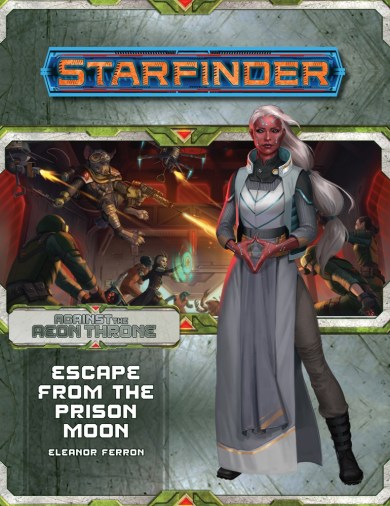
 is written by Eleanor Ferron and is intended to bring your player’s characters from level 3 to 5. Thanks to their efforts freeing Madelon’s Landing from the Azlanti Star Empire, the PCs have been deputized by the Stewards (a group of space police) and are on their way to rescue their friend. Not an easy task! They’ll have to enter the Azlanti Star Empire and figure out a way to break into a massive prison moon. They also get to visit a new space station. The articles in the back include information on the Azlanti Star Empire, some new gear, information of the many races and species that the Azlanti have conquered, and details on an Azlanti prison guard spaceship. There’s also some new creatures, including a radioactive dragon and a plant that snubs its nose at gravity (or would if it had a nose…).
 is the conclusion of this adventure path! It’s written by Larry Wilhelm and is intended for fifth level characters. Now that your PCs have rescued their friend they have to retrieve the starship drive the Azlanti retrieved from Nakondis. To do that they’ll need to find and break into a science laboratory, steal the engine, and get back to freedom. They also get to figure out why it’ so important and face off against the mastermind behind the attack on Nakondis. In addition to the adventure this issue also comes with ideas for continuing the campaign, an article on the Stewards, full details on a luxury Azlanti spaceship, and some new creatures (including fey and an aberration).
 . I loved the desperate, hopeless air of Falcon’s Hollow, and enjoyed the flavourful non-combat encounters in the adventures. But Rise of the Runelords?! I bought part one and was completely hooked. It was a fun, new twist on a classic style of adventure. As its sequels came out I was continually impressed. I loved that it took a bit of a tour of different adventure themes, from the horror of the
  , the depravity of
  , and even the vast, sandboxy exploration featured in the finale
  . It featured classic enemies, right alongside new ones, in a way that was fresh and exciting. I loved exploring the lost ruins of Thassilon, and discovering the history and culture of the ancient empire and its tyrannical rulers as you went.
 nearly right away. Unfortunately, we had a few false starts. Players came and went, and games ended each time. I swear we tried to play it three or four times before we finally got a solid group together. We ended up playing other campaigns before returning to Rise of the Runlords. We played an entire run of Curse of the Crimson Throne (which now has an awesome anniversary edition available:
  ) and to this day Curse of the Crimson Throne is my all-time favourite campaign. Heck, we even named my son after my husband’s PC. (For the record, it’s an awesome name. Haha). We also finished the entire Legacy of Fire Adventure Path in that time (which begins with
  ).
). ) and
) and  together then! Don’t get me wrong, I’m thrilled to play it as a family, but I found the request odd! He’d played so much of it that I was surprised he’d want to do so again. Since I’ve never really gotten to experience the campaign as a player I also joined a play-by-post game of it, which is a lot of fun.
 ), and see Krune and the followers of Lisalla showcased in Pathfinder Society Season Four: Year of the Risen Rune (culminating in Scenario #4-26: The Waking Rune). Readers of the previous campaigns will know that the other Runelords have always been coming. They’re there, waiting to rise…
 .
. ) depicts Sorshen. Other monuments of her rule include the Sunken Queen (which is showcased in
  ), while her tomb is located underneath Castle Korvosa in the Grand Mastaba. There she is said to be sleep eternally alongside her awakening vampiric servants.
 , where they showcase an entire level of this massive complex, as well as Pathfinder Society Scenario
  , written by Adam Daigle, and showcasing the Runelord of Wrath Alaznist on its cover. It takes place in the port town of Roderic’s Cove, where some strange things are happening! What sort of things? Well, I won’t go into it too much, but it involves multiple factions violently vying for control of the little town (and utilizing Thassilonian magics and relics to do so!), and a mysterious ghost. As your PCs become embroiled in trying to bring peace to Roderic’s Cove, they’ll also learn that the Runelords of Thassilon are reawakening! In addition to the adventure itself, this issue features an awesome gazetteer on Roderic’s Cove, some new monsters (including the nochlean, and the warpglass ooze), and an article on the history of Thassilon and how each Runelords survived Earthfall. It’s going to be awesome! This adventure should bring your characters from level 1 to 5.
 is written by Mike Shel, features the Runelord of Sloth Kruth on the cover, and is intended to bring your characters from level 5 to 8. Your PCs travel to the Varisian city of Magnimar to deliver a powerful relic, and tasks them with following up on rumours of the Runelords. They head to the infamous Hollow Mountain — a mountain on Rivenrake Island where the Runelord Alaznist once hid from Earthfall. This dungeon complex is massive, and filled with monsters and traps. There they’ll discover secrets that can help them in their coming fights. And as for Alaznist? She’s already awake! In addition to the adventure itself, this issue has an article and statistics on the empyreal lord Ashava, as well as an article on the always nasty sinspawn! Creature in this issue include the choking shade, and the shriezyx queen.
 by Richard Pett. Featuring Zutha Runelord of Gluttony on the cover, as illustrated by Ekaterina Burmak.
 . It’s written by Jason Keeley, likely features artwork of Xanderghul on the cover, and is intended to bring your characters from level 12 to around level 15 (or 16, perhaps? I’m guessing). In this issue your players face off against the cult of the Peacock Spirit, travel to their temple in the mountains, and stop them from bringing Xanderghul back into the world. An important task, since he’s among the most powerful of the Runelords! Details on this issue are scant, and I am not yet sure what extra articles and monsters will be featured in its pages.
 is written by Amanda Hamon Kunz, probably features the Runelord of Envy Belimarius on the cover, and is likely to bring your characters from around level 15/16 to level 18 or so (I’m guessing on the level range). In it, your players head to Crystilan, a city encased in a crystal sphere where the Runelord Belimarius and her citizens live out the same week of their life over and over again. You’re heading there to stop the Runelord Alaznist from utilizing time altering magic to do… something! But getting past Crystilan’s inpenetrable walls is not going to be easy! You’ll have to head to the shadow plane, perform a ritual, enter the eternally preserved Thassilonian city of Edasseril, and figure out a way to stop her. But, Alaznist’s presence has altered this place, and things are changing for the first time in ages. This adventure sounds like it has a lot of fun social interactions, intrigue, and politics, which is going to be AMAZING. I’m actually the most excited for this volume of the Adventure Path, out of all of them! I am not yet sure what extra articles and monsters will be featured in its pages.
 is the final instalment of the Return of the Runelords Adventure Path. It promises to be the longest yet! Written by Greg A. Vaughan, and featuring artwork of… The Runelord of Lust Sorshen, I think (don’t quote me on that, haha!), and is intended to bring your characters all the way up to level 20. In this volume Alaznist has messed with time, affecting both the past and the future! Your characters will need to fix the damage she’s caused, and take down the Runelord of Wrath Alaznist! That’s right! It’s got time travel! Oh yeah, and you’ll have to figure out what becomes of ‘New Thassilon.’ Yes. You read that right! It’s going to be epic! I am not yet sure what extra articles and monsters will be featured in its pages.


 . Maybe you play one of the Pathfinder Playtest Society Scenarios (
 is available in print or as a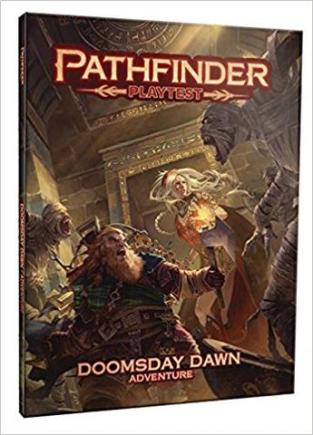
 !
! , which contains information on each of the oceans of Golarion, underwater combat, a host of new rules and some new character options.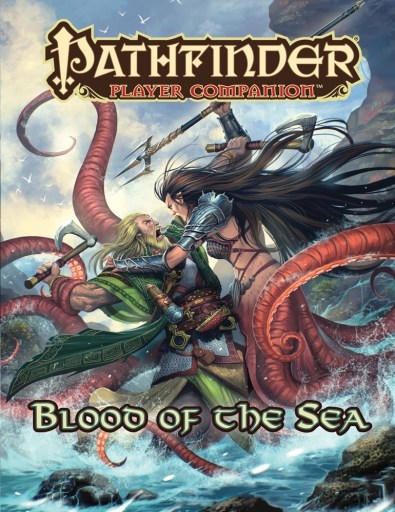
 and
and  . Gillmen can also be found in the
  , and the
  , while merfolk can also be found in the first
  .
. . I can honestly say that before reading this book they were not one of the races I ever thought I would want to play. They seem relatively impractical for a PC (being aquatic, and having tentacles), and I’m not big into octopi. It just wasn’t interesting to me. But, after reading the book, I’m probably the most excited for playing a cecaelia. For starters the artwork is awesome, and makes them a lot more relatable than the bestiary image. Their racial traits are fun looking. They have enough of the monster’s original abilities, while still being playable as a PC. They’re a powerful race, of course, at 23 RP, which puts them on par with grindylow, sahuagin, ogres, and svirfneblin. They have great flavour and cultural information. I adore that they’re super curious and social. They’re out to enjoy life, which is always fun to play. They come with three alternate race traits: ‘dextrous tentacles,’ ‘garrulous,’ and ‘tripping tentacles.’ They’re all pretty good, with ‘dextrous tentacles‘ allowing you to use your tentacles to hold and manipulate objects and increase the range of your tentacle sense ability (which gives you blindsight underwater) at the expense of being able to shoot an ink cloud; ‘garrulous‘ gives you a bonus on linguistics and diplomacy skill checks as well as allows you to learn two languages each time you invest a rank into linguistics at the expense of being able to shoot an ink cloud; lastly, ‘tripping tentacles‘ makes you really good at tripping your opponent but causes you to lose your tentacle sense ability. I like ‘garrulous‘ best, but I’m one of those players who enjoys learning a ton of languages, so I’m definitely biased. Haha. As for class options, they have only a single feat up for offer. That said, I like it, so its enough for me. The feat is ‘cecaelia focus tattoo’ which gives you a magical tattoo. Although you can have any number of tattoos, you can only activate one at a time. Once activated a tattoo functions for one hour. There are currently eight different tattoos which can increase your saves against poison or death effects, your stealth or survival skill checks, or the distance of your darkvision. Once you have the feat you can also choose to take another tattoo or increase the potency of one of your tattoos in place of a favoured class bonus, which is a pretty nifty option.
 , and the race comes in at 10 RP, which makes them approximately on par with the core races. There are also three feats here, all of which are a part of a combat style called ‘electric eel‘ that utilizes the ‘elemental fist‘ feat. I’ve mentioned in other blog posts that combat styles aren’t really my cup of tea, but I’m actually quite fond of this one. I recommend giving it a read. There are also five alternate race traits available for locathah characters, and six favoured class bonuses. I like all of the alternate race traits, but I think my favourites are ‘blunt head‘ which gives you a bite attack but reduces your swim speed, and ‘coastal emissary.‘ I also love ‘powerful smell,’ but its bound to irritate your companions. Haha.
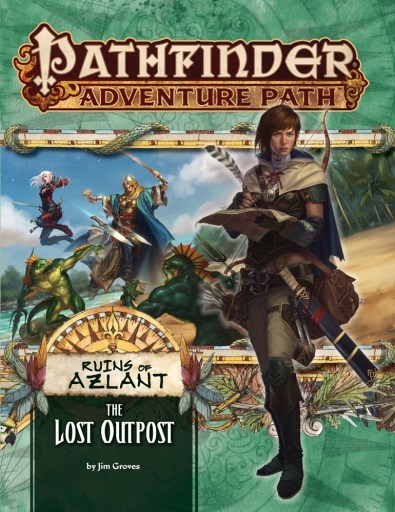

 (which is a level four adventure that takes place in the Shackles),
  (which is a level one adventure that takes place in Sargava),
  (which is a level four GameMastery Module for 3.5 that takes place almost entirely along the Vanji River in the Mwangi Expanse), or — my personal favourites —
  (a level six adventure that takes place in a half-flooded ancient city in the Sodden Lands), and
  (a level six adventure that involves ancient Azlanti ruins and a super insular town on the coast of Cheliax). Those looking for a longer campaign should check out the Ruins of Azlant Adventure Path (which begins with
  ), or even the Kingmaker Adventure Path (which begins begins with
  ). I know, I know, Kingmaker seems like an off choice. But, it takes place in the River Kingdoms (which has a whole lot of rivers), it’s encounters and adventure structure allow for regular resting (and taking a dunk in the nearest water source), and you can build your own town. Perfect for those high-maintenance aquatic races looking to make a unique mark on the world.

 ,
,  , and two books I thought he’d like:
  by Ernest Cline (which is also an
  , by the way), and the first three books in The Legend of Drizzt series (
 ,
,  , and
, and  ) by R. A. Salvatore. Drizzt’s origins are actually my favourite books he’s in, and my brother’s never read them. (Blasphemy! Haha). I think he’ll really like them. While we were shopping I found an awesome
  (I know, I’m slow, haha) and
  for the PlayStation. I was a kid when I played it the first time, and it literally blew my mind. Twist after twist I was just… Stunned. It’s got time travel, alternate dimensions, death, life, fate, a ton of NPCs you can get to join your party (many of which you meet well before you can convince them to join you), and (perhaps the coolest part) halfway through the game, after rallying friends and allies to help you defeat the villain, you have an epic confrontation which culminates with the villain using a magical ritual to swap your minds around. Your mind goes into his body and his goes into yours. All of a sudden those friends and allies are hanging around with the villain, trying to fight you. And you? Well, at least you don’t have to worry about fighting all those minions of the villain anymore. Cause they’re yours now. Sort of. Haha. So, if all your good friends are doing the work of the bad guy now, and they think they’re still doing good, but you and the other villains are working to stop them, are they still good guys? As a kid, I was amazed. Haha. Anyway, I started the game, which made my kids want to try, so we each started our own file. They’ve already reached the first big twist in the game, and were so shocked. They concocted a whole lot of crazy theories in an effort to figure out what’s going on. It’s adorable to watch. It’s been fun. I definitely owe fellow play-by-poster PaleDim a shout out for getting the music from Chrono Cross stuck in my head the other day. (Thanks!)


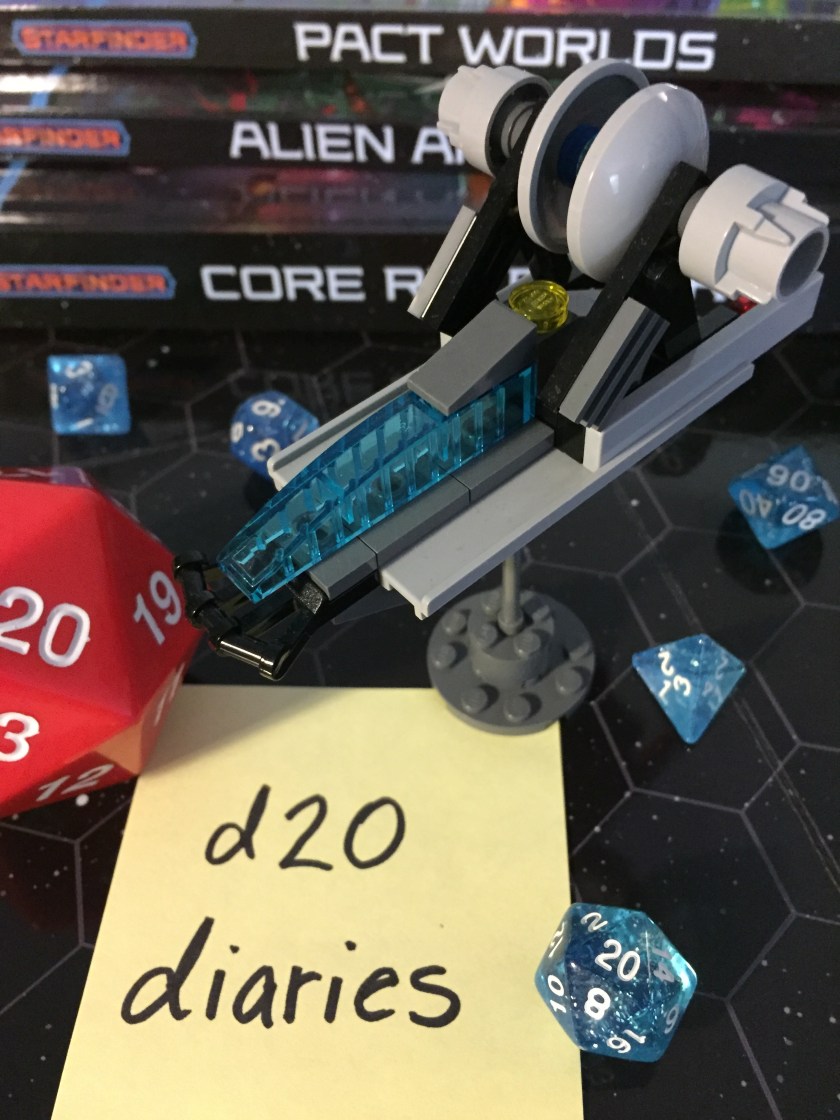


 and the
  and takes place in the Docks district. It was enjoyable, and had an interesting surprise which I’ll refrain from mentioning. It allows players to make use of a wide array of skills in order to obtain information on the Bloody Barbers (WAY more than I imagined would be helpful) which is really nice to see. Surprisingly, this quest can be accomplished without violence (although most groups are likely to get into a fight). I quite enjoyed it.
 . It was my favourite of the four quests.
 .
. .
.
 , and the
  ,
,  (twice) and a custom map.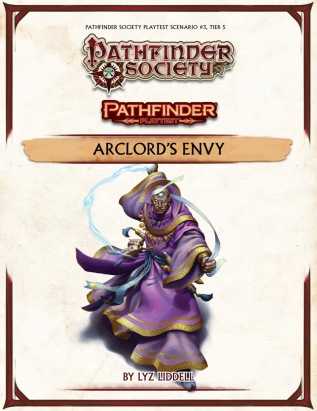
 ,
,  , and a custom map. It features gnomish Venture-Captain Sebnet Sanserkoht who is officially my favourite V.C. EVER. She’s awesome. In this scenario you’re tasked with investigating the murder of an Arclord of Nex, and determining who should be given a recently discovered book written by Nex himself, which the Arclord was likely killed for.
 , sanctioned scenarios for use with the Pathfinder Society Organized Play, or just want to read a nifty new adventure, we’ve got you covered! So let’s get cracking!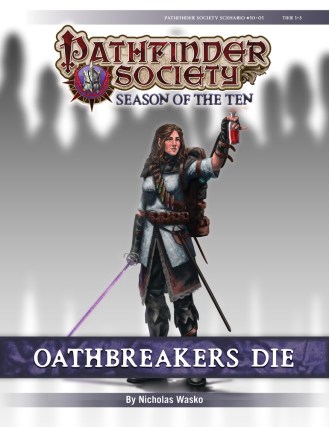
 (although all of the necessary stat blocks are included within the scenario). In addition to the
  and the
  . It utilizes the
  , and
, and  . To help keep up tension (and prevent your PCs from knowing when they might get attacked) I highly recommend using maps for even non-combat areas. You’ll find the previously mentioned
  and
and 
 , or the
  , and
, and  (although all of the necessary stat blocks are included within the scenario). In addition to the
  ,
,  , and — most especially —
  , and
, and  . It makes use of
  ,
,  ,
,  , and a few custom maps.
 ,
,  , or the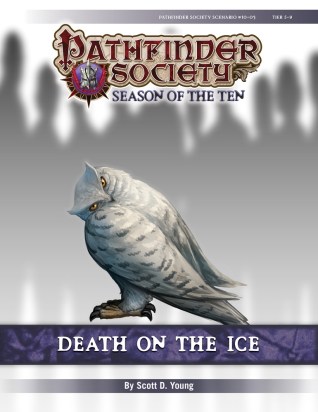
 ,
,  ,
,  , and
, and  . It makes use of the
  ,
,  , and a custom map.
 by Canadian author Robert Munsch (Okay, okay, he was born American, but we adopted him a long time ago. Haha)). While we’re on the topic of my biases, it should also be noted that the Erutaki are one of my favourite ethnicities in the world of Golarion, so I’m thrilled to see them in print once again! I thought this scenario handled the very long journey your PCs are destined to undertake very well. Near the end you have more than one route you can take which will change how the final encounter plays out, which I thought was wonderful. Overall, I adored this scenario. I give it five out of five stars.
 .
.
 , sanctioned scenarios for use with the Starfinder Society Organized Play, or just want to read a nifty new adventure, we’ve got you covered! So sit back, and get ready to explore the
 twice, and
  once. It also uses a custom map of the terrain (though it won’t be needed for tactical movement). In addition to the
  , although all the necessary stat blocks are included in this scenario.

 ). There you will investigate an abandoned military bunker in order to salvage armaments for the Exo-Guardians. I highly recommend playing through Yesteryear’s Truth before playing Yesteryear’s Sorrow. It will be infinitely more interesting if you have. If you’ve got the ‘Friends of the Ghibrani’ boon you should definitely slot it! This scenario features the Faction (Exo-Guardian) tag and does not involve starship combat. It makes use of two custom maps, and has a lot of unmapped areas (although all of the area that will feature battle are mapped). In addition to the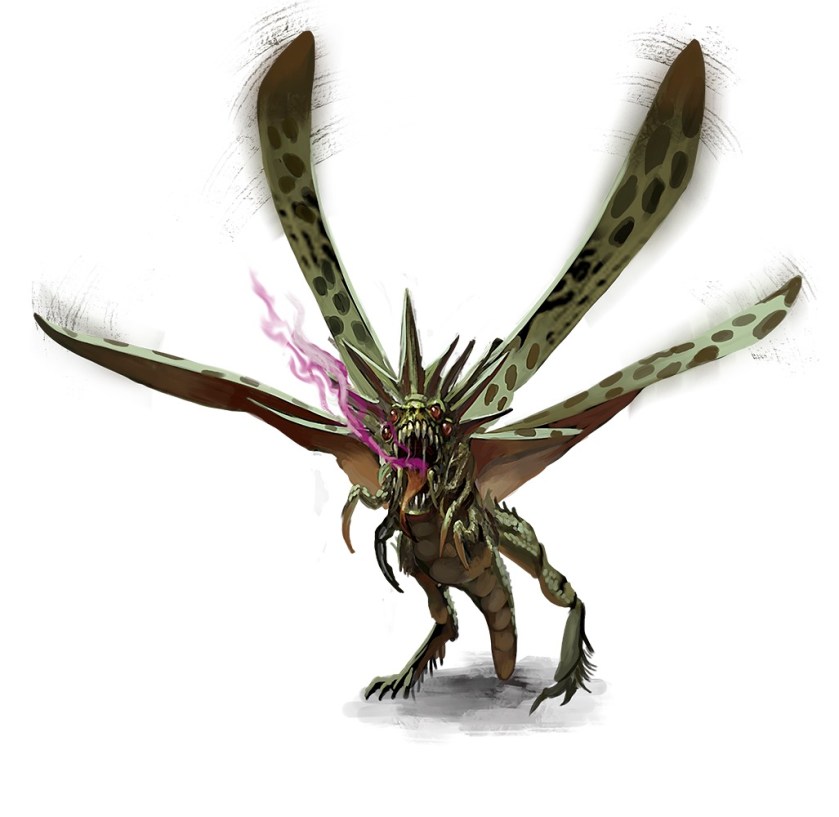
 d20 Diaries