December’s here and the weather’s getting colder, which means a there’s a whole pile of new d20 products for us to drool over! And so close to the holidays, too! Let’s hope Santa (or at least my husband) is reading this! Haha.
We’re starting out today with the classics: Dungeons and Dragons!
Temple of the Peacock Spirit (Return of the Runelords 4 of 6)
The City Outside of Time (Return of the Runelords 5 of 6)
Pathfinder Module: Cradle of Night
Pathfinder Player Companion: The Martial Arts Handbook
Pathfinder Campaign Setting: Construct Handbook
Pathfinder Campaign Setting: Faiths of Golarion
From Golarion we take off into the stars with new Starfinder Roleplaying Game releases! Whoo! I can honestly say that although Pathfinder is my favourite d20 game, I usually have the most fun reading Starfinder products. The entire team over there at Paizo is doing a great job!
This month brings us a few more releases. Starfinder Adventure Path 11: The Penumbra Protocol (Signal of Screams 2 of 3) continues the horror theme on the planet Verces. The Starfinder Society releases two new scenarios of vastly different tiers. Starfinder Society Scenario #1-28: It Rests Beneath is written by Jason Tondro, intended for tiers 1-4, is of particular importance to members of the Wayfinders Faction, and sends the Starfinders to explore a mysterious calcified region of a planet in Near Space. Colour me intrigued! This scenario also includes the ‘vehicle’ tag, which is exciting! Starfinder Society Scenario #1-29: Honorbound Emissaries is written by Jenny Jarzabski, is intended for tiers 7-10, is of particular importance to the Second Seekers (Luwazi Elsebo) faction, and continues the Scoured Stars storyline. A bonus? I have a feeling this one features another cameo of the delightfully gruff vesk pawnbroker, Julzakama. I can’t wait! Also coming out this month is the Starfinder Critical Hit Deck, which features adorable artwork of skittermanders. I’m incredibly curious to see what’s up with these cards. Plus? They look awesome! Haha.
Starfinder Flip-Mat: Hospital
Starfinder: Critical Hit Deck
SFS #1-26: Truth of the Seeker
SFS #1-27: King Xeros of Star Azlant
Starfinder Alien Archive 2
Diaspora Strain (Signal of Screams 1 of 3)
The Penumbra Protocol (Signal of Screams 2 of 3)
Realms of Atrothia: Legacy Races Revisited
And that’s it! Or is it? This month also featured the release of Sunburst Gamesfirst Pathfinder Compatible product, Realms of Atrothia: Legacy Races Revisited. Written by my brother, this product is available from a variety of websites, and lays the groundwork for the upcoming Realms of Atrothia: Primary Expansion! Watch for the Kickstarter coming this February!
The holidays are on their way! For many of us that means its time to buy the people around you gifts. But, what do you buy for those d20 gamers on your list? Well, read on! We’re sharing our top picks for gift giving!
First off: books! More specifically: new books that those gamers in your life probably don’t have yet. Our favourites?
But wait! Got young ones? So do I! Here’s my favourite d20 products to pick up for your kids!
D&D: Dungeon Mayhem! This delightful card game is intended for kids ages 8 and up.
My Little Pony: Tails of Equestria. This superb d20 game is aimed at fans of My Little Pony: Friendship is magic, but honestly? It’s awesome. I recommend this book wholeheartedly.
Endless Quest by Matt Forbeck. A series of four ‘choose your own adventure’ style novels aimed at middle-grade readers. Each casts you in the role of a different class. Endless Quest: To Catch a Thief lets your kids (or you!) be a halfling rogue, Endless Quest: Into the Jungle casts you in the role of a dwarf cleric, Endless Quest: Escape the Underdark lets you play as a human fighter, and Endless Quest: Big Trouble lets you play as an elf wizard. I’ve already picked these up for my son, and I have to mention how impressed I was with the quality. The books look awesome, feature a ton of cool artwork, and are a blast! I’m kind of jealous, honestly.
D&D Dungeon Mayhem
The ABCs of D&D
The 123s of D&D
Endless Quest: Big Trouble
Endless Quest: To Catch a Thief
Endless Quest: Escape the Underdark
Endless Quest: Into the Jungle
Dungeons & Dragons: Adventures Outlined
My Little Pony: Tails of Equestria
We hope you enjoyed our top picks for holiday gift giving!
Do you ever have those weeks when you feel totally and completely busy, but by the time the week’s over and someone asks you what you’ve done you realize there’s nothing much to say?
That’s me this week. Heck, that’s me this month. The past two months, even.
I’m constantly busy with… nothing. Stuff. Just everyday life. It’s normal for most people, I suppose. And totally fine. Just hectic! (Yes, it deserved that exclamation point!).
Winter’s here to stay. It’s cold, but not really cold. There’s snow, but it’s not really snowy. It’s a strange sort of in between. It’s cold enough that everyone in my house needs to wear full winter gear, but it’s also much warmer than it should be. We’ll get way colder yet this winter. We’ve got a bit of snow, but not a enough to make snowmen or go tobogganing (that’s sledding to those of you outside Canada).
With the cold came colds. My son’s been slowly fighting off a sickness for over two weeks. He finally took a sick day for it, and went back to school just the other day. And of course he came home sick again already. Poor thing. My daughter’s getting sick now, too. Not surprising, of course. But, unfortunate. Luckily it’s not a horrible cold. They’re not nauseous or anything. It’s just one of those lingering ones where you just have a sore throat, cough, sniffly nose, and a some mild fatigue. THAT. That’s what they’re trying to power through. For weeks.
My kids are getting excited for Christmas. They’re practising a ton of songs for their Winter Concert at school, which means I get to hear them sing and dance each day. My daughter’s particularly excited. She loves to sing. They’ve also made their wish lists, and decided who they’re going to ask for what gifts. Top of their list? A bunk bed and a Nintendo Switch. Also, my son wants to raise two hundred dollars to donate to help save the Piping Plovers (adorable little shore birds) of the Great Lakes. I’ve told him he needs to set his goals a little lower there, but he’s a dreamer. My little environmentalist. I guess I need to ask for a winning lottery ticket for Christmas. Haha.
We’ve got swimming lessons once a week to squish in amongst chores and trips to the laundromat. My kids adore swimming, but they’re about as graceful as a moose. They get the job done, but it does not look pretty. Haha. My daughter’s particularly adorable to watch. Even when she sinks and is clearly the worst swimmer in her class she’s got this humungous grin on her face. She’s just so damned happy to be there. She’s got such a great attitude.
In other news, I’m about to have two fewer kids on my hands. My sister-in-law is off on a trip with her sister to Egypt — she’s obsessed with Egyptology — which means my brother took some time off to spend with his kids and I find myself without them for two weeks. What the heck am I going to do with myself when my own kids are at school? I’ll be ALONE. That’s like… unheard of! It’s also awesome! I’m so behind on everything it’s my well-deserved chance to catch up. I’ve got chores to do, errands to run, a blog *cough cough* to pay some much deserved attention to, the rules to Traveller to learn, hundreds of surveys sitting in my inbox, and campaigns to prep and GM. Perhaps most importantly I have a ton of work to do on a special project I’m working on with my brother.
Special project? How intriguing!
Yes! It is!
It’s called Realms of Atrothia, and you can expect to hear more about that in the very near future!
In similar (but not quite related news), the call for Wayfinder Issue #19 submissions ended on Halloween, and both myself and my children submitted articles for consideration. Wayfinder is a free fanzine you can download on Paizo’s website. Issue #19 is going to be a Starfinder issue that focuses on Absalom Station! My kids each put together an Alien Archive entry, while I wrote a ‘Weal or Woe’ article, and two new Themes. Although I’m nervous, my kids are literally bouncing with excitement. They can’t wait to hear if their submissions will be accepted. Unfortunately, they have a bit longer to wait. Authors won’t be informed until early December if their creations will be used. Yes, that’s at least two more weeks of hearing “Mom, do we know yet?”, “Mom, how much longer do I have to wait?”, “Mom, how much longer NOW?”, and “What’s taking so long?”
Man, I hope they both get in. I can imagine the tears if only one of their articles gets accepted. I’m sure if their articles get accepted and mine don’t I’ll never hear the end of it. Haha. That’s alright. I’m sure my pride in them would far surpass my personal disappointment. I hope.
Wish us luck! (And best of luck to any of you who submitted an article to Wayfinder!)
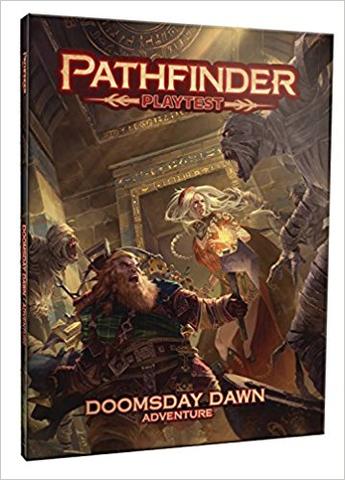
On the Pathfinder Playtest front I have to admit, I am playtested out! Thankfully no more rules updates are coming. But, I honestly just want to go back to the warm comfort of regular Pathfinder for a while. Preferably a long while. Unfortunately, that’s not in the cards, as I’m still involved in a play by post run of Doomsday Dawn and another of the Pathfinder Society Playtest Scenarios. Oh, well. C’est la vie! I’ll enjoy the experience while I still can.
You know what I AM enjoying? Starfinder Wednesdays on Paizo’s Twitch Channel! If you’re not watching them you really should!
Big news for the Starfinder Society today, as the Starfinder Guild Guide has a new update. Now that’s a Halloween treat! There’s some pretty awesome changes this update will be bringing to Starfinder Society Organized Play, but first, lets start small…
There’s changes to the rebuilding rules for characters and personal boons. There are new, expanded, and edited faction boons. The Wayfinders new capstone boon allows you to play as a ghibrani (YAY!), while the Exo-Guardians new capstone boon allows you to use a whole new starship: the Gorgon. The instructions for filling out chronicle sheets have been updated, vehicle tags and vanity boons have been mentioned, UPBs can be bought in any quantity, the Drake’s been edited. And… well there’s plenty of other minute changes you probably won’t notice on a read through. In fact, some of the small changes we named you probably won’t notice either.
But, you know what you will notice?
A new faction! Second Seekers (Jadnura) is now a faction you can join! First Seeker Jadnura was previous lost in the Scoured Stars Trinary system and was recently freed by the Starfinders, led by First Seeker Luwazi Elsebo. Oh, the drama! Be sure to check out this faction’s boons, as some are pretty nifty!
And, my favourite change? All legacy races have been included as playable races available to everyone! Yes! Dwarves, elves, gnomes, halflings, half-elves, and half-orcs, can now be played by all! *happy dance*
But wait?! What about those boons you may have earned which let you play as a specific legacy race? Never fear! Those boons can be used to increase a single ability score under fourteen by +2 on your existing characters with that race. For special GM boons this will not take up a personal boon slot, while with boons earned through a scenario (such as halfling admittance or dwarf admittance boons) it will take up the personal boon slot.
We carved pumpkins last week with my sister. My daughter carved a rabbit, and my son a cat. Or, more accurately, I carved a rabbit, and my sister carved a cat while my children bossed us around. Both of my kids shrieked when they had to put their hands inside and scoop out the pumpkin’s innards. Mostly they poked at it with a spoon. In fact, my kids didn’t do much at all. But, we had fun! We drew on some more pumpkins at home yesterday. Again, my daughter made a rabbit. My son went with a classic jack-o-lantern face.
This morning I packed up my kids costumes, and sent them off to school. They’ll have a party this morning, change into their costumes after lunch, and spend the afternoon at a school dance and haunted house. They’re absolutely over the moon. My son’s going to be a red dragon for Halloween. And my daughter? One guess.
Yup. A rabbit.
She might be obsessed.
My kids can’t wait to head out trick or treating.
And me?
To celebrate I’m taking a look at my five favourite Horror Adventures!
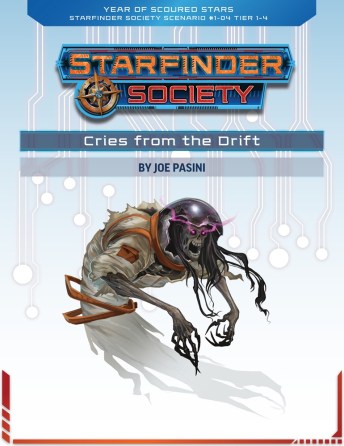
We’re starting off small with Starfinder Society Scenario #1-04: Cries from the Drift by Joe Pasini! This delightful little adventure is intended for Tier 1-4, features one starship battle, and tasks the player’s characters with exploring a derelict ship, uncovering what became of it’s crew (Spoiler Alert: NOTHING GOOD), and collecting the valuable intel they were carrying. This scenario does a great job of setting an ominous atmosphere right from the moment you step foot on the ship, and, with a solid GM, can be quite suspenseful. It’s got some surprises, so I won’t go into too much detail, but I will say that this adventures features some body horror, so it’s not for the faint of heart!
Up Next? The Strange Aeons Adventure Path! Strange Aeons is a six part series of adventures that will have your characters questioning their past, their allies, and their sanity! Strongly inspired by the works of H. P. Lovecraft, it’s spooky, macabre, and downright strange. With alien, unknowable entities, crazed cultists, and a whole heck of a lot of weird! I LOVE this adventure path. Seriously. Love it.
Strange Aeons begins with your characters waking up in an insane asylum with no idea who they are or how they got there. Oh, also, there’s some strange monster performing invasive surgery on someone else right outside your cell. Not the way you want to wake up! After your daring breakout you’ll have to explore the asylum, battle strange, shape-changing creatures, and find a way to escape — without being devoured by the… things outside. From there? Well, let’s just keep that under wraps for now. This is one of those campaigns where being in the dark is half the fun!
Next we leave behind the psychological terror, and head into some classic gothic horror! Curse of Strahd! This hardcover adventure path for Dungeons and Dragons takes place in the Ravenloft campaign setting’s country of Borovia and will take characters from levels one through ten. It’s a spooky, atmospheric, delightful piece of horror that features the vampire Count Strahd von Zarovich himself! Play it with a good DM and you’re guaranteed to get chills! This campaign has some tough fights, and was the winner of THREE Ennies in 2016: Winner (Gold): Best Adventure, Winner (Gold): Best Art/Cover, and Winner (Silver): Product of the Year. Special player options are available to download here, untagged maps are available here, and some special notes for DMs are available here.
From Dungeons and Dragons, we skip back over to Pathfinder, with the Carrion Crown Adventure Path! Carrion Crown is a six part gothic horror campaign that is like a tour de force of classic horror beasts! The first volume, Haunting of Harrowstone, tasks the players with investigating a haunted prison, while later volumes feature carrion golems, werewolves, foul cults, strange beings, vampires, undead, liches, and more! The best part? You don’t always have to kill these beasts. Some have the potential to be allies (if you’re brave enough)! The plot? Stop the Whispering Way from freeing the Lich King Tar-Baphon! I ADORE this campaign!
So what’s my very favourite horror adventure? Carnival of Tears by Tim Hitchcock and Nicolas Logue! First of, let me point out this is a dark, gory, violent, disturbing adventure. Second, I loved it. Carnival of Tears (more properly known as GameMastery Module E1: Carnival of Tears) is a 3.5 adventure from Paizo Publishing intended for fifth level characters that takes place in the desperate little town of Falcon’s Hollow. Man, that place has gone through a lot! So what better way to relax than with a winter carnival? Right? WRONG! When dark fey take over the carnival they twist it into a nightmare, and use powerful illusions to hide the truth from the citizens. The PCs need to stop the fey, save what townsfolk they can, and try their best to survive the night! I find this scenario is particularly effective when played in a town the player’s have grown fond of (even if that means you don’t play in Falcon’s Hollow), and when they’re forced to help deal with the aftermath of the so-called Carnival of Tears. Just awesome. The horror!
And that’s it!
Or is it..?
There’s one last thing I want to talk about: the future! The horror adventure I most want to play (and read), but haven’t.
Signal of Screams is a three-part adventure path for the Starfinder Roleplaying Game that starts at level seven. It begins with your PCs on vacation at a luxury resort on an asteroid when suddenly the staff and guests begin to get violent! They’ll need to protect themselves and the uninfected guests. But, what if they’re not immune to the madness? I can’t wait to find out!
Hello and welcome to d20 diaries! Today we’re taking a look at Starfinder: Armory! This is one of the few Starfinder sourcebooks that’s available for purchase. It’s a hardcover book that focuses on new gear and equipment for use in the Starfinder Roleplaying Game.
This article isn’t meant to be a thorough review or critique of Starfinder: Armory. It won’t replace the book (nor would I want it to!). It’s a quick breakdown of what’s found inside, and what I liked best in each chapter. It’s a collection of my favourites parts of the book, and some highlights. It’s here so that fellow gamers and fans can take a look and get a real a feel for what they’ll get out of the book. Hopefully it helps you decide whether this product is right for you.
Starfinder: Armory is a hardcover sourcebook 159 pages in length. Nearly all of that is dedicated to gear, with the remaining pages offering new character options for each of the seven Starfinder core classes. It features delightful cover art by Remko Troost which depicts Obozaya (the iconic vesk soldier) and Quig (the iconic ysoki mechanic) shopping. The inside covers feature a nice image of the Pact World System (which is not to scale). Following that is the table of contents and the ‘Overview.’ Basically, the two page introduction just lets you know what kinds of gear you’ll find in this book, and explains the difference between the different types of equipment categories. Perhaps the most useful tidbit? A tiny sidebar about minor equipment. Basically, any random technological item you want to invest in that’s not a weapon — things like cameras, clocks, headphones, so on and so on. Each of those items is available if GM approval for a price of 5 credits. Easy. Done. Love it. My daughter tends to try to purchase a lot of frivolous gear like this, so it’s nice to have a proper baseline for it.
After this its on to Chapter 1: Equipment. At a whopping 130 pages long, this chapter is by far the bulk of the book. These pages are filled with all new gear (not reprints) sorted by category. Equipment categories include: weapons, weapon accessories, weapon fusions, special materials, armour, powered armour, armour upgrades, augmentations, technological items, magic items, hybrid items, personal items, drugs, medicinals, poisons, other purchases, and vehicles.
Up first? Weapons. In general this book provides a wider array of weapons for each damage type at various levels, and some new abilities. And the number of choices? Huge! Just looking at the weapon charts there are six pages of melee weapons, four pages of small arms, three of long arms, three of heavy weapons, one of sniper weapons, a quarter page of untyped weapons, a quarter page of ammunition, a half page of solarian crystals, and a half page of grenades. That’s hundreds of new weapons up for sale — not even counting the new modifications and weapon fusions. There’s some awesome artwork in this section, with the art for the Bravado Handcannon (a small arm projectile with critical knockdown), the Exhorter Shout Projector (a sonic heavy weapon with critical demoralize), the Grave-Class Void Rifle (a cryo longarm with critical suffocate), the Matrix Resonant Pistol (a sonic small arm with critical deafen), the traditional battle ribbon (an uncategorized advanced melee weapon), and the warfan (and uncategorized advanced melee weapon), all numbering among my favourites. There are 46 new weapon special properties (breach, drain charge, free hands, and gravitation are my favourites), and sixteen new critical hit effects (blind and stifle are my favourites). There’s also an array of weapons manufacturers, each of which can add special abilities to your gun (for an extra fee, of course!). I’d be sure to buy from AbadarCorp and Ringworks Arsenal Group’s lovely weapon selection.
Some of the many weapons available in Starfinder Armory. Illustrated by Kent Hamilton.
But that’s not all! There’s also new weapon accessories, weapon fusions, and special materials up for offer. For accessories be sure to check out the bayonet bracket and collapsing weapon. I like a lot of the new weapon fusions, but my favourites probably turned out to be accurate, conserving, guarded, obscuring, rebounding, and soulfire. For special materials I was surprised to find I enjoyed horacalcum and inubrix the most.
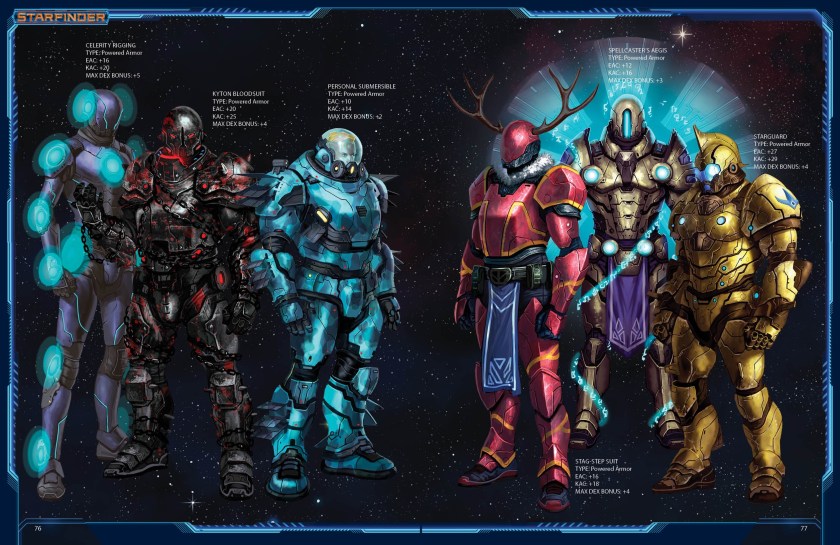
After leaving behind sixty pages of weapons and weapon-related products we’re heading out into the wide world of armour. There’s six pages dedicated to light and heavy armour (with two of those being full-page art), followed by six pages dedicated to powered armour (with two of those being full-page art), and finally six more pages of armour upgrades. The upgrades are a lot of fun. I particularly enjoyed adaptive energy shield, agility enhancer, auto injector, easy access kit, glamour projector, long strider module, medical interface, stabilizer springs (a nice low-level option), and (my personal favourite) the computer interface, which essentially lets you make a ‘Jarvis’ for your ‘Iron Man’ suit.
Up next? Augmentations. Biotech has two pages dedicated to it (be sure to check out the mighty vocal chords and regenerative blood), Cybernetics has two pages (I like the optical laser), Magitech has four pages of options (check out antimagic skin and arcane lenses), and finally Necrografts fill the last four pages (I like the bore blade and the healing larynx).
Some of the Powered Armour found in Starfinder Armory. Illustrated by Leonardo Borazio.
Then we move right on to Technological items. This section fills up a whopping twelve pages! Some of it is new, while others are pleasantly familiar, either because you can find them in our world, or because they were introduced in Pathfinder’s Technology Guide (such as ion tape and zipsticks). I particularly enjoyed the auto cartographer, datapad, domestic drive, emergency raft, evenfire unit, holographic sashimono, hoverskates, ion tape, nanite hypopen, and the many new tool kits. There’s lots of useful stuff!
Magic Items are up next, where you’ll find ten more pages of new equipment to spend your credits on. To start with there’s some cool aeon stones, my favourite of which is the kaleidoscopic icosahedron. The very expensive containment tesseract is also pretty nifty. I also enjoyed the cover seed, darksight goggles, dented kasa, diffraction cloak, figurine of wondrous power (which summon creatures to fight for you), ofuscated journal, plasma beads (pretty much a necklace of fireballs), Starfinder backpack, and the tangle burst seed. This is followed by three new artifacts: Atrocite Sphere, Trafodi Paradox, and, my personal favourite, the Book of Unwritten Truths.
Fusing Technological Items and Magic Items are the delightful Hybrid Items, which take up eight pages. I enjoyed the captive-star amulet and various vital seeds most, although I’m sure there’ll be lots of fans of the new hybrid grenades (of which there are many). I got a great laugh out of computer idols, and the software imp! Be sure to give them a read.
After this is four pages of Personal Items. Although not the most exciting category of items, it’s certainly useful. My favourites are staples! The gear maintenance kit, mess kit, and books. (I know, I know. I’m really stepping out of my comfort zone there! Haha!).
Drugs, Medicinals, and Poisons all share the next two pages (which aren’t really my cup of tea), followed by two pages of ‘Other Purchases.’ This section is mostly flavour, but I found I really enjoyed reading about the types of cuisine created and favoured by the core races of the Pact Worlds. The ysoki were hilarious! (Don’t eat their food. In fact, I’d stay away from Shirren cuisine, as well!).
Finally, there’s two pages of new vehicles, the cheapest of which is the level two motorcycle for 1,900 credits. And that brings us to the end of the new equipment. 140 pages have flown by just like *snaps* that! But, that’s not the end of the book. That simply brings us to the next chapter.
Android Envoy by Alexander Nanitchkov.
Chapter 2: Character Options. Here you’ll find one new archetype, plus two pages of new class options for each of the core classes. All of these options are focused on equipment —- typically using your equipment to the best of its ability (or beyond its normal capabilities). The archetype comes first and is called Augmented. These guys are great with — you guessed it — augmentations! They get more, pay less for them, and can make their augmentations do more than they’re built to. The Augmented grants alternate class features at 2nd, 4th, 6th, and 9th levels. I really enjoyed it (and know at least one character created by my family who’ll be using it!).
The Envoy’s class options include four new low level improvisations, two sixth level improvisations, and two eighth level improvisations, followed by seven new expertise talents. Be sure to check out fire support, brace yourselves, improved brace yourselves, terrifying blast, and improved terrifying blast for improvisations, and expert advice for talents.
The Mechanic’s class options include four new level two tricks, three more level eight tricks, two more level fourteen tricks, and four new drone modifications. My favourite tricks were provisional repair and recalibrate engine, both of which are available at level two. My favourite drone mods were barricade, and grease.
The Mystic class options were both the least adaptable, and my favourite! They introduced a new mystic connection, and two new spells granted by that connection. So what is it? The Geneturge! These guys are capable of altering their genetic code (and even those of others). In application their abilities mostly involve biotech, and sudden evolution. I particularly enjoyed their Personal Modification third level ability, their Warping Strain ninth level ability, and their Instant Evolution fifteenth level ability. The two new spells are detect augmentation, and reject augmentation (which sounds awesome! Haha).
Human Mystic Genethurge by Alexander Nanitchkov.
The Operative class options include sixteen new exploits (six at level 2, five at level six, four at level ten, and one at level fourteen). and one new operative specialization. Of the exploits, I particularly enjoyed armour optimization, fast aim, pistol whip, trap spotter, and ricochet shot. The new Specialization is the Gadgeteer, a very cool inventor which makes use of two new exploits: utility belt, and quick deployment. His trick attacks involve using a custom device to distract the enemy. Such fun!
The Solarian class options include one new stellar revelation and one new graviton revelation for each level (level two, six, ten, and fourteen), and for zenith revelations. That makes for ten cool new options total. I had a hard time picking my favourites, but in the end I decided I liked constructive interference, stellar equilibrium, attractive force, debris field, particle field, and particle wave, which turned out to be an even split between stellar and graviton powers. Awesome!
The Soldier class options include ten new gear boosts and a new fighting style called ‘Shock and Awe.’ The fighting style is supposed to focus on making a real spectacle of yourself. I like it in theory, but in execution I wasn’t that impressed. Still, it’s different. Fighters who take this style will want to make use of sonic weapons and weapons with the bright special quality. As for gear boosts, there’s a ton of useful options. My favourites were steady sniper, twinned threat, and unstoppable strike.
Finally we come to the Technomancer’s class options which include five new magic hacks of varying levels, and three new spells. My favourite magic hacks were recode gem (which is available at level two), and enchanted fusion (which is available at fifth level). As for spells, I rather enjoyed animate armour, and incompetence. The third spell, electroplating, is also quite useful.
And that’s it! All that’s left is the index and the end. 160 pages of awesome.
Honestly, I think that Starfinder: Armory is one of those books you’ve got to invest in. It’s not a frivolous extra purchase. You’ll reference it ALL the time. Every time you need to spend your credits you’ll crack out the Starfinder Core Rulebook and the Armory. For players, I’d say its more important than the Alien Archive (and Alien Archive 2) and Pact Worlds. For GMs? Well, hard to say. If you only GM it’s going to be less useful for you than the Alien Archives and Pact Worlds. But you’ll still get your use out of it. I adore this book and think it’s well worth the money.
This week’s Pathfinder Playtest Update is Version 1.5 and it’s a small one!
Sort of.
There are really only two changes this week, but both changes have quite a bit of a ripple effect. For starters they’ve tweaked the death and dying rules again, which also affects the DC to administer first aid, and the wording used on some other minor abilities (the dwarven ancestry feat mountain’s stoutness, the feat toughness, and the spells breath of life and stabilize are all good examples of this). On a related note, the DC for treating wounds with the medicine skill has changed, and is based on the patient’s level now, instead of the player’s.
And the only other change?
Spells! They’re making them stronger. Unfortunately, the only kind of spells that are easy to edit in this type of playtest are the damage dealing ones. So, although you can expect see many (if not all) spells get beefed up a bit for the release of Pathfinder 2 next year, the 1.5 update only changed the damage dealt by around forty-five spells. Typically it was the initial damage that was changed, with the heightened increases remaining at the same interval. Exciting!
This is definitely one of those aspects of gameplay you want to give feedback on. Did your spells slaughter the enemies without difficulty? Did the enemy’s spells slaughter you? Important to know (and easy to playtest)! So after you’ve given the spells a test run be sure to give your feedback. I know I’m curious to see how this plays out.
The Pathfinder Playtest is changing again. That’s right, it’s time for some more rules updates!
This week marks the second set of changes to the Pathfinder Playtest rules. Be sure to head over to Paizo’s website and download version 1.2. But that’s not all! You’ll also need to download the new character sheet! It’s been edited to conform with the new rules, and been shuffled around a bit. I rather like the new layout.
This update document is eight pages long, with the last page dedicated to the open game license and other fine print. It includes all of the updates to Pathfinder Playtest (from the first and second updates). This means that you only need to have the most recent version of the update document, not all of them. Any new additions to the update document are in bold. Although it sounds simple, it’s actually quite hard to differentiate between regular text and bold text in the document, so look closely! Rules updates are split into four types of rule changes: New Rules Updates, Critical Updates, Other Updates, and Doomsday Dawn Updates. Despite being ranked by importance, it’s imperative you begin to use all of the new rules immediately.
As for the rules themselves, we won’t get into specifics. The document is free and does a better job of explaining things than I ever could. The biggest changes you will notice this time around are with signature skills. They’re gone. Poof. Vanished. No longer does your class restrict which skills you can become Master or Legendary with. Instead, anyone can become Master or Legendary in whatever they want — if you’re willing to invest in that skill of course. I’m a big fan of this change, so I’m happy they went this route. This change affects a lot of other aspects of the game. Some feats are now irrelevant, and others were modified. The text throughout the book has to change a lot. There’s other skill changes you’ll notice as well. Each class is automatically trained in a certain skill, and many classes have more skills they’re trained in to start with. More nice updates, if you ask me!
There’s some other fun changes. Bards now have a feat that lets them gain 10th level spells. The range on their soothe spell has also been changed to 30 feet. Some of the spells granted by domains are different now. And the barbarian animal totem can now use weapons — as long as they’re NOT raging. There’s some other barbarian updates as well, so be sure to read closely!
This is just a taste of the changes. There’s a lot more updates. Changes will continue to occur over time so your feedback is incredibly important.
Surveys. When you’re done playing any part of Doomsday Dawn, the Pathfinder Playtest Society Scenarios, or just playing in general, head on over to Paizo’s website and fill out one of Paizo’s many surveys. Paizo goes through that feedback and makes changes. That’s right! Constantly over this next year they’ll be combing through your survey responses and adapting their rules for the playtest. It sounds like these changes will occur approximately bi-weekly, but don’t quote me on that. Not only do your responses provide Paizo with a large pool of data that they can use to decide the future of the game, it also lets them find out all kinds of nifty little bits of information.
At the moment, you can fill out surveys on a variety of adventures. Each of the Pathfinder Society Scenarios has it’s own trio of surveys: player survey, GM survey, and general feedback survey. Doomsday Dawn originally launched with access to three surveys, all for the first part of the adventure: The Lost Star. (Again, a player survey, GM survey, and general feedback survey). Surveys are now also available for the second adventure in Doomsday Dawn: In Pale Mountain’s Shadow, and the third adventure in Doomsday Dawn: Affair at Sombefell Hall. Further surveys for the later adventures in Doomsday Dawn will be released in the future. There’s also some general feedback surveys available. Soon you can expect to see new surveys on more general topics.
Now, if you haven’t filled out your previous survey on the Lost Star, or In Pale Mountains Shadow, don’t worry! It’s not too late. All of the surveys will be available until the end of the year, and will be revisited by the Paizo team regularly. You haven’t missed your chance to contribute.
Let us know what you think of the new changes in the comments!
Until next time,
Jessica
Farewell old character sheet! It’s time to make some changes!
As mentioned this past Monday, today we’re going to be taking a look at one of the wonderful Pathfinder books I happen to own: Blood of the Sea!
Blood of the Sea is a Pathfinder Player Companion compatible with the Pathfinder Roleplaying Game. This means it’s a thin, soft-cover book with plenty of new options intended for players creating characters. More specifically, this volume focuses on some of the aquatic races of Golarion, how you can use them in water and on land, and on underwater adventuring. This book goes hand in hand with Pathfinder Campaign Setting: Aquatic Adventures, which contains information on each of the oceans of Golarion, underwater combat, a host of new rules and some new character options.
The races detailed in Blood of the Sea include aquatic elves, cecaelias, gillmen, locathahs, merfolk, tritons, adaro, grindylow, and sahuagin. Statistics for playing these races as characters are including for all of these races except for aquatic elves, gillmen and merfolk. Aquatic elves, gillmen and merfolk can be found in a variety of sources, including the the Advanced Race Guide and Inner Sea Races. Gillmen can also be found in the Inner Sea World Guide, and the Inner Sea Monster Codex, while merfolk can also be found in the first Bestiary.
Blood of the Sea features dynamic cover art by Kiki Moch Rizky, which showcases Hakon, the iconic skald, battling an enraged cecaelia on the beach. The inside cover has a really useful map of Golarion with all of its oceans and seas labelled. I definitely read some I didn’t recognize, which is nice to see. The oceans include Abari, Antarkos, Arcadian, Embaral, and Okaiyo, while the seas depicted are Castrovin, Fever, Ivory, Inner, Shining, Songil, Steaming, and Valashmai. For more information on these major waterways you’ll need to check out Aquatic Adventures.
Up next is the table of contents and the introduction. Unlike most Pathfinder Player Companion introductions, this one does not contain any traits or character options. It does still contain a handy rules index, which lists all the new archetypes, feats, and other new rules options contained in the book, alphabetically by type with the page numbers so they can be found on for easy reference. After this we move right into the bulk of the book: aquatic races. The goodly races are presented first, each with two pages dedicated to them. Each contains information about the race in general, how they might come to be adventurers, and some new rules options which typically include statistics for playing them as a race, alternate race traits, favoured class options, feat, and archetypes. Villainous races are showcased afterwards, with two pages shared between then three of them.
Up first? Aquatic elves! Curious and respectful, these elves take it upon themselves to explore and protect underwater ruins — although they have the wisdom to leave the most dangerous ruins untouched. There’s some nifty artwork featuring an aquatic elf with a dagger that has a handle made from a conch shell, which looks pretty cool. As already mentioned, the statistics for playing an aquatic elf are not included in this book. Instead, there is a nice rogue archetype called ‘seeker of the lost‘ which I rather enjoyed. It focuses on exploring underwater ruins, disabling magical traps (which are some of the only kind to survive long periods of time underwater without deteriorating), and underwater combat. Although it’s not ground-breaking or anything, I rather like it. There are also three alternate race traits, and a total of nine favoured class options. ‘Deep sea dweller‘ allows aquatic elves to survive in the dark, depths of the ocean — sort of. It grants you dark vision and cold resistance at the cost of low-light vision and elven immunities. It does not, however, grant and protections from pressure. So it allows you to be in the lightless parts of the ocean, but not too far down. It’s my favourite of the race traits for sure! ‘Surface features‘ allows you to blend in with surface elves which, although useful, doesn’t really tickle my fancy. Why be a weird race and then choose to look like everyone else? Still, it’s sure to see use in play. It replaces keen senses. Lastly, ‘surfacer antagonist‘ is for all the aquatic elves out there who have been harmed by those nasty humans. (Ugh. Filthy land-lubbers. Am I right? lol). This trait grants you a +1 bonus on attack rolls against humans at the cost of elven magic. Yeah, against HUMANS. This trait is going to be really good in pretty much any adventure or campaign. I honestly can’t think of one where you don’t fight a human at some point. Despite it’s usefulness, ‘deep sea dweller’ beats it as my favourite character option for aquatic elves.
Next we come to cecaelias, which first appeared in Pathfinder as an enemy in Bestiary 3. I can honestly say that before reading this book they were not one of the races I ever thought I would want to play. They seem relatively impractical for a PC (being aquatic, and having tentacles), and I’m not big into octopi. It just wasn’t interesting to me. But, after reading the book, I’m probably the most excited for playing a cecaelia. For starters the artwork is awesome, and makes them a lot more relatable than the bestiary image. Their racial traits are fun looking. They have enough of the monster’s original abilities, while still being playable as a PC. They’re a powerful race, of course, at 23 RP, which puts them on par with grindylow, sahuagin, ogres, and svirfneblin. They have great flavour and cultural information. I adore that they’re super curious and social. They’re out to enjoy life, which is always fun to play. They come with three alternate race traits: ‘dextrous tentacles,’ ‘garrulous,’ and ‘tripping tentacles.’ They’re all pretty good, with ‘dextrous tentacles‘ allowing you to use your tentacles to hold and manipulate objects and increase the range of your tentacle sense ability (which gives you blindsight underwater) at the expense of being able to shoot an ink cloud; ‘garrulous‘ gives you a bonus on linguistics and diplomacy skill checks as well as allows you to learn two languages each time you invest a rank into linguistics at the expense of being able to shoot an ink cloud; lastly, ‘tripping tentacles‘ makes you really good at tripping your opponent but causes you to lose your tentacle sense ability. I like ‘garrulous‘ best, but I’m one of those players who enjoys learning a ton of languages, so I’m definitely biased. Haha. As for class options, they have only a single feat up for offer. That said, I like it, so its enough for me. The feat is ‘cecaelia focus tattoo’ which gives you a magical tattoo. Although you can have any number of tattoos, you can only activate one at a time. Once activated a tattoo functions for one hour. There are currently eight different tattoos which can increase your saves against poison or death effects, your stealth or survival skill checks, or the distance of your darkvision. Once you have the feat you can also choose to take another tattoo or increase the potency of one of your tattoos in place of a favoured class bonus, which is a pretty nifty option.
Leaving behind our tattooed cephalopods we get to a race I’ve liked since they were introduced ages ago: gillmen. I know, I know, having to submerge yourself in water or die a horrible death is tricky for a lot of campaigns, but what can I say? I like them! As mentioned previously, statistics for playing gillmen are not included this book. Instead, we get some nice flavour and cultural information (some of which is new), and a lot of class options. There’s the ‘hidden current‘ vigilante archetype which allows gillmen to take on the identity of a nonaquatic humanoid when they’re on land, and at higher levels can even let them magically travel between the land or sea. There’s also four feats, four alternate race traits, an four favoured class bonuses. Also? Awesome artwork! Its my favourite of the entire book. My favourite class options are the feats ‘surface survivor‘ (which makes playing gillmen more manageable) and ‘aphotic explorer,’ as well as the ‘venomkissed‘ alternate race trait.
Locathahs are up next, which is another one of those races I’ve never really felt an urge to play. That said, the flavour really sold it for me, and I think I’d enjoy creating one. My favourite part? They’re stinky and proud of it! Haha. Locathahs use their scent to communicate, even underwater, which is pretty cool. Locathah racial traits are a great conversion from their statistics from Bestiary 2, and the race comes in at 10 RP, which makes them approximately on par with the core races. There are also three feats here, all of which are a part of a combat style called ‘electric eel‘ that utilizes the ‘elemental fist‘ feat. I’ve mentioned in other blog posts that combat styles aren’t really my cup of tea, but I’m actually quite fond of this one. I recommend giving it a read. There are also five alternate race traits available for locathah characters, and six favoured class bonuses. I like all of the alternate race traits, but I think my favourites are ‘blunt head‘ which gives you a bite attack but reduces your swim speed, and ‘coastal emissary.‘ I also love ‘powerful smell,’ but its bound to irritate your companions. Haha.
Up next is merfolk. As mentioned, the statistics for merfolk are not provided in this book. Instead there’s a lot of music-themed class options and six favoured class bonuses. In fact, they have some of my very favourite class options in the entire book. For starters there the oracle archetype ‘ocean’s echo‘ which gives you a nice selection of sound-themed bonus spells, and the ability to use some bardic performances. I’m in! (It should be noted: I love bards). There’s also a new oracle curse which is bound to be a ton of fun: ‘song-bound,’ which compels you to sing loudly whenever you speak. Yes, always. How fun is that? I don’t know about you, but I would literally sing everything my character says (I’m an average singer at best, by the way). My kids love it, too. Lastly, there are two new masterpieces in this section, one of which can grant your companions a swim speed, and the other that can scare off trespassers. Both can be sung or played on a string instrument.
Tritons are the final goodly aquatic race in this book. Just over half of the entry is racial and cultural information, most of which is new (as far as I know, haha). Their racial traits are well done, but wow! Are they ever slow on land! Haha. They’re a great conversion from their statistics in Bestiary 2, and come out to a total of 11 RP which makes them approximately on par with the core races and locathahs. There’s a paladin archetype in this section called ‘kraken slayer‘ which looks interesting, but isn’t going to see much use in non-aquatic campaigns. There’s also two feats which work well together: ‘ally caller‘ which lets you use your innate spell-like ability to summon water elementals and dolphins two extra times per day (this feat can be taken multiple times) and ‘aquatic squires‘ which makes that same spell-like ability last 1 minute per level. Not amazing or anything, but fun and flavourful. I like it. All told, though, triton is my least favourite of the goodly races featured in this book.
With the good guys over and done we come to two pages entitled ‘Enemies of the Sea.’ Here we find statistics for playing adaros, grindylow, and sahuagin, as well as a paragraph of racial information on each. Grindylow and sahuagin are both 22 RP, putting them on par with the cecaelia, while adaro are a whopping 32 RP, which makes them among the toughest races you can choose, just under gargoyles and driders. I’ve always enjoyed adaros and grindylow, so I’m happy to see they were included.
Flipping the page we get to three pages on gear — most of which is mundane. Air breathing creatures can make use of artificial gills to survive underwater for a while, while aquatic creatures with slow base speeds like merfolk and tritons can make use of land limbs to improve their speed on land. There’s also a lot of practical gear like underwater paper, pens and compasses, as well as wall hooks. But, my personal favourite mundane bit of gear? Sponge suit! This is a mandatory purchase for the next gillman I make!
There are only four magical items, but they’re all quite useful. The ‘crystal helm‘ fills with water while on land and with air while underwater, allowing a PCs out of their environment the ability to breathe. The familiar bubble can keep your familiar breathing underwater, and shimmering kilt can turn an aquatic humanoid’s tail into legs. (No need to barter with evil cecealia witches anymore… Poor Ursula’s going to be unemployed). But, my personal favourite? The ‘cloak of eternal mist.’ In addition to making you character count as if they were submerged in water, it grants you a bonus to hide in fog and mist, and can grant you concealment when immobile. The best part? Its relatively affordable.
There are four spells on the next page. They are nicely thematic, but none of them blew me away. I think my favourite is ‘arid refuge,’ a spell that can help enable prolonged underwater adventures for land-bound characters by giving them a safe place to rest. Other spells include ‘instant clot,’ ‘silt sphere,’ and ‘suspend drowning.’
Leaving magic behind we get to four pages of aquatic class options that can be taken by most races. There’s a total of five class archetypes, one cavalier order (order of the eel) and one eidolon subtype (deepwater eidolon). I particularly like the ‘aquatic beastmaster‘ archetype for hunter, which contains a whole new array of water themed animals to use with the animal focus ability. I also really like that the ‘coral witch‘ witch archetype allows you to grow your familiar out of coral, an that the ‘keeper of the current‘ inquisitor archetype can track underwater by reading traces of eddies and currents. Very cool! The last two archetypes are ‘crashing wave‘ for the cleric (which has a very interesting form of channel energy that leaves neutrally aligned creatures unaffected) and the ‘tempest tamer‘ druid archetype (which taps into the powers of typhoons, whirlpools, and other storms).
After this is a very useful chapter on the challenges facing underwater creatures who find themselves on land, and ideas and methods for overcoming those challenges (both magical and mundane). I found these four pages a huge help. It not only urges you to think about some troubles you might not have thought of, but it also makes playing aquatic races in a land-based campaign a lot more… attainable. There were certainly some topics discussed that I’d never thought of. Not because it’s obscure or anything, but just… I don’t know. I never thought about it. Haha. For example, weight. If you’re used to being buoyant, walking on land would be hard. How would you act? Imagine how heavy your body would feel to you. Sounds exhausting! What about weather? It’s a lot different than the sway of the currents. And climate? In a lot of places the ocean is cold. How does someone used to that feel on land? What about little things, like seeing a fire or cooking your food? Or keeping up with your companions? This section also has some awesome artwork of a serious ranger on a horse looking off into the distance. Except he’s not just a ranger. He’s a merfolk ranger riding sidesaddle. It’s great. Haha.
Which bring us to the last part of the book. Two pages discussing how air-breathing creatures can adventure and travel on or under water. Like the chapter before it, this section brings up some interesting topics. It also works as a handy reference for spells and magical gear that are useful for underwater exploration. There’s also a small sidebar that lists the oceans of Golarion, a few of its seas, and gives you a one sentence description about that body of water. It’s super brief, but better than nothing. As previously mentioned, players looking for more information on Golarions major waterways should pick up a copy of Pathfinder Campaign Setting: Aquatic Adventures.
And that’s it! Then end.
This was a really fun, useful book that presented a lot of unique race and class options for players. I think it’s well-worth the investment. That said, due to its topic, it is quite niche. It’s not a book you’ll be able to use with every character or adventure you’re in. It’s quite focused: underwater races, and underwater class options. That said, this book invested a lot of effort into making underwater races playable on land indefinitely, and it succeeded. Some of the class options are just as usable above water as they are underwater — the ‘ocean’s echo‘ oracle archetype and the ‘tempest tamer‘ druid archetype are great examples of this. The rest, though, cleave pretty tightly to the waves. That said, there are plenty of places in Golarion where water is plentiful. The oceans, seas, and underwater, of course. There’s also the Shackles, Sodden Lands, and River Kingdoms, as well as many port towns, and the coasts throughout Golarion. There’s some settlements which are located both above and below the waves, like Acisazi (there’s at least one more, but I can’t recall its name at the moment… Hmmm… If you happen to remember it let me know in the comments!), and even Absalom has a the half-flooded district of the Puddles.
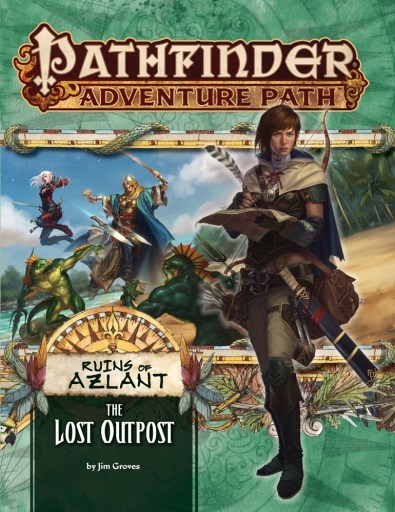
Those of you looking for adventures to play aquatic races or aquatic themed archetypes in should try the Pathfinder Modules: Plunder & Peril (which is a level four adventure that takes place in the Shackles), Ire of the Storm (which is a level one adventure that takes place in Sargava), River into Darkness (which is a level four GameMastery Module for 3.5 that takes place almost entirely along the Vanji River in the Mwangi Expanse), or — my personal favourites — Seers of the Drowned City (a level six adventure that takes place in a half-flooded ancient city in the Sodden Lands), and From Shore to Sea (a level six adventure that involves ancient Azlanti ruins and a super insular town on the coast of Cheliax). Those looking for a longer campaign should check out the Ruins of Azlant Adventure Path (which begins with Ruins of Azlant: Book One: The Lost Outpost), Skull and Shackles Adventure Path (which begins with Skull & Shackles: Book One: The Wormwood Mutiny), or even the Kingmaker Adventure Path (which begins begins with Kingmaker: Book One: Stolen Land). I know, I know, Kingmaker seems like an off choice. But, it takes place in the River Kingdoms (which has a whole lot of rivers), it’s encounters and adventure structure allow for regular resting (and taking a dunk in the nearest water source), and you can build your own town. Perfect for those high-maintenance aquatic races looking to make a unique mark on the world.
I hope you enjoyed taking a look at Blood of the Sea with me today, and that this article can help you decide if this delightful little book was right for you.
Today we’re going to look at Pathfinder PLAYTEST Society Scenarios and tell you what we thought. Currently, there are three of them available as a free download on Paizo’s website, so if you don’t have them yet you might as well pick them up! Each scenario is replayable. You may create your own characters for the intended tier (either created as level one for a tier one scenario, or created as level five for a tier five scenario). Unlike regular Pathfinder Society Scenarios, you do not need to earn enough XP to reach higher levels for the Playtest. If you don’t want to make your own characters, you can also head over to Paizo’s website and download the Pregenerated Pathfinder Playtest characters. All you’ll need to run these three scenarios (other than your characters) is the Pathfinder Playtest Rulebook and the scenarios themselves. Each scenario is intended for groups of FOUR players (unlike regular PFS Scenarios which are intended for six) although each contains easy ways to scale up encounters for larger groups. Although you’ll find references to events in each that I liked or disliked, and comments about specific characters, these scenarios are not explored in detail. It’s not my intention to spoil the events in these scenarios, or give summaries and full reviews, but to share my opinions and provide recommendations. Once you’re done playing or GMing any one of these scenarios, be sure to head over to Paizo’s website and fill out a survey about your experiences. This will be used by the Paizo team to make the Pathfinder Playtest the best that it can be.
So, without further ado, let’s get started!
Pathfinder Playtest Scenario #1: Rose Street Revenge is a Tier 1 adventure written by Leo Glass, Thurston Hillman, Joe Pasini, and Linda Zayas-Palmer. It includes three short quests which can be played in any order, followed by a fourth quest which can only be played after completing at least one of the first three quests. Each quest should run between 40-60 minutes in length. Each quest you complete before heading onto the final quest will give you an advantage in the final encounter, so I highly recommend completing all three before heading to the final quest. Plus, it’s just more fun that way. The entire adventure takes place Absalom, although each quest is set in a different neighbourhood. Neighbourhoods featured include the Docks, Puddles, Precipice and the Sewers. For more information on Absalom you can check out Pathfinder Chronicles: Guide to Absalom and the Inner Sea World Guide. Venture-Captain Ambrus Valsin begins the adventure by explaining that there’s serial killer on the prowl stalking the recently liberated slaves of Absalom! The killer’s actions have been sensationalized by locals and they’re now known as the ‘Rose Street Killer.’ The latest victim is a Pathfinder, and so Ambrus is sending your PCs out to investigate. He gives the group some fun player hand-outs, each of which contains a different lead. Then he sends you on your way. There’s time to rest between investigating each lead, which is nice for a change. Also, it should be noted that this entire scenario makes excellent use of sidebars to relay important aspects of the rules in a way that’s helpful, easy to understand, and is NOT overwhelming. It’s wonderfully done.
The first quest in Rose Street Revenge is entitled ‘Snippets‘ and is written by Joe Pasini. In this quest you’re tasked with investigating the Bloody Barbers, a thieve’s guild known for robbery, smuggling and murder. If they’re not guilty, they’re likely to know details about the murders, as they’re very well-informed. If you can find them, of course. This quest utilizes Pathfinder Flip-Mat Classics: City Streets and takes place in the Docks district. It was enjoyable, and had an interesting surprise which I’ll refrain from mentioning. It allows players to make use of a wide array of skills in order to obtain information on the Bloody Barbers (WAY more than I imagined would be helpful) which is really nice to see. Surprisingly, this quest can be accomplished without violence (although most groups are likely to get into a fight). I quite enjoyed it.
The second quest in Rose Street Revenge is entitled ‘Dragons‘ and is written by Thurston Hillman. In it you are to meet with a liaison from the ‘Sewer Dragons’ kobold tribe (longstanding allies of the Pathfinder Society). Your job is to find out if the killer has been utilizing the sewer systems — which is the territory of the Sewer Dragons. The liaison offers to give you whatever help they can as long as you help them oust a rival kobold tribe (the Dragon Sharks) that is encroaching upon their territory! You get to head into the sewers and fight alongside your kobold allies against the enemy. This scenario is a LOT of fun. It is filled with wonderful social interactions (particularly with Fazgyn!). I adored Fazgyn’s lessons on trapfinding which are not only funny and entertaining, but also serve double duty as teaching players how traps work in the Pathfinder Playtest. It also gives a nice introduction to Exploration mode, and helps showcase the importance of the Sneak and Search exploration methods. This quest makes use of the Pathfinder Map Pack: Sewer System. It was my favourite of the four quests.
The third quest in Rose Street Revenge is entitled ‘Puddles‘ and is written by Linda Zayas-Palmer. It takes place in the Puddles District and tasks your PCs with asking the Muckruckers (volunteer guards for the Puddles) for information, and following up on what they tell you. This quest has some fun social interactions, and wonderful artwork for a Muckrucker named Ziraya Al-Shurati. It has by far the most clues to the true murderer’s identity and involves the most ‘crime scene’ investigation, which is great fun. However, in an effort not to spoil the mystery’s details, I won’t be saying much more than that. It utilizes Pathfinder Flip-Mat: Haunted House.
The fourth quest in Rose Street Revenge is entitled ‘Haven‘ and is written by Leo Glass. It takes place in the Precipice Quarter (which was previously known as Beldrin’s Bluff). This is the finale of the adventure, and tasks the PCs with investigating an old safe house that the victims all used at one time or another. I’ll refrain from mentioning much more than that so that I don’t spoil the mystery’s end, but I will say that it was great fun, and certainly not what I expected! This quest utilizes Pathfinder: Map Pack: Ruined Village.
Overall, I really enjoyed Rose Street Revenge. It’s a great introduction to the Pathfinder Playest system and was a lot of fun. I give it four out of five stars and highly recommend it as the first Pathfinder Playtest adventure that groups should give a try (yes, I recommend it over Pathfinder Playtest Adventure: Doomsday Dawn).
A Pathfinder Agent by the name of Inisa Araali was secretly carrying an Iomedean relic by caravan from Diobel to Absalom when she was attacked. She sent Venture-Captain Ambrus Valsin a very cryptic note about the encounter, and then went off to find the relic herself. Knowing that she’ll need help he sends you to find the survivors of the caravan in Diobel, who are shacked up in a Pathfinder safe house (although he doesn’t know which one). You’ll need to find the safe house, check on the people, find out all you can about the caravan’s intended route and the attack, track down the robbers (and hopefully Inisa), retrieve the relic and get it back to Absalom. This scenario introduces secret rolls, which is necessary for knowledge and gather information checks because a critical fail on the check will result in your players uncovering false information. It’s best, of course, if your players don’t know whether the information they’ve received is false or not. That said, secret rolls can easily bog down a game (particularly if it’s heavy on the knowledge checks like this one is at the start), so proceed with this method of rolling with caution. As mentioned, this scenario begins with a bit of investigation. I really like how thorough the Recall Knowledge and Gather Information results are set up (especially the false information for a critical fail). That said, there are no pre-made PCs to interact with during this part of the investigation (which is something I always enjoy), so that’s a bit of a let down. Such embellishments will have to be up to the GM. Social encounters with the caravan survivors are helpful, but not particularly memorable. Overall, I felt that the events in Diobel fell flat. From there the mission moves on and becomes quite combat and exploration heavy. It pits you against some nice classic enemies, inculding harpies, minotaurs, and ghouls, which I really enjoyed. I particularly liked the ghoul statistics. I also really enjoyed the interactions with the minotaurs. Overall, this is the Pathfinder Playtest Scenario I liked least. I give it three out of five stars.
Pathfinder Playtest Scenario #3: Arclord’s Envy is a Tier 5 adventure written by Liz Liddell. It takes place in Quantium, capital of Nex. For more information on Nex be sure to check out the Inner Sea World Guide. This scenario utilizes the Pathfinder Map-Pack: Village Sites, Pathfinder Flip-Mat: Bigger Village, and a custom map. It features gnomish Venture-Captain Sebnet Sanserkoht who is officially my favourite V.C. EVER. She’s awesome. In this scenario you’re tasked with investigating the murder of an Arclord of Nex, and determining who should be given a recently discovered book written by Nex himself, which the Arclord was likely killed for.
Venture-Captain Sebnet Sanserkoht of Quantium’s Pathfinder Lodge.
This scenario did a really nice job of showcasing little bits of life in Quantium right from the start, with the many overly magical effects present in the local Pathfinder Lodge, right through to the golems walking the streets, and the strange politics of the city. It made use of a ton of rare races including ifrits, oreads, shabti, mercane, and even an invisible stalker you get to chat up at a party. It was awesome. The scenario itself begins with an interesting investigation. I particularly enjoyed retrieving the victim’s corpse from the foot of a massive patrol golem — without drawing the golem’s attention! I think this part would be a lot of fun at a table. That said, I do have one issue with the investigation. At one part you notice scorch marks on a wall which the scenario says you can identify as coming from a certain spell with the ‘Identify Magic’ use of Arcana. Except Identify Magic takes an HOUR (unless you have a special ability that shortens it to ten minutes). Now, that’s not to say that it’s not doable. I suppose some groups might spend an hour looking at a few scorch marks on a wall when there’s a lot of other stuff to go check out, but I wouldn’t. It’s just another use of the ‘Identify Magic’ skill use that feels way too long and time consuming. It’s one of my pet peeves of the Pathfinder Playtest rules, and I sincerely hope they shorten the time it requires by the time Pathfinder Second Edition comes around next year. Of course, this is a nitpick of mine regarding the rules, not the scenario itself. Moving on from the investigation there’s some fun social encounters, and some awesome character art (particularly for Ngasi!). The culprit you’re supposed to unmask is variable, which changes the clues that can lead you to them. That’s a nice option for a scenario that’s supposed to be repayable. I wouldn’t say there’s a LOT of potential culprits, but it’s certainly not static. The final encounter is quite complex, and includes different tactics and available spells depending on which Arclord ends up being your enemy, It’s going to be quite a climatic battle, I think. Overall, I thought the scenario was fresh, fun, and in a great location. I give it four out of five stars.
And that’s all for today! I hope you enjoyed checking out these scenarios with me. I know I enjoyed reading them. I’m quite excited to run my kids through the ‘Rose Street Revenge’ when we have a chance.


as a digital download from Amazon.ca
as a print copy from Amazon.ca
 (an adventure for levels 5-20)


 ,
,  , and
, and  )
) (Signal of Screams Part 1 of 3; warning: this one’s scary!)


 and the
  and the


 and
and  (Greatest. Comic. Ever. Warning: has mature content!)


 ! This delightful card game is intended for kids ages 8 and up.
 . This superb d20 game is aimed at fans of My Little Pony: Friendship is magic, but honestly? It’s awesome. I recommend this book wholeheartedly.
 lets your kids (or you!) be a halfling rogue,
  casts you in the role of a dwarf cleric,
  lets you play as a human fighter, and
  lets you play as an elf wizard. I’ve already picked these up for my son, and I have to mention how impressed I was with the quality. The books look awesome, feature a ton of cool artwork, and are a blast! I’m kind of jealous, honestly.



 by F. Wesley Schneider. Following that is #
 by Tito Leati, #
 by Ron Lundeen, #
 by Richard Pett, #
 by John Compton, and it finishes with #
 by Jim Groves. I also highly recommend picking up
  to go with it if you intend to play this wonderfully creepy campaign. The Player’s Guide is a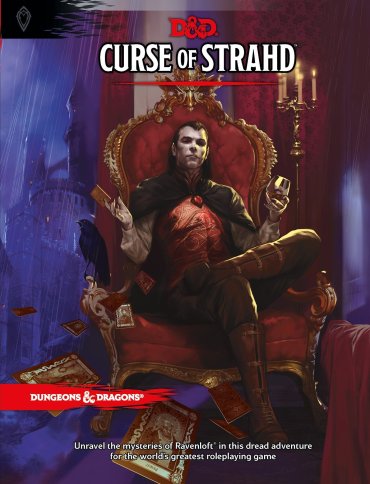


 by Richard Pett, #
 by Tim Hitchcock, #
 by Greg A. Vaughan, #
 by F. Wesley Schneider, and concludes with #
 by Brandon Hodge. The Player’s Guide is a


 by Saif Ansari.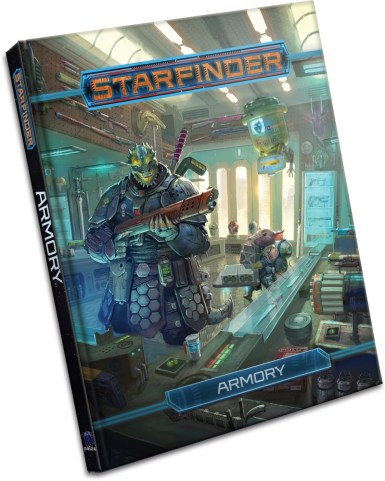


 After this is four pages of Personal Items. Although not the most exciting category of items, it’s certainly useful. My favourites are staples! The gear maintenance kit, mess kit, and books. (I know, I know. I’m really stepping out of my comfort zone there! Haha!).


 (and
(and 

 !
! , which contains information on each of the oceans of Golarion, underwater combat, a host of new rules and some new character options.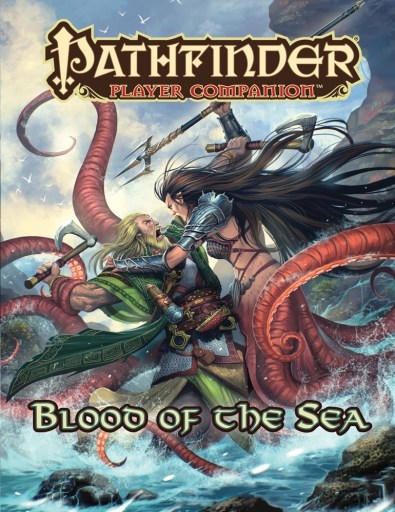
 and
and  . Gillmen can also be found in the
  , and the
  , while merfolk can also be found in the first
  .
. . I can honestly say that before reading this book they were not one of the races I ever thought I would want to play. They seem relatively impractical for a PC (being aquatic, and having tentacles), and I’m not big into octopi. It just wasn’t interesting to me. But, after reading the book, I’m probably the most excited for playing a cecaelia. For starters the artwork is awesome, and makes them a lot more relatable than the bestiary image. Their racial traits are fun looking. They have enough of the monster’s original abilities, while still being playable as a PC. They’re a powerful race, of course, at 23 RP, which puts them on par with grindylow, sahuagin, ogres, and svirfneblin. They have great flavour and cultural information. I adore that they’re super curious and social. They’re out to enjoy life, which is always fun to play. They come with three alternate race traits: ‘dextrous tentacles,’ ‘garrulous,’ and ‘tripping tentacles.’ They’re all pretty good, with ‘dextrous tentacles‘ allowing you to use your tentacles to hold and manipulate objects and increase the range of your tentacle sense ability (which gives you blindsight underwater) at the expense of being able to shoot an ink cloud; ‘garrulous‘ gives you a bonus on linguistics and diplomacy skill checks as well as allows you to learn two languages each time you invest a rank into linguistics at the expense of being able to shoot an ink cloud; lastly, ‘tripping tentacles‘ makes you really good at tripping your opponent but causes you to lose your tentacle sense ability. I like ‘garrulous‘ best, but I’m one of those players who enjoys learning a ton of languages, so I’m definitely biased. Haha. As for class options, they have only a single feat up for offer. That said, I like it, so its enough for me. The feat is ‘cecaelia focus tattoo’ which gives you a magical tattoo. Although you can have any number of tattoos, you can only activate one at a time. Once activated a tattoo functions for one hour. There are currently eight different tattoos which can increase your saves against poison or death effects, your stealth or survival skill checks, or the distance of your darkvision. Once you have the feat you can also choose to take another tattoo or increase the potency of one of your tattoos in place of a favoured class bonus, which is a pretty nifty option.
 , and the race comes in at 10 RP, which makes them approximately on par with the core races. There are also three feats here, all of which are a part of a combat style called ‘electric eel‘ that utilizes the ‘elemental fist‘ feat. I’ve mentioned in other blog posts that combat styles aren’t really my cup of tea, but I’m actually quite fond of this one. I recommend giving it a read. There are also five alternate race traits available for locathah characters, and six favoured class bonuses. I like all of the alternate race traits, but I think my favourites are ‘blunt head‘ which gives you a bite attack but reduces your swim speed, and ‘coastal emissary.‘ I also love ‘powerful smell,’ but its bound to irritate your companions. Haha.

 (which is a level four adventure that takes place in the Shackles),
  (which is a level one adventure that takes place in Sargava),
  (which is a level four GameMastery Module for 3.5 that takes place almost entirely along the Vanji River in the Mwangi Expanse), or — my personal favourites —
  (a level six adventure that takes place in a half-flooded ancient city in the Sodden Lands), and
  (a level six adventure that involves ancient Azlanti ruins and a super insular town on the coast of Cheliax). Those looking for a longer campaign should check out the Ruins of Azlant Adventure Path (which begins with
  ), or even the Kingmaker Adventure Path (which begins begins with
  ). I know, I know, Kingmaker seems like an off choice. But, it takes place in the River Kingdoms (which has a whole lot of rivers), it’s encounters and adventure structure allow for regular resting (and taking a dunk in the nearest water source), and you can build your own town. Perfect for those high-maintenance aquatic races looking to make a unique mark on the world.
 and the scenarios themselves. Each scenario is intended for groups of FOUR players (unlike regular PFS Scenarios which are intended for six) although each contains easy ways to scale up encounters for larger groups. Although you’ll find references to events in each that I liked or disliked, and comments about specific characters, these scenarios are not explored in detail. It’s not my intention to spoil the events in these scenarios, or give summaries and full reviews, but to share my opinions and provide recommendations. Once you’re done playing or GMing any one of these scenarios, be sure to head over to Paizo’s website and fill out a survey about your experiences. This will be used by the Paizo team to make the Pathfinder Playtest the best that it can be.
 and the
  and takes place in the Docks district. It was enjoyable, and had an interesting surprise which I’ll refrain from mentioning. It allows players to make use of a wide array of skills in order to obtain information on the Bloody Barbers (WAY more than I imagined would be helpful) which is really nice to see. Surprisingly, this quest can be accomplished without violence (although most groups are likely to get into a fight). I quite enjoyed it.
 . It was my favourite of the four quests.
 .
. .
. ).
).
 , and the
  ,
,  (twice) and a custom map.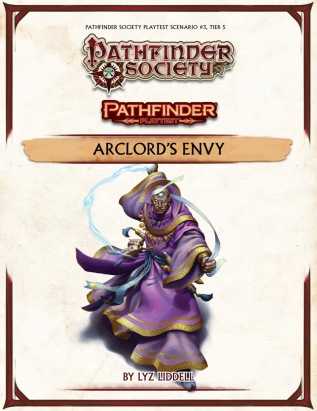
 ,
,  , and a custom map. It features gnomish Venture-Captain Sebnet Sanserkoht who is officially my favourite V.C. EVER. She’s awesome. In this scenario you’re tasked with investigating the murder of an Arclord of Nex, and determining who should be given a recently discovered book written by Nex himself, which the Arclord was likely killed for.
 d20 Diaries