Ch-ch-ch-CHANGES! (August News)

Well, it’s official! Season Nine: Year of Factions’ Favour has come to an end, and the Pathfinder Society has launched Season 10: Year of the Ten. Faction Cards have been updated, and the newest edition of the Pathfinder Society Roleplaying Guild Guide has been released. If you don’t have the newly updated versions of these documents then I highly recommend you head on over to Paizo’s website and give them a download. They’re free.

In other news, Gameday VII is underway. This means that my family is enjoying the chance to play in a bunch of new Pathfinder Society Scenarios online via play-by-post. There is a HUGE number of games scheduled to start now. That includes playing in the Pathfinder Society, Pathfinder Society Core, Pathfinder Society Adventure Card Game, Pathfinder Society Playtest and the Starfinder Society! In addition, they’re running the Pathfinder Society Scenario #8-99: Solstice Scar Special and Starfinder Society: #1-99: Scoured Stars Invasion Special as we speak. More games are slated to start in October. That’s also when Pathfinder Society Scenario #9-00: Assault on Absalom Special will run. Although it’s likely too late to join any of August’s games, there’s still plenty of time to sign up for October’s. That said, many games are full already, so I wouldn’t dawdle much longer if you want to get into a game! Haha.

First seeker Jadnura
First Seeker Jadnura. Art by Graey Erb for Starfinder.

For those of you who don’t know, the Scoured Stars Invasion special also brought with it the introduction of a new faction: Second Seekers (Jadnura). Who the heck is Jadnura? Jadnura is the First Seeker who led the Starfinders into the Scoured Stars system. That’s right. He’s the kasatha who got everyone stuck and lost in an event now known as the Scoured Stars Incident. So why would you still follow this guy when Luwazi Elsebo is the current First Seeker? For starters, it lets you make a character who was a loyal Starfinder before the advent of the Scoured Stars Incident. You can be the guy left behind, whose still loyal to a leader no longer present. Second? Well, the special is called the Scoured Stars Invasion, and it’s main purpose is to enter the Scoured Stars System and rescue as many lost agents as you can. I suppose some might call that a spoiler, but honestly, it’s obviously the point of the scenario right from the first few sentences of playing. Why else go there? Want more details? I can’t give them to you! Haha. I’m currently playing this scenario for Gameday VII and don’t know how it ends. If you want more information (and some spoilers) feel free to check out Paizo’s blog post on First Seeker Jadnura here.

GrandLodgeSymbol
The Sigil of the Open Road, logo of the Pathfinder Society.

So what the heck is Season Ten: Year of the Ten all about, anyway? Judging by the title, something to do with the Decemvirate. But what? It’s been hinted that it has something to do with the infamous Grandmaster Torch, and that some of the Decemvirate might find their anonymity threatened and their mysteries unveiled. Interestingly, most of the missions this season will revolve around the Hao Jin Tapestry. For those of you who don’t know, the Hao Jin Tapestry is a literal tapestry that leads to a demiplane which contains mysteries, relics, ruins and other places collected by the wizard Hao Jin. This object was acquired by the Pathfinder Society way back in Season Three and has been a source of tons of adventures. It’s also been harnessed by the Pathfinders in order to allow their agents to travel the world quickly and efficiently. This season the Hao Jin Tapestry is beginning to unravel and, if we can’t fix it, it’ll dump everything inside it into the Astral Plane. An unfortunate event for not only the Pathfinder Society, but also all the people and creatures who still live inside the demiplane itself. Unfortunately, you can bet that fixing it won’t be as easy as just casting mending. I’m sure there’s plenty of adventure involved! There’s a few other things that have been revealed to be a part of this season. There’s plenty of relics related to the lich Tar Baphon that will be surfacing. There’s also a demon who wants to utilize the Worldwound’s collapse to launch his apotheosis into full demon lord. Pretty nifty! I think I’m most excited for the missions involving Grandmaster Torch, but hey, I’m biased! I’m also excited to learn more about Tar Baphon. I love a good (BAD) lich!

Pathfinder Playtest Rulebook

There’s a few more exciting things going on around my house right now. My daughter’s begun work on creating her second Pathfinder Playtest character so that we can continue with our Doomsday Dawn Playtest. She’s decided to make a gnome fighter who wields an absurdly large sword. She’s very excited to be the melee character for a change.

My family and I entered a contest a week or so ago. Hosted by the overly generous Hmm on Paizo’s message boards, she was going to give away all the boons necessary to create a mermaid in PFS play. There were a few ways to enter — for yourself with a mermaid character concept, for a group of friends with a team created from the other boons she was giving away, or by nominating someone else who you thought deserved to win. Now, when we play in the Pathfinder Society, the question my kids ask me most often is:

“Mom, why can’t I be any race I want?”

Unfortunately, at the ages of six and seven, the idea of holding out for race boons is absurd. Haha. The follow up question I most often get after any explanation I can concoct is:

“Yeah. But WHY?”

So, as soon as I read the contest I told my family about it. My kids were jumping up and down in joy. They spend that night brainstorming, and spent the next day planning their characters while I madly tried to keep up with them. And then we got to the end. They were ready! Sort of. For bonus points you could also write a song.

….yup. A song.

Not my forte. My son wanted to add jokes into the song, and my daughter wanted it to have a lot of animal sounds (since we were nearly all animal people of one kind or another).

It was… hard. Haha.

But, in the end we handed in our entry with pride. So what was it?

My family and I wanted to make a quartet of characters who are (and were) universally considered outcasts among their people and Golarion at large. They’re weird, and different. But what’s strange for one culture isn’t strange for others, and it’s those very oddities that the others embraced and connected with. After all, who cares if the vanara has unnaturally large eyes, if he’s hanging out with a grippli? These guys are friends, companions, and (in many ways) family. They don’t have the same interests, and they don’t always get along. But, hey? What family does?

My daughter made an energetic poisonous grippli, my son made an eco-conscious vanara with a stumpy tail who has hair growth issues, my husband made a ratfolk who chews on everything (including magical objects), and I made an overly adventurous aquatic elf whose curiosity got her abandoned on the surface. Together, these quirky characters would do… stuff!

Just the other day the winners were announced. There were a ton of great ones. And some of the songs were awesome! Hmm ended up giving out boons to winners of each category, which is incredibly generous! We won in the ‘buddies’ category, and my kids have been hard at work ever since, plotting out their character mechanics. We were lucky enough that a fellow play-by-poster offered to run us through our group’s first PFS scenario together, so once everyone is ready and formatted for online play we’ll be starting Heroes for Highdelve! My daughter got to work first and is almost done. She’s thrilled!

We’ll post more about these lovable weirdos once they’re ready for a game. One thing’s for certain: they’re going to be the most eccentric group of characters we’ve ever made! (And that’s saying something…)

Now it’s time to say goodbye,

Or, more accurately: ‘Now it’s time to get to work on my next article.’

Season 10, here we come!

Jessica

SaveSave

New Starfinder Society Scenarios: Duskmire Accord 9 & Yesteryear’s Sorrow

We’ve looked a lot at the Pathfinder Playtest lately, but today we’re changing gears.  We’re going to take a look at the two most recent Starfinder Society Scenarios that are currently available for purchase, and will let you know we thought. Although you’ll find references to events in each that I liked or disliked, and comments about specific characters, these scenarios are not explored in detail. It’s not my intention to spoil the events in these scenarios, or give summaries and full reviews, but to share my opinions and provide recommendations. That said, if you want to avoid even minor spoilers I recommend you check out a different article. Whether you intend to use them in home games of the Starfinder Roleplaying Game, sanctioned scenarios for use with the Starfinder Society Organized Play, or just want to read a nifty new adventure, we’ve got you covered! So sit back, and get ready to explore the Pact Worlds!

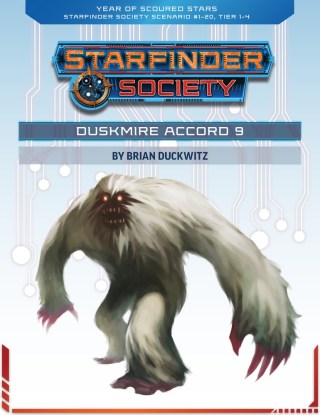
DUskmire Accor 9 Starfinder 1-22Scenario #1-20: Duskmire Accord 9 is a Tier 1-4 adventure written by Brian Duckwitz. It takes place on Salvation’s End, which is an artificial moon that was previously visited in Starfinder Society #1-00: Claim to Salvation and Starfinder Society #1-09: Live Exploration Extreme! Those of you who have the ‘Claimant to Salvation’ boon from 1-00 should definitely slot it for this one.  This scenario features no special tags and does not involve starship combat. It uses Pathfinder Flip-Mat Classics: Swamp twice, and Pathfinder Flip-Mat: Hamlet once. It also uses a custom map of the terrain (though it won’t be needed for tactical movement). In addition to the Starfinder Core Rulebook, this scenario makes use of the Alien Archive, although all the necessary stat blocks are included in this scenario.

For those of you who don’t yet know, Salvation’s End is filled with a bunch of automatically-controlled simulations and experiments, each run in an individual self-contained area called a ‘vault.’ Duskmire Accord 9 tasks your team of Starfinders with exploring one such vault called ‘Duskmire Accord.’ Your mission is to determine the source of its power and give it a look see. It’s a fun romp that will take cunning, diplomacy, and tact to accomplish — or not! There’s more than one way to accomplish your mission, and I’m very curious to hear what methods see the most play. There’s a wonderful cast of side characters in this one, from the new drow Venture-Captain Kunoris Vex (the Starfinder in charge of the new Lodge at Salvation’s End), straight through to all of the residents of the vault. It’s a great change of pace from both of the scenarios that came before it in this location. I don’t want to spoil too much about the residents of the vault, but I can say I loved all of them.   And the art for the ghost of the swamp?! SPECTACULAR! The boons are flavourful and fun, but not amazing. Overall I really enjoyed this scenario. I took me a long time to decide if I would give this four or five stars, but in the end I decided to give it five out of five. It’s not over-the-top-awesome like some of the others I’ve given five stars, but I think the interesting, fun social encounters, and the quirky cast of characters will really make it a joy to play. I give this scenario five out of five stars.

sfs 1-20 - duskmire accord - sparklemane - graey erb
Sparklemane from SFS #1-20: Duskmire Accord 9. Illustrated by Graey Erb. Art courtesy of Paizo Inc.

Yesteryear's Sorrow Starfinder 1-21Scenario #1-21: Yesteryear’s Sorrow is a Tier 3-6 adventure written by Jason Keeley. It takes place on the planet of Elytrio, homeworld of the ghibrani, who were previously introduced in Scenario #1-03: Yesteryear’s Truth (and Dead Suns: Book 5 of 6: The Thirteenth Gate). There you will investigate an abandoned military bunker in order to salvage armaments for the Exo-Guardians. I highly recommend playing through Yesteryear’s Truth before playing Yesteryear’s Sorrow. It will be infinitely more interesting if you have. If you’ve got the ‘Friends of the Ghibrani’ boon you should definitely slot it! This scenario features the Faction (Exo-Guardian) tag and does not involve starship combat. It makes use of two custom maps, and has a lot of unmapped areas (although all of the area that will feature battle are mapped). In addition to the Starfinder Core Rulebook this scenario makes use of content from Dead Suns: Book 5 of 6: The Thirteenth Gate, although all the necessary information from that adventure is included in this scenario. This scenario features a few recurring characters including Zigvigix, leader of the Exo-Guardians, whom you meet in ‘the Nest’, the base of the Exo-Guardians that will be familiar to players of #1-01: The Commencement. In addition, your players will be escorted to their destination by a local guide — either the Husk Dystane, or the Membrane Klarima. Both of these characters are originally from Yesteryear’s Truth, and which one joins you will depend on who your player’s befriended in that previous scenario. Both guides have different skills, benefits, and tactics, which is really nice to see. As for new characters? I ADORE the new fey that was introduced in this scenario. The art for this guy is wonderful. There’s an intriguing social encounter right near the beginning which you can choose to get involved in (or not). This encounter teases events that will be occurring during the upcoming Against the Aeon Throne Adventure Path (which begins with Against the Aeon Throne: Book 1: The Reach of Empire) and will hopefully lead to further Starfinder Society Scenarios involving the Azlanti Star Empire (a girl can hope!). This scenario featured nice ecological information on all of its enemies and hazards, which I always enjoy and gives GMs something interesting to tell their knowledgable players. The location explored in this scenario is very, very, large, and although lots of areas are thoroughly detailed, others are entire floors summarized by a single sentence. Due to the length of Society Scenarios, striking the right balance between detail and brevity in important and unimportant areas is difficult to say the least. Sometimes it works, and sometimes it doesn’t. I thought that this scenario did a wonderful job of finding that sweet spot. The location felt vast, without feeling rushed or skimmed over. Obtaining your objective is both challenging and fun. There’s a wonderful selection of player handouts which will be of particular interest to those of you who have played through Yesteryear’s Truth. This scenario also did a wonderful job of slowly cultivating a spooky atmosphere, closer to the end. Overall, I give it four out of five stars.

sfs 1-21 - yesteryears sorrow - nighthopper - nicolas espinoza
Nighthopper from SFS #1-21: Yesteryear’s Sorrow. Illustrated by Nicolas Espinoza. Art courtesy of Paizo Inc.

Thanks for joining us today! We’ll see you next time when we talk about the new Pathfinder Society Scenarios that are out, and the beginning of Season Ten!

Until then,
Jessica

Pathfinder Playtest – Review

Welcome back to d20diaries!

Wow, finding the time to fully read the new Pathfinder Playtest Rulebook took longer than I expected! Well, not to read it, so much as to digest it. Understand it. Plenty of rules are different, so I had to really focus. Considering that I normally find time to read while overseeing screaming, bickering, playing, laughing, children of various ages (hey, moods change quick!), finding quiet time to get some reading done was more than a little difficult.

That said, I’m a quick reader. I finished it in about two days, then spent some time crafting characters in order to try out the creation process. Before I can take the time to teach my husband and kids how to play, I need to be able to explain it. Properly. Haha. After that I helped my family through the creation process, read through Pathfinder Playtest Adventure: Doomsday Dawn (the first adventure we would be trying out), and we got to work playing.

It’s been a whirlwind! But a fun one.

And then I got sick. Still am.

LAME. Haha.

So whats on the agenda for today?

Today we’re going to take a look at Pathfinder Playtest. Not in depth — this isn’t a replacement for the rulebook. After all, the rulebook’s a free download. It’s my impressions, thoughts, and experiences. Things I’ve discovered, and even some questions I’ve got. Got an opinion of your own? Or an answer to a question I have? Let me know! This game system is brand new and we’re all learning together. Once you’ve had a chance to try out Pathfinder Playtest, be sure to head over to Paizo’s website and give them some feedback. They’re running surveys right now, and have forums up for you to share broader comments.

Ready? Let’s begin!

Pathfinder Playtest RulebookPathfinder Playtest is a new set of rules and gameplay for the Pathfinder Roleplaying Game. It’s intended to streamline the game, while retaining its robust character creation options. Running combat, monsters, and characters should go smoother. Learning the rules from scratch should be easier. Levelling up should be simpler. The book and rules are supposed to be user friendly — even for those who don’t know how to play d20 games.

In theory.

Pathfinder Playtest features gorgeous cover art by Wayne Reynolds which showcases Seoni (the iconic sorceress), Valeros (the iconic fighter), and Fumbus (the iconic alchemist) battling a white dragon! Wait! Fumbus who? Fumbus the goblin alchemist. Thats right! Not only are goblins a core race, but alchemist is a base class. Both are available options to try out in the playtest.

Open the covers (or flip to the next page on the pdf) and you’ll find an introduction by the Paizo staff, followed by the overview. This is where you’ll learn what the heck a d20 game is and how to play. There’s also an overview of the basic terms used in the game, including a few that are new, an explanation of the modes of play, and a list of what you’ll need to play. This section was easy to understand, even for a layman, although not as easy as I expected. It’s a difficult read for my children, for example, and my son (who is more than capable of reading chapter books aimed at pre-teens, published adventures for d20 games, and other Pathfinder products) would definitely get bored and flip past a few pages. Would my teenage/adult siblings read it all the way through? …Tough to say. Probably not. It’s more likely they’d give it a skim and see how it goes. So… sort of an easy read. An easy read for this genre and its audience, I suppose.

Many of the terms in this chapter will be familiar to those of you who have played d20 games before, but even experienced gamers need to give this section a thorough read. Calculations for some of the familiar statistics are different, and there are some very important brand new game mechanics that are explained here. Be sure to pay extra attention to the types of actions, the modes of play, and proficiencies. We won’t get into them in too much detail right now, but for those of you who are curious, these three aspects form a huge part of the game.

There are three modes of play in Pathfinder Playtest. Encounter mode is what you enter when your every moment matters. This is used during a battle, for traps, ambushes, hazards, and anything else similar. You play encounter mode in rounds which are six seconds long, and encounter mode ends when the danger has passed. This is a huge part of the game and the rules. But, it’s not all there is to the Playtest. Exploration mode is used for any situation where you’re not in immediate danger, but you’re not entirely safe, either. This includes exploring a town, ruin, forest, or even a hallway between encounters. It’s what you’re playing in when you’re not fighting something. It’s more than just walking, or a segue between the ‘exciting stuff.’ Exploration mode has its own rules, and has proved quite fun around my house so far. Finally, there’s downtime mode, which is what you use when you’re completely safe.

There are three major kinds of actions in Pathfinder Playtest. Actions, free actions, and reactions. Pretty much all the game is based around this. Nearly every feat, ability, and spell that has a non-passive effect has a symbol beside it right near the top showing what it costs to use. Free actions are free, obviously, Reactions can be taken once per turn, even on your opponents turns, as long as its triggering conditions are met. An example of this is an attack of opportunity (which only fighters can utilize right away!), but there are plenty others for different classes and characters. Lastly, there’s actions. Everything takes actions. Moving, attacking, special attacks, spells and such. Most spells take two actions to cast, although some take one or three. Each turn during encounter mode you’re allowed three actions, and most things you can imagine take one. Walking forward, drawing a sword, and swinging it? Three actions total. Attacking, attacking, and attacking a third time? Three actions. And totally allowed (each successive attack in a round takes a cumulative -5 penalty).  Lastly, there’s proficiencies. Yes, this includes armours and weapons. But in the Playtest proficiencies also replace your base attack bonus, base saving throws, and skill ranks. If you’re trained in something you add your level to the rolls you make with it. If you’re untrained you add your level subtract two. If you’re an expert you add your level plus one, master is your level plus two and if you’re legendary you add your level plus three. For example, if you’re trained in athletics you roll a d20, add your proficiency modifier (your level), your strength modifier, and any other item or extra modifiers you have. Expert in your weapon? Add the expert proficiency (your level plus one), your ability modifier (strength for melee, dexterity for ranged), and any other bonuses from your items. Master at reflex saves? Add your level plus two, plus your Dexterity modifier, anything else special you might have and off you go.

Got it? Good! If not, read the Pathfinder Playtest Rulebook!

After this we get into the fun stuff. Character Creation. The Playtest has a great step-by-step guide to making your characters. In short, you come up with a concept. Then you pick and apply their ancestry (race), background, and class. Each of these will increase some of your ability scores, but you also gain four increases to apply as you see fit. Once you’ve finalized your ability scores, select your trained skills and do some simple math to make it all come together. Spend your coin (150 sp), pick your spells (if you’re a caster) and fill in all your finishing details. Done. Relatively simple. The levelling up process is also simple, as well.

After this there’s an easy to follow example of how you make your ability scores. As I previously mentioned, ancestry, background, class, and your personal preference all play a part. So how does it work?

For starters, you need to know how much to increase an ability score. Increases are referred to as an ‘ability boost’. If the score you’re increasing is under 18 you increase it by 2 points. If it’s over 18 you increase it by 1 point. At character creation, you cannot make a character with over 18 in any one ability score, so all of your boosts will be increasing your ability scores by +2.

When you create a character all of your ability scores start at 10. Now you pick your ancestry. Most will give you two ability boosts that are applied to a specific ability, one ability boost that you can apply as you see fit (called ‘free’), and one flaw (which is a -2 in a specific score). For example, dwarves get ability boosts to Constitution, Wisdom, and Free. They also suffer an ability flaw to Charisma. Humans are different from most races in that they receive no flaw, and no specific ability boosts. Instead they get two free ability boosts, which can be applied at your whim.

Now that you know what to increase you apply it. However, there is a limitation. During each step that you apply your ability boosts, you must apply each to a different ability. In our previous example with dwarves, that means you’re getting +2 Con, +2 Wis, -2 Cha and a +2 to be added to any other ability score (Str, Dex, or Int). The next time you apply your ability scores you can increase any scores you want, but again, only one time each in that phase.

Backgrounds grant an ability boost in a single specific ability score chosen from a selection of two, and then grant a free ability boost. For example, acrobats get an ability boost to either Strength or Dexterity, and then a second ability boost that is free. Meanwhile, a barkeep gets an ability boost to either Constitution or Charisma, and then a second ability boost that is free. (This is not all that a background grants you, just the part that applies to ability scores). As mentioned before, during this step, each ability can only be boosted once. So, our example dwarf could apply the barkeep ability boosts to Constitution, and Strength, but couldn’t apply it to Constitution twice.

Classes offer a single specific ability boost to that classs’ key ability score. Alchemist’s increase Intelligence, bards increase Charisma, and so on. Some classes, like the fighter, can choose one of two ability scores to be their key ability score (in the case of fighters this is a choice between Strength and Dexterity).

Lastly (or second last if you choose to apply these before your class), you get four free ability boosts. You can assign these however you want — although each ability score can only be boosted once in this phase. Essentially this means that four different ability scores will increase by +2.

And that’s the ability score creation process. It’s quite simple when you get the hang of it, and can create a diverse array of balanced characters. There’s also a random generation method offered, for those of you who prefer to roll out your stats, but the characters they create will not come out as powerful as those created with the standard method. Still, it’s nice that its there.

After this we get into the chapter on ancestries and backgrounds. There are six major ancestries you can choose: dwarf, elf, gnome, goblin, halfling, and human. Those of you looking to be half-elves or half-orcs will select ‘human’ as your ancestry, and then choose a heritage feat which allows you to be either of those two ‘half-breed’ races.  This method opens up a unique design space which has potential for an interesting take on some uncommon races when the full game releases next year.

Each ancestry grants you some ability boosts and flaws (as already noted). It also grants you some hit points (which you will only receive at first level), your speed, size, and languages. Some of them also grant you a vision type, or a single special ability. That’s it. You won’t be getting a ton of racial abilities built into your ancestry. I know, I know. This seems like you get so much less. In a way, at low level, you do get less. But, as you level up you also get more out of your race. You see, each ancestry has a list of feats to choose from that only members of that ancestry can select. This is where you’ll find a lot of familiar ‘racial’ abilities like weapon familiarity, ancestral hatred, stonecunning, sure-footed, and other such features that would have once been found under ones race. There’s plenty of new ones, as well. You start the game with one ancestry feat of your choice, and gain more as you level up. This allows you to make your ancestry work for your character as an individual. After all, not all elves are the same.

After I got over the initial shock of seeing ‘how little’ each race gave me, I gave the different ancestry feats a read and, in the end, decided I like this method. It’s adaptable, easy to use, and enjoyable. I found it worked well during character creation. I particularly enjoyed the gnome ancestry feats, so be sure to give them a read!
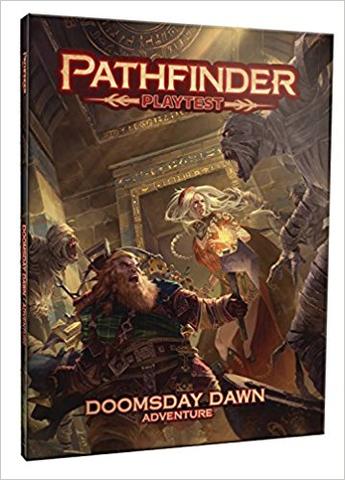
Pathfinder Playtest Doomsday DawnNext up is backgrounds. These represent the things your character did before becoming an adventurer. In addition to the ability boosts mentioned previously, each background grants you one skill feat and training in a single Lore skill tied to that background. What’s a lore? A lore is like a very specific knowledge skill. You can have lore in pretty much anything, as long as it has a very narrow focus. Examples include Vampire Lore, Desna Lore, Circus Lore, and Farming Lore. During downtime, lore skills can also be used to make an income. There are a lot of backgrounds up for offer in the Pathfinder Playtest Rulebook (nineteen!) and you can expect to see a whole lot more in the future. Each adventure path will offer new backgrounds that will tie your characters to the story. The Pathfinder Playtest Adventure: Doomsday Dawn is the first example of this, and provides a further six backgrounds to choose from. The Playtest Rulebook backgrounds include: acolyte, acrobat, animal whisperer, barkeep, blacksmith, criminal, entertainer, farmhand, gladiator, hunter, labourer, merchant, noble, nomad, sailor, scholar, scout, street urchin, and warrior. Although all of the backgrounds are equally ‘good,’ I particularly like the entertainer and the nomad, while my daughter enjoys the animal whisperer, and my son enjoys the warrior.

Past the Background we get to a short section on selecting languages. Players with very high intelligence scores will be surprised to find they don’t get as many languages as in Pathfinder First Edition, with an intelligence over 14 now granting a single bonus language!

Up next is the chapter on Classes. The classes available for the playtest include Alchemist, Barbarian, Bard, Cleric, Druid, Fighter, Monk, Paladin, Ranger, Rogue, Sorcerer, and Wizard. Despite these being familiar to you, each class has plenty of new features, and offers a lot of adaptability. In addition to hp, special abilities and a selection of class feats you can choose from in order to tailor your class to your character, each class also gives you proficiencies in saving throws, perception, and in various weapons, armour and shields. It also gives you a number of skills you can choose to be trained in. Spellcasters get spells, characters get abilities and so on. Now, you really need to read the classes to get a feel for them, so we’re not going to take too close of a look at them. What I will say is that each class we’ve tested in my house has turned out to be a lot of fun. My favourites include Bard (who can use some of their performances an unlimited number of times per day!), Sorcerer (whose spell list and type of magic is determined by their bloodline), and Paladin (who are just plain awesome!). My children particularly enjoyed the druid.

Next up is Skills. This chapter goes over each of the skills, how to calculate their modifiers, and what they can be used for. This is also where you’ll find the rules for crafting, performing and lore. Even experienced players need to give this chapter a read, as there are some changes to the skills. For example, grabbing, grappling and shoving are all tied to your Athletics skill. Yeah. Neat. Skills definitely do more for you now, than they used to. Also, anyone can make attempt any skill check. Obviously, they won’t all be as good at it, but the potential is there, which is nice. That said, some skills have uses that can only be used by characters trained in that skill, which is a nice feature.

After skills we get to the chapter on feats. Now, this section doesn’t have all the feats available in the book. Ancestry feats can be found under ancestries. Instead, it contains all the general, and skill feats available. This chapter is particularly important, because you will gain a LOT of feats.  Beginning characters start with two (at minimum!). One from your ancestry, and one from your background. Most classes grant at least one other feat (sometimes a class feat, sometimes a general or skill feat, and sometimes both). This is a wonderful surprise, which allows customization in a simple way.

After feats you’ll find Equipment. Pathfinder Playtest uses silver as the core coin (instead of gold) which means that the price of gear will be different than what you’re used to. There’s also been some changes to the armour, weapons, and weight systems — all for the better in my opinion! Definitely give the information at the start of this chapter a read before trying to spend your coin! Haha.

Past equipment you get into spells. This begins with a lot of important information about magic, spells, and how they work. Definitely don’t skip this part! Haha. There are four major spell lists: Arcane, Divine, Occult, and Primal. I’m fond of all of them. In addition, you’ll find tenth level spells. After the spell lists are spell descriptions. Amongst these spells you’ll also find a lot of class abilities that are cantrips, or run off of spell points. This includes domain powers, and bardic compositions (among others). Although I understand the purpose of including them here (in alphabetical order alongside the spells), it made it hard to make class choices. For example, if I’m looking for all the bardic compositions (which are a type of cantrip) I have to search through the entire chapter and read the spell traits to find them. There is no compiled list of bardic compositions and, as they are not class spells, they don’t appear on any of the Spell Lists. It’s a giant pain in the butt. Haha. I sincerely hope they find a better way to sort this in the future, cause all that sifting sucks. Not only that, it’s a drain on your time.

I also found (after a lot of jumping between chapters to hunt them down) that a lot of the domain powers weren’t as good as they used to be. Which is unfortunate. I’d gladly trade my cleric of Desna’s domain power from the Playtest with pretty much any other Domain power from First Edition. An unfortunate outcome! Still, it will take more playtesting to determine if it all balances out in the end.

Past this we come to a short chapter on how to level up your characters. In addition, you’ll find the rules for multiclassing and archetypes here. The system for this is very easy to understand, and allows for a lot of cool character concepts. Essentially, you can choose to take archetype or multiclass feats in place of your class feat at any given level — presuming you meet the feat requirements. There’s a bit more to it than that, of course, but not by much. It’s a simple, elegant way to handle multi classing and archetypes without causing characters to fall behind the powers of their peers. I really like it. Definitely give it a read!

Later in the chapter you’ll find the rules for animal companions, familiars, and gods. The rules in all of these categories were fun and easy to use, particularly the rules for familiars. We got ours created in only a few minutes! Wonderful! Of course, I did have questions. It’s specifically pointed out that you can only have one animal companion. But, this is not specified under familiars. Does this mean you can potentially have more than one? My son chose a gnome ancestry feat which granted him a familiar, and then later earned a vine leshy familiar from being a plant druid. Does this mean he gets both? I’ve yet to find a definitive answer, but if you’ve read an official answer somewhere, (or know the page its on that I’ve missed) let me know! I’d love to read the ruling. Another problem with familiars turned out to be damage. Although it mentions the attack rolls they can make, it doesn’t say how much damage one does if it tries to attack. This came up on one of our first combat rounds in our first playtest when my son sent his vine leshy to attack. He hit! And… we had no damage. Haha. I decided that it would do 1 damage unless I found an official ruling that says otherwise. Know of one? Let me know! We’d love to see it!

After this comes a very important chapter entitled ‘Playing the Game.’ Reading it is mandatory. Haha. It’s around 35 pages long and includes all the rules you need to play as a player, as well as the conditions found in the game. Important stuff.

After that is another very important chapter called ‘Game Mastering.’ This chapter includes everything you need to know to run the game as a GM (in addition to the content for players). This chapter is shorter — at only around twenty pages — but its also denser and more complicated. Admittedly, I had to go back and reread parts a few times, particularly regarding exploration mode, downtime mode, hazards, and DCs. I expect I’ll have to reference both this chapter and the ‘Playing the Game’ chapter plenty over the next year, as I get a handle on the rules. In my opinion, the game is easier to learn to play and GM that Pathfinder First Edition was, so I’m pleased, even if reading these chapters caused me a few headaches.

After this we come to (pretty much) the last chapter. Treasure. This is where you’ll find information on wealth, treasure distribution, special nonmagical gear, alchemical items, runes, trinkets, and magic items. There’s a lot of fun stuff in here that you’re going to love reading. I highly recommend discovering these on your own. I will say that I particularly enjoyed the addition of snares, and that I expect to make a character who utilizes them in the near future. I also really like the rune system for making magical weapons and armour. Its very similar to the fusion system in Starfinder.

Past this is the appendices and then the book is over.

That’s it, that’s all! But, that’s not all that I have to say. There are a few things I’d like to mention before wrapping up.

First: Hero Points. I loved them. Each character starts each session with one hero point, and can earn up to one extra each session as a player (for doing something awesome for the group like bringing snacks, tracking gear, or hosting the game) and one extra as a character (for doing something awesome in character like saving someone’s life, being generous, expert teamwork, or accomplishing an important task in game). These points can be used to save yourself from death, reroll a d20, or take an extra action. They’re useful, awesome, and add a great new element to the game. (My daughter’s determined to be the loot-tracker from now on in order to earn that extra point!).

Second: Dying. During our first play session, my husband’s character died. Quickly. All things considered, from the moment he fell unconscious at Dying 1, only a single full round occurred before he died. Two ill-aimed splash damage brought him to Dying 2, and then to Dying 3 with the second instance, and on his turn he failed his first and only fortitude save against death, which brought him to Dying 4: Dead. This was WAY too fast. Sure, he could’ve used Hero Points to save himself. If he had any. He had already fallen unconscious two other times that session, and had used up all his Hero Points. And he wasn’t the only one. My daughter also fell unconscious once during the session, and my son nearly did. Ouch! I found not only did we fall unconscious quite a bit, but we died too QUICK. For a lot of players, a dead character is an end to fun. Especially if your chances for recovery were so brief.

Third: Identifying Magical Items: After you realize something is magical (or alchemical), it takes an HOUR to identify the object. An HOUR. This means, that if you’re the kind of group who doesn’t rest unless its necessary, you can go an entire adventure without knowing what any of your treasure does. In fact, when we played Doomsday Dawn in my house, we went the entire first adventure without knowing what anything did. That means we didn’t get any use out of any treasure. At all. That’s absurd! Now, there are some ways for your characters to shorten this time to ten minutes (or evens shorter at higher levels), which is more manageable. Heck, I even understand the intent. If it takes more time and effort to identify magical objects, that makes them more special. They’ve got an air of mystery about them. That’s cool. But, if it takes so long to identify a healing potion, that without someone specialized in identifying magical or alchemical objects, the group can’t even figure out its a healing potion during their adventure, than what good is it? Now, I know plenty of players like to stop a LOT when they play. Maybe you’re even one of them. The group that gets loot or takes a few wounds and says, ‘We should head back and recover!’ or ‘We should go sell what we’ve found and come back!’ That’s fine. You won’t be hampered by this. But, I’m not that kind of player. Neither are my family or my friends. We very often take on entire missions until we HAVE to rest, due to our wounds. Or we HAVE to recover our spells. Or we’ve spent the whole day and our characters are actually sleepy. This is particularly true in Pathfinder Society missions, which very often occur in a single day on a timeline. This system strikes me as very problematic, unless you specifically ensure your groups always have a way to shorten it. But, why force a group to do so? That’s going to replace another skill or class feat they could have taken. It just… Reading the rules for identifying magical objects didn’t sit right with me. Then we made our characters, brought them to playtest, and it turned out to be both a problem and a handicap. An unfortunate occurrence which we’ve given feedback on.

Fourth: Resonance. This is your character’s natural ability to activate and utilize magical objects. You have a number of resonance equal to your level plus your Charisma modifier. You can invest resonance ahead of time in an object that grants a long-term effect, or spend resonance on the fly to activate a magical object upon use. It’s meant to help replace gear slots (head, hand, and so on). Kind of cool, right? Sure. Until you start counting it out. Want to wear a magical cloak? Cool, 1 point. Want to drink a potion? Cool one point! Wait! One point? What if you only start with one point? What if you’re dying and you have no points? A friend can’t even shove a potion in your mouth to save you?Sort of. When you’re out of points you can attempt to overspend resonance you don’t have in order to activate the magical object anyway. This is a flat check with a DC equal to 10 + the number of points you’ve overspent (including any times you’ve tried and failed). If you pass the magic works, and if you fail it doesn’t (and you can’t attempt to activate that item again until the next day). If you critically fail (roll a 1) you can’t attempt to invest any other magical items at all that day. Ouch! Resonance is of particular interest to alchemists, who need to infuse their alchemical items with resonance in order to craft them. Okay, I can see that, I guess. Particularly for potions and such. Luckily, alchemist’s get to base their resonance off of their Intelligence, instead of their Charisma. But why should the alchemist have to spend resonance to make an acid flask when a wizard can cast cantrip and deal comparable damage at will? Yeah, I get WHY. There’s plenty of justifications. It’s an item, they’re not spell casters, so on and such. But… I don’t know. Both resonance, and the alchemist’s reliance on it is one of those new rules that I read, and just didn’t sit right. So far in playtests around my house it’s been a bit of a problem. Our alchemist was out of resonance within the first fight and had to rely on overspending resonance the entire rest of the adventure. She didn’t critically fail, thank goodness, but if she had, her character would have been completely shut down. She literally would have had to punch people with her gauntlet (a bad idea with her low strength and poor AC) or throw a rock at them (another bad idea). And if a whole character can be shut down so easily (at low levels, at least), that’s probably a problem. Similarly, our dwarf started with no resonance at all. Feeding him a potion in order to save his life was a fifty-fifty chance the first time, with the odds getting worse from there. Considering how quickly he died when he fell unconscious, that’s brutal. Ugh. Now, that said, I haven’t play tested the game enough yet, to make a final decision on resonance. Maybe it’s better with other classes. Maybe it’s less trouble at higher levels. Maybe this is meant to show that magic items are rare and special, tying it into the length of time that it takes to identify them. Maybe we’re not meant to really use something like a healing potion at low level. Maybe other groups didn’t have trouble at all. But so far, it’s been trouble for our groups. I hope that’s not the case in the future. I’d be particularly interested to see how resonance has worked out for you. If you’ve got an experience to share let me know!

Fifth: Initiative. You don’t have one. Instead you initiative is based on your perception modifier. Occasionally, if your character is doing something specific, you can roll a different skill in its place. For example, if you’re swimming your GM might rule you can use Athletics as initiative this time, or stealth if you’re in hiding. And so on. I loved this.

Overall, I really enjoyed the Pathfinder Playtest so far. I like the changes they’ve made to the game system, character creation, and treasure. I like it a lot, actually. That said, I have some questions which need clarifying, and we did run into trouble. We felt it took too long to identify magical items. We felt resonance was too limiting — especially for alchemists. And we felt the that dying turned into dead way too fast. It’s a good game, and we’re going to play it a lot more over the next year so that we can turn our feedback in to Paizo and they can make this next edition the best that it can be.

At the moment, do I think it’s better than Pathfinder First Edition? …I don’t think I can answer that. It’s new, and going to take some getting used to. Meanwhile, I’ve been playing Pathfinder since before it was Pathfinder. It’s nostalgic and homey. You know? I think it would be unfair to compare the two in that manner until I completely get the hang of the new rules. That said, I can answer a similar question. When it comes down to it, I like Pathfinder better than Starfinder. But do I like Pathfinder Playtest better than Starfinder? …No. Not yet. Maybe one day. But, at the moment, the Drift’s got more sway over me.

Well, that’s all for today. I hope you enjoyed this short look at the Pathfinder Playtest, and my opinions on it. I’d really love to hear your opinions and experiences with the Playtest rules, so if you’ve given it a try be sure to leave a comment. If you haven’t downloaded the free PDFs for the Pathfinder Playtest I highly recommend you head on over to Paizo’s website and do so. It’s free! There’s not much you’ve got to lose. Haha. Those of you hoping to get physical copies can find them here: Pathfinder Playtest Rulebook, Pathfinder Playtest Deluxe Rulebook, Pathfinder Playtest Adventure: Doomsday Dawn, Pathfinder Playtest Flip-Mat Multi-Pack.

Until next time,
Jessica

Playtest

Pathfinder Playtest

Pathfinder Playtest RulebookPathfinder Playtest.

It’s here!

Finally, it’s here!

For some of you this might be irrelevant. Others, a little scary.

But me?

I’m excited.

I’m getting up first thing in the morning and heading over to Paizo’s website to download my free copy of everything Pathfinder Playtest. I’ll read it within a day or two, and soon be testing out the character creation process. I’ll be teaching it to my kids by the start of next week, and trying my hand at GMing an adventure for them shortly after. I’ll download the Playtest PFS scenarios as soon as they launch next week, and have reviews up on them within a day or two. When Gameday comes I’ll have a chance to try the game out as a player. Afterwards, I hope to have a chance to play again. Then there’s surveys to fill out and feedback to give, so that Paizo can make this next version of Pathfinder the best that it can be.

So what’s first?

Everything is be available on the Pathfinder Playtest landing page, so head there first and see what there is on offer. Want it all? Click ‘Download All.’ Easy!

But, what exactly is there to download?

The first thing you’ll want to download is the Pathfinder Playtest Rulebook. This is a short version of the rules which give you all the information you need to know in order to play Pathfinder Playtest, GM it, create and level up characters. Now, as the Playtest, this is not a full Rulebook. It’s not what you’ll see when Pathfinder Second Edition launches next year. It’s a streamlined Rulebook with everything you need to know to try out the game. To try running the game. And to make a wide variety of characters. This is the major download. Read it. Enjoy it. Give it a shot. Make characters. Try new things. Share it with your family and friends. Help them make characters.

Pathfinder Playtest Doomsday DawnAfter this you should download Pathfinder Playtest Adventure: Doomsday Dawn. This adventure is actually a series of short, multi-encounter adventures which are linked over a decade of time to tell one epic story. Ancient Osirion features a wide variety of magical clocks which have been counting down through millennia. Previously a mystery, these Countdown Clocks will soon reach 0, at a time when Golarion will line up with the foul planet of Aucturn and allow the horrifying and mysterious Dominion of Black to surge across the world. Your players will travel throughout Golarion over a decade in order to understand the Countdown Clocks, defeat the Dominion of Black, and save Golarion! These mini-adventures are designed to show off and test a wide variety of game mechanics and adventure styles.

I’m thrilled for the Doomsday Dawn, particularly because I first read about the Countdown Clocks back when the The Pact Stone Pyramid was released before Pathfinder had its own rules set. I found the clocks so intriguing I made a whole campaign around it (which was pretty awesome if I do say so myself!). Unfortunately, that was one of the games that fell apart through the years (multiple pregnancies from both a player and myself were the joyous reason that campaign never got played through to its conclusion). I’m thrilled to see what the Paizo team does with it!

Those of you who will be GMing also need to download the Pathfinder Playtest Bestiary (link not available at the time of posting) which contains all the monster rules you’ll need to run the Doomsday Dawn. You’ll likely also want to download the Pathfinder Playtest Flip-Mat Multi-Pack. This contains digital downloads of four major encounter areas in the Doomsday Dawn Adventure. These maps are said to include a burnt-out crypt, a ruined temple, a wizard’s tower, and an astronomer’s underground laboratory. I have high hopes for these maps, so I can’t wait to see them.

Those of you hoping to get your hands on a physical copy of these books can try their hand on Paizo’s website, or order them on Amazon: Pathfinder Playtest RulebookPathfinder Playtest Rulebook Deluxe HardcoverPathfinder Playtest Adventure: Doomsday DawnPathfinder Playtest Flip-Mat Multi-Pack.

And that’s it!

For now.

On August 7th Paizo releases three Pathfinder Society Scenarios for the Pathfinder Playtest (all of which are free). The first, Pathfinder Society Playtest #1: The Rose Street Revenge, is a series of four tier 1 quests that task the PCs with investigating a series of murders perpetrated by the Rose Street Killer, who has been targeting recently freed slaves. They’ll get to ally with kobolds, explore the Puddles, and… do some other exciting stuff that I’m not yet privy to! Haha. This scenario is written by Leo Glass, Thurston Hillman, Joe Pasini, and Linda Zayas-Palmer, so you know it’s going to be awesome!

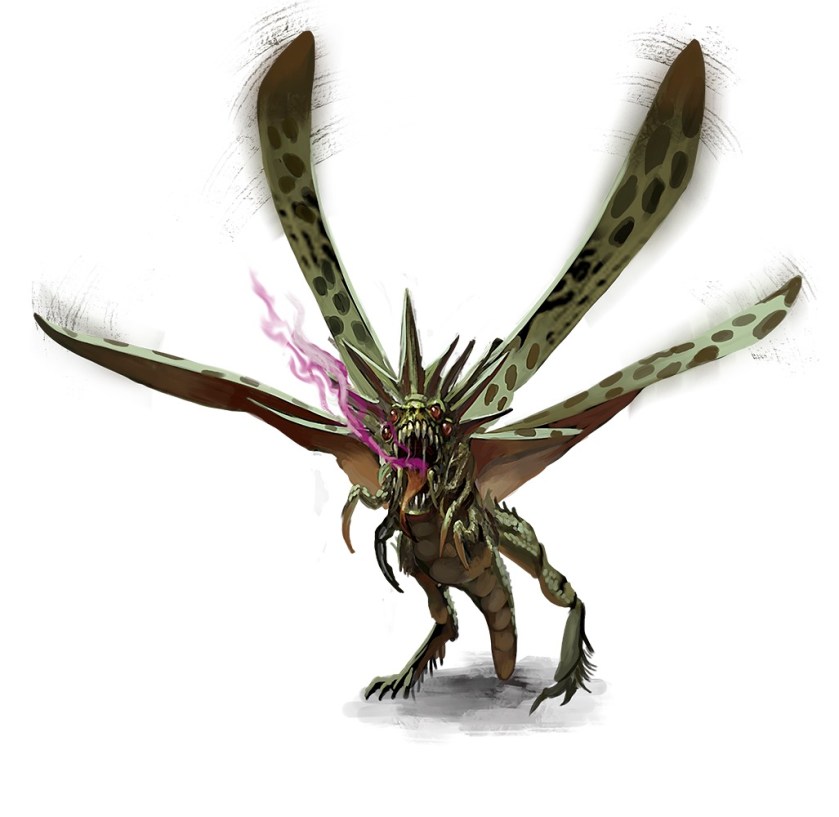
Pathfinder Playtest Scenario #2: Raiders of Shrieking Peak is a tier 5 scenario written by Luis Loza. Recently, the Pathfinders discovered an Iomedean artifact that was being shipped overland from Diobel to Absalom. Unfortunately the caravan transporting it was attacked and its up to your PCs to find the thieves, and retrieve the relic. It sounds like this scenario is intended to have multiple ways to achieve your goals, which should allow both combat heavy groups, and diplomatic groups to try out different aspects of the game. The only art I’ve seen for this scenario so far features a harpy, so I’m very intrigued! (Fans of my Legacy of Fire novelization will know I’m a huge fan of harpies as potentially dangerous NPCs. Undrella was awesome!)

Sebnet Sanserkoht gnome.jpg
Sebnet Sanserkoht, a gnome Pathfinder from Pathfinder Society Playtest #3: Arclord’s Envy. Art by Javier Charro.

Pathfinder Society Playtest #3: Arclord’s Envy is a tier 5 scenario written by Liz Lydell which I am most excited for. It takes place in NEX, which is a place I’ve never had a chance to play in before, and is a mystery investigation that I know pretty much nothing about! It said to reflect the location wonderfully, and have some flexibility, which ensures that the mystery is different each time you play. This is particularly important since all of the PFS scenarios are replayable.

Well, I’m off now. I’ve got to download the Playtest materials myself, after all. Here’s hoping the website doesn’t crash…

Best of luck!

Jessica

SaveSave

SaveSave

SaveSave

SaveSave

SaveSave

New Starfinder Society Scenarios: The Blackmoon Survey and To Conquer the Dragon!

Today we’re going to take a look at the two most recent Starfinder Society Scenarios that are currently available for purchase, and let you know we thought. Although you’ll find references to events in each that I liked or disliked, and comments about specific characters, these scenarios are not explored in detail. It’s not my intention to spoil the events in these scenarios, or give summaries and full reviews, but to share my opinions and provide recommendations. That said, if you want to avoid even minor spoilers I recommend you check out a different article. Whether you intend to use them in home games of the Starfinder Roleplaying Game, sanctioned scenarios for use with the Starfinder Society Organized Play, or just want to read a nifty new adventure, we’ve got you covered! So sit back, and get ready to explore the Pact Worlds!

PZOSFS0118E
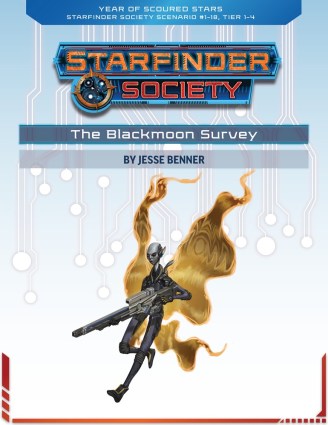
Starfinder Society Scenario #1-18, The Blackmoon Survey.

Scenario #1-18: The Blackmoon Survey is a Tier 1-4 adventure written by Jesse Benner. It takes place on Eox, a planet with a thin and toxic atmosphere that is run and populated by undead. More specifically it stops in the city of Zinhew, before heading out to the Blackmoon excavation site, and into the barren wastes of the planet. GMs will need to familiarize themselves with the poison rules, while players will need to ensure they have armour, which can protect them from many of the environmental hazards of Eox. This scenario has no tags and does not feature starship combat. Although it is influenced by Scenario #1-09: Live Exploration Extreme!, there are no mechanical advantages to bringing a character along who has played that scenario, nor are there any boons you should specifically slot. You do not need to play Live Exploration Extreme before playing The Blackmoon Survey. This scenario utilizes two custom maps, and has a third encounter area that has no map provided at all. In addition to the Starfinder Core Rulebook, it makes use of content from the Alien Archive and Pact Worlds. All the necessary information from these two extra sourcebooks is included in the scenario. This scenario features Venture-Captain Arvin, and introduces a few new characters, most notably the Starfinder Taylehm (a kasatha borai), and the contracted ‘dirt boss’ Berchta Deepdelver (a vesk mechanic with awesome horns) and her drone Digger.

sfs 1-18 - blackmoon survey - boroi - taylehm - graey erb
Taylehm the boroi kasatha from SFS 1-18 – Blackmoon Survey. Illustrated by Graey Erb. Art courtesy of Paizo Inc.

Recent events have caused the Bone Sages of Eox (their ruling elite) to contract excavation rights on different parts of Blackmoon mountain to different agencies, one of which is the Starfinder Society. This is an incredible opportunity for the Society, both to expand it’s influence on Eox, but also because the site is so famous. It draws publicity in addition to the knowledge that could be gleaned from the location. Unfortunately, the Starfinder excavation has run into some trouble. Starfinders have gone missing, undead labourers have been destroyed, and a few living souls have also turned up dead. Your player’s job is to head to the site, discover what’s causing the disruption, and put an end to it. In addition, they need to ensure they don’t do anything to tick off the Bone Sages. This excavation is very important to the Society, and it needs to return to productivity as soon as possible. The scenario makes excellent use of Pact Worlds history and current politics, which I thought was wonderful. Not only does it involve the history of Eox, but it also touches on the history of the Diaspora, Damiar, Iovo, as well as the Magefire Rebellion of 7AG, and the Thousand Moons trap. Although learning this history and background information isn’t necessary, knowledgable PCs will get extra enjoyment from doing so. It’s a great scenario to crack out your know-it-alls! The mystery and investigation itself has multiple avenues of inquiry, and accounts for a wide array of skills that can be used to gain information. Players who find themselves stumped need not worry, as the scenario keeps moving even if you’re stuck. That said, uncovering as much as you can has benefits, so good investigation is rewarded. It provides some unique roleplaying encounters, mechanically interesting battles, and environmental hazards. One of these battles could be particularly challenging for some groups, so I’m curious how it will turn out in play. This scenario also strongly gives the PCs agency. There are multiple resolutions to this adventure, and your actions have a direct impact on which boons you receive and how various groups perceive you and the Starfinder Society as a whole. All in all, this scenario looks like a ton of fun! I can’t wait to play it. I give this scenario four out of five stars.

Starfinder Society Scenatio 1 - 19 To Conquer the Dragon
Starfinder Society Scenario #1-19, To Conquer the Dragon.

Scenario #1-19: To Conquer the Dragon is a Tier 5-8 adventure written by Matt Duval. It takes place on the planet of Triaxus, in both the city of Cumo, and the Parapet Mountains. This scenario features the starship tag and involves a very tricky starship battle. It is directly influenced by events in Scenario #1-13: On the Trail of History, and I HIGHLY recommend playing the same character through both of those scenarios. It makes use of the Starfinder Flip-Mat: Urban Sprawl, Starfinder Flip-Mat: Basic Starfield, and a custom map. In addition to the Starfinder Core Rulebook, this scenario makes use of content from the Alien Archive and Pact Worlds. All the necessary information from these two extra sourcebooks is included in the scenario. This scenario is the third appearance of the bleachling gnome, Venture-Captain Naiaj, who previously appeared in Scenario #1-05: The First Mandate, and Scenario #1-06: A Night in Nightarch. It also introduces a wonderful new Starfinder, Zafeldrin, a brass dragon who gives your players a bit of a hard time upon their arrival. He’s delightful! If your characters have access to any unique ships via their boons this is a great scenario to slot them in.

sfs 1-19 - to conquer the dragon - zafeldrin - graey erb
Zafeldrin the brass dragon Venture-Captain from SFS 1-19: To Conquer the Dragon. Illustrated by Graey Erb. Art courtesy of Paizo Inc.

To Conquer the Dragon sends your players to Triaxus for the grand opening of the White Sands Starfinder Lodge! This new lodge is located between the Drakelands and the Allied Territories, and its opening is a huge win for the Society! Your job is to get there, ensure the gala goes off without a hitch, and impress the many dignitaries that will be in attendance. Sound a little familiar? Yeah, it’s premise is a bit like #1-05: The First Mandate, which worried me a bit. You attend a gala and try to impress some guests. It gets violent. That said, this scenario is full of surprises, and didn’t go as I expected. You get to spend a lot of effort on patrolling and defending the gala, which can allow you to do some pretty helpful pre-emptive things which affect this adventure’s outcome and how the Starfinder Society is perceived on Triaxus. The attack is certainly different than I expected it to be, and the sections of the adventure that follows are unique. The starship battle is a bit tricky and can really benefit from an awesome science officer, which is great to see. There’s a lot of fun social encounters, but honestly, where I think this scenario can most shine is its villain. She’s unique, driven, and has a grudge out for anyone whose played #1-13. This is personal, and she ensures your players know it. Of all the enemies I’ve seen so far in the Starfinder Society, she is BY FAR my favourite, and the most memorable. I highly recommend GMs play up this fierce opponent as much as possible! All in all, I think this is a great (but very dense) scenario, that suffers a bit from its similarity to The First Mandate. That said, it’s considerably different, and makes excellent use of its side characters and main villain. Overall, I give it three out of five stars, (although its villain nearly pushed the rating up to four out of five).

Thanks for joining us today! We’ll see you again later this week when we take a look at the new Pathfinder Society Scenarios!

See you in the Drift!

Jessica


Summer Flies By! (And other news)

Well, it’s been a busy summer so far. We’ve visited family, celebrated birthdays, gone swimming, tended our garden, played at the park and… Well, frankly my allergies are acting up like CRAZY! Whoo, I feel horrible! Haha. Still, my kids are happy, and I’d rather get out and enjoy the summer than I would let it pass me by.

In gaming news we’ve had a chance to play the Mummy’s Mask Adventure Path a few times, Reign of Winteronly once, Shackled City a few times (look for an update soon!) and haven’t had a chance to play Iron Gods at all (sad!). In fact, we haven’t had a chance to play Starfinder at home lately, either. (Double sad!).

A while ago my daughter asked me if I would start moving some of our d20 games online to play-by-post. She felt that she never got to play her many, many, many adventures and characters because when the weekend comes we only have time for one game, and it’s going to be one of the ones everyone agrees on. That means that we could go months without playing some of her characters.

“Pleeeeeeease, Mom?” she asked. “Some of my characters might as well be DEAD! I would rather play them one post a day than take no turns EVER! PLEEEEEEASE!?!?”

She’s a little dramatic, but she got the point across. Haha.

So, at my daughter’s request, we moved one of our ongoing family PFS games online and we moved our family Dead Suns Adventure Path online. My kids and I also have a lot of campaigns that involve only me and them. I told them they could choose one to move online for now. They gave this a great deal of thought and, although they have a ton of characters they enjoy playing, they also have campaign envy.
What?

Campaign envy.

Every time the grown ups play Mummy’s Mask, or Iron Gods, or Reign of Winter they are desperately jealous. A while ago they began their own Mummy’s Mask campaign and they’ve been begging me to let them start Iron Gods and Reign of Winter ever since. In the end, they chose the Mummy’s Mask Adventure Path. I’m actually really excited, since they created a very entertaining group of characters that shook up our typical party dynamics. More details on that will come in an upcoming blog post.

In other news, Gameday VII will start in another few weeks, which is super exciting! I can’t wait! GenCon is coming up (for those of you lucky enough to attend such things), and Paizo recently released their Puzzle Hunt from PaizoCon online for mass consumption. No idea what that is? In short, its a series of Golarion-themed puzzles within puzzles that were given out at PaizoCon back in May. It’s a free download on their website, and you can talk about the puzzles with other gamers on the boards. I gave them a read and am actually super excited to try them out. It looks fun!

Paizo recently announced their upcoming Pathfinder Society Scenarios, which include the finale for Season 9 and the start of Season 10! They’ve also shared details on the next four Starfinder Society Scenarios. Soon we should get information on two new Adventure Card Game adventures, and the first three of their upcoming Pathfinder Playtest Scenarios! I can’t wait to get my hands on these beauties at the end of the month!

Speaking of the Playtest, there have been some awesome spoilers lately. My favourite turned out to be the BARD. Now, I’ve always had a soft spot for bards, so I was pretty sure I was going to love it no matter what they did. After reading their recent blog post on the topic I was elated! It’s got full spellcasting, performances are now a special sort of bard only cantrip called a composition (which means you’re not going to run out of music!), and some of the performances are reactions (counter song, here’s looking at you)! It’s just… awesome! I can’t wait to read the whole class!

Luckily, we don’t have much longer to wait. Pathfinder Playtest releases on August 2nd, along with the Doomsday Dawn Adventure, free maps to go with it, and a trio of Playtest Society Scenarios. I’ve had the good luck to join up with a group of play-by-posters who are going to be playing all three PFS scenarios in a row, which will give me a chance to try the game as a player. Meanwhile, I’ll be GM for Doomsday Dawn (and perhaps even the PFS Scenarios) for my family at home. I expect there will be a lot of characters being made around the house at that time, so who knows what we’ll end up playing with! It’s exciting.

Now I just have to find the time to read all of that…

Today I’m going to leave you with a photo my daughter took especially for d20 diaries. And yes, it has rabbits.

Enjoy

Jessica

d20diaries rabbit

SaveSave

SaveSave

July New Releases!

School’s out for summer, Canada Day has passed, and Independence Day (for all you American’s out there) has just ended. It’s a new month, with new releases in the gaming world. I don’t know about you, but I’m excited for some of this month’s products!

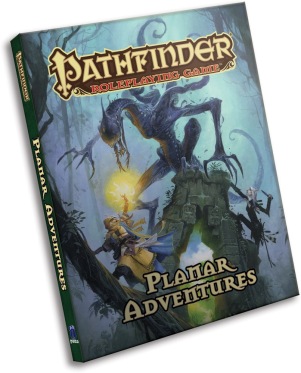
PZO1141Last month there were some awesome releases, including Pathfinder Roleplaying Game: Planar Adventures, Pathfinder Campaign Setting: Distant Realms, the finale of the Dead Suns Adventure Path: Empire of Bones (Dead Suns 6 of 6), and The Reaper’s Right Hand (War for the Crown 5 of 6)! Tricky to top! So what’s on the schedule for this month?

First off, Pathfinder Playtest.

Now, this isn’t out until AUGUST, but if you want to get your hands on a print copy now is your chance. Paizo is releasing the Pathfinder Playtest Rulebook in hardcover, softcover, and in a special edition cover. They’re also releasing the Pathfinder Playtest Adventure: Doomsday Dawn and the Pathfinder Playtest Flip-Mat: Multipack. All of these products will be available for free as PDF downloads on August 2nd, but print copies will be quite hard to come by. Preorder or bust! In addition they’re releasing three Pathfinder Society Scenarios for Pathfinder Playtest. One series of quests at tier one, and two scenarios at tier five. An interesting choice! All three will be available as PDFs for free on August 7th. For more information, or to preorder print copies, check out Paizo’s website.

With that out of the way, let’s take a look at some products you can get your hands on this month!

In the world of Pathfinder there are only two new products up for grabs. The Six-Legend Soul (War for the Crown 6 of 6) is the much anticipated finale to the War for the Crown Adventure Path! Oh, it’s gonna be a good one! I’m SUPER curious! Pathfinder Player Companion: Heroes from the Fringe presents a look at a lot of non-human, unique character options. Examples of this include the Ekujae elves of the Mwangi Expanse, and Pahmet dwarves of Osirion’s deserts, and many more. The part I’m most excited about? Whimsical phantoms for spiritualists! Come on, you know you want to be haunted by a chipper gnome ghost! I’m very intrigued with this product and can’t wait to see what’s inside. Pocket Editions of Ultimate Combat and Bestiary 5 also come available this month.

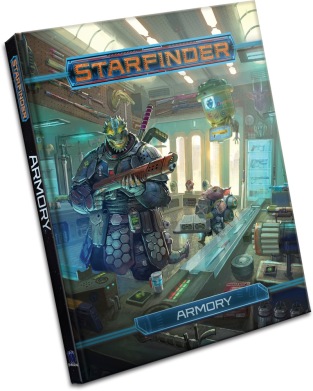
PZO7108Starfinder also has two exciting releases: The Dead Suns Pawn Collection, which has over 100 custom pawns from the Dead Suns Adventure Path, including a bunch of awesome starships! It looks amazing! What’s more exciting than that? A new hardcover book! Starfinder: Armory. Aww, yeah! This book is packed full of tons of new weapons and armour, as well as magical, technological, hybrids and mundane gear. There’s new bioaugmentations, weapons fusions… Every kind of item type has some new choices in this book. Also? New character options which focus on equipment! I don’t have a clue what they’re going to be, but I sure am intrigued!
In the world of Organized Play there will be four new scenarios coming out at the end of this month. Pathfinder Society Scenario #9-24: Beneath Unbroken Waves is a tier 5-9 scenario written by Kate Baker of particular importance to the Concordance Faction. It tasks the PCs with investigating underwater ruins. Scenario #9-25: Betrayal in the Bones is a tier 12-15 scenario written by Tom Phillips which continues the ongoing story of the Grand Lodge Faction. It allows players to finally get back at some old enemies! For more details, check out a previous blog post where we spoke about events leading up to this scenario! Starfinder Society Scenario #1-18: The Blackmoon Survey is a tier 1-4 scenario written by Jesse Benner which tasks players with exploring an ancient Eoxian ruin to determine why the workers on the excavation have been going missing. This one sounds like a ton of fun. Scenario #1-19: To Conquer the Dragon is a tier 5-8 scenario written by Matt Duval which send the players to Triaxus to open a Starfinder Lodge! This scenario builds on events from #1-13: On the Trail of History, and involves starship combat. I can’t wait until I get my hands on them later this month!

What’s left? Maps of course! And this month certainly brings us a LOT. Pathfinder Flip-Mat Classics: Watch Station is a pretty handy map set which gives is a solid dungeon or underground prison on one side, and a moderately sized sheriff’s office/town barracks on the other. It can also sub in as any small building that includes barracks, such as a thieves den, guild headquarters or school. Pathfinder Flip-Mat Multi-Pack: Forest is a useful set of two flip mats which feature woodlands, rocky banks, and small rivers. These two mats each connect to each other in multiple ways, which means that you can continue your game with a rolling scene, over and over again. They look gorgeous. Starfinder Flip-Mat: Asteroid is an interesting map release. One side is an incredibly useful map of a canyon, impact site or crater which is going to see a ton of use. It’s super adaptable, and can even work in Pathfinder play. The other side is a complex built into the interior of an asteroid. It looks quite interesting. Clearly intended to be used in the Diaspora, it can double as a lot of other complexes, including an underground bunker, base, laboratory, military instalment or even a school. Unfortunately, all three map sets are not yet released on Amazon, so if you’re Canadian, like me, or from another place in the world where the cost of having anything delivered from Paizo is ABSURD you’ll need to wait a while before getting these beauties on order.

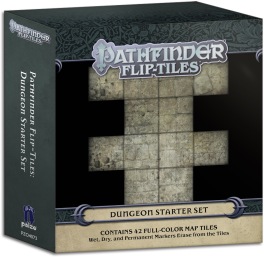
PZO4073There’s also a whole new type of map being released this month: Pathfinder Flip-Tiles! We’ve talked about these before on d20diaries, but in short, they’re a collection of 6×6 tiles with images on both sides which easily can connect to form a large complex. This month brings us two sets of map tiles. Pathfinder Flip-Tiles: Dungeon Starter Set, includes basic dungeon features including halls, stairs, turns, entrances and rooms. It has a whopping 42 double sided map tiles. The second set, Pathfinder Flip-Tiles: Dungeon perils Expansion Set, is an expansion which works will the Dungeon Set (and will work with other sets in the future). It contains 24 double sided flip-tiles which depict hazards including trapped and lit hallways, chemical spills, chasms, rock falls, magical devices, and fungal growths. They look pretty cool. Much like this months flip-mats, these products aren’t yet available on Amazon. As a brand new product, I haven’t yet seen these in person, so I’m not sure how easy they’ll be to adapt and use in a live game, but I’d love to find out. If any of you get your hands on these tiles, let me know! I’d love to hear what you think!

That’s it for this months new releases! What products are you most excited for? I know my household can’t wait to get our greedy little hands on Starfinder: Armory! Here’s hoping!

Jessica

Wayfinder 18: Fey and the First World

As you may have heard, the latest issue of Wayfinder Magazine was recently released. Wayfinder is full of fan-created content for the Pathfinder Roleplaying Game, and is a free download on Paizo’s website. Over the years they’ve made an astounding 18 issues of Wayfinder, as well as a Bestiary! Nearly every issue has a theme, with this latest one being Fey and the First World! So whether you you’re a fan of the fey, or a fan of free, I highly suggest you give this little gem a chance!

But, what’s inside it anyway? A lot! At around 75 pages for each issue, that’s a lot of free stuff! The articles inside offer new player races, archetypes, feats and spells. As well as new equipment, both magical and mundane. In addition to player options, there’s plenty for GMs with adventure ideas, plot hooks, characters that can be used as allies or enemies, unique monsters, and even short adventures. Both players and GMs can make use of a ton of locations, personalities and gazetteers that are described throughout. To round things out there’s also songs, poetry, and fiction. And let’s not forget the awesome art!

There was a lot that I loved inside Wayfinder 18. My favourite archetype was the ‘Bogeykin,’ a spiritualist who has formed a bond with a dead bogeyman that urges her to sow terror! This archetype is written by Calder CaDavid, features art by Adam Munger, and can be found on page 26.

PZO9298
For more information of the First World, check out Pathfinder Campaign Setting: The First World, Realm of the Fey

For spells, check out ‘liar’s light,’ ‘mother’s embrace,’ and ‘seneschal’s rebuke,’ all of which are inspired by Eldest of the First World, and can be found on pages 34-35. These spells are written by Jason Daugherty and Wojciech “Drejk” Gruchala, while the art in that article is by Jess Door.

I’m not a big fan of style feats, so imagine my surprise when my favourite feats all turned out to be styles! I’d suggest giving both the ‘Cold Iron Style’ (page 37) and the ‘Quickling Style’ (page 50) feat trees a read. These are written by Stewart “Reduxist” Moyer, and Matt “Helio” Roth, with art by John Bunger.

If it’s gear you’re interested in, be sure to check out the ‘living spear,‘ a +3 living wood called spear which is home to a dryad! This sure-to-be-fun weapon is on page 39. If you’re a worshipper of the Lantern King, then you should also check out the ‘vagabond’s cloak,’ found on page 40.

There are a lot of cool new creatures inside, but my favourites turned out to be the poppy leshy, a CR 1/2 creature found on page 65-66 which has adorable artwork. I also love the zolavoi, a somber little CR 5 creature found on page 67-68.

My favourite campaign inspiration was a plot hook on page 48 entitles ‘Rise of the Gerbie,’ which was written by Amanda Plageman and features art by Adam Munger. I also adored the article entitled ‘Sailing Across Eternity: Locales and Personages of the Sea Without a Shore‘ on page 54. Written by Matt Roth, with art by Fil Kearney, this is a mini gazetteer which takes a look at a few super unique settlements located within the Sea Without a Shore.

My children also enjoyed the Wayfinder Magazine. My daughter’s favourite part was an article on how animal companions can become altered by the First World. This is in no small part due to the wonderful art of a rabbit shooting fairies out of it’s mouth by Beatrice Pelagatti. The article itself is written by Calder CaDavid and features a ton of cool, creative ideas. I’m sure my daughter will be using some in the near future.

Meanwhile, my son’s favourite part was an article about the unintended side effects of bartering with fey. I highly suggest you check it out for yourself on page 14. Entitled ‘First World Trade,’ it’s written by Taylor Hubler, and features art by Jeremy Corff. It’s hilarious!

PZO9480
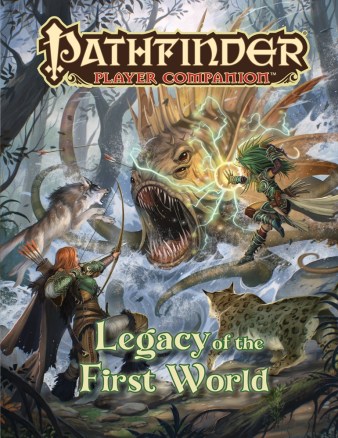
For more fey-themed player options, pick up Pathfinder Player Companion: Legacy of the First World

For more information on Fey and the First World, be sure to pick up official Paizo products, Pathfinder Player Companion: Legacy of the First World, and Pathfinder Campaign Setting: The First World, Realm of the Fey.

Want some more Wayfinder? Be sure to check out their many, many other issues on Paizo’s website!

Want to contribute to the next Wayfinder issue? You can! The next issue’s topic is Stafinder: Absalom Station! Head on over to the Paizo message boards, here, for more information on how and what you can submit! Each person is only allowed three potential submissions, so send your best! My children have both already submitted a creature each for consideration, while I’ve penned a ‘Weal or Woe’ article which I’ve submitted for consideration. I’ve also got an archetype and a theme in the works, but we’ll keep those under wraps for now. If you don’t own them, be sure to pick up the Starfinder Core Rulebook, and Starfinder Roleplaying Game: Pact Worlds before penning your submissions. Best of luck!

I hope you’ve enjoyed checking out the contents of the latest Wayfinder with me. If you happen to have contributed to it: Thanks! And if you’re thinking of applying for the next issue: I wish you the best of luck!

Have fun!

Jessica


Legacy of the First World

Hello, hello! Welcome! Today we’re going to take a look at one of my favourite soft cover releases of the past year: Pathfinder Player Companion: Legacy of the First World! If you’ve been reading the blog for a while, you’ll know that my daughter is already using some of the awesome character options found inside this little gem, with her Pathfinder Society character, Lady Naysha. Admittedly, I’m super jealous.

Legacy of the First World is a soft cover book that is 32 pages in length. As a book in the Player Companion line, it’s aimed at players, which means that you won’t find any great secrets of the First World hidden inside, or details on the plane itself. For that kind of information you’ll have to pick up Pathfinder Campaign Setting: The First World, Realm of the Fey, or the soon to be released Pathfinder Roleplaying Game: Planar Adventures. Legacy of the First World features amazing cover art by Kiki Moch Rizky, which showcases the iconic druid, Lini, and the iconic hunter Adowyn, engaged in battle against a grodair!

The front inside cover features brief information on all nine of the Eldest: gods of the First World who are often worshipped by fey and fey-blooded or fey-touched humanoids. Each entry includes their name, title, holy symbol, alignment, domains, favoured weapons, and the pages where related information and character options can be found. Curious who the Eldest are? Fear not! We’ll get into that later!

PZO9480After this we’ve got the table of contents, the rules index, and the introduction. Here we find five new regional traits, each themed around places on the material plane where fey  are common. Curious which locations? The Darkmoon Wood, Grungir Forest, Irrisen, Uringen, and a caravan known as the Witchmarket. ‘Fey Mediator (Grungir Forest)’ is a solid trait, but I think that ‘Voices of Solid Things (Witchmarket)’ turned out to be my favourite! This allows you to select either Appraise, Craft, Disable Device, or Spellcraft. In addition to making that a class skill, you can apply your Charisma modifier on those checks instead of Intelligence/Dexterity. Neat!

Moving on from the introduction we come to a pair of pages entitled ‘Fey Origins’ that deal with characters who have a touch of the fey in their bloodlines. Each of the core races has ideas for how fey-touched members of that race might look or act, and an alternate racial trait. After this there are three story feats which can be taken by any race. Although the human, half-orc, and half-elf alternate racial traits are very cool, its the one for elves that turned out to be my favourite. ‘Fey-sighted’ grants your elf detect magic as a constant ability, and replaces ‘elven magic.’ So cool! As for story feats? Check out ‘Fascinated by the Mundane’ for a really fun character concept!

Wait! That can’t be all that gnomes get in this book? Is it? Just a trait? Nope! It’s not. The next few pages focus on two races intrinsically tied to the First World: gnomes and gathlain. Up first? Gnomes! First up, rules for playing a bleaching, followed by two feats that can be taken by bleachlings. Finally! Past that we come to a quirky alchemist archetype called the ‘First World Innovator’ which lets you mix a bit of primal reagents into your alchemical creations (bombs, extracts, potions or mutagens) which will alter them in a random way. I highly recommend giving this one a read, because I loved it. Following the archetype itself are a trio of discoveries that let you create a fey-themed mutagen, which are pretty nifty. After that we come to two new alchemical creations: the chroma grenade, which dazzles enemies and makes them susceptible to illusions, and the vine tube, which spouts fast growing vines. These vinescan either grow along the ground to make difficult terrain, or can be molding by a skilled craftsman into basic tools and furniture which last for ten minutes. An interesting alternative to carrying around a bunch of heavy tools! The final little treat on the section on gnomes? It contains my favourite artwork in the book! A blue and orange haired little alchemist surrounded by very natural-looking components, crafting up some kind of glowing brew. I’m feeling it.

Leaving the gnomes behind we get into a pair of pages about gathlain. This section doesn’t contain any race-specific archetypes (for those you’ll need to check out Pathfinder RPG: Ultimate Wilderness), instead it features five alternate race traits, eight new favoured class options, and four new feats. For race traits be sure to check out ‘bower born’ and ‘sticky tendrils,’ and for feats take a peek at the very quirky ‘strange yield,’ which lets you pull a single fruit off of your wings a day that acts as a random potion.

After the various racial options in this book, we move on to the ways in which the First World has affected the material plane. The first two pages include the fey-touched template, a new oracle curse and mystery, and a bard archetype called the First World Minstrel. Although the First World Minstrel’s ability to pass on the ill luck of a pugwampi to your enemies is absolutely delightful, if I recommend only one thing from this book it would be the new oracle mystery: whimsy. It’s just… awesome. Flavourful, fun, and useful. I’d use it in a heartbeat. Unfortunately for me, (and very fortunate for my daughter), right before I could make a character with it, my daughter did. She beat me to it! And she did it so… perfectly. I just can’t compete. And so, for the forseeable future, I’ll refrain from making one of my own… At least until I can think of a concept completely different than my six-year old daughter’s…. For those of you who don’t have that issue, be sure to check out our favourite revelation: ‘whimsical prank!’ Other gems include ‘assumed form,’ ‘flicker,’ ‘whimsical step,’ and ‘woodland caprice.’

So good.

Seriously. Check it out.

But with a flip of the page we leave the whimsy behind to delve into two pages of character options which revolve around the harm fey can cause. First up are four alternate racial traits which focus around locations tainted by evil fey: Darkblight, Tanglebriar, and the Upper Korir River. I’d recommend giving the human trait, ‘imposter-wary‘ a read. Although it forces you to put your bonus skill point into sense motive at every level, it also grants you a bonus on saves against illusions. A great trade if you want to make a suspicious character. After this we get to a new hunter archetype that focuses on killing fey, the cleverly named ‘Feykiller.’ This archetype swaps out a few of the animal focus options for different ones, allows your animal companions attacks to bypass DR/cold iron, grants you a bonus against illusions and enchantments or, if they were cast by fey, makes you immune to such effects. Very cool! Lastly, this section gives us three new spells, my favourite of which is ‘iron spine.’ And yes, it does exactly what it sounds like it does. Ouch…

Every page after this point in Legacy of the First World is dedicated to one of the Eldest. First, it gives us a paragraph or two on the Eldest themselves, followed by new archetypes, class options, spells and gear which are related to that god or their teachings. Interesting, right?

First up: Count Ranalc, the Traitor. Eldest of betrayal, exile and shadows. This shifty fellow provides us with my husband’s very favourite part of the book: an archetype for slayers called ‘Ankou’s Shadow.‘ This awesome archetype gives you the ability to make shadow duplicates of yourself which function as mirror image and last until destroyed. As you level up you can command your duplicates to perform other actions, and you gain access to more duplicates. Oh, and you can see invisibility as a swift action for a minute per level per day. Sweet! He’d better get around to making one soon, or I will.  Haha! After this is another interesting archetype, the ‘Shadow Scion‘ for rogues.

PZO9298
For more information on the First World, check out Pathfinder Campaign Setting: The First World, Realm of the Fey

The Green Mother, also called the Feasting Flower, is the Eldest of carnivorous plants, intrigue, and seduction. Yikes! The pages focusing on her give us the ‘Grasping Vine‘ archetype for shamans, which shuffles up some spell options, allows you to speak with plants, gives you the ability to use plant shape, and even turns your familiar into a creature made of leaves and thorny vines. I think you could make a really cool shaman with this archetype. It’s very thematic, but also very… accessible. By that I mean: lots of different character concepts ranging throughout Golarion can make use of this archetype. Not just followers of the Green Mother, or characters from the First World. It’s easy to use. The second archetype up for offer here is much more of a niche, and focuses on The Green Mother’s seduction aspect. It’s the ‘Seducer’ archetype for witch! Their last ability, ‘Garden of Delight,’ just… Wow. I’m… a little surprised that saw print. I’m not sure why it surprised me so much. It shouldn’t. But, I’m certainly not letting my kids play this archetype! No way! That complaint aside, the archetype’s still not really my cup tea. Still, if you want to be a charming enchanter/enchantress style character, this is a really good option. Past the archetypes there are two new witch hexes up for offer and one new shaman hex. My favourite is the shaman hex ‘silkstring snare.’ Lastly, there’s three new spells. My favourite is ‘thirsting entanglement,‘ which is like a soul draining entangle spell, but the others are solid debuffs which should see use in play.

Up next is Imbrex, the Twins, Eldest of endings, statues and — you guessed it — twins. His two pages are almost entirely dedicated to summoners. It features an archetype, a new eidolon subtype, and three evolutions. After that there’s four teamwork feats. Usually, this would be a bit of bummer for me. I don’t often play summoners, even though I enjoy them, and dedicating so much space to only one class is a little unfortunate. But… it’s such an awesome archetype! SO COOL! The ‘Twinned Summoner’ has an eidolon that looks just like him (excluding any nifty evolutions). They also learn teamwork feats, which their eidolon can also automatically use. Think of the possibilities! It’s just… awesome! The moment my husband read it he looked at me and said. “Oh, this is interesting. You would be good with this archetype.” “But not you?” I asked. “No. Too much work. I’d get confused.” We laughed. Later I read through it, and you know what? I agreed. I could rock this archetype! Hahaha. The evolutions are brief, but useful — particularly ‘shared evolution‘ and ‘extra feat.‘ For teamwork feat be sure to check out ‘improved precise strike‘ and ‘spell synergy.’

Taking centre stage next is the Lantern King, also known as the Laughing Lie. He’s the Eldest of laughter, mischief, and transformation. Chances are when you think ‘fey’ you think of the attributes this guy has. He’s a prankster, and a shapeshifter. An agent of chaos with infinite forms. The character options include one archetype, the ‘Fey Prankster’ for bards, and two bloodlines that are both entitled ‘shapechanger.’ One is for bloodragers and the other for sorcerers. Both were really cool, but my favourite turned out to the the bloodrager bloodline. I’m not sure why I liked it so much, as the sorcerer bloodline was really solid, but hey! That’s how it goes sometimes.

Up next is an Eldest who is about as far from a jolly prankster as you can get: The Lost Prince. Also known as the Melancholy Lord, he’s the Eldest of forgotten things, sadness and solitude. This dour, brooding fellow has provided us with the ‘hermit‘ archetype for oracles, which is closely tied to the ‘reclusive‘ oracle curse. There’s also a ‘sorrow‘ themed psychic discipline, and a new type of feats which give you an advantage when no allies are nearby. I highly suggest giving the ‘hermit’ a thorough read, because their abilities are very, very cool. Particularly their base revelation, ‘Recluse’s Stride.’ For feats, be sure to check out ‘Centered Spell,’ which is a new metamagic feat which allows you to exclude yourself and your familiar from your instantaneous spells without increasing the spell level. Who doesn’t want to put themselves in the middle of a fireball once in a while? Right?

The next featured Eldest is Magdh, The Three, Eldest of complexity, fate, and triplets. Let me admit, up front, that I am a huge fan of this goddess. She’s my favourite in the book, by far! Unfortunately, none of the character options in her section wowed me. Now, maybe it’s just me. The three spells are interesting and useful. The monk archetype, ‘Nornkith‘, allows your monk to run off of Charisma instead of Wisdom, which is awesome, but… I wasn’t thrilled by anything. There are also three new items up for offer, my favourite of which was ‘charm of the thriceborn.’ I’d be very interested to hear what others thought about the options in Magdh’s section, so if you’ve given the book a read be sure to let me know in the comments below.

Next up is Ng, the Hooded, Eldest of the seasons, secrets, and wanderers. Under his section you’ll find a new cavalier archetype, the ‘Hooded Knight,’ who has a fey-touched mount, gains benefits when traveling on roads, and at higher levels can use dimension door or teleport. There’s also a new cavalier order, the ‘Order of the Blossom,’ which sounds… interesting. Although it’s got some cool abilities, including gaining sneak attack and some minor enchantments, one of the edicts forces you to always accept a fey’s request for aid — which could be very troublesome for obvious reasons. Thankfully, blighted or corrupted fey are excluded from this, and he must instead destroy them. Still… It could be rough! Best ensure you have an understanding GM before selecting it! The final options in Ng’s section are three new items which involve secrecy. Be sure to check out the ‘whispering gloves,’ and the ‘clandestine horseshoes’! The ‘hood of privacy‘ is awesome, but very expensive. Definitely an investment.

Following Ng’s secrecy is an interesting Eldest who cares nothing for subtlety: Ragadahn, The Water Lord, Eldest of linnorms, oceans, and spirals. He’s a brutish creature who counts all the oceans of the First World as his territory. He expects fealty, and respect, but little else. There’s two new archetypes in his section, The ‘Deepwater Rager‘ for barbarians, and the ‘Serpent Herald’ for skalds. Despite the name, the ‘Deepwater Rager’ isn’t actually an underwater combatant. I highly recommend giving it a read, because their abilities ‘Spiraling Charge’ and ‘Disorienting Grapple‘ and both very cool! There’s also three new rage powers in this section of the book (check out ‘Master of the Deep,’ which lets you command aquatic creatures), and two bardic masterpieces, both of which are cool. ‘Ragadahn’s raqs beledi’ is a dance that allows you and your companions to squeeze into tight spaces without trouble, while ‘Ragadahn’s spiral ascent’ allows you to make a whirlwind which can whisk your companions to higher ground. Intriguing!

Finally, we come to the last Eldest in the book — which is also the last page of the book —Shyka, The Many, Eldest of entropy, reincarnation, and time. Now, time related concepts are both very cool, and very difficult to work with in a d20 system. So, although I went into these pages with high hopes — hopes made higher by the awesome wizard artwork in this section — I was wary I might be let down. This section contains a single archetype, and four new spells. The archetype is called the ‘Chronomancer,’ and is for wizards. They gives up the arcane bond class feature, as well as most of their bonus feats, to gain a reservoir of energy they can use to alter time. At low levels they can use it to improve an ally’s initiative, or saving throws, and to immediately re-prepare failed spells (either due to a failed concentration check, a passed save on behalf of your enemies, spell resistance or other immunities, and so on) as if they had not been cast. Cool, right? At higher levels they can use it to cast haste on their allies or trigger contingencies. At level twenty they can even summon a version of himself from an parallel timeline at the moment of his death. The alternate you only lasts for a minute, but it’s one heck of a final gambit! He even comes with your gear! I was SO pleasantly surprised with this archetype! If you’re even remotely interested you should give it a gander. As for the spells? Very cool! Particularly ‘temporal divergence!’ Definitely read it!

And that’s it! We’ve reached the back cover, and Legacy of the First World has come to an end. I hope seeing a bit of what’s inside has helped you decide whether this is a book you want to invest in. And if you’ve read through it already, be sure to let us know what your favourite options were in the comments! Still want more fey-inspired goodness? Be sure to pick up the newest Wayfinder fanzine, Wayfinder 18: Fey and the First World, which is a free download on Paizo’s website.

Enjoy!

Jessica


June New Releases!

Hey, guys! It’s that time again! A new month brings new releases!

There were plenty of fun releases last month, including two awesome pawn collections I’d love to get my hands on: Ruins of Azlant Pawn Collection and Starfinder Pact Worlds Pawn Collection. We were also treated to War for the Crown: Part 4 of 6: City in the Lion’s Eye, and the Pathfinder Players Companion: Blood of the Ancients. The Pathfinder Society Scenarios were solid, and the Starfinder Society Scenarios really knocked it out of the park. Amazing! And this month? Well, I think it’s looking just as exciting…
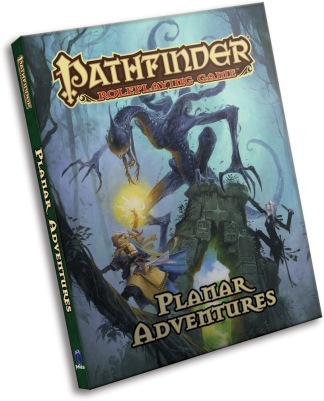
PZO1141First up, Pathfinder’s released a new hardcover book: Planar Adventures. I’ve been a huge fan of Pathfinder Chronicles: Pathfinder Campaign Setting: The Great Beyond since it’s release, so to see that the Planes are getting an entire hardcover complete with new archetypes, feats, spells, gear, monsters and three player races, is AWESOME!
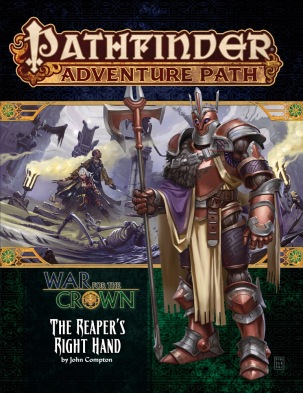
Moving on from hardcovers into softcovers, we come to Pathfinder Campaign Setting: Distant Realms. Inside this book you’ll find details on six completely different planar cities, complete with maps, history, locations and the cities movers and shakers. Which six cities does it contain? I’m not sure about all of them, but I do know you can expect to find the city of Dis in Hell, the isle of Yulgamot on the Astral Plane, Basrakal (I have no idea where that will be…) and, my personal favourite, Shadow Absalom! Colour me intrigued!

We’ve also got two other awesome adventure path volumes coming out. War for the Crown, which has been spectacularly popular, is getting it’s second last instalment! That’s right! War for the Crown: Part 5 of 6: The Reaper’s Right Hand! And on the Starfinder front? The finale of it’s first adventure path! Dead Suns: Part 6 of 6: Empire of Bones! I cannot wait to get my hands on that bad boy!

PZO90131On the Flip-Mat front we have two to peruse this month. Pathfinder Flip-Mat: Bigger Village is a super-sized play mat which features a desert oasis village on one side, and a walled village on the other side. Both sides seem quite nice looking, and rather usable. The second flip-mat is a super popular mat reprinted. Which one? Flip Mat: Classics: Pub Crawl! One side features a street lined with taverns, while the other is an expanded Flip-Mat: Warehouse for a more cheap and grungy kind of bar. This one’s bound to see a ton of use in PFS play, so I’d get your hands on it while you can.

Near the end of this month we’ll have two new Pathfinder Society Scenarios, and two new Starfinder Society Scenarios  to dive into. PFS: #9-22: Grotto of the Deluged God is a tier 1-5 scenario that tasks your PCs with investigating a shipwreck and contributes to the ongoing storyline of the Concordance faction. Meanwhile, PFS: #9-23: The Ghol-Gan Heresy is a tier 7-11 scenario that lets you take on the Aspis Consortium alongside your grippli allies! In addition to continuing previous events in the Kaava Lands, this scenario also contributes to the ongoing storyline of the Exchange.

SFS: #1-16: Dreaming of the Future is an exciting scenario! A series of four one-hour long quests that task your players with investigating the prophetic visions of a Liavaran Dreamer. These quests take you far across the Pact Worlds, into the Diaspora, Aballon, Verces and, of course, Liavara. This scenario is for tiers 1-4, features starship combat, and is REPEATABLE. Awesome! SFS: 1-17: Reclaiming the Time-Lost Tear is a tier 5-8 scenario. Yup, you heard that right! Tier 5-8! Even more exciting? It continues the story of the Scoured Stars! Pardon me while I squeal in delight!

June’s releases are looking amazing! Got a favourite? Let us know!

Jessica