My children love d20 games. My son’s favourite is Pathfinder, while my daughter’s is Starfinder. They love to make characters, craft adventures, play online via play-by-post, and play as a family at our dining room table. But, they need help. The rulebooks use a lot of complicated jargon, and, even though my son reads well above his grade level, they’re still only six and seven. The books aren’t really geared at kids that young.
There are other games out there, of course. Easier games we could invest in, learn, and play, but that’s always a gamble. Besides, who says they’ll be a better fit for a young kid?
Recently a fellow gamer, who happened to be playing alongside both of my children via play-by-post, suggested that I give a game called Tails of Equestria a try. She and her daughter had recently played it at Origins and had enjoyed it.
My first thought was: My Little Pony? My kids love my little pony!
Followed closely by: My Little Pony? I love my my little pony!
There were plenty of other thoughts that followed.
For those of you who don’t know My Little Pony: Friendship is Magic is a super popular kids show. It’s aimed at girls, but I know just as many boys who enjoy it as much as girls. As a bonus, it’s hilarious. My husband and I both enjoy the show immensely. Its one of those shows that typically Mom and Dad don’t mind being on while they’re in the room. I know I certainly enjoy it more than a lot of other shows my kids like.
Even if you don’t have kids of your own, or young relatives who have watched it, the stores are filled with movies, toys, and games featuring the characters.
But, what the heck is Tails of Equestria?
I looked it up. For starters it’s full name is Tails of Equestria: The Storytelling Game. It’s a nice thick hardcover book, and on the back it explains simply and plainly that it is a cooperative storytelling game, where multiple players and a GM forge a tale together. Then it goes on to clearly and simply explain what a Game Master is, and how the game works.
Right there, on the back is a clear, concise, easy to understand description of what the heck a d20 game is. And it revolves around a world my kids already know and love. The whole book is like that. It does away with jargon, and presents a streamlined, easy to understand game. At the same time, it doesn’t talk down to you. An awesome introductory d20 game that looks like a ton of fun. Light-hearted, family friendly, fun.
A lot of the book is devoted to creating your very own pony. The character sheets looks fun and even have a little template for a blank pony, so your kids (and you) can draw in your own pony details and appearance and still come out with a decent looking horse.
Perhaps the best part? It has a strong focus on teamwork, and overcoming obstacles together. In fact, parts of the game are built specifically to reward players for cooperating and being generous. Although battle is a component of the game, it’s not the focus. ‘Scuffles’ are short and rare. More often, you’ll be aiming to avoid, befriend, calm, or trick an enemy. It’s a nice change of pace, but definitely means that games are going to be structured differently that I’m used to. Luckily, the book itself has a sample adventure right in it. And a relatively involved one, at that.
The only problem? Getting my hands on it!
Tails of Equestria: The Storytelling Game is available on amazon.ca. As is Tails of Equestria Expansion – The Festival of Lights and Tails of Equestria Expansion: The Curse of the Statuettes, although they are very expensive. Both expansions are actually long adventures, some of which come with extra material, like a GM screen, dice, character sheets, and so on. The Bestiary of Equestria is available, but not in stock. Amazon.com has all of the products in stock and available, although then I would have shipping, duty fees, and the exchange rate to worry about. I also found the main book available on paizo’s website, although the others aren’t. There is a local game shop or two in my city that might have it. I’ll have to check.
Unfortunately, while I scoured the internet for information, my children peeked over my shoulder and saw exactly what I was looking for.
“My Little Pony RPG?!? AWESOME!” exclaimed my daughter.
“That looks fun, Mom!” added my son.
They then immediately proceed to ask when we could get it. Could they have it as an early Christmas gift? How about a graduating from Kindergarten and Grade 1 gift? Just because I love them? But, they’ll do chores!
“You know, Mom. You promised we each could get one book after school was over, but it had to be a tough one that we would work at reading this summer. You said we could pick it out ourselves. I think that book looks pretty tough…”
Yeah, Mommy had a much smaller budget in mind for that book, kids…
The conversation soon evolved into discussing what I had learned about the game system, followed by my kids contemplating what kind of characters they’ll make.
I honestly cannot express how excited they are. They’re just…
Man, they look so happy. Haha.
Now, if only I had an excuse (and the funds) to buy it for my children…
Now, before we get started, there’s one thing I need to state plainly, right up front. This is NOT a family friendly book. It’s not the book you want to bring with you to read at the laundromat or on the bus, and it’s not a book you’re going to get a lot of ideas from for games involving children, or the many gamers who prefer a fun, carefree kind of game. This book is dark. It’s disconcerting. More specifically, it features body horror, mental and physical torture, as well as imagery and content that may disturb some readers. If you’re a gamer who doesn’t enjoy (or enjoy experimenting with) such content in your d20 games, then this is NOT the book for you. I’d suggest such readers pass on it, and pick up another of the wonderful books that are available for Pathfinder.
Those of you who regularly read my blog may wonder why I bothered to invest in a book with mature content when most of the time when I GM my children are involved (a six and seven year old). That’s a fair question! This book was not chosen with them in mind. This book was for me. Why?
For starters, I have no other content outside of the Inner Sea World Guide, and the Pathfinder Module: The Midnight Mirror, that features Nidal. None. To me, that spot on the map is a giant question mark. I know the basics, but nothing else. Second, I’m the kind of player that likes a wide variety of experiences in my games. Yes, I love a happy, feel-good, fun game. I love character development, social interactions, and humour. But, I also love horror. I want my dark locales to actually be dark. The evil in my games should be disturbing, and disconcerting, not shallow and cliche. Within reason. Games are only worthwhile when the players find them fun, after all. This book on Nidal did just that.
Pathfinder Campaign Setting: Nidal, Land of Shadows is written by Liane Merciel, with additions by Lyz Liddell, Ron Lundeen, and Mark Moreland. It’s cover features awesome artwork by Kiki Moch Rizky that depicts the iconic hunter, Adowyn, and the iconic bard, Lem, facing off against an umbral dragon! This book is a thick softcover book which weighs in at 63 pages long. As a book in the Pathfinder Campaign Setting line, it contains information on the locations of Golarion (Nidal, specifically). It does not feature new archetypes, or other character options. But, that doesn’t mean this is only a book for GMs! They’re awesome for GMs, of course, but they’re also great for helping players of all kinds create fully-formed characters from different locations. In addition, I find these books really fire up the imagination. They spark ideas for both adventures, side quests, villains and characters.
The inside cover features a gorgeous map of Nidal, complete with labels, scale, and beautiful tiny depictions of the major settlements, drawn with care. The book is split into four chapters. ‘Living in Shadow’ is a ten page look at what life is like for most citizens. ‘Gazetteer’ is a thirty page look at the locations found within Nidal. ‘Threats in the Gloom’ is a twelve page look at the various locations which are particularly well suited to adventuring. And ‘Bestiary’ is a nine page look at some of the unique creatures found within Nidal’s borders. The entire book is filled with darkly beautiful artwork, some of which may be disturbing to some readers.
The first chapter of the book, ‘Living in Shadow,’ begins with a wonderful Nidalese sermon which really helped put their view on their (horribly evil) religion into perspective. If read with the proper gravitas I swear it could make a shiver run down your spine. Very atmospheric! Its accompanied by some gothic artwork of a vampiric noblewoman looking out across the city. After this is a short, half-page summary of Nidal, it’s origins, and its culture. Up next is a gorgeous image of a Nidalese Horselord and about a page worth of text on the history of Nidal. This includes what life was like before they became thralls of Zon-Kuthon. There’s also information on the government of Nidal and some of its important personages. Nidal is a theocracy dedicated to Zon-Kuthon, headed by the Black Triune, and governed by the Umbral Court. After this there is information on some of the rare citizens you might come across in Nidal, including Caligni, Fetchlings, and the terrifying Kytons. Then we get a glimpse of what life is like in the decadent cities of Nidal, and the rural countryside. Spoiler Alert: It’s WAY different. Haha. There’s also a short section about the different kinds of religious and underground resistance found within Nidal. There’s also a discussion on Nidal’s relations with other nations, and a full page timeline showing important dates in Nidal’s history. Oh! And a delightful (disturbing) image of Zon-Kuthon, the benevolent (NOT) god who rules Nidal! Such a photogenic guy! (Note the sarcasm.)
I found this chapter was the incredibly useful in helping me understand life in Nidal. I had forgotten that the Nidalese people used to be horselords. Although I knew that they were the only civilization to survive Earthfall and the Age of Darkness (sort of), I hadn’t quite realized how important it was to their history. It’s a source of constant pride. Proof of the validity of their beliefs. It also means that they have relics, written works, books, maps, and actual, reliable artifacts and history from that time. From before that time. Refugees from other places — say… Azlanti and Thassilon for example — would have fled to Nidal for safety as refugees. it was once the literal centre of civlization in the Inner Sea. The Absalom of it’s time in a world of darkness, death, and barbarism. Even the poorest farmer would still have housewares and relics handed down through the millennia. Family heirlooms that are older than nations. Even if you only count Nidal’s history from the moment they made a pact with Zon-Kuthon, they’re a nation over 10,000 years old. That’s… monumentous. This nation’s history makes it particularly useful for anyone wanting to make a character with ties to ancient civilizations, including some of the new character options from Pathfinder Player Companion: Blood of the Ancients.
I particularly enjoyed reading about the difference between city life and rural life, as well as about the Black Triune. For those of you who don’t know, they were the original horselords who beseeched Zon-Kuthon for protection for their people from Earthfall. Although the evil Zon-Kuthon granted their desires and saved their people (making them the only civilization to survive Earthfall and the Age of Darkness without crumbling) it also transformed the horselords into literal servants of Zon-Kuthon’s. They are his will made flesh. Eternal and unloving. They rule Nidal to this day, though they are rarely seen by any outside the Umbral Court.
The Gazeteer begins with a moving quote from a retiring Chelish Ambassador to her replacement about the cold beauty, harsh cruelty, and ancient knowledge which can be found in Nidal. I particularly loved the last line:
“…It is a place, for better or worse, that you will never forget. You can’t. The scars remain forever.”
Such a wonderful, atmospheric quote — again. Whoo! Love it! It’s accompanied by artwork depicting a Varisian caravan approaching a Nidalese city, surrounded by wildlife that looks rather ominous. Past the opening quote is about a page and a half of information about Nidal’s culture and politics, followed by details on their four major holidays.
Note to self: Don’t celebrate the Eternal Kiss. Or The Festival of Night’s Return. Or The Shadowchaining. Or anything, really. In fact, let’s amend that to: never visit Nidal. Haha. Honestly, I adored reading about the holidays! They were the perfect balance of ‘holiday’ and dark horror. Shivers!
After this we get to the bulk of the Gazeteer: details on a ton of locations, all of which are shown on that loverly inside-cover map I mentioned earlier. There’s a total of 55 locations which are detailed in this chapter, including two major cities (Pangolais and Ridwan) which include their own maps, and multiple locations within them. The Gazeteer’s locations include cities, towns, settlements, ancient ruins, dangerous locales, and natural features. They run the gamut from ‘safe’ and ‘unique’ to ‘deadly’ and ‘disturbing.’ It’s got a really great variety. A lot of these places sparked ideas for campaigns, adventures, and character origins — not all of which are evil. In fact, the most useful part of this chapter may be in it’s ability to make you realize that you can adventure here. You can be a hero in Nidal. I don’t mean just as a sweeping revolutionary who tries to change Nidal, but as a Nidalese person who lives and survives here. A local hero. In addition to details on the places, there’s information on important figures, enemies, and plenty of plot-hooks. There’s also a ton of useful references for where you can find further information on those places, people, and topics (both within this book, and in other books).
Stormhollow from Nidal, Land of Shadows
Some of my favourite places to read about were the Atteran Ranches (which is a great place to create characters who want to be members of the underground resistance), Auginford (a small settlement which recently unearthed a disturbing monument), Blacksulfur Pond (a pond connected to the Shadow Plane), Brimstone Springs (where a devil is enjoying a ‘delightful’ prank), Grayfrond (home to a creature based off a chilling Inuit folk creature), Stormhollow (a village whose inhabitants were slaughtered by kytons — and still walk the streets today as mutilated husks), and, my personal favourite, The Library Without Light, which is home to ancient texts and relics dating back to before Earthfall. If any of you own this book, I’d be curious to hear what your favourite locations were!
Unholy symbol of Zon-Kuthon, god of envy, pain, darkness and loss.
The next chapter, ‘Threats in the Gloom,’ begins with a recounting of an adventure in Nidal, by an Aspis Agent. It’s dour and dark, and perfect. And the art that comes with it? Creeeeeeepy! After this is looks at eleven different dangerous locations in Nidal, dedicating about a page to each. It includes the classes of powerful denizens, the kinds of creatures you can encounter there, features common to the area, as well as history, and plot-hooks for these locales. Once again, there’s a wide variety of locations here, from dungeons, dangerous wilds, haunted places, and urban areas. Those of you looking for more information on hidden bastions of good should check out the ‘Plains of Night’ and ‘Undervale.’ ‘The House of Lies’ is a great location for those of you looking for reasons for foreigners to visit. ‘Shadowreach’ revisits the legacy of a character from the Council of Thieves Adventure Path (Ilnerik Sivanshin who was mentioned in Council of Thieves: Book 3: What Lies in Dust, and featured in Council of Thieves: Book 5 – Mother of Flies). Looking for something darker? Check out the ‘Tower of Slant Shadows.’ Not only does it have connections to the wonderful Curse of the Crimson Throne Adventure Path, it’s also (in my humble opinion) the creepiest thing in the entire book. Yikes! I wish I had thought of that for my home game of Second Darkness… My personal favourite locations in this chapter are ‘Castle of the Captive Sun’ wherein a vampire keeps a collection of divinely descended beings prisoner, and tortures himself with holy artifacts! Very cool! And Barrowmoor, which is land filled with ancient burial mounds of the Nidalese Horselords. It’s steeped not only in creepy a atmosphere and a bunch of undead, but also in the occult, which I ALWAYS love. Barrowmoor is also the setting of the Tomb of Attai Horse-Speaker, which was published in its entirety in Pathfinder Campaign Setting: Tombs of Golarion. Honestly, it’s one of my favourite tombs I’ve ever had the pleasure to read.
Castle of the Captive Sun from Nidal, Land of Shadows
The last chapter of this book is the Bestiary, which collects six random encounter tables (which contains a few entries which pleasantly surprised me!) and six new monsters. The creatures vary from CR 2 to CR 8. There’s a new kyton, of course, called the suffragan. It’s born from the souls of another new creature, the joyful thing, which definitely is my pick for the most disturbing creature in this book! Yikes! The strongest monster on offer is the hive brute. For more information on hives you can check out Pathfinder Roleplaying Game: Horror Adventures. I’m not a big fan of most plant creatures, but there is a cool shadow plant called the shadow fern which I actually really like. There’s also the smokeshade, which is a tiny extraplanar, incorporeal, aberration that looks like a patch of shadow. In addition to being an enemy, these little guys can be taken as familiars by casters of at least 7th level with the Improved Familiar feat. They’re actually quite fun, flavourful critters, that enjoy forming themselves into different rude shapes in order to mock other people or pantomime insults. I want one! Haha. But, the definite winner for the most useful creature is the shadow animal template. Not only can it be used to make shadow tainted creatures, it’s abilities are chosen from a list, which makes it very adaptable. It’s super useful, and really well done.
And that brings us to the end of Nidal, Land of Shadows. Overall, I really enjoyed this book. It made me think about Nidal in a new way, which made it playable. It also gave me a lot of good ideas for characters and adventures set in this morbid, horrible place. But, keep in mind, this book is NOT for everyone. Only purchase this book if you enjoy adding dark horror to your games.
School’s out for summer, Canada Day has passed, and Independence Day (for all you American’s out there) has just ended. It’s a new month, with new releases in the gaming world. I don’t know about you, but I’m excited for some of this month’s products!
Now, this isn’t out until AUGUST, but if you want to get your hands on a print copy now is your chance. Paizo is releasing the Pathfinder Playtest Rulebook in hardcover, softcover, and in a special edition cover. They’re also releasing the Pathfinder Playtest Adventure: Doomsday Dawn and the Pathfinder Playtest Flip-Mat: Multipack. All of these products will be available for free as PDF downloads on August 2nd, but print copies will be quite hard to come by. Preorder or bust! In addition they’re releasing three Pathfinder Society Scenarios for Pathfinder Playtest. One series of quests at tier one, and two scenarios at tier five. An interesting choice! All three will be available as PDFs for free on August 7th. For more information, or to preorder print copies, check out Paizo’s website.
With that out of the way, let’s take a look at some products you can get your hands on this month!
In the world of Pathfinder there are only two new products up for grabs. The Six-Legend Soul (War for the Crown 6 of 6) is the much anticipated finale to the War for the Crown Adventure Path! Oh, it’s gonna be a good one! I’m SUPER curious! Pathfinder Player Companion: Heroes from the Fringe presents a look at a lot of non-human, unique character options. Examples of this include the Ekujae elves of the Mwangi Expanse, and Pahmet dwarves of Osirion’s deserts, and many more. The part I’m most excited about? Whimsical phantoms for spiritualists! Come on, you know you want to be haunted by a chipper gnome ghost! I’m very intrigued with this product and can’t wait to see what’s inside. Pocket Editions of Ultimate Combat and Bestiary 5 also come available this month.
Starfinder also has two exciting releases: The Dead Suns Pawn Collection, which has over 100 custom pawns from the Dead Suns Adventure Path, including a bunch of awesome starships! It looks amazing! What’s more exciting than that? A new hardcover book! Starfinder: Armory. Aww, yeah! This book is packed full of tons of new weapons and armour, as well as magical, technological, hybrids and mundane gear. There’s new bioaugmentations, weapons fusions… Every kind of item type has some new choices in this book. Also? New character options which focus on equipment! I don’t have a clue what they’re going to be, but I sure am intrigued!
In the world of Organized Play there will be four new scenarios coming out at the end of this month. Pathfinder Society Scenario #9-24: Beneath Unbroken Waves is a tier 5-9 scenario written by Kate Baker of particular importance to the Concordance Faction. It tasks the PCs with investigating underwater ruins. Scenario #9-25: Betrayal in the Bones is a tier 12-15 scenario written by Tom Phillips which continues the ongoing story of the Grand Lodge Faction. It allows players to finally get back at some old enemies! For more details, check out a previous blog post where we spoke about events leading up to this scenario! Starfinder Society Scenario #1-18: The Blackmoon Survey is a tier 1-4 scenario written by Jesse Benner which tasks players with exploring an ancient Eoxian ruin to determine why the workers on the excavation have been going missing. This one sounds like a ton of fun. Scenario #1-19: To Conquer the Dragon is a tier 5-8 scenario written by Matt Duval which send the players to Triaxus to open a Starfinder Lodge! This scenario builds on events from #1-13: On the Trail of History, and involves starship combat. I can’t wait until I get my hands on them later this month!
What’s left? Maps of course! And this month certainly brings us a LOT. Pathfinder Flip-Mat Classics: Watch Station is a pretty handy map set which gives is a solid dungeon or underground prison on one side, and a moderately sized sheriff’s office/town barracks on the other. It can also sub in as any small building that includes barracks, such as a thieves den, guild headquarters or school. Pathfinder Flip-Mat Multi-Pack: Forest is a useful set of two flip mats which feature woodlands, rocky banks, and small rivers. These two mats each connect to each other in multiple ways, which means that you can continue your game with a rolling scene, over and over again. They look gorgeous. Starfinder Flip-Mat: Asteroid is an interesting map release. One side is an incredibly useful map of a canyon, impact site or crater which is going to see a ton of use. It’s super adaptable, and can even work in Pathfinder play. The other side is a complex built into the interior of an asteroid. It looks quite interesting. Clearly intended to be used in the Diaspora, it can double as a lot of other complexes, including an underground bunker, base, laboratory, military instalment or even a school. Unfortunately, all three map sets are not yet released on Amazon, so if you’re Canadian, like me, or from another place in the world where the cost of having anything delivered from Paizo is ABSURD you’ll need to wait a while before getting these beauties on order.
There’s also a whole new type of map being released this month: Pathfinder Flip-Tiles! We’ve talked about these before on d20diaries, but in short, they’re a collection of 6×6 tiles with images on both sides which easily can connect to form a large complex. This month brings us two sets of map tiles. Pathfinder Flip-Tiles: Dungeon Starter Set, includes basic dungeon features including halls, stairs, turns, entrances and rooms. It has a whopping 42 double sided map tiles. The second set, Pathfinder Flip-Tiles: Dungeon perils Expansion Set, is an expansion which works will the Dungeon Set (and will work with other sets in the future). It contains 24 double sided flip-tiles which depict hazards including trapped and lit hallways, chemical spills, chasms, rock falls, magical devices, and fungal growths. They look pretty cool. Much like this months flip-mats, these products aren’t yet available on Amazon. As a brand new product, I haven’t yet seen these in person, so I’m not sure how easy they’ll be to adapt and use in a live game, but I’d love to find out. If any of you get your hands on these tiles, let me know! I’d love to hear what you think!
That’s it for this months new releases! What products are you most excited for? I know my household can’t wait to get our greedy little hands on Starfinder: Armory! Here’s hoping!
Today we’re going to take a look at two of the most recent Pathfinder Society Scenarios that are currently available for purchase, and let you know we thought. Although you’ll find references to events in each that I liked or disliked, and comments about specific characters, these scenarios are not explored in detail. It’s not my intention to spoil the events in these scenarios, or give summaries and full reviews, but to share my opinions and provide recommendations. That said, if you want to avoid even minor spoilers then I recommend clicking on a different article. Whether you intend to use them in home games of the Pathfinder Roleplaying Game, sanctioned scenarios for use with the Pathfinder Society Organized Play, or just want to read a nifty new adventure, we’ve got you covered! So let’s get cracking!
Nalu from #9-22: Grotto of the Deluged God. Illustrated by Enrique Barajas. Art courtesy of Paizo Inc.
This adventure tasks the PCs with locating the lost Pathfinder ship, Pride of Aspenthar, which was lost in the events leading up to Scenario #7-19: Labyrinth of Hungry Ghosts. Any characters who have played that scenario or those related to it (Scenario #6-06: Hall of the Flesh-Eaters and Scenario #8-14: Hrethnar’s Throne) or are from the Concordance Faction can gain a minor bonus during this adventure, which is a nice touch. There’s some nice terrain hazards that can complicate one of the encounters, which I rather enjoyed. The exploration of the shipwreck was enjoyable, and I rather liked that it didn’t give everything away. I’m a fan of giving players hints as opposed to answers. The social encounters in this one were all enjoyable, and I like the looming sense of danger in some of them. Overall, I really enjoyed this scenario. I give it four out of five stars.
Parveen from #9-23: The Ghol-Gan Heresy. Illustrated by Tadas Sidlauskas. Art courtesy of Paizo Inc.
Kahsu from #9-23: The Ghol-Gan Heresy. Illustrated by Tadas Sidlauskas. Art courtesy of Paizo Inc.
This adventure tasks the PCs with shutting down an Aspis Consortium operation in the area thereby ensuring that a powerful asura remains imprisoned. It has some wonderful NPCs who make cameos including the return of Pathfinder Fola Barun, and gripplis! Who doesn’t love grippli? Purpurrup and Mother Bogwynne would be great fun at a table. There’s some fun social encounters, important decisions, difficult battles, and even features manifestations, which is a rarely used mechanic that functions similar to a haunt that was first introduced in Pathfinder Campaign Setting: Hell Unleashed. Thankfully, all the rules necessary to use these manifestations are included in the scenario. But, my favourite part? The final encounter is really well written and, with the right GM, has the potential to be epic! I give this scenario five out of five stars!
Today we’re going to take a look at the two most recent Starfinder Society Scenarios that are currently available for purchase, and let you know we thought. Although you’ll find references to events in each that I liked or disliked, and comments about specific characters, these scenarios are not explored in detail. It’s not my intention to spoil the events in these scenarios, or give summaries and full reviews, but to share my opinions and provide recommendations. That said, if you want to avoid even minor spoilers I recommend you check out a different article. Whether you intend to use them in home games of the Starfinder Roleplaying Game, sanctioned scenarios for use with the Starfinder Society Organized Play, or just want to read a nifty new adventure, we’ve got you covered! So sit back, and get ready to explore the Pact Worlds!
Scenario #1-16: Dreaming of the Future is a Tier 1-4 adventure written by Natalie Kertzner, Nate Wright, Sasha Lindley Hall, and Tineke Bolleman. Unlike most scenarios, this is a Quest. Each quest contains multiple one-hour long adventures that link together to form a cohesive story. These four quests send the PCs across the Pact Worlds. It begins in Absalom Station, but also visits Aballon, the Diaspora, Liavara and Verces. This scenario has the Repeatable tag, which means that you can play this scenario once per character (as opposed to once per player). One of the Quests, ‘River Rat,’ features Starship combat. This scenario tasks the PCs with unravelling the mysterious visions of a Liavaran Dreamer (Whisperer of Solar Winds) who works for the Starfinder Society, and obtaining three fragments of a sandstone tablet. Together, this tablet is thought to unlock a variety of tools and relics from a Pre-Gap Liavaran Dreamer, which will empower and enhance Whisperer of Solar Winds’ prophetic dreams. Maybe. The only recurring cameo from previous scenarios is from Venture Captain Arvin.
Ikeshti Congregant Merthinett from SFS #1-16: Dreaming of the Future. Illustrated by Nicolas Espinoza. Art courtesy of Paizo Inc.
This Quest works great as an introductory adventure for new players and GMs. It has lots of helpful hints throughout it, some fun player handouts, and is a real tour de force of the different kinds of scenarios you might play in the Starfinder Society. The first three quests can be completed in any order, although the fourth quest is the culmination of the previous three and should be done last. The first Quest is entitled ‘Megaplex’ and is set in the Towershadow region of the Megaplex settlement of ‘Striving’ on Aballon. This is a pretty straightforward Quest which involves a battle in and around cramped spaces, and some negotiation. It’s quite brief in feel, and was probably the Quest I enjoyed least. That being said, it’s also the easiest of the Quests to run and play through, so if you’re a new GM or player I highly recommend starting with this one! Megaplex utilizes Starfinder Flip-Mat: Urban Sprawl. The second Quest is entitled ‘River Rat’ and is set in the asteroid belt known as the Diaspora. It features a very strategic, unique starship combat which I really, really enjoyed. To make it even better, there’s some great opening social interactions you can engage in with your opponents before the battle. It was lovely to see! River Rat utilizes Starfinder Flip-Mat: Basic Starfield. The third Quest is entitled ‘Bad Chameleon’ and takes place in the sector of Verces’ Ring of Nations known as Vanos. This area is known for it’s high-end nightlife. In this scenario you’ll need to blend in among the wealthy clientele of this neighbourhood, and perform a heist. It’s very free-form, and really allows players to be creative. It has some fun social encounters and a delightfully foul enemy, with some creepy artwork which really made it memorable. I really enjoyed this quest. It makes use of the Starfinder Flip-Mat: Cantina. The final Quest is entitled ‘Nightmare,’ and is a lovely little delve into a ruin where you can utilize your tablet pieces and achieve your goals. If you can get past the obstacles contained within! Nightmare takes place on Praehan, one of the moons of Liavara. In addition to being a ‘dungeon delve’ style of adventure, it also features a bunch of awesome environmental hazards. You’ll have to deal with weather, atmosphere, gravity, and attempt to swim through liquid methane (which is much harder than it sounds). It has an exciting enemy with a great premise, stats, and art which serves as a wonderful climax to this adventure. I thought it was awesome. It utilizes Pathfinder: Flip Mat: Tech Dungeon. Overall, I really enjoyed this series of Quests, and highly recommend it — especially for newer players. I give it four out of five stars.
Prima from SFS #1-17: Reclaiming the Time-Lost Tear. Illustrated by Graey Erb. Art courtesy of Paizo Inc.
Scenario #1-17: Reclaiming the Time-Lost Tear is a Tier 5-8 adventure written by Larry Wilhelm. Yes, you read that right. Tier 5-8! It takes place on the scorching hot, barren moon called Repository, which orbits a planet in the Vast called Izal-4. There you’ll explore a dangerous complex filled with ancient, advanced alien technology. This scenario has the Faction (Second Seekers [Luwazi Elsebo]) tag, and continues the ongoing Scoured Stars storyline. It does not feature starship combat. This scenario tasks the PCs with acquiring a mysterious key that will lower the barrier around the Scoured Stars. It builds directly off of events that happened in Scenario #1-13: On the Trail of History, which in turn builds off events that happened in Scenario #1-11: In Pursuit of the Scoured Past. I highly recommend you play both of those scenarios before this one. As for the scenario itself? I really enjoyed it. But, beware! This scenario is challenging! It’s got some good environmental challenges, makes use of an interesting new kind of radiation, fun battles, cool traps, and has a great pay off in the end. There was also some interesting back-plot that you can unravel as you progress, which I always enjoy. This scenario features two custom maps, and no flip-mats. I give this scenario four out of five stars!
I hope you enjoyed taking a look at this months new Starfinder Society Scenarios with me! I certainly enjoyed reading them. Tune in later this week for out look at the new Pathfinder Society Scenarios!
Today on d20 Diaries we’re taking a look at one of the wonderful new products that came out just last month: Pathfinder Player Companion: Blood of the Ancients. We recently picked it up for my husband as a Father’s Day gift, and we couldn’t be happier! Curious what’s inside? Take a peek!
Blood of the Ancients is a thin softcover book that is 32 pages long. As with every book from the Pathfinder Player Companion line, it’s aimed at players. You won’t find secrets and hidden lore in this baby. You’ll find player options. Lots of them. This includes archetypes, feats, traits, spells and gear, as well as other class options like bloodlines, discoveries and so on. And flavour! Plenty of flavour!
Wonderful stuff!
So what is Blood of the Ancients, anyway? In short: character options that are tied to the ancient civilization of Golarion. Which ones? A lot! Azlant, Celwynvian, Jistka Imperium, Lirgen, Lung Wa, Ninshabur, Osirion, Sarkoris, Shory, Tar Taargadth, Tekritanin League, Thassilon and Yamasa. See? A lot! Let’s start at the beginning, shall we?
The cover showcases the iconic oracle, Alahazra, and the iconic investigator, Quinn, battling caryatid columns, in some awesome artwork by Setiawan Lie. The inside cover features a map of the Inner Sea with the dates and locations of some of the ancient civilizations mentioned in this book. I say ‘some’ because they’re not all here. Thassilon, Sarkoris, and Tekritanin are not featured on the map but are mentioned in this book. The rest are present, although Lirgen and Yamasa are included as one unit based on their location.
Past the map we come to the introduction. Here you’ll find a rundown of some of the ancient civilizations of Golarion, as well as which books you’ll need to read for further information. This is SUPER handy. I love it. There’s also a handy rules index to help you navigate this book easily.
After this we come to the first character options: the vestige bloodline, which is available for both sorcerers and bloodragers. These are very flavourful, adaptable bloodlines, capable of showing descent from any ancient civilization. Both are pretty cool, but I think I like the bloodrager better. Their final ability allows them to summon a ghostly army from the past. How cool is that? Pretty hard to top.
The next two pages are dedicated to a single feat: ‘ancient tradition.’ This allows people who are so dedicated to embodying their ancient civilization of choice to perform a ritual in order to gain a benefit. At later levels, this also unlocks spell-like abilities that you can use. That’s right, it’s ‘deific obedience‘ for an ancient civilization. Historians rejoice! Now, it should be noted that not every civilization touched on in this book has an entry for this feat. Those that do are Azlant, Jistka Imperium, Lung Wa, Ninshabur, Osirion, Sarkoris, Shory, Tar Targaadth and Thassilon. For those of you trying to figure it out, those not included are Celwynvian, Lirgen, Tekritanin and Yamasa. I particularly enjoyed the Azlant, Lung Wa, and Shory options.
The first ancient civilization focused on is the ‘Abendego Gulf,’ which is more correctly a region home to two different but intertwined cultures: Lirgen and Yamasa. Both cultures heavily relied on divinations drawn from the movements of celestial bodies. That means astronomy, astrology, and portents were all very important to them. This section offers three new feats all based around astrology, two traits (one each for Lirgen and Yamasa), and three archetypes. The feats were interesting, but quite niche. The traits were both really useful but, as they’re regional traits only available to descendants of Lirgen or Yamasa, they’re not going to see a ton of play. Still, I suggest checking out ‘naturalist’ for survivors, and ‘stargazer’ for intellectuals. ‘Chart caster’ is a mesmerist archetype which lets you enigmatically read your ally’s future with the aid of star charts. It looks quite fun. The ‘lawspeaker’ archetype for clerics lets you sacrifice channel energy uses in order to cast some pretty nifty spells which let you… get to the heart of any matter. And lastly, ‘hinyasi’ is a brawler archetype which revolves around the use of improvised weapons. This one turned out to be my favourite, so I highly recommend you give it a read! For more information on the nations of Lirgen and Yamasa, check out Pathfinder Campaign Setting: Lost Kingdoms.
Next up? Azlant. This two-page section offers up one archetype: ‘ioun kineticist,’ which is… exactly what it sounds like. Unleash the power of these classic floating gems upon your enemies as an aether kineticist! I loved it! Haha. Seriously. ‘Gem magic’ of all kinds fascinated me as a kid, so I’m thrilled to see something new on that theme. After this there are five faith traits focused on the deities of Ancient Azlant. They were all really cool. I particularly enjoyed ‘fruits of your labor (Jaidi)‘, and ‘planar wayfarer (Onos).‘ For further details on the gods of Azlant you’ll need to pick up Pathfinder Adventure Path 123: The Flooded Cathedral (Ruins of Azlant Book 3 of 6). For further details on Azlant you can check out Pathfinder Campaign Setting: Inner Sea World Guide and the rest of the Ruins of Azlant Adventure Path (which begins with Book One: The Lost Outpost).
The next section is two pages dedicated to the ways of ancient elves. More specifically, these character options focus on protecting, helping, and sheltering others. The first option is the ‘arcane warden‘ archetype for wizards, which is both awesome and understated. Arcane wardens must be universalists. They have a very useful selection of skills and bonus feat to choose from which is different than your standard wizard, and some nifty unique abilities that replace the standard universalist options. I really recommend giving this archetype a read, and then coming back to it a few minutes later to read it again. I think I would really enjoy making one. After the archetype there are three new spells: ashen path, brightest night, and shared training. Although ashen path is arguably the most useful of these spells, I enjoyed shared training the most. It can allow spellcasters to make good use of teamwork feats, which is certainly quirky. For more information on the way of life for ancient elves, check out Adventure Path 15: The Armageddon Echo (Second Darkness Book 3 of 6).
Leaving the elves behind, we come to four pages on the Jistka Imperium. This treasure trove features a whopping four archetypes, two magical items, two spells and two traits. My favourite options in this section were definitely the ‘antiquarian’ investigator archetype, which replaces their formula book with a collection of religious trinkets, and the ‘Jistkan artificer’ magus archetype which lets you have an awesome golem arm. Yeah! I’m definitely going to play this! As soon as I can think of a wicked character concept that is not a Fullmetal Alchemist rip off…
It’s going to be a blast.
There’s also the ‘Jistkan magistrate‘ archetype for warpriests, and the ‘Poleiheira adherent‘ archetype for wizards. Items include the ‘golem gauntlet‘ and the ‘tablet of arustun,‘ spells include ‘skim’ and ‘summon ship.’ Both of the traits were very cool, but my favourite turned out to be ‘magical aptitude,’ which is a magic trait. For more information of the Jistka Imperium, check out Pathfinder Campaign Setting: Lost Kingdoms.
Up next is Imperial Lung Wa, which also has four pages dedicated to it. Contained within are three archetypes, five feats, three magical items, and three traits. My favourite of the archetypes was the ‘ironbound sword‘ for samurai, which focuses on non-lethal combat. There is also the ‘jinyiwei’ for investigators, which is centred around the divinely guided search for corruption; and the ‘imperial agent’ vigilante archetype. I had a really hard time narrowing down the five feats to only one favourite, so instead, I recommend checking out all three of my top picks which are centred around mundane healing: ‘acupuncture specialist,’ ‘incredible healer,’ and ‘pathologist.’ Read them! The magical items were interesting, but two of them were quite pricey. For traits, be sure to check out the social trait ‘excellent penmanship.’ For more information on Lung Wa, check out Pathfinder Campaign Setting: Dragon Empires Gazetteer.
We return to the Inner Sea with a two-page entry on Ninshabur, a nation known for battling the Spawn of Ravagug. Yeah. Wouldn’t have wanted to mess with those guys… This entry offers us a new legendary marshal spirit for mediums to make use of. It also has two new rituals, ‘spiritual investment‘ for combatting the incorporeal, and the incredibly powerful ‘seal.’ But, my favourite part of the entry was the slayer archetype, ‘spawn slayer.’ These daring fellows specialize in combats waged against one, big, powerful enemy. Badass. For more information on Ninshabur check out Pathfinder Campaign Setting: Mythic Realms.
Up next is the Shory. This is one of my favourite ancient civilizations from Golarion. Considering they’re a nation who lived in flying cities, who can blame me? But, that also means I have pretty high expectations. I want to be blown away! (Pun intended). To start with, it features my favourite art in the book. Go ahead and check out that windblown mage! She looks rocking!
The Shory section features three fun archetypes, only one of which is a spellcaster, which is a nice surprise. ‘Aeromancer’ is an arcanist archetype that focuses not only on air magic, but also on cold, electricity and sonic spells. In addition to being able to increase the effectiveness of such spells, they also learn two snazzy arcanist exploits, one of which allows you to use air walk and wind wall on yourself, and the other which lets you make cones of hurricane force winds. I think I’d enjoy this one! ‘Aerochemist’ is an short alchemist archetype whose mutagen can make them buoyant (and at higher levels can make them fly, or walk on air) and who specialize in attacking from above. Lastly, we have a fighter archetype called the ‘aerial assaulter‘ who focuses on attacking from higher ground. This is particularly effective for characters capable of flight. Coupled with the four new aerial feats in this section, you could have a lot of fun with this archetype. Of those feats, ‘turbulent takeoff‘ and ‘aerial roll‘ turned out to be my favourites. There’s also three spells in this section (check out ‘symbol of storms‘), and four traits. Spellcasters should take a peek at the magic trait ‘aeromantic affinity‘, while those interested in flight should give the combat trait ‘natural flier‘ a read. For more information on the Shory civilization, check out Pathfinder Adventure Path 83: The Slave Trenches of Hakotep (Mummy’s Mask Book 5 of 6).
From the lofty heights of the skies, we head down to the ground, with two pages on Tar Taargadth. These dwarves come bearing a new fighting style called ‘Skyseeker’ which focuses on defeating opponents bigger than yourself. There’s also three new magical items, two traits and a bard archetype. For items, definitely check out the ‘figurine of the wondrous forge‘ which is a must have for any mobile smiths. Very cool! As for traits, both are awesome, but I’d recommend ‘Tar Taargadth trained.’ ‘Dwarven scholar‘ is an interesting combat-focused bard archetype that gains some extra proficiencies, bonus combat feats, and can grant your combat feats to your allies. Plus? It runs off of Wisdom instead of Charisma. Very cool! Fort more information on Tar Taargadth check out the Pathfinder Campaign Setting: Inner Sea World Guide.
The last two pages in the book offer us a few more character options, from three different cultures. Ancient Osirion gives us two new paladin codes, one for followers of Osiris, and one for followers of Wadjet. For more information on Ancient Osirion be sure to read Pathfinder Campaign Setting: Osirion, Legacy of Pharoahs. Sarkoris provides us with three new bardic performances that focus around the telling of epic tales! I’d recommend ‘The Tragedy of False Hope‘ which renders your opponents flat footed. For more information on Sarkoris, pick up Pathfinder Campaign Settings: Lost Kingdoms. Lastly, The Tekritanin League gives us one final archetype: ‘Tekritanin Arbiter’ is an investigator archetype which makes you an expert in the use of language and diplomacy. For more information on the Tekritanin League, check out the Pathfinder Campaign Setting: Inner Sea World Guide.
And that’s it. We’ve reached the end of Pathfinder Player Companion: Blood of the Ancients. Hopefully, this article has helped you decide if this is a book you want to invest in. I know we’re happy with it. In the end, my favourite options turned out to be the ‘ioun kineticist,’ ‘arcane warden,’ and ‘Jistkan artificer’ archetypes, the healing feats from Lung Wa, and the flying feats from Shory.
Already have a copy of this book? Let us know your favourites! We’d love to hear from you.
As you may have heard, the latest issue of Wayfinder Magazine was recently released. Wayfinder is full of fan-created content for the Pathfinder Roleplaying Game, and is a free download on Paizo’s website. Over the years they’ve made an astounding 18 issues of Wayfinder, as well as a Bestiary! Nearly every issue has a theme, with this latest one being Fey and the First World! So whether you you’re a fan of the fey, or a fan of free, I highly suggest you give this little gem a chance!
But, what’s inside it anyway? A lot! At around 75 pages for each issue, that’s a lot of free stuff! The articles inside offer new player races, archetypes, feats and spells. As well as new equipment, both magical and mundane. In addition to player options, there’s plenty for GMs with adventure ideas, plot hooks, characters that can be used as allies or enemies, unique monsters, and even short adventures. Both players and GMs can make use of a ton of locations, personalities and gazetteers that are described throughout. To round things out there’s also songs, poetry, and fiction. And let’s not forget the awesome art!
There was a lot that I loved inside Wayfinder 18. My favourite archetype was the ‘Bogeykin,’ a spiritualist who has formed a bond with a dead bogeyman that urges her to sow terror! This archetype is written by Calder CaDavid, features art by Adam Munger, and can be found on page 26.
For spells, check out ‘liar’s light,’ ‘mother’s embrace,’ and ‘seneschal’s rebuke,’ all of which are inspired by Eldest of the First World, and can be found on pages 34-35. These spells are written by Jason Daugherty and Wojciech “Drejk” Gruchala, while the art in that article is by Jess Door.
I’m not a big fan of style feats, so imagine my surprise when my favourite feats all turned out to be styles! I’d suggest giving both the ‘Cold Iron Style’ (page 37) and the ‘Quickling Style’ (page 50) feat trees a read. These are written by Stewart “Reduxist” Moyer, and Matt “Helio” Roth, with art by John Bunger.
If it’s gear you’re interested in, be sure to check out the ‘living spear,‘ a +3 living wood called spear which is home to a dryad! This sure-to-be-fun weapon is on page 39. If you’re a worshipper of the Lantern King, then you should also check out the ‘vagabond’s cloak,’ found on page 40.
There are a lot of cool new creatures inside, but my favourites turned out to be the poppy leshy, a CR 1/2 creature found on page 65-66 which has adorable artwork. I also love the zolavoi, a somber little CR 5 creature found on page 67-68.
My favourite campaign inspiration was a plot hook on page 48 entitles ‘Rise of the Gerbie,’ which was written by Amanda Plageman and features art by Adam Munger. I also adored the article entitled ‘Sailing Across Eternity: Locales and Personages of the Sea Without a Shore‘ on page 54. Written by Matt Roth, with art by Fil Kearney, this is a mini gazetteer which takes a look at a few super unique settlements located within the Sea Without a Shore.
My children also enjoyed the Wayfinder Magazine. My daughter’s favourite part was an article on how animal companions can become altered by the First World. This is in no small part due to the wonderful art of a rabbit shooting fairies out of it’s mouth by Beatrice Pelagatti. The article itself is written by Calder CaDavid and features a ton of cool, creative ideas. I’m sure my daughter will be using some in the near future.
Meanwhile, my son’s favourite part was an article about the unintended side effects of bartering with fey. I highly suggest you check it out for yourself on page 14. Entitled ‘First World Trade,’ it’s written by Taylor Hubler, and features art by Jeremy Corff. It’s hilarious!
Want some more Wayfinder? Be sure to check out their many, many other issues on Paizo’s website!
Want to contribute to the next Wayfinder issue? You can! The next issue’s topic is Stafinder: Absalom Station! Head on over to the Paizo message boards, here, for more information on how and what you can submit! Each person is only allowed three potential submissions, so send your best! My children have both already submitted a creature each for consideration, while I’ve penned a ‘Weal or Woe’ article which I’ve submitted for consideration. I’ve also got an archetype and a theme in the works, but we’ll keep those under wraps for now. If you don’t own them, be sure to pick up the Starfinder Core Rulebook, and Starfinder Roleplaying Game: Pact Worlds before penning your submissions. Best of luck!
I hope you’ve enjoyed checking out the contents of the latest Wayfinder with me. If you happen to have contributed to it: Thanks! And if you’re thinking of applying for the next issue: I wish you the best of luck!
Hello, hello! Welcome! Today we’re going to take a look at one of my favourite soft cover releases of the past year: Pathfinder Player Companion: Legacy of the First World! If you’ve been reading the blog for a while, you’ll know that my daughter is already using some of the awesome character options found inside this little gem, with her Pathfinder Society character, Lady Naysha. Admittedly, I’m super jealous.
Legacy of the First World is a soft cover book that is 32 pages in length. As a book in the Player Companion line, it’s aimed at players, which means that you won’t find any great secrets of the First World hidden inside, or details on the plane itself. For that kind of information you’ll have to pick up Pathfinder Campaign Setting: The First World, Realm of the Fey, or the soon to be released Pathfinder Roleplaying Game: Planar Adventures. Legacy of the First World features amazing cover art by Kiki Moch Rizky, which showcases the iconic druid, Lini, and the iconic hunter Adowyn, engaged in battle against a grodair!
The front inside cover features brief information on all nine of the Eldest: gods of the First World who are often worshipped by fey and fey-blooded or fey-touched humanoids. Each entry includes their name, title, holy symbol, alignment, domains, favoured weapons, and the pages where related information and character options can be found. Curious who the Eldest are? Fear not! We’ll get into that later!
After this we’ve got the table of contents, the rules index, and the introduction. Here we find five new regional traits, each themed around places on the material plane where fey are common. Curious which locations? The Darkmoon Wood, Grungir Forest, Irrisen, Uringen, and a caravan known as the Witchmarket. ‘Fey Mediator (Grungir Forest)’ is a solid trait, but I think that ‘Voices of Solid Things (Witchmarket)’ turned out to be my favourite! This allows you to select either Appraise, Craft, Disable Device, or Spellcraft. In addition to making that a class skill, you can apply your Charisma modifier on those checks instead of Intelligence/Dexterity. Neat!
Moving on from the introduction we come to a pair of pages entitled ‘Fey Origins’ that deal with characters who have a touch of the fey in their bloodlines. Each of the core races has ideas for how fey-touched members of that race might look or act, and an alternate racial trait. After this there are three story feats which can be taken by any race. Although the human, half-orc, and half-elf alternate racial traits are very cool, its the one for elves that turned out to be my favourite. ‘Fey-sighted’ grants your elf detect magic as a constant ability, and replaces ‘elven magic.’ So cool! As for story feats? Check out ‘Fascinated by the Mundane’ for a really fun character concept!
Wait! That can’t be all that gnomes get in this book? Is it? Just a trait? Nope! It’s not. The next few pages focus on two races intrinsically tied to the First World: gnomes and gathlain. Up first? Gnomes! First up, rules for playing a bleaching, followed by two feats that can be taken by bleachlings. Finally! Past that we come to a quirky alchemist archetype called the ‘First World Innovator’ which lets you mix a bit of primal reagents into your alchemical creations (bombs, extracts, potions or mutagens) which will alter them in a random way. I highly recommend giving this one a read, because I loved it. Following the archetype itself are a trio of discoveries that let you create a fey-themed mutagen, which are pretty nifty. After that we come to two new alchemical creations: the chroma grenade, which dazzles enemies and makes them susceptible to illusions, and the vine tube, which spouts fast growing vines. These vinescan either grow along the ground to make difficult terrain, or can be molding by a skilled craftsman into basic tools and furniture which last for ten minutes. An interesting alternative to carrying around a bunch of heavy tools! The final little treat on the section on gnomes? It contains my favourite artwork in the book! A blue and orange haired little alchemist surrounded by very natural-looking components, crafting up some kind of glowing brew. I’m feeling it.
Leaving the gnomes behind we get into a pair of pages about gathlain. This section doesn’t contain any race-specific archetypes (for those you’ll need to check out Pathfinder RPG: Ultimate Wilderness), instead it features five alternate race traits, eight new favoured class options, and four new feats. For race traits be sure to check out ‘bower born’ and ‘sticky tendrils,’ and for feats take a peek at the very quirky ‘strange yield,’ which lets you pull a single fruit off of your wings a day that acts as a random potion.
After the various racial options in this book, we move on to the ways in which the First World has affected the material plane. The first two pages include the fey-touched template, a new oracle curse and mystery, and a bard archetype called the First World Minstrel. Although the First World Minstrel’s ability to pass on the ill luck of a pugwampi to your enemies is absolutely delightful, if I recommend only one thing from this book it would be the new oracle mystery: whimsy. It’s just… awesome. Flavourful, fun, and useful. I’d use it in a heartbeat. Unfortunately for me, (and very fortunate for my daughter), right before I could make a character with it, my daughter did. She beat me to it! And she did it so… perfectly. I just can’t compete. And so, for the forseeable future, I’ll refrain from making one of my own… At least until I can think of a concept completely different than my six-year old daughter’s…. For those of you who don’t have that issue, be sure to check out our favourite revelation: ‘whimsical prank!’ Other gems include ‘assumed form,’ ‘flicker,’ ‘whimsical step,’ and ‘woodland caprice.’
So good.
Seriously. Check it out.
But with a flip of the page we leave the whimsy behind to delve into two pages of character options which revolve around the harm fey can cause. First up are four alternate racial traits which focus around locations tainted by evil fey: Darkblight, Tanglebriar, and the Upper Korir River. I’d recommend giving the human trait, ‘imposter-wary‘ a read. Although it forces you to put your bonus skill point into sense motive at every level, it also grants you a bonus on saves against illusions. A great trade if you want to make a suspicious character. After this we get to a new hunter archetype that focuses on killing fey, the cleverly named ‘Feykiller.’ This archetype swaps out a few of the animal focus options for different ones, allows your animal companions attacks to bypass DR/cold iron, grants you a bonus against illusions and enchantments or, if they were cast by fey, makes you immune to such effects. Very cool! Lastly, this section gives us three new spells, my favourite of which is ‘iron spine.’ And yes, it does exactly what it sounds like it does. Ouch…
Every page after this point in Legacy of the First World is dedicated to one of the Eldest. First, it gives us a paragraph or two on the Eldest themselves, followed by new archetypes, class options, spells and gear which are related to that god or their teachings. Interesting, right?
First up: Count Ranalc, the Traitor. Eldest of betrayal, exile and shadows. This shifty fellow provides us with my husband’s very favourite part of the book: an archetype for slayers called ‘Ankou’s Shadow.‘ This awesome archetype gives you the ability to make shadow duplicates of yourself which function as mirror image and last until destroyed. As you level up you can command your duplicates to perform other actions, and you gain access to more duplicates. Oh, and you can see invisibility as a swift action for a minute per level per day. Sweet! He’d better get around to making one soon, or I will. Haha! After this is another interesting archetype, the ‘Shadow Scion‘ for rogues.
The Green Mother, also called the Feasting Flower, is the Eldest of carnivorous plants, intrigue, and seduction. Yikes! The pages focusing on her give us the ‘Grasping Vine‘ archetype for shamans, which shuffles up some spell options, allows you to speak with plants, gives you the ability to use plant shape, and even turns your familiar into a creature made of leaves and thorny vines. I think you could make a really cool shaman with this archetype. It’s very thematic, but also very… accessible. By that I mean: lots of different character concepts ranging throughout Golarion can make use of this archetype. Not just followers of the Green Mother, or characters from the First World. It’s easy to use. The second archetype up for offer here is much more of a niche, and focuses on The Green Mother’s seduction aspect. It’s the ‘Seducer’ archetype for witch! Their last ability, ‘Garden of Delight,’ just… Wow. I’m… a little surprised that saw print. I’m not sure why it surprised me so much. It shouldn’t. But, I’m certainly not letting my kids play this archetype! No way! That complaint aside, the archetype’s still not really my cup tea. Still, if you want to be a charming enchanter/enchantress style character, this is a really good option. Past the archetypes there are two new witch hexes up for offer and one new shaman hex. My favourite is the shaman hex ‘silkstring snare.’ Lastly, there’s three new spells. My favourite is ‘thirsting entanglement,‘ which is like a soul draining entangle spell, but the others are solid debuffs which should see use in play.
Up next is Imbrex, the Twins, Eldest of endings, statues and — you guessed it — twins. His two pages are almost entirely dedicated to summoners. It features an archetype, a new eidolon subtype, and three evolutions. After that there’s four teamwork feats. Usually, this would be a bit of bummer for me. I don’t often play summoners, even though I enjoy them, and dedicating so much space to only one class is a little unfortunate. But… it’s such an awesome archetype! SO COOL! The ‘Twinned Summoner’ has an eidolon that looks just like him (excluding any nifty evolutions). They also learn teamwork feats, which their eidolon can also automatically use. Think of the possibilities! It’s just… awesome! The moment my husband read it he looked at me and said. “Oh, this is interesting. You would be good with this archetype.” “But not you?” I asked. “No. Too much work. I’d get confused.” We laughed. Later I read through it, and you know what? I agreed. I could rock this archetype! Hahaha. The evolutions are brief, but useful — particularly ‘shared evolution‘ and ‘extra feat.‘ For teamwork feat be sure to check out ‘improved precise strike‘ and ‘spell synergy.’
Taking centre stage next is the Lantern King, also known as the Laughing Lie. He’s the Eldest of laughter, mischief, and transformation. Chances are when you think ‘fey’ you think of the attributes this guy has. He’s a prankster, and a shapeshifter. An agent of chaos with infinite forms. The character options include one archetype, the ‘Fey Prankster’ for bards, and two bloodlines that are both entitled ‘shapechanger.’ One is for bloodragers and the other for sorcerers. Both were really cool, but my favourite turned out to the the bloodrager bloodline. I’m not sure why I liked it so much, as the sorcerer bloodline was really solid, but hey! That’s how it goes sometimes.
Up next is an Eldest who is about as far from a jolly prankster as you can get: The Lost Prince. Also known as the Melancholy Lord, he’s the Eldest of forgotten things, sadness and solitude. This dour, brooding fellow has provided us with the ‘hermit‘ archetype for oracles, which is closely tied to the ‘reclusive‘ oracle curse. There’s also a ‘sorrow‘ themed psychic discipline, and a new type of feats which give you an advantage when no allies are nearby. I highly suggest giving the ‘hermit’ a thorough read, because their abilities are very, very cool. Particularly their base revelation, ‘Recluse’s Stride.’ For feats, be sure to check out ‘Centered Spell,’ which is a new metamagic feat which allows you to exclude yourself and your familiar from your instantaneous spells without increasing the spell level. Who doesn’t want to put themselves in the middle of a fireball once in a while? Right?
The next featured Eldest is Magdh, The Three, Eldest of complexity, fate, and triplets. Let me admit, up front, that I am a huge fan of this goddess. She’s my favourite in the book, by far! Unfortunately, none of the character options in her section wowed me. Now, maybe it’s just me. The three spells are interesting and useful. The monk archetype, ‘Nornkith‘, allows your monk to run off of Charisma instead of Wisdom, which is awesome, but… I wasn’t thrilled by anything. There are also three new items up for offer, my favourite of which was ‘charm of the thriceborn.’ I’d be very interested to hear what others thought about the options in Magdh’s section, so if you’ve given the book a read be sure to let me know in the comments below.
Next up is Ng, the Hooded, Eldest of the seasons, secrets, and wanderers. Under his section you’ll find a new cavalier archetype, the ‘Hooded Knight,’ who has a fey-touched mount, gains benefits when traveling on roads, and at higher levels can use dimensiondoor or teleport. There’s also a new cavalier order, the ‘Order of the Blossom,’ which sounds… interesting. Although it’s got some cool abilities, including gaining sneak attack and some minor enchantments, one of the edicts forces you to always accept a fey’s request for aid — which could be very troublesome for obvious reasons. Thankfully, blighted or corrupted fey are excluded from this, and he must instead destroy them. Still… It could be rough! Best ensure you have an understanding GM before selecting it! The final options in Ng’s section are three new items which involve secrecy. Be sure to check out the ‘whispering gloves,’ and the ‘clandestine horseshoes’! The ‘hood of privacy‘ is awesome, but very expensive. Definitely an investment.
Following Ng’s secrecy is an interesting Eldest who cares nothing for subtlety: Ragadahn, The Water Lord, Eldest of linnorms, oceans, and spirals. He’s a brutish creature who counts all the oceans of the First World as his territory. He expects fealty, and respect, but little else. There’s two new archetypes in his section, The ‘Deepwater Rager‘ for barbarians, and the ‘Serpent Herald’ for skalds. Despite the name, the ‘Deepwater Rager’ isn’t actually an underwater combatant. I highly recommend giving it a read, because their abilities ‘Spiraling Charge’ and ‘Disorienting Grapple‘ and both very cool! There’s also three new rage powers in this section of the book (check out ‘Master of the Deep,’ which lets you command aquatic creatures), and two bardic masterpieces, both of which are cool. ‘Ragadahn’s raqs beledi’ is a dance that allows you and your companions to squeeze into tight spaces without trouble, while ‘Ragadahn’s spiral ascent’ allows you to make a whirlwind which can whisk your companions to higher ground. Intriguing!
Finally, we come to the last Eldest in the book — which is also the last page of the book —Shyka, The Many, Eldest of entropy, reincarnation, and time. Now, time related concepts are both very cool, and very difficult to work with in a d20 system. So, although I went into these pages with high hopes — hopes made higher by the awesome wizard artwork in this section — I was wary I might be let down. This section contains a single archetype, and four new spells. The archetype is called the ‘Chronomancer,’ and is for wizards. They gives up the arcane bond class feature, as well as most of their bonus feats, to gain a reservoir of energy they can use to alter time. At low levels they can use it to improve an ally’s initiative, or saving throws, and to immediately re-prepare failed spells (either due to a failed concentration check, a passed save on behalf of your enemies, spell resistance or other immunities, and so on) as if they had not been cast. Cool, right? At higher levels they can use it to cast haste on their allies or trigger contingencies. At level twenty they can even summon a version of himself from an parallel timeline at the moment of his death. The alternate you only lasts for a minute, but it’s one heck of a final gambit! He even comes with your gear! I was SO pleasantly surprised with this archetype! If you’re even remotely interested you should give it a gander. As for the spells? Very cool! Particularly ‘temporal divergence!’ Definitely read it!
And that’s it! We’ve reached the back cover, and Legacy of the First World has come to an end. I hope seeing a bit of what’s inside has helped you decide whether this is a book you want to invest in. And if you’ve read through it already, be sure to let us know what your favourite options were in the comments! Still want more fey-inspired goodness? Be sure to pick up the newest Wayfinder fanzine, Wayfinder 18: Fey and the First World, which is a free download on Paizo’s website.
Moving on from hardcovers into softcovers, we come to Pathfinder Campaign Setting: Distant Realms. Inside this book you’ll find details on six completely different planar cities, complete with maps, history, locations and the cities movers and shakers. Which six cities does it contain? I’m not sure about all of them, but I do know you can expect to find the city of Dis in Hell, the isle of Yulgamot on the Astral Plane, Basrakal (I have no idea where that will be…) and, my personal favourite, Shadow Absalom! Colour me intrigued!
We’ve also got two other awesome adventure path volumes coming out. War for the Crown, which has been spectacularly popular, is getting it’s second last instalment! That’s right! War for the Crown: Part 5 of 6: The Reaper’s Right Hand! And on the Starfinder front? The finale of it’s first adventure path! Dead Suns: Part 6 of 6: Empire of Bones! I cannot wait to get my hands on that bad boy!
On the Flip-Mat front we have two to peruse this month. Pathfinder Flip-Mat: Bigger Village is a super-sized play mat which features a desert oasis village on one side, and a walled village on the other side. Both sides seem quite nice looking, and rather usable. The second flip-mat is a super popular mat reprinted. Which one? Flip Mat: Classics: Pub Crawl! One side features a street lined with taverns, while the other is an expanded Flip-Mat: Warehouse for a more cheap and grungy kind of bar. This one’s bound to see a ton of use in PFS play, so I’d get your hands on it while you can.
Near the end of this month we’ll have two new Pathfinder Society Scenarios, and two new Starfinder Society Scenarios to dive into. PFS: #9-22: Grotto of the Deluged God is a tier 1-5 scenario that tasks your PCs with investigating a shipwreck and contributes to the ongoing storyline of the Concordance faction. Meanwhile, PFS: #9-23: The Ghol-Gan Heresy is a tier 7-11 scenario that lets you take on the Aspis Consortium alongside your grippli allies! In addition to continuing previous events in the Kaava Lands, this scenario also contributes to the ongoing storyline of the Exchange.
SFS: #1-16: Dreaming of the Future is an exciting scenario! A series of four one-hour long quests that task your players with investigating the prophetic visions of a Liavaran Dreamer. These quests take you far across the Pact Worlds, into the Diaspora, Aballon, Verces and, of course, Liavara. This scenario is for tiers 1-4, features starship combat, and is REPEATABLE. Awesome! SFS: 1-17: Reclaiming the Time-Lost Tear is a tier 5-8 scenario. Yup, you heard that right! Tier 5-8! Even more exciting? It continues the story of the Scoured Stars! Pardon me while I squeal in delight!
June’s releases are looking amazing! Got a favourite? Let us know!
Today we’re going to take a look at the two most recent Starfinder Society Scenarios that are currently available for purchase, and let you know we thought. Although you’ll find references to events in each that I liked or disliked, and comments about specific characters, these scenarios are not explored in detail. It’s not my intention to spoil the events in these scenarios, or give summaries and full reviews, but to share my opinions and provide recommendations. That said, if you want to avoid even minor spoilers I recommend you check out a different article. Whether you intend to use them in home games of the Starfinder Roleplaying Game, sanctioned scenarios for use with the Starfinder Society Organized Play, or just want to read a nifty new adventure, we’ve got you covered! So sit back, and get ready to explore the Pact Worlds!
Scenario #1-14: Star Sugar Heartlove!!! is a Tier 3-6 adventure written by Eleanor Ferron. It takes place at Songbird Station, a beautiful Temple of Shelyn located in the Diaspora that is part concert hall, part space station and all awesome! It has the Faction (Dataphiles) and Faction (Exo-Guardians) scenario tags scenario tags and does not feature starship combat. Following a lead discovered in Scenario #1-07: The Solar Sortie, Historia-7 has uncovered a secret corporation that has altered and erased Starfinder data and files. Historia-7 has uncovered the identity of only member of this unnamed group: a man with intense security! Luckily, this same man is scheduled to attend the sure-to-be-amazing mega-concert put on by Strawberry Machine Cake! Even luckier? Your friend Zigvigix (leader of the Exo-Guardians) happens to have tickets and has invited you! So, while you’re attending the concert of the decade, you need only find Historia-7’s suspect and determine if he’s a person of interest or a red herring. Oh, and don’t tell Ziggy! Those of you who have played #1-01: The Commencement or #1-04: Cries from the Drift will get a bit of extra enjoyment from this mission, while those of you who have the ‘Star Sugar Heartlove!!!’ boon should definitely slot it! And then? Get your hands ready to do some clapping! You’ve got a concert to get to! And this concert? AWESOME! This scenario starts with a ton of fun flavourful, short, social encounters (many of which have benefits other than the obvious). You get to chat up some friendly skittermanders, meet some superfans, and generally have a blast while going about your reconnaissance mission. The first combat is fun, and the entire last section of this scenario? AMAZING! Epic! Over the top! Awesome! Any number of other positive words! It’s just a fun, exciting scenario. I loved it! Definitely giving five out of five stars!
Scenario #1-15: Save the Renkrodas is a Tier 3-6 adventure written by Andrew Hoskins which takes place on the wild continent of Ukulam on the planet of Castrovel. It has the Faction (Acquisitives) scenario tag as well as a brand new tag: Vehicle! Yes! Although this scenario doesn’t feature starship combat, it does feature a wonderful vehicle chase! It’s got a really fun premise and sees your PCs attend a gala to raise money for the conservation of the nearly extinct renkrodas. Their mission? Make the powerful people in attendance your pals, and ensure that you leave a good impression of the Starfinder Society. That’s it! At least on paper. Obviously, there’s much more that happens in this scenario, and to be honest it’s one heck of an exciting, whirlwind! Such a blast! A word of warning, though, it’s quite combat heavy. As for NPCs, Radaszam, leader of the Acquititives accompanies you to the gala. In addition there’s two new characters who might see further cameos in the future: Muldoi, a kasatha naturalist and security officer, and Poshment Jamjet, a bleaching techno-musician. I give this scenario four out of five stars, though I strongly debated giving it the full five out of five.
Both of today’s scenarios were just amazing! I hope you have the chance to play them. I know I want to!
Jessica
Captain Carmine from SFS #1-14: Star Sugar Heartlove!!! Art courtesy of Paizo Inc.
Muldoi, a kasathan naturalist from SFS #1-15: Save the Renkrodas. Art courtesy of Paizo Inc.

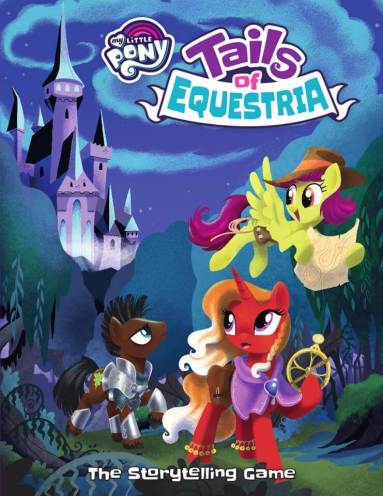 Right there, on the back is a clear, concise, easy to understand description of what the heck a d20 game is. And it revolves around a world my kids already know and love. The whole book is like that. It does away with jargon, and presents a streamlined, easy to understand game. At the same time, it doesn’t talk down to you. An awesome introductory d20 game that looks like a ton of fun. Light-hearted, family friendly, fun.


 that focuses on the dark and creepy land of Nidal. That’s right!
  .
. ,
,  ,
,  ,
,  , and the Pathfinder Adventure Paths Second Darkness (specifically
  ) and Hell’s Vengeance (which begins with
  ). Use these other products as a measure to judge whether or not this book is right for you.
 Those of you who regularly read my blog may wonder why I bothered to invest in a book with mature content when most of the time when I GM my children are involved (a six and seven year old). That’s a fair question! This book was not chosen with them in mind. This book was for me. Why?
 , and the
  , that features Nidal. None. To me, that spot on the map is a giant question mark. I know the basics, but nothing else. Second, I’m the kind of player that likes a wide variety of experiences in my games. Yes, I love a happy, feel-good, fun game. I love character development, social interactions, and humour. But, I also love horror. I want my dark locales to actually be dark. The evil in my games should be disturbing, and disconcerting, not shallow and cliche. Within reason. Games are only worthwhile when the players find them fun, after all. This book on Nidal did just that.
 The inside cover features a gorgeous map of Nidal, complete with labels, scale, and beautiful tiny depictions of the major settlements, drawn with care. The book is split into four chapters. ‘Living in Shadow’ is a ten page look at what life is like for most citizens. ‘Gazetteer’ is a thirty page look at the locations found within Nidal. ‘Threats in the Gloom’ is a twelve page look at the various locations which are particularly well suited to adventuring. And ‘Bestiary’ is a nine page look at some of the unique creatures found within Nidal’s borders. The entire book is filled with darkly beautiful artwork, some of which may be disturbing to some readers.
 I found this chapter was the incredibly useful in helping me understand life in Nidal. I had forgotten that the Nidalese people used to be horselords. Although I knew that they were the only civilization to survive Earthfall and the Age of Darkness (sort of), I hadn’t quite realized how important it was to their history. It’s a source of constant pride. Proof of the validity of their beliefs. It also means that they have relics, written works, books, maps, and actual, reliable artifacts and history from that time. From before that time. Refugees from other places — say… Azlanti and Thassilon for example — would have fled to Nidal for safety as refugees. it was once the literal centre of civlization in the Inner Sea. The Absalom of it’s time in a world of darkness, death, and barbarism. Even the poorest farmer would still have housewares and relics handed down through the millennia. Family heirlooms that are older than nations. Even if you only count Nidal’s history from the moment they made a pact with Zon-Kuthon, they’re a nation over 10,000 years old. That’s… monumentous. This nation’s history makes it particularly useful for anyone wanting to make a character with ties to ancient civilizations, including some of the new character options from
  .
. Note to self: Don’t celebrate the Eternal Kiss. Or The Festival of Night’s Return. Or The Shadowchaining. Or anything, really. In fact, let’s amend that to: never visit Nidal. Haha. Honestly, I adored reading about the holidays! They were the perfect balance of ‘holiday’ and dark horror. Shivers!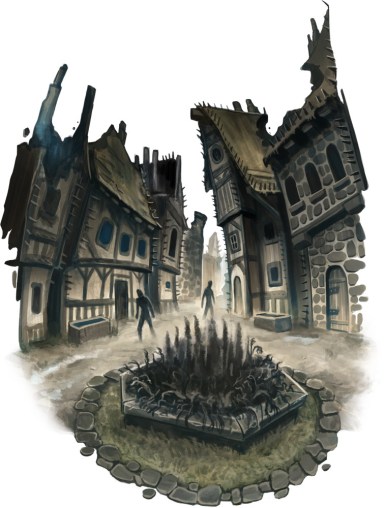
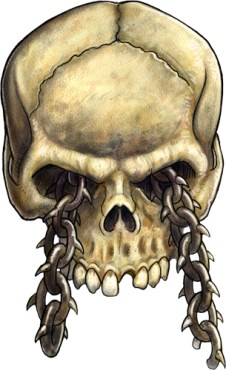
 , and featured in
  ). Looking for something darker? Check out the ‘Tower of Slant Shadows.’ Not only does it have connections to the wonderful
  , it’s also (in my humble opinion) the creepiest thing in the entire book. Yikes! I wish I had thought of that for my home game of Second Darkness… My personal favourite locations in this chapter are ‘Castle of the Captive Sun’ wherein a vampire keeps a collection of divinely descended beings prisoner, and tortures himself with holy artifacts! Very cool! And Barrowmoor, which is land filled with ancient burial mounds of the Nidalese Horselords. It’s steeped not only in creepy a atmosphere and a bunch of undead, but also in the occult, which I ALWAYS love. Barrowmoor is also the setting of the Tomb of Attai Horse-Speaker, which was published in its entirety in
  . Honestly, it’s one of my favourite tombs I’ve ever had the pleasure to read.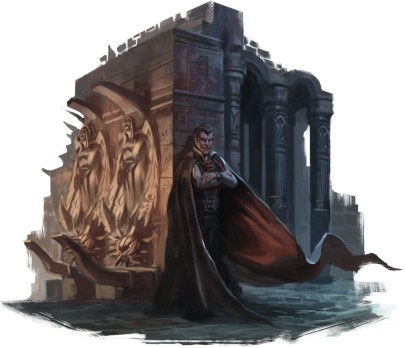
 and
and  , both of which are written by Liane Merciel. Player’s looking to make characters from Nidal, should check out
  , or
, or 
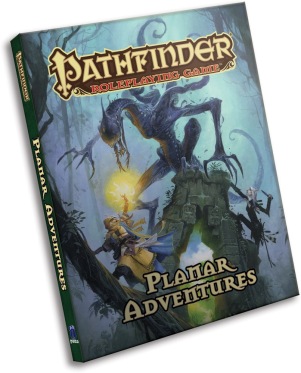 Last month there were some awesome releases, including
  ,
,  the finale of the Dead Suns Adventure Path:
  , and
, and  ! Tricky to top! So what’s on the schedule for this month?
 is the much anticipated finale to the War for the Crown Adventure Path! Oh, it’s gonna be a good one! I’m SUPER curious!
  presents a look at a lot of non-human, unique character options. Examples of this include the Ekujae elves of the Mwangi Expanse, and Pahmet dwarves of Osirion’s deserts, and many more. The part I’m most excited about? Whimsical phantoms for spiritualists! Come on, you know you want to be haunted by a chipper gnome ghost! I’m very intrigued with this product and can’t wait to see what’s inside. Pocket Editions of
  and
and  also come available this month.
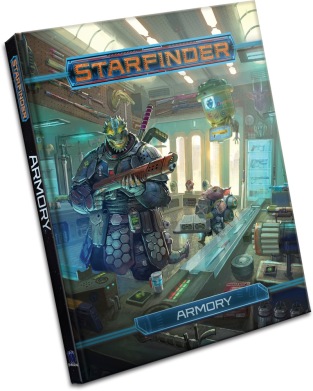 Starfinder also has two exciting releases:
  . Aww, yeah! This book is packed full of tons of new weapons and armour, as well as magical, technological, hybrids and mundane gear. There’s new bioaugmentations, weapons fusions… Every kind of item type has some new choices in this book. Also? New character options which focus on equipment! I don’t have a clue what they’re going to be, but I sure am intrigued!
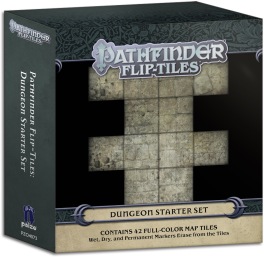 There’s also a whole new type of map being released this month: Pathfinder Flip-Tiles! We’ve talked about these before on d20diaries, but in short, they’re a collection of 6×6 tiles with images on both sides which easily can connect to form a large complex. This month brings us two sets of map tiles.
  , sanctioned scenarios for use with the Pathfinder Society Organized Play, or just want to read a nifty new adventure, we’ve got you covered! So let’s get cracking!
 ). It takes place in the ever-lasting hurricane, The Eye of Abendego! It features creatures from
  and
and  (although all of the necessary stat blocks are included within the scenario) and utilizes the
  ,
,  or
or  and a custom map. This mission is of particularly importance to members of the Concordance faction.
 and utilizes the
  as well as two custom maps.
 . Thankfully, all the rules necessary to use these manifestations are included in the scenario. But, my favourite part? The final encounter is really well written and, with the right GM, has the potential to be epic! I give this scenario five out of five stars!
 , sanctioned scenarios for use with the Starfinder Society Organized Play, or just want to read a nifty new adventure, we’ve got you covered! So sit back, and get ready to explore the


 . The second Quest is entitled ‘River Rat’ and is set in the asteroid belt known as the Diaspora. It features a very strategic, unique starship combat which I really, really enjoyed. To make it even better, there’s some great opening social interactions you can engage in with your opponents before the battle. It was lovely to see! River Rat utilizes
  . The third Quest is entitled ‘Bad Chameleon’ and takes place in the sector of Verces’ Ring of Nations known as Vanos. This area is known for it’s high-end nightlife. In this scenario you’ll need to blend in among the wealthy clientele of this neighbourhood, and perform a heist. It’s very free-form, and really allows players to be creative. It has some fun social encounters and a delightfully foul enemy, with some creepy artwork which really made it memorable. I really enjoyed this quest. It makes use of the
  . The final Quest is entitled ‘Nightmare,’ and is a lovely little delve into a ruin where you can utilize your tablet pieces and achieve your goals. If you can get past the obstacles contained within! Nightmare takes place on Praehan, one of the moons of Liavara. In addition to being a ‘dungeon delve’ style of adventure, it also features a bunch of awesome environmental hazards. You’ll have to deal with weather, atmosphere, gravity, and attempt to swim through liquid methane (which is much harder than it sounds). It has an exciting enemy with a great premise, stats, and art which serves as a wonderful climax to this adventure. I thought it was awesome. It utilizes
  . Overall, I really enjoyed this series of Quests, and highly recommend it — especially for newer players. I give it four out of five stars.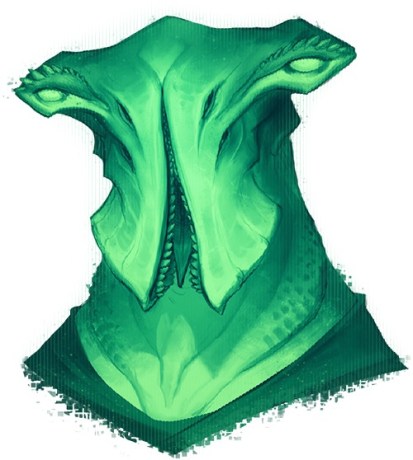
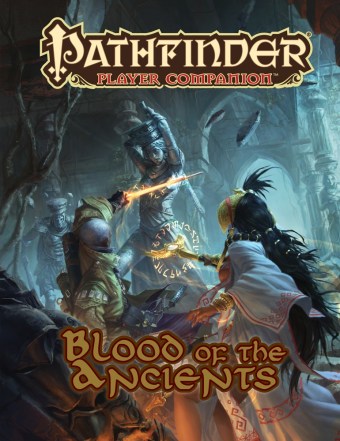
 ,
,  , and
, and  ).
). . For further details on Azlant you can check out
  ).
). ).
).
 rip off…
 .
. .
. .
.


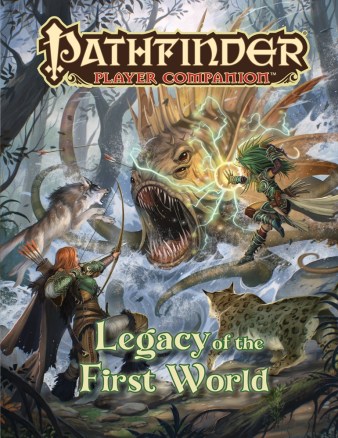 After this we’ve got the table of contents, the rules index, and the introduction. Here we find five new regional traits, each themed around places on the material plane where fey are common. Curious which locations? The Darkmoon Wood, Grungir Forest, Irrisen, Uringen, and a caravan known as the Witchmarket. ‘Fey Mediator (Grungir Forest)’ is a solid trait, but I think that ‘Voices of Solid Things (Witchmarket)’ turned out to be my favourite! This allows you to select either Appraise, Craft, Disable Device, or Spellcraft. In addition to making that a class skill, you can apply your Charisma modifier on those checks instead of Intelligence/Dexterity. Neat!
 ), instead it features five alternate race traits, eight new favoured class options, and four new feats. For race traits be sure to check out ‘bower born’ and ‘sticky tendrils,’ and for feats take a peek at the very quirky ‘strange yield,’ which lets you pull a single fruit off of your wings a day that acts as a random potion.
 and
and  . We were also treated to
  , and the
 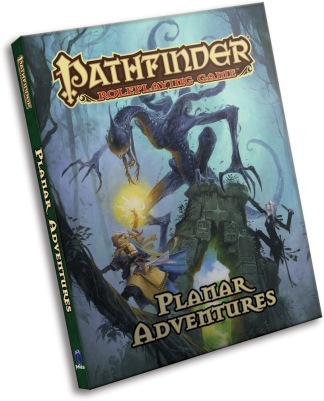 First up, Pathfinder’s released a new hardcover book:
  since it’s release, so to see that the Planes are getting an entire hardcover complete with new archetypes, feats, spells, gear, monsters and three player races, is AWESOME!
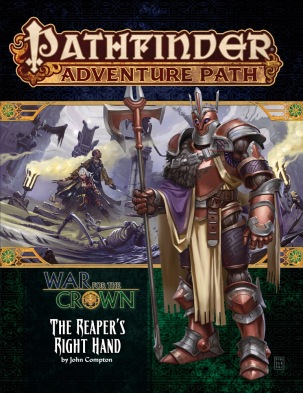 On the Flip-Mat front we have two to peruse this month.


 d20 Diaries