Pathfinder Playtest – Review

Welcome back to d20diaries!

Wow, finding the time to fully read the new Pathfinder Playtest Rulebook took longer than I expected! Well, not to read it, so much as to digest it. Understand it. Plenty of rules are different, so I had to really focus. Considering that I normally find time to read while overseeing screaming, bickering, playing, laughing, children of various ages (hey, moods change quick!), finding quiet time to get some reading done was more than a little difficult.

That said, I’m a quick reader. I finished it in about two days, then spent some time crafting characters in order to try out the creation process. Before I can take the time to teach my husband and kids how to play, I need to be able to explain it. Properly. Haha. After that I helped my family through the creation process, read through Pathfinder Playtest Adventure: Doomsday Dawn (the first adventure we would be trying out), and we got to work playing.

It’s been a whirlwind! But a fun one.

And then I got sick. Still am.

LAME. Haha.

So whats on the agenda for today?

Today we’re going to take a look at Pathfinder Playtest. Not in depth — this isn’t a replacement for the rulebook. After all, the rulebook’s a free download. It’s my impressions, thoughts, and experiences. Things I’ve discovered, and even some questions I’ve got. Got an opinion of your own? Or an answer to a question I have? Let me know! This game system is brand new and we’re all learning together. Once you’ve had a chance to try out Pathfinder Playtest, be sure to head over to Paizo’s website and give them some feedback. They’re running surveys right now, and have forums up for you to share broader comments.

Ready? Let’s begin!

Pathfinder Playtest RulebookPathfinder Playtest is a new set of rules and gameplay for the Pathfinder Roleplaying Game. It’s intended to streamline the game, while retaining its robust character creation options. Running combat, monsters, and characters should go smoother. Learning the rules from scratch should be easier. Levelling up should be simpler. The book and rules are supposed to be user friendly — even for those who don’t know how to play d20 games.

In theory.

Pathfinder Playtest features gorgeous cover art by Wayne Reynolds which showcases Seoni (the iconic sorceress), Valeros (the iconic fighter), and Fumbus (the iconic alchemist) battling a white dragon! Wait! Fumbus who? Fumbus the goblin alchemist. Thats right! Not only are goblins a core race, but alchemist is a base class. Both are available options to try out in the playtest.

Open the covers (or flip to the next page on the pdf) and you’ll find an introduction by the Paizo staff, followed by the overview. This is where you’ll learn what the heck a d20 game is and how to play. There’s also an overview of the basic terms used in the game, including a few that are new, an explanation of the modes of play, and a list of what you’ll need to play. This section was easy to understand, even for a layman, although not as easy as I expected. It’s a difficult read for my children, for example, and my son (who is more than capable of reading chapter books aimed at pre-teens, published adventures for d20 games, and other Pathfinder products) would definitely get bored and flip past a few pages. Would my teenage/adult siblings read it all the way through? …Tough to say. Probably not. It’s more likely they’d give it a skim and see how it goes. So… sort of an easy read. An easy read for this genre and its audience, I suppose.

Many of the terms in this chapter will be familiar to those of you who have played d20 games before, but even experienced gamers need to give this section a thorough read. Calculations for some of the familiar statistics are different, and there are some very important brand new game mechanics that are explained here. Be sure to pay extra attention to the types of actions, the modes of play, and proficiencies. We won’t get into them in too much detail right now, but for those of you who are curious, these three aspects form a huge part of the game.

There are three modes of play in Pathfinder Playtest. Encounter mode is what you enter when your every moment matters. This is used during a battle, for traps, ambushes, hazards, and anything else similar. You play encounter mode in rounds which are six seconds long, and encounter mode ends when the danger has passed. This is a huge part of the game and the rules. But, it’s not all there is to the Playtest. Exploration mode is used for any situation where you’re not in immediate danger, but you’re not entirely safe, either. This includes exploring a town, ruin, forest, or even a hallway between encounters. It’s what you’re playing in when you’re not fighting something. It’s more than just walking, or a segue between the ‘exciting stuff.’ Exploration mode has its own rules, and has proved quite fun around my house so far. Finally, there’s downtime mode, which is what you use when you’re completely safe.

There are three major kinds of actions in Pathfinder Playtest. Actions, free actions, and reactions. Pretty much all the game is based around this. Nearly every feat, ability, and spell that has a non-passive effect has a symbol beside it right near the top showing what it costs to use. Free actions are free, obviously, Reactions can be taken once per turn, even on your opponents turns, as long as its triggering conditions are met. An example of this is an attack of opportunity (which only fighters can utilize right away!), but there are plenty others for different classes and characters. Lastly, there’s actions. Everything takes actions. Moving, attacking, special attacks, spells and such. Most spells take two actions to cast, although some take one or three. Each turn during encounter mode you’re allowed three actions, and most things you can imagine take one. Walking forward, drawing a sword, and swinging it? Three actions total. Attacking, attacking, and attacking a third time? Three actions. And totally allowed (each successive attack in a round takes a cumulative -5 penalty).  Lastly, there’s proficiencies. Yes, this includes armours and weapons. But in the Playtest proficiencies also replace your base attack bonus, base saving throws, and skill ranks. If you’re trained in something you add your level to the rolls you make with it. If you’re untrained you add your level subtract two. If you’re an expert you add your level plus one, master is your level plus two and if you’re legendary you add your level plus three. For example, if you’re trained in athletics you roll a d20, add your proficiency modifier (your level), your strength modifier, and any other item or extra modifiers you have. Expert in your weapon? Add the expert proficiency (your level plus one), your ability modifier (strength for melee, dexterity for ranged), and any other bonuses from your items. Master at reflex saves? Add your level plus two, plus your Dexterity modifier, anything else special you might have and off you go.

Got it? Good! If not, read the Pathfinder Playtest Rulebook!

After this we get into the fun stuff. Character Creation. The Playtest has a great step-by-step guide to making your characters. In short, you come up with a concept. Then you pick and apply their ancestry (race), background, and class. Each of these will increase some of your ability scores, but you also gain four increases to apply as you see fit. Once you’ve finalized your ability scores, select your trained skills and do some simple math to make it all come together. Spend your coin (150 sp), pick your spells (if you’re a caster) and fill in all your finishing details. Done. Relatively simple. The levelling up process is also simple, as well.

After this there’s an easy to follow example of how you make your ability scores. As I previously mentioned, ancestry, background, class, and your personal preference all play a part. So how does it work?

For starters, you need to know how much to increase an ability score. Increases are referred to as an ‘ability boost’. If the score you’re increasing is under 18 you increase it by 2 points. If it’s over 18 you increase it by 1 point. At character creation, you cannot make a character with over 18 in any one ability score, so all of your boosts will be increasing your ability scores by +2.

When you create a character all of your ability scores start at 10. Now you pick your ancestry. Most will give you two ability boosts that are applied to a specific ability, one ability boost that you can apply as you see fit (called ‘free’), and one flaw (which is a -2 in a specific score). For example, dwarves get ability boosts to Constitution, Wisdom, and Free. They also suffer an ability flaw to Charisma. Humans are different from most races in that they receive no flaw, and no specific ability boosts. Instead they get two free ability boosts, which can be applied at your whim.

Now that you know what to increase you apply it. However, there is a limitation. During each step that you apply your ability boosts, you must apply each to a different ability. In our previous example with dwarves, that means you’re getting +2 Con, +2 Wis, -2 Cha and a +2 to be added to any other ability score (Str, Dex, or Int). The next time you apply your ability scores you can increase any scores you want, but again, only one time each in that phase.

Backgrounds grant an ability boost in a single specific ability score chosen from a selection of two, and then grant a free ability boost. For example, acrobats get an ability boost to either Strength or Dexterity, and then a second ability boost that is free. Meanwhile, a barkeep gets an ability boost to either Constitution or Charisma, and then a second ability boost that is free. (This is not all that a background grants you, just the part that applies to ability scores). As mentioned before, during this step, each ability can only be boosted once. So, our example dwarf could apply the barkeep ability boosts to Constitution, and Strength, but couldn’t apply it to Constitution twice.

Classes offer a single specific ability boost to that classs’ key ability score. Alchemist’s increase Intelligence, bards increase Charisma, and so on. Some classes, like the fighter, can choose one of two ability scores to be their key ability score (in the case of fighters this is a choice between Strength and Dexterity).

Lastly (or second last if you choose to apply these before your class), you get four free ability boosts. You can assign these however you want — although each ability score can only be boosted once in this phase. Essentially this means that four different ability scores will increase by +2.

And that’s the ability score creation process. It’s quite simple when you get the hang of it, and can create a diverse array of balanced characters. There’s also a random generation method offered, for those of you who prefer to roll out your stats, but the characters they create will not come out as powerful as those created with the standard method. Still, it’s nice that its there.

After this we get into the chapter on ancestries and backgrounds. There are six major ancestries you can choose: dwarf, elf, gnome, goblin, halfling, and human. Those of you looking to be half-elves or half-orcs will select ‘human’ as your ancestry, and then choose a heritage feat which allows you to be either of those two ‘half-breed’ races.  This method opens up a unique design space which has potential for an interesting take on some uncommon races when the full game releases next year.

Each ancestry grants you some ability boosts and flaws (as already noted). It also grants you some hit points (which you will only receive at first level), your speed, size, and languages. Some of them also grant you a vision type, or a single special ability. That’s it. You won’t be getting a ton of racial abilities built into your ancestry. I know, I know. This seems like you get so much less. In a way, at low level, you do get less. But, as you level up you also get more out of your race. You see, each ancestry has a list of feats to choose from that only members of that ancestry can select. This is where you’ll find a lot of familiar ‘racial’ abilities like weapon familiarity, ancestral hatred, stonecunning, sure-footed, and other such features that would have once been found under ones race. There’s plenty of new ones, as well. You start the game with one ancestry feat of your choice, and gain more as you level up. This allows you to make your ancestry work for your character as an individual. After all, not all elves are the same.

After I got over the initial shock of seeing ‘how little’ each race gave me, I gave the different ancestry feats a read and, in the end, decided I like this method. It’s adaptable, easy to use, and enjoyable. I found it worked well during character creation. I particularly enjoyed the gnome ancestry feats, so be sure to give them a read!
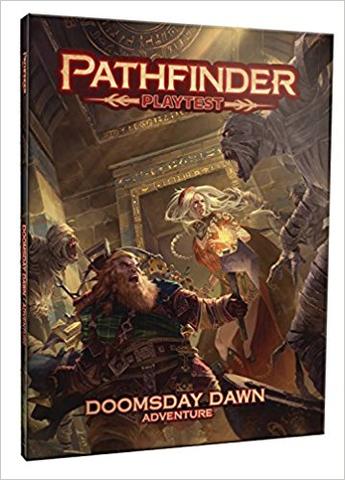
Pathfinder Playtest Doomsday DawnNext up is backgrounds. These represent the things your character did before becoming an adventurer. In addition to the ability boosts mentioned previously, each background grants you one skill feat and training in a single Lore skill tied to that background. What’s a lore? A lore is like a very specific knowledge skill. You can have lore in pretty much anything, as long as it has a very narrow focus. Examples include Vampire Lore, Desna Lore, Circus Lore, and Farming Lore. During downtime, lore skills can also be used to make an income. There are a lot of backgrounds up for offer in the Pathfinder Playtest Rulebook (nineteen!) and you can expect to see a whole lot more in the future. Each adventure path will offer new backgrounds that will tie your characters to the story. The Pathfinder Playtest Adventure: Doomsday Dawn is the first example of this, and provides a further six backgrounds to choose from. The Playtest Rulebook backgrounds include: acolyte, acrobat, animal whisperer, barkeep, blacksmith, criminal, entertainer, farmhand, gladiator, hunter, labourer, merchant, noble, nomad, sailor, scholar, scout, street urchin, and warrior. Although all of the backgrounds are equally ‘good,’ I particularly like the entertainer and the nomad, while my daughter enjoys the animal whisperer, and my son enjoys the warrior.

Past the Background we get to a short section on selecting languages. Players with very high intelligence scores will be surprised to find they don’t get as many languages as in Pathfinder First Edition, with an intelligence over 14 now granting a single bonus language!

Up next is the chapter on Classes. The classes available for the playtest include Alchemist, Barbarian, Bard, Cleric, Druid, Fighter, Monk, Paladin, Ranger, Rogue, Sorcerer, and Wizard. Despite these being familiar to you, each class has plenty of new features, and offers a lot of adaptability. In addition to hp, special abilities and a selection of class feats you can choose from in order to tailor your class to your character, each class also gives you proficiencies in saving throws, perception, and in various weapons, armour and shields. It also gives you a number of skills you can choose to be trained in. Spellcasters get spells, characters get abilities and so on. Now, you really need to read the classes to get a feel for them, so we’re not going to take too close of a look at them. What I will say is that each class we’ve tested in my house has turned out to be a lot of fun. My favourites include Bard (who can use some of their performances an unlimited number of times per day!), Sorcerer (whose spell list and type of magic is determined by their bloodline), and Paladin (who are just plain awesome!). My children particularly enjoyed the druid.

Next up is Skills. This chapter goes over each of the skills, how to calculate their modifiers, and what they can be used for. This is also where you’ll find the rules for crafting, performing and lore. Even experienced players need to give this chapter a read, as there are some changes to the skills. For example, grabbing, grappling and shoving are all tied to your Athletics skill. Yeah. Neat. Skills definitely do more for you now, than they used to. Also, anyone can make attempt any skill check. Obviously, they won’t all be as good at it, but the potential is there, which is nice. That said, some skills have uses that can only be used by characters trained in that skill, which is a nice feature.

After skills we get to the chapter on feats. Now, this section doesn’t have all the feats available in the book. Ancestry feats can be found under ancestries. Instead, it contains all the general, and skill feats available. This chapter is particularly important, because you will gain a LOT of feats.  Beginning characters start with two (at minimum!). One from your ancestry, and one from your background. Most classes grant at least one other feat (sometimes a class feat, sometimes a general or skill feat, and sometimes both). This is a wonderful surprise, which allows customization in a simple way.

After feats you’ll find Equipment. Pathfinder Playtest uses silver as the core coin (instead of gold) which means that the price of gear will be different than what you’re used to. There’s also been some changes to the armour, weapons, and weight systems — all for the better in my opinion! Definitely give the information at the start of this chapter a read before trying to spend your coin! Haha.

Past equipment you get into spells. This begins with a lot of important information about magic, spells, and how they work. Definitely don’t skip this part! Haha. There are four major spell lists: Arcane, Divine, Occult, and Primal. I’m fond of all of them. In addition, you’ll find tenth level spells. After the spell lists are spell descriptions. Amongst these spells you’ll also find a lot of class abilities that are cantrips, or run off of spell points. This includes domain powers, and bardic compositions (among others). Although I understand the purpose of including them here (in alphabetical order alongside the spells), it made it hard to make class choices. For example, if I’m looking for all the bardic compositions (which are a type of cantrip) I have to search through the entire chapter and read the spell traits to find them. There is no compiled list of bardic compositions and, as they are not class spells, they don’t appear on any of the Spell Lists. It’s a giant pain in the butt. Haha. I sincerely hope they find a better way to sort this in the future, cause all that sifting sucks. Not only that, it’s a drain on your time.

I also found (after a lot of jumping between chapters to hunt them down) that a lot of the domain powers weren’t as good as they used to be. Which is unfortunate. I’d gladly trade my cleric of Desna’s domain power from the Playtest with pretty much any other Domain power from First Edition. An unfortunate outcome! Still, it will take more playtesting to determine if it all balances out in the end.

Past this we come to a short chapter on how to level up your characters. In addition, you’ll find the rules for multiclassing and archetypes here. The system for this is very easy to understand, and allows for a lot of cool character concepts. Essentially, you can choose to take archetype or multiclass feats in place of your class feat at any given level — presuming you meet the feat requirements. There’s a bit more to it than that, of course, but not by much. It’s a simple, elegant way to handle multi classing and archetypes without causing characters to fall behind the powers of their peers. I really like it. Definitely give it a read!

Later in the chapter you’ll find the rules for animal companions, familiars, and gods. The rules in all of these categories were fun and easy to use, particularly the rules for familiars. We got ours created in only a few minutes! Wonderful! Of course, I did have questions. It’s specifically pointed out that you can only have one animal companion. But, this is not specified under familiars. Does this mean you can potentially have more than one? My son chose a gnome ancestry feat which granted him a familiar, and then later earned a vine leshy familiar from being a plant druid. Does this mean he gets both? I’ve yet to find a definitive answer, but if you’ve read an official answer somewhere, (or know the page its on that I’ve missed) let me know! I’d love to read the ruling. Another problem with familiars turned out to be damage. Although it mentions the attack rolls they can make, it doesn’t say how much damage one does if it tries to attack. This came up on one of our first combat rounds in our first playtest when my son sent his vine leshy to attack. He hit! And… we had no damage. Haha. I decided that it would do 1 damage unless I found an official ruling that says otherwise. Know of one? Let me know! We’d love to see it!

After this comes a very important chapter entitled ‘Playing the Game.’ Reading it is mandatory. Haha. It’s around 35 pages long and includes all the rules you need to play as a player, as well as the conditions found in the game. Important stuff.

After that is another very important chapter called ‘Game Mastering.’ This chapter includes everything you need to know to run the game as a GM (in addition to the content for players). This chapter is shorter — at only around twenty pages — but its also denser and more complicated. Admittedly, I had to go back and reread parts a few times, particularly regarding exploration mode, downtime mode, hazards, and DCs. I expect I’ll have to reference both this chapter and the ‘Playing the Game’ chapter plenty over the next year, as I get a handle on the rules. In my opinion, the game is easier to learn to play and GM that Pathfinder First Edition was, so I’m pleased, even if reading these chapters caused me a few headaches.

After this we come to (pretty much) the last chapter. Treasure. This is where you’ll find information on wealth, treasure distribution, special nonmagical gear, alchemical items, runes, trinkets, and magic items. There’s a lot of fun stuff in here that you’re going to love reading. I highly recommend discovering these on your own. I will say that I particularly enjoyed the addition of snares, and that I expect to make a character who utilizes them in the near future. I also really like the rune system for making magical weapons and armour. Its very similar to the fusion system in Starfinder.

Past this is the appendices and then the book is over.

That’s it, that’s all! But, that’s not all that I have to say. There are a few things I’d like to mention before wrapping up.

First: Hero Points. I loved them. Each character starts each session with one hero point, and can earn up to one extra each session as a player (for doing something awesome for the group like bringing snacks, tracking gear, or hosting the game) and one extra as a character (for doing something awesome in character like saving someone’s life, being generous, expert teamwork, or accomplishing an important task in game). These points can be used to save yourself from death, reroll a d20, or take an extra action. They’re useful, awesome, and add a great new element to the game. (My daughter’s determined to be the loot-tracker from now on in order to earn that extra point!).

Second: Dying. During our first play session, my husband’s character died. Quickly. All things considered, from the moment he fell unconscious at Dying 1, only a single full round occurred before he died. Two ill-aimed splash damage brought him to Dying 2, and then to Dying 3 with the second instance, and on his turn he failed his first and only fortitude save against death, which brought him to Dying 4: Dead. This was WAY too fast. Sure, he could’ve used Hero Points to save himself. If he had any. He had already fallen unconscious two other times that session, and had used up all his Hero Points. And he wasn’t the only one. My daughter also fell unconscious once during the session, and my son nearly did. Ouch! I found not only did we fall unconscious quite a bit, but we died too QUICK. For a lot of players, a dead character is an end to fun. Especially if your chances for recovery were so brief.

Third: Identifying Magical Items: After you realize something is magical (or alchemical), it takes an HOUR to identify the object. An HOUR. This means, that if you’re the kind of group who doesn’t rest unless its necessary, you can go an entire adventure without knowing what any of your treasure does. In fact, when we played Doomsday Dawn in my house, we went the entire first adventure without knowing what anything did. That means we didn’t get any use out of any treasure. At all. That’s absurd! Now, there are some ways for your characters to shorten this time to ten minutes (or evens shorter at higher levels), which is more manageable. Heck, I even understand the intent. If it takes more time and effort to identify magical objects, that makes them more special. They’ve got an air of mystery about them. That’s cool. But, if it takes so long to identify a healing potion, that without someone specialized in identifying magical or alchemical objects, the group can’t even figure out its a healing potion during their adventure, than what good is it? Now, I know plenty of players like to stop a LOT when they play. Maybe you’re even one of them. The group that gets loot or takes a few wounds and says, ‘We should head back and recover!’ or ‘We should go sell what we’ve found and come back!’ That’s fine. You won’t be hampered by this. But, I’m not that kind of player. Neither are my family or my friends. We very often take on entire missions until we HAVE to rest, due to our wounds. Or we HAVE to recover our spells. Or we’ve spent the whole day and our characters are actually sleepy. This is particularly true in Pathfinder Society missions, which very often occur in a single day on a timeline. This system strikes me as very problematic, unless you specifically ensure your groups always have a way to shorten it. But, why force a group to do so? That’s going to replace another skill or class feat they could have taken. It just… Reading the rules for identifying magical objects didn’t sit right with me. Then we made our characters, brought them to playtest, and it turned out to be both a problem and a handicap. An unfortunate occurrence which we’ve given feedback on.

Fourth: Resonance. This is your character’s natural ability to activate and utilize magical objects. You have a number of resonance equal to your level plus your Charisma modifier. You can invest resonance ahead of time in an object that grants a long-term effect, or spend resonance on the fly to activate a magical object upon use. It’s meant to help replace gear slots (head, hand, and so on). Kind of cool, right? Sure. Until you start counting it out. Want to wear a magical cloak? Cool, 1 point. Want to drink a potion? Cool one point! Wait! One point? What if you only start with one point? What if you’re dying and you have no points? A friend can’t even shove a potion in your mouth to save you?Sort of. When you’re out of points you can attempt to overspend resonance you don’t have in order to activate the magical object anyway. This is a flat check with a DC equal to 10 + the number of points you’ve overspent (including any times you’ve tried and failed). If you pass the magic works, and if you fail it doesn’t (and you can’t attempt to activate that item again until the next day). If you critically fail (roll a 1) you can’t attempt to invest any other magical items at all that day. Ouch! Resonance is of particular interest to alchemists, who need to infuse their alchemical items with resonance in order to craft them. Okay, I can see that, I guess. Particularly for potions and such. Luckily, alchemist’s get to base their resonance off of their Intelligence, instead of their Charisma. But why should the alchemist have to spend resonance to make an acid flask when a wizard can cast cantrip and deal comparable damage at will? Yeah, I get WHY. There’s plenty of justifications. It’s an item, they’re not spell casters, so on and such. But… I don’t know. Both resonance, and the alchemist’s reliance on it is one of those new rules that I read, and just didn’t sit right. So far in playtests around my house it’s been a bit of a problem. Our alchemist was out of resonance within the first fight and had to rely on overspending resonance the entire rest of the adventure. She didn’t critically fail, thank goodness, but if she had, her character would have been completely shut down. She literally would have had to punch people with her gauntlet (a bad idea with her low strength and poor AC) or throw a rock at them (another bad idea). And if a whole character can be shut down so easily (at low levels, at least), that’s probably a problem. Similarly, our dwarf started with no resonance at all. Feeding him a potion in order to save his life was a fifty-fifty chance the first time, with the odds getting worse from there. Considering how quickly he died when he fell unconscious, that’s brutal. Ugh. Now, that said, I haven’t play tested the game enough yet, to make a final decision on resonance. Maybe it’s better with other classes. Maybe it’s less trouble at higher levels. Maybe this is meant to show that magic items are rare and special, tying it into the length of time that it takes to identify them. Maybe we’re not meant to really use something like a healing potion at low level. Maybe other groups didn’t have trouble at all. But so far, it’s been trouble for our groups. I hope that’s not the case in the future. I’d be particularly interested to see how resonance has worked out for you. If you’ve got an experience to share let me know!

Fifth: Initiative. You don’t have one. Instead you initiative is based on your perception modifier. Occasionally, if your character is doing something specific, you can roll a different skill in its place. For example, if you’re swimming your GM might rule you can use Athletics as initiative this time, or stealth if you’re in hiding. And so on. I loved this.

Overall, I really enjoyed the Pathfinder Playtest so far. I like the changes they’ve made to the game system, character creation, and treasure. I like it a lot, actually. That said, I have some questions which need clarifying, and we did run into trouble. We felt it took too long to identify magical items. We felt resonance was too limiting — especially for alchemists. And we felt the that dying turned into dead way too fast. It’s a good game, and we’re going to play it a lot more over the next year so that we can turn our feedback in to Paizo and they can make this next edition the best that it can be.

At the moment, do I think it’s better than Pathfinder First Edition? …I don’t think I can answer that. It’s new, and going to take some getting used to. Meanwhile, I’ve been playing Pathfinder since before it was Pathfinder. It’s nostalgic and homey. You know? I think it would be unfair to compare the two in that manner until I completely get the hang of the new rules. That said, I can answer a similar question. When it comes down to it, I like Pathfinder better than Starfinder. But do I like Pathfinder Playtest better than Starfinder? …No. Not yet. Maybe one day. But, at the moment, the Drift’s got more sway over me.

Well, that’s all for today. I hope you enjoyed this short look at the Pathfinder Playtest, and my opinions on it. I’d really love to hear your opinions and experiences with the Playtest rules, so if you’ve given it a try be sure to leave a comment. If you haven’t downloaded the free PDFs for the Pathfinder Playtest I highly recommend you head on over to Paizo’s website and do so. It’s free! There’s not much you’ve got to lose. Haha. Those of you hoping to get physical copies can find them here: Pathfinder Playtest Rulebook, Pathfinder Playtest Deluxe Rulebook, Pathfinder Playtest Adventure: Doomsday Dawn, Pathfinder Playtest Flip-Mat Multi-Pack.

Until next time,
Jessica

Playtest

Pathfinder Playtest

Pathfinder Playtest RulebookPathfinder Playtest.

It’s here!

Finally, it’s here!

For some of you this might be irrelevant. Others, a little scary.

But me?

I’m excited.

I’m getting up first thing in the morning and heading over to Paizo’s website to download my free copy of everything Pathfinder Playtest. I’ll read it within a day or two, and soon be testing out the character creation process. I’ll be teaching it to my kids by the start of next week, and trying my hand at GMing an adventure for them shortly after. I’ll download the Playtest PFS scenarios as soon as they launch next week, and have reviews up on them within a day or two. When Gameday comes I’ll have a chance to try the game out as a player. Afterwards, I hope to have a chance to play again. Then there’s surveys to fill out and feedback to give, so that Paizo can make this next version of Pathfinder the best that it can be.

So what’s first?

Everything is be available on the Pathfinder Playtest landing page, so head there first and see what there is on offer. Want it all? Click ‘Download All.’ Easy!

But, what exactly is there to download?

The first thing you’ll want to download is the Pathfinder Playtest Rulebook. This is a short version of the rules which give you all the information you need to know in order to play Pathfinder Playtest, GM it, create and level up characters. Now, as the Playtest, this is not a full Rulebook. It’s not what you’ll see when Pathfinder Second Edition launches next year. It’s a streamlined Rulebook with everything you need to know to try out the game. To try running the game. And to make a wide variety of characters. This is the major download. Read it. Enjoy it. Give it a shot. Make characters. Try new things. Share it with your family and friends. Help them make characters.

Pathfinder Playtest Doomsday DawnAfter this you should download Pathfinder Playtest Adventure: Doomsday Dawn. This adventure is actually a series of short, multi-encounter adventures which are linked over a decade of time to tell one epic story. Ancient Osirion features a wide variety of magical clocks which have been counting down through millennia. Previously a mystery, these Countdown Clocks will soon reach 0, at a time when Golarion will line up with the foul planet of Aucturn and allow the horrifying and mysterious Dominion of Black to surge across the world. Your players will travel throughout Golarion over a decade in order to understand the Countdown Clocks, defeat the Dominion of Black, and save Golarion! These mini-adventures are designed to show off and test a wide variety of game mechanics and adventure styles.

I’m thrilled for the Doomsday Dawn, particularly because I first read about the Countdown Clocks back when the The Pact Stone Pyramid was released before Pathfinder had its own rules set. I found the clocks so intriguing I made a whole campaign around it (which was pretty awesome if I do say so myself!). Unfortunately, that was one of the games that fell apart through the years (multiple pregnancies from both a player and myself were the joyous reason that campaign never got played through to its conclusion). I’m thrilled to see what the Paizo team does with it!

Those of you who will be GMing also need to download the Pathfinder Playtest Bestiary (link not available at the time of posting) which contains all the monster rules you’ll need to run the Doomsday Dawn. You’ll likely also want to download the Pathfinder Playtest Flip-Mat Multi-Pack. This contains digital downloads of four major encounter areas in the Doomsday Dawn Adventure. These maps are said to include a burnt-out crypt, a ruined temple, a wizard’s tower, and an astronomer’s underground laboratory. I have high hopes for these maps, so I can’t wait to see them.

Those of you hoping to get your hands on a physical copy of these books can try their hand on Paizo’s website, or order them on Amazon: Pathfinder Playtest RulebookPathfinder Playtest Rulebook Deluxe HardcoverPathfinder Playtest Adventure: Doomsday DawnPathfinder Playtest Flip-Mat Multi-Pack.

And that’s it!

For now.

On August 7th Paizo releases three Pathfinder Society Scenarios for the Pathfinder Playtest (all of which are free). The first, Pathfinder Society Playtest #1: The Rose Street Revenge, is a series of four tier 1 quests that task the PCs with investigating a series of murders perpetrated by the Rose Street Killer, who has been targeting recently freed slaves. They’ll get to ally with kobolds, explore the Puddles, and… do some other exciting stuff that I’m not yet privy to! Haha. This scenario is written by Leo Glass, Thurston Hillman, Joe Pasini, and Linda Zayas-Palmer, so you know it’s going to be awesome!

Pathfinder Playtest Scenario #2: Raiders of Shrieking Peak is a tier 5 scenario written by Luis Loza. Recently, the Pathfinders discovered an Iomedean artifact that was being shipped overland from Diobel to Absalom. Unfortunately the caravan transporting it was attacked and its up to your PCs to find the thieves, and retrieve the relic. It sounds like this scenario is intended to have multiple ways to achieve your goals, which should allow both combat heavy groups, and diplomatic groups to try out different aspects of the game. The only art I’ve seen for this scenario so far features a harpy, so I’m very intrigued! (Fans of my Legacy of Fire novelization will know I’m a huge fan of harpies as potentially dangerous NPCs. Undrella was awesome!)

Sebnet Sanserkoht gnome.jpg
Sebnet Sanserkoht, a gnome Pathfinder from Pathfinder Society Playtest #3: Arclord’s Envy. Art by Javier Charro.

Pathfinder Society Playtest #3: Arclord’s Envy is a tier 5 scenario written by Liz Lydell which I am most excited for. It takes place in NEX, which is a place I’ve never had a chance to play in before, and is a mystery investigation that I know pretty much nothing about! It said to reflect the location wonderfully, and have some flexibility, which ensures that the mystery is different each time you play. This is particularly important since all of the PFS scenarios are replayable.

Well, I’m off now. I’ve got to download the Playtest materials myself, after all. Here’s hoping the website doesn’t crash…

Best of luck!

Jessica

SaveSave

SaveSave

SaveSave

SaveSave

SaveSave

New Pathfinder Society Scenarios: Beneath Unbroken Waves and Betrayal in the Bones

Today we’re going to take a look at two of the most recent Pathfinder Society Scenarios that are currently available for purchase, and let you know we thought. Although you’ll find references to events in each that I liked or disliked, and comments about specific characters, these scenarios are not explored in detail. It’s not my intention to spoil the events in these scenarios, or give summaries and full reviews, but to share my opinions and provide recommendations. That said, if you want to avoid even minor spoilers then I recommend clicking on a different article. Whether you intend to use them in home games of the Pathfinder Roleplaying Game, sanctioned scenarios for use with the Pathfinder Society Organized Play, or just want to read a nifty new adventure, we’ve got you covered! So let’s get cracking!

PZOPSS0924E
Scenario #9-24: Beneath Unbroken Waves. A tier 5-9 adventure by Kate Baker.

Scenario #9-24: Beneath Unbroken Waves is a Tier 5-9 adventure written by (the amazing and super nice) Kate Baker! It takes place off the coast of the Isle of Jalmeray, in a region of the Obari Ocean known as the Deadly Ocean Passage. For more information on the Isle of Jalmeray, check out the Inner Sea World Guide. This scenario features creatures from Pathfinder Roleplaying Game: Bestiary, Bestiary 2, Bestiary 3 and Bestiary 5 (although all of the necessary stat blocks are included within the scenario) and utilizes the Pathfinder Flip-Mat Classics: Ship, Pathfinder: Flip-Mat: Sunken City, and a custom map. This mission is of particularly importance to members of the Concordance faction.

This adventure gives the PCs a mysterious key that moves of its own accord and tasks them with taking it to its destination, exploring the site, and discovering what it opens. The location is known to be underwater, and involves a lost monastic academy.  This mission makes heavy use of the underwater combat rules so GMs should refresh their memories on those rules (a handy summary is provided in this scenario) and players should select their PC carefully. If you’ve got sailors, swimmers, monks, unarmed fighters, members of the Concordance, or undine, now is a great time to take them for a spin (all for different reasons).  Do not bring someone who relies on ranged combat, slashing weapons or bludgeoning weapons (they don’t work well underwater). This scenario starts with a very engaging mission briefing with a refreshing Venture-Captain (Rashmivati Melipdra of Niswan) who I desperately want to be pals with! Haha. There’s a fun navigation portion to this adventure. The first battle is very interesting, while another had some great hazards in play. The finale is a blast and looks like it could be a challenge. There were plenty of great opportunities for social encounters, and some interesting NPCs you can interact with. All of the enemies have distinct goals that really show in their tactics, which was awesome to see. Overall I thought this scenario was great fun. I can’t wait to play it. I give it four out of five stars.

Scenario #9-25: Betrayal in the Bones is a Tier 12-15 adventure written by Tom Phillips. It takes place in the ossuary of Taal Mornat in the Five Kings Mountains. For more information on The Five Kings Mountains check out the Inner Sea World Guide, or Pathfinder Player Companion: Dwarves of Golarion. This scenario features creatures from Pathfinder Roleplaying Game: Bestiary, Bestiary 2, Bestiary 3, Bestiary 4 and Bestiary 5 (although all of the necessary stat blocks are included within the scenario). It utilizes the Pathfinder Flip-Mat: Twisted Caverns, Pathfinder Map Pack: Evil Ruins, and a custom map. This mission is of particularly importance to members of the Grand Lodge faction.
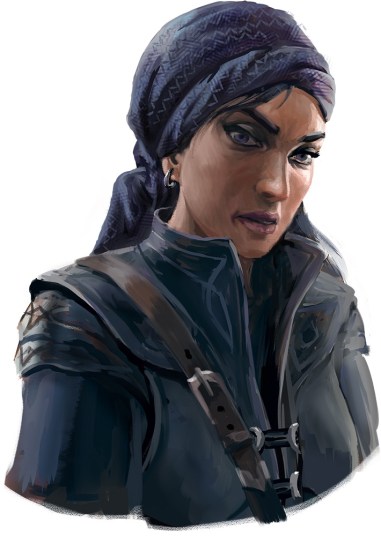
PZOPSS0925E
Scenario #9-25: Betrayal in the Bones. A tier 12-15 adventure by Tom Phillips.

This adventure tasks the PCs with entering Taal Mornat, and capturing or killing two enemies of the Pathfinder Society: the demoniac Ex-Venture-Captain Thurl, and the assassin Pasha Muhlia al-Jakri. I highly recommend that players bring along any of their characters who have had run ins with these characters in the past, or have gone up against their machinations and plots. Thurl can be found in Scenarios: #2-08: Sarkorian Prophesy, #5-09: The Traitor’s Lodge, #5-24: Assault on the Wound, #5-25: Vengeance at the Sundered Crag, #7-17: Thralls of the Shattered God, #9-06: Shores of Heaven, and the Special: Siege of the Diamond City. As for Muhlia? As the old leader of the Qadiran Faction, she’s been mentioned and featured in a ton of early scenarios, but most notably #2-21: The Dalsine Affair, #3-25: Storming the Diamond Gate#6-05: Slave Ships of Absalom, and #6-11: Slave Master’s Mirror. This scenario is a direct sequel to #9-21: In the Grandmaster’s Name. That said, due to the tier difference, it won’t be played by the same characters. For more information on #9-21 check out my previous blog post here. This is also a great scenario to play any dwarves you have, or characters who have the ‘Hero of the Five Kings’ boon.

muhlia al-jakri - betrayal in the bones
Muhlia Al-Jakri from Pathfinder Society Scenario #9-25: Betrayal in the Bones.

Now, heading into an ancient dwarven ossuary to get two bad guys isn’t as easy as it sounds. Thurl has drawn a portion of an abyssal labyrinth to the region, making the corridors incredibly dangerous and difficult to navigate. By the time you arrive, many dwarves have gone missing or lost their lives in an attempt to oust the intruders from their holy site. In addition, monsters made from the desecrated remains of the dwarves ancestors have come out of the ossuary and slaughtered a legion of dwarven soldiers. Players who don’t want to try navigating the labyrinth can attempt to enter through the volcanic fissure above the mountain, but its clear that this will likely be an even more difficult task than the labyrinth — especially since no one’s even sure if the fissure can take you to Thurl and Muhlia. Either way, I like that the option is there. Particularly for such high-level PCs.

The next line I’m about to write is a bit more of a spoiler than I normally include, so it gets its own special warning! If you don’t want to read it, skip the rest of this paragraph! The labyrinth portion of this scenario was surprisingly short, and fell a little flat, I felt. Although the battle within was great, it just didn’t feel like you were trapped in a labyrinth. The battle was really well done, though. And I love the… added complications involved.

There were some fun NPCs to interact with, my favourite of which was Borsaget. She’s awesome, although not all groups will end up getting to meet her. Muhlia was very well done! I’m curious to see how different groups handle her (and the arguments that are sure to pop up regarding her fate). Thurl is much more of a classic villain, which will give players someone to unite against and give the characters they bring some much needed closure. Some groups may uncover clues in this scenario that can lead them to the location of another enemy of the society (which is sure to be covered in an upcoming Pathfinder Society Scenario). Overall I thought this was a great, challenging scenario that did an awesome job of wrapping up Thurl and Muhlia’s story. I give it four out of five stars.

Thanks for tuning in today! Be sure to head over to Paizo’s website tomorrow and download the free rulebook for the Pathfinder Playtest! I’ll race you to it!

Jessica

beneath unbroken waves falehetu nicolas espinoza
Falehetu from Pathfinder Society Scenario #9-24: Beneath Unbroken Waves. Illustrated by Nicolas Espinoza.

Mummy’s Mask: The Tail of the Asp

Another week, another game night! Today on d20 diaries we’re heading back to Wati for more of the Mummy’s Mask Adventure Path. So, sharpen your khopesh, pull out your holy water, and let’s get ready to take on the dead!

Mummy’s Mask is a six part adventure path for the Pathfinder Roleplaying Game, intended to bring your characters from level one to around level seventeen. This campaign takes place in the deserts of Osirion, and involves trap-filled pyramids, haunted tombs, scorching deserts, bustling bazaars and more undead than you can shake an ankh at! The Mummy’s Mask Player’s Guide is a free download on Paizo’s website, and contains a ton of useful information for players looking to make characters that have lasting ties to the campaign. For more information on Osirion, you can pick up Osirion, Legacy of Pharoahs. Players looking for desert-themed character options can also check out People of the Sands.

PZO9079
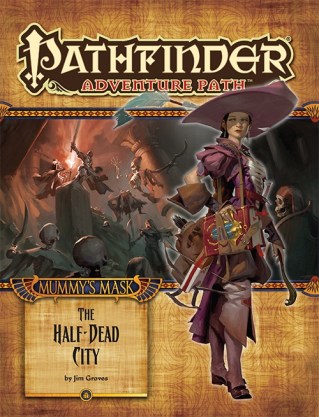
Mummy’s Mask: Book One: The Half-Dead City, by Jim Groves.

My home group has recently completed Mummy’s Mask: Book One: The Half-Dead City, and have moved on to Mummy’s Mask: Book Two: Empty Graves, both of which take place in the desert city of Wati. For those of you looking to run the game as a GM I highly recommend picking up the Mummys Mask Pawn Collection, which has a over a hundred unique pawns for use in this campaign. You’ll also get a TON of use from the Mummy’s Mask Poster Map Folio. The campaign is also available in other formats, including The Pathfinder Card Game: Mummy’s Mask Base Set, and as a series of audio stories beginning with Pathfinder Legends: Mummy’s Mask 1: The Half-Dead City. If you’ve ever listened to the audio stories, let me know what you think! I haven’t had a chance to check them out myself.
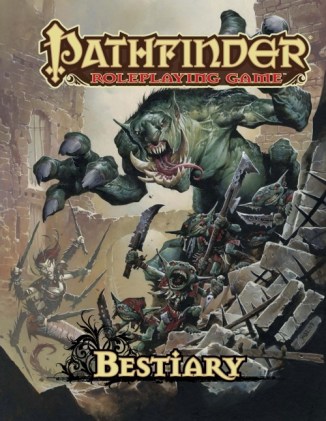
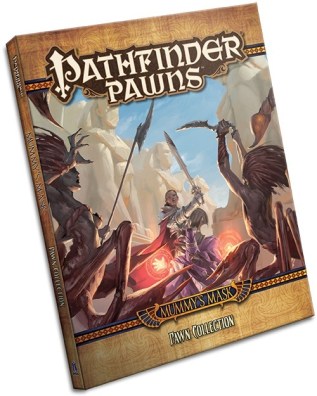
If you’re interested in my previous posts about Mummy’s Mask, check out Mummy’s Mask: Game AidsMummy’s Mask: The Shrine of Wadjet,  Mummy’s Mask: The Canny JackalMummy’s Mask: The Dead Come Knocking…, Mummy’s Mask: Death in the Streets, or learn more about our characters in Character Focus: Mummy’s Mask: Fateway Five.


The Fateway Five left the Precinct of Left Eyes behind, and set off for their friend Manaat‘s house, deep in the slums of the Asp District. As they travelled, the streets got tighter, the homes smaller, and soon neither doors nor shutters protected the cowering inhabitants from the horrors outside. Only tattered curtains offered a barrier between the families hiding in their overcrowded homes from the zombies and skeletons stalking the streets.

“We need to get these people out of here…” Arc remarked. He was an awkward, red-headed herb witch from Thuvia. He wore little in the way of clothes and held a staff in his hands. On his back he wore a bag of dirt in which he grew a tiny garden and carried his pet rabbit.

“All of them.” Kasmet added. She was a fiesty catfolk dressed in ancient Osiriani finery with a pelt like that of a cloud leopard and an unhealthy fondness for shiny jewels.

Nazim Salahadine, a portly catfolk cleric of Pharasma who looked like an overgrown Persian housecat, spent no time in conversation. Instead, he let out a loud ululation and leapt into battle with his khopesh and shield against every undead he laid eyes on. Arc and Kasmet followed him a moment later.

PZO9080
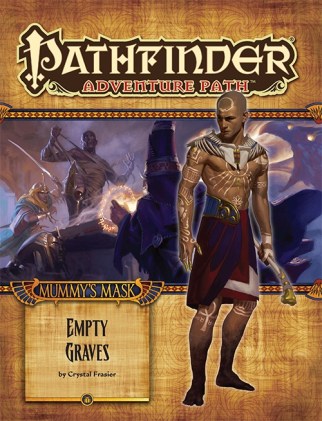
Mummy’s Mask: Book Two: Empty Graves by Crystal Frasier.

It took them a long time to fight their way through the streets to Manaat’s house. Although the wandering, weak undead posed no challenge to them, there were plenty to fight off. To make matters worse, most of the dead were relatives and pets of the residents, who had been buried under the floors of their homes due to an inability to afford burial in the Necropolis. This meant that families didn’t just have to fight off a roaming zombie, they fought off grandma, or a cousin or their previous pet cats. They also faced freshly risen zombies — residents of the Asp who were killed recently and reanimated by the necromantic pulses that had been washing over the city.

Arcs little pet rabbit looked around at the chaos with a sad look and a twitching nose. A silvanshee named Kal sat beside her, mocking every move Arc made.

“This is it!” Kasmet suddenly exclaimed.

The group hurried into the tiny house to find it under attack. Undead had literally crawled out of the tiny home’s back wall. The house was no more than ten feet by fifteen feet, and was packed with a bed, table, and cupboards, not to mention Manaat’s husband, twelve children and three zombies.

In between attempting to maneuver through the house, combat the undead, and protect the children, this turned out to be the groups hardest battle yet! Thankfully they pulled through without any of the family being injured. As Arc and Kasmet ushered the family out into the streets and explained to the father who they were, Nazim inspected the walls. The house was built right up against the Necropolis, so he was worried that the undead had broken through the Necropolis walls and into the home. Luckily, that wasn’t the case. It looked like the undead were purposefully interred within the walls, although he wasn’t sure if they had been honoured ancestors unable to pay for a proper resting place, or murder victims buried in the sly. Whatever the case, he was certain the Necropolis walls were still holding strong.

The group filed out into the streets and started to make their way back towards the Grand Mausoleum.

“Wait,” Kasmet exclaimed. “The people in these homes have no protection. We need to get them out of here.”

“Agreed!” Nazim declared. “But we cannot take them all. If the group is too large we will not be able to protect them.”

Arc nodded. “This neighbourhood, then. We’ll gather whoever will come with us from this block.”

“And the others?” Kasmet asked. “We can’t leave them.”

“We will come back for them!” Nazim purred loudly. “For now we announce our intent to return and tell them to ready themselves! Now, hurry! Let’s be off!”

The group took to the streets shouting that there was safety at the Grand Mausoleum and that evacuations were under way. They banged on the walls of those homes who they could escort now — some of whom joined them — and shouted their intent to return in another hour for another group. As they left the neighbourhood behind with nearly forty other citizens in their care, they prayed that the people of Asp could last that long…

Arc ordered Kal ahead to scout for danger. Surprisingly he offered no quips or arguments. Despite his frivolous demeanour, Kal cared for protecting innocents, particularly from his hated foe: undead. With their guide hopping between rooftops as a lookout and the Fateway Five armed and ready for battle, they managed to get back to the Grand Mausoleum without any casualties.

The Fateway Five were tired and sore. Battered and bruised. Though they still has magical resources at their disposal, it had been a long night. Fatigue would set in soon.

PZO1112_500
Zombies, skeletons and many other undead menaces can be found in Pathfinder Roleplaying Game: Bestiary.

But as the residents of the poorest sections of Wati fell upon the steps of the Grand Mausoleum and wept in relief to find sanctuary; as Manaat’s family rushed into her arms crying “Mommy;” they decided it had all been worth it. It would all be worth it… For they were far from done. The slums were large, and there were many other families who needed help.

The group beckoned over some healers to tend to their wounds, then headed off to speak with  High Priestess Sebti. They found her in the sanctum making up sleeping pallets for the refugees. The group told her all they had learned so far, and informed her of the weakening of the wall wards, the rising of the recently deceased, the plans of the Voices of the Spire, and the Voices intent to summon psychopomps to supplement their numbers.

Sebti was grateful, but also worried. She thanked the group for aid and sent for the clergy’s resident expert in holy wards. While they waited for him to arrive so they could escort him to the Necropolis gates, Nazim explained their plan to protect the poor of the Asp district. Sebti was both shocked and pleased.

“A wise decision,” she told them with a smile.

Just then a regal looking man with pale skin, a bald head, and long blue robes strode into the room. With a very imperious look he assessed the Fateway Five. He sighed in disdain.

“You called for me, High Priestess.”

Sebti smiled at the scholarly priest and quickly introduced everyone. “This is Ahrutep Mahetree, our foremost expert on religious blessings and defensive wards.”

Ahrutep smiled.

You’ll be escorting him to the Necropolis gates.” Sebti finished.

Ahrutep frowned. “I… uh… that is… High Priestess!” he stammered. “I am a scholar.”

Sebti smiled. “I wish you the best of luck. May the Lady of Graves watch over you.”

With their reluctant scholar in tow the group left the safety of the Grand Mausoleum and headed out into the abandoned streets. Kal hopped off to scout ahead. Not long after he shouted down from the rooftops,

“Hey! Losers! There’s some dead-heads over here.”

The Fateway Five took a slight detour over a block, heading towards the undead.

“What? No! Go the other way, you fools!” Ahrutep exclaimed in a panic.

PZO1012_500
Pawns for Osirion-themed undead (and NPCs!) can be found in the Pathfinder Pawns: Mummys Mask Pawn Collection.

Nazim let out a loud ululation, drowning out the man’s complaints, and leapt into battle. It was a trio of zombies, so combat was quick. During the fight Kal hopped down into Arc’s dirt-bag  and cuddled up next to Arc’s rabbit. Arc offered some ranged support, and Kasmet attacked with her claws.

Ahrutep panicked, shrieked, and hid behind Arc.

Kal laughed at the top of his lungs. “A-HA-HA! THIS POMPOUS FOOL IS THE BIGGEST COWARD!”

Ahrutep was too scared to care.

As the battle came to an end he cleared his throat and smoothed out his robes. “Ahem… Yes, well… A fair job…”

Kal scoffed. “I’ve seen braver babies at Insula Mater!”

As Ahrutep stammered in embarrassment Kal rubbed his side against the rabbit, then hopped back up to a nearby rooftop and disappeared.

Only a handful of steps later and there was a strange glow emanating from the space behind the Ahrutep! He turned slowly so see a human-shaped figure made of glowing light.

“AHHH!” he shrieked. He hurried to hide behind Kasmet and cowered in terror.

The Fateway Five looked at the glowing figure. Kasmet bared her claws, while Arc and Nazim tried to determine if it was undead. Suddenly both of the men relaxed and rolled their eyes. Nazim held out a hand to prevent Kasmet from wasting her energy.

“It is but a trick!” Nazim explained.

“Not funny, Kal,” Arc remarked aloud. “We’ve got important things to do.”

From above they could hear the silvanshee laugh. “AHAHAHAHAHAHA! Did you SEE that? Get that guy a change of shorts!”

Ahrutep fumed angrily and sputtered out a rebuttal.

Kal laughed and turned, showing off his backside to the scholarly priest. “Ha! Okay, I’m really leaving now.”

And with that, he was gone. Again.

The short trip to the Necropolis gates took far longer than expected, but in time the massive gates loomed large. They could see Bal Themm and her reinforcements holding the gate against the hordes of undead who banged against the gates from the other side. The howls of the undead made a loud cacophony that gave chills to even the bravest of souls.

“Greetings, Bal! Here is your holy water,” Nazim said, handing over the vials. “And here is your priest.”

They pushed forth Ahrutep.

The scholar cleared his throat and stepped forward. “Lead the way, Voice.”

As the pair walked away, Kal laughed. “We should call that guy ‘yellow.’ And why was he wearing a dress?”

Arc, whose elaborate loincloth was more akin to a skirt than shorts, blushed. “Get a move on, Kal! We need to hurry.”

“Sure, sure,” Kal groaned as he scampered ahead.

2018-07-15 15.02.02
My wonderful, heavily used, much beloved map of Wati! I cannot express how helpful it is for my player’s during Mummy’s Mask: Book Two: Empty Graves. This map can be found in the Mummy’s Mask Poster Map Folio

The journey to the tail end of the Asp continued with Kal making a mockery of the Fateway Five, and pointing out all the undead in their vicinity. The PCs made quick work against all of the undead in their path. They battled zombie cats, skeletal members of the Silver Chain gang who were looting nearby homes at the behest of their skeletal champion gang leaders, sun-baked dead who had died of dehydration out in the desert and slums, and even an attic whisperer who stole Nazim’s voice.

Much to my amusement Nazim’s player, my brother, played the rest of the session only acting and mouthing out Nazim’s words. We all had one heck of a fun time guessing and replying in character. I particularly enjoyed playing Kal, who assured everyone that he could read lips, and then proceeded to translate everything Nazim attempted to say horribly wrong, and thoroughly insulting. It was a complete and total blast! So much fun! We probably spent more time laughing than we did playing. Haha.

The Fateway Five pushed themselves hard, and made a total of six trips to and from the Asp district, escorting the residents to the safety of the Grand Mausoleum. They were surprised to see a few familiar faces among the residents. Senja Messeniah, a dancer who occasionally performed at the Tooth and Hookah was  among the citizens. As was Tais (a half-orc who had befriended Kasmet a few days earlier), Frida Bylo (a partying dwarven lass who had tried seduced Arc in the hopes of robbing him blind. Her flirting stopped abruptly when she realized all he had in his room was plants). They also met the Pahnet, the wife of a dead man they had discovered in the Necropolis on their second day of the lottery.

Unfortunately, undead weren’t the only ones to cause trouble. Kal tricked Arc into an embarrassing encounter with a thief girl that Arc had a massive crush on. While Arc blushed, Kal threw his voice and gave his best Arc impersonation, then proceeded to make chauvinistic comments at the young woman. She was less than unimpressed.

On another trip the group discovered that they were missing a handful of refugees! They backtracked and found the missing citizens trying to rob a local shop. Outside the battered and bruised teenaged girl who worked there sobbed in the street. To make matters worse, one of the refugees was a kid. The Fateway Five ended up beating the robbers into unconsciousness, then dragged them through the streets to the Grand Mausoleum and handed them over to High Priestess Sebti. The shopgirl refused to come with them, knowing that her father had told her not to leave the shop unattended.

On their last journey, right at the end of Mender’s Row, where the slums transition to the lower class section of the Asp (as opposed to the destitute section) they heard screams and some strange growls. The Fateway Five called a halt, left Kal in charge of the refugees (which he loved), and hurried over a street. There they reached a fabric and dyer’s shop called Rising Pheonix Textiles, which happens to be the place that Manaat worked as a dyer. Out front they saw the owners — Ohmun Kotem and Shamihn Hep — being attacked by zombies while two massive beasts tore the zombies apart. The creatures looked like wide, panthers with ruffled black feathers around their necks, and skeletal crocodile heads.

2018-07-15 14.45.09
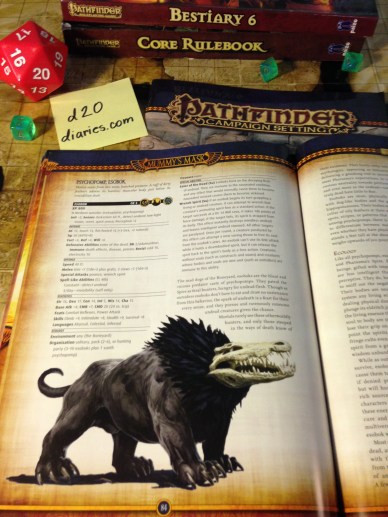
Esoboks are a psychopomp originally published in Mummy’s Mask: Book Two: Empty Graves and reprinted in Bestiary 6. It’s mini is available in the Mummys Mask Pawn Collection as well as the Bestiary 6 Pawn Box. These guys are a blast!

“Esoboks!” Nazim exclaimed. “Psychopomps who devour all in their path!”

“You mean the Voices of the Spire summoned those things even though you told them not to?” Kasmet shrieked. “Fools!”

The esoboks finished devouring the zombies and approached the women with open, bloody jaws. Ohmun and Shamihn shrieked in panic.

“Ah!” Arc exclaimed. Then he waved his arms and starting yelling at the beast. “Hey! Over here! You’re ugly and… you look like the undead! HA!”

The esoboks turned at the word undead, pinning Arc with their baleful gaze. The Fateway Five dashed into battle intent on not only destroying the esoboks, but protecting the women. It was a fun battle, that really showcased some of the esobok’s cool abilities (wrench spirit, anyone?) which was made extra challenging due to the maidens in danger. In time the esoboks were defeated, and vanished in a puff of gravedust, confirming that they were summoned creatures brought to Wati on purpose. Although they had combatted the undead, as the Voices of the Spire intended, they also were a threat to the living, as Nazim had warned. Nazim took a quick look around for the caster, but couldn’t find him (or her), while Arc and Kasmet tried to calm the women. They offered to escort the ladies to the Grand Mausoleum, which Shamihn accepted, and Ohmun complained about. After some fine diplomacy checks the Fateway Five convinced them to join the refugees.

“Oh!” Kasmet suddenly remarked. “And Manaat sent us to check on you, you know.” she lied. “You owe her your lives. You should probably give her a raise or something.”

When they finally reached the Grand Mausoleum the sun was rising.  The Fateway Five reported to Sebti, ensured the citizens were well cared for, and then headed off to their rooms down the road at the Tooth and Hookah to fall asleep. They hadn’t slept in almost 24 hours.

Undead still stalked the streets. Citizens were still in danger. And there was a group of impatient nobles waiting at the Grand Mausoleum to be escorted to their homes. But, the Fateway Five had saved a lot of lives. They had held the Necropolis gates, coordinated the major religious organizations, evacuated the most at risk neighbourhood in Wati, and slayed dozens of undead.

They had done an amazing job. But, there was much left to do.

Wati needed heroes.

So heroes they would be.


Thanks for joining us on another trip to Wati! I hope you enjoyed your time with the dead as much as we did.

Until next time,

Watch out for esoboks!

Jessica


2018-07-15 14.57.37

Nidal, Land of Shadows

Welcome, welcome! Gather round! Today we’re taking a look at an awesome new release for the Pathfinder Roleplaying Game that focuses on the dark and creepy land of Nidal. That’s right! Pathfinder Campaign Setting: Nidal, Land of Shadows.

Now, before we get started, there’s one thing I need to state plainly, right up front. This is NOT a family friendly book. It’s not the book you want to bring with you to read at the laundromat or on the bus, and it’s not a book you’re going to get a lot of ideas from for games involving children, or the many gamers who prefer a fun, carefree kind of game. This book is dark. It’s disconcerting. More specifically, it features body horror, mental and physical torture, as well as imagery and content that may disturb some readers. If you’re a gamer who doesn’t enjoy (or enjoy experimenting with) such content in your d20 games, then this is NOT the book for you. I’d suggest such readers pass on it, and pick up another of the wonderful books that are available for Pathfinder.

However, if you’re the kind of reader who enjoys exploring the dark side of Golarion, then I highly recommend this book. A few similar products that it reminded me of are Pathfinder Roleplaying Game: Horror Adventures, Pathfinder Roleplaying Game: Book of the Damned, Pathfinder Campaign Setting: Horror Realms, GameMastery Module E1: Carnival of Tears, and the Pathfinder Adventure Paths Second Darkness (specifically Book Four: Endless Night) and Hell’s Vengeance (which begins with Book One: The Hellfire Compact). Use these other products as a measure to judge whether or not this book is right for you.

nidal land of shadows - openerThose of you who regularly read my blog may wonder why I bothered to invest in a book with mature content when most of the time when I GM my children are involved (a six and seven year old). That’s a fair question! This book was not chosen with them in mind. This book was for me. Why?

For starters, I have no other content outside of the Inner Sea World Guide, and the Pathfinder Module: The Midnight Mirror, that features Nidal. None. To me, that spot on the map is a giant question mark. I know the basics, but nothing else. Second, I’m the kind of player that likes a wide variety of experiences in my games. Yes, I love a happy, feel-good, fun game. I love character development, social interactions, and humour. But, I also love horror. I want my dark locales to actually be dark. The evil in my games should be disturbing, and disconcerting, not shallow and cliche. Within reason. Games are only worthwhile when the players find them fun, after all. This book on Nidal did just that.

PZO92108Pathfinder Campaign Setting: Nidal, Land of Shadows is written by Liane Merciel, with additions by Lyz Liddell, Ron Lundeen, and Mark Moreland. It’s cover features awesome artwork by Kiki Moch Rizky that depicts the iconic hunter, Adowyn, and the iconic bard, Lem, facing off against an umbral dragon! This book is a thick softcover book which weighs in at 63 pages long. As a book in the Pathfinder Campaign Setting line, it contains information on the locations of Golarion (Nidal, specifically). It does not feature new archetypes, or other character options. But, that doesn’t mean this is only a book for GMs! They’re awesome for GMs, of course, but they’re also great for helping players of all kinds create fully-formed characters from different locations. In addition, I find these books really fire up the imagination.  They spark ideas for both adventures, side quests, villains and characters.

nidal, land of shadows - illustrated by federico musettiThe inside cover features a gorgeous map of Nidal, complete with labels, scale, and beautiful tiny depictions of the major settlements, drawn with care. The book is split into four chapters. ‘Living in Shadow’ is a ten page look at what life is like for most citizens. ‘Gazetteer’ is a thirty page look at the locations found within Nidal. ‘Threats in the Gloom’ is a twelve page look at the various locations which are particularly well suited to adventuring. And ‘Bestiary’ is a nine page look at some of the unique creatures found within Nidal’s borders. The entire book is filled with darkly beautiful artwork, some of which may be disturbing to some readers.

images
For more information on Zan-Kuthon and the other gods of Golarion, check out Pathfinder Campaign Setting: Inner Sea Gods

The first chapter of the book, ‘Living in Shadow,’ begins with a wonderful Nidalese sermon which really helped put their view on their (horribly evil) religion into perspective. If read with the proper gravitas I swear it could make a shiver run down your spine.  Very atmospheric! Its accompanied by some gothic artwork of a vampiric noblewoman looking out across the city. After this is a short, half-page summary of Nidal, it’s origins, and its culture. Up next is a gorgeous image of a Nidalese Horselord and about a page worth of text on the history of Nidal. This includes what life was like before they became thralls of Zon-Kuthon. There’s also information on the government of Nidal and some of its important personages. Nidal is a theocracy dedicated to Zon-Kuthon, headed by the Black Triune, and governed by the Umbral Court. After this there is information on some of the rare citizens you might come across in Nidal, including Caligni, Fetchlings, and the terrifying Kytons. Then we get a glimpse of what life is like in the decadent cities of Nidal, and the rural countryside. Spoiler Alert: It’s WAY different. Haha. There’s also a short section about the different kinds of religious and underground resistance found within Nidal. There’s also a discussion on Nidal’s relations with other nations, and a full page timeline showing important dates in Nidal’s history. Oh! And a delightful (disturbing) image of Zon-Kuthon, the benevolent (NOT) god who rules Nidal! Such a photogenic guy! (Note the sarcasm.)

nidal land of shadows - skrialsikenI found this chapter was the incredibly useful in helping me understand life in Nidal. I had forgotten that the Nidalese people used to be horselords. Although I knew that they were the only civilization to survive Earthfall and the Age of Darkness (sort of), I hadn’t quite realized how important it was to their history. It’s a source of constant pride. Proof of the validity of their beliefs. It also means that they have relics, written works, books, maps, and actual, reliable artifacts and history from that time. From before that time. Refugees from other places —  say… Azlanti and Thassilon for example — would have fled to Nidal for safety as refugees. it was once the literal centre of civlization in the Inner Sea. The Absalom of it’s time in a world of darkness, death, and barbarism. Even the poorest farmer would still have housewares and relics handed down through the millennia. Family heirlooms that are older than nations. Even if you only count Nidal’s history from the moment they made a pact with Zon-Kuthon, they’re a nation over 10,000 years old. That’s… monumentous. This nation’s history makes it particularly useful for anyone wanting to make a character with ties to ancient civilizations, including some of the new character options from Pathfinder Player Companion: Blood of the Ancients.

I particularly enjoyed reading about the difference between city life and rural life, as well as about the Black Triune. For those of you who don’t know, they were the original horselords who beseeched Zon-Kuthon for protection for their people from Earthfall. Although the evil Zon-Kuthon granted their desires and saved their people (making them the only civilization to survive Earthfall and the Age of Darkness without crumbling) it also transformed the horselords into literal servants of Zon-Kuthon’s. They are his will made flesh. Eternal and unloving. They rule Nidal to this day, though they are rarely seen by any outside the Umbral Court.

The Gazeteer begins with a moving quote from a retiring Chelish Ambassador to her replacement about the cold beauty, harsh cruelty, and ancient knowledge which can be found in Nidal. I particularly loved the last line:

“…It is a place, for better or worse, that you will never forget. You can’t. The scars remain forever.”

Such a wonderful, atmospheric quote — again. Whoo! Love it! It’s accompanied by artwork depicting a Varisian caravan approaching a Nidalese city, surrounded by wildlife that looks rather ominous. Past the opening quote is about a page and a half of information about Nidal’s culture and politics, followed by details on their four major holidays.

nidal land of shadows - opener - illustrated by federico musettiNote to self: Don’t celebrate the Eternal Kiss. Or The Festival of Night’s Return. Or The Shadowchaining. Or anything, really. In fact, let’s amend that to: never visit Nidal. Haha. Honestly, I adored reading about the holidays! They were the perfect balance of ‘holiday’ and dark horror. Shivers!
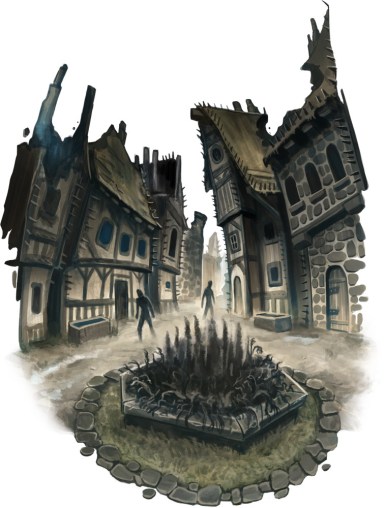
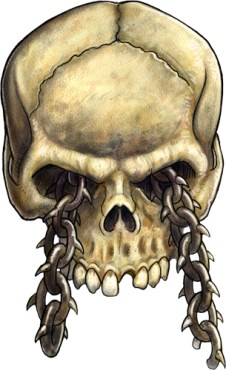
After this we get to the bulk of the Gazeteer: details on a ton of locations, all of which are shown on that loverly inside-cover map I mentioned earlier. There’s a total of 55 locations which are detailed in this chapter, including two major cities (Pangolais and Ridwan) which include their own maps, and multiple locations within them. The Gazeteer’s locations include cities, towns, settlements, ancient ruins, dangerous locales, and natural features. They run the gamut from ‘safe’ and ‘unique’ to ‘deadly’ and ‘disturbing.’ It’s got a really great variety. A lot of these places sparked ideas for campaigns, adventures, and character origins — not all of which are evil. In fact, the most useful part of this chapter may be in it’s ability to make you realize that you can adventure here. You can be a hero in Nidal. I don’t mean just as a sweeping revolutionary who tries to change Nidal, but as a Nidalese person who lives and survives here. A local hero. In addition to details on the places, there’s information on important figures, enemies, and plenty of plot-hooks. There’s also a ton of useful references for where you can find further information on those places, people,  and topics (both within this book, and in other books).

nidal land of shadows - stormhollow
Stormhollow from Nidal, Land of Shadows

Some of my favourite places to read about were the Atteran Ranches (which is a great place to create characters who want to be members of the underground resistance), Auginford (a small settlement which recently unearthed a disturbing monument), Blacksulfur Pond (a pond connected to the Shadow Plane), Brimstone Springs (where a devil is enjoying a ‘delightful’ prank), Grayfrond (home to a creature based off a chilling Inuit folk creature), Stormhollow (a village whose inhabitants were slaughtered by kytons — and still walk the streets today as mutilated husks), and, my personal favourite, The Library Without Light, which is home to ancient texts and relics dating back to before Earthfall. If any of you own this book, I’d be curious to hear what your favourite locations were!

Zon-Kuthon
Unholy symbol of Zon-Kuthon, god of envy, pain, darkness and loss.

The next chapter, ‘Threats in the Gloom,’ begins with a recounting of an adventure in Nidal, by an Aspis Agent. It’s dour and dark, and perfect. And the art that comes with it? Creeeeeeepy! After this is looks at eleven different dangerous locations in Nidal, dedicating about a page to each. It includes the classes of powerful denizens, the kinds of creatures you can encounter there, features common to the area, as well as history, and plot-hooks for these locales.  Once again, there’s a wide variety of locations here, from dungeons, dangerous wilds, haunted places, and urban areas. Those of you looking for more information on hidden bastions of good should check out the ‘Plains of Night’ and ‘Undervale.’ ‘The House of Lies’ is a great location for those of you looking for reasons for  foreigners to visit. ‘Shadowreach’ revisits the legacy of a character from the Council of Thieves Adventure Path (Ilnerik Sivanshin who was mentioned in Council of Thieves: Book 3: What Lies in Dust, and featured in Council of Thieves: Book 5 – Mother of Flies). Looking for something darker? Check out the ‘Tower of Slant Shadows.’ Not only does it have connections to the wonderful Curse of the Crimson Throne Adventure Path, it’s also (in my humble opinion) the creepiest thing in the entire book. Yikes! I wish I had thought of that for my home game of Second Darkness… My personal favourite locations in this chapter are ‘Castle of the Captive Sun’ wherein a vampire keeps a collection of divinely descended beings prisoner, and tortures himself with holy artifacts! Very cool! And Barrowmoor, which is land filled with ancient burial mounds of the Nidalese Horselords. It’s steeped not only in creepy a atmosphere and a bunch of undead, but also in the occult, which I ALWAYS love. Barrowmoor is also the setting of the Tomb of Attai Horse-Speaker, which was published in its entirety in Pathfinder Campaign Setting: Tombs of Golarion. Honestly, it’s one of my favourite tombs I’ve ever had the pleasure to read.
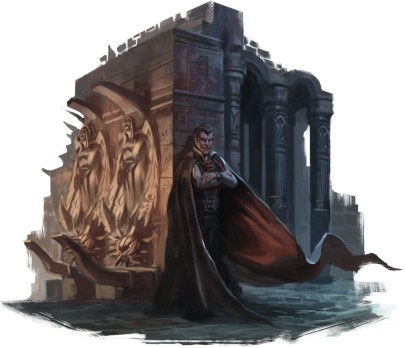
nidal land of shadows - castle of the captive sun
Castle of the Captive Sun from Nidal, Land of Shadows

The last chapter of this book is the Bestiary, which collects six random encounter tables (which contains a few entries which pleasantly surprised me!) and six new monsters. The creatures vary from CR 2 to CR 8. There’s a new kyton, of course, called the suffragan. It’s born from the souls of another new creature, the joyful thing, which definitely is my pick for the most disturbing creature in this book! Yikes! The strongest monster on offer is the hive brute. For more information on hives you can check out Pathfinder Roleplaying Game: Horror Adventures. I’m not a big fan of most plant creatures, but there is a cool shadow plant called the shadow fern which I actually really like. There’s also the smokeshade, which is a tiny extraplanar, incorporeal, aberration that looks like a patch of shadow. In addition to being an enemy, these little guys can be taken as familiars by casters of at least 7th level with the Improved Familiar feat. They’re actually quite fun, flavourful critters, that enjoy forming themselves into different rude shapes in order to mock other people or pantomime insults. I want one! Haha. But, the definite winner for the most useful creature is the shadow animal template. Not only can it be used to make shadow tainted creatures, it’s abilities are chosen from a list, which makes it very adaptable. It’s super useful, and really well done.

And that brings us to the end of Nidal, Land of Shadows. Overall, I really enjoyed this book. It made me think about Nidal in a new way, which made it playable. It also gave me a lot of good ideas for characters and adventures set in this morbid, horrible place. But, keep in mind, this book is NOT for everyone. Only purchase this book if you enjoy adding dark horror to your games.

Those of you looking to more fully immerse yourself in Nidal should pick up the Pathfinder Tales novels: Nightglass and Nightblade, both of which are written by Liane Merciel. Player’s looking to make characters from Nidal, should check out Pathfinder Player Companion: Blood of Shadows, or Pathfinder Roleplaying Game: Horror Adventures.

Thanks for taking a walk through the darkness with me!

Jessica

shadow plane by jay epperson
The Shadow Plane by Jay Epperson

July New Releases!

School’s out for summer, Canada Day has passed, and Independence Day (for all you American’s out there) has just ended. It’s a new month, with new releases in the gaming world. I don’t know about you, but I’m excited for some of this month’s products!

PZO1141Last month there were some awesome releases, including Pathfinder Roleplaying Game: Planar Adventures, Pathfinder Campaign Setting: Distant Realms, the finale of the Dead Suns Adventure Path: Empire of Bones (Dead Suns 6 of 6), and The Reaper’s Right Hand (War for the Crown 5 of 6)! Tricky to top! So what’s on the schedule for this month?

First off, Pathfinder Playtest.

Now, this isn’t out until AUGUST, but if you want to get your hands on a print copy now is your chance. Paizo is releasing the Pathfinder Playtest Rulebook in hardcover, softcover, and in a special edition cover. They’re also releasing the Pathfinder Playtest Adventure: Doomsday Dawn and the Pathfinder Playtest Flip-Mat: Multipack. All of these products will be available for free as PDF downloads on August 2nd, but print copies will be quite hard to come by. Preorder or bust! In addition they’re releasing three Pathfinder Society Scenarios for Pathfinder Playtest. One series of quests at tier one, and two scenarios at tier five. An interesting choice! All three will be available as PDFs for free on August 7th. For more information, or to preorder print copies, check out Paizo’s website.

With that out of the way, let’s take a look at some products you can get your hands on this month!

In the world of Pathfinder there are only two new products up for grabs. The Six-Legend Soul (War for the Crown 6 of 6) is the much anticipated finale to the War for the Crown Adventure Path! Oh, it’s gonna be a good one! I’m SUPER curious! Pathfinder Player Companion: Heroes from the Fringe presents a look at a lot of non-human, unique character options. Examples of this include the Ekujae elves of the Mwangi Expanse, and Pahmet dwarves of Osirion’s deserts, and many more. The part I’m most excited about? Whimsical phantoms for spiritualists! Come on, you know you want to be haunted by a chipper gnome ghost! I’m very intrigued with this product and can’t wait to see what’s inside. Pocket Editions of Ultimate Combat and Bestiary 5 also come available this month.

PZO7108Starfinder also has two exciting releases: The Dead Suns Pawn Collection, which has over 100 custom pawns from the Dead Suns Adventure Path, including a bunch of awesome starships! It looks amazing! What’s more exciting than that? A new hardcover book! Starfinder: Armory. Aww, yeah! This book is packed full of tons of new weapons and armour, as well as magical, technological, hybrids and mundane gear. There’s new bioaugmentations, weapons fusions… Every kind of item type has some new choices in this book. Also? New character options which focus on equipment! I don’t have a clue what they’re going to be, but I sure am intrigued!
In the world of Organized Play there will be four new scenarios coming out at the end of this month. Pathfinder Society Scenario #9-24: Beneath Unbroken Waves is a tier 5-9 scenario written by Kate Baker of particular importance to the Concordance Faction. It tasks the PCs with investigating underwater ruins. Scenario #9-25: Betrayal in the Bones is a tier 12-15 scenario written by Tom Phillips which continues the ongoing story of the Grand Lodge Faction. It allows players to finally get back at some old enemies! For more details, check out a previous blog post where we spoke about events leading up to this scenario! Starfinder Society Scenario #1-18: The Blackmoon Survey is a tier 1-4 scenario written by Jesse Benner which tasks players with exploring an ancient Eoxian ruin to determine why the workers on the excavation have been going missing. This one sounds like a ton of fun. Scenario #1-19: To Conquer the Dragon is a tier 5-8 scenario written by Matt Duval which send the players to Triaxus to open a Starfinder Lodge! This scenario builds on events from #1-13: On the Trail of History, and involves starship combat. I can’t wait until I get my hands on them later this month!

What’s left? Maps of course! And this month certainly brings us a LOT. Pathfinder Flip-Mat Classics: Watch Station is a pretty handy map set which gives is a solid dungeon or underground prison on one side, and a moderately sized sheriff’s office/town barracks on the other. It can also sub in as any small building that includes barracks, such as a thieves den, guild headquarters or school. Pathfinder Flip-Mat Multi-Pack: Forest is a useful set of two flip mats which feature woodlands, rocky banks, and small rivers. These two mats each connect to each other in multiple ways, which means that you can continue your game with a rolling scene, over and over again. They look gorgeous. Starfinder Flip-Mat: Asteroid is an interesting map release. One side is an incredibly useful map of a canyon, impact site or crater which is going to see a ton of use. It’s super adaptable, and can even work in Pathfinder play. The other side is a complex built into the interior of an asteroid. It looks quite interesting. Clearly intended to be used in the Diaspora, it can double as a lot of other complexes, including an underground bunker, base, laboratory, military instalment or even a school. Unfortunately, all three map sets are not yet released on Amazon, so if you’re Canadian, like me, or from another place in the world where the cost of having anything delivered from Paizo is ABSURD you’ll need to wait a while before getting these beauties on order.

PZO4073There’s also a whole new type of map being released this month: Pathfinder Flip-Tiles! We’ve talked about these before on d20diaries, but in short, they’re a collection of 6×6 tiles with images on both sides which easily can connect to form a large complex. This month brings us two sets of map tiles. Pathfinder Flip-Tiles: Dungeon Starter Set, includes basic dungeon features including halls, stairs, turns, entrances and rooms. It has a whopping 42 double sided map tiles. The second set, Pathfinder Flip-Tiles: Dungeon perils Expansion Set, is an expansion which works will the Dungeon Set (and will work with other sets in the future). It contains 24 double sided flip-tiles which depict hazards including trapped and lit hallways, chemical spills, chasms, rock falls, magical devices, and fungal growths. They look pretty cool. Much like this months flip-mats, these products aren’t yet available on Amazon. As a brand new product, I haven’t yet seen these in person, so I’m not sure how easy they’ll be to adapt and use in a live game, but I’d love to find out. If any of you get your hands on these tiles, let me know! I’d love to hear what you think!

That’s it for this months new releases! What products are you most excited for? I know my household can’t wait to get our greedy little hands on Starfinder: Armory! Here’s hoping!

Jessica

Character Focus: The Tangletops

Hello everyone!

GiftsWe just finished up a wonderfully busy long weekend! In addition to celebrating Canada Day, playing The Shackled City Adventure Path, and Heroscapes, we also celebrated my wedding anniversary. After nine years of marriage and eleven years together, my husband and I couldn’t be happier. Wow, it’s passed in a flash! Curious what I got for my anniversary? Jewelry, flowers, something romantic? Nope! Something way better! My husband and kids got me The Shannara Chronicles: Season 1 (which is awesome so far), the Iron Gods Dice Set, and a the Pathfinder Battles: Iconic Heroes Set 5. Can you say ‘spoiled’? As for my husband, my kids and I picked him up a Magic The Gathering Fat Pack for Dominaria! There were all kinds of goodies in there!  I’m curious to see what he makes from it.
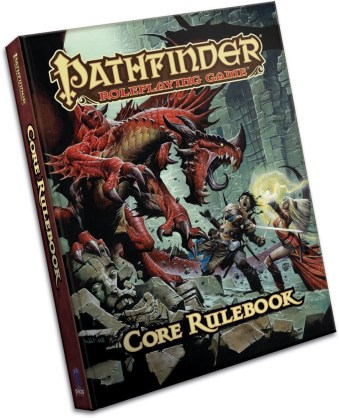
But, enough about my family. Today we’re going to talk about another family: the Tangletops!

Who?

So glad you asked!

During the recent OutPost convention my children made their second Pathfinder Society characters. My husband didn’t. He wasn’t sure how much he would enjoy play-by-post gaming, so he waited. But, AFTER OutPost? Ah! He wanted more. My husband made a total of three characters after that, two of which he really enjoys, and one of which he decided needs some work. One of the ones that really clicked was a strange gnome by the name of Toban Tangletop.

Toban is an experienced gnome with an eclectic past. He’s travelled the world, and tried his hand at nearly everything he could. In time, he came to worship Shelyn, the goddess of art, beauty and love. He also developed a complete and total obsession… with food. Toban became a chef who creates art through fantastic meals. He drew on his vast experiences to make fusion food, drawing on traditions throughout Golarion. Toban is always looking for rare ingredients and new recipes. Toban enjoys cooking for friends and strangers alike. He is not shy and is prone to approaching strangers and cooking them a meal unlike any other! Toban is adventurous in his cooking and willing to try new exotic foods. Because of this Toban has developed a strong stomach. Every meal and tasty treat he creates is a holy communion with his goddess, Shelyn.

Toban is short even for a gnome. He is barely over 3 feet tall and weighs 37 pounds. Toban has a rather large bottom lip that flaps when he speaks. He has black hair and a wildly long moustache. When Toban is in thought he often taps a finger on the bottom of his lip which makes a popping sound. He wears flamboyant leather clothes and a spectacularly over-the-top tophat which clashes with the rest of his clothes. He carries his cooking supplies with him wherever he goes.

PZO1115_500
Read more about inquisitors, as well as five other base classes, in the Advanced Player’s Guide.

Mechanically, Toban is a gnome inquisitor of Shelyn who works for the Grand Lodge Faction. He selected the protection domain. He uses his divinely gifted magic to heal wounds, and understand foreign languages. He’s quite old, but uses his vast experience of the world to his advantage, so he chose ‘breadth of experience’ as his first feat, which is honestly one that we LOVE in my household. To better represent his adventuresome eating habits he took ‘resilient’ as a trait. He also took ‘weathered emissary’ to help him in learning new languages.

Toban’s a knowledgable fellow, and an amazing chef. But, he strongly cares about using fresh ingredients, so he’s also good at perception and survival. Although he tries to make friends, his eccentricity can sometimes get in the way.

In battle, Toban always to gives humanoids a chance to surrender and repent, believing that death ends all chances for that person to create beauty. A tragedy! When forced into battle he uses a fine glaive, or his cooking knife. He can also hurl globs of acid at his enemies. He carries acid vials, holy water, and smokesticks, wears studded leather armour. He also carries plenty of healing scrolls, and recently picked up a healing wand. His wayfinder hangs around his neck, while his backpack is overflowing with cooking equipment.

So far, Toban has completed a single scenario: #5-08: The Confirmation. He’s currently working his way through #7-10: The Consortium Compact, alongside “Scaredy’ Sir Lansle Eine, Lady Naysha, and a few other colourful characters.

But, perhaps the strangest thing about Toban, is his family.


My daughter had the chance to play alongside Toban during his confirmation with her character, Lady Naysha. She thought he was hilarious! A day or so earlier she had been begging me to let her make a third Pathfinder Society character so she could play more play-by-posts, and I had relented. She’d been stewing over character ideas for days. She was pretty sure she wanted to play someone who could be a melee character, which is a role my daughter very, very, VERY rarely tries to fill. Fighter? Barbarian? Monk? She couldn’t decide.

That night we watched some Bleach on Netflix and my daughter saw Ururu fight for the first time. No idea what I’m talking about? You can see a short video of it on youtube here.

My daughter thought it was amazing.

“Mom! That little girl is just like me!”

She held up her tiny little fists and showed me her ‘fighting stance.’ Then threw a little punch that would flatten a fly — if my daughter had better aim — but not much else. When she tries to punch my daughter also lets out a little squeak of effort, which makes her ‘fierce’ attempts at battle the cutest and funniest thing you’ll see. It should be noted, she’s the same proportions as Ururu, tall and skinny with slender little arms and tiny fists.

“I’m just a little girl, Mom. But, I am pretty strong you know!”

She threw a few more punches accompanied by some squeaks.

I smiled.

After the episode was over my daughter announced quite proudly that she had figured out what she was going to make. It would be a little girl fighter, just like her and Ururu. A little girl who fought with her fists and was a monk. Except she wasn’t a girl! She was a girl gnome! She would be Toban’s sister, and she would act like a shy, scared little girl. Until battle! Then she’d say something like ‘Please don’t hurt me! I am just a little girl’ before punching them in the stomach really hard! “She is not a weak little girl, Mom! She is strong! And also a big LIAR! She will try to trick people all the time!”

My daughter then showed us a demonstration of her character’s fighting style, which involves some fine little punches and a lot of squeaking.

Very proud of herself, we pulled out the rulebooks and got to work.

PZO1110
Monks can be found in the Pathfinder Roleplaying Game: Core Rulebook, along withall the rules you need to play Pathfinder!

She decided that her character would be named Rosie. Rosie Tangletop. She would be Toban’s sister. Even though she is a gnome, she looks like a little girl. She has brown hair done up in pig tails, big brown eyes and a big happy smile. She wears a little pink cotton dress, stretchy little shorts, and comfy shoes. She keeps her eyebrows trimmed to better help her blend in with human children. She’s tall for a gnome and very slender and frail looking. She acts shy and meek. She would be a monk, of course.

After some reading and planning, she decided that Rosie carries no weapons at all. Instead, she gave her ‘throw anything’ as her monk bonus feat. She also invested in some vials of acid and a holy water. For her regular feat she ended up settling on weapon focus (unarmed strike). Rosie’s good at physical skills — acrobatics, climb, and stealth — as well as bluff. She’s hoping to invest in disguise at her next level up, but couldn’t afford to from the start. Why? Well, Rosie would use those skills to become trained in Handle Animal and Profession Cook!

Rosie picked up a love of cooking from her brother and, even though she doesn’t worship Shelyn (or any god for that matter), she is a well-trained chef who makes artistic culinary creations. She’s prone to making the food she’s served ‘better’ by pulling out her cooking tools and ingredients at the dinner table and spontaneously making a custom sauce to enhance the meals she’s been served. Then she cleans up and shares her additions with everyone else present.

As for handle animal? My daughter loves rabbits. She decided that Rosie had a pet rabbit that she purchased from an animal breeder and fellow Pathfinder, Bunny Paras. Rosie named the rabbit Lily, and keeps her in a familiar satchel when on missions. She took the trait ‘animal friend’ which gives Rosie a bonus on will saves as long as she keeps her rabbit nearby, and made handle animal a class skill.

Rosie also took the trait ‘loyalty’ and the alternate race trait ‘vivacious’ which helps her recover faster at the expense of the gnome spell-like abilities.

All in all, Rosie Tangletop is a sneaky little thing. She looks meek, but she packs quite a punch. She’s currently working her way through Scenario #6-10: The Wounded Wisp. She’s has great fun cooking in the middle of the Wounded Wisp — which earned her a job offer as a chef. She also was one of the only people who managed to harm the choker they faced in the cellar. Archers and melee fighters missed, and there was poor little Rosie, squeaking in ‘fear’ at the back of the group. She picked a wine bottle off the shelf, and tossed it, sending it end over end towards the monster, past companions, and down the hall. And scored a critical hit! Which dealt MAX damage. My daughter has never laughed so hard after an attack roll in her life. She was absolutely thrilled with herself. Rosie’s bottle tossing saved the day. She’s also shadow-boxed with an illusion, followed clues, solved mysteries and discovered secret chambers. All without having to break her ‘child’ persona. She’s had an absolute blast, and her first adventure’s not even over yet!


With the announcement of Gameday VII on play-by-post, my family and I have been trying to finagle our way into some scenarios together. One of the ones I managed to get them into involved the three of them. Having already played the scenario in question I had to sit this one out. My husband chose to be Toban. My daughter clapped her hands in glee and chose Rosie! This would mark their first scenario where the brother and sister duo would be on the same mission.

And my son?

“Sign me up with a Tangletop, Mom!”

“You don’t have a Tangletop, dear,” I reminded him.

“I will make one.” He assured me.

So we signed him up and he’s been plotting ever since.

images
Read more about Shelyn and the other gods of Golarion in Inner Sea Gods!

He knew he would be a gnome — “A fun, happy one, Mom!” Shortly after he decided that Toban would be his big brother, and Rosie would be his twin sister. His character desperately wanted to be like his big brother, Toban. He tried to be a chef, but he was horrible at it! He does worship Shelyn, though.

With a bit more thought, my son decided he would be a painter who fought with an iron brush. He would be a bard, and when he casts spells he draws through the air with his paintbrush, while describing what he’s making. After a bit more thought, he decided he would instead be a skald. He’d never made one of those before. We did a bit more digging and he settled on being an urban skald.

With those decisions made we got down to work. He decided to name his gnome artist Jastrokan Tangletop. He would be a member of the Sovereign Court. He gave up a few of his gnomish racial traits to take ‘eternal hope’ which allows him to reroll a critical fail once a day, and gives him a bonus on saving throws against fear and despair. For spells he chose comprehend languages and silent image. He wanted the ability to understand anyone, and to make his paintings come to life! For cantrips he chose detect magic, resistance, sift and spark. For his trait he chose ‘simple disciple,’ which gives him a bonus on profession (painter), and unswaying love, which gives him a bonus on saving throws against charms and compulsions. As a skald he gains scribe scroll, which is replaced by extra performance for PFS play. For his other feat he selected prodigy, which makes him better at profession (painter) and perform (oratory). His archetype gives him ‘controlled inspired rage’ instead of the basic ‘inspired rage’ raging song the skalds get, which he’s quite excited about. With a whopping 12 rounds/day of music at his disposal, he’s thrilled to get to start instructionally painting his way through battle. It’s going to be hilarious!

When it came time to buy his gear, Jastrokan went a little overboard. He purchased a whopping 10 iron brushes for battle, two alchemists fire and a holy water. His other combat gear includes leather armour, and a buckler. He bought plenty of painting supplies, of course, and a spell component pouch. In addition to some standard gear (like backpack and a bedroll) he bought a pet songbird (a thrush), and a familiar satchel to keep him in.

With his character complete, my son and I got to work writing his backstory. Here’s what he had to say:

Jastrokan was born and raised in Sandpoint, with his parents and his twin sister, Rosie. Their older brother was a famous travelling chef. Rosie and Jastrokan always wanted to be just like their big brother, Toban, so they tried to cook, too! Rosie was great, but Jastrokan was terrible! And his food tasted gross! Instead, he painted pictures of his sister’s tasty food for signs. He realized he was pretty good at it! He started painting other things, and soon became a really good artist. He started worshipping Shelyn.

PZO1129_500
You can find the skald, as well as nine other base classes, in the Advanced Class Guide!

Eventually he got bored. He started to travel, and paint all kinds of things. His favourite things to paint were places and things that people hadn’t seen for a long time. Ancient ruins, dangerous monsters, hard to reach wild places, and magical relics! What fun!

A while ago his parents died, so the Tangletop family had a reunion in Absalom. Jastrokan was sad, but was also happy to see his brother and sister. He found out Toban worked at a local church of Shelyn, and that both Toban and Rosie were Pathfinders. Jastrokan missed seeing them, and he did love seeing new things… So he joined up, too!

Jastrokan is a chipper little golden-eyed gnome with a wide, smiling face framed all around by fluffy red hair. He takes great pride in his appearance, and keeps his hair and beard will brushed. He wears a white button up shirt and two vests — one blue (worn buttoned up) and one orange (worn open). His pants are black and around his neck is a little blue ascot. On his feet are good sturdy walking shoes. He wears a backpack that is bulging with gear, and carries a whole bunch of paint brushes sticking out of his pockets and belt. His fingers are stained by different colours of paint. On one of his arms is a wooden buckler that has been painted with a beautiful picture of a sunset and birds. He also wears a satchel, from which peeks a colourful little songbird.

Jastrokan is kind, adventurous, and very curious. He is bold and bright!


With Jastrokan created and ready for adventure, the Tangletops are complete. At least until my daughter decides I should make a Tangletop of my own, I suppose… Haha. So where are the Tangletop’s off to first? They’re signed up to play Scenario #6-01: Trial by Machine in session two of the Gameday VII convention. Although, if I can find another game for them to play in session one, they might sneak an extra game in before hand!

I hope you had a great weekend, and you enjoyed taking a peek at the Tangletops. If you haven’t signed up for any Gameday VII games, and you’d like to, I recommend doing so soon. Games are filling up fast!

Best of luck,

Jessica

Dice Gift
Take a look at these bad boys! I love my new dice!


New Pathfinder Society Scenarios: Grotto of the Deluged God and The Ghol-Gan Heresy

Today we’re going to take a look at two of the most recent Pathfinder Society Scenarios that are currently available for purchase, and let you know we thought. Although you’ll find references to events in each that I liked or disliked, and comments about specific characters, these scenarios are not explored in detail. It’s not my intention to spoil the events in these scenarios, or give summaries and full reviews, but to share my opinions and provide recommendations. That said, if you want to avoid even minor spoilers then I recommend clicking on a different article. Whether you intend to use them in home games of the Pathfinder Roleplaying Game, sanctioned scenarios for use with the Pathfinder Society Organized Play, or just want to read a nifty new adventure, we’ve got you covered! So let’s get cracking!

grotto of the deluged god - nalu - enrique barajas
Nalu from #9-22: Grotto of the Deluged God. Illustrated by Enrique Barajas. Art courtesy of Paizo Inc.

Scenario #9-22: Grotto of the Deluged God is a Tier 1-5 adventure written by Gabrielle Harbowy (who also happened to write the wonderful novel Pathfinder Tales: Gears of Faith). It takes place in the ever-lasting hurricane, The Eye of Abendego! It features creatures from Pathfinder Roleplaying Game: Bestiary and Pathfinder Roleplaying Game: Bestiary 2 (although all of the necessary stat blocks are included within the scenario) and utilizes the Pathfinder: Flip-Mat: Elemental Planes Multipack, Pathfinder: Flip-Mat: Warship or Pathfinder Flip-Mat Classics: Ship and a custom map. This mission is of particularly importance to members of the Concordance faction.

This adventure tasks the PCs with locating the lost Pathfinder ship, Pride of Aspenthar, which was lost in the events leading up to Scenario #7-19: Labyrinth of Hungry Ghosts. Any characters who have played that scenario or those related to it (Scenario #6-06: Hall of the Flesh-Eaters and Scenario #8-14: Hrethnar’s Throne) or are from the Concordance Faction can gain a minor bonus during this adventure, which is a nice touch. There’s some nice terrain hazards that can complicate one of the encounters, which I rather enjoyed. The exploration of the shipwreck was enjoyable, and I rather liked that it didn’t give everything away. I’m a fan of giving players hints as opposed to answers.  The social encounters in this one were all enjoyable, and I like the looming sense of danger in some of them.  Overall, I really enjoyed this scenario. I give it four out of five stars.

ghol-ghan heresy - parveen - tadas sidlauskas
Parveen from #9-23: The Ghol-Gan Heresy. Illustrated by Tadas Sidlauskas. Art courtesy of Paizo Inc.

Scenario #9-23: The Ghol-Gan Heresy is a Tier 7-11 adventure written by Charlie Brooks. It begins in Eleder, but quickly leads the PCs to the ruined cyclops city of Kadoddi, located in Sargava’s Kaava Lands. This scenario is of particular importance to the Exchange faction, and involves both the Aspis Consortium, and the Vanji Prospector’s Guild. In addition, it continues an ongoing storyline that includes: Scenario #6-14: Scions of the Sky Key Part 2: Kaava Quarry, Scenario #8-21: Champion’s Chalice Part 2: Agents of the Eye, and Scenario #9-10: Signs in Senghor (which was an amazing scenario written by my brother, Kris Leonard! I highly recommend picking it up!). The Ghol-Gan Heresy features creatures from Pathfinder Roleplaying Game: Bestiary 2 and Pathfinder Roleplaying Game: Bestiary 3 and utilizes the Pathfinder: Flip-Mat Classics: Forest as well as two custom maps.

pfs 9-23 - kahsu - tadas sidlauskas
Kahsu from #9-23: The Ghol-Gan Heresy. Illustrated by Tadas Sidlauskas. Art courtesy of Paizo Inc.

This adventure tasks the PCs with shutting down an Aspis Consortium operation in the area thereby ensuring that a powerful asura remains imprisoned. It has some wonderful NPCs who make cameos including the return of Pathfinder Fola Barun, and gripplis! Who doesn’t love grippli? Purpurrup and Mother Bogwynne would be great fun at a table. There’s some fun social encounters, important decisions, difficult battles, and even features manifestations, which is a rarely used mechanic that functions similar to a haunt that was first introduced in Pathfinder Campaign Setting: Hell Unleashed. Thankfully, all the rules necessary to use these manifestations are included in the scenario. But, my favourite part? The final encounter is really well written and, with the right GM, has the potential to be epic! I give this scenario five out of five stars!

Thanks for joining us today!

Until next time,

Jessica


Character Focus: “Scaredy” Sir Lansle Eine

My kids have grown to love play-by-post gaming over the last few months. They created their first Pathfinder Society characters back in December so they could play a scenario my brother wrote. Scenario #9-10: Signs in Senghor was a ton of fun. Mr. Ice, Bunny Paras, Paras and Enzo Jeggare accomplished their goals, made allies, and escaped the clutches of a dangerous monster. So when OutPost was announced they made the decision to move their characters online so they could play some more. In addition, they made their second characters. Lady Naysha and her beloved stuffed animal Miss Whiskers, the ever forgetful Fuzzzy and his clever owl Bobby joined the ranks of the Pathfinders.


Note: For more information on Mr. Ice, Bunny Paras, Paras and Enzo, check out the following posts: Joining the Pathfinder Society, Signs in Senghor Part One, Signs in Senghor Part Two, Farewell to OutPost, and The Many Fortunes of Grandmaster Torch. For more information on Fuzzzy and Lady Naysha, check out these posts: Outpost 2018 and Farewell to OutPost.


Recently, they decided they wanted to do more. They each took some time to think, and registered their third Pathfinder Society characters. Today, we’re going to take a look at my son’s.

He wanted to make a paladin. He also wanted to make someone from Fuzzzy’s past. Someone who knew Fuzzzy before he was a forgetful old man. Someone who knew he was a hero. He’s a big fan of demons in his d20 games, which worked well with his concept. In no time at all, on the way to school, he announced suddenly:

“Mom, I am going to make Fuzzzy’s brother. He died too. But when he came back, he didn’t get to forget. He remembers. And it makes him really scared.”

Immediately, I smiled. “That’s a great idea! Do you think he’s going to give in to his fear?”

My son thought for a moment. “He will be very scared. He will shake and stuff and hide behind his shield. But he is a paladin, Mom. Even though he is scared, he will try to protect other people. He will be a hero even if he wants to pee himself in fear and run away.”

“That sounds like he is very brave.” I pointed out.

My son nodded. “The bravest!”

By then we were at school, so he waved at his friends and handed me his backpack. I reminded him not to talk about ‘demons’ too much in school — unsurprisingly a touchy topic for a grade one classroom — and off he went to play.

After school he did his homework (with only mild complaints), and slowly typed his way though his play-by-posts. He pulled out our Pathfinder books and began to look at the pictures. After dinner we say down to make his character.

Choosing a race, class, and religion was easy. Fuzzzy had been a human in life, and his brother would be one as well. He worshipped Iomedae, and was a paladin. We quickly discovered a favoured class bonus for humans that he loved: “Add +1 to the paladin’s energy resistance to one kind of energy (maximum +10).” He chose to go with Fire Resistance 1 to start with, due to his unfortunate past with demons. He knew he wanted to fight with a longsword and a shield. Dented ones! And some big heavy armour that was scratched. The same gear he wore in his battles in the Worldwound. He chose improved shield bash, and weapon focus longsword for his feats.

He also chose his stats quite easily: Str 18, Dex 10, Con 14, Int 12, Wis 12, Cha 8. Strong and healthy. A little smart and a little wise from his time in the military. But not very nimble — his armour is too hard to move in for that. And not charismatic at all! He’s so nervous and scared that it bugs people. Also, he’s used to friends turning out to be traitors and demons and things! So he doesn’t trust people very easily. He is too scared they might be demons in disguise to be good at making friends! He knew that the low charisma could be a problem for a paladin, but he decided he was fine with that.

Then something wonderful happened. As we were browsing through archetypes we came across two that he wanted: torturer crusader and warrior of holy light.

Tortured Crusader is an archetype from Pathfinder Roleplaying Game: Horror Adventures that represents a paladin who has lived through more terrifying and horrifying experiences than most. These events have left a scar on him. Perfect! It uses Wisdom instead of Charisma — even better! It gives him access to more skills per level than a normal paladin, and new skills. He gives up diplomacy and handle animal (fine with him!) and he gains access to survival skills, and a bunch of skills that would be super useful to a guy who tries to battle demons everyday. They can’t detect evil. Seeing the evil all around them only reminds them of how horrible life is. This could also help keep his new character scared all the time, since he has no idea where evil might strike from next! Their smite evil is also a little different. It’s less effective at level one, but later becomes more effective. My son thought this was alright with him. They can’t use their healing powers to heal others, instead he can only heal himself with them. This is because they want to protect others from evil so much, that they can’t ask others to fight beside them. Even though this is quite a downside for his healing powers, my son liked it. He decided that his character wanted to protect everyone from the pain and trauma that the demons caused him, so he would fight them all on his own. Also, this ability would give him extra uses of smite evil, which he thought was pretty cool. Soon he’ll also gain the ability to set conditions that could cause his healing powers to automatically trigger on himself. My son loved this idea, deciding that it was Iomedae herself, still granting him some extra help now and then.

The second archetype he liked is the Warrior of the Holy Light from Pathfinder Roleplaying Game: Advanced Player’s Guide. This archetype made him give up his spell casting. Instead, he can make a magical aura of light that makes himself and his allies a little bit better at fighting. Later, it can do other things, like healing ability damage, providing energy resistance, and even harming evil creatures. He immediately decided to give himself this archetype along with the trait, birthmark. His paladin would have a birthmark on his left palm that looked like a glowing sword. It works as his holy symbol, and helps him shake off charms and compulsions, which is really helpful against demons! When he gets access to his light abilities, it will be his holy birthmark that glows with light. When this happens, his scared paladin will turn into the man he used to be. Iomedae’s holy light will help him remember what its like to be brave.
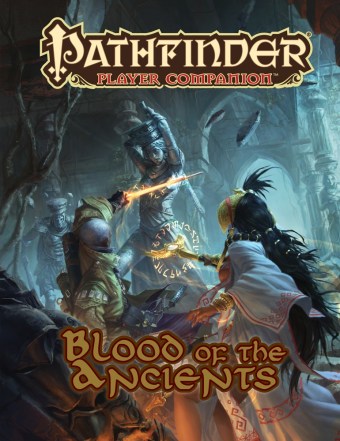
From there, filling in the rest of his character was easy. He chose ‘a sure thing’ as his second trait, gave himself ranks in Knowledge (planes), Knowledge (religion), Perception, Profession (soldier), Sense Motive and Survival. He chose abyssal as his bonus language. And he spent his money on some good gear. A longsword, heavy steel shield, scale mail and some javelins. He also invested in holy water. He made sure to pick up a wooden holy symbol of Iomedae and a battered old copy of her holy text. His, from before his death. He also invested in a shield sconce and some torches. The rest of his gear was pretty basic: backpack, bedroll, so on and such. With a bit more tweaking, he was ready!

We painstakingly typed up his character sheet on our computer, registered him online. My son browsed through character images and quickly found one he liked. Then we spent some time writing his character biography.

He was ready!


So, on behalf of my son, we’re introducing Sir Lansle Eine. Brother of Fuzzzy. Paladin of Iomedae. Known to most as Sir ‘Scaredy.’


Sir Lansle Eine and his brother Sir Palad Eine were holy paladins in the service of Iomedae. They battled together in the Worldwound and saw many horrors. In the end, at twenty-four and twenty-five years of age, they died. But as the demon tore apart their bodies, Iomedae plucked their souls from the Boneyard and placed them in new bodies. They were brought back to life by their faith and devotion and self-sacrifice. But when they came back they were not the same. Death changes everyone.

Palad came back in the body of an old man, with no memory of his past life. He calls himself Fuzzzy now, and doesn’t remember Lansle at all. Fuzzzy has a pet owl who is very smart—a gift from Iomedae—who keeps Fuzzzy safe and on track. Lansle visits his brother often, but it always makes him both happy and sad. It hurts being forgotten.

Lansle didn’t change as much as Palad. He looks the same, and he remembers everything. That’s the problem. Dying at the hands of demons was terrifying and it left a deep scar on Lansle’s soul. He is scared of dying, and all the things that might make him die. But, he is still a paladin in his heart.

He can’t stand on the sidelines when evil is in the world. He won’t waste his second life.

Sir Lansle decided to do some good. He takes care of his brother, even though Palad/Fuzzzy doesn’t remember him. And he joined the Pathfinders. More specifically, the Silver Crusade. Through his missions he is going to make the world a better place. Even though it makes his knees shake, and his arms turn to jelly. He is a scared, but very brave, guy.

Lansle is a young man in his twenties, with brown hair that is starting to go gray on the sides from worrying too much. He wears heavy armour and carries a big shield. They both have Iomedae’s holy symbol on them—a glowing sword—but they are also both dented and scratched as if they have seen a lot of use in battle. Lansle was probably handsome once, but he has big bags under his eyes he never smiles. He always looks very scared and nervous. His knees shake and his eyes look back and forth nervously all the time. He has a longsword on his hip, and a holy symbol of Iomedae around his neck. He carries an old, worn out holy text of Iomedae in his bag, and in the back he writes his own prayers and poems. He has a birthmark on his palm that is in the shape of his holy symbol, and once in a while, when he is in very deep trouble, it glows, and then Lansle remembers what it’s like to be brave.

Luckily, my son had no trouble finding a game for him to play in. Sir Lansle is currently working his way through Scenario #7-10: The Consortium Compact. Stopping a shipment of horrible drugs from being spread across the Inner Sea? Definitely a good start!

I hope you enjoyed taking a look at my son’s new character. I know I enjoyed helping him make it.

Thanks for stopping by!

Jessica


Blood of the Ancients

Today on d20 Diaries we’re taking a look at one of the wonderful new products that came out just last month: Pathfinder Player Companion: Blood of the Ancients. We recently picked it up for my husband as a Father’s Day gift, and we couldn’t be happier! Curious what’s inside? Take a peek!

Blood of the Ancients is a thin softcover book that is 32 pages long. As with every book from the Pathfinder Player Companion line, it’s aimed at players. You won’t find secrets and hidden lore in this baby. You’ll find player options. Lots of them. This includes archetypes, feats, traits, spells and gear, as well as other class options like bloodlines, discoveries and so on. And flavour! Plenty of flavour!

Wonderful stuff!

So what is Blood of the Ancients, anyway? In short: character options that are tied to the ancient civilization of Golarion. Which ones? A lot! Azlant, Celwynvian, Jistka Imperium, Lirgen, Lung Wa, Ninshabur, Osirion, Sarkoris, Shory, Tar Taargadth, Tekritanin League, Thassilon and Yamasa. See? A lot! Let’s start at the beginning, shall we?

PZO9490
Pathfinder Player Companion: Blood of the Ancients

The cover showcases the iconic oracle, Alahazra, and the iconic investigator, Quinn, battling caryatid columns, in some awesome artwork by Setiawan Lie. The inside cover features a map of the Inner Sea with the dates and locations of some of the ancient civilizations mentioned in this book. I say ‘some’ because they’re not all here. Thassilon, Sarkoris, and Tekritanin are not featured on the map but are mentioned in this book. The rest are present, although Lirgen and Yamasa are included as one unit based on their location.

Past the map we come to the introduction. Here you’ll find a rundown of some of the ancient civilizations of Golarion, as well as which books you’ll need to read for further information. This is SUPER handy. I love it. There’s also a handy rules index to help you navigate this book easily.

After this we come to the first character options: the vestige bloodline, which is available for both sorcerers and bloodragers. These are very flavourful, adaptable bloodlines, capable of showing descent from any ancient civilization. Both are pretty cool, but I think I like the bloodrager better. Their final ability allows them to summon a ghostly army from the past. How cool is that? Pretty hard to top.

The next two pages are dedicated to a single feat: ‘ancient tradition.’ This allows people who are so dedicated to embodying their ancient civilization of choice to perform a ritual in order to gain a benefit. At later levels, this also unlocks spell-like abilities that you can use. That’s right, it’s ‘deific obedience‘ for an ancient civilization. Historians rejoice! Now, it should be noted that not every civilization touched on in this book has an entry for this feat. Those that do are Azlant, Jistka Imperium, Lung Wa, Ninshabur, Osirion, Sarkoris, Shory, Tar Targaadth and Thassilon. For those of you trying to figure it out, those not included are Celwynvian, Lirgen, Tekritanin and Yamasa. I particularly enjoyed the Azlant, Lung Wa, and Shory options.

The rest of this book is sorted into individual ancient cultures, with character options for each. Most of the entries are two pages long, with some reaching four pages. Three of the civilizations, (Osirion, Sarkoris, and the Tekritanin League) have less than a page to itself, while Thassilon receives no further character options throughout the book. Those of you hoping to more information on Thassilon will need to turn to some of the many other books in which this culture is featured (particularly the Rise of the Runelords Adventure Path, Pathfinder Campaign Setting: Inner Sea World Guide, Pathfinder Chronicles: Lost Cities of Golarion, and Pathfinder Campaign Setting: Lost Kingdoms).

The first ancient civilization focused on is the ‘Abendego Gulf,’ which is more correctly a region home to two different but intertwined cultures: Lirgen and Yamasa. Both cultures heavily relied on divinations drawn from the movements of celestial bodies. That means astronomy, astrology, and portents were all very important to them. This section offers three new feats all based around astrology, two traits (one each for Lirgen and Yamasa), and three archetypes. The feats were interesting, but quite niche. The traits were both really useful but, as they’re regional traits only available to descendants of Lirgen or Yamasa, they’re not going to see a ton of play.  Still, I suggest checking out ‘naturalist’ for survivors, and ‘stargazer’ for intellectuals. ‘Chart caster’ is a mesmerist archetype which lets you enigmatically read your ally’s future with the aid of star charts. It looks quite fun. The ‘lawspeaker’ archetype for clerics lets you sacrifice channel energy uses in order to cast some pretty nifty spells which let you… get to the heart of any matter. And lastly, ‘hinyasi’ is a brawler archetype which revolves around the use of improvised weapons. This one turned out to be my favourite, so I highly recommend you give it a read! For more information on the nations of Lirgen and Yamasa, check out Pathfinder Campaign Setting: Lost Kingdoms.

Next up? Azlant. This two-page section offers up one archetype: ‘ioun kineticist,’ which is… exactly what it sounds like. Unleash the power of these classic floating gems upon your enemies as an aether kineticist! I loved it! Haha. Seriously. ‘Gem magic’ of all kinds fascinated me as a kid, so I’m thrilled to see something new on that theme. After this there are five faith traits focused on the deities of Ancient Azlant. They were all really cool. I particularly enjoyed ‘fruits of your labor (Jaidi)‘, and ‘planar wayfarer (Onos).‘ For further details on the gods of Azlant you’ll need to pick up Pathfinder Adventure Path 123: The Flooded Cathedral (Ruins of Azlant Book 3 of 6). For further details on Azlant you can check out Pathfinder Campaign Setting: Inner Sea World Guide and the rest of the Ruins of Azlant Adventure Path (which begins with Book One: The Lost Outpost).

The next section is two pages dedicated to the ways of ancient elves. More specifically, these character options focus on protecting, helping, and sheltering others. The first option is the ‘arcane warden‘ archetype for wizards, which is both awesome and understated. Arcane wardens must be universalists. They have a very useful selection of skills and bonus feat to choose from which is different than your standard wizard, and some nifty unique abilities that replace the standard universalist options. I really recommend giving this archetype a read, and then coming back to it a few minutes later to read it again. I think I would really enjoy making one. After the archetype there are three new spells: ashen path, brightest night, and shared training. Although ashen path is arguably the most useful of these spells, I enjoyed shared training the most. It can allow spellcasters to make good use of teamwork feats, which is certainly quirky. For more information on the way of life for ancient elves, check out Adventure Path 15: The Armageddon Echo (Second Darkness Book 3 of 6).

PZO9246_500
Many of these ancient civilizations are further detailed in Pathfinder Campaign Setting: Lost Kingdoms

Leaving the elves behind, we come to four pages on the Jistka Imperium. This treasure trove features a whopping four archetypes, two magical items, two spells and two traits. My favourite options in this section were definitely the ‘antiquarian’ investigator archetype, which replaces their formula book with a collection of religious trinkets, and the ‘Jistkan artificer’ magus archetype which lets you have an awesome golem arm. Yeah! I’m definitely going to play this! As soon as I can think of a wicked character concept that is not a Fullmetal Alchemist rip off…

It’s going to be a blast.

There’s also the ‘Jistkan magistrate‘ archetype for warpriests, and the ‘Poleiheira adherent‘ archetype for wizards. Items include the ‘golem gauntlet‘ and the ‘tablet of arustun,‘ spells include ‘skim’ and ‘summon ship.’ Both of the traits were very cool, but my favourite turned out to be ‘magical aptitude,’ which is a magic trait. For more information of the Jistka Imperium, check out Pathfinder Campaign Setting: Lost Kingdoms.

Up next is Imperial Lung Wa, which also has four pages dedicated to it. Contained within are three archetypes, five feats, three magical items, and three traits. My favourite of the archetypes was the ‘ironbound sword‘ for samurai, which focuses on non-lethal combat. There is also the ‘jinyiwei’ for investigators, which is centred around the divinely guided search for corruption; and the ‘imperial agent’ vigilante archetype. I had a really hard time narrowing down the five feats to only one favourite, so instead, I recommend checking out all three of my top picks which are centred around mundane healing: ‘acupuncture specialist,’ ‘incredible healer,’ and ‘pathologist.’ Read them! The magical items were interesting, but two of them were quite pricey. For traits, be sure to check out the social trait ‘excellent penmanship.’ For more information on Lung Wa, check out Pathfinder Campaign Setting: Dragon Empires Gazetteer.

We return to the Inner Sea with a two-page entry on Ninshabur, a nation known for battling the Spawn of Ravagug. Yeah. Wouldn’t have wanted to mess with those guys… This entry offers us a new legendary marshal spirit for mediums to make use of. It also has two new rituals, ‘spiritual investment‘ for combatting the incorporeal, and the incredibly powerful ‘seal.’ But, my favourite part of the entry was the slayer archetype, ‘spawn slayer.’ These daring fellows specialize in combats waged against one, big, powerful enemy. Badass. For more information on Ninshabur check out Pathfinder Campaign Setting: Mythic Realms.

Up next is the Shory. This is one of my favourite ancient civilizations from Golarion. Considering they’re a nation who lived in flying cities, who can blame me? But, that also means I have pretty high expectations. I want to be blown away! (Pun intended). To start with, it features my favourite art in the book. Go ahead and check out that windblown mage! She looks rocking!

The Shory section features three fun archetypes, only one of which is a spellcaster, which is a nice surprise. ‘Aeromancer’ is an arcanist archetype that focuses not only on air magic, but also on cold, electricity and sonic spells. In addition to being able to increase the effectiveness of such spells, they also learn two snazzy arcanist exploits, one of which allows you to use air walk and wind wall on yourself, and the other which lets you make cones of hurricane force winds. I think I’d enjoy this one! ‘Aerochemist’ is an short alchemist archetype whose mutagen can make them buoyant (and at higher levels can make them fly, or walk on air) and who specialize in attacking from above. Lastly, we have a fighter archetype called the ‘aerial assaulter‘ who focuses on attacking from higher ground. This is particularly effective for characters capable of flight. Coupled with the four new aerial feats in this section, you could have a lot of fun with this archetype. Of those feats, ‘turbulent takeoff‘ and ‘aerial roll‘ turned out to be my favourites. There’s also three spells in this section (check out ‘symbol of storms‘), and four traits. Spellcasters should take a peek at the magic trait ‘aeromantic affinity‘, while those interested in flight should give the combat trait ‘natural flier‘ a read. For more information on the Shory civilization, check out Pathfinder Adventure Path 83: The Slave Trenches of Hakotep (Mummy’s Mask Book 5 of 6).

PZO9226_500
For more information on the modern and ancient civilizations of Golarion, check out the Pathfinder Campaign Setting: Inner Sea World Guide.

From the lofty heights of the skies, we head down to the ground, with two pages on Tar Taargadth. These dwarves come bearing a new fighting style called ‘Skyseeker’ which focuses on defeating opponents bigger than yourself. There’s also three new magical items, two traits and a bard archetype. For items, definitely check out the ‘figurine of the wondrous forge‘ which is a must have for any mobile smiths. Very cool! As for traits, both are awesome, but I’d recommend ‘Tar Taargadth trained.’ ‘Dwarven scholar‘ is an interesting  combat-focused bard archetype that gains some extra proficiencies, bonus combat feats, and can grant your combat feats to your allies. Plus? It runs off of Wisdom instead of Charisma. Very cool! Fort more information on Tar Taargadth check out the Pathfinder Campaign Setting: Inner Sea World Guide.

The last two pages in the book offer us a few more character options, from three different cultures. Ancient Osirion gives us two new paladin codes, one for followers of Osiris, and one for followers of Wadjet. For more information on Ancient Osirion be sure to read Pathfinder Campaign Setting: Osirion, Legacy of Pharoahs. Sarkoris provides us with three new bardic performances that focus around the telling of epic tales! I’d recommend ‘The Tragedy of False Hope‘ which renders your opponents flat footed. For more information on Sarkoris, pick up Pathfinder Campaign Settings: Lost Kingdoms. Lastly, The Tekritanin League gives us one final archetype: ‘Tekritanin Arbiter’ is an investigator archetype which makes you an expert in the use of language and diplomacy. For more information on the Tekritanin League, check out the Pathfinder Campaign Setting: Inner Sea World Guide.

And that’s it. We’ve reached the end of Pathfinder Player Companion: Blood of the Ancients. Hopefully, this article has helped you decide if this is a book you want to invest in. I know we’re happy with it. In the end, my favourite options turned out to be the ‘ioun kineticist,’ ‘arcane warden,’ and ‘Jistkan artificer’ archetypes, the healing feats from Lung Wa, and the flying feats from Shory.

Already have a copy of this book? Let us know your favourites! We’d love to hear from you.

Until next time,

Jessica