
Welcome back to d20diaries!
Wow, finding the time to fully read the new Pathfinder Playtest Rulebook
That said, I’m a quick reader. I finished it in about two days, then spent some time crafting characters in order to try out the creation process. Before I can take the time to teach my husband and kids how to play, I need to be able to explain it. Properly. Haha. After that I helped my family through the creation process, read through Pathfinder Playtest Adventure: Doomsday Dawn
It’s been a whirlwind! But a fun one.
And then I got sick. Still am.
LAME. Haha.
So whats on the agenda for today?
Today we’re going to take a look at Pathfinder Playtest. Not in depth — this isn’t a replacement for the rulebook. After all, the rulebook’s a free download. It’s my impressions, thoughts, and experiences. Things I’ve discovered, and even some questions I’ve got. Got an opinion of your own? Or an answer to a question I have? Let me know! This game system is brand new and we’re all learning together. Once you’ve had a chance to try out Pathfinder Playtest, be sure to head over to Paizo’s website and give them some feedback. They’re running surveys right now, and have forums up for you to share broader comments.
Ready? Let’s begin!
 Pathfinder Playtest is a new set of rules and gameplay for the Pathfinder Roleplaying Game
In theory.
Pathfinder Playtest features gorgeous cover art by Wayne Reynolds which showcases Seoni (the iconic sorceress), Valeros (the iconic fighter), and Fumbus (the iconic alchemist) battling a white dragon! Wait! Fumbus who? Fumbus the goblin alchemist. Thats right! Not only are goblins a core race, but alchemist is a base class. Both are available options to try out in the playtest.
Open the covers (or flip to the next page on the pdf) and you’ll find an introduction by the Paizo staff, followed by the overview. This is where you’ll learn what the heck a d20 game is and how to play. There’s also an overview of the basic terms used in the game, including a few that are new, an explanation of the modes of play, and a list of what you’ll need to play. This section was easy to understand, even for a layman, although not as easy as I expected. It’s a difficult read for my children, for example, and my son (who is more than capable of reading chapter books aimed at pre-teens, published adventures for d20 games, and other Pathfinder products) would definitely get bored and flip past a few pages. Would my teenage/adult siblings read it all the way through? …Tough to say. Probably not. It’s more likely they’d give it a skim and see how it goes. So… sort of an easy read. An easy read for this genre and its audience, I suppose.
Many of the terms in this chapter will be familiar to those of you who have played d20 games before, but even experienced gamers need to give this section a thorough read. Calculations for some of the familiar statistics are different, and there are some very important brand new game mechanics that are explained here. Be sure to pay extra attention to the types of actions, the modes of play, and proficiencies. We won’t get into them in too much detail right now, but for those of you who are curious, these three aspects form a huge part of the game.
There are three modes of play in Pathfinder Playtest. Encounter mode is what you enter when your every moment matters. This is used during a battle, for traps, ambushes, hazards, and anything else similar. You play encounter mode in rounds which are six seconds long, and encounter mode ends when the danger has passed. This is a huge part of the game and the rules. But, it’s not all there is to the Playtest. Exploration mode is used for any situation where you’re not in immediate danger, but you’re not entirely safe, either. This includes exploring a town, ruin, forest, or even a hallway between encounters. It’s what you’re playing in when you’re not fighting something. It’s more than just walking, or a segue between the ‘exciting stuff.’ Exploration mode has its own rules, and has proved quite fun around my house so far. Finally, there’s downtime mode, which is what you use when you’re completely safe.
There are three major kinds of actions in Pathfinder Playtest. Actions, free actions, and reactions. Pretty much all the game is based around this. Nearly every feat, ability, and spell that has a non-passive effect has a symbol beside it right near the top showing what it costs to use. Free actions are free, obviously, Reactions can be taken once per turn, even on your opponents turns, as long as its triggering conditions are met. An example of this is an attack of opportunity (which only fighters can utilize right away!), but there are plenty others for different classes and characters. Lastly, there’s actions. Everything takes actions. Moving, attacking, special attacks, spells and such. Most spells take two actions to cast, although some take one or three. Each turn during encounter mode you’re allowed three actions, and most things you can imagine take one. Walking forward, drawing a sword, and swinging it? Three actions total. Attacking, attacking, and attacking a third time? Three actions. And totally allowed (each successive attack in a round takes a cumulative -5 penalty). Lastly, there’s proficiencies. Yes, this includes armours and weapons. But in the Playtest proficiencies also replace your base attack bonus, base saving throws, and skill ranks. If you’re trained in something you add your level to the rolls you make with it. If you’re untrained you add your level subtract two. If you’re an expert you add your level plus one, master is your level plus two and if you’re legendary you add your level plus three. For example, if you’re trained in athletics you roll a d20, add your proficiency modifier (your level), your strength modifier, and any other item or extra modifiers you have. Expert in your weapon? Add the expert proficiency (your level plus one), your ability modifier (strength for melee, dexterity for ranged), and any other bonuses from your items. Master at reflex saves? Add your level plus two, plus your Dexterity modifier, anything else special you might have and off you go.
Got it? Good! If not, read the Pathfinder Playtest Rulebook!
After this we get into the fun stuff. Character Creation. The Playtest has a great step-by-step guide to making your characters. In short, you come up with a concept. Then you pick and apply their ancestry (race), background, and class. Each of these will increase some of your ability scores, but you also gain four increases to apply as you see fit. Once you’ve finalized your ability scores, select your trained skills and do some simple math to make it all come together. Spend your coin (150 sp), pick your spells (if you’re a caster) and fill in all your finishing details. Done. Relatively simple. The levelling up process is also simple, as well.
After this there’s an easy to follow example of how you make your ability scores. As I previously mentioned, ancestry, background, class, and your personal preference all play a part. So how does it work?
For starters, you need to know how much to increase an ability score. Increases are referred to as an ‘ability boost’. If the score you’re increasing is under 18 you increase it by 2 points. If it’s over 18 you increase it by 1 point. At character creation, you cannot make a character with over 18 in any one ability score, so all of your boosts will be increasing your ability scores by +2.
When you create a character all of your ability scores start at 10. Now you pick your ancestry. Most will give you two ability boosts that are applied to a specific ability, one ability boost that you can apply as you see fit (called ‘free’), and one flaw (which is a -2 in a specific score). For example, dwarves get ability boosts to Constitution, Wisdom, and Free. They also suffer an ability flaw to Charisma. Humans are different from most races in that they receive no flaw, and no specific ability boosts. Instead they get two free ability boosts, which can be applied at your whim.
Now that you know what to increase you apply it. However, there is a limitation. During each step that you apply your ability boosts, you must apply each to a different ability. In our previous example with dwarves, that means you’re getting +2 Con, +2 Wis, -2 Cha and a +2 to be added to any other ability score (Str, Dex, or Int). The next time you apply your ability scores you can increase any scores you want, but again, only one time each in that phase.
Backgrounds grant an ability boost in a single specific ability score chosen from a selection of two, and then grant a free ability boost. For example, acrobats get an ability boost to either Strength or Dexterity, and then a second ability boost that is free. Meanwhile, a barkeep gets an ability boost to either Constitution or Charisma, and then a second ability boost that is free. (This is not all that a background grants you, just the part that applies to ability scores). As mentioned before, during this step, each ability can only be boosted once. So, our example dwarf could apply the barkeep ability boosts to Constitution, and Strength, but couldn’t apply it to Constitution twice.
Classes offer a single specific ability boost to that classs’ key ability score. Alchemist’s increase Intelligence, bards increase Charisma, and so on. Some classes, like the fighter, can choose one of two ability scores to be their key ability score (in the case of fighters this is a choice between Strength and Dexterity).
Lastly (or second last if you choose to apply these before your class), you get four free ability boosts. You can assign these however you want — although each ability score can only be boosted once in this phase. Essentially this means that four different ability scores will increase by +2.
And that’s the ability score creation process. It’s quite simple when you get the hang of it, and can create a diverse array of balanced characters. There’s also a random generation method offered, for those of you who prefer to roll out your stats, but the characters they create will not come out as powerful as those created with the standard method. Still, it’s nice that its there.
After this we get into the chapter on ancestries and backgrounds. There are six major ancestries you can choose: dwarf, elf, gnome, goblin, halfling, and human. Those of you looking to be half-elves or half-orcs will select ‘human’ as your ancestry, and then choose a heritage feat which allows you to be either of those two ‘half-breed’ races. This method opens up a unique design space which has potential for an interesting take on some uncommon races when the full game releases next year.
Each ancestry grants you some ability boosts and flaws (as already noted). It also grants you some hit points (which you will only receive at first level), your speed, size, and languages. Some of them also grant you a vision type, or a single special ability. That’s it. You won’t be getting a ton of racial abilities built into your ancestry. I know, I know. This seems like you get so much less. In a way, at low level, you do get less. But, as you level up you also get more out of your race. You see, each ancestry has a list of feats to choose from that only members of that ancestry can select. This is where you’ll find a lot of familiar ‘racial’ abilities like weapon familiarity, ancestral hatred, stonecunning, sure-footed, and other such features that would have once been found under ones race. There’s plenty of new ones, as well. You start the game with one ancestry feat of your choice, and gain more as you level up. This allows you to make your ancestry work for your character as an individual. After all, not all elves are the same.
After I got over the initial shock of seeing ‘how little’ each race gave me, I gave the different ancestry feats a read and, in the end, decided I like this method. It’s adaptable, easy to use, and enjoyable. I found it worked well during character creation. I particularly enjoyed the gnome ancestry feats, so be sure to give them a read!
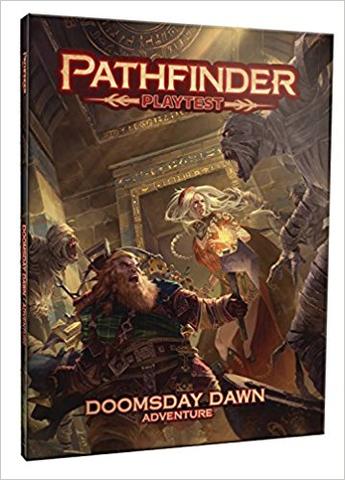 Next up is backgrounds. These represent the things your character did before becoming an adventurer. In addition to the ability boosts mentioned previously, each background grants you one skill feat and training in a single Lore skill tied to that background. What’s a lore? A lore is like a very specific knowledge skill. You can have lore in pretty much anything, as long as it has a very narrow focus. Examples include Vampire Lore, Desna Lore, Circus Lore, and Farming Lore. During downtime, lore skills can also be used to make an income. There are a lot of backgrounds up for offer in the Pathfinder Playtest Rulebook (nineteen!) and you can expect to see a whole lot more in the future. Each adventure path will offer new backgrounds that will tie your characters to the story. The Pathfinder Playtest Adventure: Doomsday Dawn
Past the Background we get to a short section on selecting languages. Players with very high intelligence scores will be surprised to find they don’t get as many languages as in Pathfinder First Edition, with an intelligence over 14 now granting a single bonus language!
Up next is the chapter on Classes. The classes available for the playtest include Alchemist, Barbarian, Bard, Cleric, Druid, Fighter, Monk, Paladin, Ranger, Rogue, Sorcerer, and Wizard. Despite these being familiar to you, each class has plenty of new features, and offers a lot of adaptability. In addition to hp, special abilities and a selection of class feats you can choose from in order to tailor your class to your character, each class also gives you proficiencies in saving throws, perception, and in various weapons, armour and shields. It also gives you a number of skills you can choose to be trained in. Spellcasters get spells, characters get abilities and so on. Now, you really need to read the classes to get a feel for them, so we’re not going to take too close of a look at them. What I will say is that each class we’ve tested in my house has turned out to be a lot of fun. My favourites include Bard (who can use some of their performances an unlimited number of times per day!), Sorcerer (whose spell list and type of magic is determined by their bloodline), and Paladin (who are just plain awesome!). My children particularly enjoyed the druid.
Next up is Skills. This chapter goes over each of the skills, how to calculate their modifiers, and what they can be used for. This is also where you’ll find the rules for crafting, performing and lore. Even experienced players need to give this chapter a read, as there are some changes to the skills. For example, grabbing, grappling and shoving are all tied to your Athletics skill. Yeah. Neat. Skills definitely do more for you now, than they used to. Also, anyone can make attempt any skill check. Obviously, they won’t all be as good at it, but the potential is there, which is nice. That said, some skills have uses that can only be used by characters trained in that skill, which is a nice feature.
After skills we get to the chapter on feats. Now, this section doesn’t have all the feats available in the book. Ancestry feats can be found under ancestries. Instead, it contains all the general, and skill feats available. This chapter is particularly important, because you will gain a LOT of feats. Beginning characters start with two (at minimum!). One from your ancestry, and one from your background. Most classes grant at least one other feat (sometimes a class feat, sometimes a general or skill feat, and sometimes both). This is a wonderful surprise, which allows customization in a simple way.
After feats you’ll find Equipment. Pathfinder Playtest uses silver as the core coin (instead of gold) which means that the price of gear will be different than what you’re used to. There’s also been some changes to the armour, weapons, and weight systems — all for the better in my opinion! Definitely give the information at the start of this chapter a read before trying to spend your coin! Haha.
Past equipment you get into spells. This begins with a lot of important information about magic, spells, and how they work. Definitely don’t skip this part! Haha. There are four major spell lists: Arcane, Divine, Occult, and Primal. I’m fond of all of them. In addition, you’ll find tenth level spells. After the spell lists are spell descriptions. Amongst these spells you’ll also find a lot of class abilities that are cantrips, or run off of spell points. This includes domain powers, and bardic compositions (among others). Although I understand the purpose of including them here (in alphabetical order alongside the spells), it made it hard to make class choices. For example, if I’m looking for all the bardic compositions (which are a type of cantrip) I have to search through the entire chapter and read the spell traits to find them. There is no compiled list of bardic compositions and, as they are not class spells, they don’t appear on any of the Spell Lists. It’s a giant pain in the butt. Haha. I sincerely hope they find a better way to sort this in the future, cause all that sifting sucks. Not only that, it’s a drain on your time.
I also found (after a lot of jumping between chapters to hunt them down) that a lot of the domain powers weren’t as good as they used to be. Which is unfortunate. I’d gladly trade my cleric of Desna’s domain power from the Playtest with pretty much any other Domain power from First Edition. An unfortunate outcome! Still, it will take more playtesting to determine if it all balances out in the end.
Past this we come to a short chapter on how to level up your characters. In addition, you’ll find the rules for multiclassing and archetypes here. The system for this is very easy to understand, and allows for a lot of cool character concepts. Essentially, you can choose to take archetype or multiclass feats in place of your class feat at any given level — presuming you meet the feat requirements. There’s a bit more to it than that, of course, but not by much. It’s a simple, elegant way to handle multi classing and archetypes without causing characters to fall behind the powers of their peers. I really like it. Definitely give it a read!
Later in the chapter you’ll find the rules for animal companions, familiars, and gods. The rules in all of these categories were fun and easy to use, particularly the rules for familiars. We got ours created in only a few minutes! Wonderful! Of course, I did have questions. It’s specifically pointed out that you can only have one animal companion. But, this is not specified under familiars. Does this mean you can potentially have more than one? My son chose a gnome ancestry feat which granted him a familiar, and then later earned a vine leshy familiar from being a plant druid. Does this mean he gets both? I’ve yet to find a definitive answer, but if you’ve read an official answer somewhere, (or know the page its on that I’ve missed) let me know! I’d love to read the ruling. Another problem with familiars turned out to be damage. Although it mentions the attack rolls they can make, it doesn’t say how much damage one does if it tries to attack. This came up on one of our first combat rounds in our first playtest when my son sent his vine leshy to attack. He hit! And… we had no damage. Haha. I decided that it would do 1 damage unless I found an official ruling that says otherwise. Know of one? Let me know! We’d love to see it!
After this comes a very important chapter entitled ‘Playing the Game.’ Reading it is mandatory. Haha. It’s around 35 pages long and includes all the rules you need to play as a player, as well as the conditions found in the game. Important stuff.
After that is another very important chapter called ‘Game Mastering.’ This chapter includes everything you need to know to run the game as a GM (in addition to the content for players). This chapter is shorter — at only around twenty pages — but its also denser and more complicated. Admittedly, I had to go back and reread parts a few times, particularly regarding exploration mode, downtime mode, hazards, and DCs. I expect I’ll have to reference both this chapter and the ‘Playing the Game’ chapter plenty over the next year, as I get a handle on the rules. In my opinion, the game is easier to learn to play and GM that Pathfinder First Edition was, so I’m pleased, even if reading these chapters caused me a few headaches.
After this we come to (pretty much) the last chapter. Treasure. This is where you’ll find information on wealth, treasure distribution, special nonmagical gear, alchemical items, runes, trinkets, and magic items. There’s a lot of fun stuff in here that you’re going to love reading. I highly recommend discovering these on your own. I will say that I particularly enjoyed the addition of snares, and that I expect to make a character who utilizes them in the near future. I also really like the rune system for making magical weapons and armour. Its very similar to the fusion system in Starfinder.
Past this is the appendices and then the book is over.
That’s it, that’s all! But, that’s not all that I have to say. There are a few things I’d like to mention before wrapping up.
First: Hero Points. I loved them. Each character starts each session with one hero point, and can earn up to one extra each session as a player (for doing something awesome for the group like bringing snacks, tracking gear, or hosting the game) and one extra as a character (for doing something awesome in character like saving someone’s life, being generous, expert teamwork, or accomplishing an important task in game). These points can be used to save yourself from death, reroll a d20, or take an extra action. They’re useful, awesome, and add a great new element to the game. (My daughter’s determined to be the loot-tracker from now on in order to earn that extra point!).
Second: Dying. During our first play session, my husband’s character died. Quickly. All things considered, from the moment he fell unconscious at Dying 1, only a single full round occurred before he died. Two ill-aimed splash damage brought him to Dying 2, and then to Dying 3 with the second instance, and on his turn he failed his first and only fortitude save against death, which brought him to Dying 4: Dead. This was WAY too fast. Sure, he could’ve used Hero Points to save himself. If he had any. He had already fallen unconscious two other times that session, and had used up all his Hero Points. And he wasn’t the only one. My daughter also fell unconscious once during the session, and my son nearly did. Ouch! I found not only did we fall unconscious quite a bit, but we died too QUICK. For a lot of players, a dead character is an end to fun. Especially if your chances for recovery were so brief.
Third: Identifying Magical Items: After you realize something is magical (or alchemical), it takes an HOUR to identify the object. An HOUR. This means, that if you’re the kind of group who doesn’t rest unless its necessary, you can go an entire adventure without knowing what any of your treasure does. In fact, when we played Doomsday Dawn in my house, we went the entire first adventure without knowing what anything did. That means we didn’t get any use out of any treasure. At all. That’s absurd! Now, there are some ways for your characters to shorten this time to ten minutes (or evens shorter at higher levels), which is more manageable. Heck, I even understand the intent. If it takes more time and effort to identify magical objects, that makes them more special. They’ve got an air of mystery about them. That’s cool. But, if it takes so long to identify a healing potion, that without someone specialized in identifying magical or alchemical objects, the group can’t even figure out its a healing potion during their adventure, than what good is it? Now, I know plenty of players like to stop a LOT when they play. Maybe you’re even one of them. The group that gets loot or takes a few wounds and says, ‘We should head back and recover!’ or ‘We should go sell what we’ve found and come back!’ That’s fine. You won’t be hampered by this. But, I’m not that kind of player. Neither are my family or my friends. We very often take on entire missions until we HAVE to rest, due to our wounds. Or we HAVE to recover our spells. Or we’ve spent the whole day and our characters are actually sleepy. This is particularly true in Pathfinder Society missions, which very often occur in a single day on a timeline. This system strikes me as very problematic, unless you specifically ensure your groups always have a way to shorten it. But, why force a group to do so? That’s going to replace another skill or class feat they could have taken. It just… Reading the rules for identifying magical objects didn’t sit right with me. Then we made our characters, brought them to playtest, and it turned out to be both a problem and a handicap. An unfortunate occurrence which we’ve given feedback on.
Fourth: Resonance. This is your character’s natural ability to activate and utilize magical objects. You have a number of resonance equal to your level plus your Charisma modifier. You can invest resonance ahead of time in an object that grants a long-term effect, or spend resonance on the fly to activate a magical object upon use. It’s meant to help replace gear slots (head, hand, and so on). Kind of cool, right? Sure. Until you start counting it out. Want to wear a magical cloak? Cool, 1 point. Want to drink a potion? Cool one point! Wait! One point? What if you only start with one point? What if you’re dying and you have no points? A friend can’t even shove a potion in your mouth to save you?Sort of. When you’re out of points you can attempt to overspend resonance you don’t have in order to activate the magical object anyway. This is a flat check with a DC equal to 10 + the number of points you’ve overspent (including any times you’ve tried and failed). If you pass the magic works, and if you fail it doesn’t (and you can’t attempt to activate that item again until the next day). If you critically fail (roll a 1) you can’t attempt to invest any other magical items at all that day. Ouch! Resonance is of particular interest to alchemists, who need to infuse their alchemical items with resonance in order to craft them. Okay, I can see that, I guess. Particularly for potions and such. Luckily, alchemist’s get to base their resonance off of their Intelligence, instead of their Charisma. But why should the alchemist have to spend resonance to make an acid flask when a wizard can cast cantrip and deal comparable damage at will? Yeah, I get WHY. There’s plenty of justifications. It’s an item, they’re not spell casters, so on and such. But… I don’t know. Both resonance, and the alchemist’s reliance on it is one of those new rules that I read, and just didn’t sit right. So far in playtests around my house it’s been a bit of a problem. Our alchemist was out of resonance within the first fight and had to rely on overspending resonance the entire rest of the adventure. She didn’t critically fail, thank goodness, but if she had, her character would have been completely shut down. She literally would have had to punch people with her gauntlet (a bad idea with her low strength and poor AC) or throw a rock at them (another bad idea). And if a whole character can be shut down so easily (at low levels, at least), that’s probably a problem. Similarly, our dwarf started with no resonance at all. Feeding him a potion in order to save his life was a fifty-fifty chance the first time, with the odds getting worse from there. Considering how quickly he died when he fell unconscious, that’s brutal. Ugh. Now, that said, I haven’t play tested the game enough yet, to make a final decision on resonance. Maybe it’s better with other classes. Maybe it’s less trouble at higher levels. Maybe this is meant to show that magic items are rare and special, tying it into the length of time that it takes to identify them. Maybe we’re not meant to really use something like a healing potion at low level. Maybe other groups didn’t have trouble at all. But so far, it’s been trouble for our groups. I hope that’s not the case in the future. I’d be particularly interested to see how resonance has worked out for you. If you’ve got an experience to share let me know!
Fifth: Initiative. You don’t have one. Instead you initiative is based on your perception modifier. Occasionally, if your character is doing something specific, you can roll a different skill in its place. For example, if you’re swimming your GM might rule you can use Athletics as initiative this time, or stealth if you’re in hiding. And so on. I loved this.
Overall, I really enjoyed the Pathfinder Playtest so far. I like the changes they’ve made to the game system, character creation, and treasure. I like it a lot, actually. That said, I have some questions which need clarifying, and we did run into trouble. We felt it took too long to identify magical items. We felt resonance was too limiting — especially for alchemists. And we felt the that dying turned into dead way too fast. It’s a good game, and we’re going to play it a lot more over the next year so that we can turn our feedback in to Paizo and they can make this next edition the best that it can be.
At the moment, do I think it’s better than Pathfinder First Edition? …I don’t think I can answer that. It’s new, and going to take some getting used to. Meanwhile, I’ve been playing Pathfinder since before it was Pathfinder. It’s nostalgic and homey. You know? I think it would be unfair to compare the two in that manner until I completely get the hang of the new rules. That said, I can answer a similar question. When it comes down to it, I like Pathfinder better than Starfinder. But do I like Pathfinder Playtest better than Starfinder? …No. Not yet. Maybe one day. But, at the moment, the Drift’s got more sway over me.
Well, that’s all for today. I hope you enjoyed this short look at the Pathfinder Playtest, and my opinions on it. I’d really love to hear your opinions and experiences with the Playtest rules, so if you’ve given it a try be sure to leave a comment. If you haven’t downloaded the free PDFs for the Pathfinder Playtest I highly recommend you head on over to Paizo’s website and do so. It’s free! There’s not much you’ve got to lose. Haha. Those of you hoping to get physical copies can find them here: Pathfinder Playtest Rulebook

Until next time,
Jessica

 After this you should download
  was released before Pathfinder had its own rules set. I found the clocks so intriguing I made a whole campaign around it (which was pretty awesome if I do say so myself!). Unfortunately, that was one of the games that fell apart through the years (multiple pregnancies from both a player and myself were the joyous reason that campaign never got played through to its conclusion). I’m thrilled to see what the Paizo team does with it!

 . This scenario features creatures from
  ,
,  ,
,  and
and  (although all of the necessary stat blocks are included within the scenario) and utilizes the
  ,
,  , and a custom map. This mission is of particularly importance to members of the Concordance faction.
 . This scenario features creatures from
  and
and  ,
,  , and a custom map. This mission is of particularly importance to members of the Grand Lodge faction.

 a few times,
  only once,
  a few times (look for an update soon!) and haven’t had a chance to play
  at all (sad!). In fact, we haven’t had a chance to play Starfinder at home lately, either. (Double sad!).
 Adventure Path online. My kids and I also have a lot of campaigns that involve only me and them. I told them they could choose one to move online for now. They gave this a great deal of thought and, although they have a ton of characters they enjoy playing, they also have campaign envy.
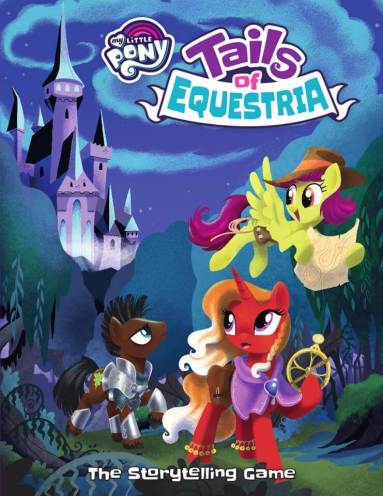 Right there, on the back is a clear, concise, easy to understand description of what the heck a d20 game is. And it revolves around a world my kids already know and love. The whole book is like that. It does away with jargon, and presents a streamlined, easy to understand game. At the same time, it doesn’t talk down to you. An awesome introductory d20 game that looks like a ton of fun. Light-hearted, family friendly, fun.
 is available on amazon.ca. As is
  and
and  , although they are very expensive. Both expansions are actually long adventures, some of which come with extra material, like a GM screen, dice, character sheets, and so on. The Bestiary of Equestria is available, but not in stock.
  .
. ,
,  ,
,  ,
,  , and the Pathfinder Adventure Paths Second Darkness (specifically
  ) and Hell’s Vengeance (which begins with
  ). Use these other products as a measure to judge whether or not this book is right for you.
 Those of you who regularly read my blog may wonder why I bothered to invest in a book with mature content when most of the time when I GM my children are involved (a six and seven year old). That’s a fair question! This book was not chosen with them in mind. This book was for me. Why?
 , that features Nidal. None. To me, that spot on the map is a giant question mark. I know the basics, but nothing else. Second, I’m the kind of player that likes a wide variety of experiences in my games. Yes, I love a happy, feel-good, fun game. I love character development, social interactions, and humour. But, I also love horror. I want my dark locales to actually be dark. The evil in my games should be disturbing, and disconcerting, not shallow and cliche. Within reason. Games are only worthwhile when the players find them fun, after all. This book on Nidal did just that.
 The inside cover features a gorgeous map of Nidal, complete with labels, scale, and beautiful tiny depictions of the major settlements, drawn with care. The book is split into four chapters. ‘Living in Shadow’ is a ten page look at what life is like for most citizens. ‘Gazetteer’ is a thirty page look at the locations found within Nidal. ‘Threats in the Gloom’ is a twelve page look at the various locations which are particularly well suited to adventuring. And ‘Bestiary’ is a nine page look at some of the unique creatures found within Nidal’s borders. The entire book is filled with darkly beautiful artwork, some of which may be disturbing to some readers.
 I found this chapter was the incredibly useful in helping me understand life in Nidal. I had forgotten that the Nidalese people used to be horselords. Although I knew that they were the only civilization to survive Earthfall and the Age of Darkness (sort of), I hadn’t quite realized how important it was to their history. It’s a source of constant pride. Proof of the validity of their beliefs. It also means that they have relics, written works, books, maps, and actual, reliable artifacts and history from that time. From before that time. Refugees from other places — say… Azlanti and Thassilon for example — would have fled to Nidal for safety as refugees. it was once the literal centre of civlization in the Inner Sea. The Absalom of it’s time in a world of darkness, death, and barbarism. Even the poorest farmer would still have housewares and relics handed down through the millennia. Family heirlooms that are older than nations. Even if you only count Nidal’s history from the moment they made a pact with Zon-Kuthon, they’re a nation over 10,000 years old. That’s… monumentous. This nation’s history makes it particularly useful for anyone wanting to make a character with ties to ancient civilizations, including some of the new character options from
  .
. Note to self: Don’t celebrate the Eternal Kiss. Or The Festival of Night’s Return. Or The Shadowchaining. Or anything, really. In fact, let’s amend that to: never visit Nidal. Haha. Honestly, I adored reading about the holidays! They were the perfect balance of ‘holiday’ and dark horror. Shivers!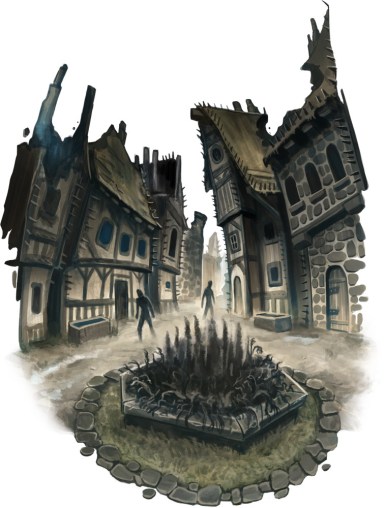
 , and featured in
  ). Looking for something darker? Check out the ‘Tower of Slant Shadows.’ Not only does it have connections to the wonderful
  , it’s also (in my humble opinion) the creepiest thing in the entire book. Yikes! I wish I had thought of that for my home game of Second Darkness… My personal favourite locations in this chapter are ‘Castle of the Captive Sun’ wherein a vampire keeps a collection of divinely descended beings prisoner, and tortures himself with holy artifacts! Very cool! And Barrowmoor, which is land filled with ancient burial mounds of the Nidalese Horselords. It’s steeped not only in creepy a atmosphere and a bunch of undead, but also in the occult, which I ALWAYS love. Barrowmoor is also the setting of the Tomb of Attai Horse-Speaker, which was published in its entirety in
  . Honestly, it’s one of my favourite tombs I’ve ever had the pleasure to read.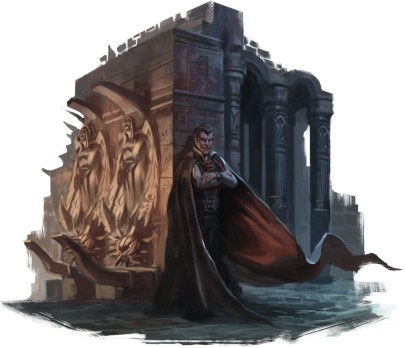
 and
and  , both of which are written by Liane Merciel. Player’s looking to make characters from Nidal, should check out
  , or
, or 
 Last month there were some awesome releases, including
  ,
,  the finale of the Dead Suns Adventure Path:
  , and
, and  ! Tricky to top! So what’s on the schedule for this month?
 is the much anticipated finale to the War for the Crown Adventure Path! Oh, it’s gonna be a good one! I’m SUPER curious!
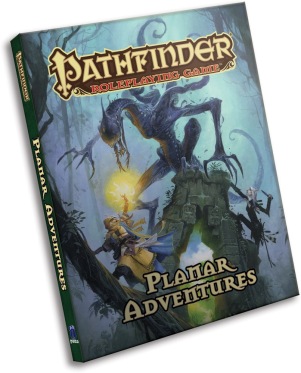
  presents a look at a lot of non-human, unique character options. Examples of this include the Ekujae elves of the Mwangi Expanse, and Pahmet dwarves of Osirion’s deserts, and many more. The part I’m most excited about? Whimsical phantoms for spiritualists! Come on, you know you want to be haunted by a chipper gnome ghost! I’m very intrigued with this product and can’t wait to see what’s inside. Pocket Editions of
  and
and  also come available this month.
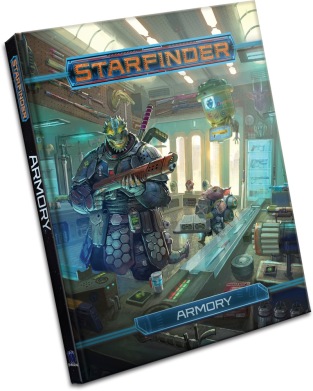 Starfinder also has two exciting releases:
  . Aww, yeah! This book is packed full of tons of new weapons and armour, as well as magical, technological, hybrids and mundane gear. There’s new bioaugmentations, weapons fusions… Every kind of item type has some new choices in this book. Also? New character options which focus on equipment! I don’t have a clue what they’re going to be, but I sure am intrigued!
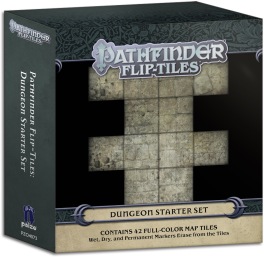 There’s also a whole new type of map being released this month: Pathfinder Flip-Tiles! We’ve talked about these before on d20diaries, but in short, they’re a collection of 6×6 tiles with images on both sides which easily can connect to form a large complex. This month brings us two sets of map tiles.
  We just finished up a wonderfully busy long weekend! In addition to celebrating Canada Day, playing
  , we also celebrated my wedding anniversary. After nine years of marriage and eleven years together, my husband and I couldn’t be happier. Wow, it’s passed in a flash! Curious what I got for my anniversary? Jewelry, flowers, something romantic? Nope! Something way better! My husband and kids got me
  (which is awesome so far), the
  , and a the
  . Can you say ‘spoiled’? As for my husband, my kids and I picked him up a
  ! There were all kinds of goodies in there! I’m curious to see what he makes from it.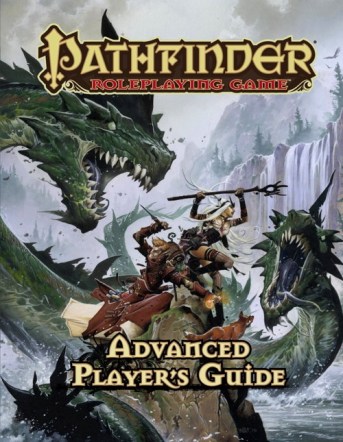
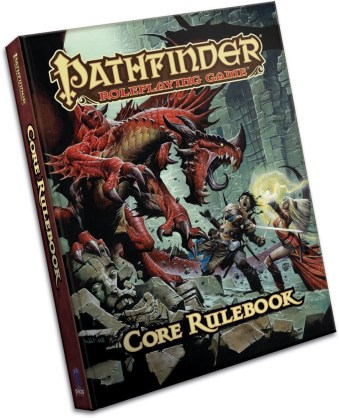

 !
!

 , sanctioned scenarios for use with the Pathfinder Society Organized Play, or just want to read a nifty new adventure, we’ve got you covered! So let’s get cracking!
 ). It takes place in the ever-lasting hurricane, The Eye of Abendego! It features creatures from
  (although all of the necessary stat blocks are included within the scenario) and utilizes the
  ,
,  or
or 
 as well as two custom maps.
 . Thankfully, all the rules necessary to use these manifestations are included in the scenario. But, my favourite part? The final encounter is really well written and, with the right GM, has the potential to be epic! I give this scenario five out of five stars!
 , sanctioned scenarios for use with the Starfinder Society Organized Play, or just want to read a nifty new adventure, we’ve got you covered! So sit back, and get ready to explore the


 . The second Quest is entitled ‘River Rat’ and is set in the asteroid belt known as the Diaspora. It features a very strategic, unique starship combat which I really, really enjoyed. To make it even better, there’s some great opening social interactions you can engage in with your opponents before the battle. It was lovely to see! River Rat utilizes
  . The third Quest is entitled ‘Bad Chameleon’ and takes place in the sector of Verces’ Ring of Nations known as Vanos. This area is known for it’s high-end nightlife. In this scenario you’ll need to blend in among the wealthy clientele of this neighbourhood, and perform a heist. It’s very free-form, and really allows players to be creative. It has some fun social encounters and a delightfully foul enemy, with some creepy artwork which really made it memorable. I really enjoyed this quest. It makes use of the
  . The final Quest is entitled ‘Nightmare,’ and is a lovely little delve into a ruin where you can utilize your tablet pieces and achieve your goals. If you can get past the obstacles contained within! Nightmare takes place on Praehan, one of the moons of Liavara. In addition to being a ‘dungeon delve’ style of adventure, it also features a bunch of awesome environmental hazards. You’ll have to deal with weather, atmosphere, gravity, and attempt to swim through liquid methane (which is much harder than it sounds). It has an exciting enemy with a great premise, stats, and art which serves as a wonderful climax to this adventure. I thought it was awesome. It utilizes
  . Overall, I really enjoyed this series of Quests, and highly recommend it — especially for newer players. I give it four out of five stars.
 d20 Diaries