My kids love games. Board games, d20 games, video games. All kinds. So, it should come as no surprise that this Christmas my tree was packed full of games. My kids were lucky enough to get a Nintendo Switch from their uncle this year, so both my son and daughter spent the first few days trying out their new video games. Let’s Go Eevee is a huge hit, as is Super Mario Odyssey. But, when we had some free time together as a family, my kids gravitated right to the new board games. My daughter got quite a few. The Hatchimals Eggventure Game, Bananagrams, and Bunny Kingdom
 (plus a new d20 game we’ll talk about another time!). And my son got two: Jumanji
  and Dinosaur Island.
We spent a few days this week opening up the new games, learning how to play them — which is technically me learning how to play them and then teaching them to everyone else — and taking each one for a whirl.
Hatchimals Eggventure Game was quick to learn, which should come as no surprise. I assumed it was another one of those generic board games where you just move around the track that happens to be plastered with pictures of the latest popular kids show. Surprisingly, that wasn’t the exactly case. It was a simple kids game plastered with pictures of Hatchimals, the popular kids toy. But it was also a little more complex than just moving around the board. It involved hatching eggs, which you did by matching cards in your hand to eggs on the board. Cards and eggs were colour coded by which ‘nest’ they could hatch at, and when you landed on the proper nest you revealed one of the appropriate eggs to everyone. If it matched yours you hatched it, and if it didn’t you put it back. First to hatch their eggs wins. It was sort of like a mix between go fish, memory, and a generic kids board game. Not exactly a thrilling gameplay experience, but my daughter adored it and it only cost me a few dollars at the local Giant Tiger (which is a Canadian discount store). It’s simple enough that we can teach it to her cousins and they can play it together. Well worth the money. My son had the worst luck, though! Every single time he had a chance to blindly choose an egg, and had a fifty-fifty chance to get the right one, he got the wrong egg, The entire game. Haha. Poor kid.
Bananagrams was much more fun for everyone. For those of you who’ve never played this delightful little word game, it’s essentially a bunch of letter tiles that you put in the middle of the table. You get a bunch of them, and it’s your job to make words out of the tiles. You have to connect the words to one another by shared letters, either horizontally or vertically. It’s like each player at the table plays their own personal game of scrabble. You race to see who uses up their tiles first, then shout ‘Banana’ when you’ve done so. Everyone checks it for spelling errors, and then you start over for another round. You can also swap letters you’ve got with ones on the table if you want to, which is pretty much what my son did the whole time. Haha. Anyway, it’s a fun little game that’s great for kids of all ages. Mine are quite young, so they had no hope of beating me, but they had fun trying to make their own words and came up with some pretty good ones in the end. As an added bonus its one of those small, compact games that’s great for bringing out to family gatherings, a friend’s house, a road trip, or (in our case) the laundromat. It’s pricier than I expected it to be, though, but I was lucky enough to pick it up on sale.

Jumanji was hell! Don’t get me wrong, I love the game. I was the perfect age for the original Jumanji when it came out, and owned the board game as well as the movie on VHS. I remember my brother and I got a kick out of using the decoder to read the rhyming cards from the movie. I can still rattle some off of the top of my head, actually. “At night they fly, you’d better run, these winged things are not much fun.” There’s a few more, now that I think about it. In fact, I probably remember more of them than I should…
My son isn’t partial to the original Jumanji  movie, but when he watched the reboot with Dwayne Johnson and Jack Black in it this past year (Jumanji: Welcome To The Jungle ) he LOVED it. Obsessively loved it. He even started writing his own Jumanji stories. Never finished any, of course. He’s both impatient and lazy, which isn’t exactly conducive to finishing the things he starts, but he enjoyed it. So, he was absurdly excited to get a copy of the board game for Christmas. It’s got a nifty little wooden case/board (just like in the original movie), plenty of dice, and is fast paced. Unfortunately, the first time we played it was when my niece and nephew were over. Now, I’m not sure if any of you have had the joy of teaching a new board game to four antsy and overly excited children between the ages of two and seven before, but wow! It was brutal! Haha. As an added complication there were multiple sets of dice — one for each player — and the game pieces were slightly too big for the spaces on the board, so I spent the entire game guiding play, stopping children from consuming game pieces, looking for missing dice, reminding toddlers not to move pieces that aren’t theirs, reading cards, referencing rules, and trying to figure out which of the children happened to have stolen the toy rhino that was supposed to be on the board. It was absolute chaos! Luckily I have the standard Mom superpowers: eyes in the back of my head, extra invisible arms, and limitless patience. In the end we got through it and the kids all had a ton of fun. Definitely not a game to play with all of them again, though. I’ll reach for the generic ‘race around the board’ game plastered with popular cartoon characters next time. But, when it’s just me and my kids, we’re more than happy to enter the jungles of Jumanji. Although, my son insists it would be much more fun as a virtual reality video game. Haha.
Which brings me to the actual point of this blog. Two of the games we picked up weren’t geared at young kids at all. They were aimed at an older audience. And honestly? Both were awesome!
First up? Bunny Kingdom.
Bunny Kingdom is a pricey game that we picked up for my daughter months ago when we found it in the local game store, Game Knight Games and Cool Stuff. Yes, that’s the store’s actual name. It was far out of our budget for an impulse purchase, but my daughter REALLY LOVES RABBITS. Seriously. I’m not sure I can actually emphasize that enough. But, just know: she really loves rabbits. She’s got quite a few rabbit board games already, but none that are games that my husband will sit and play with her. So, when we saw it at the store we figured, why not? I suppose I could have gotten it cheaper off of Amazon, but when we have the chance we always prefer to shop locally. Anyway, we figured that even if my husband hated the game, it was covered in adorable images of rabbitfolk making farms and kingdoms so my daughter would love it.
Luckily, our hunch was right and it turned out to be a lot of fun.
Bunny Kingdom is a board game for 2-4 players. It’s intended for players ages 12 and up, but my kids are only seven and eight and they didn’t have any trouble getting the hang of the game. It’s published by IELLO, features bright and colourful art by Paul Mafayon, and was designed by Richard Garfield (the creator of Magic: The Gathering, King of Tokyo, and Keyforge: Call of The Archons , to name a few). Bunny Kingdom was a nominee for 2018 Origins Awards Best Family Game, and 2017 Cardboard Republic Striker Laurel awards. The box is nice looking and solid, and the board inside looks great. It’s essentially a large map with a 10×10 grid overtop, and a scoreboard on the side. Many of the 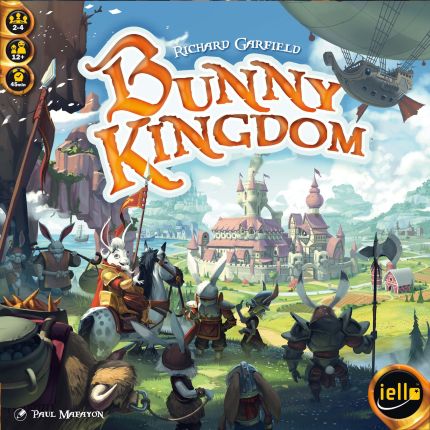 spaces on the map feature settlements and resources that players can claim. Settlements contain castles, while resources allow you to collect wood, carrots, and fish. Unfortunately, our board had suffered damage in two places despite having a seemingly undamaged box. Not what you want to see when you’ve paid a good chunk of change for a new board game!
Each player has a pile of tiny rabbit tokens they can use to claim their territory on the board, and act as their token on the scoreboard. In addition to the player tokens and board, this game comes with three different sized castles (level 1, 2, and 3), corner markers to denote special upgrades and camps that you can add onto spaces, and a massive deck of cards. Seriously massive! You’ll have to split it into a few piles just to shuffle it. The art throughout the board, cards, and box is consistently wonderful. It’s bright, colourful, and cartoony in all the best ways. My daughter repeatedly shrieked in glee, exclaimed “AUW! CUTIES!”, and hugged cards to her chest, so it’s clearly a winner in her opinion! Haha.
The premise of the game is simple. Your great Bunny King has ordered you to lead your clan of rabbits in gathering resources, claiming some land, and establishing new settlements. The rabbit with the most prosperous fief — determined by having the most golden carrots — wins.
So how do you play? For starters, you select your rabbit colour, place one of them on the 0 on the scoreboard, and deal out ten cards to each player. You draft cards from the hand, selecting two you want to keep for yourself, then pass the rest on to the next player. You play some of the card types and set the others aside for later. Then you proceed with the draft. This continues until there are no more cards in hand. Cards can do a few things, but the most important ones are labelled with a letter and a number — coordinates referring to a space on the board. If you select a card like this you get to place a rabbit token there and claim the space as your own. Other cards include camps (which let you claim any unclaimed space until someone claims it with the proper card), settlements (which let you build castles of various levels on your claimed territory), sky towers (which let you connect two distant parts of your fief), resources (which let you collect resources like wood, mushrooms, and iron from your land), treasures (which give you golden carrots), and missions (which give you bonus golden carrots at the end of the game as long as you meet the requirements stated on the card). After the cards are drafted you enter the ‘Build Phase.’ This is when you play all of the castle cards, camps, sky towers, and resources you’ve drafted. After this you earn points (golden carrots) for how prosperous your fiefs are, which is based on number of ‘towers’ on the castles within your connected territories, and the different types of resources they can create. Once points are tallied you’ve reach an end of a round. Then you deal out another ten cards to each player and begin another draft. The game ends after four rounds of gameplay. Then you reveal the treasures and missions you’ve acquired, gaining extra golden carrots for them as appropriate. The winner is the rabbit with the most golden carrots (the highest score).
Our first game took us about an hour to play, but all the other games took up around 40 minutes, which is about how long the game is expected to run. Because the game always lasts four rounds, you can expect this to be a pretty consistent time. Which is really nice!
 Bunny Kingdom is a relatively fast paced game that involves some strategy, but doesn’t take up an entire afternoon or a whole day just to play it. Selecting the proper territory is important. You want to grow the size of your fiefs and ensure they connect, but you also want to establish cities and ensure there’s a variety of resources within it’s borders. Knowing which to go for at which times is both a matter of chance, and practise. After playing a round you’ll figure out what’s most important to you. Claiming any territory that already has a castle on it is sound, as is claiming any cards that let you establish resources — or luxury resources — in territories of your choosing. In the first two rounds you won’t earn many golden carrots from your fiefs, but if you build it properly you’ll make a lot in the last two rounds. Treasures are nice, but they offer a small one time payout. Not always worth it. Missions offer a bigger payout, but are sometimes difficult to achieve. They require you invest time in accomplishing them. For example, a mission that promises you one golden carrot per territory you own that can produce wood is nice. But, if you focus on that too much you won’t have a variety of resources available in your fiefs. And it’s variety that earns you golden carrots.
My daughter caught onto the game right away, and had great fun building her kingdoms. She, myself, and my husband all did pretty well. Some games she lagged behind the adults, but others she did just as well or better. Luck played a bit of a factor. So did my daughter’s habit of occasionally selecting cards just because they’re cute. Haha. My son, however, decided that building fiefs takes too much work. Instead he spent the entire first game only taking treasures and missions. We all thought he was crazy! Turns out in the end he went from 0 golden carrots all the way to 147 golden carrots. More than enough to score him a win against my husband’s 116. We were shocked, to say the least. Apparently, taking all the treasures and not bothering with that whole kingdom thing is a decent strategy — as long as you’re the only one who tries it. If too many players go this route it won’t lead to victory.
So, when we played our follow up games, we worked on our kingdoms, took some snazzy treasures and missions, and my son — once again — took every treasure and mission he could get his hands on. This time we thought we had him on the ropes! …And he won again.
*face palm*
I guess we should have taken even more of those treasures… Haha.
Aside from this flaw it was a great game. Of course, it was a rather large flaw. Why should the one person who didn’t bother to even try building a kingdom win a kingdom building game?!? But, we had a lot of fun anyway. Overall, we all thought it was a blast! It’s definitely going to see regular play.
But, our favourite game of the holidays had nothing to do with cute fluffy rabbits. Instead, it featured people-eating dinosaurs! Yes!
Dinosaur Island is a game we picked up for my son because he LOVES Jurassic Park
 and Jurassic World
 (and Jurassic World: Fallen Kingdom ). And this game? Pretty much that. You research the genetic code of dinosaurs, create them, and put them in your very own dinosaur theme park. If you don’t have enough security they escape and eat some of your patrons. Which is bad for business, obviously! Haha. In the end, the player with the most successful park wins. The game is designed by Jonathan Gilmour and Brian Lewis, and released by Pandasaurus Games.
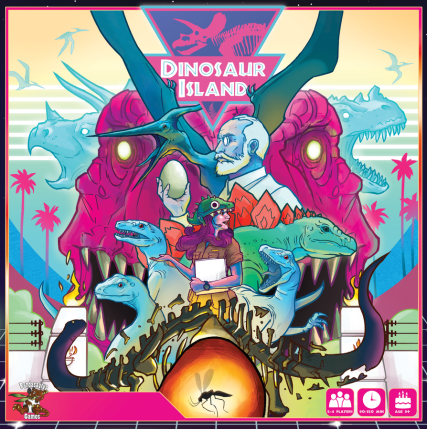 We found it on the shelf at another local game shop, Fusion Gaming, and nearly gagged at the price tag. And then we read the box. My husband traded in some Magic cards for the game, and we brought it home for my son for Christmas. It’s a heavy square box packed full of stuff. There’s lots of boards, pieces, dice, cards, and pop-outs of all kinds in this game, which is frankly a little bewildering at first. But, once you’ve got everything popped out and sorted into the many little storage baggies the game comes with (thank goodness!) you can open up the rulebook and try to figure out what the heck you’re supposed to do. Which is hard! Haha. I had to flip back and forth between the first few pages of the rulebook to set everything up — some pages were telling me how to set up the game, and others were telling me the names of types of pieces. All very important! Once I had everything properly set up — which took me around twenty minutes — I finally flipped the page on the rulebook and started to actually read how to play. It didn’t take too long to read, and there were some very useful gameplay examples for each step that helped me figure things out. But, it was still quite complicated. I had to read and reread each step and its example a few times while referencing the board and the list of piece names. Once I figured out a step I moved on, and then by the time I hit the end of a phase description I went back and read that whole phase over again. Anyway, by the time I finished making sense of the rulebook I was confident I understood how the game worked and could teach it to my family, but that I would still need to reference the rulebook for details on most of the gameplay choices the first time we played through. And I was right! I referenced that rulebook constantly during the first game and still made quite a few mistakes. I used it a lot during the second game (so that we find and correct our mistakes from the first play through), and then in the third and fourth game I only had to reference it a few times to double check a rule or a cost for something we hadn’t come across much yet.
In summary, it was hard to learn. This is a bit of a problem since the game is listed as ages eight and up. Eight! In my opinion, this game is too complex for eight year olds. They can play if they’re joining in with the grown ups or teenagers — like mine did — but its not the kind of game you could give to some eight year olds and expect them to be able to learn and play properly. Twelve and up would be more accurate.
That said, the game was awesome.
Everyone had a blast and, surprisingly, my daughter and husband loved it most of all. In fact, they were both the driving factor in us playing it so many times over the last few days. Which is huge! My daughter is always ready to play a board game, but my husband? Not so much. This is particularly surprising when you take into account how long this game takes to play. It says it takes an hour and a half to two hours to play through, but it took us over three on our first run through (and we played the ‘short game’). Further run throughs also took around three hours each, although the second time we played a ‘medium game’ and the third we played a ‘long game’ with three people instead of four. Definitely a time investment!

So what is Dinosaur Island, and how do you play?
The point of Dinosaur Island is to create the most successful park. Your park’s success is measured in Victory Points, which are most often earned by having guests survive their trip to your park. You can also earn Victory Points by creating dinosaurs and by building some attractions. A number of guests visit your park each turn based on your parks Excitement level, which is also influenced by the number and grandeur of the dinosaurs you have created, and by some attractions. But, getting people to your park isn’t all that matters. You also have to have attractions for them to visit. They’ll visit your dinosaurs, of course, but only so many visitors can view a paddock at a time, so you’ll also want to create other attractions. Things like restaurants and rides for the guests to visit. Another factor you need to take into account is danger. You can have a lot of dinosaurs and a huge excitement level, but if you haven’t invested enough in security then your guests will get eaten by dinosaurs. And dead guests don’t earn you Victory Points!
It’s a complex game that involves multiple phases, each of which allows you to make decisions regarding how you choose to run your park. We didn’t find a single obvious method for best increasing your Victory Points. Which is great! You have a lot of choices to make, and all of them are helpful in different ways. Usually you’ll need to change your priorities from round to round to do well in this game. There was a lot of fun strategy and planning involved, which even got my daughter taking the time to sit, think, plan, count, and envision a few stages and turns ahead. Fun planning, too. Not boring. We all really enjoyed this games layered complexity.
So what are these phases?
 Phase One is the Research Phase, which will utilize a shared board that will be in the middle of the table. On it you’ll find dice (which usually show DNA in various types, amounts, and a threat level), dinosaur cards, and some other open spaces. During this phase each player will take turns selecting how you want your three scientists to prioritize their research. They can select one of the dinosaur cards in order to learn the DNA recipe for that dinosaur, they can select a DNA dice in order to collect that kind of DNA, they can work to increase your cold storage (which is the maximum levels of each type of DNA you can hold), or they can refrain from doing research and instead become an extra worker for the third phase. All of these options are really important. Dinosaurs raise excitement levels which in turn draw in guests, but they each cost different kinds of DNA. Collecting DNA to create them is important. Of course, your cold storage starts off small, so you’ll want to increase it as you play.
Phase Two is the Market Phase, which will utilize a shared board that will be in the middle of the table. On it you’ll find a variety of DNA, lab upgrades and park attractions you can purchase, and specialist workers you can hire. During this phase each player takes a turn selecting what they want to purchase, until each player has bought two things.
Phase Three is the Worker Phase, which will utilize a personal board which will be in front of you. On it you’ll find your DNA Cold Storage and your current levels of DNA, your current threat level, your current security level, as well as your current lab facilities and upgrades. During this phase you place your workers (typically you have four) on your board to accomplish certain tasks. Tasks can include refining DNA from one type to another advanced type, creating dinosaurs, increasing security measures, increasing paddock capacity, and raising capital. In addition, some lab upgrades will give you more options, or allow you to perform tasks with less workers invested in them, or at a financial discount. Once everyone has placed their personal workers (which happens all at the same time) you tell your fellow players what your workers are doing and apply it.
 Phase Four is the Park Phase, which will utilize a personal board which will be in front of you. On it you’ll find you park, your current dinosaurs and paddock capacities, your attractions, and the number of guests which can visit each location. During the Park Phase you count up your Excitement which determines how many guests visit your park, receive income from entry fees (except for those pesky hooligans who sneak inside!), place guests at attractions, calculate threat against your security, see if any dinosaurs escape, have dinosaurs devour guests, and finally count up how many surviving guests you retain, which will grant you Victory Points.
Phase Five is the Cleanup Phase, which is when you tidy up the boards and prepare them for the next round. It’s also when you determine the next round’s turn order. Whoever has the most Victory Points goes last, while the least goes first. And then its onto the next round, with Phase One.
There’s a lot more to this game than we’ve mentioned. Plot Twist Cards help make every game different, and objective cards determine the goals you need to accomplish in order to end the game. These goals are sorted by game length, so if you want a short game you select objectives at random from the short game deck, while a long game will require cards drawn from the long game deck.
We absolutely loved this game. So much, in fact, that my husband is considering buying my son the expansion for his birthday gift. The expansion, called Dinosaur Island: Totally Liquid, allows for a fifth player to join in the fun, features water dinosaurs, more DNA dice, new attractions, and more. Super cool!
All in all, we’re thrilled with our new games.
Think you know of a game we’ll love? Let us know in the comments! I’d love to hear it!
GAME ON!
Jessica


 and Pathfinder’s final first edition Adventure Path:
  — this month has a lot of live up to!


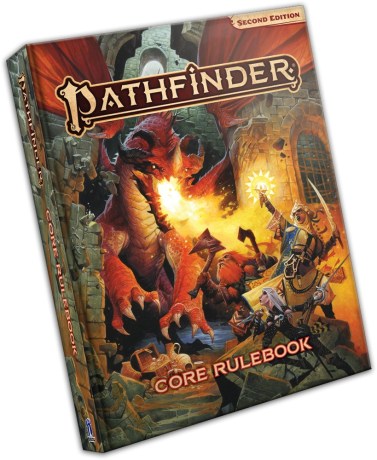


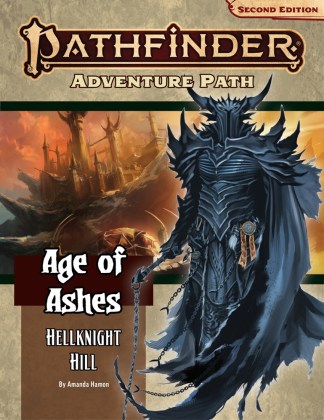

 is a 64-page standalone adventure for first-level characters written by Paizo Director of Game Design Jason Bulmahn. Beginning with the PCs attempting to solve the murder of a friend, this adventure soon spirals out of control with the “discovery of forbidden alchemy, mutant animals, and a nearby forest rotting away due to a mysterious blight.” Ominous! The Fall of Plaguestone features wilderness exploration, dungeon encounters, and urban mystery. In addition to the adventure itself, The Fall of Plaguestone (and every Pathfinder Adventure to follow) includes new monsters, treasures, and player options. The Fall of Plaguestone is $24.99. Launching alongside this adventure is Pathfinder Flip-Mat: The Fall of Plaguestone which depicts the “hillside hideout of an evil alchemist.” The Flip-Mat measures 24″ x 30″ unfolded, 8″ x 10″ folded, and can handle dry erase, wet erase, and permanent marker. It costs $14.99.


 . This is a collection of twenty full coloured tactical poster maps in a folio. The maps look really nice, with some being rather generic and easy to use (like a path through the wilds), and others being more specific and a bit trickier to make use of (arcane rooms, castle chambers, and so on).


 and
and 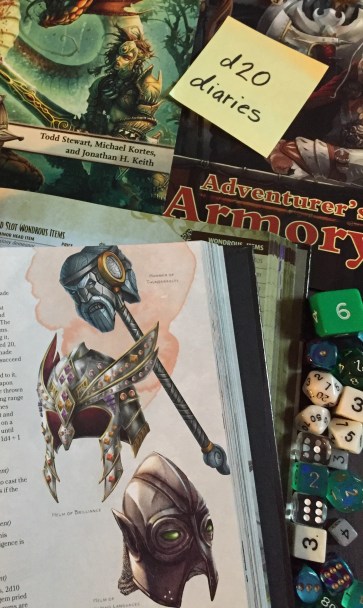 9 – Circlet of Persuasion
 for 6,000 gp.
 and Pathfinder Player Companion:
 adventure which brings PCs from levels 5-20, as well as the
  which brings the wonder of Magic: The Gathering to D&D.

 ,
,  coming out, which is sure to be a solid addition to the Player Companion line. Two new pocket editions are coming out:
  and
and  comes out later this month.


 featuring adorable illustrations of skittermanders, which I’ve yet to get my hands on. If you own it, I’d love to hear what you thought in the comments.


 As an added bonus Alien Archive 3 is going to contain some other player options and gear, which is a nice change of pace. Best of all? Rule for pets, mounts, and combatant creature companions! My daughters dreams have just come true. Haha.


 is a huge hit, as is
  (plus a new d20 game we’ll talk about another time!). And my son got two:
  and
and  was quick to learn, which should come as no surprise. I assumed it was another one of those generic board games where you just move around the track that happens to be plastered with pictures of the latest popular kids show. Surprisingly, that wasn’t the exactly case. It was a simple kids game plastered with pictures of Hatchimals, the popular kids toy. But it was also a little more complex than just moving around the board. It involved hatching eggs, which you did by matching cards in your hand to eggs on the board. Cards and eggs were colour coded by which ‘nest’ they could hatch at, and when you landed on the proper nest you revealed one of the appropriate eggs to everyone. If it matched yours you hatched it, and if it didn’t you put it back. First to hatch their eggs wins. It was sort of like a mix between go fish, memory, and a generic kids board game. Not exactly a thrilling gameplay experience, but my daughter adored it and it only cost me a few dollars at the local Giant Tiger (which is a Canadian discount store). It’s simple enough that we can teach it to her cousins and they can play it together. Well worth the money. My son had the worst luck, though! Every single time he had a chance to blindly choose an egg, and had a fifty-fifty chance to get the right one, he got the wrong egg, The entire game. Haha. Poor kid.
 was much more fun for everyone. For those of you who’ve never played this delightful little word game, it’s essentially a bunch of letter tiles that you put in the middle of the table. You get a bunch of them, and it’s your job to make words out of the tiles. You have to connect the words to one another by shared letters, either horizontally or vertically. It’s like each player at the table plays their own personal game of scrabble. You race to see who uses up their tiles first, then shout ‘Banana’ when you’ve done so. Everyone checks it for spelling errors, and then you start over for another round. You can also swap letters you’ve got with ones on the table if you want to, which is pretty much what my son did the whole time. Haha. Anyway, it’s a fun little game that’s great for kids of all ages. Mine are quite young, so they had no hope of beating me, but they had fun trying to make their own words and came up with some pretty good ones in the end. As an added bonus its one of those small, compact games that’s great for bringing out to family gatherings, a friend’s house, a road trip, or (in our case) the laundromat. It’s pricier than I expected it to be, though, but I was lucky enough to pick it up on sale.
 movie, but when he watched the reboot with Dwayne Johnson and Jack Black in it this past year (
 is a game we picked up for my son because he LOVES
  and
and  (and
(and 
 d20 Diaries