Well, it’s another week and another Pathfinder Playtest Update! There’s new surveys to fill out about Pathfinder Playtest Adventure: Doomsday Dawn: Part Five: Heroes of Undarin, new videos to watch on Paizo’s twitch stream, and a new Pathfinder PlaytestUpdate Document. Be sure to head on over to Paizo’s website and download the free update. This version? 1.4!
So, what’s new this time around?
Heritages.
In previous versions of the Pathfinder Playtest you select an ancestry: dwarf, elf, goblin, gnome, halfling, or human. This choice grants you ability boosts and flaws, hit points, size, speed, languages, and some special abilities. Then you select a single ancestry feat. This feat grants you an additional ability or quality based on your ancestry that you get to select yourself. At higher levels you can select more ancestry feats. Unless of course, you’re a half-elf or a half-orc. To access those races you have to select human, and then use your ancestry feat to become a half-elf or half-orc.
Instead, they’ve introduced an additional kind of feat: heritage feats. Now you select an ancestry, apply it, then select a heritage feat and an ancestry feat. Like ancestry feats, heritage feats are tied to your ancestry. Only gnomes can select a gnome heritage feat, and so on. The half-elf and half-orc ancestry feats are now a part of this heritage feat system. You become a human, select a either half-orc or half-elf as a heritage feat, and select an ancestry feat like every other ancestry gets to. In addition to shuffling these feats around they created unique heritage feats for each ancestry. With the selection of a heritage feat you can now play a desert dwarf, jungle elf, svirfneblin, razor tooth goblin, nomadic halfling, and so on. Each ancestry has around four new heritage feat options. Some of these options will be familiar. For example, the dwarven hardy ability has been moved from an ancestry feat to a heritage feat called Strong-Hearted Dwarf. Others options are brand new.
But, that’s not the only changes. With the addition of heritage feats some of the ancestry abilities have been shuffled around. Other ancestries lost abilities, and some (like halflings) gained some (finally!). They’ve also created three new, higher level ancestry feats for each ancestry.
The rest of the changes are quite minor. They’ve altered the phrasing on a few abilities, improved fighter’s bravery, ranger’s full-grown companion, and the feats battle medic and natural medicine. Crafting can now be used to Recall Knowledge about alchemy instead of arcana. Medicine can now be used to find forensic information on a body or a crime scene. A few spells were slightly adjusted.
And that’s it! It’s a small update, but the heritage system is going to effect every character created to date, so it’s quite important. I’m curious to see how this alters the feel of Pathfinder Playtest characters.
Today we’re going to be taking a look at Starfinder: Pact Worlds! This is one of the few Starfinder sourcebooks that’s available for purchase. It’s a hardcover book that focuses entirely on the setting of the Starfinder Roleplaying Game: the Pact Worlds. Information on the Pact Worlds first appeared in the Starfinder Rulebook, but this book expands it. A LOT. It features a multiple page description of each planet in the Pact Worlds solar system, a new theme for each, and a wealth of other information on the setting itself.
This article isn’t meant to be a thorough review or critique of Starfinder: Pact Worlds. It won’t replace the book (nor would I want it to!). It’s a quick breakdown of what’s found inside, and what I liked best in each chapter. It’s a collection of my favourites parts of the book, and some highlights. It’s here so that fellow gamers and fans can take a look and get a real feel for what they’ll get out of the book. Hopefully it helps you decide whether this product is right for you.
Starfinder: Pact Worlds is a hardcover sourcebook 215 pages in length. It features awesome cover art by Remko Troost which depicts Raia (the iconic lashunta technomancer), Altronus (the iconic kasatha solarian), and Keskodai (the iconic shirren mystic) battling a tyrannosaurus-like alien on the planet Castrovel. The inside covers feature a nice image of the Pact World System (which is not to scale). Following that is the table of contents and the introduction: Welcome to the Pact Worlds. The introduction is four pages long and provides a lot of useful setting information. It talks about the mysterious Gap, the history of the Pact Worlds, as well as the system’s government, economy, culture, and universal time. There’s also quite a bit of information about the Stewards, which is a peace-keeping organization that enforces law and order through the Pact Worlds. They are independent of all planets, and technically serve the Pact Council, but their allegiance is first and foremost to the Pact Worlds themselves. The Stewards are free to refuse orders that violate the Pact or its citizens. I particularly enjoyed hearing more about this group.
After the introductions we get into Chapter 1: Worlds. This section features an eight to ten page write up of each world in the Pact Worlds system (I use the term ‘world’ loosely). Each entry starts with a small image of the planet as seen upon approach and a gorgeous image of a settlement or location within that world. The entries feature information on each world’s geography, climate, residents, society, potential conflicts and threats, and a large number of notable locations found there. There’s also detailed information on at least one settlement, a map of that world (or region/space station/etc.), an image of an inhabitant (sometimes a general citizen, but other times an important figure), and a brand new character theme (complete with artwork). The artwork is consistently spectacular, and the maps are incredibly useful. The write-ups are surprisingly thorough — particularly considering the difficulty inherent in trying to describe an entire world in ten pages. That said, I found reading them in sequence difficult, as the locations on one planet started to get mixed up with the locations on other planets after I’d read a few different entries. And the themes? Really cool!
Signing the Pact from Starfinder: Pact Worlds
The first planet this chapter focuses on isn’t a planet at all. It’s the sun. The centre of the Pact Worlds. I loved this entry. It was unique and wildly imaginative. I particularly enjoyed the Burning Archipelago, a region made up of massive bubbles of unknown origin which contain climate-controlled, habitable areas. These islands within the sun are connected by a sort of energy tether, which special ships called linecrawlers can traverse. Obviously, Sarenrae’s faith is common here, and in addition to regular residents of the Pact Worlds one can also find fire elementals, salamanders, and other more exotic creatures. My favourite location on the Sun was the Floating Gardens of Verdeon, although I am very curious about what secrets the lashunta of Asanatown are hiding… The theme for the sun is called Solar Disciple, which represents characters who either honour or worship the life-giving light, heat, and energy of the sun. It grants +1 Wisdom, makes Perception a class skill, and it’s theme knowledge makes it easier to know about the sun, light, and sun-based religions. At sixth level they gain a bonus on Will saving throws against compulsions, at twelfth level they can channel fire damage dealt to them into their next fire-based attacks, and at eighteenth level they can meditate in the sunlight to regain resolve. Very cool!
The second planet examined (and closest to the sun) is the machine world of Aballon. Here androids, robots known as anacites, artificial intelligences, and innumerable other mechanical creations live, work, and toil as one. Every being has a place and a use in this world, and the governing Insight Array seeks to make life here efficient and purposeful. The only areas outside the reach of their Megaplexes are the ancient cities of the First Ones — the unknown beings who created the first anacites. I ADORED reading about the society of the anacites who make Aballon home. My favourite locations include Preceptum XIII, a megaplex run by a senile advanced intelligence; and Infinity, a holy site where anacites bathe in molten lead by day, and sit in contemplation in the cooled, hardened lead by night. Aballon’s theme is the Roboticist, which is my son’s favourite theme in this book. It grants +1 Intelligence, makes Engineering a class skill, and it’s theme knowledge makes it easier to identify technological creatures. At sixth level they can create technological equipment of a higher level than normal, at twelfth level they can repair constructs and starships more effectively, and at eighteenth level they can examine discovered technology to regain resolve.
Up next is my daughter’s favourite planet: Castrovel! A land of steaming jungles, lush forests, eco-friendly cities, and nature preserves. This is the homeward of lashuntas (who live on the continent of Asana), formians (who live in The Colonies), and elves (who live in Sovyrian). Its fourth major continent is Ukulam, a nature preserve of immense size. My favourite locations include the Ocean of Mists (which is exactly what is sounds like), the continent of Ukulam, the elven settlement of Cordona, and Telasia: the Portal Grove, a magical transportation hub claimed by the green dragon Urvosk. The theme for Castrovel is called Wild Warden, which represents characters who live in the wilds. It grants +1 Wisdom, makes Survival a class skill, and it’s theme knowledge makes it easier to know about animals, plants, and vermin. At sixth level they are effective at using non-lethal damage with lethal weapons against animals, plants and vermin, and providing first aid to such creature with Life Science. At twelfth level they become master foragers, and at eighteenth level they can meditate in a natural setting to regain resolve. This is by far my daughter’s favourite theme.
The next planet in the Pact Worlds isn’t a planet at all, but a space station. That’s right! It’s Absalom Station! Home of the Starstone, the Starfinders, centre of Drift travel, and located in the place Golarion once stood. Chances are if you’re reading this you know at least a bit about Absalom Station. If there’s a capital of the Pact Worlds, this is it! Be sure to check out my favourite locations in Absalom: Eyeswide Agency (a group of psychic ‘holistic detectives.’ Dirk Gently, anyone?!?), Fardock (a mysterious magical arch that’s likely to kill you), Rig House (lair of the Lowrigger Gang), and the Ghost Levels of the Spike, which contain strange eco-systems, dangerous criminals, and the machinery that keeps Absalom running! The theme for Absalom Station is called Corporate Agent, which represents characters who work for mega corporations. It grants +1 Charisma, makes Diplomacy a class skill, and it’s theme knowledge makes it easier to know about corporations and their executives. At sixth level they can quickly gather information from their contacts, at twelfth level they can use their connections to influence people, and at eighteenth level they can study and negotiate to the benefit of their company to regain resolve. Although this theme is neat, it’s not really one that caught me eye.
Leaving Absalom Station behind, we come to the desert world of Akiton, a dying planet where only the desperate still live. The native humans of Akiton have deep red skin and are known as hylki. Other races prominent on Akiton include contemplatives, shobhad, ysoki and, my personal favourite: ikeshti. There are a lot of cool places on this Mars-like planet, but my favourites are Ashok (a psychic amplifier located in a crater and populated by contemplatives), Bounty (a failed terraforming experiment that worked too well), Five Tines Fortress (an ancient flying citadel that was transformed into an amusement park by enterprising ysoki), the Utopia of Tivik (an abandoned company town that features its founder’s face everywhere), and Ka, Pillar of the Sky (the tallest mountain in the Pact Worlds and a mysterious holy site to the shobhad-neh). The theme for Akiton is called Gladiator, which represents… exactly what it says it does. Haha. It grants +1 Constitution, makes Intimidate a class skill, and it’s theme knowledge makes it easier to know about entertainment combat, fighting styles, and gladiatorial traditions. At sixth level they become famous, at twelfth level they can convince others to let them carry their weapons even where they’re not allowed, and at eighteenth level they can defeat a significant enemy in front of an audience to regain resolve.
Up next? Verces. Now, when I first read the Starfinder Core Rulebook of all the planets that were introduced it was Verces that most interested me. I couldn’t quite place why, but it definitely had me intrigued. Suffice to say I was really excited to learn more about this highly civilized, tidally locked world. I was not disappointed! Half of Verces is a sun-scorched desert, while the other half is a dark, frozen wasteland. The area between these regions forms a central ring known as the Ring of Nations, which is a series of cities all built side-by-side. The locals are known as verthani, and they have bulging mouse-like black eyes, elongated arms, and (many have) a plethora of augmentations. Other races commonly found here include humans, kasatha, rhyphorians, shirren, strix, and ysoki. Of the many cool locations, I recommend checking out Fastness of the Ordered Mind (a monastic temple in the cold of Darkside with surprising thematic ties to the religion of Zon-Kuthon), The River of Returning Joys (a massive travelling caravan festival that constantly journeys through the Ring of Nations), Lempro (a tiny independent nation inhabited by bloodless creatures called intis who adore riddles), and the Oasis Temples (planar breaches to the First World where fey we once worshipped in temples and lush plant-life grows). The theme for Verces is called Cyberborn, which represents characters who are augmented. It grants +1 Intelligence, makes Computers a class skill, and it’s theme knowledge makes it easier to know about cybernetic augmentations, procedures, and experts. At sixth level they can use their augmentations to regain stamina, at twelfth level they gain electricity resistance and improve their augmentations countermeasures, and at eighteenth level they can perform an amazing task with one of their augmentations to regain resolve. This is by far my husband’s favourite theme in the book!
Next to Verces is Idari, the amazing and beautiful homeship of the kasathans. Be sure to check out the Culinarium (a very fine cooking academy), the Red Corridors (where rebel kasathans are exiled to), and the Sholar Adat (where a section of deceased kasathans brains are ritually preserved and used to access their knowledge and memories! Awesome!). The theme for the Idari is called Tempered Pilgrim, which represents characters who are undertaking the traditional kasathan walkabout known as the Tempering. It grants +1 Charisma, makes Culture a class skill, and it’s theme knowledge makes it easier to know about cultural customs, and learn languages. At sixth level they are quick to make friends, at twelfth level they can take ten on checks to recall knowledge, and at eighteenth level they can participate in a cultural tradition significantly different than their own to regain resolve.
After that? The Diaspora, a massive asteroid belt made when the sarcesian homeworld was destroyed by Eox. It should be noted that sarcesians are one of my very favourite Pact Worlds races so I’m totally biased to love this place. In addition to sarcesians you can find a lot of space pirates, miners, and dwarves is the Diaspora. By far the coolest location in Diaspora is the River Between, a river that magically flows from one asteroid to another through space. Awesome. Other places worth checking out include The Forgotten King (an asteroid that looks like a 12 mile in diameter human skull made from some kind of ceramic and covered in strange runes), Havinak’s Vortex (a dangerous gravitational phenomenon which contains a protean space station), The Hum (a ship graveyard located around a strange section of space that creates a subsonic hum which causes ships to break and people to become erratic), Heorrhahd (a Dwarven Star Citadel), Nisis (an icy planetoid where sarcesians live in underwater bubble cities), and Songbird Station (a gorgeous Shelynite temple and concert hall). The theme for the Diaspora is called Space Pirate, which is intended for scoundrels who operate on the wrong side of the law. It grants +1 Dexterity, makes Bluff a class skill, and it’s theme knowledge makes it easier to know about black markets, smugglers, and space pirates. At sixth level they become better at hiding and hiding objects on themselves, at twelfth level they become better at fighting with a small arm and a one handed weapon, and at eighteenth level they can lead a raid or ambush in order to rob someone to regain resolve.
Right next-door to the Diaspora is the toxic planet of Eox, home to the undead. Some of the coolest locations on this dangerous world include Exantius (a new settlement created for non-elebrian undead who are tired of being oppressed), Grim Reach (a ghostly town full of phantoms from the past), Halls of the Living (a subterranean city maintained for the living in order to host reality television shows and cruel competitions), Remembrance Rock (an area littered with tombs and monuments to those lost during the death of Eox), and the Spiral Basilica (a Pharasmin temple). The theme for Eox is called Death-Touched and it is definitely one of my favourites! This theme is for characters who are mortal, but have long lived on Eox, or suffered through an event which could have tainted them with negative energy, or unlife. It grants +1 Constitution, makes Perception a class skill, and it’s theme knowledge makes it easier to know about undead and negative energy. For an added bonus you also use Perception to identify such creatures and effects, instead of Mysticism. At sixth level they gain a bonus on saving throws against a variety of conditions and effects, at twelfth level they become resistant to the cold, and at eighteenth level they can draw upon souls of the recently killed to regain resolve. Awesome!
Leaving behind the world of the dead we next visit Triaxus, a world with incredibly long seasons (it’s currently winter) inhabited by dragons, dragonkin, and a type of trimorphic elves called rhyphorians. Other races found there include elves, half-elves, and gnomes. I love this place! Who doesn’t? Some of the coolest places on the planet include Grenloch Lacuna Beach (a balmy beach resort and luxury vacation spot which is actually an elaborate virtual reality), Meruchia and Nusova (a pair of flying citadels), and the Sephorian Archipelago (a secret research facility). The theme for the Triaxus is called Dragonblood, which represents characters who have dragon blood coursing through their veins. It grants +1 Charisma, makes Culture a class skill, and it’s theme knowledge makes it easier to know about dragons and their culture. At sixth level they can terrify their enemies, at twelfth level they gain variable energy resistance, and at eighteenth level they can catalogue their wealth to regain resolve. This theme is awesome, and super thematic! I can’t wait to give it a try.
Up next is the ringed gas giant Liavara and it’s many moons, each with its own races and cultures. Here the mysterious Dreamers sing riddles of the future while swimming through golden clouds, and outposts of foreign gas miners plunder the planet’s natural resources. Roselight is Liavara’s major city, which floats the the skies and monitors the mining interests who seek to obtain Liavara’s valuable gases. My personal favourite locations are Etroas (an ancient city on the moon Melos whose citizens all vanished in a mysterious religious event known as the Taking), and Bhalakosti Excursions (a dangerous tourism company on the moon Osoro that brings adrenaline junkies into poisonous jungles for survival safaris — a Vesk hotspot!). The theme for Liavara is called Dream Prophet, which represents characters who can connect with the Dreamers and their songs. It grants +1 Wisdom, makes Mysticism a class skill, and it’s theme knowledge makes it easier to identify spells, and know about arcane symbolism and traditions. At sixth level they can cast augury, at twelfth level they can reroll a specific type of d20 roll twice per day, and at eighteenth level after failing a check that they rerolled they can meditate on the nature of prophecy to regain resolve. Although this is a cool theme, it’s not something I would play. It’s just not my cup of tea.
Beyond Liavara is another gas giant, Bretheda, a stormy planet with blue and purple clouds, surrounded by a large number of moons. Nicknamed ‘the Cradle,’ this planet is home to a ton of races, including the jellyfish-like barathu, haan, kalo, maraquoi, and urogs. There’s also a sizeable population of kasatha and lashunta. This article is particularly dense but, that said, it only had a few locations that really caught my interest. Be sure to check out Yashu-Indiri (a lifeless moon where a strange cult builds shrines to forgotten, dead, and lost deities — including many from Golarion), and the Grand Inza on the moon of Kalo-Mahoi (an underwater resort-city of luxury shopping centres). The theme for the Bretheda is called Biotechnician, which represents characters who have installed biological augmentations in themselves. It grants +1 Intelligence, makes Medicine a class skill, and it’s theme knowledge makes it easier to know about biotech augmentations. At sixth level they can use their connections to get a discount on biotech augmentations, at twelfth level they can install extra augmentations in themselves, and at eighteenth level they can deactivate an installed biotech augmentation to regain resolve. Interesting!
Apostae is up next — an atmosphere-less planetoid inhabited by demon-worshipping drow. Safe to say it’s not a nice place to live. Other unfortunates who toil under the thumb of the drow houses and their weapons corporations are half-orcs, orcs, mongrelmen, and troglodytes. There are a lot of cool places on Apostae, including Crater Town (an independent settlement founded in an icy crater by a half-orc), Nightarch (a city built around a mysterious gate that leads to the planet’s interior), and Wrecker’s Field (a scrapyard). The theme for the Apostae is my absolute favourite in the book and is called Xenoarchaeologist, which represents characters who explore the ruins of lost civilizations. It grants +1 Intelligence, makes Engineering a class skill, and it’s theme knowledge makes it easier to identify rare and alien technology. At sixth level they become adept at noticing traps, at twelfth level they are masters of translating foreign languages, and at eighteenth level they can document an artifact from an unknown or ancient culture to regain resolve. This is AWESOME! Count me in!
Apostae from Starfinder: Pact Worlds. Art by Leon Tukker.
The final planet in the Pact Worlds is Aucturn, a toxic, shifting, organic world believed by cultists to be the womb of a Great Old One. This place is nasty! It causes mutations, madness, sickness, and worse. It’s very Lovecraftian, featuring gugs, cultists, shogoth, the Dominion of the Black, and so on. Here, nothing is illegal or taboo, and even the darkest urges can be indulged. There are a lot of interesting (and gross!) locations on Aucturn, but my favourites turned out to be Amniek (a city led by a group of midwives who are trying to birth a foul godling from the nearby Gravid Mound), Citadel of the Black (a massive, half-full settlement ruled by Carsai the King, high priest of Nyarlathotep), Endless Throat (an organic feeling hole in the ground that has no end), The Fury Place (a forest filled with a mist that drives people to rage — curiously records show it once caused lust, and before that lethargy), and Master’s Maze (a man-made maze of canyons that can only be solved from within). The theme for Aucturn is called Cultist, which actually represents a character who is an ex-cultist (or at least says they are…). It grants +1 Constitution, makes Disguise a class skill, and it’s theme knowledge makes it easier to know about secretive religions and cults. At sixth level they become adept at infiltrating and impersonating members of a cult, at twelfth level they can reroll a saving throw against diseases, drugs, and poisons, and at eighteenth level they can speak about your time in a cult to regain resolve.
The Drift from Starfinder: Pact Worlds
With the last of the gazetteers on the planets of the Pact Worlds behind us we’ve already gone through over half of the book. Up next is Chapter Two: Starships. This section begins with some information on the Drift, and then launches into a small array of new starship options. The most interesting options are created for the Xenowarden’s biomechanical ships, but there’s also a few mainstream options like launch tubes, and a brig. I think the Aballonian data net is also really cool. There’s two new starship weapon special properties: burrowing and spore. After that there’s a trio of three new premade ships for different organizations. Three each for Aballonian ships, Hellknight ships, Iomedaean ships, Vercite ships and, my personal favourite: Xenowarden ships. The artwork for the Iomedaean Cathedralships is particularly gorgeous.
Iomedian cathedral ship from Starfinder: Pact Worlds.
Up next is Chapter Three: Supporting Cast! This section starts with a few sentences of information on a bunch of different factions and organizations, including AbadarCorp, Android Abolitionist Front, Augmented, Corpse Fleet, Knights of Golarion, Starfinder Society, Stewards, and the Xenowardens. After this there is a wide array of NPC stat blocks tied to a theme. Each theme is two pages long, has three different stat blocks of different classes and challenge ratings associated with it, a paragraph of ideas on how you could use (and alter) these stat blocks, and some sample encounters to run with the stat blocks. The themes explored in this section are cultists, free captains, hellknights, mercenaries, security forces, and street gangs.
Up next is the final chapter in the book: Chapter Four: Character Options. This section starts with six new archetypes. The Arcanamirium Sage, who is an expert at using magical items; the Divine Champion, who serves a deity and can unlock divine powers; Skyfire Centurion, warriors who forge a bond with their teammates; Star Knight, a highly adaptable class that can represent warriors of holy or unholy orders (including hellknights); Starfinder Data Jockey, who is an expert with computers and data retrieval; and Steward Officer, a diplomatic peace-keeping military officer. I really liked the Divine Champion and the Star Knight, but I think the Data Jockey is likely to see the most use. It’s awesome.
After the archetypes there eight new feats (including the highly adaptable divine blessing), four pages of new weapons and weapon fusions, two pages of new armour and armour upgrades, two pages of technological items, two pages of magic items, two pages hybrid items, and four pages of new spells (check out control atmosphere!).
The last seven pages of the book turned out to be my favourite. They introduced six new Pact Worlds races. What can I say? I’m a sucker for playable aliens! The races include the shapeshifting astrozoans, who have no known history and look like blobby starfish (if they tried to stand). Also, they have eyeballs for elbows and knees! Cool. There’s also winged strix (a familiar face from Golarion), and bantrids who — let’s face it — look like giant noses. These quirky fellows roll around on a sort of ball they have on their base and (ironically) have no sense of smell. The borais are living races who either refused to die (despite dying) or were tainted by negative energy or undeath before they died. These people came back and are now a unique form of undead. There’s also khizars, the awesome plant-people of Castrovel and my favourite of the new races. The final race? SROs, which are basically robots that are fully sentient. My daughter ADORES them.
Boroi, a playable race from Starfinder: Pact Worlds
SRO, a playable race from Starfinder: Pact Worlds
Bantrid, a playable race from Starfinder: Pact Worlds
And that’s it! The end of Starfinder: Pact Worlds. I hope you enjoyed taking a closer look at the book with me today, and that this helped you decide whether Pact Worlds is right for you. I know I love it!
Jessica
The Pact Worlds System
Ysoki Arcanamirium Sage from Starfinder: Pact Worlds
Kasatha Idari Pilgrim from Starfinder: Pact Worlds
Android Security from Starfinder: Pact Worlds
Verthani Cyberborn from Starfinder: Pact Worlds. Art by Pixeloid Studios
My family spent the better part of last weekend preparing for winter. We dug out and washed all of our winter gear, tried on coats and boots, matched mitts (or shoved lonely mitts into mismatched pairs), donated what was too small to the homeless, and went out to buy new winter boots. Everyone in my house needed a new pair this year and with the amount of walking we do winter boots are a necessity for everyone, not just my kids. Which is unfortunate, I suppose, because they’re really expensive. It’s important they’re warm enough and waterproof to keep everyone nice and toasty throughout our chilly winters, so cheap fashion boots won’t cut it. They’ve got to be cold rated for -30°C at least. -40°C is better. Not easy to find for my daughter. For some reason boys boots are built for the cold, while a lot of girl boots look like they’re warm, but aren’t. Anyway it took us the weekend, but we all managed to find a pair. And just in time! We had our first real snow on Wednesday. I say real snow because we’ve had flurries before this. But this snow stayed. There was enough of it to get the kids all excited, and to make snowballs and tiny snowmen (or in my daughter’s case, tiny snow rabbits). I’m not sure how long the snow will stay. It might not go away until next spring, but there’s only a few centimetres, so if we get a warm day it might still melt away. We’ll see. My kids were thrilled for it, but after only a day of the damp and the (very, very mild) cold they’re already complaining.
Suck it up kids! We’re just getting started! It will get so much worse. Haha.
My toddler-aged niece that I watch on the weekdays hates getting in her winter clothes, so every trip outside and to and from school is a tear-filled struggle. Not to mention the time! It takes twenty minutes to get everyone properly dressed and out the door. (Once they get used to it I hope to cut it down to fifteen. Ten would be a welcome miracle). My niece keeps expecting me to give up on her and let her do whatever she wants, which is not going to happen. Clearly she has forgotten we had this same problem last winter. She did not win. She’ll grow accustomed to it in a few weeks. Hopefully sooner. Thankfully her older brother (he’s four) does remember last year’s winter. He knows he needs to bundle.
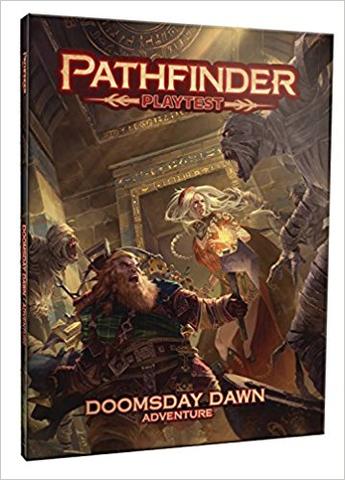
In other news, my family and I tried playing some more of Pathfinder Playtest Adventure: Doomsday Dawn. We prepared our characters for ‘In Pale Mountains Shadow’ and got started. Unfortunately, by the end of the session they decided they were bored with it. They’ve officially given up playing through Doomsday Dawn and are ready to go back to their regular games. My son desperately wants to continue with the Carrion Crown Adventure Path (we’re about to start Carrion Crown: Book Two: Trial of the Beast), my husband wants to continue with The Shackled City Adventure Path (we’re nearly done book one), and my daughter wants to play some more of our Starfinder Society characters. Most of the other campaigns we’re playing together I moved online so we can play via play-by-post. Getting in a post a day lets us keep playing, so we can dedicate our one chance to play on the weekends to one of our three main campaigns.
Although it may sound like we’re done with the Pathfinder Playtest that’s not quite accurate. I’m playing through two different play-by-post runs of Doomsday Dawn, and we’re all playing in a play-by-post run of the Pathfinder Playtest Society Scenarios. We’re halfway through Rose Street Revenge right now and enjoying it. My son’s character is particularly hilarious. We’ll share more about that at a later date.
My son has been reading like crazy lately! Obviously, I’m very proud of this. I believe that reading is one of those incredibly important skills you really need to instil a love of young. I always encourage my kids to find something they love to read, and indulge in it. Even though both of my kids are good at reading I always push them to try reading something that’s a challenge everyday. Not absurdly hard for them, or anything, but something they do need to work at a bit. Anyway, both of my children are reading well above their grade level so their classrooms don’t have anything that’s a challenge for them. They both bring home books that are far too easy for them for home reading everyday. In fact my daughter can read her older brother’s home reading books without trouble, never mind her own. We have a ton of books at home for my kids to read, but only two books that are a challenge for my son to read that interest him (and he’s read both chapter books repeatedly already). We have plenty of chapter books that my son reads for fun — Geronimo Stilton, The Hardy Boys (Secret Files), Scooby-Doo! mystery novels, Minecraft books, the Jurassic World: Fallen Kingdom junior novelization, and so on — but he can read one of those in under a half hour. They’re a challenge for my daughter (and some are too hard), but not exactly a challenge for my son. Something must be done! Once a week after I pick my kids up from school we go for a walk to the local library and I let them each pick out one book that’s a challenge for them to read, and one book that they just want. I say one, but inevitably they come back with one challenging book and a ton of other books they want to read. This is expected and totally fine. A while ago my son brought home a massive book on ecology clearly intended for pre-teens or teenagers. This thing was huge! Anyway, he loved it, but this time he wanted a chapter book. He contemplated starting the Guardians of Gahoole books, so he picked up one of those. But for his fun book? Captain Underpants. My son LOVES Captain Underpants. So he pulled down not one book, but every single Captain Underpants chapter book the library had. There are twelve of them.
“Are you sure you’ll read all of them this week?” I asked my son. “They’re going to be heavy.”
“Uh, yeah, Mom. Of course! But, it might take me two weeks to read them.”
It took him three days. Which is great! But, also… not great. I now have to break it to him that there are only twelve Captain Underpants books. He just read them all. Meanwhile my daughter picked out three Princess in Black chapter books. She owns one of them: The Princess in Black and the Hungry Bunny Horde, already, but the others are new to her. Although she’s disappointed they are not going to have any rabbits in them, she is enjoying them. So much so that she was inspired to write her own book. It’s called ‘Bunny’s Adventure.’ In it a rabbit named Pim journeys up the rainbow and finds another world. She makes some friends and is back home in time for bed. She worked on it for a few days and in the end gave it to her teacher as a gift. (Her teacher had just returned from surgery that week). It was adorable. She’s so proud of it.
I was recently invited to join a play-by-post game of Traveller, and gifted a digital copy of the rulebook by the overly generous Tarondor. (Thank you!) Traveller is a game I’ve never played before, so I’m super excited to give it a shot. I’ve given the book a skim, and have just embarked on a thorough read-through. The character creation rules look particularly interesting. Like a mini-game of its own. Very cool! I can’t wait to try it out. I’ve got plenty left to read though, so I’m not sure how soon that will be. Haha. This time of the year is quite busy around my house. But, I’m happily working on it.
This coming weekend is going to be just as busy as the last one. Busier, in fact. Yesterday was a day off from school, this morning is swimming lessons for my children (which is about a thirty minute walk away), then dentist appointments later today. I’ve got to squish in a trip to the grocery store and the laundromat. And tomorrow? Thanksgiving at my Mom’s! Monday’s another day off from school and more Thanksgiving celebrations, this time at my mother-in-laws. That’s actually pretty quiet for us for Thanksgiving, in all honesty. We usually also try to squish in visits to my grandparents and my Dad’s, but it’s not going to happen this year. We don’t own a vehicle, and frankly I’m too tired. Haha. We’ll be making time for less frantic visits with them soon.
Well, I’ve got to get cracking! Plenty to do and no time to do it in.
Happy Thanksgiving everyone!
Or, for those of you who are not Canadian, have a great weekend! I wish you all the best.
Jessica
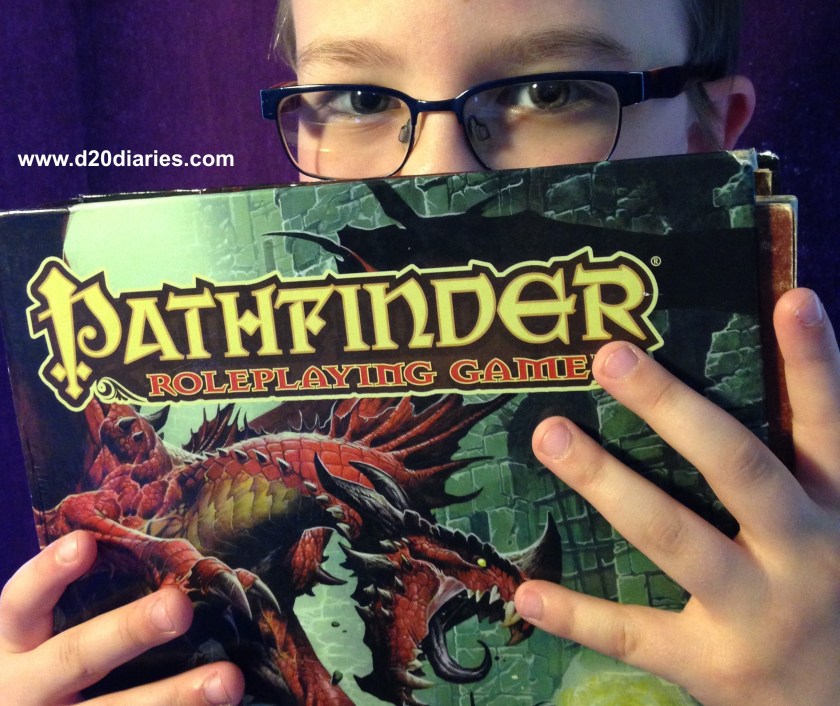
My son desperately wanted his picture featured on d20diaries. This was our compromise. Haha.
Today we’re going to look at the brand new Pathfinder PLAYTEST Society Scenario and tell you what we thought. Currently, there are four of them available as a free download on Paizo’s website: three that were released back in August, and one that was released a short time ago. (For more information on the first three scenarios check out this previous blog post. Each scenario is replayable. You may create your own characters for the intended tier (either created as level one for a tier one scenario, created as level five for a tier five scenario, or created as level ten for a tier ten scenario). Unlike regular Pathfinder Society Scenarios, you do not need to earn enough XP to reach higher levels for the Playtest. If you don’t want to make your own characters, you can also head over to Paizo’s website and download the Pregenerated Pathfinder Playtest characters for the three low level scenarios. For this new scenario, which is tier ten, there are no pregenerated characters. You’ll need to make your own. All you’ll need to run these four scenarios (other than your characters) is the Pathfinder Playtest Rulebook, the most recent update document which, at the time of posting this, is version 1.3, and the scenarios themselves. Each scenario is intended for groups of FOUR players (unlike regular PFS Scenarios which are intended for six) although each contains easy ways to scale up encounters for larger groups. Although you’ll find references to events in each that I liked or disliked, and comments about specific characters, these scenarios are not explored in detail. It’s not my intention to spoil the events in these scenarios, or give summaries and full reviews, but to share my opinions and provide recommendations. Once you’re done playing or GMing any one of these scenarios, be sure to head over to Paizo’s website and fill out a survey about your experiences. This will be used by the Paizo team to make the Pathfinder Playtest the best that it can be.
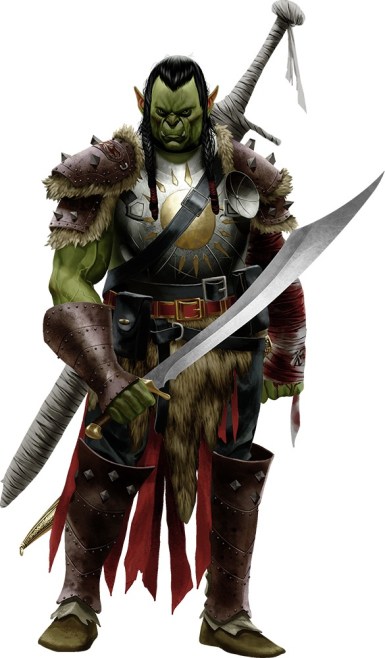
This scenario begins in a meeting in Turvik with the delightful Venture-Captain Bjersig Torrsen and his husky Mahki. Bjersig is a deaf half-orc well trained in reading lips who made another recent appearance in Pathfinder Society Scenario #10-03: Death on the Ice. He’s an awesome VC and I was thrilled to find that he had his own art this time around. Bjersig informs the party that he recently deployed a team of goblin trial-pathfinders on a scouting mission to a giant temple called Dvalinheim. They returned with an object of interest — a few tiles taken from the site which show the giant temple has a connection to the Tian representation of Desna. Believing that this temple could be a site built by the founder of the Path of Aganhei he’s dispatching the PCs to investigate further. He even gives the group a map drawn by one of the goblins. So… yeah. It’s totally accurate (not). Chances are the first thing the group will do is visit the goblin artist to ask her what the heck the map means. Which leads us to our second awesome NPC: Ogthup the goblin. Honestly, chatting with this quirky (and wonderfully drawn) goblin was my favourite part of the scenario. From there the PCs set out to follow Ogthup’s directions to the temple. There’s a few battles along the way, but the bulk of this scenario takes place in Dvalinheim itself. There the group will have to explore the temple, deal with more than a few angry frost giants, and… well let’s leave that part a secret for now. Haha. I particularly enjoyed the monster statistics in this scenario. Many of the creatures have special reactions, and interesting attack forms that make them feel really unique. My personal favourite was the disperse ability of the air elemental. Overall, I thought this was a fun scenario with engaging (but minor) NPCs and interesting opponents. I give it four out of five stars.
Definitely worth a free download!
I hope you enjoyed taking a look at this playtest scenario. If you have a chance to play it, I’d love to hear what you thought!
Today we’re going to take a look at two of the most recent Pathfinder Society Scenarios that are currently available for purchase, and let you know we thought. Although you’ll find references to events in each that I liked or disliked, and comments about specific characters, these scenarios are not explored in detail. It’s not my intention to spoil the events in these scenarios, or give summaries and full reviews, but to share my opinions and provide recommendations. That said, if you want to avoid even minor spoilers then I recommend clicking on a different article. Whether you intend to use them in home games of the Pathfinder Roleplaying Game, sanctioned scenarios for use with the Pathfinder Society Organized Play, or just want to read a nifty new adventure, we’ve got you covered! So let’s get cracking!
Scenario #10-04: Reaver’s Roar is a Tier 7-11 Adventure written by Steven Hammond. It begins in Three Pines Ford in Lastwall, with a mission briefing hosted by Venture-Captain Shevar Besnik and Ollysta Zadrian, leader of the Silver Crusade. The scenario quickly moves on to the semi-abandoned outpost of Roslar’s Coffer, and the Sarenite temple known as the Bastion of Light found within. For more information on Lastwall you can check out the Inner Sea World Guide. For more information on Sarenrae you can check out Inner Sea Gods. This scenario features creatures from Pathfinder Roleplaying Game: Bestiary, and Pathfinder Adventure Path: Curse of the Crimson Throne Anniversary Edition (although all of the necessary stat blocks are included within the scenario). It makes use of a vast number of sourcebooks, including the Core Rulebook, Advanced Class Guide, Advanced Player’s Guide, Ultimate Combat, Ultimate Equipment, and even Mythic Adventures. All of the necessary rules from the Advanced Class Guide and the Mythic Adventures are included in this scenario. It features one custom map, and one custom chase. This mission is of particular importance to members of the Silver Crusade faction as well as any worshippers of Sarenrae.
Uirch of the Burning Sun from PFS #10-04: Reaver’s Roar. Illustrated by Dion Harris. Art courtesy of Paizo Inc.
This adventure tasks the PCs with travelling to Roslar’s Coffer and retrieving a helmet of religious significance from the Bastion of Light, an important temple to Sarenrae. The temple once contained many relics and rituals vital during the Shining Crusade. Unfortunately, the temple has since become the lair of an incredibly powerful red reaver. The PCs will have to enter the temple, defeat the red reaver, and obtain the helmet. But, this mission won’t be as simple as it seems! For starters, the red reaver has formed powerful bonds with the relics housed in the temple, which have greatly empowered it. PCs will need to find ways to weaken the red reaver, sever its connection to these relics, and outsmart the territorial creature. In addition, orcs from the Twisted Nail tribe are also after the red reaver for (no doubt) nefarious purposes. The cast of characters is rounded out by Gorm Greathammer, a famous Pathfinder and the third prince of the dwarven sky citadel Kraggodan, who acts as a contact and source of information for the PCs. The town of Roslar’s Coffer is appropriately serious and ominous. When the villagers learn of your purpose in town they offer to send a letter to your loved ones when you die a horrible death. How sweet! Haha. It’s a simple but effective way to showcase the ‘friendly’ villagers and let the players know that they might not survive the challenges ahead. I love the atmospheric buffer zone between the town and the territory of the red reaver. There’s a great chase scene in this scenario, and the red reaver is wonderfully challenging. The exploration of the Bastion of Light is a lot of fun, providing characters with danger, a few scares, chances to weaken the red reaver, chances to gain holy blessings, and even chances to make an ally or two. It offers GMs some nice flexibility in the placement of a few encounters, and does a really great job of setting an ominous, suspenseful mood. Perhaps one of the most impressive things? It will make your PCs scared for their lives. A rare thing at high levels of play! The red reaver is a fierce opponent that needs to be weakened in order for your characters to have a chance of defeating it. And even then? It should still be a tough fight! This, of course, makes it a difficult scenario to use with players who prefer to decimate everything, straight-forward encounters, and for most younger players. But the ending? SO worth it! Overall I really liked this scenario, although it’s atmosphere and difficulty are not for everyone. I give it four out of five stars.
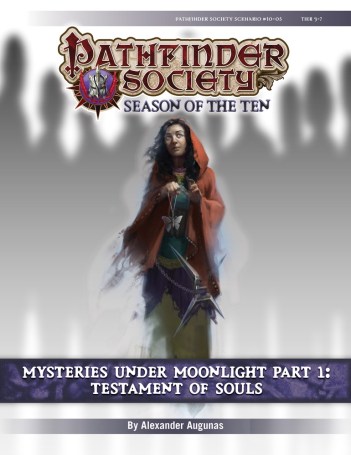
Inspector Theodorus Ichonvarde from PFS #10-05: Mysteries Under Moonlight. Illustrated by Tadas Sidluahskas. Art courtesy of Paizo Inc.
Something strange is happening to Magnimar’s beloved monuments, and its up to your PCs to find out what’s going on, and put a stop to it! But, this mystery isn’t as simple as it seems. The honourable Lord-Mayor Grobaras has hired his own investigator to look into the crimes, one who seems to be more than a little biased towards blaming the city’s Varisian population. Your players will have to investigate monuments, question witnesses, confront dangerous enemies, speak with the dead, and dabble in the occult to succeed! The three monuments featured in this scenario are the Cenotaph, Founder’s Flame, and Mistress of Angels. There’s a wide array of NPCs in this delightful adventure including Venture-Captain Shiela Heidmarch and her husband Venture-Captain Canayven Heidmarch, Mystery Cultist Davorge, Inspector Theodorus Ichonvorde, plenty of witnesses (living and dead!), an outsider, and even the ghost of one of Magnimar’s Founders: Ordellia Whilwren! Perceptive PCs can uncover a lovely little tribute to any of your players characters who permanently died during any Season 4 Scenario, or during #7-03: The Bronze House Reprisal, #7-25: Orders from the Gate, #8-01: Portent’s Peril, #8-22: Wrath of the Fleshwarped Queen, or #9-09: Beyond the Halflight Path. It’s a nice little shout-out that’s lovely to see. There’s a lot of unique and interesting social encounters in this scenario, which are really the highlight of this adventure. That said, there’s still a large number of battles in this one, so it’s going to be tricky to fit it all in. I found the final battle properly climatic and exciting, with obvious consequences for failure. The other battles aren’t particularly exciting, though. The occult rituals and objects included in this adventure are fun, and don’t bog down the game with complicated rules. I really enjoyed it (although I admit to being a sucker for the occult! Haha). I really enjoyed this scenario. It’s a fun change of pace that has a lot to offer. My only complaint? If you don’t have a good GM for this one, some sections could become repetitive. Overall, I really enjoyed it! It’s a fun, refreshing adventure that’s right up my alley! I give it four out of five stars.
Thanks for joining us today! Tune in later this week when we take a look at the final Pathfinder Playtest Society Scenario that’s been released: #4: The Frozen Oath!
Today we’re going to take a look at the two most recent Starfinder Society Scenarios that are currently available for purchase, and let you know we thought. Although you’ll find references to events in each that I liked or disliked, and comments about specific characters, these scenarios are not explored in detail. It’s not my intention to spoil the events in these scenarios, or give summaries and full reviews, but to share my opinions and provide recommendations. That said, if you want to avoid even minor spoilers I recommend you check out a different article. Whether you intend to use them in home games of the Starfinder Roleplaying Game, sanctioned scenarios for use with the Starfinder Society Organized Play, or just want to read a nifty new adventure, we’ve got you covered! So sit back, and get ready to explore the Pact Worlds!
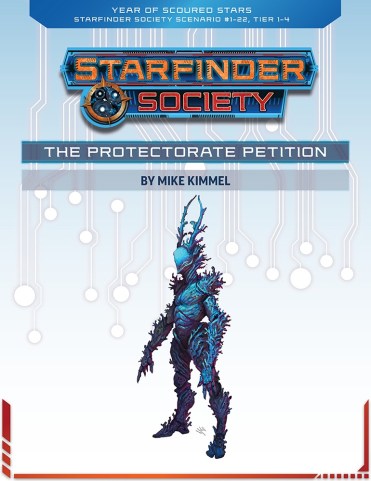
Scenario #1-22: The Protectorate Petition is a Tier 1-4 adventure written by Mike Kimmel. It takes place on Tabrid Minor, a planet in Near Space that has a population of around two billion. The dominant race on the planet, the copaxis, have applied to the Pact Worlds for Protectorate status. The Stewards have hired the Starfinder Society to conduct an independent review of the ruins of an ancient flying city located on Tabris Minor, with the help of some locals. You’ll need to learn all you can about the cobaxis, their culture, and their history. Once you’ve got a feel for them and their past it will be your job to write a report which will either approve or deny Tabris Minor’s request for Protectorate status. This scenario features no special scenario tags, does not include starship combat, and does not continue any ongoing storylines. It makes use of Pathfinder Map Pack: Ruined Village, and Pathfinder Map Pack: Secret Rooms . In addition to the Starfinder Core Rulebook, it features content from Starfinder: Alien Archive, and Starfinder: Armory. There is a single familiar face in this scenario: the always delightful Venture-Captain Arvin, as well as a host of new NPCs. It introduces a member of the Stewards: Major Tower-9, who will hopefully be featured in another future scenario. The copaxis are a really interesting race. Each individual is actually a colony of microorganisms which live within a single humanoid-shaped exoskeleton and act as a single unit. They’re basically coral-people. There are also a lot of interesting NPCs in this scenario from among the copaxis themselves, including Bryanisis, Gnaucara, Panacula, and Therseis. My personal favourite? Less Than Three (of whom I will divulge no further details).
Therseis, a copaxis from Tabris Minor featured in SFS #1-22: The Protectorate Petition. Illustrated by Michele Giorgi. Art courtesy of Paizo Inc.
Exploring the ruined flying city of Tabantria is a lot of fun, with some locations already excavated and safe, and others still dangerous. There’s opportunities to glean interesting information at both types of locations, as well as copaxis researchers you can turn to for context and advice if desired. Although I don’t want to give away anything about your discoveries, I will say that things are more… complex that they seem. It’s wonderfully handled. There’s some fun battles in this scenario, all of which can provide the PCs with some information. I particularly enjoyed the new crab-like creature known as the corchaaz which can alter gravity and even use some solarian powers! Very cool. There’s no particular boons you’ll want to slot for this one, although members of the Dataphiles, Exo-Guardians, and Wayfinders all should naturally have the most interest in this scenarios goals. If you’ve got a solarian, now is a great time to play them. Solarians have a few unique benefits throughout this scenario. Overall I really enjoyed this scenario. I give it four out of five stars.
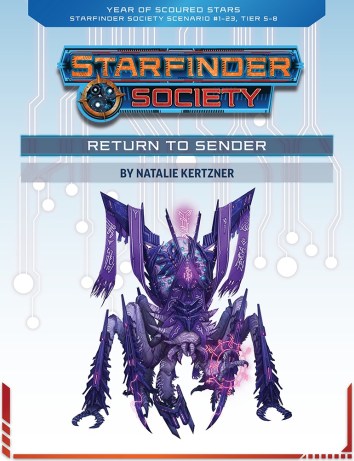
Scenario #1-23: Return to Sender is a Tier 5-8 adventure written by Natalie Kertzner. It takes place on the edge of the Scoured Stars trinary system, which contains three suns, and a plethora of planets. The systems within the Scoured Stars are Callion, Agillae, and Bastiar. This scenario takes place after a number of other Scoured Stars related scenarios including: #1-05: The First Mandate, #1-11: In Pursuit of the Scoured Past, #1-13: On the Trail of History, #1-17: Reclaiming the Time-Lost Tear, and the Starfinder Special: #1-99: The Scoured Stars Invasion. Obviously, this scenario contains some spoilers, particularly in regards to the Special. I recommend playing as many of the previous scenarios as possible, before playing this one. One very important piece of information? Jinsul are an alien species that attacked the Starfinders when they attempted to rescue their comrades from the Scoured Stars system. Although most of the Starfinders escaped, the jinsul conquered the Scoured Stars system. As to what they want next? Unknown.
A jinsul ship. Originally depicted in SFS #1-13: On the Trail of History. Art courtesy of Paizo Inc.
This mission begins when Historia-7 (leader of the Dataphiles) flies the PCs to a secret facility run by Radaszam (leader of the Acquisitives) and maintained for his Obsidian Spiders mercenary company. Together the duo gives the PCs an off-the-books mission. Their job? Take a recovered jinsul ship and fly to a space station on the edge of the system. Infiltrate the jinsul base, learn all you can, and destroy it (with the help of Historia-7 and Radaszam!). This scenario features the Faction (Acquisitives) and Faction (Dataphiles) tags and uses two custom maps. It features content from Starfinder: Alien Archive, but all relevant information is included in this scenario. There’s no specific boons I’d recommend slotting (other than the faction boons, of course) or classes to take. It is worth mentioning that one enemy in this scenario has an ability that could allow them to foil the operative’s trick attack ability. Return to Sender is intended to be a dangerous infiltration mission with a nerve-wracking atmosphere. You’re supposed to worry over alerting the base to your presence, while learning all you can. That said, the path laid before you is noticeably linear, with no real repercussions for being discovered. It runs the risk of feeling like a long, drawn out slug-fest. Room, fight, hack a computer. Room, fight, hack a computer. And so on. This is one of those missions that really requires a talented GM to make it shine. That said, I particularly liked the final battle, and the scenario’s cinematic ending. In my opinion the best part of this scenario was actually nothing to do with the mission at all. Throughout it the PCs get to hear Radaszam and Historia-7 banter over the comms and learn more about the duo. PCs also have the opportunity to release and befriend and adorable little alien that behaves like a goofy puppy dog and looks like a mix between a shark and an octopus, with big, cutesy eyes and a lolling tongue. This little fellow’s antics can either be played up (for groups who would enjoy some comic relief) or fall to the wayside (for groups who are enjoying a more serious, suspenseful playthrough). I think the fact that the option was given for this creature to serve different roles for different kinds of groups was a really nice addition. Although this mission will be a great fit for some players, it just wasn’t my cup of tea. I give it three out of five stars.
Thanks for joining us today! I hope you enjoyed this look at the newest Starfinder Society Scenarios. We’ll be back in a few days with a look at the newest Pathfinder Society Scenarios. See you then!
As the Pathfinder Playtest keeps chugging along, this week brings us new surveys and new rules updates! The new surveys are open for the next chapter of Doomsday Dawn: The Mirrored Moon which reunites your players with their primary PCs for this mini adventure path. And the rules updates? There’s a lot of them! Thirteen new pages of rules, plus a separate pdf with a bunch of new content on… wait for it… archetypes! (Pardon me while I squeal with glee!)
So, what exactly is new this update?
To start with the penalty for being untrained in a skill is greater. While it used to be equal to your level minus two it is not equal to your level minus four. Although it might seem lame, I like this change. Now those people who have taken the time to become trained in a skill actually feel better at it than those who didn’t. Before it was kind of a toss up.
The next major change is the DC chart. They’ve shuffled around the DCs a bit, and fine-tuned it. This also effects the DCs across all skills and throughout Doomsday Dawn and the Pathfinder Playtest Scenarios. Yeah. This change is sweeping! I’m curious to see how it plays out.
There’s also… the ten minute rest! What? Yup! First of all, identifying magical objects no longer takes an hour, it only takes ten minutes. FINALLY. This was one of my major pet peeves from the Playtest so I’m thrilled they changed it. Ten is more manageable. Repairing items? Also ten minutes. And finally, they’ve added a new way to use the medicine skill. You can now use it to treat wounds. This takes — you guessed it — ten minutes and can heal up to six people (yourself included) of some of their wounds. This means that there are now ways to heal yourself and your party without relying on magic. In addition, it makes taking a ten minute break after a fight a standard, organic thing to do. You fight, you win. Yay! You bandage your wounds. While the healer does that the mage identifies a magical item and the fighter repairs his shield. It fits. You know? This I can get behind.
There have been some nice changes to classes. Alchemist’s are no longer double-dinged on resonance when using infused items that they give to their companions. Monks finally have simple weapon proficiency so they can actually use a ranged weapon. Thank goodness! Rangers have some new 1st level feat options, and Rogues no longer need to be Dexterity based. Instead they have a trio of techniques they can choose from at level one. Sorcerers no longer have to take their later bloodline feats, which makes them feel less restrictive.
Death and Dying rules have been adjusted again, with the inclusion of a new condition ‘wounded.’ For the full details you’ll have to give the pdf a read, but I think this method is meant to make it a bit harder to survive than the last updates made it, but still easier than the original Playtest rules. I’m curious to see how it plays out.
There’s other smaller changes and clarifications. Its been confirmed that shields can never take two dents at once. Its also been pointed out that your spell roll is not used for your spell attack rolls. Instead you use your proficiency modifier and Dexterity or Strength as normal. I was really happy that the spell roll was used for your spell attack rolls, but I can see why that’s not the case. Still, I think it’s and unfortunate clarification. I rather liked being a mage who could naturally aim their spells. (Sad! Haha).
That’s all of the big changes, but there’s also a second document. This contains updated rules for all of the multiclassing archetypes, changes some of them (fighter: here’s looking at you!), and adds a bunch of new ones. Oh, yeah! There are now multi class options for every base class. Very exciting!
In other news, Pathfinder Kingmaker the video game has now officially launched. For those of you who don’t know, Pathfinder Kingmaker is a computer RPG with a wide variety of NPC allies for your character to befriend (and the ability to create your own allies!). The game looks AMAZING. It’s currently available to purchase on GOG and Steam. For more information on the game check out our recent blog post: here. Already playing? Let me know what you think! I’d love to hear all about it!
This week brings us a few exciting announcements. For starters, Pathfinder Playtest has just released two new surveys. These are both general feedback surveys which are not connected to Doomsday Dawn. The first is about your experiences and opinions on ancestry and the second is on classes. Both surveys can only be filled out once and feature opportunities for your to offer feedback on each of the ancestry an class options. If there’s any that you don’t want to give feedback on you’re welcome to skip them. It really important to remember that these surveys are very in depth. Make sure you’re prepared to answer detailed questions including which aspects and feats were your favourite, overpowered and so on. It’s handy to have your Pathfinder Playtest Rulebook on hand to reference feat and ability names. Overall I really enjoyed the ancestry survey, but I did have trouble with the class survey. It had an error which kept redirecting me back to the beginning of the survey after I completed the feedback on the first class. I’m going to head back and try again later, but for now I’ve had to leave it be. When you’re ready, be sure to head over to Paizo’s website and fill out the surveys. Or click the links provided: Ancestry Survey and Class Survey.
UPDATE: The survey is now working fine for me!
Octavia the half-elf arcane trickster from the Pathfinder Kingmaker computer roleplaying game.
The other big announcement? PATHFINDER KINGMAKER! I know, I know, Kingmaker’s an old campaign. But we’re not talking about that. We’re talking about Pathfinder Kingmaker the computer game! This RPG is currently available for pre-order on both GOG and Steam and is going to be released next week. It looks AMAZING (if only my computer was good enough to play it… Haha). This game follows the story of the Kingmaker Adventure Path, and expands upon it greatly, including an entire new ending, a plethora of new characters, and a ton of quests. You’ll have to conquer, rule, and protect your own nation in the Stolen Lands! There’s supposed to be a ton of character options for your characters, including multi-classing and archetypes. After completing the tutorial and prologue you can also create your own team of characters. In addition, there’s eleven pre-made party members who have their own stories, personalities, quirks, and abilities. Each has tied to unique events from the game’s storyline, and some of them can even be ‘romanced’ by your characters. I’m definitely looking forward to the banter. Haha.
So who are these characters? So glad you asked!
One of them will be familiar to most of us: Amiri the Kellid barbarian. There’s also Nok-Nok the goblin rogue (who some of us might recognize from his Pathfinder Adventure Card Game promo card). The rest (as far as I know) are all new. Ekundayo the Garundi ranger, Harrim the dwarf cleric of Groetus (god of the end-times), Jaethal the elven undead inquisitor of Urgathoa (goddess of undead), Jubilost the gnome alchemist, Linzi the halfling bard who’s going to chronicle your adventures, Octavia the half-elf arcane trickster and her good friend Regongar the half-orc magus, Tristian the human cleric of Sarenrae (goddess of the sun and redemption), and finally Valerie the human fighter who gave up a life in service to Shelyn (goddess of beauty and love) to learn to fight. They look like a fun group of unique characters. And their art? AWESOME. All of them look great.
Ekundayo
Harrim
Jaethal
Jubilost
Amiri
Nok-Nok
Linzi
Regongar
Tristian
Valerie
For more information on Pathfinder Kingmaker you can check out Paizo’s blog post, or watch some of the previews from GOG and Steam. Want to get the whole scoop? Pick up the game yourself! And be sure to swing by and let us know what you thought of the game.
I’ve already mentioned that Starfinder has launched their new Adventure Path: Against the Aeon Throne. I’ve talked about it, geeked out about it, watched Paizo’s twitch stream, and generally wished I owned it. It looks like a ton of fun. My husband nodded his head and gave me a ‘that’s nice’ sort of look. Clearly not as excited as I am, haha. And my kids? Excited, but not obsessively so.
Until they saw the preview.
Preview?
Yeah! Preview! The trailer! Like a movie trailer for an adventure path. It explains the premise and basics of the campaign clearly, quickly, and concisely. It sounds awesome, it’s got great art. And it generally made me start salivating all over again.
As soon as it started my kids wandered over to see what I was watching. They sat still…. and stared….
And when it ended my kids literally started shrieking all at once.
“THIS LOOKS SO MUCH FUN!”
“I WANT TO PLAY!”
“YOU NEED TO BUY THAT FOR ME! NO! I will tell DAD to buy it for YOU for YOUR birthday!”
“THAT’S TOO LONG! AN EARLY BIRTHDAY!”
“A… thanks for going to school gift? Can I have one of those? I am in grade one now, Mom.”
So on and so on. We laughed, and I figured they’d soon wander off.
Instead they pulled out the Starfinder books and started making characters for Against the Aeon Throne. They didn’t have time to finish before bed, but the next day on the walk to school it was all they talked about. And the day after, on the weekend, we spent our time at the laundromat creating their characters together.
My son made a contemplative technomancer who is a scholar with a focus on the fields of ecology and alien ecosystems. He dabbles in illusions, mind magic, and technology, but takes special care to use magic that doesn’t harm the environment, and to create clean, sustainable technologies. His contemplative travels to Nakondis to help his friend study the starship drive on the mysterious crashed ship she is studying there. In addition, he’s going to ensure that the new colony of Madelon’s Landing treats the planet of Nakondis with the respect it deserves.
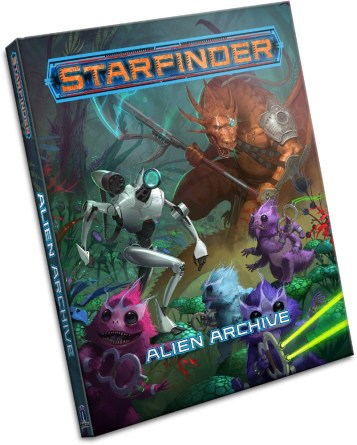
Contemplatives can be found in Starfinder: Alien Archive, along with a ton of other fun monsters and playable races.
And my daughter? She has a character image she discovered ages ago on Pinterest that she’s been saving for something special. She’s making a ysoki ninja! White furred, with pale pink attire, a dagger and a stun gun. She’s going to be an operative, although she’s torn between selecting the ‘daredevil’ and the ‘ghost’ specializations. She plans to focus on both acrobatics and stealth, so she’s undecided. Either way she’s going to be a nimble, tricky combatant comfortable in close range and melee combat.
Then they got to work asking what I would play, and badgering my husband for his character concept.
The only problem? I still don’t own it. Haha. Guess I’m investing in Against the Aeon Throne sooner than expected!
Grumpy over our inability to begin playing, my kids settled in with my husband to watch the finale of Voltron: Legendary Defender. They loved it, and when they end came they headed right over to the block bucket and got building.
Last time they built starships they did so with LEGO, but this time they used Duplo. Duplo is like bigger sized LEGO. It’s kind of marketed for toddlers, while LEGO is for kids, but my kids ADORE their Duplo (yes, even more than their LEGO). With LEGO they build things, but locking in the blocks sometimes hurts their fingers, and for some reason they feel compelled to find and follow instructions when they use it. They don’t often just build something grand from their imagination with LEGO. But with Duplo? It’s different. They never look at instructions. The blocks don’t hurt. They just come up with the craziest things, and build. Usually it’s full cities and markets with multiple buildings and roads and things. Trains and other vehicles are popular. Sometimes amusement park rides (that move). Once in a while they build mazes multiple layers deep. A while back my husband and I were watching ‘In The Heart Of The Sea‘ on Netflix and although my husband and I liked it my kids were bored out of their minds. Instead of watching my son sat down with blocks and built his own massive whaling ship. It was the right ship, had masts and sails, and even miniature rowboats on it. It was literally a massive, awesome ship. It even had a removable top deck so you could look inside. It was, hands-down, cooler than anything I’ve ever built.
So, I wasn’t surprised when they started building something together. They had a plan, and they chatted and got to work. When it was done they called me over. They had made a big starship, a few feet long and almost a foot wide. They stacked it on stilts that they attached to wheels, so it could drive around the house while the ship itself was still hovering off the ground.
“Awesome starship, guys!” I said
They shook their heads.
“This is not just ANY starship, Mom. THIS is a Galra battle cruiser! The really big ones. See!”
I looked at it again and nodded. It looked like the right shape and everything. I could see it.
They showed me the bridge. If you’ve got little hands (which I do not, haha) you can slip a hand inside and put figures inside. There’s even chairs and computer consoles in there. Impressive. They showed my the really big gun turret they built on top, which really does spin. They named what kind of gun it was, but in all fairness, I’ve forgotten it’s name (shame on me, I know). It was the big one. Haha. They showed me the thrusters and the engine bay. They showed my the medical bay and the prison cells. They pointed out that the prison cells had toy lions in them because in the finale they had just watched the villain captures the hero’s lions (they’re sentient lion-shaped starships, in case you have no idea what I’m talking about) and locks them up. Cool!
Anyways, I was so impressed we took a bunch of photos I thought I’d share below. My kids are very proud. They’re still waiting for Against the Aeon Throne. And they’re still excited. But, for now, they’re happy their creation is getting shared with the world.
The Pathfinder Playtest is changing again. That’s right, it’s time for some more rules updates!
This week marks the second set of changes to the Pathfinder Playtest rules. Be sure to head over to Paizo’s website and download version 1.2. But that’s not all! You’ll also need to download the new character sheet! It’s been edited to conform with the new rules, and been shuffled around a bit. I rather like the new layout.
This update document is eight pages long, with the last page dedicated to the open game license and other fine print. It includes all of the updates to Pathfinder Playtest (from the first and second updates). This means that you only need to have the most recent version of the update document, not all of them. Any new additions to the update document are in bold. Although it sounds simple, it’s actually quite hard to differentiate between regular text and bold text in the document, so look closely! Rules updates are split into four types of rule changes: New Rules Updates, Critical Updates, Other Updates, and Doomsday Dawn Updates. Despite being ranked by importance, it’s imperative you begin to use all of the new rules immediately.
As for the rules themselves, we won’t get into specifics. The document is free and does a better job of explaining things than I ever could. The biggest changes you will notice this time around are with signature skills. They’re gone. Poof. Vanished. No longer does your class restrict which skills you can become Master or Legendary with. Instead, anyone can become Master or Legendary in whatever they want — if you’re willing to invest in that skill of course. I’m a big fan of this change, so I’m happy they went this route. This change affects a lot of other aspects of the game. Some feats are now irrelevant, and others were modified. The text throughout the book has to change a lot. There’s other skill changes you’ll notice as well. Each class is automatically trained in a certain skill, and many classes have more skills they’re trained in to start with. More nice updates, if you ask me!
There’s some other fun changes. Bards now have a feat that lets them gain 10th level spells. The range on their soothe spell has also been changed to 30 feet. Some of the spells granted by domains are different now. And the barbarian animal totem can now use weapons — as long as they’re NOT raging. There’s some other barbarian updates as well, so be sure to read closely!
This is just a taste of the changes. There’s a lot more updates. Changes will continue to occur over time so your feedback is incredibly important.
Surveys. When you’re done playing any part of Doomsday Dawn, the Pathfinder Playtest Society Scenarios, or just playing in general, head on over to Paizo’s website and fill out one of Paizo’s many surveys. Paizo goes through that feedback and makes changes. That’s right! Constantly over this next year they’ll be combing through your survey responses and adapting their rules for the playtest. It sounds like these changes will occur approximately bi-weekly, but don’t quote me on that. Not only do your responses provide Paizo with a large pool of data that they can use to decide the future of the game, it also lets them find out all kinds of nifty little bits of information.
At the moment, you can fill out surveys on a variety of adventures. Each of the Pathfinder Society Scenarios has it’s own trio of surveys: player survey, GM survey, and general feedback survey. Doomsday Dawn originally launched with access to three surveys, all for the first part of the adventure: The Lost Star. (Again, a player survey, GM survey, and general feedback survey). Surveys are now also available for the second adventure in Doomsday Dawn: In Pale Mountain’s Shadow, and the third adventure in Doomsday Dawn: Affair at Sombefell Hall. Further surveys for the later adventures in Doomsday Dawn will be released in the future. There’s also some general feedback surveys available. Soon you can expect to see new surveys on more general topics.
Now, if you haven’t filled out your previous survey on the Lost Star, or In Pale Mountains Shadow, don’t worry! It’s not too late. All of the surveys will be available until the end of the year, and will be revisited by the Paizo team regularly. You haven’t missed your chance to contribute.
Let us know what you think of the new changes in the comments!
Until next time,
Jessica
Farewell old character sheet! It’s time to make some changes!



 (we’re nearly done book one), and my daughter wants to play some more of our Starfinder Society characters. Most of the other campaigns we’re playing together I moved online so we can play via play-by-post. Getting in a post a day lets us keep playing, so we can dedicate our one chance to play on the weekends to one of our three main campaigns.
 , by Day Pilkey.
 mystery novels,
  books, the
  junior novelization, and so on — but he can read one of those in under a half hour. They’re a challenge for my daughter (and some are too hard), but not exactly a challenge for my son. Something must be done! Once a week after I pick my kids up from school we go for a walk to the local library and I let them each pick out one book that’s a challenge for them to read, and one book that they just want. I say one, but inevitably they come back with one challenging book and a ton of other books they want to read. This is expected and totally fine. A while ago my son brought home a massive book on ecology clearly intended for pre-teens or teenagers. This thing was huge! Anyway, he loved it, but this time he wanted a chapter book. He contemplated starting the Guardians of Gahoole books, so he picked up one of those. But for his fun book? Captain Underpants. My son LOVES Captain Underpants. So he pulled down not one book, but every single Captain Underpants chapter book the library had. There are twelve of them.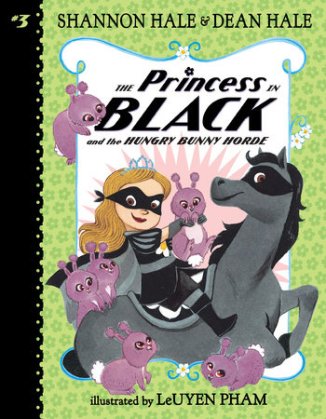


 . For more information on the Lands of the Linnorm Kings check out
  . This scenario utilizes
  ,
,  , and a custom map of Dvalinheim.
 , sanctioned scenarios for use with the Pathfinder Society Organized Play, or just want to read a nifty new adventure, we’ve got you covered! So let’s get cracking!
 . For more information on Sarenrae you can check out
  . This scenario features creatures from
  , and
, and  (although all of the necessary stat blocks are included within the scenario). It makes use of a vast number of sourcebooks, including the
  ,
, 
 , and the
  (although all of the necessary stat blocks are included within the scenario) and makes use of a variety of sourcebooks including the
  , and
, and  . It utilizes the new
  , as well as
  , and a custom map reprinted from
  . Although this mission is not tied to any particular factions, if you have any characters who are from Magnimar, have a love of monuments, or an interest in laying spirits to rest, now is a great chance to bring them out to play.
 , and
, and  . In addition to the




 ‘ on Netflix and although my husband and I liked it my kids were bored out of their minds. Instead of watching my son sat down with blocks and built his own massive whaling ship. It was the right ship, had masts and sails, and even miniature rowboats on it. It was literally a massive, awesome ship. It even had a removable top deck so you could look inside. It was, hands-down, cooler than anything I’ve ever built.


 d20 Diaries