Hey everyone! Thanks for stopping by. Today we’re taking a look between the the covers of the latest ‘gods’ book: Pathfinder Campaign Setting: Faiths of Golarion! Although I’ll be mentioning what’s in this book and talking about my favourite parts, this is not meant to replace the book itself. The opposite, in fact! It’s meant to let you know what’s inside so you can decide for yourself whether this is a book that will be of use to you. For me? Definitely! Curious what’s inside? Read on!
Featuring cover art by Igor Grechanyi that showcases the gods Gruhastha, Hei Feng, and Nivi Rhombodazzle, this soft cover book is 64 pages in length. Other contributing artists include Gislaine Avila, Emanuele Desiati, Vlada Hladkova, Sandra Posada, Luca Sotgiu, and Vicky Yarova. Contributing authors include Kate Baker, John Compton, Adam Daigle, Crystal Frasier, Ron Lundeen, Liane Merciel, Michael Sayre, and Owen K.C. Stephens.
Like the many god and faith themed books before it, this book takes an up close look at a variety of faiths, talking about the gods and goddesses, their faith, church, priests, worshippers, holy texts, holidays, aphorisms, planar allies, and so on. It also features information on their alignment, domains, subdomains, favoured weapons, centres of worship, paladin and anitpaladin codes (if there is one), obediences, and boons (usable by those who take the deific obedience feat, or take levels in the exalted, evangelist, or sentinel prestige classes from Inner Sea Gods). There’s plenty of awesome art in this book, with each faith discussed having four images: one of the deity, one of the holy symbol, one of a worshipper, and one action shot of the deity.
There are ten faiths discussed in this book. Each is a lesser detailed but very important faith. This includes a few racial faiths — the halfling goddess Chaldira Zuzaristan, the gnome goddess Nivi Rhombodazzle, the elf god Ketephys, and the dwarf god Magrim. It also includes information on deities from other regions of Golarion such as the Tien gods Hei Feng, Shizuru, and Tsukiyo, as well as the anadi goddess Grandmother Spider who is popular in the Shackles and Sodden Lands, the Vudrani god Gruhastha who is popular in Vudra, and the Razatlani goddess Kazutal who is popular in Arcadia. Each of these faiths is incredibly important to their respective cultures and I’m thrilled to see them get some of the attention they deserve. Information on the racial deities, especially, I feel was long overdue. Before sitting down to read this book I was most excited for further information on Ketephys, Shizuru, and Tsukiyo. All of the entries were great, but after reading I was most inspired to make worshippers of Grandmother Spider, Kazutal, and Tsukiyo.
So who, exactly, are these deities?
So glad you asked!
Chaldira Zuzaristan is a brash and reckless halfling demigoddess of battle, luck, and mischief. She fights against oppressors, tyrants, and injustice, trusting in her luck and companions to see her through. A bit of a thieving troublemaker, but not malicious, Chaldira is good friends with the goddess Desna, who shares her love of travel. One of my favourite parts of the article on Chaldira is her eccentric planar allies, particularly her herald The Button Fellow.
Grandmother Spider is a cunning goddess of twilight, illusions, family, and weaving. Created by the gods as a tool be used alongside her brother, Achaekek, Grandmother Spider was tasked with weaving the world and the destiny of the mortals in it. But she rebelled against the gods and wove a new destiny for herself, granting herself free will and divinity. She’s a trickster, teacher, and folk hero. I particularly enjoyed reading about her relationships with the other gods — she once stole Asmodeus’ keys and enjoys teasing her brother Achaekek. Who doesn’t want to irritate the assassin of the gods?! Haha. I also adore all the art in this section!
Gruhastha is the vudrani god of peace, understanding, and self-improvement. Once Irori’s nephew he sought to record his knowledge for the world. Upon completing his perfect book, the Azvadeva Pujila, he became the divine embodiment of that holy text. Now Gruhasta seeks to enlighten the world so that one day it will be so perfect it becomes one with Nirvana. Interesting!
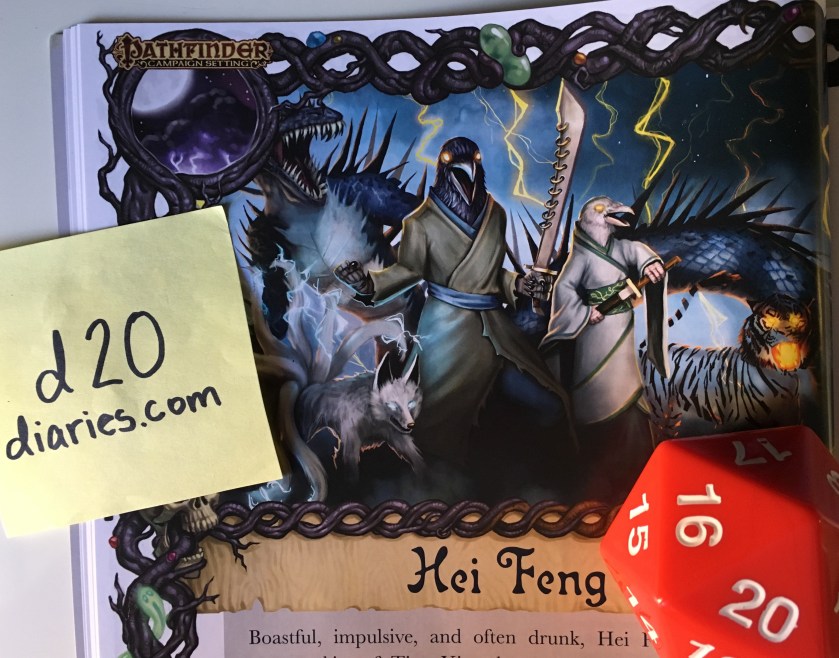
Hei Feng is a wild and unpredictable tengu god who is very popular in Tian Xia. A moody god of the sea, storms, thunder, and wind, he is always accompanied by his four companions, the Counts of Lightning, Rain, Thunder, and Wind. Drunken, boisterous, and easily angered, Hei Feng is a dangerous deity. As one of the most popular Tian gods I’m happy to see he got some attention. Turned out Hei Feng is my son’s favourite god in the book.
Hei Feng and his four Counts.
Kazutal is a deity I didn’t know much about, but wow! She is awesome! Haha. Also known as Mother Jaguar, she’s a war goddess whose focus changed over the Age of Darkness, when community and togetherness became integral for survival. Now a goddess of war, family, togetherness, community, liberty, and safety, she promotes a love of your neighbours, family, and friends. This love should be spoken of plainly and without shame, for its these bonds of love that cause neighbours to have the courage to stand up and protect one another. It’s love that makes communities strong. Those who don’t show love of others are considered cowards. Which is awesome! I really enjoyed reading about her faith’s take on love, and the evolution of her religion. I also adore the art in this section! It’s amazing!
Kazutal, illustrated by Vlada Hladkova. Art courtesy of Paizo inc.
Kazutal Priest, illustrated by Vlada Hladkova. Art courtesy of Paizo Inc.
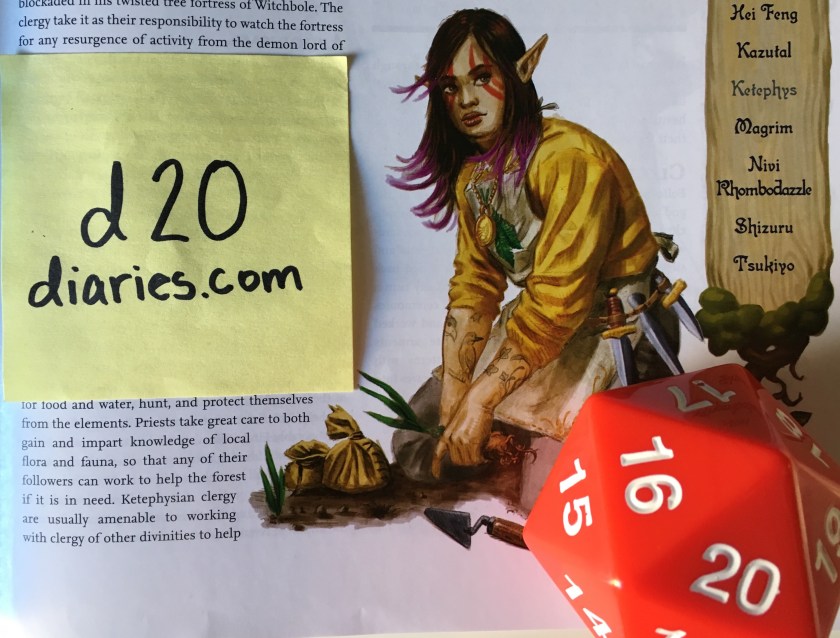
Ketephys is the calm, stoic elven god of hunting, the moon, and the forest. He’s a god of archery, and urges his followers to respect nature, replace what they take, and never waste. This is one of the gods I was most excited to see included in Faiths of Golarion, as the elven deities were among those created back when Pathfinder didn’t have it’s own rules, and I feel like I’ve been waiting forever for further details on them. There are some details, of course. A paragraph or two throughout the various Paizo products, but I wanted more. I would have been happy to see details on any of them, but I’m particularly pleased to see its Ketephys.
A worshipper of Ketephys planting a garden.
Magrim is another deity that’s been around since the beginning of Pathfinder but lacked much information. The dwarven god of death, fate, tradition, and the underworld, he’s fair, unflinching, and unwavering. Magrim considers Pharasma a respected elder, and is often tasked by her to repair damaged spirits that enter the Boneyard. I really enjoyed learning how Magrim fit alongside Pharasma, and his role in the dwarven afterlife.
Nivi Rhombodazzle is about as different as Magrim as you can get. This gnome gambler fled underground to escape her many angry creditors and ended up becoming the first of the svirfneblin after she traded a rare gem to Torag in exchange for divinity. Talk about a deal! Nivi’s an impulsive daredevil addicted to the thrill of a wager. She urges others to test their skill, push their luck, and experience the best life has to offer. And when luck turns against you and you’re in a lot of debt? Run, of course! Best of luck! Haha. She’s a tricky, thieving little thing whose faith is said to hold the key to staving off the Bleaching.
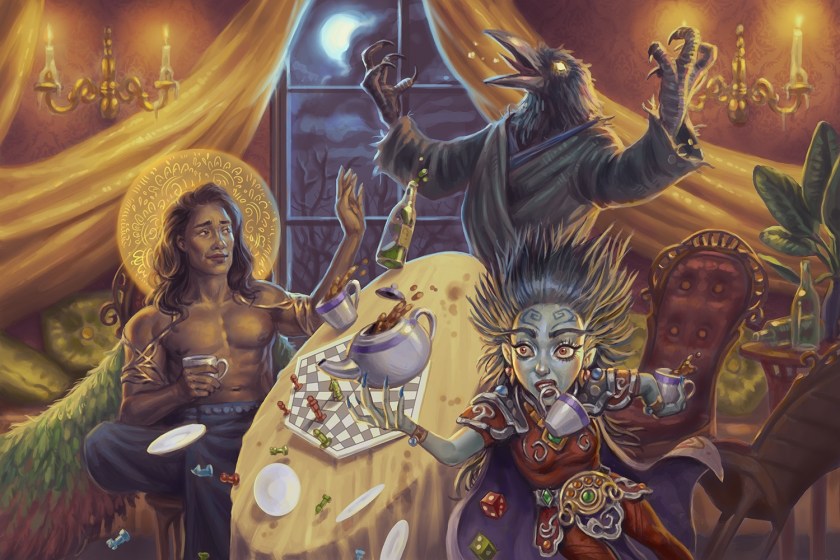
Hei Feng proves to be a poor loser in this art featuring Gruhastha, Hei Feng, and Nivi Rhombodazzle. Illustrated by Vicky Yarova. Art courtesy of Paizo Inc.
Shizuru is another of the gods I was most interested in reading about. This draconic Tien goddess is also known as the Empress of Heaven, and is the main deity of the Tien pantheon. A goddess of honour, swordplay, the sun, and ones ancestors, she’s incredibly popular among the people of Tian Xia and players of Pathfinder. I particularly enjoyed reading about her relationship with Tsukiyo, her lover who died and came back to life changed.
Which brings us to Tsukiyo, the final deity in Faiths of Golarion. Killed by his own jealous brother, Tsukiyo was the beloved of Shizuru. But his lover couldn’t accept his death and she ordered Qi Zhong, god of medicine and healing, to bring his back to life. It worked, but Tsukiyo came back changed. Now quiet, contemplative, and possessing an uncommon outlook, he is god of the moon, spirits, and outsiders. He teaches that no matter a person’s perceived flaws and oddities, all are a whole person deserving of respect. This applies to those society shuns, deems insane, are disabled, or those suffering from mental illness. I absolutely love what they did with Tsukiyo. Delightful from start to finish.
Tsukiyo, illustrated by Sandra Posada. Art courtesy of Paizo Inc.
A priestess of Tsukiyo.
Which brings us to the end of Pathfinder Campaign Setting: Faiths of Golarion! If you’re a fan of learning about the many deities of Golarion (like I am) I highly recommend picking up this book!
May is here and plethora of new gaming products are hitting shelves! Check out this month’s new d20 releases!
Dungeons and Dragons
Dungeons and Dragons is releasing two very exciting products this month. Stranger Things D&D Roleplaying Game Starter Set contains everything players need to get started playing D&D – a basic rulebook, an adventure, a set of dice, five character sheets, and an awesome enemy to face off against – all in a retro red box with a Stranger Things twist. The adventure is written in the style of Mike Wheeler, a character and DM from Stranger Things, and pits PCs against a mysterious castle and the Demogorgon! The pre-made character sheets feature the kids D&D characters from Stranger Things, including Dustin the Dwarf, Will the Wise, and so on. Finally, the set comes with two Demogorgon figures (one painted and one unpainted). You can watch Stranger Things on Netflix (I highly recommend it!).
Due out May 21, Ghosts of Saltmarsh is a collection of seven nautical and coastal themed adventures that vary from levels 1-12. These adventures can be run separately, or combined by DMs into one larger campaign. The adventures contained in this volume are all previously published adventures, including some of the most popular first edition D&D adventures and some from Dungeon Magazine. Adventures in Ghosts of Saltmarsh include:
The Sinister Secret of Saltmarsh (originally written by Dave J. Browne and Don Turnbull in 1981)
Danger at Dunwater (originally written by Dave J. Browne and Don Turnbull in 1982)
The Final Enemy (originally written by Dave J. Browne and Don Turnbull in 1983)
Isle of the Abbey (originally written by Randy Maxwell for Dungeon Magazine #34)
Tammeraut’s Fate (originally written by Greg A. Vaughan for Dungeon Magazine #106)
The Styes (originally written by Richard Pett for Dungeon Magazine #121)
Salvage Operation (originally written by Mike Mearls for Dungeon Magazine #123)
In addition to the adventures themselves there’s details on the port of Saltmarsh, mechanics for ship-to-ship combat, new monsters, and new magic items.
Launching next month is Beadle & Grimm’s Sinister Silver Edition for Ghosts of Saltmarsh! Currently available for pre-order on their website, the Sinister Silver Edition contains twelve high quality player handouts, a detailed ship map, a reusable ship map, two large scale battle maps, a map of the Styes, 30 encounter cards (which are designed to be hung over a DM screen so players can see images of the monsters they fight while the DM sees it’s statistics), custom DM screen, two objects, bonus encounters, and characters!
This month’s Pathfinder Society Scenarios have not yet been announced, although canny players can find them on the schedule for PaizoCon (which takes place later this month in Seattle). For more information on PaizoCon and to register for events head over to https://paizo.com/paizocon!
Gardens of Gallowspire (Tyrant’s Grasp Book 4 of 6)
Chronicle of Legends
Pathfinder Adventure Card Game
Very exciting news, as this month the new Pathfinder Adventure Card Game in unveiled! Players can test it out in person at PaizoCon or pick up a copy at the end of the month. Pathfinder Adventure Card Game: Core Set is the base game, which include all the rules, the Dragons Demand adventure series, and a ton of cards. They’re also releasing Pathfinder Adventure Card Game: Curse of the Crimson Throne Adventure Path which is designed to be mixed into the Core Set to create a whole new series of adventures. For more information on some of the changes you can expect to see in the newest version of the Pathfinder Adventure Card Game check out this post, or head straight to the source and check out Paizo’s blog!
WizKids releases some lovely products this month, primarily Pathfinder Battles: Ruins of Lastwall! This brand new set of pre-painted miniatures comes in blind booster boxes that contain four minis each – one large figure and three small or medium figures. In addition to buying a single standard booster box you can order a brick of boosters (which contains eight boosters) or a case of boosters (four bricks for a total of 32 boosters). Anyone who orders an entire case of boosters may also order Pathfinder Battles: Ruins of Lastwall: Cemetery of the Fallen Set which is a collection of graveyard themed set dressing! For images you can check out this blog post from last month, or head straight to the source and view the images on WizKids and Paizo’s blog.
Also out this month is Wave 3 of the Wardlings pre-painted miniatures. My kids and I absolutely adore this line of minis. Each one is interesting, highly detailed, and comes with one youthful adventurer and their pet. A few of the new releases also include male and female versions of eccentric adventurers (such as ghosts, goblins, and zombies), or a single large mini (such as a troll of treefolk).
Wayfinder
Wayfinder Fanzine is a free magazine of fan-created content that releases every year at PaizoCon. Typically filled with Pathfinder content, this years topic is Starfinder – more specifically, Absalom Station! Wayfinder #19 is due out later this month, and will be a free download on Paizo’s website. Although not currently on Paizo’s website, you can find all of the previous Wayfinder issues available, which I highly recommend you download and give a read.
My kids and I are particularly excited for this issue, as each of my kids created an alien that’s going to be featured in the magazine! I wrote a few articles as well (which is awesome!) but not nearly as impressive as my kids doing it. Haha. (Pardon my ‘proud mom’ bragging).
And that’s it for this month! Got a favourite release? I’d love to hear about it!
Today we’re going to take a look at two of the most recent Pathfinder Society Scenarios that are currently available for purchase, and let you know we thought. Although you’ll find references to events in each that I liked or disliked, and comments about specific characters, these scenarios are not explored in detail. It’s not my intention to spoil the events in these scenarios, or give summaries and full reviews, but to share my opinions and provide recommendations. That said, if you want to avoid even minor spoilers then I recommend clicking on a different article. Whether you intend to use these scenarios in home games of the Pathfinder Roleplaying Game, sanctioned scenarios for use with the Pathfinder Society Organized Play, or just want to read a nifty new adventure, we’ve got you covered! So let’s get cracking!
Chalos Visanda from #10-18: The Daughters’ Due. Illustration by Leonardo Santanna. Art courtesy of Paizo Inc.
This adventure tasks the PCs with investigating four missing relics from the Blakros Museum which it’s curator, Nigel Aldain, insists were destroyed or stolen by Pathfinders during their many missions within the Blakros Museum over the years. His boss, Lady Hamaria Blakros, has invited the PCs to her museum to investigate or refute these claims. After this quick mystery the PCs can give their report to Hamaria and even pass judgement on Nigel himself — a turn of events that I’m sure many players will take a perverse joy in. Haha. From there the PCs head into Shadow Absalom, to track down the missing relics and retrieve them from the true thieves. PCs who have played in any of the Blakros-themed Pathfinder Society Scenarios over the years (there’s lots!) will find this mission more relevant and entertaining than those who haven’t. It’s particularly closely tied to the events of Pathfinder Society Scenario #2–11: The Penumbral Accords. PCs who have the “Acquainted with Aslynn” boon from Pathfinder Society #5-09: The Traitor’s Lodge and#7-09: The Blakros Connection have a chance to have a slightly different experience than players who haven’t, although its minor.
Start to finish, this scenario was an absolute joy! The investigations in the beginning of the scenario are interesting. There’s a wide variety of fun social encounters and quirky characters to interact with. The battles were challenging and dynamic, with one of them having the potential to be avoided with clever skill use. Best of all, this scenario includes multiple ways in which the PCs can make important decisions which will come to influence the Pathfinder Society in the future. Overall, I thought this was an excellent scenario that’s going to be a ton of fun to play. It brings the Blakros/Onyx Alliance storyline to a nice ‘conclusion’ for First Edition, which is clearly going to be picked up again in Second Edition. I can’t wait to see where it goes from here!
Ellux Shost, one of the gnomes PCs will have a chance to interact with during their investigation. Illustration by Hannah Boving. Art courtesy of Paizo Inc.
This adventure tasks the PCs with investigating a series of deaths in Kalsgard, all of which occurred in gnomes and were attributed to the Bleaching. Of course, the local priestess of Nivi Rhombodazzle, Quil Tabberdash refutes these claims. Venture-Captain Bjersig Torrsen and his husky Mahki dispatch the PCs to Kalsgard to meet up with Quil and get to the bottom of this mystery! PCs will have a chance to quickly check out a series of crime scenes, dead bodies, and petition neighbours and witnesses for information. As the mystery unravels the PCs will have a chance to follow two different avenues of inquiry with each resulting in a different encounter and event. To make matters even more exciting this is all happening on a backdrop of political turmoil in Kalsgard, and canny PCs can even pick up clues that this mission has a connection to an organization and Adventure Path I’ll leave unnamed. This scenario is a great little mystery that should move at a rapid pace. There’s lots of fun NPCs to interact with. Most are brief witness statements, but Quil is an absolute delight. I’ll leave the other NPCs and villains unmentioned to help prevent too many spoilers, but I will say I enjoyed them all. There’s quite a few fights in this one (although one will be excluded depending on your PCs actions), but it’s the final encounter that will likely prove most challenging. Particularly as the composition of the fight depends upon your PCs actions throughout the scenario. This means that some groups will find it difficult and others… less so. Although this could prove problematic, I think it’s a nice change of pace. I’d be interested to see how this plays out at game tables throughout the Organized Play Community. Overall I thought this was a fun and quirky murder mystery that made an effort to shake things up a bit. I particularly enjoyed that the PCs actions can alter the events and battles in this scenario. I give it four out of five stars.
Thanks for joining us today! We’ll see you again soon!
Today we’re going to take a look at the two most recent Starfinder Society Scenarios that are currently available for purchase, and let you know we thought. Although you’ll find references to events in each that I liked or disliked, and comments about specific characters, these scenarios are not explored in detail. It’s not my intention to spoil the events in these scenarios, or give summaries and full reviews, but to share my opinions and provide recommendations. That said, if you want to avoid even minor spoilers I recommend you check out a different article. Whether you intend to use them in home games of the Starfinder Roleplaying Game, sanctioned scenarios for use with the Starfinder Society Organized Play, or just want to read a nifty new adventure, we’ve got you covered! So sit back, and get ready to explore the Pact Worlds!
Starfinder Society Scenario #1-36: Enter the Ashen Asteroid is a Tier 1-4 adventure written by Larry Wilhelm. It takes place on Sledgehammer, a mining facility and exploration vessel owned by Ulrikka Clanholdings, a dwarven mining consortium that may be familiar to PCs who’ve played Starfinder Society Scenario#1-12: Ashes of Discovery. From there the PCs enter Asteroid AA-126D, an asteroid in the Diaspora that contains duergar ruins dating back to the time of the Gap — and marked with the unholy symbol of Droskar. There you will explore the the site and collect any objects of archaeological importance. This does not feature any tags and does not contribute to the ongoing Scoured Stars storyline. PCs who are dwarves, speak dwarven, or have the Contractor’s Respect (Ulrikka Clanholdings) boon from Starfinder Society Scenario #1-12: Ashes of Discovery will find they have an edge in this scenario. Enter the Ashen Asteroid does not feature starship combat. It includes two custom half-page maps (which are beautifully detailed!) and Pathfinder Flip-Mat: Elemental Planes. It makes use of the Starfinder Core Rulebook, Starfinder Armory, and Alien Archive 2.Although this scenario doesn’t feature any recurring characters it does introduce a new NPC of importance, dwarven Venture-Captain Thromkendal. In addition, five other NPCs you’ll have a chance to influence are introduced, most of which (but not all!) are dwarves.
Venture-Captain Thromkendal. Illustrated by Bryan Syme. Art courtesy of Paizo Inc.
At it’s core, Enter the Ashen Asteroid is a dungeon delve. PCs enter an enclosed location, look around, unearth some secrets, and fight some bad guys. It’s a type of adventure that’s underrepresented in Starfinder, so I think it’s a nice change of pace. Happily this delve is packed full of opportunities to use a wide variety of skill checks, has interesting environmental hazards, and features a few obstacles in it that can be overcome in multiple ways. There’s some complex devices and backstory to untangle, which keeps the dungeon interesting, and plenty of important finds to collect. I particularly enjoyed the interconnectivity of the dungeon. Each room has ties to those around it, which is really nice to see. The battles in this scenario are challenging, particularly one against an old foe from Pathfinder whose new art looks amazing! At the end of the scenario PCs will have to report to some Ulrikka Clanholdings bigwigs and offer them a recommendation in regards to the fate of the asteroid. It should be noted that this is a complex adventure to run. There’s some subsystems at work here that new or inexperienced GMs could find confusing — luckily this is mitigated by a super handy player handout. One of the locations also has a complex obstacle some PCs might struggle with. Overall I really enjoyed this scenario. I give it four out of five stars.
Starfinder Society #1-37: Siege of Civility is a Tier 5-8 adventure written by Kalervo Oikarinen. It takes place on a fortress moon named the Eye of Gideron, that orbits a gas giant named Maelstrom’s Maw. These areas are located within the territory of the Gideron Authority, a mostly-hobgoblin militant space empire at war with the Marixah Republic, both of which are introduced in Starfinder Society #1-24: Siege of Enlightenment. Although the two scenarios are linked, playing them is order isn’t necessary. In fact, characters who haven’t played Siege of Enlightenment are likely to have a different outlook on the Gideron Authority than those who have, which can make for some fun roleplaying between the party members. I think it’s best to have a mix of PCs who have and haven’t played Siege of Enlightenment. Whatever the party composition, your PCs mission is to convince representatives of the Gideron Authority to lend the Starfinder Society their aid — the Wayfinders flagship Master of Stars needs a drift engine only the Gideron Authority can provide, and the Starfinder Society would like exploration rights to some of their archaeological sites. This scenario features the Faction (Wayfinders) tag and does not contain starship combat. It makes use of one half-page custom map and no flip-mats. It includes content from Starfinder Core Rulebook, Alien Archive, and Alien Archive 2. There are two recurring characters in this scenario: Fitch, leader of the Wayfinders Faction, and Ceobarn Zeizerer, a drow who first appeared in Starfinder Society Scenario #1-06: A Night in Nightarch. There are five other new NPCs from the Gideron Authority who are likely to be of further importance in the future. PCs who have the Victory Over Authority boon will need to slot it for this mission.
Commander Imako. Illustrated by Bryan Syme. Art courtesy of Paizo Inc.
Overall, this is a really fun social scenario. There’s plenty of interesting NPCs to talk to and sway to your side. The social engagements are well planned out, and interspersed with opportunities for other skill checks and a really cool combat encounter. It think it’s going to be an absolute blast to play! This is a great scenario to crack out your diplomats, envoys, and other charismatic characters. PCs who prefer to pound face all day are better suited to other scenarios, but that doesn’t mean they won’t have a chance to shine. The Gideron Authority is an aggressive, military-based society that values strength and experience, so even PCs with a martial focus will find someone they get along with. Overall, I give this scenario four out of five stars. It’s one of my favourite influence-based Starfinder Scenarios.
Thanks for joining us today! Tune in later this week when we take a look at the newest Pathfinder Society Scenarios!
Big news today as both Paizo Inc., creators of Pathfinder and Starfinder RPGs, and WizKids, an industry leader in high-quality pre-painted miniatures, announced a new branch of their licensing partnership: Starfinder Battles! That’s right! Starfinder pre-painted miniatures are coming to a gaming store near you!
“We’re very excited to explore the Starfinder universe with Paizo,” said Justin Ziran, president of WizKids. “We’re confident that our fans will love the new miniatures this line will have to offer.”
Miniatures will include pre-painted Iconics, monsters, and starships, available in a Booster Set and Premium Set. Product will be available for sale worldwide, with the first release slated to hit shelves in 2020.
“Pathfinder Battles has been a stalwart of the Pathfinder RPG for years, and we’re excited to see WizKids bringing that same expertise to the Starfinder universe,” said Jim Butler, VP of Marketing and Licensing at Paizo. “With hundreds of aliens and scores of player-character races in the Starfinder RPG, the Starfinder Battles line is sure to expand your gaming tabletop for years to come.”
My kids and I couldn’t be more excited! I’ve got my fingers crossed for a nice array of PC options, while my kids are hoping for — you guessed it — skittermanders. Got a favourite alien or ship you’d like to see included in the first run of Starfinder Battles? I’d love to hear it! Let us know in the comments!
For more information on WizKids, visit: WizKids.com. For more information on Paizo, visit: Paizo.com.
A lucky skittermander! Illustrated by Taylor Fischer. Art courtesy of Paizo Inc.
Starfinder Critical Hit Deck is the size and shape of a deck of playing cards. It retails for around $10.99 USD (or around $15 Canadian dollars). There’s an adorable little skittermander playing with a d20 on the box, with some product information on the back.
The cards inside are high quality and easy to read with a colour scheme matching the Starfinder Core Rulebook. There’s fifty-five cards inside. One contains product information, the open game license, and cites Owen K.C. Stephens as the author and Taylor Fischer as the illustrator. The second card lists the rules of using the Critical Hit Deck. And the other 53 cards are Critical hit Cards.
All of the cards follow a specific set of rules laid out on the rules card. All critical hits deal double damage unless the card specifies otherwise. Any effects listed as ‘Crit Effect’ can replace your weapons regular critical hit effect (if it has one) if you want it to, but you don’t get both. Any effects listed as ‘Bonus Effect’ apply in addition to the critical hit effects of your weapons. There’s some other simple rules for DCs, scaling, and so on, but they’re all easy to get a handle on.
You’ll also need to decide ahead of time how to use the Critical Hit Deck. That is to say, when you use it. For players that’s simple. Every time you score a critical hit (a natural 20 on a d20 dice) you draw a card and apply it’s effects. For GMs it works a little differently. The deck provides three options for the GM to select from. First, the GM draws a card whenever a major villain, creature, or NPC scores a critical hit. Second, drawing a critical hit card is a special ability that NPCs can take, and the GM selects which NPCs have it. And third, the GM draws a card every time a villain, creature, or NPC scores a critical hit. Personally, my family uses it for all PC critical hits and for major villain, creature, and NPC critical hits, but I like that there’s a variety of ways to integrate this deck into your game.
When you score a critical hit you draw a card. Each card has four different critical hit effects. One for energy attacks, one for kinetic attacks, and one for spell attacks. The fourth critical hit effect is an ‘extreme blow’ and lists a single specific damage type (such as electricity or slashing). You simply read the card, select the critical hit effect that matches your damage type, and carry out the effect listed. If you happen to deal the exact same type of damage as the extreme blow you use that critical effect instead. Easy.
Most importantly? It’s fun! My family loves pulling out a card and getting some extra effects. Particularly the extreme blows. It always ends in laughter. Of course, they’re not so thrilled when an enemy does it, but hey, that’s the way the dice land. Haha.
Some of our favourite effects include blast back (energy), lodged in the bone (kinetic), shrapnel by the bone (kinetic), blood magic (spell), vampiric magic (spell), disintegrate (extreme spell), it’s a gusher (extreme melee), mega-smash (extreme bludgeoning), punctured lung (extreme piercing), sound of victory (extreme sonic), severed spine (extreme slashing), and disarmed (literally!)(extreme slashing).
Got a favourite critical hit card? Let us know in the comments!
Archives of Nethys, an online database for official Pathfinder and Starfinder content and rules, recently announced the launch of their new website: 2e.aonprd.com! This new site will be dedicated to Pathfinder Second Edition and will launch on August 1st, 2019, at 7:00 am (Pacific Time). That’s right! It’s coming out the same day that Pathfinder Second Edition launches in print!
Exciting news!
Through the Archives of Nethys players around the world will have all the rules and characters options for Pathfinder Second Edition at their fingertips, online and free. I am absolutely ecstatic! I know cost is a huge factor to consider when deciding whether I’ll be able to give Pathfinder Second Edition a try. Seeing that barrier removed is amazing.
Today we’re taking an in depth look at the first book in the Tyrant’s Grasp Adventure Path! This survival horror campaign pits the players against the return of the Whispering Tyrant, the lich-king Tar-Baphon, who was defeated and sealed away long ago. Tyrant’s Grasp will be the final Pathfinder 1st Edition Adventure Path released, before the switch is made over to Pathfinder 2nd Edition in August. Intended to take characters from levels 1 to 17, Tyrant’s Grasp is six volumes long.
A wonderful Player’s Guide for Tyrant’s Grasp is available as a free download on Paizo’s website here. The Player’s Guide gives players a relatively spoiler-free way to properly prepare for and integrate their characters into the Tyrant’s Grasp Adventure Path. I highly recommend checking it out!
The Tyrant’s Grasp Adventure Path begins with Pathfinder Adventure Path: The Dead Roads (Tyrant’s Grasp 1 of 6). Written by Ron Lundeen, The Dead Roads is an adventure intended for first level characters, which should bring PCs up to level five by its conclusion. This adventure begins when the PCs awaken already defeated in the Boneyard, a land where the dead go to be judged. There’s just one problem… They’re not quite dead. Trapped inside a tomb that doesn’t belong to them, they’ll need to escape, figure out what happened to them, and find a way to return home. But, how could one possibly escape the land of the dead?
Let me start by saying that The Dead Roads — and the Tyrant’s Grasp Adventure Path — is not for everyone. Terrible tragedies will occur, and you won’t always be able to prevent them. These events are bound to have a lasting effect on your characters, so players should be prepared to consider and role-play the marks left by the trials you face. Often you’ll be in dire situations with limited resources, so players will need to be resourceful to survive. Plenty of the imagery and events in this adventure are dark, morbid, and sorrowful. It’s definitely a horror campaign — though not your typical horror. It’s suspenseful survival horror, with a good deal of body horror in the first book, as well. The Dead Roads contains imagery that is inappropriate for children and some adult gamers will even consider an image or two disturbing. It’s definitely not a campaign I could play with my family.
That said, I loved The Dead Roads. Absolutely, positively, adored it.
For starters, it looks great. From cover to cover it’s a wonderful, high quality book filled with nice maps, and beautiful, dark artwork. The cover depicts Mictena (a catrina psychopomp the PCs are destined to interact with) in the foreground. Behind her is an image of Seelah (the Iconic paladin) and Yoon (the iconic kineticist) battling ostovites. Both images are by Igor Grechanyi. There’s a lovely map of The Gravelands (Lastwall and parts of Ustalav) on the inside cover. There’s a ton of artwork throughout the book — of enemies, allies, and characters who could become either. I particularly enjoyed the art for Prince Uspid and Mictena. Colulus was the most disconcerting image in the book. If any image is going to bug a squeamish player it’ll be that one. There’s a few characters that I wish had art but don’t (which is expected! Art’s not cheap and there’s only so much space!). Ayuki, in particular, would have been nice to see, as well as the jitterbone creature in the bestiary. The maps, all drawn by Matthias Rothenaicher, are really nice. They look great, of course, but they’re also well thought out, executed, and each has a unique feel to it. I particularly enjoyed ‘Roslar’s Tomb’ and ‘Deathbower.’ I wish that the maps of the various Dead Roads locations were given a bit more space, though. Squishing three multi-floor maps for three different locations onto one page is good for page count, but makes some of the maps difficult to read. Part of the eastern end of the ‘Palace of Teeth’ is nearly lost in the creases of the binding, while the entrance to ‘Salishara’s Scriptorium’ is hidden in the creases. If both of those maps were a few grid squares further to the left that would have been less of a problem. Finally, flipping back and forth between the map page and the various locations depicted in it (which is spread out over 28 pages) is a bit irritating. Have a bookmark or post-it note handy and try not to tear your pages. Much to my surprise there was also two player handouts which represent puzzles the group comes across. I’m really glad they’re depicted instead of just described. They’re necessary and a really nice touch.
Part of the maps lost in the creases.
The Dead Roads starts with a bang (HA!) and doesn’t let up. The entire opening has the feel of an ominous, suspenseful mystery. Your PCs don’t know where they are, how they got there, or what’s going on. Their locations hide clues to both their situation and the history of wider events, which the PCs may or may not be able to uncover. In time they will discover the answers to some of their questions, just as they realize it’s tied to an even bigger mystery.
There’s a lot of wonderful social encounters and NPCs in this adventure. Number Three, Barple Stonebreaker, Prince Uspid, Queen Carnassial, Kishokish and his portrait, Ayuki, Salighara, Berthold, the wyrwoods, Mrs. Pedipalp, Aydie, Reedreaper, Mictena — there’s just so many great interactions in this adventure! Among them, three particularly stand out amongst the crowd: interacting with the townsfolk of Roslar’s Coffer is poignant and amazing; speaking with Barzahk the Passage; and — my personal favourite characters — Umble and Thoot! This pair of friendly psychopomps are the best!
Umble and Thoot
Prince Uspid
Deathbower
Many of the creatures and NPCs you come across don’t look friendly — which doesn’t mean they aren’t friendly. Of course, it doesn’t mean they are friendly, either. Which I love! Appearances have no bearing on what a creature acts like and I appreciate that this adventure used that so effectively. It’s bound to throw players for a bit of a loop and make them feel… off-kilter. Which is great!
There’s a lot of challenging encounters in this adventure and plenty of unique monsters to face off against. I particularly enjoyed that so many can end in ways other than violence. But, don’t let that last sentence lull you into a false sense of security! There’s a lot of combat encounters in this book that cannot be avoided.
And the ending! Oh, the ending! I love it! I cannot wait to get my hands on the next book in this Adventure Path! I have a feeling Eulogy for Roslar’s Coffer is going to be just as good.
And now it’s time for a warning:
We’ve got more to say about this adventure, but it’ll come with spoilers! Don’t want to read them? Skip on past this next section until you see the large words ‘SPOILERS OVER.’ Got it? Good! See you on the other side where we’ll talk about the extra content in this book!
SPOILERS
The Dead Roads adventure is split into four major parts: Awake in Roslar’s Tomb, Among the Dead, Walking the Dead Roads, and Deathbower. One of these parts Walking the Dead Roads is particularly dense and is made up of three major locations: The Palace of Teeth, Nine-Eaves, and Salighara’s Scriptorium. All told The Dead Roads adventure is 52 pages in length with six pages afterwards dedicated to three NPCs: Mictena, Mrs. Pedipalp, and Reedreaper. All three of these are enemies the PCs will come across, but only one of them has to stay that way. The PCs have a chance to convince the other two to step aside without violence (although it’s extremely hard to accomplish for one of those two!).
Through this adventure the PCs will get to interact with psychopomps, a type of outsider native to the Boneyard who work to ensure that the processing of souls is done accurately and efficiently. Typically functioning as guides for the souls of the deceased, the psychopomps are confused over what to do about the mysterious PCs. Some will help them along their way (especially the delightful Umble and Thoot!) , and others with hinder them — particularly Mictena, a catrina psychopomp obsessed with putting the PCs spirits properly to rest. Through a good thorough death, of course! Psychopomps aren’t the only enemies and NPCs the players will interact with. The Boneyard is a huge realm, and there’s plenty of creatures living/stranded/invading there. Other major groups of enemies include fey, vermin, sakhil, and nightmarish beings from the Dimension of Dreams.
Fittingly, The Dead Roads begins with death. Lots of it. The entire town of Roslar’s Coffer has been destroyed in one terrifying instant. Including the PCs. I’ll leave the details out of this article, but suffice to say this will have a lasting effect on your players and their characters. Any family, friends, and companions — pets included — that lived in Roslar’s Coffer are dead. Although it might be tempting to warn some players about this in advance, that also will ruin some of the surprise and likely result in players purposely making no personal connections to the town of Roslar’s Coffer — which would be a mistake in my opinion. Every GM will need to judge their players accordingly, and perhaps provide them with some hints and warnings while they build their characters and backstories. In my opinion this event is handled incredibly well throughout this adventure, and I highly recommend allowing players to make a character with personal connections to Roslar’s Coffer. It adds so much to the story. However, it is important to inform PCs that if they have animal companions, mounts, or they are a wizard with a familiar, they will not have access to their pet at the start of the campaign. Player’s who have read the Tyrant’s Grasp Player’s Guide will already be aware of this, although they won’t (accurately) know why.
Happily, the player’s experience doesn’t begin with the death of Roslar’s Coffer. Instead, Part One: Awake in Roslar’s Tomb begins with the PCs waking up in a stone coffin. Literally entombed they need to push their way out of the stone box and into a cold, dark, mausoleum. It’s a great opening. Players and characters alike are bound to be curious what has happened and where they are. Players begin with any gear they had that could reasonably fit in a coffin with them. Any familiars who share a soul with your PCs (a shaman or witch familiar) will be in a coffin of their own, while all other companions are not present (as they are dead). Eidolons and phantoms can be summoned back normally, although all other familiars and companions will need to be replaced at a later time.
Soon, the PCs will discover they’re in someone else’s tomb — Ervin Roslar, Knight of Ozem and hero of the Shining Crusade. The same man that Roslar’s Coffer is named after, in fact. Interesting! As they navigate the tomb they’ll find strange creatures, animated bones (sort of…), a trapped spirit, and a tribe of mites. They’ll also discover that Ervin Roslar may have had a few secrets of his own, although it’s unlikely they’ll unravel his history completely. This section of the adventure is a suspenseful series of explorations, mysteries, tantalizing clues, and challenging combats. It’s going to be a ton of fun to both run and play.
Part Two: Among the Dead begins when the PCs exit Roslar’s Tomb to find themselves face to face with a pair of spooky looking (and absolutely delightful) psychopomps: Umble and Thoot! Seriously, they’re awesome. This quirky pair give the PCs some answers to their most pressing questions and explains that not only are the PCs dead and not dead at the same time — weird! — the rest of Roslar’s Coffer is well and truly dead. They ask the PCs to lend them a hand in convincing the spirits of the dead of Roslar’s Coffer that they are, in fact, dead. These poor fellows need a hand moving everyone on to the afterlife in a calm and orderly fashion! The PCs get to travel to a phantom version of Roslar’s Coffer where they interact with all the people in town — now dead. This is an amazing section of the adventure. Short and poignant, the GM has a chance to show the PCs what has happened to all their family and friends. They’ll need to convince loved ones to move on, and will have a chance to say goodbye. If they have any pets they’ll find them here as well. The adventure itself provides rules for interacting with these spirits, how to convince them to move on, and some tactics that will let them do it in a timely fashion — namely convincing the town leaders of their death. Some PCs will want to stay behind and die along with their family, others won’t have personal connections to the townsfolk, and others still will want to ‘save’ some of these spirits and attempt to return them back to life. There’s plenty of guidance in this book for handling PCs of every kind. After accepting their death the people of Roslar’s Coffer — even familial loved ones — want answers for what happened to them. The PCs are uniquely positioned to uncover this. And, of course, any spirits who can’t be convinced to move on (including those your PCs may want to bring back) will deteriorate in time until they become undead ghosts and other malevolent entities. Umble and Thoot can explain this to the group and ensure no PCs attempt anything so foolhardy. Also in this section the PCs are first introduced to the antagonist of this adventure, Mictena. Overall, this section of the book is among my very favourites. It’s exceptionally well handled and sure to be an emotional experience for players and characters alike. It’s a truly unique roleplaying opportunity. I’m not an overly emotional person, but I’m quite certain that if I was playing this with any character who had even a modest amount of family or friends in Roslar’s Coffer, under an even remotely talented GM, I would cry — in a good way! It has the potential to really tug at the heartstrings.
Part Three: Walking the Dead Roads begins after the PCs have helped the people of Roslar’s Coffer accept their death. Umble and Thoot, who are grateful and believe that since the PCs are only slightly dead they’re not truly dead at all, offer the PCs a way out of the Boneyard. The Dead Roads. They explain that this secret path is only ever trod by psychopomps and gatekeepers, the beings who watch over what amounts to traveller’s checkpoints along the road. Capable of leading anywhere, the PCs can use the Dead Roads to get home to Roslar’s Coffer (so they can figure out what’s happened) by taking a certain path. They’ll need to stop at the three checkpoints along the way and get stamped by that location’s master. Convincing them to grant the stamp should be the hardest part of the journey. Unbeknownst to Umble and Thoot, politics and turmoil have overtaken the three waystations, making each location more dangerous than expected. These locations may be visited in any order, although they are presented in order of difficulty (which is also how I recommend playing them).
The Palace of Teeth is a small castle ruled over Queen Carnassial and her court of tooth fairies. Not long ago her son, Prince Uspid, led a coup against her, and the two factions have been locked in a stalemate ever since. Although Queen Carnassial is the only one with the authority to stamp the PCs (at least until her death) it’s Prince Uspid the PCs are destined to meet first. They’ll need to navigate, bargain, and battle their way through bickering fey factions. They might even get to keep all their teeth…. This location is simultaneously goofy in a crazed sort of way and disconcerting. Although the Palace of Teeth was once a beautiful castle it’s undergone a rather morbid makeover since the fey moved in. The place is creepy and it’s denizens literally want to yank your teeth out. That can make bargaining… weird. Haha. I love the art for both the tooth fairy monarchs (particularly Prince Uspid!) and the stained glass angel. But, in my opinion, the creepiest encounter involves a pair of soulbound dolls in the midst of acting out a rather bloody play about dentistry. They attempt to make the PCs their next patients, using deep slumber and some particularly creepy statements. It’s awesome! Haha. The Palace of Teeth is my favourite location on in part three.
Nine-Eaves is a three storey manor owned by an old shoki psychopomp with a fondness for games and puzzles. Unfortunately, Kishokish’s manor has been invaded by sahkil and he’s now a prisoner in his own home. They PCs will need to free him if they want to get his stamp. Luckily they’re not without allies. An animated portrait created to pose riddles to visitors can lend the PCs a hand — if they can solve his puzzles! There are three puzzles total, and each one solved can earn the PCs information and advice. They’ll need to traverse the house as they seek answers, battling vermin, sahkil, and an unfettered phantom named Ayuki. I really enjoyed the puzzle aspects of this location.
Salighara’s Scriptorium was created by Salighara, a reclusive viduus psychopomp who is studying the Dimension of Dreams and oversees a crew of wyrwood scribes. Mictena attempted to convince Salighara to kill the PCs on her behalf, but was rebuffed. Mictena then offered the same deal to Salighara’s assistant, a plump woman named Mrs. Pedipalp (actually an aranea from a nightmarish section of the Dimension of Dreams). Happy to take the powerful psychopomp up on her offer, Mrs. Pedipalp has ousted Salighara from her own scriptorium and remade the building in her own image. Now a dark place of nightmares and horror, the PCs will need to set things right. This is definitely the most horror-themed location in The Dead Roads, with traps, haunts, and horrifying enemies. Colulus, a flayed ettercap and long-time minion of Mrs. Pedipalp is by far the most horrifying. But, even the Scriptorium is not without potential allies. PCs get to meet Salighara, some upset wyrwoods, and a ratling named Berthold. Mrs. Pedipalp herself is a great opponent — a capable liar, powerful spellcaster, and nightmarish foe all wrapped up in a kindly looking package. I particularly like her tactics. That said, it’s likely Colulus who will give parties the most trouble.
After receiving their stamps the PCs can finally traverse the rest of the Dead Roads and return to the land of the living — not! Mictena refuses to let them go! She magically relocated her domain, Deathbower, right onto the Dead Roads so that she and her dangerous shabti gardeners can kill your PCs properly. Which brings us to the final section of the Dead Roads adventure, Part Four: Deathbower. I love this location and its map. I love the inhabitants — gardeners, friends, and foes. And I love Mictena herself. Despite being an enemy of your PCs she’s not a bad being. She’s a psychopomp just doing what she thinks is right. Which is cool! Although some of the hazards and enemies in this glorious garden must be confronted head on, some characters can be swayed and may even join you for a while. Reedreaper is a particularly interesting character, although it’s unlikely he sticks around long enough to play much of a role. Even Mictena can be talked down — theoretically. The chances your PCs will be able to roll high enough are incredibly slim, but it could happen. Which I really like.
After leaving Deathbower behind the PCs find themselves back on the Dead Roads and greeted by an incredibly powerful psychopomp, Barzahk the Passage, a demigod and master of the Dead Roads. This enigmatic figure whisks the PCs off to their home in a matter of moments, giving them a bit of time to ask him any questions they might have. I thought this was a great moment and a wonderful way to end the adventure.
SPOILERS OVER
In addition to The Dead Roads adventure, this volume contains two articles intended for both GMs and players, one article solely for the GM, a campaign outline, and a bestiary containing five new creatures.
The first article, Tools of the Boneyard, is written by Matt Morris. In it you’ll find new gear and character options aimed at dealing with the dead. There is one alchemical remedy, one alchemical tool, and two alchemical weapons — bone burn is my favourite, so be sure to check it out! There are two new special materials useful for crafting — cryptstone can be used for ammunition and weapons, while spiresteel can be used for ammunition, weapons, and armour. Finally, there are five new magic items: crypt rod, grim helm, harbinger’s scythe, Lady’s Mercy, and Momument’s Truth. Although I enjoyed a lot of the items, it’s the character options that I found were most exciting. Graveslinger is a gunslinger archetype that specializes in combatting incorporeal undead. Soul Shepherd is a monk archetype that calm incorporeal undead and haunts with a touch. They also gain some otherworldly resistances and interesting ways to use their ki. Reaper is a new oracle mystery which I really enjoyed. Tightly themed and flavourful it’s capable of both killing the living and destroying undead. There are also six new barbarian rage powers including the psychopomp totem powers.
Thrilled to see shabti get some attention!
The second player friendly article is written by Mikhail Rekun and entitled The Half-Dead. This section talks about four races that have a strong connection to death and the undead. In addition to providing details and character options for dhampir, duskwalkers, and shabti, it also talks about the new subtype of creatures, mortics. Dhampir appear alongside two magical items, duswalkers have access to five new feats, and shabti have access to five new feats. I was particularly excited to see shabti included.
The next article, To Exceed Their Grasp, is written by Crystal Frasier and intended for GMs only. This article discusses some of the important concepts, characters, and events of the Tyrant’s Grasp Adventure Path and the role they play in the overarching story. It also contains a timeline. This is incredibly useful for GMs an will likely be referenced throughout the entire Adventure Path.
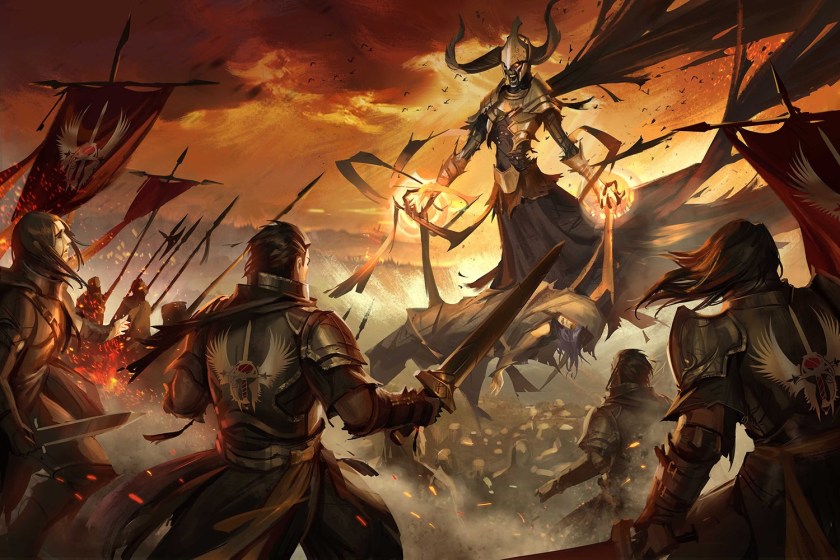
The Death of Arazni (Herald of Aroden) during the Shining Crusade. Art courtesy of Paizo Inc.
The Bestiary is up next! It contains a random encounter chart, two interesting social encounters, and five new creatures written by Ron Lundeen, Kyle T. Raes, and Mike Welham. All of the monsters in this book have ties to death and the Boneyard and two of them are featured in The Dead Roads adventure. Bonewrought Willow is an ominous looking intelligent plant capable of growing in Boneyard. Attracted to light and more benevolent than it appears this is a great CR 3 creature I can’t wait to confront my players with. Kaicherak are nasty little fanged worm beasts with ties to Achaekek and a fondness for messily gorging themselves on blood. At CR 4 they are among the most powerful new creatures in the bestiary. Mortics are living beings with strong connections to negative energy which makes them sort of like living undead. There are two mortic stat blocks included in the bestiary — the ghoulish elf-like angheuvore (CR 2) and the incredibly flexible halfling-like jitterbone (CR 4). As previously mentioned, more information on mortics is also included in The Half-Dead article. The final creature is the tooth fairy monarch, a CR 3 version of the lowly tooth fairy.
The last article is a campaign outline, written by Crystal Frasier and Ron Lundeen, that briefly details the events of the upcoming volumes of the Tyrant’s Grasp Adventure Path. Not the sort of thing you want your players peeking at! The campaign outline is incredibly useful for GMs.
Last month Paizo announced a the launch of a liveplay campaign that will feature the new Pathfinder Second Edition ruleset! Launching on April 4th and featuring Paizo staff members, this liveplay will be our first glimpse at the newly updated Pathfinder Second Edition rules.
GMed by Paizo’s Director of Game Design, Jason Bulmahn, the liveplay is called Oblivion Oath and will air live on Paizo’s twitch stream every Thursday at Noon Pacific for one hour. Episodes will go up on Paizo’s Youtube Channel a few days later. Each week since the announcement the players have sat down with Dan Tharp, producer of the show, to describe their characters and answer questions. The final character reveal happened last week and tomorrow marks the premiere of the Oblivion Oath campaign! Oblivion Oath will continue for an indetermined length of time.
Jason Bulmahn will be joined by four lucky Paizo Staffers, Gabe Waluconis (Paizo’s Project Manager) will be playing an Iruxi (lizardfolk) rogue named Zel. Katina Davis (from Paizo’s Customer Service Team) will be playing Zel’s best friend Mykah, a gnome wizard. Sara Marie (Customer Service and Community Manager) will be playing Carina Whisperbane, a runaway dwarf Redeemer Champion of Pharasma (Champion is the new term for Paladin, which can be of any good alignment. Paladins are LG Champions, Redeemers are NG Champions, and Liberators are CG Champions). And finally, Owen K.C. Stephens (Starfinder Design Lead) will be playing Qundle, a Celestial blooded goblin sorcerer capable of using divine magic and possessing a deep love of pickles. Unlike the previous Doomsday Dawn livestream, Oblivion Oath is meant to be a character driven liveplay that features the same players and characters week after week. Although it is sure to feature spoilers about the upcoming Second Edition rules, it’s not intended to teach viewers how to play Second Edition. It’s about story, and the characters helping to drive it.
The characters of Oblivion Oath! From the left: Zel, Mykah, Carina Whisperbane, and Qundle. Illustrated by PxelSlayer. Art courtesy of Paizo Inc.
Oblivion Oath takes place in Golarion in the year 4719, which makes it concurrent with the events of the final Pathfinder First Edition Adventure Path: Tyrant’s Grasp. Oblivion’s Oath is said to feature a glimpse at that AP, but not spoilers. Instead, it will be it’s own story.
“Four unlikely heroes set sail from the port of Vellumis aboard the Sleepy Sea Cat, a slow-moving barge sailing the waters of Lake Encarthan,” Jason Bulmahn revealed on Paizo’s blog. “Packed with travelers and cargo, Captain Heliana Ironeye assures everyone of a smooth journey north to Ustalav before turning south and making for the elven port of Greengold, but tensions aboard remain high. Terrifying rumors out of the west, combined with fires throughout the city have set folk on edge, and the barge contains more than a few eager to put Lastwall behind them. In the case of our heroes, that could not be more true…”
For more information on Oblivion Oath cast and characters check out Paizo’s Twitch Stream or Youtube Channel! A list of the current episodes it at the bottom of this post. Be sure to tune it to Paizo’s Twitch Streamweekly on Thursdays at Noon Pacific to watch Oblivion Oath live! The premiere is tomorrow!
There are no major product releases for Dungeons and Dragons this month (as far as I know).
Minis available in D&D Icons of the Realms: Waterdeep: Dungeon of the Mad Mage. Image property of Wizards of the Coast
D&D Icons of the Realms: Waterdeep: Dungeon of the Mad Mage. Image property of Wizards of the Coast.
Halaster’s Lab. A special miniatures collection from D&D Icons of the Realms: Waterdeep: Dungeon of the Mad Mage. Image property of Wizards of the Coast.
Eulogy for Roslar’s Coffer (Tyrant’s Grasp 2 of 6)
April will see the release of two Pathfinder books. Pathfinder Adventure Path 141: Last Watch by Larry Wilhelm continues the ongoing Tyrant’s Grasp Adventure Path. Pathfinder Campaign Setting: Concordance of Rivals takes an in depth look at monitors — neutral outsiders — including aeons, proteons, and psychopomps. In addition to details on a variety of monitor demigods, this book also contains occult rituals, details on monitor sects, a prestige class, and a bestiary.
Last Watch (Tyrant’s Grasp 3 of 6)
Pathfinder Campaign Setting: Concordance of Rivals
The most exciting Pathfinder release of April is Pathfinder Battles: Ruins of Lastwall! This brand new set of pre-painted miniatures comes in blind booster boxes that contain four minis each — one large figure and three small or medium figures. In addition to buying a single standard booster box you can order a brick of boosters (which contains eight boosters) or a case of boosters (four bricks for a total of 32 boosters). Anyone who orders an entire case of boosters may also order Pathfinder Battles: Ruins of Lastwall: Cemetery of the Fallen Set which is a collection of graveyard themed set dressing.
There have been a lot of wonderful renderings of this product’s miniatures released over the past month or so. Far too many to share here. Be on the lookout for further details on Pathfinder Battles: Ruins of Lastwall in a future blog post!
NOTE: According to WizKids, Pathfinder Battles: Ruins of Lastwall will be available in MAY, not April. The release date seems to have been pushed back a month.
Pathfinder Battles – Ruins of Lastwall Miniatures
Pathfinder Battles – Ruins of Lastwall Booster Box
Pathfinder Battles – Ruins of Lastwall – Cemetery of the Fallen Set
Pathfinder Battles – Ruins of Lastwall – Set Dressing
Pathfinder Battles – Ruins of Lastwall – Cemetery of the Fallen Set

 Hey everyone! Thanks for stopping by. Today we’re taking a look between the the covers of the latest ‘gods’ book: Pathfinder Campaign Setting: Faiths of Golarion! Although I’ll be mentioning what’s in this book and talking about my favourite parts, this is not meant to replace the book itself. The opposite, in fact! It’s meant to let you know what’s inside so you can decide for yourself whether this is a book that will be of use to you. For me? Definitely! Curious what’s inside? Read on!
 There are ten faiths discussed in this book. Each is a lesser detailed but very important faith. This includes a few racial faiths — the halfling goddess Chaldira Zuzaristan, the gnome goddess Nivi Rhombodazzle, the elf god Ketephys, and the dwarf god Magrim. It also includes information on deities from other regions of Golarion such as the Tien gods Hei Feng, Shizuru, and Tsukiyo, as well as the anadi goddess Grandmother Spider who is popular in the Shackles and Sodden Lands, the Vudrani god Gruhastha who is popular in Vudra, and the Razatlani goddess Kazutal who is popular in Arcadia. Each of these faiths is incredibly important to their respective cultures and I’m thrilled to see them get some of the attention they deserve. Information on the racial deities, especially, I feel was long overdue. Before sitting down to read this book I was most excited for further information on Ketephys, Shizuru, and Tsukiyo. All of the entries were great, but after reading I was most inspired to make worshippers of Grandmother Spider, Kazutal, and Tsukiyo.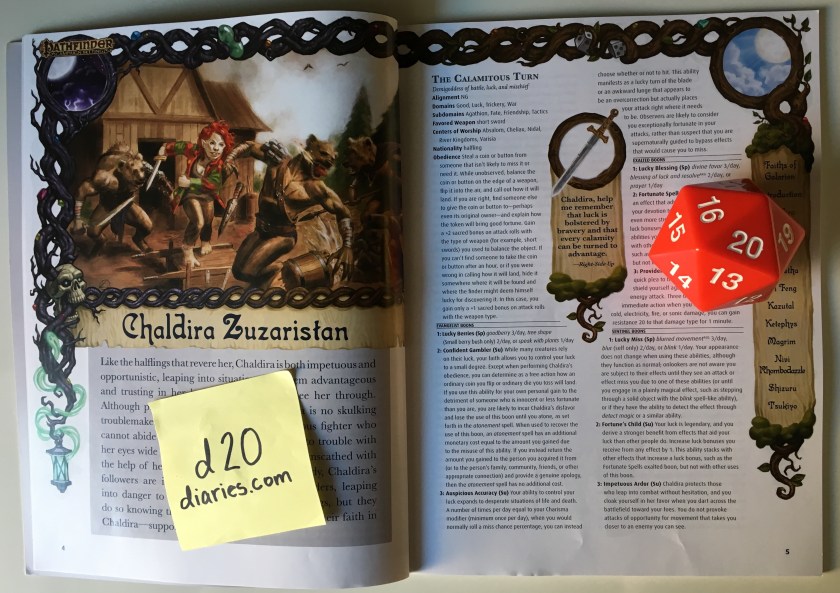






 contains everything players need to get started playing D&D – a basic rulebook, an adventure, a set of dice, five character sheets, and an awesome enemy to face off against – all in a retro red box with a Stranger Things twist. The adventure is written in the style of Mike Wheeler, a character and DM from Stranger Things, and pits PCs against a mysterious castle and the Demogorgon! The pre-made character sheets feature the kids D&D characters from Stranger Things, including Dustin the Dwarf, Will the Wise, and so on. Finally, the set comes with two Demogorgon figures (one painted and one unpainted). You can watch Stranger Things on Netflix (I highly recommend it!).
 include:

 by Larry Wilhelm, and
  by Crystal Frasier and
  and
and  and
and 


 is the base game, which include all the rules, the Dragons Demand adventure series, and a ton of cards. They’re also releasing
  which is designed to be mixed into the Core Set to create a whole new series of adventures. For more information on some of the changes you can expect to see in the newest version of the Pathfinder Adventure Card Game check out

 by Joe Pasini and the
  to look forward to, as well as


 it includes content from the
  (although all of the necessary stat blocks are included within the scenario). It utilizes
  , and a half-page custom map that will look very familiar to some players. For more information on the Shadow Plane check out
  and
and 

 and
and  and
and 


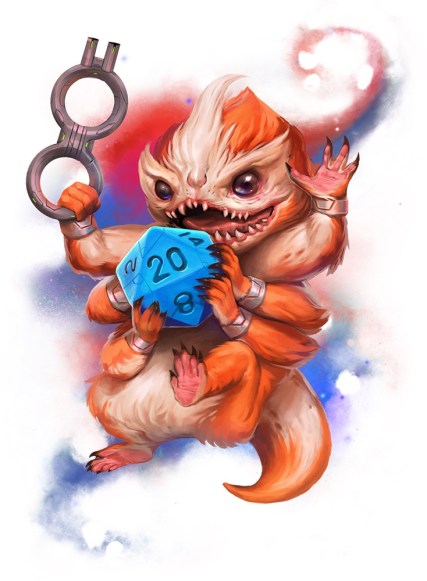
 is the size and shape of a deck of playing cards. It retails for around $10.99 USD (or around $15 Canadian dollars). There’s an adorable little skittermander playing with a d20 on the box, with some product information on the back.


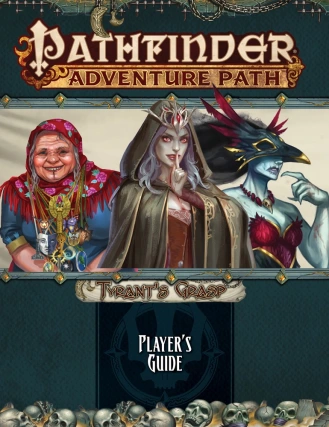 A wonderful Player’s Guide for Tyrant’s Grasp is available as a free download on Paizo’s website


 The first article, Tools of the Boneyard, is written by Matt Morris. In it you’ll find new gear and character options aimed at dealing with the dead. There is one alchemical remedy, one alchemical tool, and two alchemical weapons — bone burn is my favourite, so be sure to check it out! There are two new special materials useful for crafting — cryptstone can be used for ammunition and weapons, while spiresteel can be used for ammunition, weapons, and armour. Finally, there are five new magic items: crypt rod, grim helm, harbinger’s scythe, Lady’s Mercy, and Momument’s Truth. Although I enjoyed a lot of the items, it’s the character options that I found were most exciting. Graveslinger is a gunslinger archetype that specializes in combatting incorporeal undead. Soul Shepherd is a monk archetype that calm incorporeal undead and haunts with a touch. They also gain some otherworldly resistances and interesting ways to use their ki. Reaper is a new oracle mystery which I really enjoyed. Tightly themed and flavourful it’s capable of both killing the living and destroying undead. There are also six new barbarian rage powers including the psychopomp totem powers.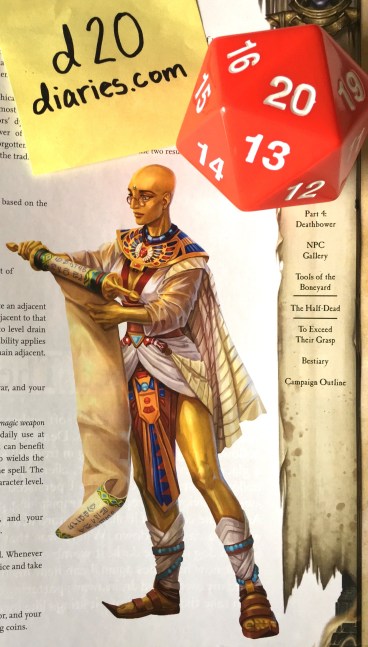
 by Jason Keeley,
  by Luis Loza, and


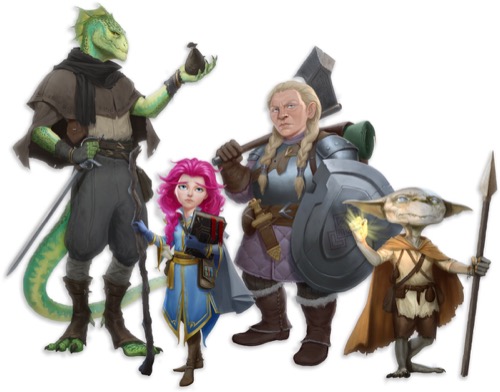
 miniatures! Produced by WizKids these pre-painted minis come in blind boosters, each of which contains four figures — one large or huge figure and three medium or small figures. In addition to a


 takes an in depth look at monitors — neutral outsiders — including aeons, proteons, and psychopomps. In addition to details on a variety of monitor demigods, this book also contains occult rituals, details on monitor sects, a prestige class, and a bestiary.


 and the

 !!! (Yes, it deserves all those exclamation points). Organized Play releases are


 d20 Diaries