Today we’re going to take a look at two of the most recent Pathfinder Society Scenarios that are currently available for purchase, and let you know we thought. Although you’ll find references to events in each that I liked or disliked, and comments about specific characters, these scenarios are not explored in detail. It’s not my intention to spoil the events in these scenarios, or give summaries and full reviews, but to share my opinions and provide recommendations. That said, if you want to avoid even minor spoilers then I recommend clicking on a different article. Whether you intend to use these scenarios in home games of the Pathfinder Roleplaying Game, sanctioned scenarios for use with the Pathfinder Society Organized Play, or just want to read a nifty new adventure, we’ve got you covered! So let’s get cracking!
Chalos Visanda from #10-18: The Daughters’ Due. Illustration by Leonardo Santanna. Art courtesy of Paizo Inc.
This adventure tasks the PCs with investigating four missing relics from the Blakros Museum which it’s curator, Nigel Aldain, insists were destroyed or stolen by Pathfinders during their many missions within the Blakros Museum over the years. His boss, Lady Hamaria Blakros, has invited the PCs to her museum to investigate or refute these claims. After this quick mystery the PCs can give their report to Hamaria and even pass judgement on Nigel himself — a turn of events that I’m sure many players will take a perverse joy in. Haha. From there the PCs head into Shadow Absalom, to track down the missing relics and retrieve them from the true thieves. PCs who have played in any of the Blakros-themed Pathfinder Society Scenarios over the years (there’s lots!) will find this mission more relevant and entertaining than those who haven’t. It’s particularly closely tied to the events of Pathfinder Society Scenario #2–11: The Penumbral Accords. PCs who have the “Acquainted with Aslynn” boon from Pathfinder Society #5-09: The Traitor’s Lodge and#7-09: The Blakros Connection have a chance to have a slightly different experience than players who haven’t, although its minor.
Start to finish, this scenario was an absolute joy! The investigations in the beginning of the scenario are interesting. There’s a wide variety of fun social encounters and quirky characters to interact with. The battles were challenging and dynamic, with one of them having the potential to be avoided with clever skill use. Best of all, this scenario includes multiple ways in which the PCs can make important decisions which will come to influence the Pathfinder Society in the future. Overall, I thought this was an excellent scenario that’s going to be a ton of fun to play. It brings the Blakros/Onyx Alliance storyline to a nice ‘conclusion’ for First Edition, which is clearly going to be picked up again in Second Edition. I can’t wait to see where it goes from here!
Ellux Shost, one of the gnomes PCs will have a chance to interact with during their investigation. Illustration by Hannah Boving. Art courtesy of Paizo Inc.
This adventure tasks the PCs with investigating a series of deaths in Kalsgard, all of which occurred in gnomes and were attributed to the Bleaching. Of course, the local priestess of Nivi Rhombodazzle, Quil Tabberdash refutes these claims. Venture-Captain Bjersig Torrsen and his husky Mahki dispatch the PCs to Kalsgard to meet up with Quil and get to the bottom of this mystery! PCs will have a chance to quickly check out a series of crime scenes, dead bodies, and petition neighbours and witnesses for information. As the mystery unravels the PCs will have a chance to follow two different avenues of inquiry with each resulting in a different encounter and event. To make matters even more exciting this is all happening on a backdrop of political turmoil in Kalsgard, and canny PCs can even pick up clues that this mission has a connection to an organization and Adventure Path I’ll leave unnamed. This scenario is a great little mystery that should move at a rapid pace. There’s lots of fun NPCs to interact with. Most are brief witness statements, but Quil is an absolute delight. I’ll leave the other NPCs and villains unmentioned to help prevent too many spoilers, but I will say I enjoyed them all. There’s quite a few fights in this one (although one will be excluded depending on your PCs actions), but it’s the final encounter that will likely prove most challenging. Particularly as the composition of the fight depends upon your PCs actions throughout the scenario. This means that some groups will find it difficult and others… less so. Although this could prove problematic, I think it’s a nice change of pace. I’d be interested to see how this plays out at game tables throughout the Organized Play Community. Overall I thought this was a fun and quirky murder mystery that made an effort to shake things up a bit. I particularly enjoyed that the PCs actions can alter the events and battles in this scenario. I give it four out of five stars.
Thanks for joining us today! We’ll see you again soon!
Archives of Nethys, an online database for official Pathfinder and Starfinder content and rules, recently announced the launch of their new website: 2e.aonprd.com! This new site will be dedicated to Pathfinder Second Edition and will launch on August 1st, 2019, at 7:00 am (Pacific Time). That’s right! It’s coming out the same day that Pathfinder Second Edition launches in print!
Exciting news!
Through the Archives of Nethys players around the world will have all the rules and characters options for Pathfinder Second Edition at their fingertips, online and free. I am absolutely ecstatic! I know cost is a huge factor to consider when deciding whether I’ll be able to give Pathfinder Second Edition a try. Seeing that barrier removed is amazing.
Hello adventurers! Today we’re taking a peek between the covers of Pathfinder Player Companion: Heroes from the Fringe! This delightful softcover book from Paizo Inc. focuses on a variety of non-human cultures and societies. The races explored in this book are dwarves, elves, gnomes, half-elves, half-orcs, and halflings — each of which has multiple heritages and cultures examined. There are also a few paragraphs on Tian ratfolk and the merfolk and sahuagin of Outsea.
Pathfinder Player Companion: Heroes from the Fringe is a soft cover book that is 32 pages in length. As a book in the Player Companion line, it’s aimed at players, which means that you won’t find a ton of world lore or secrets inside. Instead you’ll find character options — things like archetypes, feats, traits, spells, and more. The cover features dynamic art by Setiawan Fajareka which depicts the Iconic swashbuckler Jirelle and the Iconic bloodrager Crowe battling a pack of yetis in a snowy mountain pass. Why does a book about non-human races show a picture of a human on the cover? I don’t know! Technically there are a few traits in this book which could be taken by humans from specific regions, but none of them are meant for Shoanti characters. Whatever the reasoning, the art looks cool so I’m not complaining.
The front inside cover features artwork of a single mundane cultural item from each race along with a short paragraph of flavourful information on each object. There’s an Ekujae wand (elf), Sandkin holy symbol of Sarenrae (half-orc), First World gnome mask (gnome), Pahmet axe (dwarf), shoreborn trident (half-elf), and — my personal favourite — the Segada pouch (halfling).
Illustrated by Alyssa McCarthy. Art courtesy of Paizo Inc.
After this is the table of contents, the rules index, and the introduction which contains nine new traits tied to specific regions and cultures. Many of these traits can be taken by a variety of races. I really enjoy ‘mechanical expert’ for characters from Alkenstar and ‘resourceful scavenger’ for characters from Numeria, but it was ‘cliff strider’ for characters from Arcadia that was my favourite. This trait allows you to climb five feet without provoking an attack of opportunity for your movement as a move action, even if you don’t have a climb speed. Awesome! I’m always a fan of characters who can climb, so it’s a trait that’s sure to see some use. Next time I make and Arcadian, anyway. …Okay, so it might take me a while to get around to using that one. Haha.
Pahmet psammokinetic. Illustrated by Priscilla Kim. Art courtesy of Paizo Inc.
Moving on from the introduction we come to six pages on dwarves. Six dwarven heritages are explored: desert dwarves, Mwangi dwarves, Ouat Caste dwarves, Pahmet dwarves, Paraheen dwarves, and Sky Citadel dwarves. Each of these heritages also discusses which already printed alternate race traits they’re likely to select, and comes with a single new alternate race trait. I most enjoyed reading about desert dwarves and Mwangi dwarves, but it was the alternate race traits for desert dwarves (‘desert delver’) and Pahmet dwarves (‘death’s end’) that I liked the most. After the heritages there are new character options intended for dwarves of some of these cultures (although most of these options can also be taken by non-dwarves). There are two archetypes, seven weapons, and nine feats. The ‘psammokinetic’ is a lawful, monk-like sand kineticist common among the Pahmet dwarves. Believing the desert can burn away their imperfections, a ‘psammokinetic’ lives an ascetic life in the desert. Capable of bending sand, earth, and super-hot air to their wills, they also gain access to some ki powers which they can use to empower their kinetic blasts, bolster their AC, and increase the speed. I love this archetype. Of course, I also love dwarves and kineticists, so that’s not too surprising. The ‘symbol striker’ is a bloodrager archetype common among Sky Citadel dwarves. Capable of using rune-based magic they can place spell runes on their weapons, or rune traps on the battlefield. They also have useful and thematic spell-like abilities and treat linguistics as a class skill. The new dwarven weapons are the axe gauntlet (available either heavy or light), giant sticker (a polearm), pellet bow (available either heavy or light), ram hammer (a one-handed weapon), and sphinx hammer (a two-handed weapon). Of the new feats its the ‘cloak of stone’ feat tree and ‘hammer throw’ feat tree that I liked best.
A fire-breathing Mwangi dwarf.
The next six pages are all about elves. There are six heritages discussed, each with it’s own list of applicable alternate race traits and a new alternate race trait. Elven heritages include aquatic, Ekujae, Forlorn, Jininese, Spiresworn, and Snowcaster. I most enjoyed reading about the Jininese and Spiresworn elves. There are three archetypes in this section, but unlike the dwarven ones these are for elves only. The ‘calamity caller’ is a warpriest archetype intended for Ekujae elves that can call down the fury of nature and natural disasters at will but does not gain the focus weapon or sacred weapon abilities (this is my favourite elf archetype). The ‘twilight speaker’ is a skald archetype intended for Snowcaster worshippers of Findeladlara that grants access to some nifty raging songs (improved devotion, song of understanding, and song of secrecy). The ‘warrior poet’ is a samurai archetype intended for Jininese elves which is a graceful, lightly armoured combatant that dances across the battlefield. All three are very cool! Other elven character options include the ‘Order of the Songbird’ samurai order which values beauty, art, and life; two new sanctuary-themed bardic masterpieces (Findeladlara’s refuge and hymn of sacred lands), and three new magical items crafted by the Spiresworn elves (northern star ioun stone, southern star ioun stone, and farspear).
Up next is four pages on gnomes and although there’s less content, it’s no less exciting. In fact, many of my favourite character options and both of my children’s favourite character options are for gnomes. There are three gnomish heritages discussed in this section with each getting two new alternate race traits instead of one: Bleachlings, First World gnomes, and Segada gnomes. I don’t know much about Segada gnomes (or Segada at all) so it was my favourite gnomish heritage to read about. There’s only one archetype up for offer, but it was my daughter’s absolute favourite. ‘First World Caller’ is a wizard archetype that grants your familiar the fey-creature template and later grants them fairy wings. ‘First World Callers’ can summon fey creatures with summon monster spells, and can warp the world around them. My daughter can’t wait to use this ability to make an area completely without gravity. Haha. She’s really excited and is planning on making her next Pathfinder Society character a gnome wizard (first world caller). Likely in conjunction with the ‘spark of the uncanny’ feat from Pathfinder Player Companion: Wilderness Origins that gives your familiar the ability to speak. Other gnome options include the ‘whimsy’ emotional focus for phantoms (which is a ton of fun!), ‘bleaching’ psychic discipline, three new spells (pernicious pranksters is my favourite), and one new bardic masterpiece (wildsoul aria). Perhaps one of my favourite parts about the gnome chapter is a delightful piece of artwork that shows a bleachling spiritualist being teased by his whimsical phantom. Look closer and you’ll realize that the phantom isn’t the spirit of a dead gnome, but the spirit of the bleachling’s old self. His joy literally died. I love it! Haha.
A bleachling spiritualist with his whimsy phantom. But wait! Those two look awfully similar…
Half-elves are up next, followed by half-orcs. Both of these chapters have a lot in common. They’re both four pages long, both feature a vigilante archetype, and they both look at five different heritages. More than that, each of these heritages is one that has already been printed in Pathfinder Player Companion: Bastards of Golarion. Each has a paragraph of information on it and one alternate race trait. After that each has one feat. This feat and the rest of the character options are new additions.
The half-elf heritages examined are shoreborn (with the trait ‘child of the sea’ and the feat ‘gifts from the sea’), darkborn (with the trait ‘thinblood resistance’ and feat ‘strength in defeat’), wildborn (with the trait ‘jungle affinity’ and feat ‘sense allies’), spireborn (with the trait ‘Mordant envoy’ and feat ‘pinch time’), and snowborn (with the trait ‘cold-honed’ and feat ‘twilight words’). Other half-elf character options include the ‘half-elf double scion’ vigilante archetype which allows you to appear as a different half of your heritage (elf or human) in each identity, two new pieces of equipment (I love the poisoner’s buckler!), two magic items (seashell diving mask and soothing stole), two feats (be sure to check out ‘citystep’!), and two spells (false age and mark of spite).
Half-orc heritages discussed are gloomkin (with the trait ‘evader’ and feat ‘unraveler of secrets’), sandkin (with the trait ‘burning assurance’ and feat ‘dawn’s blessing’), rainkin (with the trait ‘warded skin’ and feat ‘great expectations’), cragkin (with the trait ‘cliffside charger’ and feat ‘precipice strike’), and frostkin (with the trait ‘unflinching valor’ and feat ‘frozen skin’). Unlike half-elf, there are two half-orc archetypes up for offer. The ‘ferocious hunter’ vigilante archetype allows a half-orc to pass for human in his social identity and then appears as a proud half-orc in his vigilante identity. ‘Terror weaver’ is a psychic archetype which is sort of like a scary enchanter. I think it would be a lot of fun. Finally, there are two half-orc feats: ‘lead by example’ and ‘solitary survivor.’
A half-orc terror weaver.
Halflings are next, but they have a very short (and not very exciting) chapter. Two heritages are included, each of which has two alternate race traits. Segadan halflings (with the traits ‘festive’ and ‘small quarter ally’) and Song’o halflings (with the traits ‘danger detection’ and ‘evasive nomad’). After this there’s four new magical items (check out the scatter sling!) and a series of four sling equipment tricks.
The last two pages of the book discuss a few other unique cultures. The ratfolk of Tian Xia are getting some love with a very cool ninja archetype called the ‘gunpowder bombardier’ and two new ninja tricks. And the residents of Outsea — both merfolk and sahuagin — get some new options. Merfolk have the alternate race trait ‘unexpected ally’ while sahuagin have the alternate race traits ‘sahuagin song’ and ‘stoic defender.’ There’s also a new combat style called ‘sahuagin blood frenzy’ which includes three feats.
And that’s it! The end of Pathfinder Player Companion: Heroes from the Fringe! I’m a huge fan of learning about other cultures (real or imaginary), so I really loved getting to see details on and character options for a lot of non-human societies. It’s brief, but fun. Unfortunately, I do have one complaint about the book I’ve yet to mention: coverquality. My copy of Heroes from the Fringe has a cover that’s a tiny bit smaller on one side than the pages inside the book, which means the pages are going to get the heck beat out of them in a short time — particularly when my children flip through it. It’s not a big size difference, but it’s enough of a difference to be irritating. I’m sure if I complained I could send it back for a new copy, but I’m way too easygoing to go to all that effort for a few millimetres. Haha. Even with the slightly shrunken cover it’s a good book and I’m happy to have it on my shelf.
Thanks for checking out d20diaries! I hope that taking a peek at what’s inside this Player’s Companion helped you decide if this is the right book for you. There’s plenty of great books out there (and I know I’m not the only one who can’t afford them all!).
It’s been a while since we talked about my family’s current home campaign, Shackled City. We haven’t stopped playing — far from it. But we’ve been so busy lately it’s hard to find the time to play anything at all, let alone write about it. So while I have a free moment let me welcome you back to Cauldron, home of the The Shackled City Adventure Path!
When we last left off our heroic musicians had finally returned home to Cauldron. They had saved a lot of people and brought down an underground slave ring, but they were ill at ease. Someone else knew about the slavers and had done nothing. Who were they? And what about the people they had failed to save? The people who were sold to unknown parties before our heroes were even hired to find them… Were they gone forever? Could four kooky members of an up and coming band possibly brave the Darklands to track them down? No! Surely they couldn’t do anything so foolish! ….Or could they…?
The Shackled City Adventure Path is available for purchase in its entirety here. The first volume, Life’s Bazaar, is available for purchase here.
The Heroes
Our eccentric heroes are all members of ‘Dinorabbit,’ a musical band that changes its name frequently and was most previously known as ‘Boople Snoot.’ The band’s lead singer and song-writer is Falco Rhiavadi, a foppish noble bastard of mixed Tien descent whose father was devoured by a dragon when Falco was just a boy. A well-groomed, handsome man with an easy smile and a winning personality, Falco’s a black sheep among his family. Mechanically, Falco is an oracle of life whose familiar is a jealous and demanding thrush named Ruby. Falco is played by my husband.
Mick Frimfrocket is a gnome with dark blue skin, bright pink hair that stands straight up on his head, and light blue eyes with flecks of red around his pupils. He’s energetic, bold, and loves nothing more than a good laugh! Mick acts as the band’s pianist and creative director. He’s the driving force behind the band’s constant name changes, and over-the-top performances. Mick was born in the gnomish enclave of Jzadirune but was brought to the city of Cauldron to escape the Vanishing. Orphaned by the mysterious events and with few memories of those early years, Mick was raised in the Lantern Street Orphanage — the very same orphanage that recently had four children kidnpapped right from their beds! Determined to save those little scamps, Mick was very excited to take up this missing person’s case and follow it to its conclusion — particularly when he realized that it led through his one-time home. Mechanically Mick is a monk / bard (prankster) who attacks with wild kicks while playing his piano in battle. Partway through exploring Jzadirune he came into possession of a broken magical construct. He’s played by my seven-year old son.
Rabbity Castalle is a rabbitfolk waitress who works at the Tipped Tankard Tavern. A dancer and singer for the band Dinorabbit, Rabbity also has a pet panther named Panthy. She’s lucky, nimble, and quick, but a little skittish. A co-workers of hers, Griffin Malek, was one of the recently abducted people, so she was very keen to solve this mystery and return him home. Rabbity is a hydrokineticist played by my six-year old daughter, using the rabbitfolk race. Rabbitfolk are a Pathfinder Compatible race created by my daughter (with some help) which will one day be published in the upcoming Realms of Atrothia: Primary Expansion by Sunburst Games. Rabbity recently ‘befriended’ (she thinks) a vicious howler named Prickles. What could go wrong?!
The final member of our party is Aeris Caldyra, a local locksmith who was cajoled by her roommate, Rabbity, to join the band as a percussionist and set designer. With few friends to call her own, Aeris relented to the rabbitfolk’s request and is the least talented member of the band. The last worshipper of Alseta in Cauldron, with more than a few secrets and regrets, Aeris is a suli bloodrager with a chip on her shoulder. Always one to lend a hand, like her Grandfather Marzio once would have done, Aeris was determined to rescue the missing citizens of Cauldron. Aeris is my character for the Shackled City Adventure Path.
The jungle city of Cauldron, located in the bowl of a dormant volcano.
The members of Dinorabbit and their newly liberated Cauldronites arrived in Cauldron to little fanfare. They brought the people they had freed from slavery to the Church of Abadar — the group who had hired them to find four missing orphans — and spoke with it’s current leader, Jenya Urikas. The authorities were called and the group had just enough time to ask about Terrem Karatys, one of the four children they had been tasked to save. Terrem had been free by our heroes only a few moments before a monstrous beholder had appeared and stole him away again. They admitted their failings to the Priestess, who looked confused.
“Oh? You didn’t save Terrem? Well, he is here safe and sound. He arrived on our doorstep before any others.” She counted out the coins she owed the group for saving three of the four children and handed it to them with a smile. “A pleasure doing business with you.”
My family was more than a little confused. Why would a beholder go to the trouble of stealing an orphaned kid that they had saved from slavery just to bring the kid home? And this beholder… He wasn’t the only one interested in Terrem. The Last Laugh Thieve’s Guild also wanted the boy. In fact, they had gone as far as tasking the orphanage’s janitor, Patch, with keeping an eye on him. Strange… Our heroes tried to speak with Terrem, but the boy would say nothing.
Suddenly the town guard arrived and everyone — victims, heroes, and even some priests — were brought to the Garrison for questioning. The PCs were interviewed over and over by the authorities. The guards looked for holes in their story. Incongruities that might show they had something to do with the kidnappings… They were lectured on the legality and dangers of vigilanteism. Informed that the entirety of Jzadirune and the Malachite Fortress were off limits — it was an active crime scene, after all. The poor musicians were so busy they barely had a moment to stop and breathe. After a few days they received one last warning from Terseon Skellerang, Captain of Cauldron’s city watch, and were sent on their way.
On the way out they ran into Krylscar Endercott, a town guard who was among those that had been abducted from his home by dark folk and then saved by Dinorabbit. Although he was badly wounded when they found him, he grinned at the sight of them and asked for a blade. The stubborn fool was a big help in getting everyone home safe. They chatted with him a bit, and bid him farewell.
Upon re-entering the city for the first time in days they were shocked to discover that although their deeds were well known, their identities were not. A heinous crime! While Aeris returned to work at her locksmith shop, the rest of the band spent some time spreading word of their triumphs and of an upcoming performance — which they had yet to schedule. The next few days were marked with frivolities — writing, practising, performing, rumourmongering, and so on. Falco took these responsibilities very seriously, intent on milking their newfound fame for all it was worth.
Rabbity discovered that Griffin, the friend she had worked so hard to save, was out of a job. He had been replaced as bartender and was now stuck waiting tables. Also, Rabbity had been fired. She hadn’t been into work in nearly a week and left no word as to why, so that wasn’t too much of a surprise. Still, my daughter was a little insulted. She also worried about her pet howler, Prickles, who was currently locked inside the Malachite Fortress, hopefully not killing (or being killed by) the investigating city guards. Deciding they needed to sneak into Jzadirune and save him before he got into trouble, Rabbity concocted a plan. She looked into the people who they hadn’t saved and picked out one whose home was close to Jzadirune — 52 Ash Avenue, the home of skinner Rikaldo Veskar. Rikaldo had a tiny, blood-stained, stinky home that had been abandoned 37 nights. Knowing that he had been sold to unknown buyers in the Darklands and wouldn’t be returning, my daughter set out to purchase the building from the city. She sought guidance from her friend Ruphus Laro at the Church of Abadar and determined the steps to take to buy the building. It cost more than she had, but she managed to convince the group it was important. They pooled their money and bought the house. Then Rabbity asked Falco to start using his stone shape spells to tunnel out a passage from their new junky home to Jzadirune. With some luck and planning they’d be able to get to Prickles before he killed anyone. Hopefully….
Mick was equally busy. He spent a lot of time trying to figure out how he could legally get his hands on Jzadirune. Deciding he needed help he sought professional guidance from the Church of Abadar, just as Rabbity had. With their legal advice he put together a plan to legally acquire the underground complex. And so he set out to track down the original ownership paperwork, and the living descendants of Jzadirune’s founders. There weren’t many of them. Only six. So Mick set out to barter with them over ownership, in the hopes they would turn it over to him. Hopefully, when all is said and done, he could legally claim the property from the city.
Aeris spent her time working, patrolling the town, and looking for a sign that matched the mysterious Kingfisher symbol they had discovered on a letter written to the slaver Kazmojen. She discovered nothing.
There was plenty the group did together, as well. They visited the orphanage, Church of Abadar, and all the other people they had saved, double checking they were safe, healthy, and reintegrating back into society. Patch was fine and back at work. Apparently he had managed to keep his affiliations with the Last Laugh Thieve’s Guild a secret. The orphans were a little traumatized — all except for Terrem who seemed unconcerned over the entire ordeal.
Krylscar had returned home to find his parents hadn’t even been looking for him. Turns out they thought he had robbed them and fled the city — the jerks! He was trying to find himself a new place to live, but not having any luck. At work everyone treats him like a weirdo and he’s angry that they never saved him. In fact, he was generally an angry guy. Still, he had friends. He remained close with his pal Griffin, and often showed up to hang out with the members of Dinorabbit. They knew he wasn’t some shifty loser. They knew he was a good guy. (My family really grew to like this guy! Haha).
Jasper and Jeneer had gone back to work like nothing had happened. Jasper teaches math at Bluecrater Academy, and Jeneer is a jeweller’s apprentice. The group saw Maple, a suspected member of the Alleybashers gang, on the streets from time to time, but she never stayed to chat. And Coryston Pike, the retired adventurer, made it home, but hadn’t been seen around town since.
But, not everyone had recovered. Sondor (the dwarven cartwright), Deven Myrlzal (a teenage human lamplighter), and Irruth Mercadi (a chandler), were all traumatized by their experiences. They wouldn’t talk. They just sat still, scared, and sad. Currently they were at the Church of Abadar, but they would need to head home soon. As Priestess Jenya Urikas plainly pointed out, the Church of Abadar was not in the business of charity.
When the group discovered that Keygan Ghelve had been arrested they went to visit him. My kids were a little upset about his fate. Did he really deserve to be arrested? Out of fear he had helped the kidnappers and slavers, but he had also fought alongside our heroes to free them again. Of course, he had done that only because the group had forced him to… In time they realized that Keygan’s fate was out of their hands. Instead they offered to take care of his rat familiar, Starbrow, and his home. It took some bargaining and a signed contract, but Keygan agreed to transfer ownership of his home and locksmith shop to the members of Dinorabbit on the condition they took care of Starbrow, they did not sell any of his paintings or his grandfather clock, and they didn’t bring their meddlesome pets into his home. When he was released from prison, ownership of his home and shop would revert to Keygan. Keygan was grateful, and they began to feel a little better about this whole ordeal.
In time they discovered a vandalism problem in Cauldron. Someone had been painting words on buildings in goblin. Things like “Murrd wrote this!” “Snurk smells like dung!” and “Drakthar has bat ears!” Luckily, Mick could speak goblin and was pretty sure the culprits were a gang of goblins. Which was absurd! Everyone knew no goblins lived in Cauldron! Determined to prove he wasn’t crazy, the group stayed up late a few nights, attempting to catch the vandals red-handed. Although they came close, the only thing they managed to earn was a scolding from the guards for suspicious behaviour. Whoops!
One day the group received a summons from the Mayor’s Office. They hurried over and were told that the mayor — Lord Mayor Severen Navalant — wanted to host a ceremony in honour of their deeds. Although it was clear he was hoping to use their newfound celebrity status to bolster the public’s opinion of him, the band didn’t mind. They wanted to do the same to him, after all. Together they made some plans and the party was scheduled, with Dinorabbit making a headlining performance. The Mayor also asked about their experiences under Cauldron and their opinions on what should be done about Jzadirune, the Malachite Fortress, and the passages to the Darklands. Mick took this opportunity to share his plans to acquire full ownership of Jzadirune while Rabbity petitioned for her ‘beloved’ new pet Prickles to be returned to her at once! The Mayor smiled and assured them he would take it under advisement. The group was skeptical he would, but had little choice but to accept him at his word.
The days leading up to the festival were hectic, with even Aeris practising as much as she could. They put on a lot of other performances, both big and small. My family was happiest to earn themselves a performance at both the Cusp of Sunrise (a fancy social club that was for the nobility) and the Coy Nixie (a fancy restaurant where they first began their adventure). Before they knew it the party was upon them. Much to their surprise the mayor named them ‘Champions of Cauldron’ — a position which he later assured them had no real responsibilities to go with it — rewarded them the deed to Jzadirune, and gave them a new task: putting an end to the goblin vandals that have been irritating the town! Both shocked and pleased at this turn of events, the gang agreed. Not that they were given a choice…. Haha. After the ceremony the party began, and my family had a blast describing their performances and songs. The night ended with fireworks, and a few angry scowls from Captain Skellerang.
The next day would see them busy again. Plans had to be made for Jzadirune and Prickles had to be liberated. The Lord Mayor’s secretary informed them that the Malachite Fortress would be turned into a guard post for the Town Guard so that the entrance to the Darklands could be properly protected. This, of course, meant that they would need to have engineers remodel the entrances to both Jzadirune and the Malachite Fortress a bit. Both the members of Dinorabbit and the Town Guard had to be able to access different parts of the complex without traipsing through the others space. I handed my kids a map of Jzadirune and asked them for their ideas. They also got to make plans for the engineers to fix up some of Jzadirunes broken walls and tunnels while they were at it — courtesy of a small grant provided to them by the Mayor’s Office. A surprise my kids found very exciting! Even more exciting? The group got to visit Jzadirune and Rabbity retrieved Prickles. Happily he did not try to devour her. Yet.
By the time Dinorabbit left Jzadirune and began to walk home they were greeted by rain. More than that. It was a downpour. Fall had come to Cauldron, which meant the rains would continue for a few weeks more, at least. It was misty out. Cool and dark. There was a chilling howl on the wind — like that of a wolf. On the side of Aeris’ locksmith shop was more goblin graffiti.
“Who builds town in volcano? Stupid humans!”
The gang sighed.
Tomorrow they would need to put aside their ambitions and get to work. The had a gang of vandals to catch.
Behind the Screen
The Shackled City Adventure Path is a difficult to get your hands on adventure path published in eleven separate Dungeon Magazines, or available in hardcover from Amazon here or from Paizo Publishing’s website here. The first adventure, Life’s Bazaar is available in Dungeon Magazine #97 from Paizo Publishing’s website here. A copy of the premade player handouts is available from Paizo here.
Despite being a 3.5 Dungeons and Dragons Adventure Path, we’re running this campaign with Pathfinder (both the campaign setting and the ruleset). Our characters utilize content from many sources, some of which are listed below.
Today we’re taking an in depth look at the first book in the Tyrant’s Grasp Adventure Path! This survival horror campaign pits the players against the return of the Whispering Tyrant, the lich-king Tar-Baphon, who was defeated and sealed away long ago. Tyrant’s Grasp will be the final Pathfinder 1st Edition Adventure Path released, before the switch is made over to Pathfinder 2nd Edition in August. Intended to take characters from levels 1 to 17, Tyrant’s Grasp is six volumes long.
A wonderful Player’s Guide for Tyrant’s Grasp is available as a free download on Paizo’s website here. The Player’s Guide gives players a relatively spoiler-free way to properly prepare for and integrate their characters into the Tyrant’s Grasp Adventure Path. I highly recommend checking it out!
The Tyrant’s Grasp Adventure Path begins with Pathfinder Adventure Path: The Dead Roads (Tyrant’s Grasp 1 of 6). Written by Ron Lundeen, The Dead Roads is an adventure intended for first level characters, which should bring PCs up to level five by its conclusion. This adventure begins when the PCs awaken already defeated in the Boneyard, a land where the dead go to be judged. There’s just one problem… They’re not quite dead. Trapped inside a tomb that doesn’t belong to them, they’ll need to escape, figure out what happened to them, and find a way to return home. But, how could one possibly escape the land of the dead?
Let me start by saying that The Dead Roads — and the Tyrant’s Grasp Adventure Path — is not for everyone. Terrible tragedies will occur, and you won’t always be able to prevent them. These events are bound to have a lasting effect on your characters, so players should be prepared to consider and role-play the marks left by the trials you face. Often you’ll be in dire situations with limited resources, so players will need to be resourceful to survive. Plenty of the imagery and events in this adventure are dark, morbid, and sorrowful. It’s definitely a horror campaign — though not your typical horror. It’s suspenseful survival horror, with a good deal of body horror in the first book, as well. The Dead Roads contains imagery that is inappropriate for children and some adult gamers will even consider an image or two disturbing. It’s definitely not a campaign I could play with my family.
That said, I loved The Dead Roads. Absolutely, positively, adored it.
For starters, it looks great. From cover to cover it’s a wonderful, high quality book filled with nice maps, and beautiful, dark artwork. The cover depicts Mictena (a catrina psychopomp the PCs are destined to interact with) in the foreground. Behind her is an image of Seelah (the Iconic paladin) and Yoon (the iconic kineticist) battling ostovites. Both images are by Igor Grechanyi. There’s a lovely map of The Gravelands (Lastwall and parts of Ustalav) on the inside cover. There’s a ton of artwork throughout the book — of enemies, allies, and characters who could become either. I particularly enjoyed the art for Prince Uspid and Mictena. Colulus was the most disconcerting image in the book. If any image is going to bug a squeamish player it’ll be that one. There’s a few characters that I wish had art but don’t (which is expected! Art’s not cheap and there’s only so much space!). Ayuki, in particular, would have been nice to see, as well as the jitterbone creature in the bestiary. The maps, all drawn by Matthias Rothenaicher, are really nice. They look great, of course, but they’re also well thought out, executed, and each has a unique feel to it. I particularly enjoyed ‘Roslar’s Tomb’ and ‘Deathbower.’ I wish that the maps of the various Dead Roads locations were given a bit more space, though. Squishing three multi-floor maps for three different locations onto one page is good for page count, but makes some of the maps difficult to read. Part of the eastern end of the ‘Palace of Teeth’ is nearly lost in the creases of the binding, while the entrance to ‘Salishara’s Scriptorium’ is hidden in the creases. If both of those maps were a few grid squares further to the left that would have been less of a problem. Finally, flipping back and forth between the map page and the various locations depicted in it (which is spread out over 28 pages) is a bit irritating. Have a bookmark or post-it note handy and try not to tear your pages. Much to my surprise there was also two player handouts which represent puzzles the group comes across. I’m really glad they’re depicted instead of just described. They’re necessary and a really nice touch.
Part of the maps lost in the creases.
The Dead Roads starts with a bang (HA!) and doesn’t let up. The entire opening has the feel of an ominous, suspenseful mystery. Your PCs don’t know where they are, how they got there, or what’s going on. Their locations hide clues to both their situation and the history of wider events, which the PCs may or may not be able to uncover. In time they will discover the answers to some of their questions, just as they realize it’s tied to an even bigger mystery.
There’s a lot of wonderful social encounters and NPCs in this adventure. Number Three, Barple Stonebreaker, Prince Uspid, Queen Carnassial, Kishokish and his portrait, Ayuki, Salighara, Berthold, the wyrwoods, Mrs. Pedipalp, Aydie, Reedreaper, Mictena — there’s just so many great interactions in this adventure! Among them, three particularly stand out amongst the crowd: interacting with the townsfolk of Roslar’s Coffer is poignant and amazing; speaking with Barzahk the Passage; and — my personal favourite characters — Umble and Thoot! This pair of friendly psychopomps are the best!
Umble and Thoot
Prince Uspid
Deathbower
Many of the creatures and NPCs you come across don’t look friendly — which doesn’t mean they aren’t friendly. Of course, it doesn’t mean they are friendly, either. Which I love! Appearances have no bearing on what a creature acts like and I appreciate that this adventure used that so effectively. It’s bound to throw players for a bit of a loop and make them feel… off-kilter. Which is great!
There’s a lot of challenging encounters in this adventure and plenty of unique monsters to face off against. I particularly enjoyed that so many can end in ways other than violence. But, don’t let that last sentence lull you into a false sense of security! There’s a lot of combat encounters in this book that cannot be avoided.
And the ending! Oh, the ending! I love it! I cannot wait to get my hands on the next book in this Adventure Path! I have a feeling Eulogy for Roslar’s Coffer is going to be just as good.
And now it’s time for a warning:
We’ve got more to say about this adventure, but it’ll come with spoilers! Don’t want to read them? Skip on past this next section until you see the large words ‘SPOILERS OVER.’ Got it? Good! See you on the other side where we’ll talk about the extra content in this book!
SPOILERS
The Dead Roads adventure is split into four major parts: Awake in Roslar’s Tomb, Among the Dead, Walking the Dead Roads, and Deathbower. One of these parts Walking the Dead Roads is particularly dense and is made up of three major locations: The Palace of Teeth, Nine-Eaves, and Salighara’s Scriptorium. All told The Dead Roads adventure is 52 pages in length with six pages afterwards dedicated to three NPCs: Mictena, Mrs. Pedipalp, and Reedreaper. All three of these are enemies the PCs will come across, but only one of them has to stay that way. The PCs have a chance to convince the other two to step aside without violence (although it’s extremely hard to accomplish for one of those two!).
Through this adventure the PCs will get to interact with psychopomps, a type of outsider native to the Boneyard who work to ensure that the processing of souls is done accurately and efficiently. Typically functioning as guides for the souls of the deceased, the psychopomps are confused over what to do about the mysterious PCs. Some will help them along their way (especially the delightful Umble and Thoot!) , and others with hinder them — particularly Mictena, a catrina psychopomp obsessed with putting the PCs spirits properly to rest. Through a good thorough death, of course! Psychopomps aren’t the only enemies and NPCs the players will interact with. The Boneyard is a huge realm, and there’s plenty of creatures living/stranded/invading there. Other major groups of enemies include fey, vermin, sakhil, and nightmarish beings from the Dimension of Dreams.
Fittingly, The Dead Roads begins with death. Lots of it. The entire town of Roslar’s Coffer has been destroyed in one terrifying instant. Including the PCs. I’ll leave the details out of this article, but suffice to say this will have a lasting effect on your players and their characters. Any family, friends, and companions — pets included — that lived in Roslar’s Coffer are dead. Although it might be tempting to warn some players about this in advance, that also will ruin some of the surprise and likely result in players purposely making no personal connections to the town of Roslar’s Coffer — which would be a mistake in my opinion. Every GM will need to judge their players accordingly, and perhaps provide them with some hints and warnings while they build their characters and backstories. In my opinion this event is handled incredibly well throughout this adventure, and I highly recommend allowing players to make a character with personal connections to Roslar’s Coffer. It adds so much to the story. However, it is important to inform PCs that if they have animal companions, mounts, or they are a wizard with a familiar, they will not have access to their pet at the start of the campaign. Player’s who have read the Tyrant’s Grasp Player’s Guide will already be aware of this, although they won’t (accurately) know why.
Happily, the player’s experience doesn’t begin with the death of Roslar’s Coffer. Instead, Part One: Awake in Roslar’s Tomb begins with the PCs waking up in a stone coffin. Literally entombed they need to push their way out of the stone box and into a cold, dark, mausoleum. It’s a great opening. Players and characters alike are bound to be curious what has happened and where they are. Players begin with any gear they had that could reasonably fit in a coffin with them. Any familiars who share a soul with your PCs (a shaman or witch familiar) will be in a coffin of their own, while all other companions are not present (as they are dead). Eidolons and phantoms can be summoned back normally, although all other familiars and companions will need to be replaced at a later time.
Soon, the PCs will discover they’re in someone else’s tomb — Ervin Roslar, Knight of Ozem and hero of the Shining Crusade. The same man that Roslar’s Coffer is named after, in fact. Interesting! As they navigate the tomb they’ll find strange creatures, animated bones (sort of…), a trapped spirit, and a tribe of mites. They’ll also discover that Ervin Roslar may have had a few secrets of his own, although it’s unlikely they’ll unravel his history completely. This section of the adventure is a suspenseful series of explorations, mysteries, tantalizing clues, and challenging combats. It’s going to be a ton of fun to both run and play.
Part Two: Among the Dead begins when the PCs exit Roslar’s Tomb to find themselves face to face with a pair of spooky looking (and absolutely delightful) psychopomps: Umble and Thoot! Seriously, they’re awesome. This quirky pair give the PCs some answers to their most pressing questions and explains that not only are the PCs dead and not dead at the same time — weird! — the rest of Roslar’s Coffer is well and truly dead. They ask the PCs to lend them a hand in convincing the spirits of the dead of Roslar’s Coffer that they are, in fact, dead. These poor fellows need a hand moving everyone on to the afterlife in a calm and orderly fashion! The PCs get to travel to a phantom version of Roslar’s Coffer where they interact with all the people in town — now dead. This is an amazing section of the adventure. Short and poignant, the GM has a chance to show the PCs what has happened to all their family and friends. They’ll need to convince loved ones to move on, and will have a chance to say goodbye. If they have any pets they’ll find them here as well. The adventure itself provides rules for interacting with these spirits, how to convince them to move on, and some tactics that will let them do it in a timely fashion — namely convincing the town leaders of their death. Some PCs will want to stay behind and die along with their family, others won’t have personal connections to the townsfolk, and others still will want to ‘save’ some of these spirits and attempt to return them back to life. There’s plenty of guidance in this book for handling PCs of every kind. After accepting their death the people of Roslar’s Coffer — even familial loved ones — want answers for what happened to them. The PCs are uniquely positioned to uncover this. And, of course, any spirits who can’t be convinced to move on (including those your PCs may want to bring back) will deteriorate in time until they become undead ghosts and other malevolent entities. Umble and Thoot can explain this to the group and ensure no PCs attempt anything so foolhardy. Also in this section the PCs are first introduced to the antagonist of this adventure, Mictena. Overall, this section of the book is among my very favourites. It’s exceptionally well handled and sure to be an emotional experience for players and characters alike. It’s a truly unique roleplaying opportunity. I’m not an overly emotional person, but I’m quite certain that if I was playing this with any character who had even a modest amount of family or friends in Roslar’s Coffer, under an even remotely talented GM, I would cry — in a good way! It has the potential to really tug at the heartstrings.
Part Three: Walking the Dead Roads begins after the PCs have helped the people of Roslar’s Coffer accept their death. Umble and Thoot, who are grateful and believe that since the PCs are only slightly dead they’re not truly dead at all, offer the PCs a way out of the Boneyard. The Dead Roads. They explain that this secret path is only ever trod by psychopomps and gatekeepers, the beings who watch over what amounts to traveller’s checkpoints along the road. Capable of leading anywhere, the PCs can use the Dead Roads to get home to Roslar’s Coffer (so they can figure out what’s happened) by taking a certain path. They’ll need to stop at the three checkpoints along the way and get stamped by that location’s master. Convincing them to grant the stamp should be the hardest part of the journey. Unbeknownst to Umble and Thoot, politics and turmoil have overtaken the three waystations, making each location more dangerous than expected. These locations may be visited in any order, although they are presented in order of difficulty (which is also how I recommend playing them).
The Palace of Teeth is a small castle ruled over Queen Carnassial and her court of tooth fairies. Not long ago her son, Prince Uspid, led a coup against her, and the two factions have been locked in a stalemate ever since. Although Queen Carnassial is the only one with the authority to stamp the PCs (at least until her death) it’s Prince Uspid the PCs are destined to meet first. They’ll need to navigate, bargain, and battle their way through bickering fey factions. They might even get to keep all their teeth…. This location is simultaneously goofy in a crazed sort of way and disconcerting. Although the Palace of Teeth was once a beautiful castle it’s undergone a rather morbid makeover since the fey moved in. The place is creepy and it’s denizens literally want to yank your teeth out. That can make bargaining… weird. Haha. I love the art for both the tooth fairy monarchs (particularly Prince Uspid!) and the stained glass angel. But, in my opinion, the creepiest encounter involves a pair of soulbound dolls in the midst of acting out a rather bloody play about dentistry. They attempt to make the PCs their next patients, using deep slumber and some particularly creepy statements. It’s awesome! Haha. The Palace of Teeth is my favourite location on in part three.
Nine-Eaves is a three storey manor owned by an old shoki psychopomp with a fondness for games and puzzles. Unfortunately, Kishokish’s manor has been invaded by sahkil and he’s now a prisoner in his own home. They PCs will need to free him if they want to get his stamp. Luckily they’re not without allies. An animated portrait created to pose riddles to visitors can lend the PCs a hand — if they can solve his puzzles! There are three puzzles total, and each one solved can earn the PCs information and advice. They’ll need to traverse the house as they seek answers, battling vermin, sahkil, and an unfettered phantom named Ayuki. I really enjoyed the puzzle aspects of this location.
Salighara’s Scriptorium was created by Salighara, a reclusive viduus psychopomp who is studying the Dimension of Dreams and oversees a crew of wyrwood scribes. Mictena attempted to convince Salighara to kill the PCs on her behalf, but was rebuffed. Mictena then offered the same deal to Salighara’s assistant, a plump woman named Mrs. Pedipalp (actually an aranea from a nightmarish section of the Dimension of Dreams). Happy to take the powerful psychopomp up on her offer, Mrs. Pedipalp has ousted Salighara from her own scriptorium and remade the building in her own image. Now a dark place of nightmares and horror, the PCs will need to set things right. This is definitely the most horror-themed location in The Dead Roads, with traps, haunts, and horrifying enemies. Colulus, a flayed ettercap and long-time minion of Mrs. Pedipalp is by far the most horrifying. But, even the Scriptorium is not without potential allies. PCs get to meet Salighara, some upset wyrwoods, and a ratling named Berthold. Mrs. Pedipalp herself is a great opponent — a capable liar, powerful spellcaster, and nightmarish foe all wrapped up in a kindly looking package. I particularly like her tactics. That said, it’s likely Colulus who will give parties the most trouble.
After receiving their stamps the PCs can finally traverse the rest of the Dead Roads and return to the land of the living — not! Mictena refuses to let them go! She magically relocated her domain, Deathbower, right onto the Dead Roads so that she and her dangerous shabti gardeners can kill your PCs properly. Which brings us to the final section of the Dead Roads adventure, Part Four: Deathbower. I love this location and its map. I love the inhabitants — gardeners, friends, and foes. And I love Mictena herself. Despite being an enemy of your PCs she’s not a bad being. She’s a psychopomp just doing what she thinks is right. Which is cool! Although some of the hazards and enemies in this glorious garden must be confronted head on, some characters can be swayed and may even join you for a while. Reedreaper is a particularly interesting character, although it’s unlikely he sticks around long enough to play much of a role. Even Mictena can be talked down — theoretically. The chances your PCs will be able to roll high enough are incredibly slim, but it could happen. Which I really like.
After leaving Deathbower behind the PCs find themselves back on the Dead Roads and greeted by an incredibly powerful psychopomp, Barzahk the Passage, a demigod and master of the Dead Roads. This enigmatic figure whisks the PCs off to their home in a matter of moments, giving them a bit of time to ask him any questions they might have. I thought this was a great moment and a wonderful way to end the adventure.
SPOILERS OVER
In addition to The Dead Roads adventure, this volume contains two articles intended for both GMs and players, one article solely for the GM, a campaign outline, and a bestiary containing five new creatures.
The first article, Tools of the Boneyard, is written by Matt Morris. In it you’ll find new gear and character options aimed at dealing with the dead. There is one alchemical remedy, one alchemical tool, and two alchemical weapons — bone burn is my favourite, so be sure to check it out! There are two new special materials useful for crafting — cryptstone can be used for ammunition and weapons, while spiresteel can be used for ammunition, weapons, and armour. Finally, there are five new magic items: crypt rod, grim helm, harbinger’s scythe, Lady’s Mercy, and Momument’s Truth. Although I enjoyed a lot of the items, it’s the character options that I found were most exciting. Graveslinger is a gunslinger archetype that specializes in combatting incorporeal undead. Soul Shepherd is a monk archetype that calm incorporeal undead and haunts with a touch. They also gain some otherworldly resistances and interesting ways to use their ki. Reaper is a new oracle mystery which I really enjoyed. Tightly themed and flavourful it’s capable of both killing the living and destroying undead. There are also six new barbarian rage powers including the psychopomp totem powers.
Thrilled to see shabti get some attention!
The second player friendly article is written by Mikhail Rekun and entitled The Half-Dead. This section talks about four races that have a strong connection to death and the undead. In addition to providing details and character options for dhampir, duskwalkers, and shabti, it also talks about the new subtype of creatures, mortics. Dhampir appear alongside two magical items, duswalkers have access to five new feats, and shabti have access to five new feats. I was particularly excited to see shabti included.
The next article, To Exceed Their Grasp, is written by Crystal Frasier and intended for GMs only. This article discusses some of the important concepts, characters, and events of the Tyrant’s Grasp Adventure Path and the role they play in the overarching story. It also contains a timeline. This is incredibly useful for GMs an will likely be referenced throughout the entire Adventure Path.
The Death of Arazni (Herald of Aroden) during the Shining Crusade. Art courtesy of Paizo Inc.
The Bestiary is up next! It contains a random encounter chart, two interesting social encounters, and five new creatures written by Ron Lundeen, Kyle T. Raes, and Mike Welham. All of the monsters in this book have ties to death and the Boneyard and two of them are featured in The Dead Roads adventure. Bonewrought Willow is an ominous looking intelligent plant capable of growing in Boneyard. Attracted to light and more benevolent than it appears this is a great CR 3 creature I can’t wait to confront my players with. Kaicherak are nasty little fanged worm beasts with ties to Achaekek and a fondness for messily gorging themselves on blood. At CR 4 they are among the most powerful new creatures in the bestiary. Mortics are living beings with strong connections to negative energy which makes them sort of like living undead. There are two mortic stat blocks included in the bestiary — the ghoulish elf-like angheuvore (CR 2) and the incredibly flexible halfling-like jitterbone (CR 4). As previously mentioned, more information on mortics is also included in The Half-Dead article. The final creature is the tooth fairy monarch, a CR 3 version of the lowly tooth fairy.
The last article is a campaign outline, written by Crystal Frasier and Ron Lundeen, that briefly details the events of the upcoming volumes of the Tyrant’s Grasp Adventure Path. Not the sort of thing you want your players peeking at! The campaign outline is incredibly useful for GMs.
Last month Paizo announced a the launch of a liveplay campaign that will feature the new Pathfinder Second Edition ruleset! Launching on April 4th and featuring Paizo staff members, this liveplay will be our first glimpse at the newly updated Pathfinder Second Edition rules.
GMed by Paizo’s Director of Game Design, Jason Bulmahn, the liveplay is called Oblivion Oath and will air live on Paizo’s twitch stream every Thursday at Noon Pacific for one hour. Episodes will go up on Paizo’s Youtube Channel a few days later. Each week since the announcement the players have sat down with Dan Tharp, producer of the show, to describe their characters and answer questions. The final character reveal happened last week and tomorrow marks the premiere of the Oblivion Oath campaign! Oblivion Oath will continue for an indetermined length of time.
Jason Bulmahn will be joined by four lucky Paizo Staffers, Gabe Waluconis (Paizo’s Project Manager) will be playing an Iruxi (lizardfolk) rogue named Zel. Katina Davis (from Paizo’s Customer Service Team) will be playing Zel’s best friend Mykah, a gnome wizard. Sara Marie (Customer Service and Community Manager) will be playing Carina Whisperbane, a runaway dwarf Redeemer Champion of Pharasma (Champion is the new term for Paladin, which can be of any good alignment. Paladins are LG Champions, Redeemers are NG Champions, and Liberators are CG Champions). And finally, Owen K.C. Stephens (Starfinder Design Lead) will be playing Qundle, a Celestial blooded goblin sorcerer capable of using divine magic and possessing a deep love of pickles. Unlike the previous Doomsday Dawn livestream, Oblivion Oath is meant to be a character driven liveplay that features the same players and characters week after week. Although it is sure to feature spoilers about the upcoming Second Edition rules, it’s not intended to teach viewers how to play Second Edition. It’s about story, and the characters helping to drive it.
The characters of Oblivion Oath! From the left: Zel, Mykah, Carina Whisperbane, and Qundle. Illustrated by PxelSlayer. Art courtesy of Paizo Inc.
Oblivion Oath takes place in Golarion in the year 4719, which makes it concurrent with the events of the final Pathfinder First Edition Adventure Path: Tyrant’s Grasp. Oblivion’s Oath is said to feature a glimpse at that AP, but not spoilers. Instead, it will be it’s own story.
“Four unlikely heroes set sail from the port of Vellumis aboard the Sleepy Sea Cat, a slow-moving barge sailing the waters of Lake Encarthan,” Jason Bulmahn revealed on Paizo’s blog. “Packed with travelers and cargo, Captain Heliana Ironeye assures everyone of a smooth journey north to Ustalav before turning south and making for the elven port of Greengold, but tensions aboard remain high. Terrifying rumors out of the west, combined with fires throughout the city have set folk on edge, and the barge contains more than a few eager to put Lastwall behind them. In the case of our heroes, that could not be more true…”
For more information on Oblivion Oath cast and characters check out Paizo’s Twitch Stream or Youtube Channel! A list of the current episodes it at the bottom of this post. Be sure to tune it to Paizo’s Twitch Streamweekly on Thursdays at Noon Pacific to watch Oblivion Oath live! The premiere is tomorrow!
There are no major product releases for Dungeons and Dragons this month (as far as I know).
Minis available in D&D Icons of the Realms: Waterdeep: Dungeon of the Mad Mage. Image property of Wizards of the Coast
D&D Icons of the Realms: Waterdeep: Dungeon of the Mad Mage. Image property of Wizards of the Coast.
Halaster’s Lab. A special miniatures collection from D&D Icons of the Realms: Waterdeep: Dungeon of the Mad Mage. Image property of Wizards of the Coast.
Eulogy for Roslar’s Coffer (Tyrant’s Grasp 2 of 6)
April will see the release of two Pathfinder books. Pathfinder Adventure Path 141: Last Watch by Larry Wilhelm continues the ongoing Tyrant’s Grasp Adventure Path. Pathfinder Campaign Setting: Concordance of Rivals takes an in depth look at monitors — neutral outsiders — including aeons, proteons, and psychopomps. In addition to details on a variety of monitor demigods, this book also contains occult rituals, details on monitor sects, a prestige class, and a bestiary.
Last Watch (Tyrant’s Grasp 3 of 6)
Pathfinder Campaign Setting: Concordance of Rivals
The most exciting Pathfinder release of April is Pathfinder Battles: Ruins of Lastwall! This brand new set of pre-painted miniatures comes in blind booster boxes that contain four minis each — one large figure and three small or medium figures. In addition to buying a single standard booster box you can order a brick of boosters (which contains eight boosters) or a case of boosters (four bricks for a total of 32 boosters). Anyone who orders an entire case of boosters may also order Pathfinder Battles: Ruins of Lastwall: Cemetery of the Fallen Set which is a collection of graveyard themed set dressing.
There have been a lot of wonderful renderings of this product’s miniatures released over the past month or so. Far too many to share here. Be on the lookout for further details on Pathfinder Battles: Ruins of Lastwall in a future blog post!
NOTE: According to WizKids, Pathfinder Battles: Ruins of Lastwall will be available in MAY, not April. The release date seems to have been pushed back a month.
Pathfinder Battles – Ruins of Lastwall Miniatures
Pathfinder Battles – Ruins of Lastwall Booster Box
Pathfinder Battles – Ruins of Lastwall – Cemetery of the Fallen Set
Pathfinder Battles – Ruins of Lastwall – Set Dressing
Pathfinder Battles – Ruins of Lastwall – Cemetery of the Fallen Set
Today we’re going to take a look at the most recent Pathfinder Society Scenarios that are available for purchase, and let you know we thought. Although you’ll find references to events in each that I liked or disliked, and comments about specific characters, these scenarios are not explored in detail. It’s not my intention to spoil the events in these scenarios, or give summaries and full reviews, but to share my opinions and provide recommendations. That said, if you want to avoid even minor spoilers then I recommend clicking on a different article. Whether you intend to use them in home games of the Pathfinder Roleplaying Game, sanctioned scenarios for use with the Pathfinder Society Organized Play, or just want to read a nifty new adventure, we’ve got you covered! So let’s get started!
Pathfinder Society Scenario #10-16: What the Helm’s Hide is a Tier 1-5 repayable scenario that consists of four short one-hour long quests. “Collection,” “Autumn,” “Dust,” and “Witness.” “Collection” should always be played first, “Autumn” and “Dust” may be played in any order, and “Witness” is the thrilling finale. Each quest is penned by a different author, including Calder CaDavid, Lysle Kapp, Kendra Leigh Speedling, and Nate Wright. While Speedling and Wright have written for Paizo before, this will be the first Paizo writing credit going to CaDavid and Kapp. Each quest also comes with its own player handout, which is always nice. Also, this scenario has a lot of great artwork in it!
The first quest, “Collection,” is written by Lysle Kapp and takes place in Korvosa’s Jeggare Museum. Here PCs will need to inspect relics discovered by the famous Pathfinder Helven Leroung and uncover clues about her history and character. You also get to delve into Helven’s relationship with the famous Montlarion Jeggare, for whom the museum (and much more!) is named. His descendant, Mercival Jeggare is curator of the museum and willing to lend you a hand. There’s a lot of information you can learn here, although groups are unlikely to get all of it, which I rather enjoyed. For more information on Korvosa you can check out Pathfinder Chronicles: Guide to Korvosa.
“Autumn” is written by Calder Cadavid and takes places in Andoran’s Arthfell Forest. PCs investigate a sliver of the history of the Pathfinder Zaul Blystone. It has amazing art for an NPC, Adelyn Rhinon, which is my favourite art in the scenario. This is a fun quest although I do have one minor complaint. I feel like one of the characters gives up a bit too easily. For more information on Andoran check out Andoran, Birthplace of Freedom.
A member of the Decemvirate. Illustration by Ernanda Souza. Art courtesy of Paizo Inc.
“Dust” by Nate Wright takes place in underground Dwarven ruins on the edge of Highhelm. There players get to dig a little deeper into the history of Veldrid Goldborough. I enjoyed the NPCs in this one and adore the art for Helga Silverbrew. She’s got such a great facial expression. I like enemies in this one a lot, and the… source of information. For further details on the Five Kings Mountains check out the The Inner Sea.
The finale, “Witness,” is written by Kendra Leigh Speedling and was an absolute delight! It takes place in the Grand Lodge of Absalom and involves the PCs enacting a sort of ritual to activate a secret cache hidden by the gnome Pathfinder Eylysia. As Master of Scrolls Kreighton Shaine and two members of the Decemvirate watch on your players get to experience an important event from Eylysia’s past. I won’t say any more to prevent too many spoilers, but I will say it was awesome. I loved the final battle and the revelations it uncovered. And Eylysia’s final line! So good. For more information on the Grand Lodge check out Pathfinder Chronicles: Seekers of Secrets and Pathfinder Society Field Guide.
What the Helms Hide is a really great series of Quests. So great, in fact, that it’s my favourite series of PFS Quests. All of it’s component Quests were enjoyable, but its the finale that really ties it all together and makes it exceptional. Really well done from the whole team of writers. Each Quest has a chance for battle, a social encounter, and to uncover clues regarding their respective mini mysteries. Overall I really enjoyed this scenario. I give it four out of five stars.
Captain Sevenfingers. Illustration by Josef Kucera. Art courtesy of Paizo Inc.
Like the three scenarios before it, On Sevenfingers’s Sails features Venture-Captain Calisro Benarry, a half-orc Pathfinder who has sent plenty of Pathfinders into the depths of the Gloomspires. It also features Benarry’s quartermaster Kakikko, and Hrethnar from Pathfinder Society Scenario #8-15: Hrethnar’s Throne. New NPCs introduced include the very disturbing Thael Shivers, Vashthrexa, Nightdrinker, and Sempet Sevenfingers himself. PCs will need to enter the terrifying tomb, contend with Captain Sevenfingers, and plunder everything they can. Of course, there’s some complications in this mission, and PCs will have to contend with far more than expected. This scenario features an optional Hard Mode for all those players out there who relish a challenge.
The scenario is wonderfully creepy, morbid, and ominous, although that sort of content is not for everyone. Players who have issues with body horror will want to give this scenario a pass. It’s definitely not an scenario for kids. Any characters who played the previous Gloomspires adventures are going to get a bit more satisfaction out of this scenario than their compatriots who haven’t, and will find they get a few extra bonuses along the way. This scenario is packed full of atmospheric environments, memorable characters, and foul villains. The battles are challenging and take place in dynamic locations. I particularly enjoyed the final encounter. Really well done! Overall I think this is a really great scenario that won’t be for everyone. It’s creepy, gory, and a great high level challenge. I give it five out of five stars!
Today we’re taking a peek between the covers of Pathfinder Player Companion: Wilderness Origins! If you’ve been reading d20diaries since its beginning you’ll know that my family and I adore Ultimate Wilderness. My kids love the races introduced — particularly the adorable vine leshys — and my entire family enjoys the shifter class. In fact, each of us have at least two shifters. Needless to say we were excited to get our hands on Wilderness Origins. My husband was hoping for more shifter options, my kids were hoping for more vine leshy options, and I was… Well, I was just hoping someone in my family would find something inside the book that they’d make use of right away.
We were not disappointed.
Pathfinder Player Companion: Wilderness Origins is a soft cover book that is 32 pages in length. As a book in the Player Companion line, it’s aimed at players, which means that you won’t find a ton of world lore or secrets inside. You’ll find archetypes, feats, traits, spells, and more! Wilderness Origins features amazing cover art by David Alvarez, which showcases the iconic shifter, Zova, engaged in battle against an earth elemental.
The inside front over of Wilderness Origins.
The front inside cover features brief information on a few plants described in the book alongside some sketches. The entire page is presented as if they were entries in a scholar’s journal, which is a nice touch. Although no important information is contained here that can’t be found later in the book, it’s nicely showcased. Plants depicted include ambrosial lotus, cleanthistle, ghostblossom, and a ghoran seed. There’s also art of a gathlain’s wing and a leaf leshy.
After this is the table of contents, the rules index, and the introduction which contains eight new regional traits themed around different terrains. Each trait is printed alongside an example background for each terrain, that emphasize how you can embrace nature and your environment. Guerilla tactics and surefooted ascent are sure to be popular, but fruit merchant and strong stomach turned out to be my favourites. Environments covered by these traits include the desert, road, forest, jungle, mountain, swamp, tundra, and coast.
Moving on from the introduction we come to six pages of new shifter options. It features a whopping nine new shifter aspects, all of which are pretty cool. The new shifter aspects are boar, crocodile, dolphin, dragonfly, electric eel, mantis, octopus, scorpion, and spider. Electric eel is my favourite, but my son LOVES the boar aspect. He immediately made a gnomish boar shifter for Pathfinder Society Organized Play and was super excited to give it a shot. Unfortunately, we suffered a TPK that weekend and poor Sid’s career was cut short. Still, my son loved the character and made a ton of use out of the boar’s minor aspect, which gives you diehard as a bonus feat.
A half-orc feyform shifter from Wilderness Origins.
After the shifter aspects are three new archetypes, dragonblood shifter, feyform shifter, and swarm shifter. They’re all pretty self-explanatory, with the dragonblood shifter allowing you to take on the aspects and forms of a variety of dragons, feyform shifter granting you some tricky defences and the ability to transform into fey beings, and swarm shifter allowing you to turn into a swarm of bugs. They’re all really cool, but dragonblood shifter turned out to be my favourite. My husband’s a big fan of the swarm shifter, though, and he’s not going to be the only one. It’s a really useful archetype which is sure to see a lot of play.
Also in the shifter chapter are thirteen new favoured class options, seven new feats (be sure to check out chimeric aspect, greater weapon shift, and raking claws), and my favourite new option for shifters: alternate natural attacks. Each shifter aspect currently released (new and old) has a list of alternate attack forms they can select in place of claw attacks. Bears have a bite attack, for example, while boars have a gore and a hoof. Any time you activate your shifter claws you can choose to take an alternate natural attack from your animal aspect options in place of one of your claw attacks. This changes the damage type and the way your natural attacks look, but otherwise functions as the shifter’s regular claw attacks. It’s a really nice option I’m happy to see available.
Up next are two pages on each of the races introduced in Ultimate Wilderness — gathlain, ghoran, and vine leshy. The new gathlain options include five alternate race traits (arborealvitality, feyresilience, and whimsicaloutlook are my favourites), seven new feats (mighty boughs and strength of wood are my favourites), and one new archetype. Sworn of the Eldest is a Charisma-based inquisitor archetype that I really enjoyed. Particularly the magic of the Eldest ability, which swaps out teamwork feats for some extra spells and spells per day.
Ghoran options include four alternate race traits (check out intoxicating aroma and magicalabsorption), three feats (I love spell mirror), two new spells (pinecone bomb and woodland rune), and the new ninja archetype petal ninja, which lets you transform into a cloud of flower petals.
Vine leshy verdivant. Illustration by Nathanael James. Art courtesy of Paizo Inc.
Vine Leshy options include four alternate race traits (lashvine and writhing eye are awesome!), four new feats (we like bounteous body best), and the cavalier archetype verdivant. This turned out to be both my kids’ favourite archetype — which came as no surprise since they both love vine leshys. The verdivant archetype lets you to have a plant mount, and enables you create effloresces, which are explosive plant growths that can be used a number of times per day and have some cool effects. While one might form a wall of vines to prevent attacks of opportunity, others can make you walk on air, or even give you and your allies fast healing. Effloresce replaces the cavalier’s banner and tactician abilities.
Up next in Wilderness Origins are two pages themed around flowers. It starts by introducing four new magical plants, ambrosial lotus, cleanthistle, ghostblossom, and gravebane petals. All four are surprisingly useful, but I think I like the cleanthistle best. It’s a great plant to add into my family game of Iron Gods. There’s also five awesome new witch hexes. I honestly had a hard time picking my favourite. My daughter loves leshy summoning, my son loves verdant familiar, and heralding bloom is going to be really useful for some characters. In the end its the floating lotus and iceplant hexes I’m most likely to use. Floating lotus conjures a flower that you can stand on to walk over water or gain a bonus on jump checks while Iceplant makes the witch and her familiar’s flesh harden, granting them a natural armour bonus and and the effects of endure elements. Finally, there’s a new alchemist archetype in this section: perfumer. This alchemist creates atomized perfumes in place of potions, an can distill pheromones that augment your Charisma, diplomacy, and bluff checks in place of mutagens. Very cool!
The next two pages are entitled Wardens of the Wild and involve kami. There’s a new kami eidolon subtype for unchained summoners, ward aspects for hunters to make use of, and the new spiritualist archetype ward spiritualist. This archetype allows a spiritualist to purposesly seek out a kami to bond with, and grants them a ward implement which can either be an object or their own body. With their ward implement they can gain occultist focus powers. They can also merge their kami with their implement to empower their implement in battle. I’m a huge fan of both spiritualists and occultists, so I’m totally biased to love this archetype. Haha.
Scorpion familiar. Illustration by Beatrice Pelagatti. Art courtesy of Paizo Inc.
The next four pages are packed full of options for our animalistic pals — animal companions, familiars, and mounts. It starts with two animal companion archetypes: apex species (which gives your companion benefits in certain terrains) and unexpected intellectual (which makes a vermin companion more intelligent). Then there’s three familiar archetypes: occult messenger, the super creepy parasite, and arcane amplifier (my personal favourite) which grants your familiar the ability to use some metamagic feats on touch spells they deliver. Following these are seven feats which can be taken by animal companions, familiars, and their owners. Three are relevant to familiars, three to animal companions, and one is relevant to both. I really like the animal companion feats curious companion and friendly face, but it was two familiar feats that turned out to be my favourite. Changeling familiar gives any familiar capable of changing shape the ability to transform into a child or teenager of their master’s race, while spark of the uncanny gives your familiar the ability to speak. Awesome! (My kids are absurdly excited for this one!) A few levels later you can swap it out for improved familiar. Next up are descriptions of five breeds of mounts along with a trait for each of them (these traits count towards their master’s total number of traits). Finally, there’s an expanded companion list for cavaliers paladins, and rangers.
The following two pages talk about the totem spirits of the Shoanti, with nine new totem rage powers geared at members of the Lyrune-Quah (moon clan), Shundar-Quah (spire clan), and any ancestor-revering character. There’s also a new shaman spirit, tribe.
Wilderness Magic is up next, with five new arcanist exploits, three disaster themed spells, and the psychic archetype Magaambyan telepath, which blends druidic magic and wilderness themed powers with the psychic. Wild stride and wooden flesh are my favourite arcanist exploits, while flash flood — a sixth level spell on the druid, shaman, and sorcerer/wizard spell list — is my favourite spell.
The iconic kineticist Yoon riding a fire steed.
Similar to magic, the following two pages are all about elemental power — specifically fire. First up is the flame steed spell, which conjures a mount made of fire. Continuing this theme is a new archetype, the cinderlands adept, a fire-based kineticist that gains a loyal mount and is based on the Burn Riders of the Sklar-Quah (sun clan). Finally, there are eight new kineticist talents — one form infusion (elemental trap) and seven utility talents. My favourites included fire corridor and the fire steed tree. I’m a huge fan of both the Shoanti and kineticists, so I was pleasantly surprised to discover these new options.
By now there’s only a few pages left. Two pages of character options themed around the sea and sky. It starts with two more archetypes — a very interesting paladin archetype called champion of the cascade and esoteric starseeker, a psychic archetype based around Golarion’s constellations. Following this are two very cool (and disconcerting) oracle curses that have to do with decay: putrid and scourge. Finally, there’s three new ki powers: floating breath, racing current, and zephyr blow.
And that’s it! The end of Pathfinder Player Companion: Wilderness Origins! My whole family loves this player companion. It contains a lot of fun options for all our favourite parts of Ultimate Wilderness — shifters, gathlain, ghoran, and vine leshys — and pays some loving attention to the many different pets you can acquire. It’s rare that we get to make in-game use of a d20 book right after reading it, but this one immediately inspired us to create something new. It was well worth the investment for my family.
Thanks for joining us today! I hope you enjoyed taking a peek behind the covers of Wilderness Origins.
One of the play-by-post campaigns I am lucky enough to take part in is run by the wonderful GM Zek on Paizo’s messageboards. The campaign is called the Mantisbane Pact, and it takes place in Golarion, the world of Pathfinder. Mantisbane Pact involves an alliance of powerful monarchs and rightful rulers who come together to destroy the Red Mantis Assassins and their god, Achaekek. Our players would act as their agents, travel to Ilizmagorti (a city firmly in the grasp of the Red Mantis Assassins), and work to bring the entire organization crumbling down.
A few weeks ago I shared a short story I wrote as part of the application process to get to play in the Mantisbane Pact. In it we met my character, a smart-ass, jaded slayer named Kilarra Calvennis. Throughout the course of this campaign the GM and players have had the opportunity to write a variety other vignettes and flashbacks, often from the perspective of our shaman, who can view moments from the past by using the Akashic Record.
Today I’m sharing with you a flashback from Kilarra’s life I wrote when our shaman (Talia) attempted to discover why Kilarra was out of prison, despite being sentenced to life in jail for patricide. After today it will be available on the d20 Stories section on our website. Enjoy!
Jessica
Release
Its dark.
Cold.
Talia feels like she’s laying on something hard and rough. A stone floor?
There’s sounds. Women crying, wailing voices, a distant scream of pain. Breathing close by — Kilarra perhaps — it’s hard to tell in the dark.
Time passes. There’s the sound of something falling to the ground and tumbling around. It sounds like a dice, but it’s likely a stone. There’s a bit of a slapping sound, then a scraping, as if whoever dropped it was picking it back up.
It falls again. Slap. Scrape. Silence.
It falls again. Slap. Scrape. Silence.
In the distance the crying continues. Different voices, the same sounds. A sigh, a scream, denials, and tears.
“Please! I’m innocent!” someone can be heard to call above the din. A young woman by the sounds of it. “I didn’t kill him!”
Nearby someone scoffs. Talia recognizes it as Kilarra. “No one cares,” she mutters under her breath.
“Yeah, I’m innocent, too!” a different voice calls out. It’s deeper, and clearly mocking the crying woman. “I didn’t kill nobody!” The voice breaks out into a cackling laugh.
The young woman devolves into sobs.
The stone falls. Slap. Scrape. Silence.
Eventually something changes. There’s a lightening of the room. It’s subtle at first, but soon becomes light enough to see vague shapes.
Kilarra’s pale and thin. Her lip is cut and swollen, and a poorly healing wound on her face is clearly going to become the familiar scar she bears to this day. Kilarra lays on her back in a bare, stone cell, staring up at the ceiling. She fiddles with a tiny dice in her fingers, dropping it on the floor, covering it, and picking it back up again. Her other fingers tug on the hem of her ‘dress.’ She wears a filthy sack with a few holes cut in it for her arms and head that looks like it once held potatoes. The fabric’s rough and little bugs scurry around amongst it’s loose fibres.
Behind her is a wall of bars. Outside there are other cells, filled with women of varying ages. Some cry, some speak to themselves, but most sit in resigned silence. The other woman across the hall wears pants and a shirt, has a pallet of hay, a blanket, and a chamber pot — luxuries Kilarra’s cell does not possess.
The world continues to brighten. The walls turn red and the flickering of an open flame can be heard. The light suddenly spills into Kilarra’s cell, and stops.
From her place on the floor Kilarra raises an eyebrow. She rolls onto her stomach, pushes herself up to standing and stalks over to the bars. She grabs hold of them, her knuckles bloody and bruised, and leans her face up against the bars.
Outside her cell is a man in shining armour. He holds a torch in one hand, and a bag in the other. Kilarra’s eyes drift to his belt where she sees a keyring and an empty scabbard — the sword is nowhere to be seen. She smirks, apparently finding that funny.
As Kilarra grabs hold of the bars the guard — a young man, really — steps back quickly. He’s jumpy and nervous.
“You forgot your sword, kid,” Kilarra remarks with a curled lip. “Better go get it before the warden finds out. Don’t worry, I’ll wait. I’ve got nowhere else to be.”
The man shifts uncomfortably, then straightens himself. “It’s not lost. I — “
Kilarra chuckles then nods at the package. “You bring me a gift?”
The young guard clears his throat. “Step back,” he orders.
Kilarra smirks and takes a few steps back. She leans against a nearby wall and crosses her arms. The man steps closer, pauses, and looks at her, then quickly shoves the bag between the bars and steps back.
“You finally returning my chamber pot?” she asks.
“What? No, its…”
As the guard stutters Kilarra opens the bag and pulls out a blouse. She scoffs in disgust and shoves it back in the bag. “What’s the matter? Warden tire of his other whores?” She tosses the bag on the floor. “Tell him I bite. Hard.”
The fresh-faced guard looks confused for a moment, either unsure what Kilarra’s talking about or unsure why she’s angry. “No, it’s… You’re free.”
Kilarra scoffs aloud. “Free. Seriously?” She scoffs again and shakes her head.
The man nods. “By order of the Warden, you’re to be set free.”
“Why?” she asks skeptically.
“Good behaviour.”
Kilarra bursts out laughing.
The guard shifts uncomfortably. “Could you… put on your clothes? You can’t go outside like that. It’s unseemly.”
Kilarra’s laughter fades to silence. She watches the guard for a moment, wary and on edge. Eventually she takes off the rough sack and tosses it to the ground, then empties the bag out and starts getting dressed. There’s a blouse, pants, boots — familiar looking clothes Talia’s seen Kilarra wear every day.
The guard blushes and turns around, giving her privacy — an act which causes her to let out another cackling laugh.
“This place is going to eat you alive, kid.” She laughs some more, then approaches the bars. “Ready.”
The guard unlocks the cell. “Follow me.”
The flag of Taldor. Image courtesy of Paizo Inc.
Kilarra slips out behind him, following the guard down the hall. His torch illuminates the cells they pass — some of which are as spartan as Kilarra’s, but most of which have hay, pallets, chairs, simple beds, blankets, one even has a flickering candle and a pile of books. The prisoners are all female of varying ages, some cry, some beg, but most simply watch with tired, hopeless eyes. A few of the prisoners give Kilarra a nod as she goes. A few others step back in fear.
At the end of the hall is a pair of barred doors flanked by armoured guards. Above them is a massive painting of Grand Prince Stavian the third. Words underneath it read: A crime against the empire is a crime against yourself. Repent, Obey, Serve.
Unlike the guard walking with Kilarra, these men are hardened and unafraid. They each draw their swords at her approach. One sports a broken nose and a missing front tooth. He snarls at the sight of her.
She smirks. “Love the new look.”
“Listen up, you bit—“
Kilarra’s laughter drowns out the man’s words as the young guard quickly unlocks the door and ushers Kilarra through it.
They travel through more corridors and gates, up stairs and through a few checkpoints. Wherever Kilarra was being held, it was a long ways underground. The sort of place where the prisoners are never expected to leave alive.
As they travel the halls get lighter, and the torch is left behind. Kilarra squints into the dim light as if she were looking into the sun. In time they reach a large room. One final gate blocks the way to the prison’s main hall. One final gate to freedom.
A rotund man wearing nobleman’s finery and a deep sneer scowls at her. “I don’t know what strings you’ve pulled, but it won’t last.”
Kilarra smirks. “Hello, Warden. Fancy seeing you here.”
“You’re a degenerate!” the man spits. “You may be free now, but you’ll be back. Scum like you always comes back.”
“Aww,” she replies with a sarcastic pout. “I’ll miss you too.”
The warden stands seething in front of the gate. He takes a deep breath, nods at the guards, and clenches his fists. As the guards unlock the doors he speaks in a grand voice. “Kilarra Calvennis. In the name of Grand Prince Stavian the third, long may he rule, you are hereby released for… good behaviour…” he spits at Kilarra’s feet then straightens himself. He waves his arms through the air, clearly deciding she’s not worth reciting the rest of the words. “I hereby release you. Now go, before I arrest you for loitering.”
Kilarra strides out of the gate, hurries through the waiting room and bursts out of the doors onto the busy streets of Oparra. She squints into the sun and takes a deep breath. Slowly, a smile spread across her scarred face.
“Kilarra Calvennis?” a voice calls out.
Blinded by the sun, Kilarra’s smile slips. A fleeting look of panic crosses her face. A moment later it’s replaced by a look of determination.
“Who wants to know?” she calls back.
But before the voice can reply the vision blurs and fades, leaving Talia back in her own body.
Want to read more about Kilarra? Be on the look out for more vignettes and flashbacks in the coming weeks!

 Pathfinder Society Scenario #10-18: The Daughters’ Due is a Tier 5-9 adventure written by Thurston Hillman. It begins in the Blakros Museum and quickly moves to Shadow Absalom. In addition to the Core Rulebook


 Pathfinder Society Scenario #10-19: Corpses in Kalsgard is a Tier 5-9 Adventure written by Alex Riggs. It begins in Iceferry but primarily takes place in Kalsgard, a major city in the Land of the Linnorm Kings. For more information on these locations check out The Inner Sea World Guide, Pathfinder Campaign Setting: Lands of the Linnorm Kings


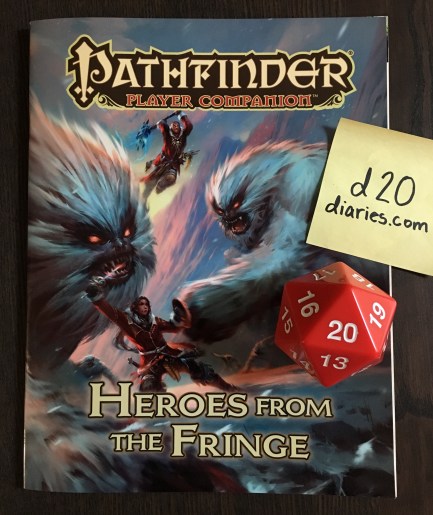
 is a soft cover book that is 32 pages in length. As a book in the Player Companion line, it’s aimed at players, which means that you won’t find a ton of world lore or secrets inside. Instead you’ll find character options — things like archetypes, feats, traits, spells, and more. The cover features dynamic art by Setiawan Fajareka which depicts the Iconic swashbuckler Jirelle and the Iconic bloodrager Crowe battling a pack of yetis in a snowy mountain pass. Why does a book about non-human races show a picture of a human on the cover? I don’t know! Technically there are a few traits in this book which could be taken by humans from specific regions, but none of them are meant for Shoanti characters. Whatever the reasoning, the art looks cool so I’m not complaining.


 The next six pages are all about elves. There are six heritages discussed, each with it’s own list of applicable alternate race traits and a new alternate race trait. Elven heritages include aquatic, Ekujae, Forlorn, Jininese, Spiresworn, and Snowcaster. I most enjoyed reading about the Jininese and Spiresworn elves. There are three archetypes in this section, but unlike the dwarven ones these are for elves only. The ‘calamity caller’ is a warpriest archetype intended for Ekujae elves that can call down the fury of nature and natural disasters at will but does not gain the focus weapon or sacred weapon abilities (this is my favourite elf archetype). The ‘twilight speaker’ is a skald archetype intended for Snowcaster worshippers of Findeladlara that grants access to some nifty raging songs (improved devotion, song of understanding, and song of secrecy). The ‘warrior poet’ is a samurai archetype intended for Jininese elves which is a graceful, lightly armoured combatant that dances across the battlefield. All three are very cool! Other elven character options include the ‘Order of the Songbird’ samurai order which values beauty, art, and life; two new sanctuary-themed bardic masterpieces (Findeladlara’s refuge and hymn of sacred lands), and three new magical items crafted by the Spiresworn elves (northern star ioun stone, southern star ioun stone, and farspear).
 that gives your familiar the ability to speak. Other gnome options include the ‘whimsy’ emotional focus for phantoms (which is a ton of fun!), ‘bleaching’ psychic discipline, three new spells (pernicious pranksters is my favourite), and one new bardic masterpiece (wildsoul aria). Perhaps one of my favourite parts about the gnome chapter is a delightful piece of artwork that shows a bleachling spiritualist being teased by his whimsical phantom. Look closer and you’ll realize that the phantom isn’t the spirit of a dead gnome, but the spirit of the bleachling’s old self. His joy literally died. I love it! Haha.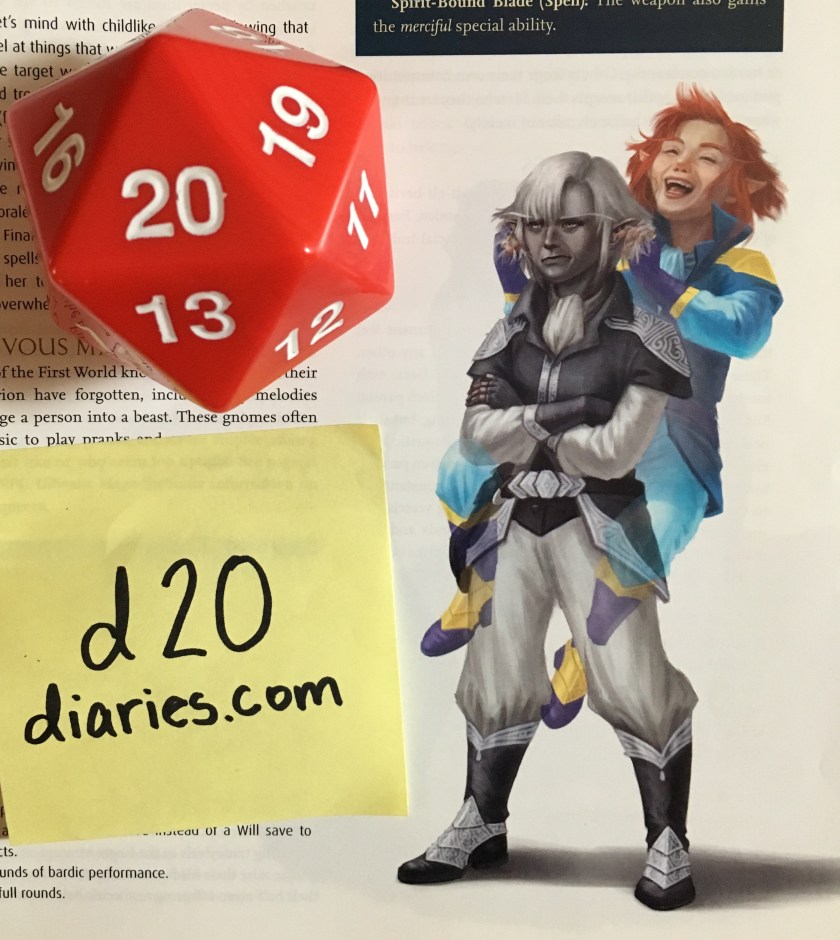
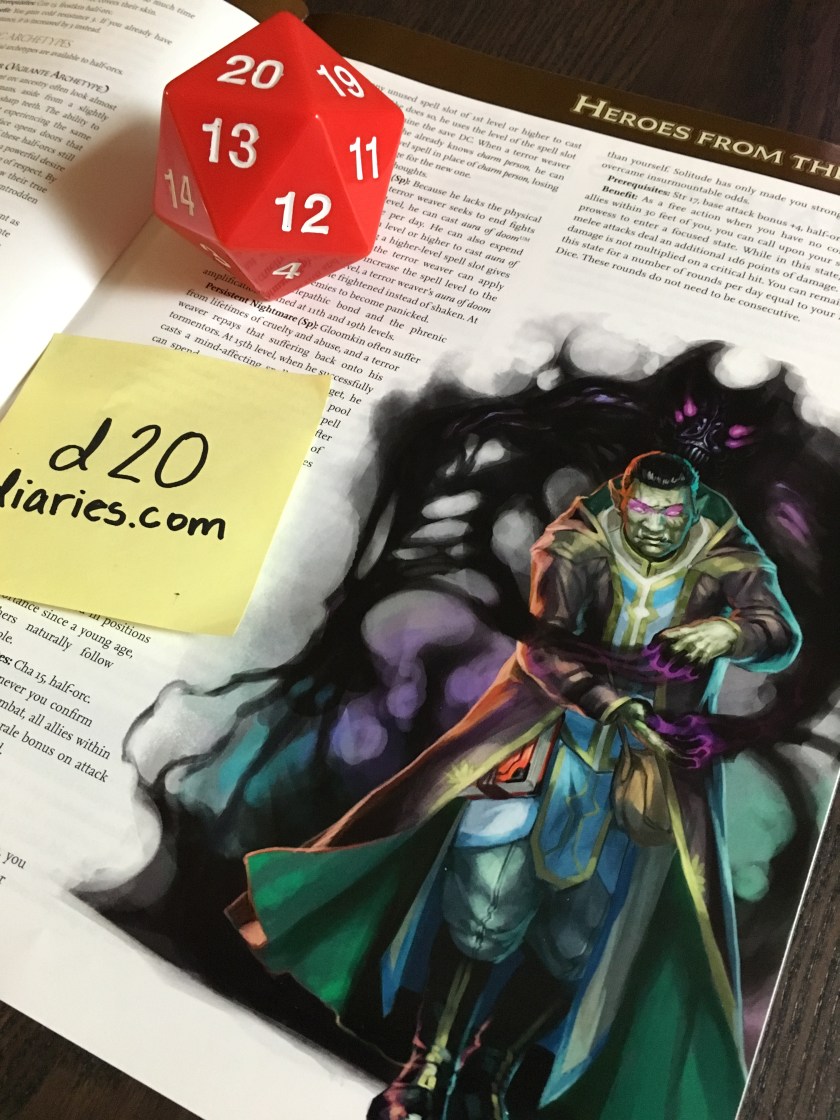


 or from Paizo Publishing’s website
  . The urban bloodrager archetype can be found in
  . The Kineticist class can be found in
  . The monk and bard are base classes found in the
  (or in a convenient travel-sized edition:
  .
. A wonderful Player’s Guide for Tyrant’s Grasp is available as a free download on Paizo’s website


 The first article, Tools of the Boneyard, is written by Matt Morris. In it you’ll find new gear and character options aimed at dealing with the dead. There is one alchemical remedy, one alchemical tool, and two alchemical weapons — bone burn is my favourite, so be sure to check it out! There are two new special materials useful for crafting — cryptstone can be used for ammunition and weapons, while spiresteel can be used for ammunition, weapons, and armour. Finally, there are five new magic items: crypt rod, grim helm, harbinger’s scythe, Lady’s Mercy, and Momument’s Truth. Although I enjoyed a lot of the items, it’s the character options that I found were most exciting. Graveslinger is a gunslinger archetype that specializes in combatting incorporeal undead. Soul Shepherd is a monk archetype that calm incorporeal undead and haunts with a touch. They also gain some otherworldly resistances and interesting ways to use their ki. Reaper is a new oracle mystery which I really enjoyed. Tightly themed and flavourful it’s capable of both killing the living and destroying undead. There are also six new barbarian rage powers including the psychopomp totem powers.
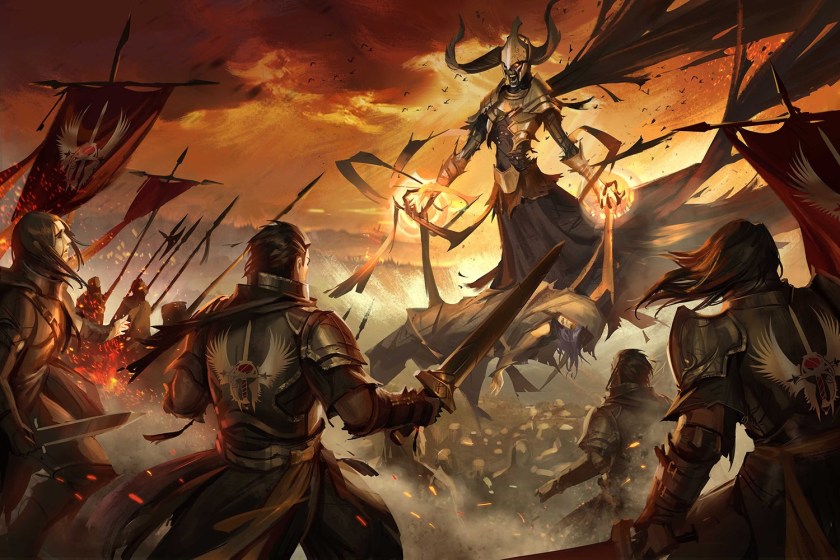
 by Jason Keeley,
  by Larry Wilhelm,
  by Crystal Frasier,
  by Luis Loza, and


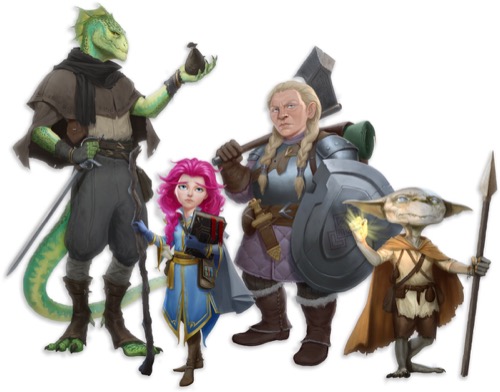
 miniatures! Produced by WizKids these pre-painted minis come in blind boosters, each of which contains four figures — one large or huge figure and three medium or small figures. In addition to a


 takes an in depth look at monitors — neutral outsiders — including aeons, proteons, and psychopomps. In addition to details on a variety of monitor demigods, this book also contains occult rituals, details on monitor sects, a prestige class, and a bestiary.


 and the

 !!! (Yes, it deserves all those exclamation points). Organized Play releases are


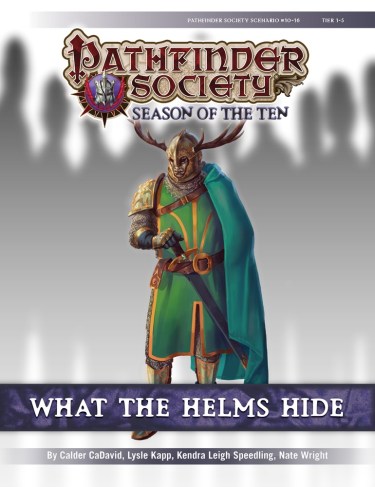
 (although all of the necessary stat blocks are included within the scenario). It contains content from
  (although all the content needed from Champions of Corruption is included in the scenario itself). It utilizes the
 and
and 
 and for more information on Leng check out
  or
or 
 Ready to get wild?
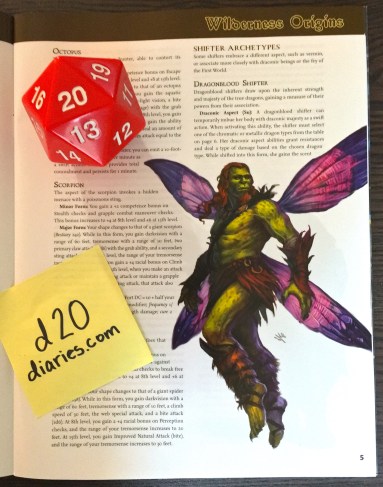


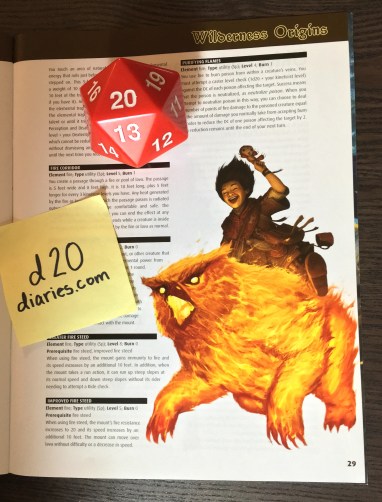
 — shifters, gathlain, ghoran, and vine leshys — and pays some loving attention to the many different pets you can acquire. It’s rare that we get to make in-game use of a d20 book right after reading it, but this one immediately inspired us to create something new. It was well worth the investment for my family.
 and explore Golarion for yourself! For more information on Taldor you can also check out
  .
. d20 Diaries